
If you have oily skin, there are specific foods to avoid for oily skin that can make your skin oilier and cause breakouts. These include sugary snacks, fried foods, dairy products, and refined carbs like white bread and pasta.
Cutting back on these can help reduce excess oil and keep your skin clearer.

In this article, I’ll walk you through the most important foods to avoid with oily skin & explain why they affect your skin. Plus, I’ll share some easy tips to help you keep your skin balanced and healthy without complicating your diet.
what Foods to Avoid for Oily Skin
When it comes to oily skin, one of the main reasons your face looks shiny or feels greasy is because of excess sebum production.
Certain foods that increase sebum production can make this worse, causing clogged pores and breakouts. Knowing which foods to watch out for is the first step to managing oily skin better.
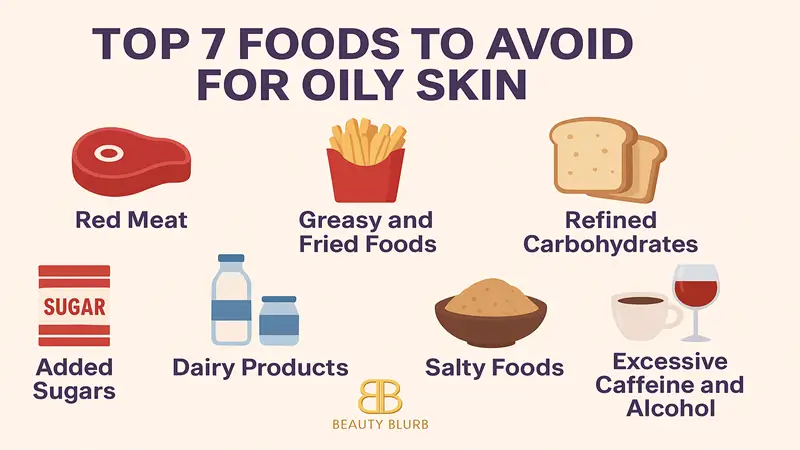
Red meat, such as beef and lamb, is often linked to increased oiliness in the skin. This happens because red meat contains high levels of saturated fats and hormones, which can stimulate your sebaceous glands to produce more sebum.
More sebum means oilier skin and a higher chance of clogged pores and acne.
Scientific study:
- A study published in the International Journal of Dermatology found a positive correlation between the intake of red meat and the occurrence of acne lesions.
- The research indicated that diets high in red meat might exacerbate acne symptoms due to their influence on sebum production. Source.
So, If you’re dealing with oily skin, reducing your intake of red meat might help balance oil production and improve your skin’s appearance.
2: Greasy and Fried Foods
You might be wondering: Does oily food cause pimples? While it’s a common belief that greasy foods directly lead to acne, the scientific evidence doesn’t fully support this idea. However, consuming greasy and fried foods can indirectly contribute to acne development.
These foods are often high in unhealthy fats, such as omega-6 fatty acids and trans fats, which can promote inflammation in the body.
Chronic inflammation is a known factor in the development of acne. Additionally, greasy foods can affect hormone levels and insulin sensitivity, both of which play roles in acne formation.
Backed by science
- A study published in JAMA Dermatology found that the consumption of fatty and sugary foods appeared to be associated with adult acne.
- While this study didn’t establish a direct cause-and-effect relationship, it suggests a potential link between diet and acne severity. Source.
So, while greasy and fried foods might not be the sole culprit behind pimples, they can definitely fan the flames by increasing inflammation and hormonal imbalance.
Paying attention to what you eat and choosing cleaner, less processed options can give your skin a better chance to stay clear and shine-free. It’s not about cutting out all your favorites but about making smarter choices that your skin will thank you for.
3: Refined Carbohydrates
When we talk about things to avoid for oily skin, refined carbohydrates should definitely be on your radar, my friend. These include white bread, pastries, sugary cereals, and even some processed snacks.
Refined carbs cause your blood sugar to spike quickly, which triggers insulin production and increases oil secretion in your skin.
This extra oil can clog your pores and lead to more pimples and blackheads, especially in oily skin types.
Clinical Insight:
- A systematic review published in the Journal of Drugs in Dermatology examined various studies and concluded that diets high in refined carbohydrates are associated with increased acne severity.
- The review highlighted that high glycemic index foods contribute to acne by elevating insulin and insulin-like growth factor 1 (IGF-1) levels, which promote sebum production.
- This evidence suggests that reducing the intake of refined carbohydrates can be beneficial for managing oily skin and preventing acne. Source.
So, my friend, after trying to avoid these foods to avoid oily skin and acne, tell me in the comments—have any of these foods caused you pimples or blackheads, especially in the T-zone? I’d love to hear about your experience!
4: Added Sugars
When considering foods that cause oily skin, added sugars—such as those found in candies, sodas, and sweetened juices—are significant contributors. These sugars cause rapid spikes in blood sugar levels, leading to increased insulin production.
Elevated insulin levels can stimulate the sebaceous glands to produce more sebum (natural oils), which may clog pores and result in acne breakouts.
What sience say:
- A comprehensive study published in the Journal of the American Academy of Dermatology in 2020 analyzed dietary habits and acne prevalence among 24,452 French adults.
- The research found that individuals with current acne consumed significantly more milk, milk chocolate, snacks, and fast foods, including those high in added sugars, compared to those without acne.
- This study suggests a notable association between the intake of added sugars and the presence of acne.
Therefore, if you’re aiming to maintain healthy, clear skin, it’s advisable to reduce your intake of added sugars. Opting for natural sweeteners like honey or stevia, and choosing whole fruits over sugary snacks, can help manage oil production and prevent acne.
5: Dairy Products
When considering foods that increase sebum production, dairy products like milk, cheese, and yogurt are often implicated.
These foods contain hormones such as insulin-like growth factor 1 (IGF-1), which can stimulate the sebaceous glands to produce more oil. Additionally, dairy consumption has been associated with increased acne severity in some studies.
Scientific study:
- A study published in the Journal of the American Academy of Dermatology in 2018 analyzed dietary habits and acne prevalence among 78,529 children, adolescents, and young adults.
- The research found that consuming any type of dairy was associated with a higher likelihood of acne in individuals aged 7–30 years.
- Acne was more likely to occur in people who consumed low-fat and skim milk.
- The researchers suggest that this finding might be because people often consume a higher amount of low-fat and skim milk than full-fat and whole milk.
Remember, foods to avoid if you have oily skin often include dairy, so exploring alternatives like almond or oat milk could make a real difference. Give it a try and see how your skin responds!
6: Salty Foods
You know, when it comes to foods to avoid for oily skin, salty snacks often sneak under the radar. But trust me, too much salt can really mess with your skin’s balance.
It dehydrates you, and your skin tries to fix that by pumping out more oil. The result? More shine and clogged pores. So, all those chips, salted nuts, and processed goodies? Yeah, they’re best kept in check.
7: Excessive Caffeine and Alcohol
excessive caffeine and alcohol can be sneaky troublemakers. Both can dehydrate your body and skin, causing your sebaceous glands to overcompensate by producing more oil.
Plus, alcohol can trigger inflammation and worsen skin conditions, while too much caffeine may increase stress hormones that affect oil balance.
So, if you’re aiming for clearer, less oily skin, it’s wise to moderate your intake of coffee, energy drinks, and alcoholic beverages.

What should you avoid with oily skin? Now that you know the main troublemakers, let’s talk about some healthier swaps that can keep your skin happy and fresh.
Which Food Is Better for Oily Skin?
Now that you’ve learned, my friend, about the most important food to prevent oily skin, let’s focus on what you should be eating to keep that shine under control. Here are some great choices to add to your diet:
| Food | Description | Benefit |
|---|---|---|
| Avocados | Packed with healthy fats | Nourish skin without clogging pores |
| Cucumbers | High in water content | Keep skin hydrated and fresh |
| Tomatoes | Rich in antioxidants | Protect skin from damage |
| Green tea | Contains anti-inflammatory properties | Calms oily, irritated skin |
| Nuts (almonds, walnuts) | Full of vitamins and minerals | Support skin health |
| Fatty fish (salmon, mackerel) | Loaded with omega-3 fatty acids | Reduce inflammation |
| Whole grains | Help balance blood sugar levels | Reduce oil spikes |
| Dark chocolate | Low sugar and rich in antioxidants | Beneficial for oily skin |
| Coconut water | Hydrating | Supports skin health |
| Citrus fruits | Promote hydration, vitamin C boost | Enhance skin brightness and hydration |
| Green veggies | Packed with nutrients | Improve skin texture |
| Carrots | Help prevent dark pigmentation | Support skin repair |
| Bananas | Soothing properties | Great for oily and acne-prone skin |
| Peas | Reduce inflammation | Support skin clarity |
| Nuts | Repair skin damage | Provide essential nutrients |
| Oats | Help soothe skin | Regulate oil production |
| Pineapples | Contain enzymes and vitamin C | Promote healthy skin and reduce oiliness |
Give these foods a try, my friend, and see how your skin responds! Don’t forget to drop a comment sharing your experience — I’d love to hear which ones worked best for you.
How to Remove Oily Skin Naturally
Dealing with oily skin can be frustrating, but don’t worry — there are natural ways to keep that shine under control without harsh chemicals. Here are some easy tips you can try at home:
- Use a gentle cleanser: Look for products with ingredients like salicylic acid or tea tree oil that help remove excess oil without drying your skin out.
- Apply a natural toner: Witch hazel or rose water can balance your skin’s pH and reduce oiliness.
- Use blotting papers: These handy sheets absorb excess oil throughout the day without disturbing your makeup or skin.
- Moisturize wisely: Choose lightweight, oil-free moisturizers to keep your skin hydrated without adding extra grease.
- Exfoliate regularly: Gentle exfoliation removes dead skin cells that can clog pores and worsen oily skin. Aim for 1-2 times a week.
- Try clay masks: Masks made from bentonite or kaolin clay can absorb excess oil and unclog pores.
- Hydrate from within: Drinking plenty of water helps regulate your skin’s oil production naturally and keeps your body healthy.
- Maintain a balanced diet: Avoid foods that increase sebum production and focus on fresh fruits, veggies, and whole grains.
Remember, consistency is key — try these tips daily, and you’ll start seeing improvements!
Follow a Skincare Routine for Oily Skin and Choose Products Wisely
When dealing with oily skin, knowing the foods to avoid for oily skin is just the start. A solid skincare routine for oily skin plays a huge role in keeping your complexion balanced, fresh, and shine-free. Combining smart diet choices with the right skincare steps will give you the best results.
Here’s a step-by-step routine to help you manage oily skin effectively:
- Cleanse Twice Daily: Use a gentle, oil-free cleanser morning and night to remove dirt, excess oil, and impurities without stripping your skin.
- Exfoliate with a Scrub (1-2 times a week): Gently scrub to remove dead skin cells and unclog pores. Avoid harsh scrubs that can irritate your skin and trigger more oil production.
- Apply Toner: Use an alcohol-free toner to balance your skin’s pH and reduce excess oil.
- Use Lightweight Serums: Serums with ingredients like niacinamide or salicylic acid can help control oil and minimize pores.
- Moisturize with an Oil-Free Lotion: Keep your skin hydrated without adding grease. Gel-based moisturizers work great for oily skin.
- Apply Night Cream: At bedtime, use a non-comedogenic night cream that nourishes your skin and supports repair without clogging pores.
- Use Sunscreen Daily
Choose a mattifying, oil-free sunscreen to protect your skin from UV damage without extra shine.
Following these steps, along with avoiding foods to avoid for oily skin, will dramatically improve your skin’s health and appearance.
For a deeper dive, check out my detailed guide on the dermatologist recommended skin care routine for oily skin to take your skincare game to the next level!
FAQ Of Foods to Avoid for Oily Skin
Thank you so much for taking the time to read through this guide on foods to avoid for oily skin. I truly hope these tips help you on your journey to clearer, healthier skin. Don’t hesitate to try out the advice and see what works best for you.
I’d love to hear all about your experience and progress—so please share your oily skin journey in the comments below. Your story might inspire others too!

Akram Boulaid is a dedicated Skincare Researcher and Analyst with over 7 years of intensive focus on dermatology and cosmetic ingredient science. As a globally recognized expert, his insights have been featured in major international publications, including the New York Post and GB News. A verified expert on Qwoted, Akram connects with health journalists to provide evidence-based analysis. He founded Beauty Blurb to bridge the gap between complex clinical data and practical skincare routines, specializing exclusively in the needs of oily and acne-prone skin through rigorous analysis of peer-reviewed scientific literature.