
Glycolic Acid for Dark Spots, works by chemically exfoliating the skin to remove pigmented dead cells and stimulate new cell growth.
As an alpha hydroxy acid, it helps fade sun spots, melasma, and post-inflammatory hyperpigmentation while improving texture and radiance.
For best results, start with a low concentration, introduce it gradually, and always pair it with broad-spectrum sunscreen to protect and maintain your progress.
In this article, we’ll explore everything you need to know about using glycolic acid for hyperpigmentation—how it works, the best percentages to use, how long it takes to see results, and expert tips to avoid irritation.
If you’ve been struggling with stubborn dark marks or uneven skin tone, this guide will give you clear answers and practical steps to get the most out of your routine.
What Is Glycolic Acid and How Does It Work?
Glycolic acid is one of the most popular alpha hydroxy acids (AHAs) in skincare, and for good reason. It has the smallest molecular size among AHAs, which means it penetrates the skin quickly and effectively.
This makes it a powerful option for targeting dark spots, uneven skin tone, and hyperpigmentation.
Here’s how it works:
- It gently dissolves the bonds that hold dead skin cells together.
- This chemical action allows the outer layer of dull, damaged skin to shed naturally.
- By clearing away this buildup, glycolic acid encourages the skin to produce new, healthier cells at a faster rate.
In simple terms, glycolic acid doesn’t just sit on the surface—it actively encourages your skin to renew itself. That’s why it’s often recommended for those dealing with dark spots, post-inflammatory hyperpigmentation, or dull-looking skin.
Is Glycolic Acid Good for Dark Spots?
Dark spots can be stubborn, whether they come from sun damage, melasma, or leftover acne marks. One ingredient that dermatologists often recommend is glycolic acid.
But does it really work for hyperpigmentation? Research shows that glycolic acid, as a chemical exfoliant, can fade discoloration by removing pigmented surface cells and stimulating fresh, even-toned skin underneath.
In this section, we’ll break down the proven glycolic acid benefits for dark spots, supported by clinical studies, so you can see exactly how and why it works.
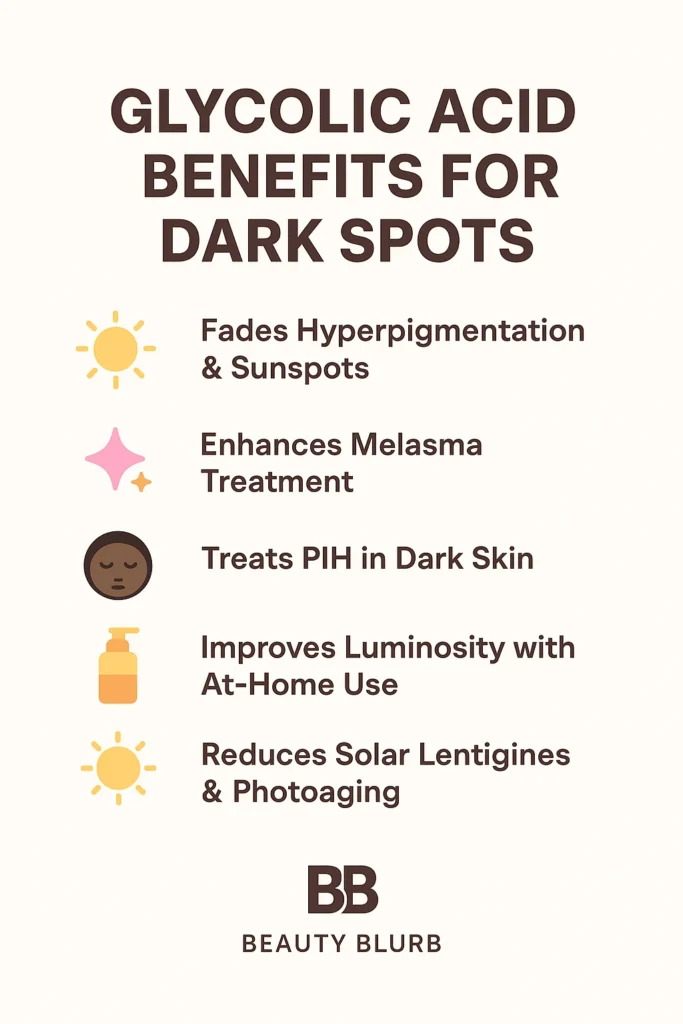
1. Fades Hyperpigmentation & Sunspots
glycolic acid works to fade dark spots, including sunspots and general hyperpigmentation, by gently dissolving the bonds between pigmented dead skin cells, speeding up exfoliation, and promoting clearer, more evenly toned skin.
Clinical study of glycolic acid for dark spots:
- A double-blind randomized clinical trial led by Stiller et al. involved 75 participants using a 5% unneutralized glycolic acid cream applied daily to the face and neck over 3 months.
- The study reported statistically significant improvement in skin texture and discoloration compared to a placebo. This demonstrates glycolic acid’s efficacy in reducing uneven tone and pigmentation. Source.
2. Enhances Treatment of Melasma
Glycolic acid can enhance the effectiveness of existing melasma treatments. When combined with topical regimens, its exfoliating action helps the skin absorb active ingredients more deeply, boosting results.
Scientific study:
- In a clinical study involving 40 Indian patients with epidermal melasma, researchers compared a modified Kligman’s topical regimen (hydroquinone, tretinoin, hydrocortisone) with and without serial glycolic acid peels.
- Over 21 weeks, the peel group experienced significantly greater improvement (P < .001) in MASI scores compared to the control group, proving glycolic acid’s additive benefit. Source.
3. Treats Post-Inflammatory Hyperpigmentation (PIH) in Dark Skin
For individuals with darker skin tones (Fitzpatrick IV–VI), glycolic acid peels can speed up the reduction of PIH when used carefully.
It helps lighten post-inflammatory dark marks more effectively than topical regimens alone.
Clinical Evidence:
- A comparative clinical trial with 19 dark-skinned patients (Fitzpatrick skin types IV–VI) compared a topical regimen (hydroquinone/glycolic gel + tretinoin) versus the same regimen plus six glycolic acid peels (up to 68% concentration).
- By the end, the peel group showed more rapid and greater lightening of pigmentation, with minimal side effects. Source.
4. Improves Skin Luminosity and PIH with At-Home Formulations
Also one of glycolic acid Benefits is Even non-invasive, over-the-counter glycolic acid formulations (10–12%) can enhance brightness, reduce hyperpigmentation, and improve skin texture over time—when used consistently.
clinical Study:
- In a 12-week study involving American women (Fitzpatrick II–VI), a topical formulation containing 10% glycolic acid, 2% phytic acid.
- and a calming complex led to significant improvements in overall pigmentation, texture, and luminosity—starting as early as week 4 and sustained through week 12.
- (While not a peer-reviewed clinical trial, the study’s data receive support by expert sources and dermatologists in the field). Source.
5. Helps Reduce Solar Lentigines (Sunspots) and Improves Skin Quality
At higher concentrations such as in professional peels, glycolic acid can lighten sunspots (solar lentigines) and improve signs of photoaging like rough texture and fine lines.
Study:
A double-blind, vehicle-controlled study by Newman et al. applied 50% glycolic acid peels to one side of the face, forearms, and hands of 41 volunteers, once weekly for 4 weeks.
The results showed a slight lightening of sun spots, improvement in rough texture and fine wrinkles, plus histological evidence of thinner stratum corneum and increased collagen.
So, what does glycolic acid do for dark spots?
It gently exfoliates the skin, removes layers of pigmented cells, and stimulates new cell turnover—leading to a more even and radiant complexion.
Clinical studies confirm that it can improve melasma, post-inflammatory hyperpigmentation, and sunspots, whether used in professional peels or lower-strength at-home products.
In short, glycolic acid is one of the most researched and effective ingredients for fading dark spots. Consistency, patience, and proper sun protection are key to seeing lasting results.
How to Use Glycolic Acid for Dark Spots On Face
Maybe you’re wondering, Can I use glycolic acid for dark spots? The short answer is yes—but how you use it makes all the difference. To get real results without damaging your skin, dermatologists recommend starting slowly and working your way up.
The safest way to begin is with a low-concentration product (5–10%), applied at night 2–3 times per week. Over time, as your skin builds tolerance, you can increase the frequency and strength.
Always perform a patch test before applying it to your face, follow up with a hydrating moisturizer, and never skip a broad-spectrum sunscreen the next morning.
This protects your skin from UV rays and helps prevent new pigmentation from forming. Used correctly, glycolic acid for pigmentation can gradually fade discoloration, brighten your tone, and support healthier skin renewal.

What I Should Do Before Use glycolic acid for hyperpigmentation
- Patch Test
Always test first. Apply a small amount of glycolic acid to a hidden spot (like behind your ear or on your jawline) and wait 24 hours. If no irritation occurs, you can safely use it on your face. - Choose the Right Product
For at-home use, stick to products with 5–10% glycolic acid. Higher concentrations (20–70%) are designed for professional chemical peels performed by dermatologists or licensed estheticians. - Understand Your Skin Type
If you struggle with stubborn dark spots, melasma, or acne scars, be patient. Glycolic acid works gradually, so consistency matters more than speed. Sensitive skin types should go slower, while oily or resilient skin may tolerate quicker progress.
Adding Glycolic Acid to Your Skincare Routine For Dark Spots
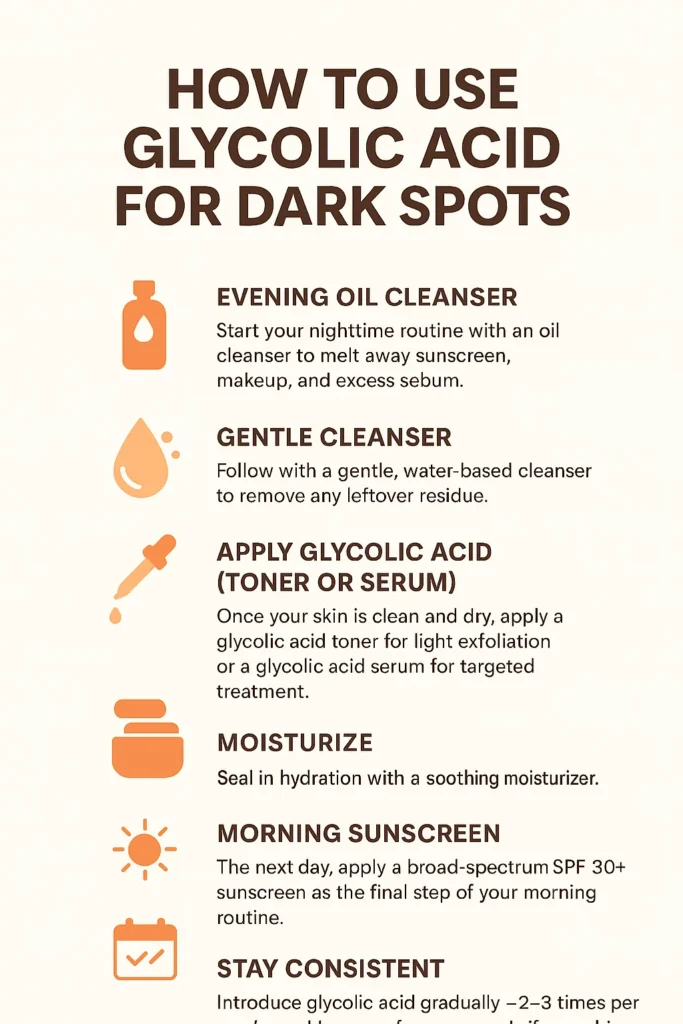
- Step 1: Evening Oil Cleanser
Start your nighttime routine with an oil cleanser to melt away sunscreen, makeup, and excess sebum. This helps prep your skin for deeper cleansing. - Step 2: Gentle Cleanser
Follow with a gentle, water-based cleanser to remove any leftover residue. Avoid harsh or foaming cleansers that can strip your skin barrier. - Step 3: Apply Glycolic Acid (Toner or Serum)
Once your skin is clean and dry, apply a glycolic acid toner for light exfoliation or a glycolic acid serum for pigmentation if you want more targeted treatment for dark spots and pigmentation. Always use it at night to avoid sun sensitivity. - Step 4: Moisturize
Seal in hydration with a soothing moisturizer. Look for ingredients like hyaluronic acid, ceramides, or peptides to restore balance and calm potential irritation. - Step 5: Morning Sunscreen
The next day, apply a broad-spectrum SPF 30+ sunscreen as the final step of your morning routine. This step is crucial to protect your skin and maintain progress in fading dark spots. - Step 6: Stay Consistent
Introduce glycolic acid gradually—2–3 times per week—and increase frequency only if your skin adapts well. Overuse can cause redness, peeling, or even worsen hyperpigmentation.
If you’ve been struggling with dark spots or pigmentation, adding glycolic acid to your evening routine could be a game-changer.
Start slow, stay consistent, and protect your skin with sunscreen—you’ll thank yourself when you see the gradual glow and clarity return.
We’d love to hear from you! 💬 Have you tried using glycolic acid for dark spots? Share your experience in the comments below—your journey might inspire someone else.
Pro Tip: Want to build a complete skincare routine that works hand in hand with glycolic acid? Check out our guide on a dermatologist recommended skin care routine for oily skin.
How Often to Use Glycolic Acid for Dark Spots
If you’re wondering “how often should I use glycolic acid for dark spots?” the simple answer is: start 2–3 nights per week with a low concentration, then increase gradually as your skin adjusts.
Because glycolic acid is an alpha hydroxy acid (AHA), it works by exfoliating pigmented dead cells—but using it too often can irritate your skin and actually make pigmentation worse.
How to Get Started
- Begin Slowly: Choose a product with 5–10% glycolic acid and apply it 2–3 times per week at night.
- Nighttime Use Only: Glycolic acid increases sun sensitivity, so keep it in your evening skincare routine.
- Hydrate After Use: Follow with a nourishing moisturizer to keep your skin barrier strong.
- Daily Sunscreen: Protect your skin with broad-spectrum SPF 30+ every morning, even on cloudy days, to prevent further dark spots.
Increasing Frequency
- Monitor Your Skin: If your skin tolerates it well (no redness or peeling), you can increase usage up to every other night.
- Daily Use? Some people with resilient or oily skin can eventually use glycolic acid daily, but it’s not necessary for results.
- Listen to Your Skin: If you see irritation, scale back. Overuse can damage your barrier and trigger more melanin production.
Important Considerations
- Consult a Professional: If you’re unsure, ask a dermatologist about the best glycolic acid frequency for your skin type and pigmentation level.
- Cleansers with glycolic acid can often be used more frequently.
- Serums and toners (5–10%) are best for regular dark spot treatment.
- Peels (20% or higher) should only be used occasionally or under professional guidance.
- Skin Type Differences: Sensitive skin may only handle once a week, while oily or acne-prone skin may tolerate more frequent use.
- Results Timeline: Most people notice brighter skin in 4–6 weeks, with visible fading of dark spots in 8–12 weeks of consistent use.
Glycolic Acid for Dark Spots — Usage Summary
A quick, feminine-styled reference for how often to use alpha hydroxy acid for dark spots, what to expect, and key safety notes.
| Step / Event | What to Do | Frequency / Timeline | Notes & Tips |
|---|---|---|---|
| Getting Started | Use 5–10% glycolic acid at night after cleansing (oil cleanser → gentle cleanser). | 2–3 nights per week | Patch test first; follow with moisturizer. Morning SPF 30+ is a must. |
| Nighttime Only | Apply in your PM routine as a toner or serum for dark spots. | Each application | Avoid daytime use—AHAs increase photosensitivity. |
| Moisturize & SPF | Hydrate after use; wear broad-spectrum sunscreen every morning. | Daily | Prevents irritation and protects against new hyperpigmentation. |
| Increasing Frequency | If no redness/peeling, increase to every other night (some may tolerate daily). | After 2–3 weeks of tolerance | Sensitive skin may stay at 1–2×/week. Always “listen” to your skin. |
| Product Type |
Cleansers: milder, more frequent. Toners/Serums (5–10%): best for dark spots. Peels (≥20%): occasional or professional only. | Varies by strength | Higher % = less frequent use. Avoid stacking multiple strong exfoliants. |
| Results Timeline | Expect a brighter look and smoother feel with consistent use. | 4–6 weeks | First visible clarity and radiance typically appear in this window. |
| Dark Spot Fading | Noticeable fading of pigmentation with proper routine + sun protection. | 8–12 weeks | Patience pays off—consistency matters more than speed. |
| Caution / Overuse | Redness, peeling, barrier damage, or worsening spots if you overdo it. | Anytime with misuse | If irritated, scale back or pause and consult a dermatologist. |
Knowing how often to use glycolic acid for hyperpigmentation isn’t just about following a rule—it’s about listening to your skin.
Begin with a gentle routine, adjust based on how your complexion responds, and stay consistent with sunscreen and hydration. The real key is balance: enough glycolic acid to target pigmentation, but not so much that it disrupts your skin barrier.
With steady care, you’ll see dark spots fade gradually, revealing brighter and healthier-looking skin.
how long does it take for glycolic acid to fade dark spots
I know you’re wondering right now, my friend, how long for glycolic acid to fade dark spots. On average, glycolic acid takes about 4–12 weeks to noticeably fade dark spots, though some people see early improvements in skin brightness within the first 1–2 weeks.
The exact glycolic acid results timeline depends on spot depth, product strength, frequency of use, and consistent sun protection.
| Timeframe | What Happens | Visible Results | Practical Notes |
|---|---|---|---|
| Week 1–2 | Initial exfoliation and increased surface cell turnover as your skin adapts to the AHA. | Noticeable improvement in skin smoothness and overall brightness; faint spots may look less dull. | Start with 5–10% formula, 2–3 nights/week; patch test before full-face use. |
| Week 4–6 | Deeper exfoliation cycles have completed once or twice; pigmented surface cells shed more consistently. | Light-to-moderate dark spots (superficial PIH, sun-induced dullness) begin to fade noticeably. | If tolerated, increase to every-other-night; always use a calming moisturizer after application. |
| Week 8–12 | Several full cell-turnover cycles completed; combination regimens (AHA + adjuncts) show stronger effects. | Moderate-to-deeper hyperpigmentation (PIH, some sunspots) shows visible fading; tone becomes more even. | Consider professional-strength treatments for stubborn spots; consult a dermatologist if needed. |
| 3+ months | Long-term remodeling and maintenance phase; collagen and texture improvements consolidate. | Best results for persistent sunspots and melasma appear gradually; maintenance prevents relapse. | Maintain a stable routine (AHA frequency + SPF); use booster treatments only under pro supervision. |
Tips for best results
- Combine, but don’t stack: For faster pigmentation control, alternate glycolic acid nights with niacinamide or vitamin C mornings (or vitamin C on nights you’re not using AHA). Avoid layering strong actives in the same application.
- Protect relentlessly: Daily broad-spectrum SPF 30+ is non-negotiable — UV exposure reverses progress and deepens pigmentation.
- Adjust by product type: Cleansers with glycolic acid can be used more often; serums/toners (5–10%) need measured frequency; professional peels require pro supervision.
- Watch for irritation: Redness, persistent peeling, or new darkening are signs to reduce frequency and seek professional advice — overuse can trigger more hyperpigmentation.
- Track progress: Take standardized photos (same light, same angle) every 4 weeks to objectively review the glycolic acid results timeline.
- Be patient: Superficial improvements can show quickly, but meaningful fading of deeper dark spots commonly requires 8–12 weeks or longer.
glycolic acid for dark spots side effects
Even though glycolic acid is one of the most effective alpha hydroxy acids for dark spots, it can still cause some side effects—especially if used incorrectly or in high concentrations.
Understanding these reactions helps you know what’s normal and when you should be cautious.
Common Side Effects Of glycolic acid
- Mild Redness & Irritation: A temporary tingling or stinging sensation is common during the first few uses.
- Dryness & Flaking: Because glycolic acid accelerates cell turnover, the skin can feel tight or start peeling lightly.
- Increased Sun Sensitivity: As an exfoliant, it makes your skin more vulnerable to UV damage, which can worsen hyperpigmentation if unprotected.
Less Common but Notable Side Effects
- Severe Irritation: Some people may develop burning, swelling, or persistent redness, especially when using strong concentrations (15%+).
- Post-Inflammatory Hyperpigmentation (PIH): In deeper skin tones, overuse or misuse can sometimes trigger more dark spots instead of reducing them.
- Barrier Damage: Excessive application may weaken your skin’s natural moisture barrier, leading to sensitivity and breakouts.
Who Is More at Risk?
- People with sensitive or reactive skin
- Those with eczema, rosacea, or chronic dryness
- Individuals with medium-to-dark skin tones, who may be more prone to PIH if irritation occurs
✨ Conclusion
So, what should you remember about glycolic acid for hyperpigmentation side effects? Most reactions are mild and temporary, but misuse can lead to bigger problems like hyperpigmentation or irritation.
To minimize risks, always start low, introduce it slowly, hydrate well, and never skip sunscreen. With the right precautions, glycolic acid can safely deliver the bright, even-toned skin you’re aiming for.
Best Glycolic Acid for Dark Spots (Top Products)
I know you’re probably wondering: “Which glycolic acid is best for dark spots?”
Beauty Blurb team did the research for you—we gathered dermatologist insights, reviewed user experiences, and handpicked the best glycolic acid products that actually deliver results for pigmentation, melasma, and uneven skin tone.
Here’s a quick comparison to help you choose the right one for your skin type and needs:
| Product | Type | Best For | Key Benefits |
|---|---|---|---|
| The Ordinary Glycolic Acid 7% Toning Solution | Toner | Oily/Combination Skin | Affordable, gently exfoliates, brightens uneven tone |
| Pixi Glow Tonic | Toner | Sensitive Skin | Contains aloe vera for soothing, gentle daily use |
| Murad Rapid Resurfacing Peel (10% Glycolic Acid) | Peel Pads | Stubborn Dark Spots | Professional strength, quick visible results |
| L’Oréal Paris Revitalift 10% Pure Glycolic Acid Serum | Serum | All Skin Types | Clinically tested, reduces dark spots in 2 weeks |
| Alpha Skin Care Renewal Body Lotion (12% Glycolic Acid) | Lotion | Body Hyperpigmentation | Smooths texture, fades dark patches on body |
When it comes to choosing the best glycolic acid for dark spots, there isn’t a single “one-size-fits-all.” If you’re a beginner, The Ordinary Glycolic Acid for dark spots 7% is a budget-friendly favorite.
For faster results, dermatologist-backed options like Murad or L’Oréal Revitalift Serum might suit you better. What matters most is consistency—stick to your chosen product, protect your skin with SPF, and your dark spots will gradually fade.
What Is the Best Acids for Dark Spots?
If you’re dealing with stubborn pigmentation, you might be wondering about the best acids for pigmentation beyond glycolic acid.
Dermatologists often recommend a combination of exfoliating and brightening acids that target hyperpigmentation from different angles. Below is a clear comparison of the best acids for dark spots and how they work.
| Acid | How It Works | Best For | Key Benefits |
|---|---|---|---|
| Glycolic Acid (AHA) | Exfoliates surface skin cells, boosts cell turnover | Sun spots, uneven texture | Smooths skin, brightens, improves radiance |
| Lactic Acid (AHA) | Gentle exfoliation, hydrates while resurfacing | Sensitive or dry skin | Brightens dark spots without irritation |
| Salicylic Acid (BHA) | Penetrates pores, reduces oil and acne marks | Post-acne hyperpigmentation | Unclogs pores, prevents breakouts, fades acne spots |
| Mandelic Acid (AHA) | Large molecules = slow penetration, very gentle | Sensitive skin, deeper skin tones | Reduces dark spots with minimal irritation |
| Azelaic Acid | Anti-inflammatory, reduces melanin production | Melasma, acne-related spots | Brightens, calms redness, safe for long-term use |
| Kojic Acid | Inhibits melanin production at the source | Stubborn pigmentation, dark patches | Skin brightening, often combined with other acids |
When it comes to the best acids for pigmentation, each one has its own strength. Glycolic acid is ideal for quick resurfacing, lactic acid works well for sensitive skin, while salicylic acid is perfect if acne marks are your main concern.
For stubborn melasma and deeper pigmentation, azelaic acid and kojic acid are dermatologist favorites. Choosing the right acid depends on your skin type and the type of dark spots you want to treat.
Salicylic Acid or Glycolic Acid for Dark Spots?
You might be asking yourself: which is better for dark spots, glycolic acid or salicylic acid? Both are powerful exfoliating acids but they work differently on the skin.
Understanding their unique strengths will help you choose the one that matches your skin type and pigmentation concerns.
Comparison Table: salicylic acid vs glycolic acid for dark spots
| Feature | Glycolic Acid (AHA) | Salicylic Acid (BHA) |
|---|---|---|
| Main Action | Exfoliates surface skin, speeds up cell turnover | Penetrates pores, reduces oil & inflammation |
| Best For | Sun spots, melasma, overall pigmentation | Post-acne dark spots, oily & acne-prone skin |
| Skin Type | Normal to dry, uneven texture | Combination to oily, breakout-prone |
| Key Benefits | Brightens skin, smooths texture, fades pigmentation | Clears pores, prevents acne, reduces acne scars |
| Possible Drawbacks | May cause dryness or sensitivity if overused | Can be drying, not ideal for very dry skin |
If your dark spots are mainly from sun damage or melasma, glycolic acid is usually the better option because it resurfaces the skin and boosts brightness.
But if you’re struggling with post-acne pigmentation on oily skin, salicylic acid can be more effective since it treats both the spots and the breakouts that cause them.
According to our experience, some dermatologists even recommend alternating or combining both for maximum results, depending on your skin’s needs.
FAQ Of Glycolic Acid for Dark Spots
kojic acid or glycolic acid which is better for dark spots?
Kojic acid works mainly by inhibiting melanin production, while glycolic acid exfoliates the surface to fade existing pigmentation. If your dark spots are deeper or caused by sun damage, glycolic acid may show faster results. Kojic acid, however, can be gentler for sensitive skin. Some people benefit from combining both under dermatologist guidance.
hyaluronic acid or glycolic acid for dark spots?
Hyaluronic acid does not fade dark spots directly. Instead, it hydrates the skin, making it look plump and healthy. Glycolic acid, on the other hand, exfoliates pigmented skin cells to lighten dark spots. For best results, many dermatologists recommend using both together: glycolic acid to fade pigmentation and hyaluronic acid to maintain hydration.
How long do I leave glycolic acid on my feet?
If you’re using a glycolic acid peel for feet, most dermatologists recommend leaving it on for 5–10 minutes depending on the product strength. For creams or lotions, follow the instructions, as some are leave-on formulas. Always rinse if irritation occurs and avoid overusing to protect the skin barrier.
Can I use glycolic acid for hyperpigmentation bikini area?
Yes, glycolic acid can be used for hyperpigmentation in the bikini area, but only at low concentrations (5–7%) and with caution, as the skin there is sensitive. Always patch test first and moisturize well. Avoid waxing or shaving immediately after applying to prevent irritation.
Can we use glycolic acid in pregnancy?
Glycolic acid in low concentrations (under 10%) is generally considered safe in pregnancy, but it’s best to confirm with your dermatologist. Higher concentrations or professional peels are usually avoided during pregnancy for safety reasons.
How many times a week can I use glycolic acid on my legs?
For body use, start with 2–3 times a week at night. If your skin tolerates it well without irritation, you can gradually increase frequency. Always follow with moisturizer, and use sunscreen during the day to prevent dark spots from returning.
Can glycolic acid get rid of dark spots?
Yes, glycolic acid can help fade dark spots by exfoliating pigmented skin cells and promoting new cell turnover. Consistent use over 6–12 weeks often brings visible improvements, especially for sun spots, melasma, and post-acne pigmentation.
How to use Ordinary glycolic acid for dark spots?
The Ordinary Glycolic Acid 7% Toning Solution should be applied at night, 2–3 times per week to cleansed skin. Apply with a cotton pad, avoiding eyes and sensitive areas. Follow with moisturizer and always use sunscreen the next day to protect results.
Is glycolic acid safe for underarms during pregnancy?
In small concentrations, glycolic acid can be used in the underarm area during pregnancy, but consult your doctor first. Opt for mild formulas (under 5%) and avoid high-strength peels. Always patch test before applying to delicate skin.
What age can I start using glycolic acid?
Most dermatologists recommend glycolic acid starting from late teens (around 17–18 years old) if needed for acne scars or pigmentation. For anti-aging benefits, it’s commonly introduced in the mid-20s. Always start low and increase gradually.
When should I stop using glycolic acid?
You should stop using glycolic acid if you experience persistent redness, burning, peeling, or if advised by your dermatologist. Also, discontinue before procedures like laser treatments, or if you are pregnant and using high concentrations.
Thank you for joining us on this deep dive into Glycolic Acid for Dark Spots. By now, you know how it works, the best ways to use it, and what to expect on your skincare journey.
We’d love for you to try it yourself and pay close attention to the changes in your skin over time.
Don’t forget to share your experience with us in the comments—your story might inspire someone else who’s just starting their journey toward clearer, brighter skin.
And if you enjoyed this guide, subscribe to our newsletter for more dermatologist-approved skincare tips and expert-backed routines delivered straight to your inbox. 💖

Akram Boulaid is a dedicated Skincare Researcher and Analyst with over 7 years of intensive focus on dermatology and cosmetic ingredient science. As a globally recognized expert, his insights have been featured in major international publications, including the New York Post and GB News. A verified expert on Qwoted, Akram connects with health journalists to provide evidence-based analysis. He founded Beauty Blurb to bridge the gap between complex clinical data and practical skincare routines, specializing exclusively in the needs of oily and acne-prone skin through rigorous analysis of peer-reviewed scientific literature.