
💡 Quick Insight
Are water-based cleansers good for oily skin? Absolutely — and here’s why.
If you struggle with constant shine or pores that collect oil faster than you can blot it, a water-based cleanser might be your skin’s best friend.
These cleansers lift away excess sebum, sweat, and daily grime without stripping your skin barrier — a mistake that often leads to even more oil production.
What makes them special is their gentle, pH-balanced formulas that cleanse while keeping your skin hydrated and calm.
How to use it for best results:
– Use twice a day: once in the morning to refresh your face, and once at night to wash off sunscreen, pollution, and makeup.
– Massage in with damp hands for 30–60 seconds.
– Rinse with lukewarm water and pat dry — no harsh rubbing needed.
In short, water-based cleansers aren’t just gentle — they actively balance oil, maintain hydration, and keep your skin calm.

In this expert guide, we’ll explore everything you need to know about finding the best water based cleanser for oily skin in 2025.
You’ll learn what makes these cleansers different, which ingredients truly help control shine, and discover our dermatologist-approved top picks.
Whether you’re new to water-based skincare or looking to upgrade your current routine, this guide will help you choose smarter — and care for your oily skin with confidence.
What Is a Water-Based Cleanser & How Does It Work?
A water-based cleanser is simply a facial cleanser where water (aqua) is the very first ingredient, and the formula is built around water-soluble surfactants, humectants, and lightweight gels or foams.
For someone with oily skin, this matters because formulas based on water can help remove excess sebum, sweat and surface impurities without triggering the rebound oil production that harsher cleansers often cause.
In practice, here’s how it works on your skin: when you massage in a water-based gel or foam cleanser, the surfactants (molecules that are both water-loving and oil-loving) bind to the oily debris and water-based residue on your face.
Then you rinse, and both the debris and the cleanser wash away, leaving your skin feeling clean but not stripped.
Because oily skin tends to overproduce sebum, choosing a cleanser that efficiently targets water-soluble impurities (like sweat, pollution, dust).
and minimizes disruption to the skin barrier helps keep pores clearer, shine under control and lets your skincare routine (serums, moisturizers) work better.
Benefits of Using a Water-Based Cleansers for Oily Skin
You might be wondering Should I use a water-based cleanser if I have oily skin? Yes — a gentle water-based cleanser built for oily skin is actually one of the smartest first steps you can take.
It removes excess oil, sweat and surface impurities without stripping your skin’s natural barrier.
That matters especially for oily skin, because over-drying the skin often triggers rebound oil production, larger pores and more breakouts.
A good formula, when used consistently, helps keep your skin balanced, clearer and comfortable.
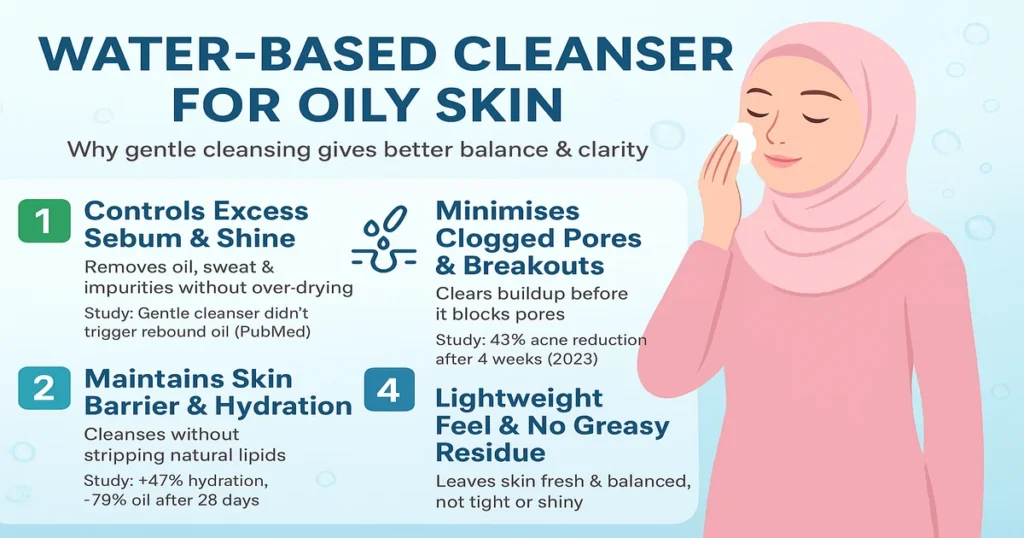
1: Controls Excess Sebum & Shine
Oily skin is defined by overactive sebaceous glands producing more oil (sebum) than your skin needs.
A water-based cleanser for oily skin uses mild surfactants that break down this excess oil plus “water-soluble impurities” (sweat, pollution, grime) and rinse them away effectively.
- clinical study From Pubmed by Draelos Z.D. on subjects with normal to oily skin.
- a daily gentle cleanser did not damage the skin barrier nor trigger additional sebum overcompensation — this suggests you can cleanse without worsening oiliness (Source).
As a result, your skin will feel less slick, your T-zone will reflect less light, and your pores will appear more refined.
2: Minimises Clogged Pores & Breakouts
Because oily skin often means more oil + more dead skin cells + more sweat, the risk of pores getting blocked (and turning into blackheads or pimples) is higher.
Using a gel cleanser for oily skin that is water-based helps lift away that build-up before it becomes visible.
- A study published in Int J Res Dermatol. (Kumari P et al., 2023) of 619 oily and mixed-skin subjects found that.
- after 4 weeks use of a cleansing routine, there was a 43.46% reduction in acne, 44.33% fewer acne spots, and 46.54% less post-inflammatory hyper-pigmentation. Source
So the benefit of Gentle wateer based cleanser for oily skin, isn’t just feeling less oily—it’s visibly clearer skin.
3: Maintains Skin Barrier & Hydration
One of the biggest mistakes with oily skin is choosing a super harsh, high-pH cleanser that strips the protective lipid barrier.
That often backfires. A non-comedogenic water-based cleanser helps clean without compromising your skin’s barrier.
- For example, a 2025 study by Xia Y. et al. on a ceramide-containing glycinate-based cleanser for oily skin found after 28 days:
- hydration increased by 47.37%, transepidermal water loss (TEWL) decreased by 13.42%, and sebum content reduced by 79.18% Source.
By keeping your barrier intact, you reduce irritation, keep your skin calmer, and allow your overall skincare regime (serums, moisturisers) to perform better.
4: Lightweight Feel & No Greasy Residue
A common complaint with oily skin is “I feel clean but still shiny” or “I wash, and then my skin feels tight and dries out, and then becomes oily again”.
A good lightweight cleansing gel for oily skin with a water-based formula gives you a fresh, non-greasy finish and a “reset” without that uncomfortable tightness.
- A 2019 botanical cleanser study (Weber N. et al.) found significant reduction in sebum levels (p < .01) by day 17 in oily skin areas, confirming that a gentle cleanser can do the job without over-drying.
In other words: your skin feels clean, comfortable—and looks balanced.
So, we’ve learned that gentle water-based cleansers for oily skin aren’t just hype — they’re your secret weapon against that “why am I shiny again?” moment halfway through the day.
They help keep oil in check, pores clear, and your skin feeling fresh instead of fried. But even the best cleanser won’t work its magic if you don’t use it the right way (yes, there’s a bit of an art to washing your face!).
Let’s move on to how to actually fit it into your skincare routine — because the right technique can make the difference between “meh” and “wow, my skin looks amazing!”
How to Use Water-Based Cleanser for Oily Skin
To use a gentle water-based cleanser for oily skin, start by wetting your face with lukewarm water.
apply a small amount of cleanser, and gently massage it for about a minute—especially around your T-zone where oil builds up the most.
Rinse thoroughly, pat your skin dry with a clean towel, and follow up with your usual moisturizer or serum. It’s that simple — but doing it right makes all the difference for balanced, shine-free skin.
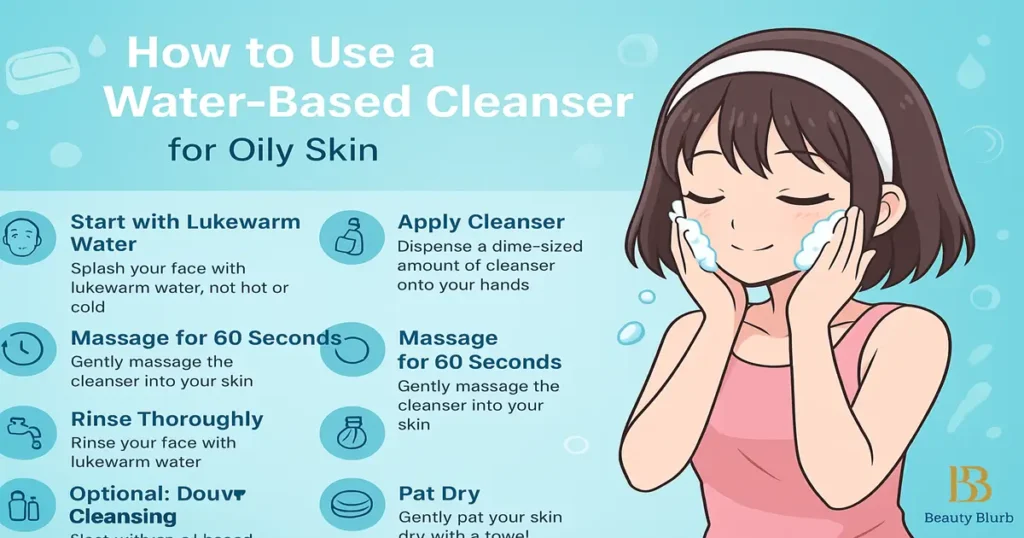
🪞 Step 1: Start with Lukewarm Water
- Splash your face with lukewarm water, not hot or cold. This helps loosen dirt and excess sebum without shocking your skin or damaging your moisture barrier.
- 👉 Pro tip: Lukewarm water opens your pores just enough to allow your gentle water-based cleanser to do its job effectively.
🫧 Step 2: Apply a Small Amount of Cleanser
- Dispense a dime-sized amount of your pH-balanced gel cleanser or foam cleanser for oily skin into your hands.
Rub your palms together to activate the formula — this helps it spread evenly and lather properly for a deeper clean.
🔄 Step 3: Massage for 60 Seconds
- Using your fingertips, gently massage the cleanser in circular motions for about one minute.
- Focus on oily areas like the T-zone (forehead, nose, and chin), where sebum production is usually the highest. Avoid scrubbing too hard — your skin needs kindness, not combat.
- 💡 Why 60 seconds? According to dermatologists like Dr. Whitney Bowe, cleansing for a full minute allows surfactants and actives (like salicylic acid or tea tree extract).
to properly dissolve oil and impurities without over-drying your skin.
💦 Step 4: Rinse Thoroughly
- Rinse off with lukewarm water until no residue remains. Any leftover cleanser can mix with sebum later and clog pores, defeating the purpose of your oil control routine.
- Try not to rush — this step is what leaves your skin feeling truly fresh and breathable.
🧻 Step 5: Pat Dry, Don’t Rub
Use a soft, clean towel and gently pat your face dry. Rubbing can cause irritation, especially around the cheeks and jawline. You want to keep your skin barrier healthy and calm.
🌙 Step 6: Follow with Your Skincare Routine
Immediately after cleansing, follow up with an oil-free moisturizer, a niacinamide serum, or even a lightweight SPF if it’s your morning routine.
Oily skin still needs hydration — skipping moisturizer can actually make your glands produce more oil to compensate.
💧 Optional Step: Double Cleansing (For Makeup or Sunscreen Users)
If you wear makeup or heavy sunscreen, start with an oil-based cleanser for oily skin first to melt down waterproof products and sebum plugs.
Then follow with your mild water based cleanser for oily skin as the second step for a deep, residue-free finish.
This double cleansing routine for oily skin is the secret behind that “glass skin” clarity seen in Korean skincare — and yes, it works wonders when done consistently.

💡 If you’re building your full skincare routine, don’t stop here — check out our complete guide on Skincare Routine for Oily Skin. It shows you how to layer your cleanser, toner, and moisturizer like a pro.
Common Mistakes to Avoid When Cleansing Oily Skin
Even with the best water-based cleanser for oily skin, a few wrong moves can undo all your effort. If your skin still feels greasy, tight, or breaks out often, you might be guilty of one (or more) of these cleansing mistakes:
❌ 1. Overwashing Your Face
Washing your face three or four times a day won’t make it less oily — it’ll actually do the opposite.
Over-cleansing strips away natural oils, forcing your skin to produce even more sebum to compensate. Stick to cleansing twice daily with a gentle face wash for oily skin — morning and night are enough.
❌ 2. Using Hot Water
Hot water may feel satisfying, but it weakens your skin barrier, dries out the surface, and triggers redness. Always rinse with lukewarm water; it effectively removes impurities without irritating or dehydrating your skin.
❌ 3. Choosing Harsh or High-pH Cleansers
Cleansers that leave your face feeling “squeaky clean” usually have a high pH or contain sulfates. That tight feeling isn’t freshness — it’s barrier damage.
Opt for a pH-balanced cleanser that maintains your skin’s natural acidity (around 5.5).
❌ 4. Skipping Moisturizer After Cleansing
One of the biggest myths is that oily skin doesn’t need moisture. In reality, skipping moisturizer sends your skin into oil-production overdrive.
Always follow your oil control routine with a lightweight, non-comedogenic moisturizer to keep hydration balanced.
❌ 5. Ignoring Double Cleansing (When Needed)
If you wear sunscreen or makeup, a single cleanse might not be enough. Forgetting the double cleansing step can leave residue behind, clogging pores and dulling your complexion.
Use an oil-based cleanser first, then your water-based cleanser for a truly clean finish.
❌ 6. Scrubbing Too Hard
Scrubbing might feel like it’s “deep cleaning,” but it actually inflames the skin and spreads bacteria. Gentle circular motions for about 60 seconds are all you need. Remember: it’s about technique, not force.
❌ 7. Using the Same Face Cloth Too Long
If you use a face cloth as part of your cleansing routine for oily skin, make sure to change it daily or every other day.
A damp cloth that doesn’t dry out overnight (on a radiator, for example) becomes a breeding ground for bacteria.
and if it smells, that’s your warning sign! Keeping your cleansing tools fresh is just as important as using a gentle cleanser itself.
How do I choose a water based cleanser For oily skin (key ingredients)
Quick answer: Look for a pH-balanced, non-comedogenic, water-based cleanser (gel or gentle foam) that contains targeted actives like salicylic acid or niacinamide if you have acne-prone oily skin.
and avoid harsh sulfates or high-alcohol formulas. Use pump packaging, fragrance-free formulas when possible, and prefer surfactants that are gentle (e.g., coco-glucoside) to protect your skin barrier.

- Pick a pH-balanced formula (around pH 5–6).
Why: A slightly acidic / skin-friendly pH preserves the acid mantle and reduces barrier disruption; harsh, high-pH soaps cause dryness → rebound oil.
Dermatologists consistently advise using gentle, pH-balanced cleansers rather than harsh detergents. - Choose the right texture: gel or gentle foam (water-based).
Why: Lightweight gel cleansers for oily skin and foaming water-based cleansers remove excess sebum and water-soluble grime without heavy emollients that can feel greasy.
If you want the best water-based cleanser for oily skin, start with gel/foam textures.
Look for proven actives — salicylic acid and/or niacinamide — where appropriate.
- Salicylic acid (BHA) is comedolytic and penetrates into pores to reduce clogging; clinical reviews and trials support its use in cleansers and skincare for acne and oily skin.
- Niacinamide (2%) has clinical evidence for reducing sebum production and improving skin texture — a helpful supportive ingredient for oily skin.
Note: Cleansers have short contact time, so higher-impact treatments often live in leave-on products — but having these actives in a cleanser helps as part of an overall routine.
- Prefer gentle surfactants (not SLS/SLES).
Why: Gentle surfactants like coco-glucoside or decyl-glucoside clean without stripping. Avoid harsh sulfates (SLS/SLES) and denaturing alcohols that can irritate and trigger rebound oil.
Recent skincare guidance recommends mild surfactants for combination/oily skin. - Choose non-comedogenic and oil-free labels (but read ingredients).
Why: “Non-comedogenic” reduces the chance of pore-clogging. Still scan the INCI for heavy emollients or occlusives if you want a truly lightweight finish. - Fragrance-free or low-fragrance — especially if acne/prone or sensitive.
Why: Fragrance can irritate and cause inflammation; dermatology advice commonly recommends fragrance-free options to reduce irritation risk. Source: Académie Américaine de Dermatologie. - Dermatologist-tested / clinically supported products are a plus.
Why: Brands that publish clinical data or that specifically formulate with dermatologists (e.g., CeraVe, La Roche-Posay) give extra confidence about barrier-friendly formulations.
Always check for published evidence or physician endorsements. - Packaging & hygiene: pump bottles are better than jars.
Why: Pumps reduce contamination; if you use a cloth or sponge, change/dry it daily to avoid bacterial growth (important for oily/acne-prone skin).
Consider proven ingredient combos for extra benefits:
- Zinc PCA (oil control), green tea extract (soothing/antioxidant), glycerin or hyaluronic acid (light hydration). These help balance oil control with barrier support.
Trial & contact time awareness:
- If your cleanser contains active ingredients (salicylic acid, low % benzoyl peroxide), let it stay on the skin ~30–60 seconds during the massage step to increase efficacy.
but follow product guidance and avoid overuse that causes irritation. Clinical and expert guidance note that brief contact times can still be effective for certain actives.
| Criterion | Why it matters | What to look for (examples) | Keywords to include |
|---|---|---|---|
| pH-balanced | Protects the skin’s acid mantle and prevents barrier damage that can trigger rebound oil. | Product label: “pH balanced” or formulas ~pH 5.0–6.0; avoid traditional soap bars. | pH-balanced cleanser • gentle cleanser for oily skin |
| Gentle surfactants | Cleans without stripping — reduces irritation and the cycle of excess sebum production. | Look for coco-glucoside, decyl-glucoside; avoid SLS/SLES and denaturing alcohols. | gentle water-based cleanser • non-stripping surfactants |
| Non-comedogenic & oil-free | Helps prevent clogged pores and blackheads — critical for oily and acne-prone skin. | Label: non-comedogenic, oil-free; light gel or foam textures rather than creamy cleansers. | non-comedogenic water-based cleanser • oil-free cleanser |
| Active ingredients | Targeted actives (BHA, niacinamide) help control sebum, unclog pores and calm inflammation. | Salicylic acid (BHA) 0.5–2% in cleanser, niacinamide, zinc PCA, green tea extract. | salicylic acid cleanser • niacinamide cleanser • oil control cleanser |
| Fragrance & irritation | Fragrance can cause redness/irritation and worsen acne — avoid when possible. | Fragrance-free or low-fragrance formulas; “dermatologist-tested” is a plus. | fragrance-free cleanser • dermatologist-tested cleanser |
| Packaging & hygiene | Pump bottles reduce contamination; hygiene matters for oily/acne-prone skin. | Pump or tube packaging; avoid open jars; change face cloths daily. | pump bottle cleanser • cleanser hygiene |
| Clinical / derm backing | Products with published clinical data or dermatologist input are more likely barrier-friendly and effective. | Brand clinical studies, “developed with dermatologists”, or trial results on oily skin. | dermatologist-approved cleanser • clinically tested cleanser |
| Quick checklist | pH-balanced • gentle surfactants • non-comedogenic • gel/foam texture • salicylic acid or niacinamide (if needed) • fragrance-free • pump hygiene | best water-based cleanser for oily skin • gentle water-based cleansers for oily skin | |
Best water based cleanser for oily skin (top picks)
You might be wondering, “Which cleansing water is best for oily skin?” If you want something dermatologist-approved and gentle enough for daily use, La Roche-Posay Toleriane Purifying Foaming Cleanser and CeraVe Foaming Facial Cleanse are top-tier picks. Both formulas balance oil without stripping your skin — perfect if you struggle with shine or acne-prone skin.
1. CeraVe Foaming Facial Cleanser
This dermatologist-recommended classic is a staple for oily and acne-prone skin. It contains niacinamide, ceramides, and hyaluronic acid, which help balance oil while repairing the skin barrier.
How it performs on oily skin:
Foams gently and leaves the face feeling fresh without that tight, squeaky sensation. It’s especially great if your skin gets greasy by midday.
Pros & Cons:
✅ Pros: Non-stripping, fragrance-free, developed with dermatologists.
❌ Cons: May feel slightly thick for very oily skin types.
2. Paula’s Choice CALM Ultra-Gentle Cleanser
A soothing, pH-balanced cleanser formulated with glycerin and soothing plant extracts. Designed for sensitive, oily, and combination skin, it removes impurities without disrupting your barrier.
How it performs on oily skin:
Light foamy texture that instantly calms redness and irritation — ideal if you deal with both oil and sensitivity.
Pros & Cons:
✅ Pros: Fragrance-free, very gentle, reduces redness.
❌ Cons: Not ideal for heavy makeup removal.
3. The Ordinary Glucoside Foaming Cleanser
This cleanser uses plant-derived glucosides as gentle surfactants, effectively removing oil and grime while maintaining hydration.
How it performs on oily skin:
Leaves the skin feeling clean and smooth without over-drying. Users report improved texture and fewer breakouts after consistent use.
Pros & Cons:
✅ Pros: Budget-friendly, sulfate-free, suitable for sensitive oily skin.
❌ Cons: Might not remove waterproof sunscreen completely.
4. Dermatica Balancing Glycerin Gel Cleanser
Developed by dermatologists, this soap-free gel uses glycerin and panthenol to cleanse while keeping the moisture barrier strong — ideal for those who over-exfoliate or use acne treatments.
How it performs on oily skin:
Balances oil without stripping. It’s particularly beneficial for acne-prone or dehydrated oily skin types.
Pros & Cons:
✅ Pros: Clinically tested, hydrating, fragrance-free.
❌ Cons: Available mainly through the official site.
5. La Roche-Posay Effaclar Purifying Foaming Gel
A French pharmacy favorite containing zinc pidolate to help reduce excess oil and shine. Recommended by dermatologists worldwide.
How it performs on oily skin:
Cleanses deeply and leaves a matte, refreshed finish — without over-drying.
Pros & Cons:
✅ Pros: Tested on sensitive skin, effective oil control, soap-free.
❌ Cons: Slightly pricier than drugstore options.
💡 Tip: If you prefer a more natural or K-beauty approach, you can check out our next section — Best Korean Water-Based Cleansers for Oily Skin,
featuring gentle yet powerful options like COSRX Low pH Good Morning Gel Cleanser and more.
what are the Best Korean Water Based Cleansers for Oily Skin
If you’re wondering which Korean water-based cleanser is best for oily skin, the top contenders are COSRX Low pH Good Morning Gel Cleanser and Anua Heartleaf Quercetinol Pore Deep Cleansing Foam — both loved by dermatologists and K-beauty fans alike.
They balance the skin’s natural oils while deeply purifying pores, giving that smooth, glass-skin finish Korea is famous for.
What makes Korean cleansers stand out is their unique mix of gentle surfactants, natural extracts, and low pH formulas that cleanse without damaging your skin barrier.
Whether you’re battling blackheads, acne, or midday shine, these cleansers keep your skin clean, calm, and balanced — not stripped or squeaky.
1. COSRX Low pH Good Morning Gel Cleanser
A cult favorite for a reason — this gentle gel cleanser maintains your skin’s optimal pH balance (around 5.5) and includes tea tree oil to help control sebum.
How it performs on oily skin:
Perfect for morning use. Removes overnight buildup and oil while leaving the skin soft and refreshed.
Pros & Cons:
✅ Pros: Low pH, anti-bacterial, travel-friendly.
❌ Cons: Slight tea tree scent may not suit everyone.
2. COSRX Salicylic Acid Daily Gentle Cleanser
A stronger cousin to the Good Morning Gel, this one targets acne-prone oily skin using salicylic acid to gently exfoliate and unclog pores.
How it performs on oily skin:
Ideal for those who deal with frequent breakouts and congested pores. It provides that deep clean without irritation.
Pros & Cons:
✅ Pros: Fights acne, reduces blackheads, dermatologist-tested.
❌ Cons: Slight dryness possible with overuse.
3. Anua Heartleaf Quercetinol Pore Deep Cleansing Foam
Packed with Heartleaf extract (Houttuynia Cordata), this foam cleanser helps purify pores and calm inflammation. A great choice for oily, sensitive skin that easily flares up.
How it performs on oily skin:
Deeply cleanses pores while soothing redness. Leaves a matte, clean finish without tightness.
Pros & Cons:
✅ Pros: Natural ingredients, anti-inflammatory, perfect for acne-prone skin.
❌ Cons: Foamy texture may feel drying for dehydrated oily skin.
4. Beauty of Joseon Green Plum Refreshing Cleanser
Inspired by traditional Korean Hanbang ingredients, this cleanser uses green plum water and mung bean extract to refresh and detox the skin.
How it performs on oily skin:
Gentle and hydrating — balances oil production while preserving your skin barrier. Great for daily use.
Pros & Cons:
✅ Pros: Hydrating, lightweight, pH-balanced.
❌ Cons: Subtle herbal scent may not appeal to everyone.
5. Isntree Green Tea Fresh Cleanser
Infused with green tea extract and centella asiatica, this cleanser soothes irritation while reducing excess sebum and shine.
How it performs on oily skin:
Cleanses deeply without dryness, making it an excellent option for those prone to redness and oil imbalance.
Pros & Cons:
✅ Pros: Soothing, antioxidant-rich, eco-friendly.
❌ Cons: Bottle design can make product dispensing tricky.
💧 Quick Note:
If you want that signature K-beauty glow without the greasy feeling, opt for low-pH formulas with calming botanicals like Heartleaf, Green Tea, or Centella Asiatica — they’re gentle yet effective for oily, acne-prone skin.
Is Oil or Water-Based Cleanser Better for Oily Skin?
If you have oily skin, a water-based cleanser is usually your best daily choice—it removes excess oil and shine without leaving your skin heavy or dry.
But if you wear makeup or sunscreen, you’ll benefit from a double-cleansing method:
- start with an oil-based cleanser to break down stubborn makeup and sunscreen, then follow with a water-based cleanser to remove sebum, sweat, and everyday dirt.
- The key is to use both in balance for clean, healthy skin without over-drying.
| Feature | Water-Based Cleanser 💧 | Oil-Based Cleanser 🛢️ |
|---|---|---|
| Main Purpose | Removes excess sebum, sweat, and daily dirt | Dissolves makeup, sunscreen, and heavy oil-based impurities |
| Effect on Skin | Lightweight, non-greasy | Very effective on oily impurities but can feel heavier |
| Best for Oily Skin | Yes, perfect for daily use | Yes, usually used occasionally when needed |
| Texture / Form | Gel, foam, or lotion | Oil, cleansing balm, or cream |
| Feel After Use | Refreshing and light | May leave slight hydration if not rinsed thoroughly |
| Usage Tip | Morning and night or after activity | Before water-based cleanser if removing makeup or sunscreen |
In short, don’t stress about picking “the best cleanser.” Focus on your skin type and daily needs:
- Use a water-based cleanser daily to control oil and keep skin clean.
- Use an oil-based cleanser when needed for makeup or sunscreen.
This simple routine keeps your skin balanced, healthy, and shine-free without over-stripping it.
FAQ About mild water based cleanser for oily skin
Gel cleansers are lightweight and great for oily skin as they remove excess sebum without stripping the skin. Foams can also work well, especially if you prefer a lathering sensation, but choose a gentle, non-stripping formula. Always pair with a moisturizer suited for oily skin.
Water-based cleansers remove sweat, dirt, and light oil, but they may struggle with heavy or waterproof sunscreen. For full removal, consider double cleansing: start with an oil-based cleanser, then follow with a water-based cleanser to cleanse thoroughly without over-stripping the skin.
CeraVe Foaming Facial Cleanser is lightweight and contains ceramides and niacinamide, helping control oil and maintain the skin barrier. Cetaphil Gentle Foaming Cleanser is milder and very gentle, ideal if your skin is sensitive or prone to irritation. Either can work for oily skin when used correctly.
Examples include CeraVe Foaming Facial Cleanser, COSRX Low pH Good Morning Gel Cleanser, and The Ordinary Glucoside Foaming Cleanser. They help remove excess oil, unclog pores, and maintain hydration without irritation.
For most oily skin types, cleansing morning and night is fine, but avoid harsh scrubbing. If your skin feels tight or dry, reduce frequency or switch to a gentler formula.
Water-based cleansers remove excess sebum and dirt that contribute to blackheads, but combining with gentle exfoliation (like BHA) helps fully unclog pores and prevent new blackheads.
Choose non-comedogenic, fragrance-free water-based cleansers with soothing ingredients like glycerin, niacinamide, or aloe vera. Avoid harsh sulfates or high-pH formulas to minimize irritation.
Water-based cleansers remove oil, dirt, and makeup residues. Toners balance pH, hydrate, and prep skin for serums or moisturizers. Use both for optimal oily skin care, especially if your toner contains soothing or pore-minimizing ingredients.
Thank you so much for reading! 💜 We hope this guide on water based cleanser for oily skin has helped you understand how to choose the right products and build a routine that works for your skin.
We’d love to hear from you — share your journey in the comments below! What cleanser are you using, and how has it changed your skin? Your experiences can inspire and help others on their oily skin journey.
Don’t forget to subscribe for more tips, product recommendations, and skincare guides that make your routine simple, effective, and fun. Your best skin is just a few steps away! 🌸

Akram Boulaid is a dedicated Skincare Researcher and Analyst with over 7 years of intensive focus on dermatology and cosmetic ingredient science. As a globally recognized expert, his insights have been featured in major international publications, including the New York Post and GB News. A verified expert on Qwoted, Akram connects with health journalists to provide evidence-based analysis. He founded Beauty Blurb to bridge the gap between complex clinical data and practical skincare routines, specializing exclusively in the needs of oily and acne-prone skin through rigorous analysis of peer-reviewed scientific literature.