Does oily skin need moisturizer? Yes, it absolutely does — and I know that might sound a little surprising at first.
If your skin already feels greasy or shiny by midday, the idea of adding even more “moisture” might feel like a no-go. But here’s the thing: moisturizing isn’t about adding oil — it’s about keeping your skin balanced, healthy, and happy.

You might be wondering, why does oily skin need moisturizer in the first place? In this article, I’ll walk you through the science behind oily skin, why skipping moisturizer could actually make things worse, how to choose the right one, and even share some of my go-to products.
Let’s clear up the confusion together — your skin will thank you later 💧✨
Why Does Oily Skin Need Moisturizer?
You’d think that oily skin already has enough moisture—but actually, sebum (that oily film) is not the same as hydration.
Sebum helps protect your skin, but it doesn’t guarantee it’s hydrated. Dermatologists often explain it this way: water-based hydration ≠ oil-based shine
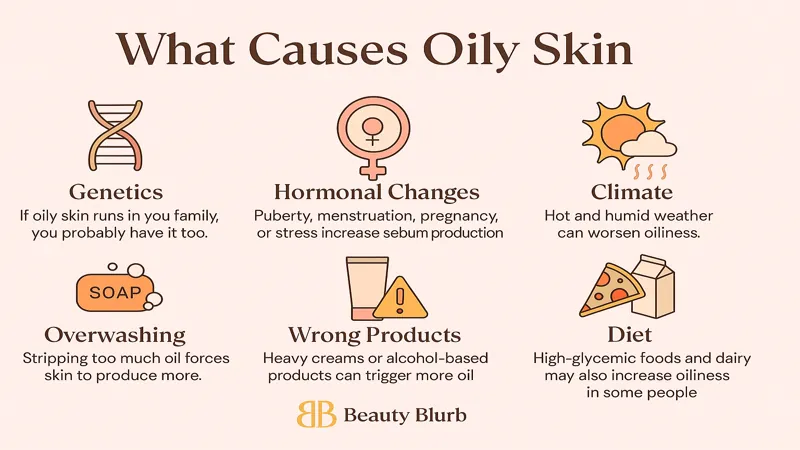
1: What Causes Oily Skin?
Derms agree oily skin stems from overactive sebaceous glands pumping out too much sebum—driven by hormones, genetics, environment, and stress
For example, a study using skin imaging confirmed that oily skin shows higher sebum levels on areas like the forehead, nose, and chin—leading to a shiny T-zone, larger pores, and sometimes acne.
2: Oil Vs Hydration
Even though your skin looks oily, it can still be dehydrated (lacking water). When that happens, your skin panics and produces even more oil to compensate—a vicious cycle. Research and expert opinions make it clear:
- Dermatologist Dr. Claire Chang explains that skipping moisturizer makes your skin overproduce oil to support its barrier. .
- Dr. Lauren Penzi from MDCS Dermatology notes: “skipping moisturizer can trigger more oil & breakouts… dehydrate skin still needs moisture”. Source.
3: 🧴 Acne and Moisturizing
Using powerful acne-fighting ingredients can often leave our skin feeling tight, flaky, or even cracked—especially if it’s oily to begin with. But here’s the deal: medications like topical retinoids (Retin‑A/tretinoin, adapalene) and benzoyl peroxide are amazing at clearing acne, yet they also dry out your skin significantly.
A- Why these ingredients dry out your skin:
Retinoids speed up cell turnover, causing more shedding of skin cells, which leads to dryness and flakiness.
Benzoyl peroxide acts as a sebostatic (reducing oil) and mild keratolytic (exfoliating). While this helps treat acne, it also strips moisture from your skin.
If you skip moisturizer while using these treatments, your skin stays dry and vulnerable—prone to cracks, irritation, and even infection. According to the American Academy of Dermatology, a daily moisturizer is the single best defense against these side effects. Source.
B- What science and experts say:
- A study on acne patients using benzoyl peroxide + tretinoin found that adding a ceramide-containing moisturizer improved tolerance and skin barrier function, boosting adherence without reducing effectiveness. Source.
- Dermatologists like Dr. Joshua Zeichner and those at Cleveland Clinic recommend applying moisturizer both before and after tretinoin to buffer dryness while still benefiting from its acne-clearing effects
So yes, do oily face need moisturizer? — 100% yes, babe. Even if your skin feels shiny or greasy, it still craves water-based hydration to stay balanced. Without it, your skin can go out of whack — producing more oil, clogging pores, triggering breakouts, and leaving you frustrated. Moisturizing isn’t optional; it’s one of the key steps to keeping oily skin happy, calm, and under control.
🌿 Which Moisturizer Is Good for Oily Skin?
Now that you know the answer to: Do you need to moisturize if you have oily skin? Let’s talk about how to do it right. It’s not just about slapping on any cream and hoping for the best.
Oily skin has its own personality—it needs moisture, yes, but only the kind that hydrates without suffocating your pores or adding to the shine. The secret? Picking the perfect lightweight, non-comedogenic formula that works with your skin, not against it.
In this part, I’ll walk you through the most effective, dermatologist-approved moisturizers that actually respect oily skin. We’ll also break down what ingredients to look for, what textures feel best, and why the right choice can seriously level-up your glow—without the grease.
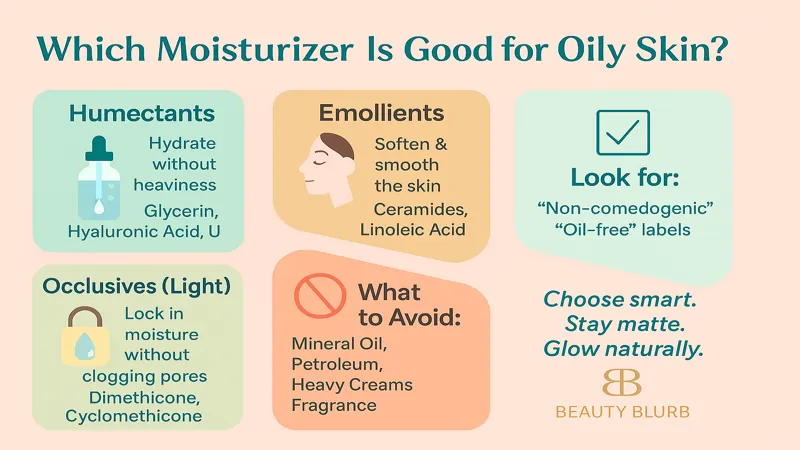
1: Occlusive Agents
Occlusives are ingredients that seal moisture into your skin by forming a thin, hydrophobic layer that slows transepidermal water loss .
- Traditional occlusive agents like petroleum jelly, mineral oil, or lanolin are incredibly effective at preventing moisture loss—but they’re too greasy for oily or acne-prone skin and may feel heavy.
- Instead, silicone-based occlusives, such as dimethicone or cyclomethicone, offer the same moisture-sealing benefits without greasiness. Studies show dimethicone forms a smooth, breathable barrier that’s non-comedogenic, hypoallergenic, and ideal even for acne-prone skin.
- An in vivo study comparing silicones to petrolatum found that silicones reduce transepidermal water loss similarly without creating a heavy occlusive layer—meaning hydration without clogging or shine.
source: www.ncbi.nlm.nih.gov
2: Humectants:
Humectants are skincare workhorses that attract water from deeper skin layers (or humid air) and bring it to the surface, effectively boosting hydration.
- Common humectants include glycerin, hyaluronic acid, urea, sodium lactate, sorbitol, and light alpha hydroxy acids—all excellent for oily skin.
- However, humectants on their own can actually draw moisture away from the skin if there’s no occlusive layer to lock it in. That’s why combining humectants with occlusives (like dimethicone) is key for true hydration without dehydration risk.
3: Emollients
Emollients smooth out the skin by filling in rough patches and flaky areas with oils or waxes.
- Heavy emollients like stearic acid, lauric acid, and fatty alcohols can feel greasy and clog pores on oily skin.
- On the other hand, lighter emollients such as ceramides are ultra-gentle yet powerful. They reinforce and repair the skin barrier without weight or residue.
- Research—like randomised controlled trials using ceramide-rich moisturizers—confirms these formulations improve skin hydration, restore lipid balance, and reduce transepidermal water loss in acne-prone or oily skin types.
4: ✅ Quick Ingredient Guide for Oily Skin Moisturization
- Choose humectants + non-greasy occlusives: This combo delivers hydration that absorbs fast and disappears into your skin without clogging pores.
- Focus on non-comedogenic formulations, especially those labeled safe for acne-prone skin.
- Avoid traditional greasy occlusives like petrolatum or mineral oil, which are too heavy and can cause shine or breakouts.
Yes—Does Oily Skin Need Moisturizer? Definitely. But hydration for oily skin requires a smart formula. Here’s your formula: humectants (like glycerin or HA) + silicone-based occlusive (like dimethicone) + barrier-supporting emollient (like ceramides). Together they hydrate, protect, and balance—without excess oil or pore-clogging residue.
Would you like to move on to the next section: H2 – How to Apply Moisturizer the Right Way? 😊
Best Moisturizer for Oily Skin Dermatologist Recommended
Since moisturizer is one of the most important steps to address oily skin issues, let’s explore three top picks that are dermatologist-tested, backed by clinical studies, and trusted by skincare experts.
1: Neutrogena Hydro Boost Water Gel
Why it works: This lightweight gel-cream is powered by hyaluronic acid—a dermatologist-recommended humectant that delivers 24-hour hydration without heaviness. Clinically proven to strengthen the skin’s moisture barrier after just one use.
Expert backing: Dermatologists like Dr. Melanie Warycha, Hadley King, Dr. Caroline Robinson, and Dr. Kenneth Howe rate it a top choice for oily to combination skin because it hydrates deeply while staying ultra-light. Source.
Real-world feedback: Users with oily, acne-prone skin call it a “holy grail”—effective hydration, no breakouts, no grease.
2: La Roche-Posay Toleriane Double Repair Matte Moisturizer
Why it stands out: This gel-cream combines ceramide-3, niacinamide, and silica for barrier repair and all-day shine control. Clinical tests showed improved texture, reduced pores, and less shine within just one.
Dermatologist trusted: Formulated under strict dermatological standards, it’s lightweight, non-comedogenic, and ideal for oily or sensitive skin.
3: CeraVe Oil Control Gel‑Cream
Benefits: A mattifying gel-cream that combines ceramides, hyaluronic acid, niacinamide, and oil-absorbing silica. It hydrates, rebalances sebum, and maintains matte skin all day.
Derm-approved: CeraVe dermatologists often recommend it for oily skin routines due to its gentle yet effective hydration.

Moisturizer is one of the most essential steps in solving oily skin problems. Now that you know how to choose the right one, you’re already one step closer to balanced, healthy skin.
To take things even further, check out this article: Dermatologist Recommended Skin Care Routine for Oily Skin. It’ll help you build a full routine that fits your skin’s needs—so you can finally get that clear, shine-free glow you deserve. 💧✨
🕒 Best Time & Right Amount: How to Use Moisturizer for Oily Skin
Now that we’ve answered the big question—Does oily skin need moisturizer? (yes, 100%)—you might be wondering when and how much to actually apply. Don’t worry, girl, I’ve got you. Timing and technique matter just as much as the product itself.
1: ☀️ When to Apply Moisturizer
Morning and night—no skipping! Apply your moisturizer twice daily, right after cleansing and before sunscreen in the morning or before bed at night.
This helps lock in hydration and support your skin’s natural barrier. And here’s a tip: apply it while your face is still slightly damp to really seal in moisture.
According to the American Academy of Dermatology, applying moisturizer on damp skin maximizes absorption and keeps skin balanced—even if it’s oily.
At night, your skin goes into repair mode. A lightweight, oil-free moisturizer helps calm irritation and replenish what acne treatments or cleansers strip away. Yes, even oily skin needs that nighttime love. 💕
2: 💧 How Much Moisturizer to Use for Oily Skin
Less is more—but skipping is a no. Use about a nickel-sized amount for your whole face. That’s just enough to hydrate without overwhelming your skin or leaving it shiny. Dab small dots onto your forehead, cheeks, nose, and chin, then gently smooth it out with upward strokes.
- Dermatologists recommend using a thin layer—just enough to cover the skin evenly without clogging pores or triggering excess oil production.
✅ Quick Tip: Stick to non-comedogenic formulas and avoid over-applying. Too much product can actually backfire, causing congestion and unwanted shine.
☀️ Does Oily Skin Need Moisturizer in Summer?
You might think your oily skin gets a free pass in summer—but let’s clear that up. Just because your skin feels greasy doesn’t mean it’s actually hydrated. In fact, all that sweating, sun exposure, and air conditioning can strip your skin of essential moisture.
And guess what? When your skin feels dehydrated, it produces even more oil to compensate. That’s why, yes—oily skin still needs moisturizer in summer.
Dermatologist Dr. Shari Marchbein explains that “hydration and oil are two different things. Even oily skin needs proper hydration to stay balanced and avoid inflammation or breakouts.”
(Source: American Academy of Dermatology)
🧴 What to Use Instead of Skipping
During the hot season, go for:
- Gel-based or water-based moisturizers.
- Ingredients like hyaluronic acid, niacinamide, and aloe vera.
- Always choose products labeled “non-comedogenic” and oil-free.
These formulas feel weightless on the skin and give you hydration without adding shine or clogging your pores.
✅ Pro Tip
Keep your moisturizer in the fridge—it’s like a mini spa moment and helps calm skin after sun exposure! 😌
💬 Still unsure what your summer routine should look like?If you’re ready to give your oily skin the care it deserves all summer long, check out this complete guide:
👉 Best Summer Skincare Routine for Oily Skin — no doubt it’ll make a huge difference! 🌿💧
By now, you probably see it clearly—does oily skin need hydration? Absolutely. Hydrating your skin the right way is the secret to calming oiliness, preventing breakouts, and keeping your skin smooth and balanced all day long.
But if you still have a few questions swirling in your mind (and that’s totally normal!), don’t worry—I’ve got you. 💕
Let’s walk through the most common questions about oily skin and moisturizers, so you can feel confident in every step of your routine. 👇 Ready? Let’s go!
❓ FAQ: Does Oily Skin Need Moisturizer?
So… now you truly know the answer to “Does oily skin need moisturizer?” It’s a big YES—your skin needs hydration just as much as any other type. With the right product and a gentle routine, you’ll start to notice your skin looking more balanced, less shiny, and way healthier. 🌿✨
Now it’s your turn: try one of the moisturizers we talked about, and tell me how your skin feels after a few days! 💕
And if you’re still dealing with something specific—like clogged pores, acne flare-ups, or just constant shine—drop a comment below. I’d love to help you figure it out. You’re not alone in this skincare journey. Let’s glow together, naturally. 💧

Akram Boulaid is a dedicated Skincare Researcher and Analyst with over 7 years of intensive focus on dermatology and cosmetic ingredient science. As a globally recognized expert, his insights have been featured in major international publications, including the New York Post and GB News. A verified expert on Qwoted, Akram connects with health journalists to provide evidence-based analysis. He founded Beauty Blurb to bridge the gap between complex clinical data and practical skincare routines, specializing exclusively in the needs of oily and acne-prone skin through rigorous analysis of peer-reviewed scientific literature.