
If you’ve ever wondered, Is Oil Cleanser Good for Oily Skin? the short answer is yes—when you choose the right formula and use it correctly.
While it might feel counterintuitive to apply oil to already oily skin, certain lightweight cleansing oils can actually help balance sebum, melt away makeup, and leave your skin feeling clean yet hydrated.

And if you’re asking yourself, “is oil cleansing good for oily acne-prone skin?”—we’re going to explore that too.
In this guide, I’ll walk you through the science behind oil cleansing, the best and worst oils for your skin type, step-by-step tips to get it right, and what experts say about making it part of your daily routine.
What Is Oil Cleanser and How It Works
An oil cleanser is a skincare product designed to gently remove makeup, sunscreen, dirt, and excess sebum using—you guessed it—oil. Unlike harsh foaming cleansers, cleansing oils are formulated with lightweight plant-based oils that bind to the oils and impurities on your skin.
When you massage it onto dry skin, it melts away stubborn makeup and unclogs pores without stripping your natural moisture.
Here’s the beauty of it: oil cleansing works on the principle of “like dissolves like”. This means the oil in the cleanser attaches to the oil on your skin, lifting away buildup while keeping your skin soft and balanced.
It’s why many women with oily or even oily acne-prone skin are surprised at how fresh and hydrated their face feels after using a cleansing oil.
Whether you use it alone or as the first step in a double cleansing routine, it can be a game-changer for achieving clean, healthy-looking skin without that tight, dry feeling.
Why Is Oil Cleanser Good for Oily Skin: Top 4 Benefits
If you’ve ever doubted whether an oil cleanser could actually help your oily skin, let’s set the record straight. The right oil cleansing routine doesn’t just remove makeup and dirt—it works with your skin, not against it.
Backed by dermatologists and skincare experts, oil cleansers can balance sebum production, protect your skin barrier, and even reduce breakouts when used correctly.
In this section, we’ll look at the key benefits of using an oil-based cleanser for oily skin and oily acne-prone skin, so you’ll know exactly why it deserves a place in your daily beauty ritual.

1: Deep Cleansing Without Stripping Your Skin
A high-quality oil cleanser gently melts away makeup, SPF, and excess oils, cleansing deeply without harsh suds or skin-tightening effects.
That means your oily skin can stay clean and refreshed without triggering rebound oiliness or irritation.
Scientific Insight
- Typology highlights a 2019 study by Chang et al., where women applied cleansing oil on one cheek and micellar water on the other.
- Two hours later, the oil-cleaned side retained more of its natural hydrolipidic film, without stimulating extra sebum production.
- It demonstrated better protection for the skin barrier compared to micellar water. Source.
2: Supports Your Skin Barrier & Hydration
When cleansers strip away the skin’s natural oils, your skin may produce more sebum and lose hydration, leading to dryness and breakouts. A gentle oil cleanser helps preserve your skin’s barrier, keeping it comfortable, balanced, and less prone to overcompensation.
Scientific study:
- A clinical trial on a gentle facial cleanser for normal to oily—especially acne-prone skin—showed it effectively cleaned pores without damaging the skin barrier or causing sebum rebound.
- The study measured TEWL, sebum production, and acne symptoms, concluding that barrier-friendly cleansers support deep cleansing without triggering oil overproduction. Source.
3: Ideal for Removing Makeup, Sunscreen & Surface Debris
Oily skin tends to trap dirt, pollution, and long-lasting makeup throughout the day. Oil cleansers dissolve these impurities easily and more gently than intense scrubbing with foam cleansers—which can irritate your skin or worsen breakouts.
Backed by science:
- Moreover, Marie Claire affirms that lightweight, non-comedogenic oils (e.g., jojoba, grapeseed, squalane) cleanse oily and acne-prone skin effectively—embodying the principle of “like dissolves like” without stripping natural oils.
- Dermalogica explains that oil cleansers break down stubborn residues—like waterproof mascara, physical SPF, and lipstick—safely, while smoothing and nourishing your skin without clogging pores.
4: Helps Maintain Skin’s Microbiome Balance
A healthy skin barrier is essential for keeping “good” bacteria that protect against infections like acne. Harsh cleansers can disrupt this delicate ecosystem. Oil cleansers, by contrast, cleanse gently while preserving your microbiome balance.
What sience say:
WebMD notes that oil cleansing tends to maintain the skin’s beneficial microbes, unlike more aggressive surfactant-based washes—helping reduce the risk of acne and other skin infections.
Summary of Key Benefits (Quick View)
- Deep cleansing without dehydration or triggering excess oil production.
- Barrier protection, supporting hydration and reducing overproduction of sebum.
- Gentle removal of makeup, sunscreen, and surface buildup without irritation.
- Microbiome support, keeping protective skin bacteria intact and balanced.
So, Is Oil Cleanser Good for Oily Skin?
Yes—it can be a game-changer when used correctly. The right oil cleanser gently removes excess sebum, makeup, and impurities without stripping your skin, helping it stay balanced and hydrated.
For oily or oily acne-prone skin, lightweight, non-comedogenic oils like jojoba or grapeseed work best, making oil cleansing not just safe, but one of the most effective ways to keep your complexion clear, fresh, and comfortable.
What Type of Oil Cleanser Is Best for Oily Skin?
Maybe you’ve been wondering, “How do I choose a cleansing oil?” With so many options out there, it can feel overwhelming—but the good news is, once you know what to look for, finding your perfect match becomes easy and fun.
Here’s what to keep in mind when choosing:
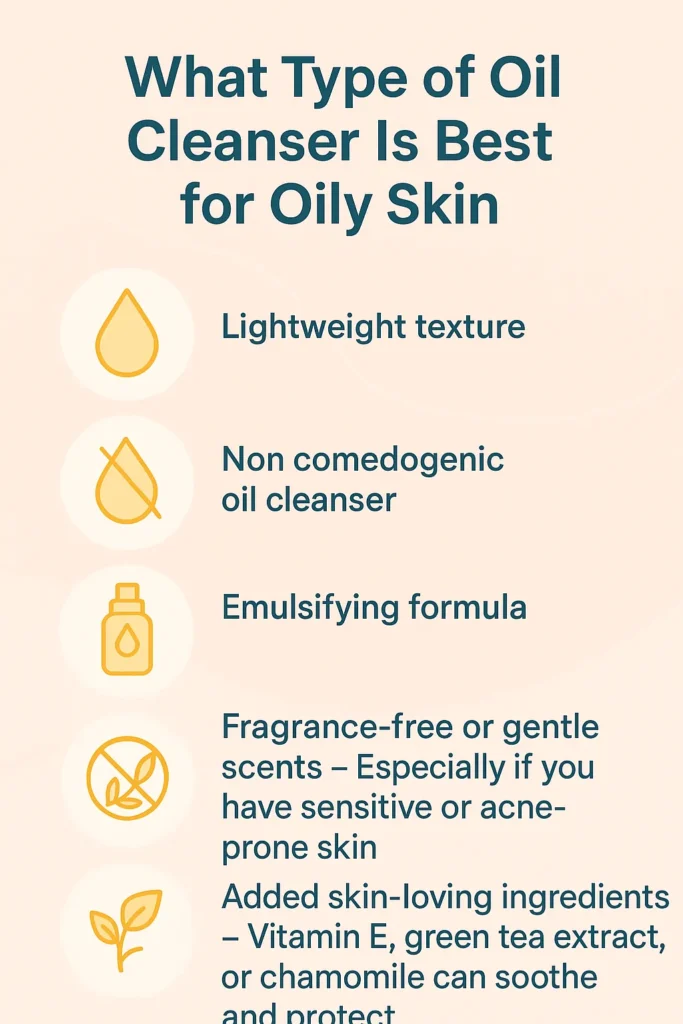
- Lightweight texture .
- non comedogenic oil cleanser.
- Emulsifying formula.
- Fragrance-free or gentle scents – Especially if you have sensitive or acne-prone skin.
- Added skin-loving ingredients – Vitamin E, green tea extract, or chamomile can soothe and protect.
Final tip: Choosing the right cleansing oil is all about balance—finding one that melts away makeup and excess oil without leaving your skin feeling stripped or sticky. With the right product, oil cleansing can become your favorite step in your skincare routine, giving you that fresh, soft glow every time.
Best Ingredients in Oil Cleanser for Oily Skin
After you’ve learned is cleansing oil good for acne & oily skin, it’s time to talk about what’s inside the bottle. Not all oils are created equal—some are perfect for balancing oily skin, while others can clog pores or trigger breakouts. Choosing the right ingredients makes all the difference in how your skin feels after cleansing.
| Ingredient | Why It’s Great for Oily Skin | Extra Skin Benefits |
|---|---|---|
| Jojoba Oil non-comedogenic | Mimics natural sebum; lightweight texture helps balance shine without clogging pores. | Supports barrier function; can reduce the look of sebaceous filaments over time. |
| Grapeseed Oil | Fast-absorbing and light; a favorite base in cleansing oils for oily & combo skin. | Rich in antioxidants; helps refine the look of enlarged pores. |
| Squalane | Ultra-light emollient that won’t leave residue; excellent for oily acne-prone skin. | Strengthens the skin barrier and boosts softness without heaviness. |
| Sunflower Seed Oil | Gentle and low-comedogenic; cleanses effectively without stripping. | Soothes irritation and supports a healthy moisture balance. |
| Hemp Seed Oil | Helps regulate sebum and calm shiny zones. | Rich in omega fatty acids; reduces the look of redness. |
| Camellia Oil | Lightweight and easily absorbed; ideal when you want a silky feel post-cleanse. | Vitamin-rich (A, B, E) to soften and smooth texture. |
Tip: Look for an emulsifying cleansing oil so it rinses clean with water.
Next step: Now that you know the best ingredients for your oily skin, let’s move on to how to use an oil cleanser correctly to get the most out of these skin-loving oils.
How to Use Oil Cleanser for Oily Skin
You might be asking, “Do dermatologists recommend cleansing oil?” The answer is yes—many skin experts agree that when used correctly, oil cleansers can be a gentle yet effective way to clean oily skin without damaging its natural barrier. The secret is all in the technique.
Step-by-step guide:
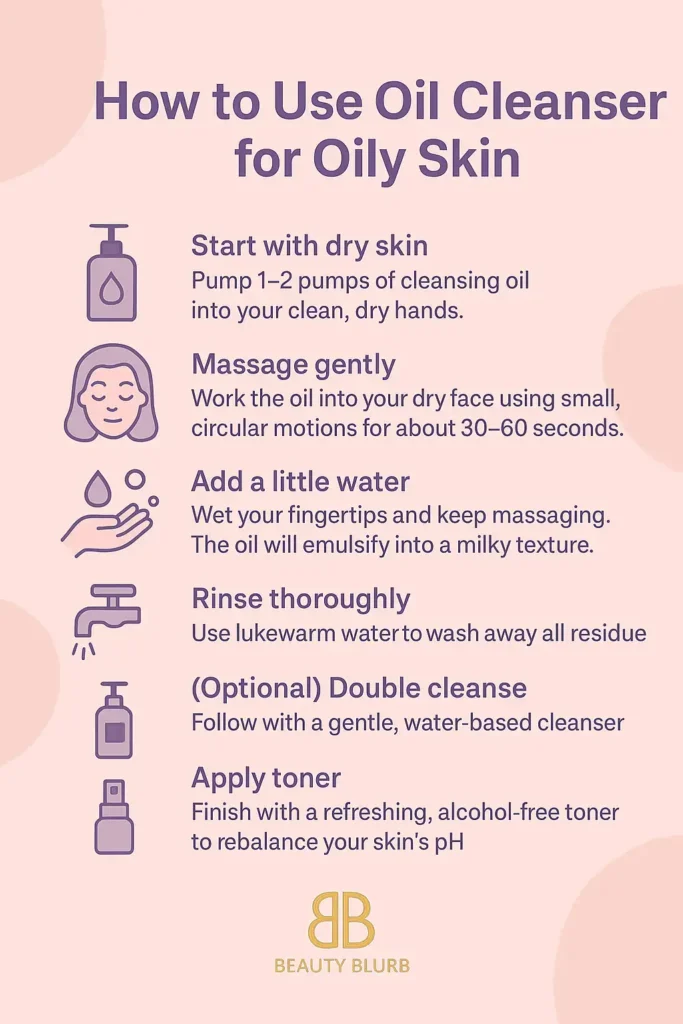
- Start with dry skin – Pump 1–2 pumps of cleansing oil into your clean, dry hands.
- Massage gently – Work the oil into your dry face using small, circular motions for about 30–60 seconds. Focus on areas with makeup or heavy SPF.
- Add a little water – Wet your fingertips and keep massaging. The oil will emulsify into a milky texture.
- Rinse thoroughly – Use lukewarm water to wash away all residue.
- (Optional) Double cleanse – If you wear heavy makeup or have very oily skin, follow with a gentle, water-based cleanser.
- Apply toner – Finish with a refreshing, alcohol-free toner to rebalance your skin’s pH and prep it for the next steps in your skincare routine.
Final note: The right technique helps you get all the benefits—clean pores, balanced sebum, and a soft, hydrated glow—without any greasy after-feel.
Pro tip: For a complete dermatologist-approved approach to caring for oily skin, check out our guide to the Dermatologist Recommended Skin Care Routine for Oily Skin—it will help you build a routine that keeps your skin clear, balanced, and glowing.
How Often Should I Oil Cleanse For Oily Skin?
I know you might be wondering right now — “Is oil cleansing everyday okay?” The short answer is: it can be, but it really depends on your skin type, lifestyle, and the kind of products you use.
For most people with oily or acne-prone skin, oil cleansing once a day—usually in the evening—is enough. This timing helps remove makeup, sunscreen, and excess sebum that build up during the day without over-cleansing your skin.
If you double cleanse at night, your morning routine can be as simple as rinsing with lukewarm water or using a gentle foaming cleanser.
Signs you might be oil cleansing too often:
- Your skin feels tight or dry after cleansing
- You notice more redness or sensitivity than usual
- Your breakouts are increasing instead of improving
Pro tip: If you wear heavy makeup, waterproof sunscreen, or live in a polluted city, daily oil cleansing can be beneficial. But if your skin is sensitive or dry in certain areas, try doing it every other day to maintain balance.
Common Mistakes to Avoid When Oil Cleansing
If you’ve fallen in love with the soft, dewy feel after using your cleansing oil, you’re not alone. But even the best oil cleanser for oily skin can backfire if you’re making a few common mistakes. These slip-ups can lead to clogged pores, breakouts, or just not getting the results you expect.
- Using the wrong type of oil cleanser: Choosing a product with heavy, comedogenic oils (like coconut oil) can overwhelm oily skin. Instead, go for lightweight, non-comedogenic options like grapeseed oil or jojoba oil.
- Not emulsifying properly: Skipping the step where you add a bit of water to turn the oil milky means you might leave residue behind. This can trap dirt and bacteria.
- Over-cleansing: Yes, even with oil cleansing, more is not always better. Twice a day might strip your skin and trigger more oil production.
- Rubbing too harshly: Your skin isn’t a dirty dish—gentle circular motions are enough to lift away impurities without causing micro-tears.
- Skipping the double cleanse: If you have oily or acne-prone skin, following up with a gentle water-based cleanser helps remove all traces of oil and impurities.
Final Word:
Oil cleansing is a little like cooking a perfect recipe—choose the right ingredients, follow the right steps, and avoid the little mistakes that ruin the dish. When done correctly, it can be one of the most effective steps in your skincare routine for keeping oily skin balanced, clear, and happy.
Best Oil Cleanser for Oily Skin (Korean & Western Products)
I know you’re wondering, “Which oil cleanser is best for oily skin?” And maybe you’re also torn between choosing a Western product or a K-beauty product (Korean beauty).
You’re not alone—both have amazing options, but the right choice really depends on your skin’s needs, budget, and the type of texture you enjoy.
Western oil cleansers often focus on dermatology-tested formulas and minimal ingredients, while Korean oil cleansers tend to feature lightweight, skin-loving botanical blends that leave your skin feeling fresh and pampered.
Which Korean Oil Cleanser is Best for Oily Skin
K-beauty has mastered the art of oil cleansing. Korean oil cleansers are often lightweight, packed with natural extracts, and perfect for balancing oily skin without leaving a greasy residue. Here are some of the top picks you can trust:
| Product | Key Ingredients | Why It’s Great for Oily Skin |
|---|---|---|
| Banila Co Clean It Zero Purity | Natural ester oils, botanical extracts | Gentle, fragrance-free, great for sensitive oily skin |
| The Face Shop Rice Water Bright Light Cleansing Oil | Rice bran oil, jojoba oil | Light texture, brightens dull skin |
| Heimish All Clean Balm | Shea butter, coconut extract | Melts makeup quickly, non-greasy finish |
| Innisfree Apple Seed Cleansing Oil | Apple seed oil, green tea extract | Refreshes skin, controls excess sebum |
💡 Tip: Korean oil cleansers are especially good if you like gentle formulas that combine deep cleansing with a spa-like skincare experience.
If you love the idea of a fresh, glowing complexion the K-beauty way, you’ll want to see the full routine. Check out my Korean Skincare Routine for Oily Skin Guide for a step-by-step plan that pairs perfectly with your new favorite oil cleanser.
Which Oil Based Cleanser is Best for Oily Skin (Western Products)
If you’re leaning toward Western skincare, you might be asking yourself “Which The Best oil cleanser is best for oily skin?”. Western brands often focus on dermatologist-tested formulas, minimal fragrance, and targeted ingredients for controlling excess sebum without over-drying.
Here are some top picks worth trying:
| Product | Key Ingredients | Why It’s Great for Oily Skin |
|---|---|---|
| DHC Deep Cleansing Oil | Olive oil, vitamin E | Deep cleans while keeping skin hydrated |
| Burt’s Bees Facial Cleansing Oil | Coconut oil, argan oil | Natural formula, gentle for daily use |
| Clinique Take The Day Off Cleansing Oil | Safflower seed oil | Fragrance-free, dissolves heavy makeup easily |
| Neutrogena Ultra Light Cleansing Oil | Mineral oil, rosemary extract | Lightweight texture, rinses without residue |
| CeraVe Hydrating Foaming Oil Cleanser | Ceramides, triglycerides, squalane | Cleanses without disrupting skin barrier, dermatologist-approved |
| The Ordinary Squalane Cleanser | Squalane, esters | Gentle, non-comedogenic, removes makeup and impurities |
Korean vs Western Oil Cleansers for Oily Skin – Which One Wins?
When it comes to choosing between Korean oil cleansers and Western oil cleansers for oily skin, it’s not just about where they come from—it’s about texture, ingredients, and the way they fit into your skincare routine. Let’s compare them side-by-side so you can decide which feels like your perfect match.
| Feature | Korean Oil Cleansers | Western Oil Cleansers |
|---|---|---|
| Texture | Lightweight, watery to balm textures | Varies from rich oils to silky liquids |
| Ingredients | Botanical extracts, fermented oils | Dermatology-tested, synthetic + natural oils |
| Price Range | Affordable to mid-range | Mid-range to high-end |
| Best For | Gentle, hydrating daily cleanse | Heavy makeup removal, deep cleanse |
| Fragrance | Often light or natural | Varies from fragrance-free to scented |
My Take:
If you prefer a luxurious, spa-like cleanse that feels light, go for the K-beauty option. But if you want a powerful formula that melts stubborn makeup in seconds, Western cleansers might be your go-to.
Best Skincare Ingredients to Pair with Oil Cleanser for Oily Skin
Knowing which ingredients work well alongside your oil cleanser can help you build a routine that keeps your oily skin balanced, clear, and healthy. Here are some of the best options:
- Salicylic Acid – Helps unclog pores and prevent breakouts without over-drying.
- Niacinamide – Balances oil production, minimizes pores, and soothes redness.
- Hyaluronic Acid – Provides lightweight hydration, perfect after cleansing.
- Green Tea Extract – Rich in antioxidants to calm inflammation and fight environmental damage.
- Witch Hazel – A natural astringent to control excess sebum.
- Aloe Vera – Soothes irritation and refreshes skin post-cleansing.
- Lactic Acid (low concentration) – Gently exfoliates and brightens skin tone.
💡 Tip: Avoid using strong retinoids or high-percentage AHAs right after oil cleansing, as your skin will be more receptive and could become sensitive.
Is water based or oil based cleanser better for oily skin?
If you’ve ever stood in the skincare aisle wondering, “Should I pick a water-based cleanser or stick with oil-based?” — you’re not alone.
For oily skin, the answer isn’t as simple as one being “better” than the other. It’s about understanding what your skin truly needs.
| Type | Best For | Benefits |
|---|---|---|
| Oil-Based Cleanser | Removing sunscreen, waterproof makeup, excess sebum | Maintains moisture barrier, melts away oils and impurities |
| Water-Based Cleanser | Sweat, dirt, and water-based impurities | Lightweight feel, refreshing, preps skin for skincare products |
💡 Pro Tip: Many dermatologists recommend combining both in a double cleanse routine for oily skin — start with an oil-based cleanser to melt away oils and follow with a gentle water-based cleanser to sweep away the rest.
Real user Experience with Double Cleansing For Oily Skin (100 DAY)
In this video, a creator documents her 100-day double-cleansing experiment on oily, acne-prone skin.
She used an oil cleanser first to break down sunscreen/makeup and surface sebum, then followed with a gentle water-based cleanser to remove residue.
Across the 100 days she reports progressive improvements: reduced surface oil, fewer clogged pores, calmer inflammation, and smoother texture — especially after the first month.
The creator highlights consistency, choosing non-comedogenic formulas, and avoiding harsh stripping ingredients.
This real-user experiment is paired with the creator’s observations, short weekly notes, and final verdict on whether double cleansing suited her oily skin type.

Key takeaways — short bullets
- Experiment: Double cleansing every evening for 100 days (oil cleanser → gentle foaming/gel cleanser).
- Early effects (week 1): noticed less surface greasiness and cleaner makeup removal.
- By day 30: fewer clogged pores and blackheads reported.
- By day 60–100: skin texture improved, less inflammation, overall calmer skin.
- Crucial tips from creator: use non-comedogenic oil, avoid over-scrubbing, moisturize, and give the routine time (several weeks) to show results.
Condensed timeline
Week 1 — Immediate effects
- Oil cleanser removes makeup and surface sebum more effectively than water alone.
- The creator felt her face looked cleaner and makeup removal was easier.
Weeks 2–4 — Adapting phase
- Skin adjusts to the new routine. Possible initial texture changes; in this case she reported reduced visible oil and fewer clogged pores by week 4.
Month 2 (Days 31–60) — Noticeable improvement
- Reduced blackheads/clogged follicles and calmer inflammation. Pore appearance may look smaller as surface oil is managed.
Months 3 (Days 61–100) — Final outcome
- Smoother skin texture, less frequent breakouts, and an overall balanced appearance. Creator concludes double cleansing was beneficial when using gentle, non-comedogenic products and avoiding over-drying agents.
What she actually did (routine template)
Products: she recommends non-comedogenic, fragrance-light oil cleansers and gentle second cleansers (no harsh sulfates)
Evening:
- Step 1: Oil cleanser (apply to dry skin, massage to dissolve sunscreen/makeup, emulsify with water).
- Step 2: Rinse and follow immediately with a gentle water-based cleanser (gel/foam).
- Step 3: Pat dry, apply lightweight moisturizer; spot-treat if needed.
Morning: light rinse or gentle cleanser (not heavy double cleanse every AM).
Pro Tip: Pairing double cleansing with the right toner made the results even better — which is why my next experiment was adding toner right after oil cleansing (and yes, it was chef’s kiss amazing).
FAQ Of Is Oil Cleanser Good for acne & Oily Skin
Thank you so much for joining me on this skincare deep-dive! Now that you know the truth behind Is Oil Cleanser Good for Oily Skin,
I hope you feel inspired to give this gentle yet powerful cleansing method a try. It’s not just about removing makeup or excess oil — it’s about treating your skin with love, balance, and care.
If you decide to start your own oil cleansing journey, I’d be so excited to hear about it! 🌸 Share your experience in the comments below — your story might be the push another beauty lover needs to finally try it.

Akram Boulaid is a dedicated Skincare Researcher and Analyst with over 7 years of intensive focus on dermatology and cosmetic ingredient science. As a globally recognized expert, his insights have been featured in major international publications, including the New York Post and GB News. A verified expert on Qwoted, Akram connects with health journalists to provide evidence-based analysis. He founded Beauty Blurb to bridge the gap between complex clinical data and practical skincare routines, specializing exclusively in the needs of oily and acne-prone skin through rigorous analysis of peer-reviewed scientific literature.