Is witch hazel good for oily skin? Yes — witch hazel can be a game changer for oily skin when used correctly.
Thanks to its natural astringent and anti-inflammatory properties, it helps reduce excess sebum, tighten enlarged pores, and calm irritation without stripping your skin’s natural moisture barrier.
What makes it stand out even more is its ability to balance oil production over time — not just give a temporary matte look.
Dermatologists often recommend alcohol-free witch hazel formulas, because they deliver the purifying benefits without causing dryness or disrupting your skin’s microbiome.
In other words, it’s not just good for oily skin — it’s one of the few natural ingredients that actually supports long-term oil control and skin clarity when used wisely.
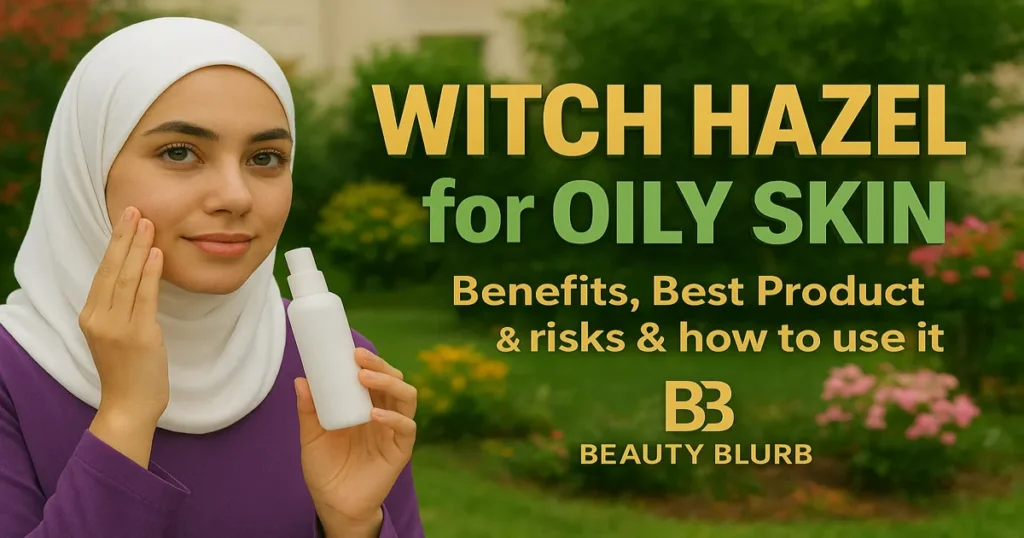
In this guide, we’ll dive deep into Witch Hazel for Oily Skin — how it works, its scientifically proven benefits and potential side effects.
Also you’ll discover the right way to use it, and the best dermatologist-approved products to try in 2025.
Whether you’re battling persistent shine or occasional breakouts, this article will help you decide if witch hazel deserves a permanent spot in your skincare routine.
What Is Witch Hazel and How It Works?
Witch hazel is a natural plant extract derived from the Hamamelis virginiana shrub, native to North America.
For centuries, it’s been used as a natural astringent and soothing remedy for various skin concerns.
In skincare, witch hazel is best known for its ability to tighten pores, balance oil, and calm irritation — making it a popular ingredient in toners and facial cleansers.
When you see “witch hazel toner” on a product label, it usually refers to this botanical extract blended with other hydrating ingredients to refresh and purify the skin.
But what makes witch hazel for skin so effective? Its secret lies in its active compounds — particularly tannins and polyphenols.
These natural antioxidants help remove excess sebum, fight surface bacteria, and reduce inflammation, all while giving your skin a smoother and more refined look.
Scientifically speaking, witch hazel works by constricting pores and strengthening the skin barrier, which helps limit oil buildup and shine throughout the day.
When used consistently, witch hazel extract doesn’t just mask oiliness; it helps your skin find its natural balance — clean, fresh, and comfortably matte.
witch hazel benefits for oily skin
Witch hazel offers several scientifically supported benefits for oily skin — and many are stronger than competitors’ claims.
Below are the most important ones, drawn from recent studies, explained simply, followed by how they help you.
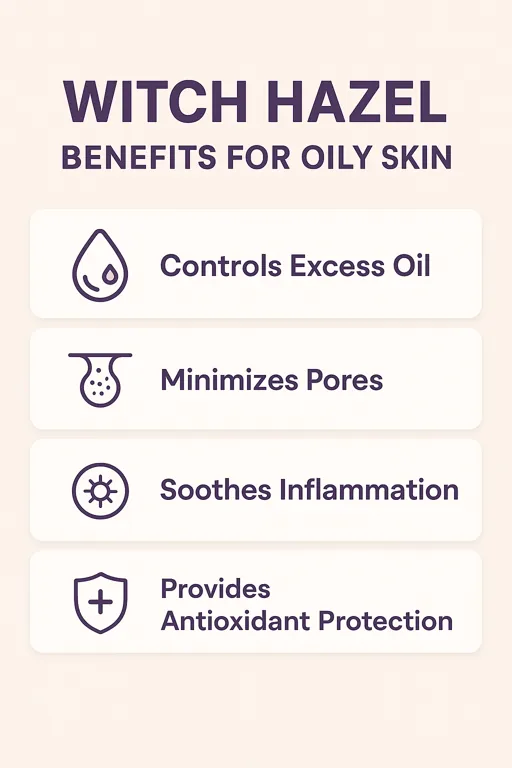
1. Anti-Inflammatory & Skin Barrier Support
Witch hazel extract helps calm inflammation caused by acne or irritation; it also improves skin barrier proteins, reducing sensitivity.
Study: Revealing the Therapeutic Potential (2025, Journal of Cosmetic Dermatology) found that a formula with witch hazel:
- • significantly reduced pro-inflammatory cytokines (IL-6, IL-8) in both 2D cell models and ex vivo human skin.
- • improved barrier function markers like loricrin and transglutaminase-1 vs inflamed skin.
- • lowered UV-induced ROS (4-hydroxynonenal, protein carbonylation) indicating antioxidant protection. Source
2. Anti-Microbial & Antiseptic Properties
Witch hazel extract has compounds (like tannins, hamamelitannin) that can reduce bacteria load, helping prevent breakouts.
Clinical Study: Chemical composition, skin microbiota metabolism, antimicrobial potential… (2025) showed:
- The bark extract of Hamamelis virginiana has strong anti-inflammatory and antimicrobial activity against Staphylococcus aureus.
- In vitro wound healing assays: witch hazel bark & hamamelitannin promoted keratinocyte migration (repair process). PubMed
3. Antioxidant Activity & Protection from Environmental Stress
Witch hazel extract contains polyphenols and flavonoids that neutralize free radicals caused by pollution, UV, etc., protecting oily skin from oxidative damage.
Study: Revealing the Therapeutic Potential (2025) demonstrated:
- UV-induced ROS (reactive oxygen species) significantly reduced by witch hazel formula (both 2% & 8% concentrations) compared to untreated.
- The markers such as 4-hydroxynonenal decreased by ~39-46%.
4. Wound Healing & Skin Repair (Supporting Texture Improvement)
With regular oil control and reduced inflammation, skin repair is supported; texture improves through cellular repair.
Study: From the same Chemical composition… paper (2025):
- Extract and hamamelitannin aided migration of keratinocytes in wound healing assays. PubMed
- Also showed reduction in inflammatory mediator release from keratinocytes and fibroblasts when stimulated, helping skin recover faster.
So, What Does Witch Hazel Do for Oily Skin?
In simple terms, witch hazel helps oily skin find balance — it tones down excess sebum, calms redness, fights acne-causing bacteria, and shields your skin from oxidative stress.
By strengthening the skin barrier and improving its resilience, it doesn’t just “dry” the oil; it helps your skin regulate itself more effectively.
The result is a cleaner, smoother, and naturally matte complexion that still feels hydrated.
But to experience these benefits without irritation, it’s essential to know how to use witch hazel correctly — that’s exactly what we’ll cover next.
How to Use Witch Hazel for Oily Skin

1: Daily Toner Routine (Morning & Evening)
Apply an alcohol-free witch hazel toner using a cotton pad right after cleansing. Focus especially on oily zones (like the T-zone).
- Why: The astringent tannins in witch hazel help bind excess sebum, tightening pores and gently reducing surface oil.
- Scientific Source: A 2024 study “Investigating the Impact of a Novel Witch Hazel Formula” showed that the formula enhanced skin barrier function and reduced oxidative stress (ROS) while preserving hydration. PMC
You can do this once or twice daily, depending on how your skin tolerates it. Always follow with a lightweight, non-comedogenic moisturizer to prevent over-drying.
2: Spot Treatment for Breakouts
Dab a small amount of witch hazel directly onto blemishes using a cotton swab.
- Why: Witch hazel’s antimicrobial and anti-inflammatory compounds (e.g. tannins, flavonoids) help calm redness and fight acne-causing bacteria.
- Scientific Source: In the botanical review Hamamelis virginiana L. in Skin Care (2025), witch hazel was noted to reduce free sebum production and promote tissue regeneration, supporting its beneficial role in acne-prone oily skin. PMC
3: Pre-Makeup / Midday Refresh
Use witch hazel as a light mist or toner before applying makeup or during the day (if your skin becomes shiny).
- Why: It removes leftover oil and impurities, prepping skin for better absorption of makeup and reducing midday shine.
Safety & Formulation Tips
- Always choose alcohol-free witch hazel formulas to avoid stripping your skin barrier.
- Avoid applying undiluted pure witch hazel (100%) full-face — it may cause irritation or over-drying.
- Patch test any new product behind the ear or on the jawline for 24 hours before full use.
- Start with once daily; if skin tolerates it, increase to twice daily.
💡 Pro Tip (and a little wink):
If you’re serious about keeping that shine under control, don’t stop at witch hazel — your skin deserves a full plan.
Check out my guide on the ultimate skincare routine for oily skin — because even witch hazel likes a good team. 😉
Side Effects of Witch Hazel for Oily Skin
While witch hazel is generally safe for oily and acne-prone skin, it’s important to understand that even natural ingredients can cause reactions if used incorrectly.
If you’re building a skincare routine with witch hazel, it’s smart to pair it with the best ingredients for oily skin — like niacinamide, hyaluronic acid, or green tea extract — to balance and protect your barrier.
Here’s what to keep in mind 👇
- Dryness or Tightness
Witch hazel contains natural astringent compounds (like tannins) that can sometimes over-dry the skin, especially if your formula contains alcohol.
💡 Fix: Always use alcohol-free witch hazel and follow with a non-comedogenic moisturizer.
- Irritation or Sensitivity
Sensitive skin types may react to the essential oils or preservatives in certain witch hazel products.
💡 Fix: Do a patch test before full application, and start with every-other-day use.
- Barrier Disruption
Overusing witch hazel — even gentle versions — can weaken the skin barrier over time, especially if combined with harsh cleansers.
💡 Fix: Combine witch hazel with barrier-supporting ingredients such as niacinamide or panthenol to maintain skin resilience.
- Interactions with Other Actives
Witch hazel may enhance dryness if layered incorrectly with strong exfoliating acids (like glycolic or salicylic acid).
💡 Fix: Alternate days when using chemical exfoliants, or use witch hazel in the morning and acids at night.
- Allergic Reactions (Rare)
Though uncommon, allergic contact dermatitis can occur due to plant-based polyphenols or preservatives.
💡 Fix: Opt for dermatologist-tested formulas and avoid DIY blends using raw witch hazel extract.
💬 Final Note
By following the tips I’ve shared from experience, you’ll avoid any skin damage and enjoy witch hazel’s full benefits safely — and remember: always listen to your skin; it knows what it needs. 💚
What Not to Combine with Witch Hazel
Even though witch hazel is a multitasking hero for oily skin, pairing it with the wrong ingredients can turn your skincare routine from refreshing to irritating.
Understanding what not to mix with witch hazel helps you keep your skin balanced, prevent over-drying, and protect your barrier — especially if you’re already using strong actives.
Here’s a quick reference guide 👇
| Ingredient | Why You Shouldn’t Combine | Better Alternative |
|---|---|---|
| Glycolic Acid (AHA) | Combining witch hazel with AHAs can lead to excessive exfoliation and dryness, disrupting your skin barrier. | Use witch hazel in the morning and glycolic acid at night. |
| Retinol | Both are astringent and can over-dry the skin when layered together. | Alternate days or use witch hazel as a toner only 3–4× a week. |
| Vitamin C (L-Ascorbic Acid) | Witch hazel’s natural acidity may destabilize vitamin C, reducing its potency. | Apply vitamin C in the morning and witch hazel in the evening. |
| Alcohol-Based Toners | Doubling up on astringents can strip the skin of essential moisture and trigger rebound oiliness. | Stick to alcohol-free witch hazel formulations. |
| Strong Exfoliating Masks or Scrubs | May cause irritation when used with witch hazel, especially on sensitive or acne-prone skin. | Use soothing masks with green tea or aloe vera instead. |
| Benzoyl Peroxide | The combination can be too harsh and lead to redness or flaking. | Alternate between the two (witch hazel in the morning, benzoyl peroxide at night). |
So, Can You Use Witch Hazel and Salicylic Acid Together?
Yes — but only with caution. Both ingredients target oil and acne, but layering them can easily over-dry or irritate your skin if not balanced with moisture.
If you want to use witch hazel and salicylic acid together, try applying witch hazel as a gentle toner in the morning and salicylic acid at night.
Always follow with a hydrating, non-comedogenic moisturizer to prevent barrier disruption.
Used wisely, they can complement each other — used carelessly, they’ll just gang up on your skin. 💧
Which Is Better Witch Hazel or Salicylic Acid?
Both witch hazel and salicylic acid play valuable roles in skincare, but the “better” choice depends on your skin’s needs.
Salicylic acid goes deep — it dissolves sebum, clears congested pores, and prevents breakouts at the root.
Witch hazel, on the other hand, works on the surface — it soothes inflammation, refines pores, and helps maintain a balanced skin barrier.
If your main goal is to treat active acne and control excess oil, go with salicylic acid. If you need to calm irritation, reduce shine, and tone sensitive skin, witch hazel wins the round.
| Feature | Witch Hazel | Salicylic Acid |
|---|---|---|
| Main Function | Natural astringent that tightens pores, balances oil, and soothes irritation. | Beta hydroxy acid (BHA) that exfoliates deep inside pores and removes dead skin cells. |
| Best For | Sensitive or combination skin; mild oil control and calming redness. | Oily or acne-prone skin; blackheads, whiteheads, and breakouts. |
| Mechanism | Contains tannins and polyphenols that constrict pores and reduce inflammation. | Lipid-soluble; penetrates follicles to dissolve sebum plugs and clear acne-causing debris. |
| Irritation Risk | Low when alcohol-free; can be drying if overused. | Moderate; may cause flaking or stinging if used too frequently. |
| Hydration Balance | Supports the skin barrier when paired with humectants like hyaluronic acid. | Can disrupt moisture barrier if not balanced with emollients. |
| Results Timeline | Visible pore tightening and reduced redness within 1–2 weeks. | Noticeable acne reduction within 2–4 weeks of consistent use. |
| Recommended Usage | Daily toner or post-cleanse refresher (morning & evening). | 2–4 times per week as exfoliating treatment or active serum. |
Think of salicylic acid as your deep cleaner and witch hazel as your daily skin balancer.
For stubborn acne and clogged pores, salicylic acid gives a targeted biochemical exfoliation by loosening the bonds of dead keratinocytes.
For post-breakout recovery or sensitivity, witch hazel’s bioactive polyphenols help restore equilibrium and microcirculation.
In short — use salicylic acid to treat, witch hazel to maintain.
Balanced together in the right routine, they create the ultimate synergy for clear, resilient, and calm skin. ✨
What is The best witch hazel for oily skin
which witch hazel is best for oily skin? When selecting these products, I focused on formulas that are alcohol-free or low-alcohol, non-comedogenic, dermatologist-recommended.
and enhanced with ingredients that support oily or combination skin — not just toners, but also astringents and multi-use solutions.
Each one offers something unique for oil control, balance, and long-term skin health.
| Product Name | Key Ingredients / Highlight | Why It’s Good for Oily Skin | Price Range / Category |
|---|---|---|---|
| Thayers Alcohol-Free Rose Petal Witch Hazel Toner | Witch hazel + aloe vera + rose water (alcohol-free) | Balances oil, hydrates gently, calms irritation, non-drying | Budget / Mass market |
| Dickinson’s Original Witch Hazel (Yellow Label) | Witch hazel extract + light alcohol content | Strong astringent action, good for heavy oil control | Drugstore / Mid range |
| T.N. Dickinson’s 100% Natural Astringent | Pure witch hazel extract, minimal additives | Gentler formula, suitable for spot use or mixed skin | Mid range / Specialty |
💬 User Feedback & Insights
- Thayers Alcohol-Free Rose Petal Witch Hazel Toner:
“My skin feels calm and less oily after using this — it’s gentle and smells amazing.”
– Verified buyer on Ulta Beauty - Dickinson’s Original Witch Hazel:
“It’s strong but effective. I use it only on my T-zone, and it really keeps oil away.”
– Review from SkincareVibes.com - T.N. Dickinson’s 100% Natural Astringent:
“I use this daily on my forehead and back — super refreshing and helps with acne spots.”
– Real user review on Amazon
Remember, even the best witch hazel works only as part of a consistent skincare routine.
Pair it with a gentle cleanser, a lightweight moisturizer, and SPF protection — your skin barrier will thank you.
These three witch hazel favorites have earned glowing reviews — but every skin is unique.
Try one that fits your routine and tell us in the comments how it worked for your oily skin! Your feedback could help someone else find their perfect match. 🌿✨
FAQ Of witch hazel for oily skin
You can mix witch hazel with ingredients like **niacinamide, aloe vera, hyaluronic acid**, or light antioxidants (vitamin E, green tea). Always avoid combining with strong acids or harsh alcohols in the same layer. Start slowly and patch test first.
Use witch hazel first (as toner), wait briefly, then apply a niacinamide serum. Niacinamide supports the skin barrier and regulates oil production, while witch hazel tones and soothes. Together they can be gentle yet effective.
Witch hazel can inhibit some surface bacteria and fungi due to tannins and phenolic compounds, but it’s not strong enough to treat fungal infections like athlete’s foot or ringworm. If you suspect a fungal issue, see a dermatologist and use a proven antifungal product.
Prefer alcohol-free, non-comedogenic formulas. Use as a toner 1–2 times daily. Always follow with a moisturizing, barrier-supporting product. If irritation occurs, reduce frequency.
Pure witch hazel extract is non-comedogenic. However, if mixed with heavy oils, comedogenic bases, or occlusive ingredients, the entire product might block pores. Always choose clean formulations.
Many people use it once in the morning or twice (morning + evening). If your skin stays balanced, you can continue twice daily. If dryness or stinging appears, reduce to every other day or morning only.
Use alcohol-free witch hazel, ideally with soothing ingredients like aloe or centella. Begin with limited frequency. If you experience stinging, redness, or flaking, pause use and restore your barrier first.
Witch hazel’s astringent components help constrict pores and absorb some oil, leading to a less glossy appearance. But it’s not a replacement for proper cleansing, hydration, and barrier maintenance.
Thank you so much for spending your time here, beautiful! 💕
I hope this guide helped you understand how to truly care for your skin and make the most of Witch Hazel for Oily Skin.
Whether you’re just starting your skincare journey or perfecting your daily routine, remember — consistency is your secret glow weapon. ✨
f you try any of the witch hazel products we mentioned, I’d love to hear from you!
Share your experience in the comments below — what worked, what surprised you, and how your skin feels now.
Your story might inspire another reader to finally fall in love with her skin too. 💬
And hey, don’t forget to subscribe to our newsletter for more science-backed skincare tips, product reviews, and self-care rituals made just for you. 🌸

Akram Boulaid is a dedicated Skincare Researcher and Analyst with over 7 years of intensive focus on dermatology and cosmetic ingredient science. As a globally recognized expert, his insights have been featured in major international publications, including the New York Post and GB News. A verified expert on Qwoted, Akram connects with health journalists to provide evidence-based analysis. He founded Beauty Blurb to bridge the gap between complex clinical data and practical skincare routines, specializing exclusively in the needs of oily and acne-prone skin through rigorous analysis of peer-reviewed scientific literature.