
💡 Quick Insight
Is double cleansing good for oily skin? Absolutely — double cleansing is highly beneficial because it deeply removes excess oil, makeup, and impurities that can clog pores and trigger breakouts.
Unlike a regular cleanse, it helps maintain a healthy balance, starting with an oil-based cleanser to dissolve sebum and debris, followed by a water-based cleanser to wash away any remaining residue.
This method leaves your skin thoroughly clean, refreshed, and hydrated, while also reducing shine and allowing your other skincare products to absorb more effectively.
In short, double cleansing for oily skin not only removes excess oil and makeup, but also helps your skin stay balanced, smooth, and ready for the rest of your skincare routine.

In this article, we’ll cover everything you need to know about double cleansing for oily skin.
how to do it correctly, common mistakes to avoid, the best types of cleansers for each step, and practical tips to ensure your oily skin stays clean and balanced without dryness or irritation.
By the end, you’ll have a complete, easy-to-follow guide that you can apply to your daily routine for healthier, clearer skin.
what is double cleansing for oily skin
Double cleansing is a two-step skincare routine designed to deeply clean your skin without stripping it of its natural oils.
This method is especially beneficial for oily skin, as it targets excess sebum, makeup, sunscreen, and other impurities that can clog pores and cause breakouts.
The process starts with an oil-based cleanser. Despite sounding counterintuitive for oily skin, a lightweight, non-comedogenic oil effectively dissolves sebum, makeup, and sunscreen.
Once your skin is free from these residues, the second step uses a water-based cleanser—typically a gentle gel, foam, or cream formula—to remove sweat, dirt, and any leftover impurities.
This combination ensures that your skin is thoroughly clean while maintaining its hydration and natural barrier, preventing over-drying or irritation.
Many dermatologists recommend this routine for people who struggle with oily or acne-prone skin because it helps minimize clogged pores, reduces the likelihood of breakouts.
and improves the effectiveness of other skincare products like serums and moisturizers.

In short, double cleansing works by first dissolving surface-level impurities with oil, then washing away residual debris with a gentle water-based cleanser.
This two-step method allows your skin to stay balanced, healthy, and ready for the next steps in your skincare routine.
Let me share a little secret with you, lovely — this is one of the key secrets behind the glass-like skin that Korean skincare enthusiasts swear by.
By incorporating double cleansing for oily skin into your routine, you’re not just removing impurities; you’re setting the stage for healthy, radiant, and perfectly balanced skin. Give it a try, and watch your skin glow like never before!
The Benefits of Double Cleansing for Oily Skin
when done properly, double cleansing can be a game‑changer for oily skin.
So, If you have oily skin, proper double cleansing isn’t just a trend—it’s a transformative step. It ensures a deeper clean than a single cleanser, effortlessly removes stubborn oil-based debris and water-based grime,
and perfectly primes your skin for maximum absorption of your subsequent skincare. Let’s dive into the key benefits:
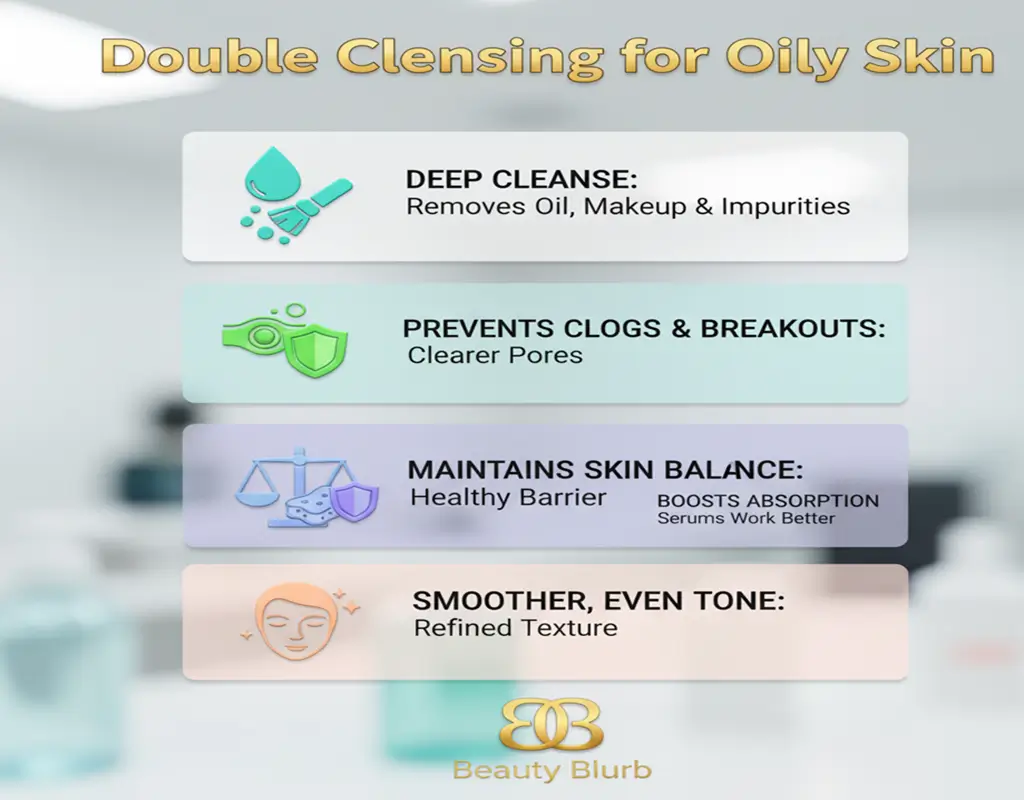
1. Elimination of Excess Oil, Makeup & Impurities
The first step with a cleansing oil for oily skin dissolves sebum, makeup and water‑resistant sunscreen, which are often too stubborn for a single gel or foam cleanser to handle alone.
- In a 2019 study, researchers found that cleansing oils removed ~5.8% ± 3.3% of waterproof sunscreen residue, compared to 59.3% ± 10.4% when washed with water alone (Source).
Following that with a water based cleanser for oily skin ensures leftover residues are eliminated without stripping the skin’s barrier, so you get clean skin that’s not over‑dried.
2. Prevention of Clogged Pores and Breakouts
Oily skin is prone to build‑ups of sebum and debris, which can block pores and trigger blackheads and acne.
- A systematic review of 14 studies (671 participants) showed significant improvements in acne outcomes when skin cleansing and topical hygiene were optimized (Source).
By combining oil‑based + water‑based cleansing, you reduce the chances of pore‑blocking buildup and help keep your complexion clearer.
3. Maintenance of Skin’s Natural Balance & Barrier Integrity
It’s tempting to scrub oily skin aggressively, but harsh cleansing can damage the skin barrier and actually trigger more oil production.
- A 2006 clinical trial Fruom Pubmed, found that a gentle daily cleanser for normal‑to‑oily skin did not damage the barrier or provoke increased sebum output.
Proper double cleansing supports barrier‑friendly cleaning — the oil step removes heavy lipids, the water step finishes gently — helping your skin stay balanced, not over‑reactive.
4. Increased Absorption of Skincare Products
Once your skin is free of oil‑based residue and water‑based debris, it becomes more receptive to serums, moisturizers, treatments and actives.
Think of it as prepping the “canvas” before painting: clearer skin means ingredients work better. This benefit is especially important in oily and acne‑prone skin routines, where effectiveness matters.
5. Smoother Texture and More Even Tone
Over time, deep cleansing can refine the feel of the skin and reduce visible texture irregularities. Removing buildup from the pore openings and surface lipids helps your skin look more “polished” and even.
While few studies focus directly on double cleansing for oily skin, cleansing and surfactant research shows that mild detergents and proper cleansing methods contribute to healthier‑looking skin overall.
So, Do Dermatologists Recommend Double Cleansing?
Absolutely — most dermatologists agree that double cleansing can be especially beneficial for oily and acne-prone skin, as long as you use a gentle cleansing oil followed by a mild water-based cleanser.
Experts like Dr. Marisa Garshick, a board-certified dermatologist in New York, note that this two-step method “helps remove both oil-based and water-based impurities without stripping the skin barrier.
” The key is balance — not over-cleansing, but giving your skin the deep yet gentle care it truly deserves.
How to Do Double Cleansing for Oily Skin at home
You might be wondering — how to do double cleansing correctly for oily skin? Don’t worry, it’s simpler (and gentler) than it sounds.
Double cleansing isn’t just about washing your face twice — it’s a method designed to melt away oil-based impurities first, then lift off water-based debris, sweat, and dirt.
Here’s a step-by-step dermatologist-approved guide to help you get it right.
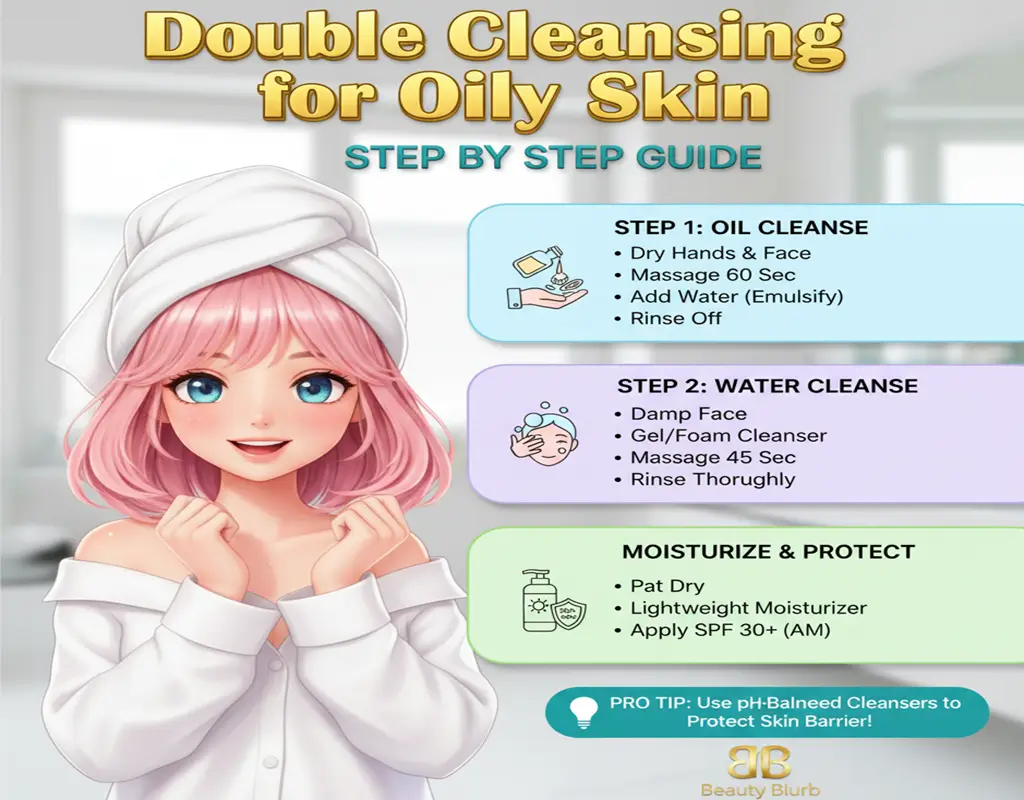
Step 1: Start with an Oil-Based Cleanser or Cleansing Balm
Begin with dry hands and a dry face.
Apply 1–2 pumps of your favorite oil cleanser for oily skin or a light cleansing balm. Massage gently in circular motions for about 45–60 seconds, especially around the T-zone (nose, forehead, and chin), where sebum builds up most.
👉 Pro tip: Don’t be afraid of oils — the principle of “like dissolves like” means cleansing oil actually breaks down excess sebum and SPF residue without clogging pores.
Next, add a splash of lukewarm water to emulsify the cleanser — it should turn milky and light. Massage again for a few seconds, then rinse thoroughly.
Product Spotlights:** When choosing your oil cleanser, look for lightweight formulas featuring ingredients like jojoba oil, squalane, or sunflower seed oil. These are ideal for oily or acne-prone skin. Steer clear of heavy mineral oils, which can sometimes be too occlusive.
Step 2: Follow with a Water-Based Cleanser
While your skin is still damp, apply a gentle gel or foaming cleanser — preferably pH-balanced and formulated for oily or combination skin.
Massage for another 30–45 seconds using upward circular motions to reach deeper impurities inside pores.
This step ensures you’re removing what the oil cleanser loosened, leaving your skin clean but never stripped.
🧪 Dermatologist insight: Dr. Rachel Nazarian, board-certified dermatologist at Mount Sinai, explains that using a low pH cleanser (around 5.5) after your oil cleanse.
“helps preserve your skin barrier while reducing excess shine and future breakouts.”
Step 3: Moisturize and Protect
After cleansing, gently pat your skin dry — never rub. Follow up with a lightweight, non-comedogenic moisturizer (look for ingredients like hyaluronic acid or niacinamide).
This helps lock in hydration and keeps your oil glands from overcompensating.
Finish your routine with a broad-spectrum SPF 30+ sunscreen every morning, even if you’re indoors. Sunscreen prevents post-acne marks and keeps your freshly cleansed skin healthy and bright.
💡 Pro Tips for the Perfect Double Cleansing Routine

- Use this routine once daily at night, and a single gentle cleanse in the morning.
- Avoid using hot water — it can disrupt your moisture barrier.
- Always choose non-stripping, sulfate-free cleansers to prevent rebound oil production.
- Pair your routine with weekly exfoliation (using BHA or salicylic acid) for even smoother, clearer results.
💬 Psst… oily skin still giving you trouble?
Don’t stop here, beautiful — your double cleanse is just the beginning!
Check out my full skincare routine for oily skin to learn how to balance, hydrate, and finally stop glowing like a glazed donut (unless you want to 😉).
Common Mistakes to Avoid When Double Cleansing (Especially for Oily Skin)”
Common Mistakes to Avoid When Double Cleansing (Especially for Oily Skin)
The best skincare routines are often the simplest. While double cleansing for oily, acne-prone skin is transformative, tiny missteps can backfire—leading to dryness, breakouts, or a compromised barrier.
Let’s ensure you avoid these common pitfalls
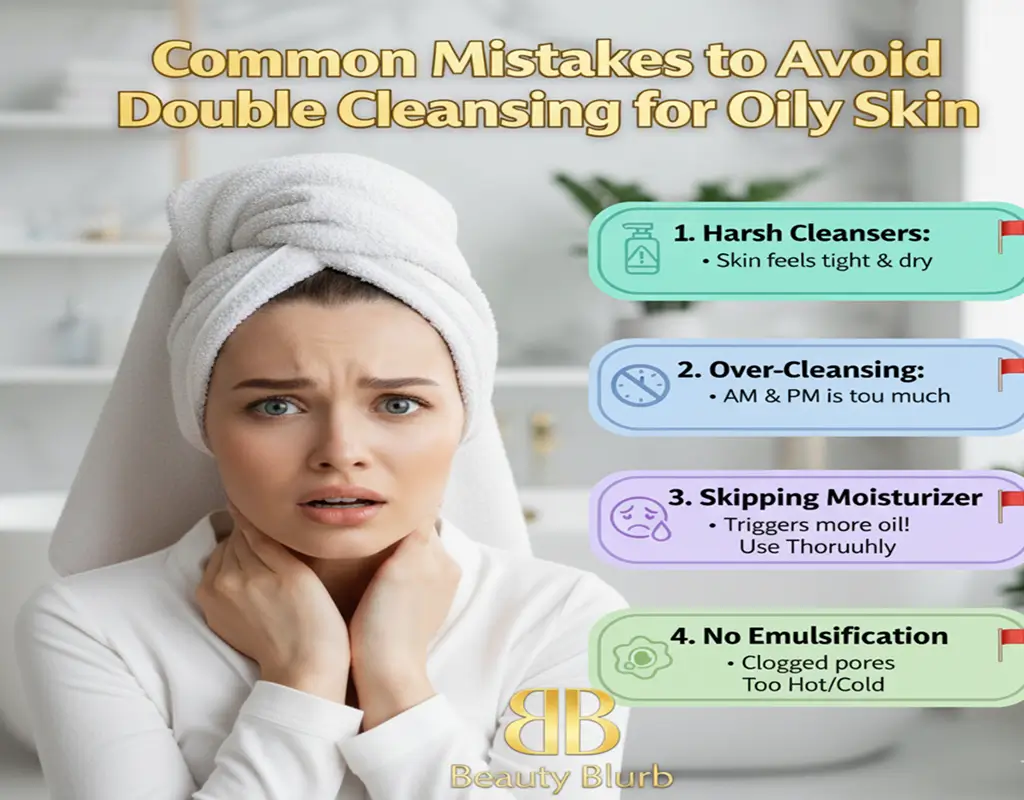
1. Relying on Harsh or High-pH Cleansers
If your skin feels tight after cleansing, that’s not a sign of cleanliness — it’s a red flag 🚩.
Many people with oily skin reach for foaming cleansers loaded with alcohol or sulfates, thinking they’ll “dry out” the oil. In reality, they strip your natural moisture barrier, causing your skin to overproduce sebum.
✅ Instead, choose a pH-balanced foaming cleanser or gel cleanser for oily skin with gentle surfactants (like cocoyl isethionate or betaine).
2. Over-Cleansing — Twice a Day Is Too Much
Yes, overdoing it is real. Double cleansing should be done only at night — when you need to remove sunscreen, makeup, and daily buildup. Doing it morning and night can disrupt your skin barrier and lead to excessive oil rebound.
✅ In the morning, a single mild water-based cleanser or even just rinsing with lukewarm water is enough. Remember: you’re cleansing, not punishing your skin!
3. Skipping Moisturizer After Cleansing
This is one of the most common mistakes people with oily skin make.
They assume that skipping moisturizer will reduce shine — but dehydration actually makes your sebaceous glands go into overdrive.
✅ Always follow your routine with a lightweight, oil-free moisturizer and, during the day, a broad-spectrum SPF 30+ sunscreen. It locks in hydration and keeps your newly cleansed skin protected.
4. Not Emulsifying the Cleansing Oil Properly
When using a cleansing oil for oily skin, you must add a bit of water and massage until the formula turns milky — this step “emulsifies” the oil, allowing it to lift away impurities instead of leaving residue.
If you skip emulsification, leftover oil can clog pores and cause small breakouts, especially if you’re acne-prone.
✅ Massage for 30–60 seconds with dry hands first, then add water slowly to transform the texture before rinsing.
5. Using Water That’s Too Hot (or Too Cold)
Hot water might feel relaxing, but it can strip your natural oils and worsen sensitivity. Cold water, on the other hand, won’t effectively emulsify your oil cleanser or remove residue.
✅ Always use lukewarm water — it’s the sweet spot for maintaining balance and ensuring your double cleansing routine works effectively.
💡Pro Tip: Listen to Your Skin
Your skin tells you what it needs. If you notice tightness, flaking, or increased oiliness, adjust your products — maybe a gentler gel cleanser or a lighter cleansing oil.
Remember, the goal of double cleansing for oily acne-prone skin isn’t to make your face squeaky-clean; it’s to make ibalanced, calm, and glowing. ✨
Now that you know exactly how to master double cleansing for oily skin, it’s time to try it for yourself! 🌙✨
Give it a week or two, and you might be surprised at how balanced, soft, and glowier your skin feels.
And hey — I’d love to hear how it goes! 💬 Drop your experience in the comments and share your skincare wins (or fails — we’ve all been there 😉).
Who Should Not Do Double Cleansing?
I know what you’re thinking — “Who doesn’t need to double cleanse or Who should avoid double cleansing?” 👀
It’s a great question, because while double cleansing can be amazing for oily or acne-prone skin, it’s not for everyone.
Some skin types are naturally delicate or already balanced enough, and over-cleansing could do more harm than good.
Here’s who should skip (or be extra gentle with) double cleansing:
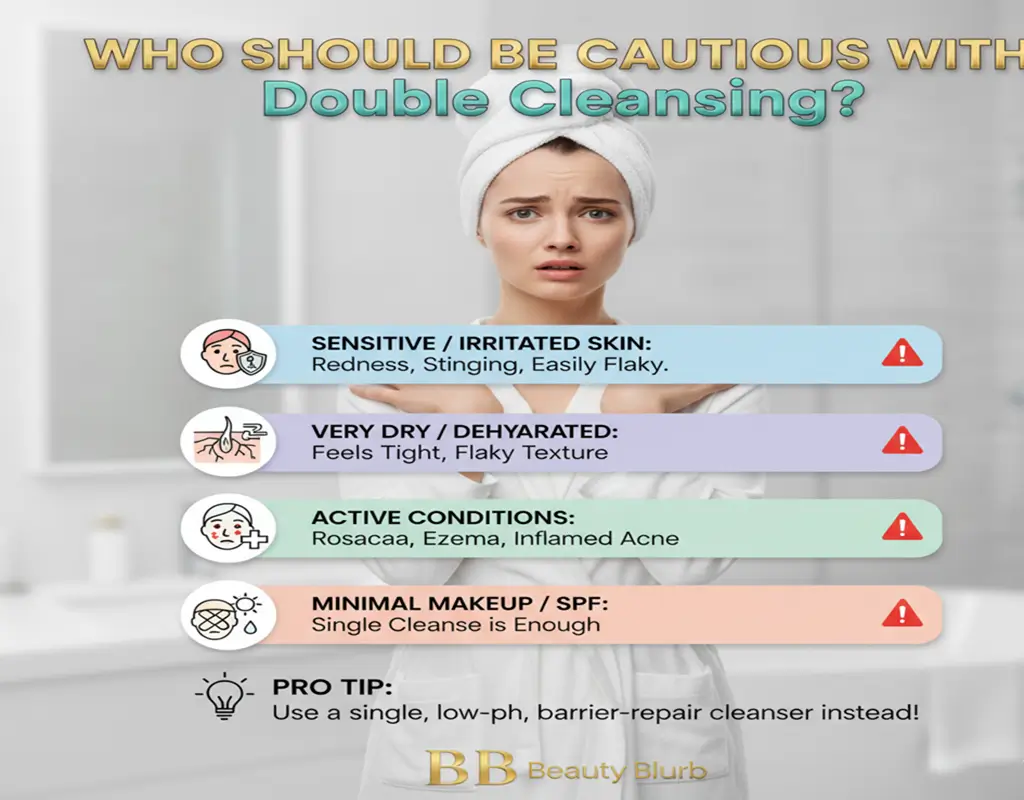
1. Skin with a Compromised or Sensitive Barrier
If your skin turns red easily or stings after washing, you might fall into the sensitive skin category.
Double cleansing — especially with strong surfactants or fragranced oils — can disrupt your skin barrier and trigger irritation or burning sensations.
💡 Tip: If you still want to try it, use a fragrance-free cleansing balm followed by a mild, pH-balanced cleanser just 2–3 times a week instead of daily.
2. Very Dry or Dehydrated Skin
For dry skin, double cleansing can sometimes feel too stripping, leaving your face tight or flaky.
This happens because both cleansers remove surface oils that dry skin actually needs to stay supple.
✅ A single gentle cream cleanser or hydrating cleansing milk might be all you need to keep your barrier happy and smooth.
3. Skin with Active Conditions (Rosacea, Eczema, or Inflamed Acne)
If you have rosacea, eczema, or even active acne, double cleansing could worsen flare-ups by introducing friction and over-washing.
Dr. Shereene Idriss, a board-certified dermatologist in NYC, warns that “when the skin barrier is compromised, even mild cleansers can feel like acid.”
💡 Alternative: Use one low-pH cleanser rich in ceramides or panthenol, and focus on healing your barrier before trying double cleansing again.
4. Minimal Makeup or Sunscreen Users
If you don’t wear much makeup or use only water-based sunscreen, you might not need double cleansing at all.
A single gentle foaming cleanser is usually enough to keep your skin clean without overdoing it.
5. Post-Treatment or Compromised Skin
After chemical peels, microneedling, or laser treatments, your skin needs rest — not double cleansing.
Stick with a mild cleanser and barrier-repair moisturizer for at least a week before resuming any two-step routine.
pro tip: Stick with a mild cleanser and barrier-repair moisturizer rich in Ceramides or Hyaluronic Acid for at least a week before resuming any two-step routine.
| Skin Type / Condition | Why to Avoid or Be Cautious | Dermatologist Tip |
|---|---|---|
| Sensitive Skin | Double cleansing can be too stripping and may cause irritation or redness. | Use a mild, fragrance-free cleanser only once daily. |
| Dry Skin | Over-cleansing removes natural oils, leaving skin feeling tight and flaky. | Opt for a hydrating cream cleanser instead of a foaming one. |
| Rosacea or Eczema | Can worsen inflammation or trigger flare-ups. | Stick to one-step gentle cleansing with lukewarm water. |
| Minimal Makeup Users | If you don’t wear makeup or SPF often, double cleansing isn’t necessary. | Single cleanse at night is usually enough. |
✨ Remember: Your skin doesn’t need more steps — it needs the *right* steps.
🧴 Quick Self-Check Quiz: Should You Be Double Cleansing?
Let’s make it easy — answer these in your head:
- Do you wear sunscreen or makeup daily?
- Does your skin feel greasy or congested by the end of the day?
- Do you have oily or acne-prone skin?
If you said “yes” to most of these — double cleansing might be perfect for you.
If not, you can safely skip it (your skin will thank you 😉).
✨ Tell Me in the Comments!
Now I’m curious — do you double cleanse or are you team “one-and-done”?
Share your answer below 👇 I love hearing about real-life skincare journeys (and your skin might just help someone else too!).
best double cleanse for oily skin (top picks)
If you’re wondering what’s the best double cleansing for oily skin, here’s your quick answer:
Start with the Dermalogica PreCleanse Cleansing Oil — a gentle Korean oil cleanser that melts away sebum and sunscreen without clogging pores.
then follow with the La Roche-Posay Toleriane Purifying Foaming Cleanser, a dermatologist-approved classic that removes leftover residue while supporting your skin barrier.
A: best oil-based cleanser for oily skin
1. Dermalogica PreCleanse Cleansing Oil
A go-to recommended by dermatologists for oily and acne-prone skin. The formula features apricot-kernel and sunflower seed oils that effectively melt excess sebum and waterproof sunscreen.
According to Glamour, Dr. Chang says it “melts away impurities while retaining a low comedogenic profile.”
How it performs on oily skin: Slick texture that rinses clean without a greasy after-feel, perfect for heavy-makeup or sunny days.
- ✅ Pros: Powerful, low-clog risk. ❌ Cons: Higher price point.
2. Ma:nyo Pure Cleansing Oil (K-Beauty pick)
A top Korean choice in 2025 for oily skin and blackhead control. It “transforms from silky oil into a luxe cleansing milk” according to Allure.
How it performs: Lightweight and soothing on the face; tackles pore buildup around the T-zone
- ✅ Pros: Korean double cleansing for oily skin go-to, gentle. ❌ Cons: Minimal availability in some regions.
3. Haruharu Wonder Black Rice Cleansing Oil (Korean)
Seen in lists of “best Korean oil cleansers for acne-prone skin.
How it performs: Good at reducing blackhead and sebaceous filament visibility.
- ✅ Pros: K-beauty innovative; clean ingredients. ❌ Cons: Doesn’t foam — you’ll need the follow-up step.
4. Biossance Squalane + Antioxidant Cleansing Oil
it’s safe for oily skin thanks to non-comedogenic oils.We also noticed that sales of this product on Amazon have increased significantly, which is evidence that it is a unique product.
How it performs: Cleanses deeply while adding antioxidant protection.
- ✅ Pros: Luxe feel; green-beauty appeal. ❌ Cons: Premium pricing.
B: Top Water-Based Cleansers for oily skin
1. CeraVe Foaming Facial Cleanser (Normal-to-Oily Skin)
Widely recommended by dermatologists for oily skin. A strategist review noted “seven different dermatologists all recommend” this formula.
How it performs: Foams gently and leaves skin feeling fresh—not tight—making it ideal for midday oiliness.
- ✅ Pros (benefits): Affordable, barrier-supporting. ❌ Cons: Might feel thick for ultra-oily types.
2. La Roche-Posay Toleriane Purifying Foaming Cleanser
A strong pick for oily and combination skin. It contains niacinamide and ceramides, supports your skin barrier while controlling oil
How it performs: Clean lather, easy rinse, keeps skin balanced.
- ✅ Pros: Trusted derm brand. ❌ Cons: Slight fragrance in some versions.
3. Anua Heartleaf Quercetinol Pore Deep Cleansing Foam (K-Beauty)
The Anua Heartleaf Quercetinol Pore Deep Cleansing Foam is a gentle daily cleanser that dives deep into pores to clear out oil and buildup.
Powered by Heartleaf Extract and Quercetin, it soothes irritation, reduces redness, and keeps skin calm. With a touch of Salicylic Acid, it lightly exfoliates and controls shine — perfect for oily, combination, or acne-prone skin.
- ✅ Pros: Excellent value; tailored to oily skin. ❌ Cons: Texture may be too thick for some.
4. Beplain Mung Bean pH-Balanced Cleansing Foam
The Beplain Mung Bean pH-Balanced Cleansing Foam is a soft, creamy Korean cleanser that purifies pores while keeping your skin hydrated and happy.
Infused with mung bean extract and amino acids, it melts away oil, makeup, and fine dust without stripping. Gentle, balanced, and refreshing — it’s one of the best Korean cleansers for oily skin that still feels kind to sensitive skin. 💚
- ✅ Pros: Mild formula; fungal-acne safe. ❌ Cons: Might require a heavier second cleanse if you wear heavy makeup.
💬 Your Turn, Beautiful!
We’ve talked about the best double cleansing routine for oily skin — now it’s your turn! 🌿
Have you tried double cleansing before? If yes, which oil or water-based cleanser gave you the best results?
Share your experience in the comments below — your story might just help another skincare lover find her perfect match. 💚
How Often Should I Double Cleanse with an Oil Cleanser?
You might be wondering — how often should I double cleanse if I have oily or acne prone skin? Dermatologists generally agree that once a day (preferably at night) is enough for most people with oily skin.
That’s when your skin needs a deeper cleanse to remove sunscreen, makeup, and excess sebum that builds up throughout the day.
When done correctly, double cleansing for oily acne-prone skin helps keep pores clear and balance oil production without stripping away your natural moisture barrier.
1: For Oily or Acne-Prone Skin
If your skin tends to get greasy or you deal with frequent breakouts, double cleansing once daily — especially in the evening — works wonders. It keeps your pores clean and prevents congestion from oil, sweat, and SPF buildup.
🩺 According to Dr. Marisa Garshick (Board-Certified Dermatologist, NYC), double cleansing once per night can significantly reduce excess oil and improve overall skin texture without causing irritation
2: For Heavy Makeup or Sunscreen Users
If you wear long-lasting makeup or layer SPF daily, you can double cleanse twice a day, but use a lightweight, pH-balanced oil cleanser for oily skin in the morning and a gentle water-based cleanser at night.
Be mindful — if your skin starts feeling tight, overly matte, or slightly irritated, it might be a sign you’re over-cleansing.
🌙 The Bottom Line
Think of double cleansing as your night-time skin reset — not something you need to overdo. Once daily is just right for most oily-skin beauties.
Keep it consistent, and you’ll notice smoother texture, fewer breakouts, and that subtle “glass skin” glow we all love. ✨
I Tried Double Cleansing With The Same Cleanser Twice

1. Quick intro — why she tried it
A content creator with oily skin explains she tried double cleansing to see whether the routine actually helped reduce shine, clear pores, and improve product absorption.
She chose a simple experiment: use one oil cleanser followed by the same water-based cleanser twice (morning & night or night only — follow the creator’s setup), and share real results over a short trial period.
2. The routine she used (method)
She demonstrates the exact steps on camera: dry-face, 45–60 second massage with a lightweight oil cleanser to dissolve sebum and sunscreen; emulsify with lukewarm water and rinse; immediately follow with a gentle gel/foam cleanser, lather for ~30 seconds, rinse and pat dry.
She mentions product names (oil cleanser + water cleanser) and shows product textures, how they emulsify, and the feel on her skin.
3. Immediate impressions (first use)
Right after the first double cleanse she notices her skin feels cleaner and less greasy, but not tight.
She points out the oil rinse emulsifies into a milky texture and rinses away cleanly — a key moment that convinced her the oil step was working. She also notes any stinging or discomfort (if present), or that she experienced none.
4. Short-term results (after a few days to one week)
Over the first week she reports reduced surface oil through the afternoon and fewer clogged pores in her T-zone.
She mentions whether any new breakouts appeared (common concern), and whether skin felt balanced versus over-dry. She emphasizes consistency — that small changes appeared only after several nights.
5. Longer-term changes (2–4 weeks)
At the two-to-four week check-in she summarizes texture improvements (smoother skin, fewer visible blackheads), how her other skincare (serums, moisturizers) absorbed more readily.
and whether the routine affected her skin barrier (sensitivity, redness). If she had any setbacks (temporary purging or increased oil), she describes how she adjusted (reduced frequency, swapped product).
6. Pros & Cons she highlights
Pros: deeper clean, makeup/SPF removal, reduced midday shine, serums absorb better.
Cons: takes longer than a single cleanse, possible over-cleansing if done morning + night, risk of residue if oil is not emulsified properly.
7. Final verdict & recommendation
The creator concludes that double cleansing was worth trying for her oily skin — especially on days with makeup or heavy SPF — but stresses gentle products and listening to your skin.
She recommends trying the routine nightly for 1–2 weeks, then adjusting frequency based on how your skin reacts.
8. Practical tips she shares (quick wins for readers)
- Massage time matters: 45–60 seconds on the oil step.
- Emulsify fully with lukewarm water before rinsing.
- If skin feels tight, cut back frequency or switch to a milder second cleanser.
- Try double cleansing only at night unless you wear heavy sunscreen in the morning.
FAQ About is double cleansing good for oily skin
If your skin looks red, tight, or more irritated after double cleansing, you’re likely using harsh surfactants, a pore-clogging oil, or cleansing too often. Swap to a gentle oil-based cleanser for oily skin that emulsifies, use a mild pH-balanced water-based cleanser, and limit the routine to once nightly. If irritation continues, pause and consult a dermatologist.
The first step (an oil cleanser or cleansing balm) dissolves sebum, sunscreen and makeup. The second (a water-based cleanser) lifts sweat, dirt and leftover residue. Together they clean more effectively than repeating the same cleanser twice.
Potential downsides: over-cleansing (too frequent), using harsh formulas that strip the barrier, or not emulsifying the oil step (which leaves residue). Avoid heavy occlusive oils, pick a gentle gel cleanser for oily skin, and listen to your skin.
If you prefer not to use an oil, a micellar water or a lightweight cleansing balm can replace the oil step — they remove makeup and SPF without heavy oils. Just ensure you follow with a water-based cleanser to finish the job.
Most dermatologists recommend double cleansing once nightly, especially for oily or acne-prone skin. If you wear heavy makeup or sweat a lot, you can do it twice, but use very gentle formulas and monitor your skin for signs of dryness or irritation.
Breakouts can occur if the oil cleanser is comedogenic, if you don’t emulsify and rinse properly, or if you overdo the routine. Choose non-comedogenic oils (squalane, jojoba), rinse fully, and pair with a gentle water-based cleanser for oily skin.
Massage the oil step for about 30–60 seconds focusing on the T-zone and areas with makeup or SPF. Then add lukewarm water to emulsify and rinse. This timing helps dissolve sebum without over-rubbing the skin.
For most oily-skin routines, a gentle water-based cleanser or a splash of lukewarm water in the morning is sufficient. Reserve double cleansing for the evening when you need to remove sunscreen, makeup, and daytime oil buildup.
Hey beautiful, thank you for reading all the way through! 💚
If you’ve been searching for the secret to balanced, shine-free skin, double cleansing for oily skin might just become your new skincare ritual. It’s gentle, effective, and gives that fresh, glassy glow we all dream of.
I’d love to hear from you — have you tried double cleansing yet? 💦
Share your experience in the comments below and tell us how your skin feels after making the switch. And don’t forget to subscribe to our newsletter for more honest skincare tips, dermatologist insights, and product-tested guides designed just for you.
Here’s to clean, glowing skin and a confident you! 🌿✨

Akram Boulaid is a dedicated Skincare Researcher and Analyst with over 7 years of intensive focus on dermatology and cosmetic ingredient science. As a globally recognized expert, his insights have been featured in major international publications, including the New York Post and GB News. A verified expert on Qwoted, Akram connects with health journalists to provide evidence-based analysis. He founded Beauty Blurb to bridge the gap between complex clinical data and practical skincare routines, specializing exclusively in the needs of oily and acne-prone skin through rigorous analysis of peer-reviewed scientific literature.