
💡 Quick Answer:
Does Aloe Vera Clog Pores? Generally, no. Pure aloe vera is unlikely to clog pores because it’s naturally lightweight, mostly water, and sinks into the skin quickly instead of sitting on the surface.
Many people with oily or breakout-prone skin use it for its calming effect and gentle hydration. But here’s the part most people overlook: aloe itself is rarely the issue.
Problems usually happen when the gel isn’t pure — meaning it contains heavy oils, thickening agents, artificial fragrance, or extra moisturizers that can trap debris inside pores.
The safest approach is choosing products that are mostly aloe vera with a clean, non-comedogenic formula, and avoiding anything with unnecessary additives your skin might react to.
In this article, we’ll break down the real truth behind the question can aloe vera clog pores, explain why different people have different experiences, and show you exactly how to choose the right aloe product for your skin.
You’ll also learn what ingredients to watch out for and simple steps you can take to avoid irritation or breakouts while using aloe vera.
What Is Aloe Vera?
Aloe vera is a succulent plant known for its clear, gel-like substance found inside its leaves.
This gel has been used for centuries in skincare routines because it’s lightweight, soothing, and naturally rich in compounds that support the skin’s barrier.
One of the biggest reasons it’s popular—especially among people with oily or acne-prone skin—is that it provides hydration without feeling greasy or heavy.
The gel itself is made up of almost 99% water, which explains why it absorbs quickly and feels refreshing on the skin.
The remaining 1% contains a mix of beneficial components, including antioxidants, amino acids, enzymes, polysaccharides, vitamins, and gentle natural exfoliating compounds.

Aloe vera also contains small amounts of salicylic-acid–like substances, which are often mentioned in skincare discussions because they help loosen dead skin buildup on the surface—making aloe a popular choice in routines designed for oily or congested skin.
What makes aloe vera especially appealing is its combination of being non-greasy, non-comedogenic, and naturally soothing.
When used in its pure form or in a clean, lightweight formula, it fits perfectly into routines focusing on oil control, calming irritation, or maintaining a balanced complexion.
This is why you’ll find it included in many products marketed for oily skin, acne-prone skin, “gel-based moisturizers,” and “lightweight hydration.”
Pores : What You Really Need to Know
Before we talk about aloe vera and clogged pores, it helps to understand what pores actually are — because they play a bigger role in your skin’s behavior than most people realize.
What Are Pores, Exactly?
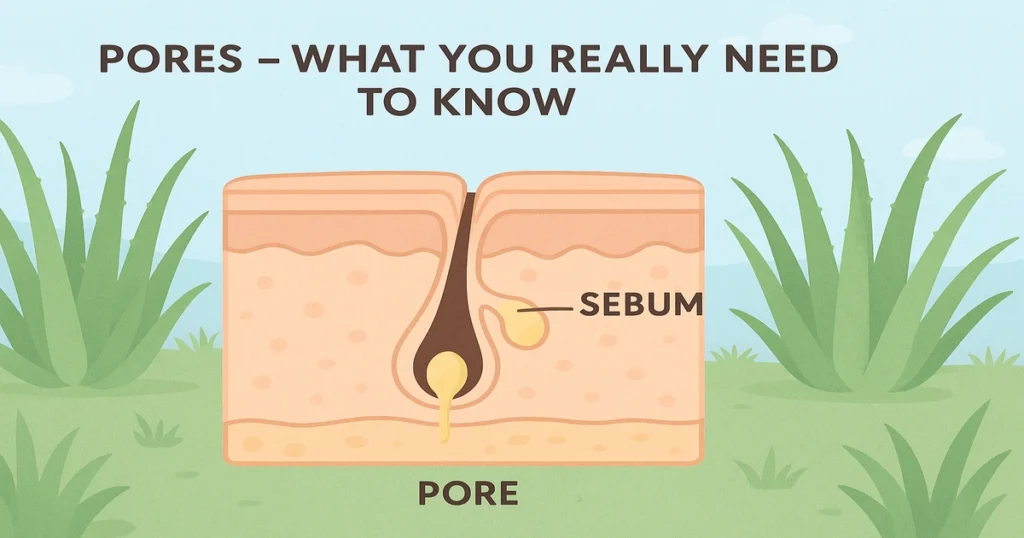
Pores are tiny openings on the surface of your skin. Each one is connected to a hair follicle and a sebaceous gland — the little “oil producer” that creates sebum, the natural oil that keeps your skin soft, flexible, and protected.
Think of pores as the skin’s built-in channels: small, essential, and always working behind the scenes to keep your skin balanced.
Why Pore Size Looks Different for Everyone
If you’ve ever wondered why someone else’s pores look smaller or larger than yours, the answer is simple: everyone’s skin behaves differently.
Genetics, skin type, age, and sun exposure all influence how visible your pores appear.
- Oily or acne-prone skin often shows larger, more noticeable pores because it produces more sebum.
- Dry skin tends to have pores that look finer and less pronounced.
It’s completely normal — your pores are just doing their job.
How Pores Get Clogged (and Why It’s So Common)
Clogged pores usually happen when dead skin cells, excess oil, sweat, or everyday buildup settle inside the pore instead of shedding away naturally.
When this mixes with your skin’s natural oils, it can form a plug — which may lead to congestion, blackheads, whiteheads, or those tiny bumps that feel like texture.
This doesn’t mean your skin is “dirty”; it just needs consistent, gentle care to stay clear.
Daily Habits That Affect Your Pores
Your pores respond to your routine more than you think. Some habits can make them look more noticeable or more prone to clogging, such as:
- Sleeping with makeup on
- Skipping cleansing after sweating
- Overexposure to the sun, which reduces collagen and makes pores appear larger
- Not exfoliating regularly, leading to build-up of dead skin
Small choices add up — either helping your pores stay balanced or contributing to congestion.
Where Aloe Vera Fits Into All of This
Aloe vera is often included in skincare routines for oily skin and acne-prone skin because it hydrates without heaviness.
Its fresh, water-gel texture helps keep the skin comfortable without adding extra oil, which is especially helpful for people trying to avoid clogged pores.
While aloe isn’t a “pore minimizer,” its lightweight nature makes it easier for the skin to stay balanced and less greasy — which many people appreciate.
Does Aloe Vera Clog Pores — Breaking Down the Myth
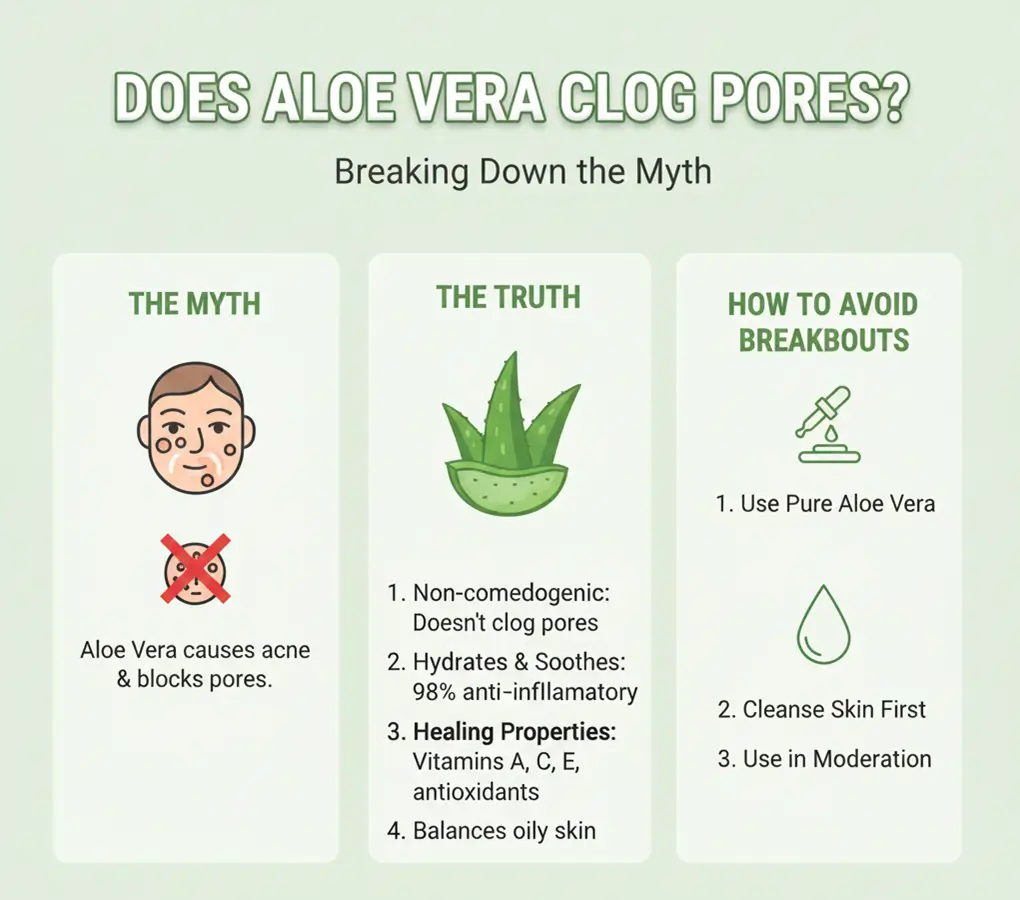
1: Why “Non-Comedogenic” Matters
First — what does “non-comedogenic” even mean? It’s just skincare lingo that indicates whether a product is unlikely to block your pores.
A comedo is basically a plugged pore (think blackhead or whitehead). So when a product is labeled non-comedogenic, it’s meant to avoid that kind of clogging.
In the case of pure gel from Aloe vera, its natural makeup — light, water-based, and free of heavy oils — usually earns it a comedogenic rating of 0 to 1 on the standard 0–5 scale. That means very low risk of blocking pores.
2: What Aloe Vera Actually Contains (That Helps)
- Aloe vera gel is mostly water — which is why it feels so light and absorbs quickly.
- It also contains polysaccharides, enzymes, antioxidants, vitamins, and certain acids naturally present that help maintain skin’s balance.
- Interestingly, aloe contains minor compounds that act somewhat like mild exfoliants (similar in effect to what people expect from salicylic acid).
These compounds help prevent dead skin buildup — one of the main causes of clogged pores. - Thanks to this profile, aloe gel doesn’t add greasiness or heaviness. Instead, it hydrates while remaining breathable — a big plus for oily or acne-prone skin.
3: Pure Aloe vs “Aloe Products” — What’s the Difference?
Here’s the important part many people miss: “Aloe vera” on the label doesn’t guarantee purity.
Many commercial gels mix aloe with oils, fragrances, thickeners, preservatives, or other moisturizing agents. Those additives — not the aloe itself — are often what trigger breakouts or clogged pores.
So if you grab a store-bought aloe product that feels sticky, heavy, or has “fragrance / oils / carbomer / alcohol” — it’s smart to be skeptical. That formula may clog pores even though the label says “aloe.”
4: What the Research Says: Evidence & Benefits
- A 2024 study From Pubmed showed that a topical gel containing aloe vera significantly helped reduce acne lesions (papules and pustules) when applied consistently over time — giving real-world evidence that aloe gel can be safe and even beneficial for acne-prone skin. Source
- Scientific analysis of pure aloe gel confirms it contains polysaccharides and bio-active compounds that provide antioxidant, anti-inflammatory, and potentially antimicrobial effects — all helpful for skin health and keeping pores clear. Source
- Because of its lightweight, water-based nature and skin-soothing profile, many dermatology-inspired skincare sources consider aloe vera gel to be safe for oily and acne-prone skin, as long as it’s pure.
5: ⚠️ When Aloe Vera Could Cause Problems — Usually Not Because of Aloe Itself
Aloe vera gel rarely blocks pores — but there are situations where it might seem like it does:
- If the product formula is impure (contains oils, waxes, heavy emollients, thickeners, fragrance, alcohol) → these added ingredients can clog pores.
- If the gel is not fresh, or has been contaminated/expired → this could irritate skin or upset balance.
- If your skin is particularly reactive or sensitive — irritation or clogging may come from other factors (environment, sweat, dirt, humidity) rather than aloe itself.
✅ Bottom Line on This Myth

Pure aloe vera gel does not clog pores. On the contrary — thanks to its light, water-based nature and beneficial bioactive compounds, it can be a gentle, hydrating, and even helpful option for oily or acne-prone skin.
The key is in choosing the right product: go for something as close to 100% natural aloe as possible, avoid heavy additives, and always check ingredient lists.
If you do that, aloe vera is more likely to help your skin than to cause problems.
Tip: If you’re still unsure, you can test it by applying aloe vera gel to a small area of your skin and leaving it for 24 hours to check for any sensitivity. This way, you’ll have no doubts left.
Note: My dear, if you have tried this before in your oily skincare routine, I would be delighted if you could share your experience in the comments; your experience might benefit other readers.
When Aloe Vera Can Clog Pores
Pure aloe vera gel is naturally non-comedogenic — but not all aloe products are created equal.
Breakouts usually happen because of what’s added to the aloe, not the aloe itself. Below is the exact breakdown your readers need to understand when aloe vera can lead to clogged pores, acne, or irritation.
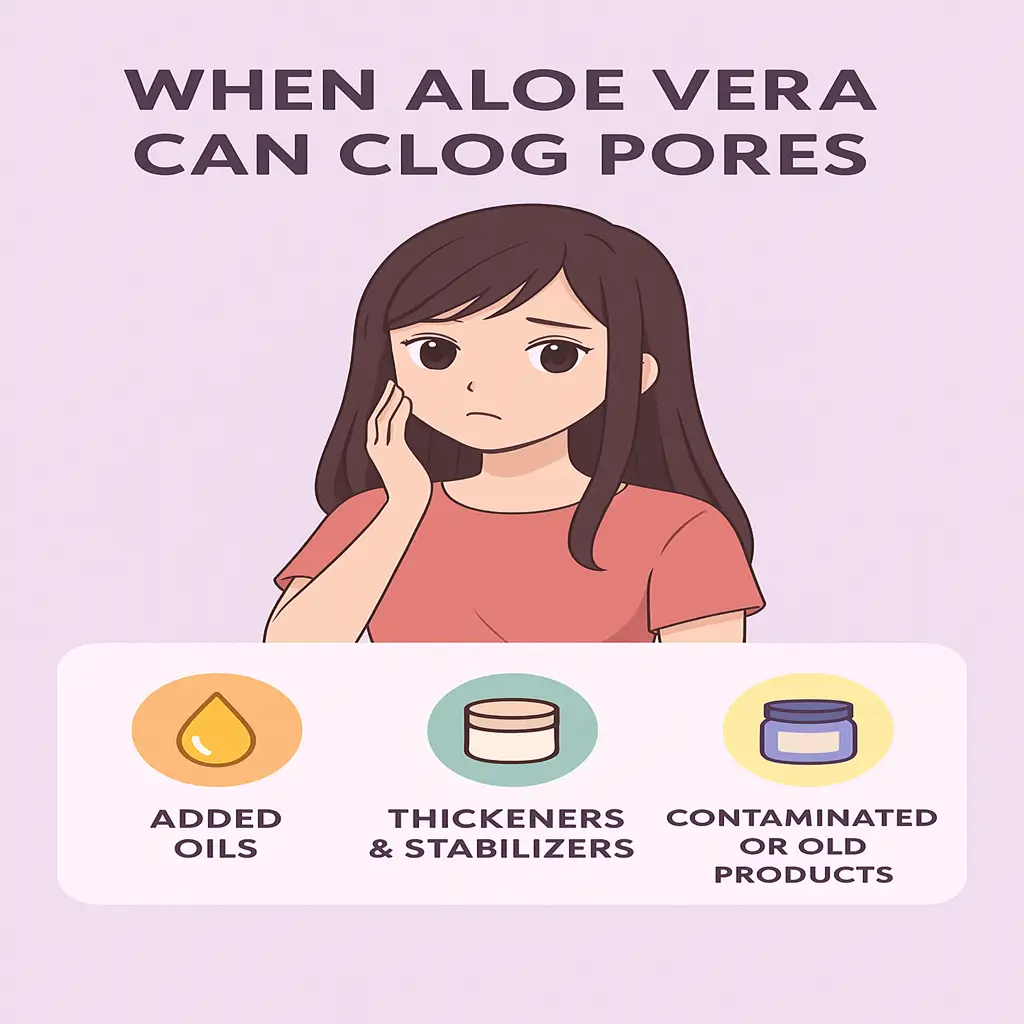
1. Added Oils
Many commercial aloe gels include added oils to make the texture smoother or more “luxurious.”
The problem? Some of these oils have high comedogenic ratings, meaning they’re more likely to clog pores — especially for oily or acne-prone skin.
Common pore-clogging oils found in aloe products include:
- Coconut oil
- Cocoa butter
- Wheat germ oil
- Soybean oil
- Mineral oil (in cheap formulations)
Even natural oils can be problematic. For example, coconut oil has a comedogenic rating of 4, making it risky for people dealing with acne or sebaceous-filament–prone skin.
Why this matters:
These oils trap heat and sebum inside the pore, leading to blackheads, whiteheads, and inflammatory acne. This is often misinterpreted as “aloe vera caused my breakout,” when it’s actually the added oils doing the damage.
2. Thickeners & Stabilizers
Aloe gel is naturally watery — so companies add thickeners and stabilizers to create the jelly-like texture most people expect.
While these ingredients are usually safe, some can form an occlusive film on the skin.
Examples that may clog pores for some users:
- Carbomer
- Xanthan gum
- Guar gum
- Synthetic polymers (e.g., acrylates)
These don’t clog pores in everyone, but on oily skin, they can trap excess sebum and sweat underneath the surface, increasing the chance of congestion, especially in humid climates.
Scientific support:
A 2022 cosmetic science review noted that polymeric thickeners can increase transepidermal occlusion, which may contribute to follicular blockage in people with sebaceous overactivity (oily skin types).
3. Contaminated or Old Products
Aloe vera is highly perishable. Without proper preservation, it becomes a perfect breeding ground for bacteria, yeast, and mold.
Two major risks:
1: Expired Aloe Gel
Old aloe products can break down into irritating compounds that trigger redness, bumps, or acne-like reactions.
2: Contamination From Poor Packaging
Jar packaging → dipping fingers repeatedly → bacterial contamination.
Research insight:
A 2023 microbiological analysis found that improperly stored aloe products can develop bacterial loads high enough to disrupt the skin barrier, causing inflammation and acne-mimicking lesions (source).
This makes some people think aloe “clogged their pores,” when the real culprit is contamination-induced irritation.
4. Personal Sensitivities
Even with pure aloe, not everyone’s skin reacts the same. Some individuals have:
- Allergies to latex-like compounds (aloe contains trace amounts of aloin and anthraquinones)
- Sensitivity to plant enzymes found in aloe
- A compromised skin barrier, making the skin react to even mild humectants
These reactions may show up as:
- Tiny bumps
- Redness
- Itching
- A burning sensation
Clinical evidence:
A 2021 dermatology case review noted that aloe vera can cause allergic contact dermatitis in a small percentage of people, especially those with atopic tendencies or sensitivity to botanical extracts (Source).
This irritation can resemble acne, leading people to assume “aloe clogged my pores,” when it’s actually a sensitivity reaction, not true comedogenic buildup.

✔️ Summary of This Section
Aloe vera itself is non-comedogenic — but products containing added oils, heavy thickeners, contaminants, or irritating ingredients can clog pores or trigger breakouts.
Pure aloe gel is safe for oily and acne-prone skin, but formulation matters.
How to Choose an Aloe Vera Product That Won’t Clog Pores
If you want aloe vera without breakouts, here’s the simple truth: the formula matters more than the aloe itself. Pure, lightweight aloe is non-comedogenic.
but once brands start adding oils, fragrances, or heavy thickeners, the chances of pore congestion increase.
So here’s a quick, practical guide to choosing an aloe product that keeps your pores clear and your skin happy.
FAQ About Does Aloe Vera Gel Clog Pores
Pure aloe vera gel is lightweight and non-comedogenic, so many people with oily or sensitive skin can use it daily for hydration and calming inflammation. Start with a small amount to see how your skin reacts and always patch-test first.
Aloe vera water or juice can be safe for topical use during pregnancy, providing hydration and soothing skin. For oral consumption, consult your doctor — some aloe latex compounds can cause digestive or uterine irritation if ingested.
Aloe vera is soothing and hydrating, making it a good companion to tretinoin, which often causes dryness and irritation. Apply aloe vera gel after tretinoin absorption, or use as a moisturizer at a different time of day.
Use a gentle cleanser twice daily, exfoliate with a mild BHA or enzyme-based exfoliant, and apply non-comedogenic moisturizers. Consistency, sunscreen, and avoiding pore-clogging oils make a huge difference over time.
Apply a thin layer of pure aloe vera gel to clean skin and leave for 15–20 minutes. Rinse if desired, or leave overnight if your skin tolerates it and the product is pure. Always patch-test for sensitivity.
Aloe vera’s anti-inflammatory and hydrating properties can support skin healing, making post-acne marks appear less red over time. For deeper scars, consider combining aloe with professional treatments like chemical peels or microneedling.
Aloe vera works well with niacinamide, hyaluronic acid, and some mild acids (like lactic acid). Avoid combining with very strong chemical exfoliants or retinoids at the same time unless your skin is tolerant. Layering gently can boost hydration and soothe irritation.
Pure aloe vera gel is generally gentle and non-comedogenic. Choose a fragrance-free formula and patch-test first. It can soothe redness, calm irritation, and hydrate without adding oils that may clog pores.
💜 Thank You for reaching this point!
We hope this guide has cleared up all your doubts about Does Aloe Vera Clog Pores and helped you feel confident in adding this natural gem to your skincare routine.
Aloe vera can be a gentle, soothing ally when chosen wisely, and now you know exactly how to keep your pores happy!
💌 Don’t forget to subscribe to our newsletter for more skincare tips, honest product reviews, and expert insights delivered straight to your inbox. Your journey to glowing, healthy skin is just getting started!
And we’d love to hear from you! Share your aloe vera experiences or any questions in the comments below. Tell us what worked for you and what you’re curious to try next – your story could inspire someone else on their skincare journey! 🌿✨

Akram Boulaid is a dedicated Skincare Researcher and Analyst with over 7 years of intensive focus on dermatology and cosmetic ingredient science. As a globally recognized expert, his insights have been featured in major international publications, including the New York Post and GB News. A verified expert on Qwoted, Akram connects with health journalists to provide evidence-based analysis. He founded Beauty Blurb to bridge the gap between complex clinical data and practical skincare routines, specializing exclusively in the needs of oily and acne-prone skin through rigorous analysis of peer-reviewed scientific literature.