
How to treat dehydrated oily skin starts with understanding that your skin isn’t lacking oil — it’s lacking water. If your face feels tight after cleansing but still looks shiny, you’re likely dealing with dehydration caused by over-cleansing, harsh actives, or skipping moisturizer.
The fix is simple but precise: switch to a gentle, sulfate-free cleanser to protect your barrier, apply a hyaluronic acid serum on damp skin to pull in hydration, then seal it with a lightweight, non-comedogenic moisturizer with niacinamide to balance oil without clogging pores.
Avoid hot water, alcohol-based toners, and over-exfoliating — these worsen water loss. With a consistent routine, most people start seeing real improvement within 2 to 4 weeks.
In this guide, you’ll learn exactly what dehydrated oily skin is, how to tell it apart from dry skin, and why your current routine might be making it worse.
We’ll break down the science behind dehydration, the best ingredients to use, and a simple step-by-step skincare routine designed specifically for oily yet dehydrated skin — so you can restore balance without triggering more oil or breakouts.
What Is Dehydrated Oily Skin?
So , Can Oily Skin Be Dehydrated? the quick answer Is definitely, look the Dehydrated oily skin is a condition where your skin produces excess oil but lacks water.
This means your face may appear shiny or greasy while still feeling tight, dull, or even slightly rough. Because of this contrast, many people with oily skin don’t realize they are actually dealing with dehydration.
It’s important to understand that oil is not the same as hydration. Oil (sebum) helps lubricate and protect the skin, while hydration refers to the water content within the skin.
When your skin loses too much water — a process known as transepidermal water loss (TEWL) — it becomes dehydrated. In response, your skin may produce even more oil to compensate, which can lead to clogged pores, breakouts, and an imbalanced skin barrier.
This is why treating dehydrated oily skin is not about removing oil, but about restoring water balance and supporting the skin barrier.
Dehydrated vs Dry vs Oily Skin: What’s the Difference?
Many people confuse dehydrated oily skin with dry skin because both can feel tight or uncomfortable. But the difference is simple:
dry skin lacks oil, while dehydrated skin lacks water. Oily skin, on the other hand, produces excess sebum — yet it can still become dehydrated when the skin barrier is damaged or water loss increases.
Understanding the difference between dry skin vs dehydrated skin is essential because each condition needs a completely different skincare approach. Using harsh products on dehydrated oily skin can actually increase oiliness, irritation, and breakouts instead of fixing the problem.
Now that you understand the difference between dehydrated skin vs oily skin, the next step is learning how to recognize the most common signs of dehydrated oily skin before it starts affecting your skin barrier and triggering more breakouts.
Signs Your Oily Skin Is Actually Dehydrated
Dehydrated oily skin can be confusing because it often looks oily on the surface while lacking water underneath. This imbalance can cause your skin to produce even more oil, making breakouts, irritation, and tightness worse. If your skin feels greasy but never truly comfortable, dehydration may be the real issue.
Here are the most common signs of dehydrated oily skin:
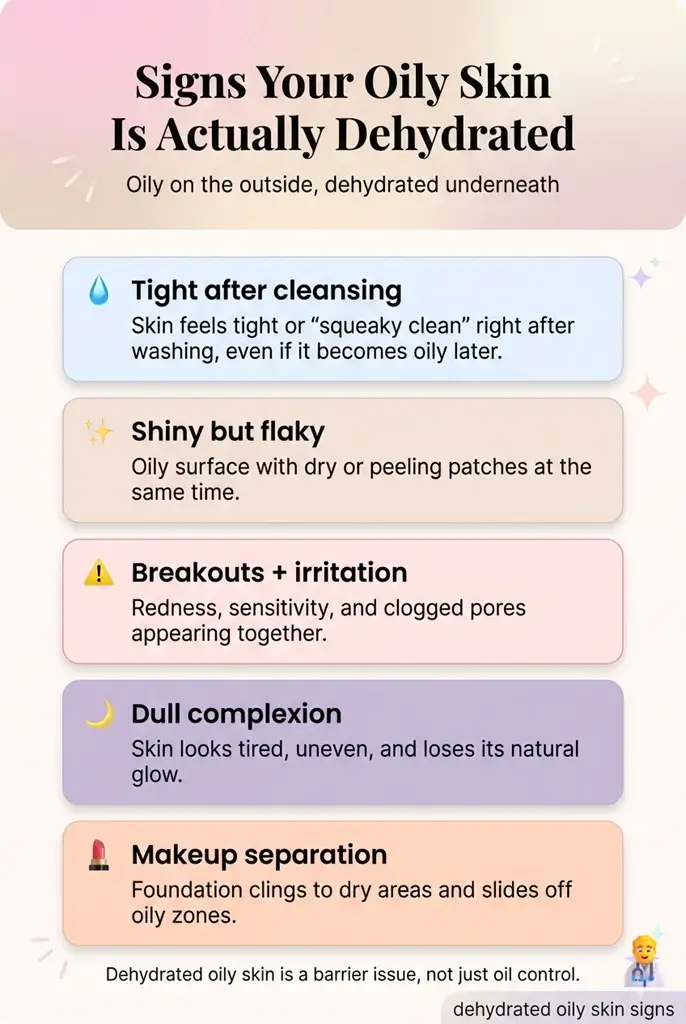
- Your skin feels tight after cleansing
Even if your face becomes oily a few hours later, that tight or “squeaky clean” feeling is often a sign your skin barrier has been stripped. - Your skin looks shiny but also flaky
Excess oil combined with dry patches or peeling is one of the clearest signs of oily yet dehydrated skin. - You experience breakouts and irritation at the same time
Dehydration can weaken the skin barrier, leading to redness, sensitivity, and clogged pores simultaneously. - Your complexion looks dull or tired
When skin lacks water, it can lose its healthy glow and appear rough or uneven, even if it produces plenty of oil. - Makeup becomes patchy or separates quickly
Foundation may cling to dry areas while sliding off oily zones, creating an uneven finish. - Your skin gets oilier throughout the day
In many cases, over-cleansing and dehydration trigger excess sebum production as the skin tries to protect itself.
So, How can I tell if my skin is oily or dehydrated?
A simple way to identify your skin condition is to look at how it behaves after cleansing.
- Oily skin: Your face feels comfortable after washing but becomes shiny within a few hours.
- Dehydrated oily skin: Your skin feels tight or slightly itchy after cleansing, yet still becomes greasy later in the day.
Another easy method is the pinch test. Gently pinch the skin on your cheek:
- If it looks smooth and bounces back quickly, your hydration levels are likely fine.
- If it appears crepey, wrinkled, or less elastic, your skin may be dehydrated.
For example, if your forehead becomes very oily by noon but your cheeks feel tight and flaky after washing, you’re likely dealing with dehydrated oily skin rather than naturally oily skin alone.
Why Oily Skin Becomes Dehydrated (causes)
Many people assume oily skin cannot become dehydrated, but excess oil does not always mean your skin is properly hydrated.
In fact, oily skin is often more prone to dehydration because people tend to over-cleanse, over-exfoliate, or use harsh acne treatments that damage the skin barrier. Once the barrier becomes weakened, transepidermal water loss (TEWL) increases, causing the skin to lose water faster than it can retain it.
Here are the most common causes of dehydrated oily skin:
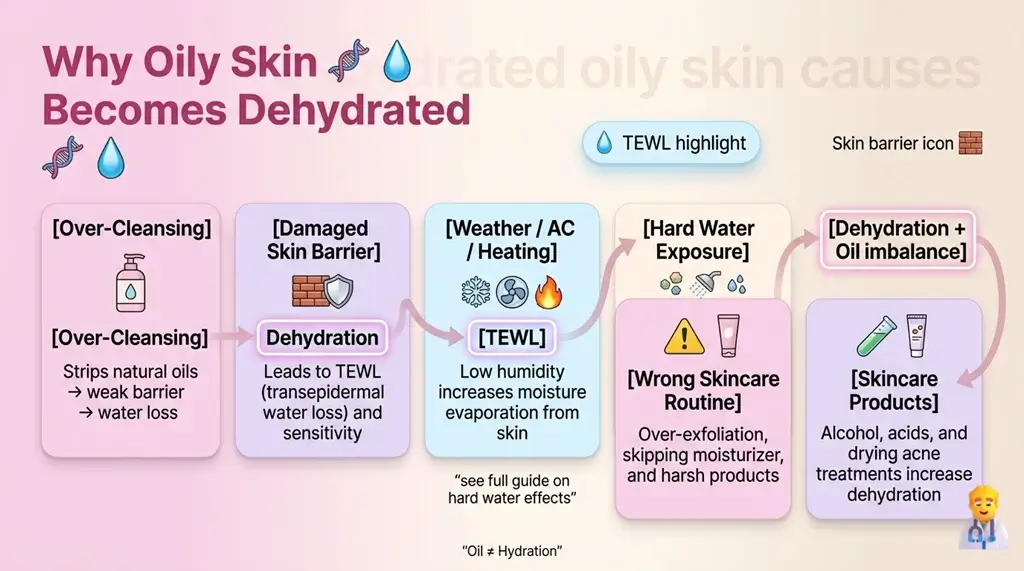
1: Over-Cleansing
dear, You might be wondering Why Skin Feels Tight After Cleansing? Washing your face too often or using strong foaming cleansers can strip away the skin’s natural protective barrier. When this happens, your skin loses water more easily and may start producing even more oil to compensate.
This is especially common in people trying to control oily or acne-prone skin by cleansing multiple times a day.
2: A Damaged Skin Barrier
Your skin barrier acts like a shield that keeps moisture in and irritants out. When this barrier becomes damaged, water escapes more quickly through TEWL, leading to dehydration, sensitivity, and excess sebum production.
Signs of a damaged skin barrier often include:
- Tightness.
- Redness.
- Burning or stinging.
- Flaky yet oily skin.
- Increased breakouts.
This is why repairing the barrier is one of the most important steps when treating dehydrated oily skin.
3: Weather, Air Conditioning, and Indoor Heating
Environmental factors can also dehydrate oily skin. Cold weather, dry climates, air conditioning, and indoor heating reduce moisture levels in the air, making it easier for water to evaporate from the skin.
Even if your face still looks oily, the deeper layers of the skin may be lacking hydration.
4: Hard Water Exposure
Hard water contains high levels of minerals like calcium and magnesium that can leave residue on the skin and disrupt the skin barrier over time. This may increase dryness, irritation, and dehydration — especially in people with oily or sensitive skin.
If your skin feels tight after washing, looks dull, or becomes greasy shortly afterward, hard water could be contributing to the problem.
This is one reason many people with dehydrated oily skin notice improvement after switching to gentler cleansing habits or using filtered water.
you can check our guide: how to reverse the effects of hard water.
5: Using the Wrong Skincare Routine
One of the biggest causes of oily dehydrated skin is following a routine designed only to remove oil instead of maintaining hydration balance.
For example:
- Skipping moisturizer because your skin feels oily.
- Using only mattifying products.
- Layering too many active ingredients.
- Exfoliating daily to “dry out” breakouts.
- Skipping the sunscreen more important step in skincare routine for oily skin.
These habits can increase water loss and push the skin into a cycle of dehydration and excess oil production.
6: Can skincare products cause dehydrated oily skin?
Yes — some skincare products can actually worsen dehydrated oily skin, especially when they focus only on removing oil instead of protecting hydration levels.
Products most commonly linked to dehydration include:
- Harsh foaming cleansers.
- Alcohol-based toners.
- Strong exfoliants used too often.
- Drying acne treatments.
- High-fragrance skincare products.
- Overuse of AHAs/BHAs.
- Clay masks used too frequently.
For example, if you use a strong salicylic acid cleanser twice a day without a hydrating moisturizer, your skin may initially feel less oily — but over time, increased TEWL and barrier damage can make your skin tighter, shinier, and more irritated than before.
How to Treat Dehydrated Oily Skin (Step-by-Step)
Treating dehydrated oily skin is not about removing more oil — it’s about restoring water balance while protecting the skin barrier. When oily skin becomes dehydrated, the skin often responds by producing even more sebum, creating a cycle of shine, tightness, breakouts, and irritation.
The goal is to reduce transepidermal water loss (TEWL), repair barrier damage, and hydrate the skin without clogging pores.
The most effective approach is to keep your routine simple, lightweight, and consistent.
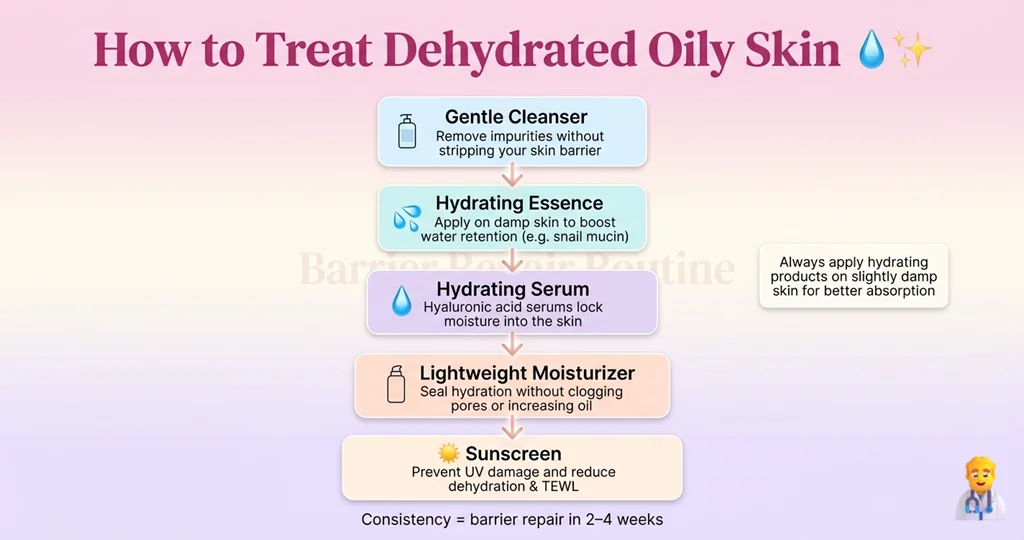
🌞 Step 1: Use a Gentle Cleanser That Doesn’t Strip the Skin
One of the biggest mistakes people with oily skin make is using aggressive cleansers that leave the skin feeling “squeaky clean.” That tight feeling after washing is usually a sign your barrier is being stripped.
Instead, choose a:
- Sulfate-free cleanser.
- Low-pH or pH-balanced formula.
- Gel or lightweight cream cleanser.
- Non-comedogenic formula.
Look for soothing ingredients like:
- Glycerin.
- Panthenol.
- Green tea.
- Centella asiatica.
A 2025 study published in the Journal of Cosmetic Dermatology tested a gentle ceramide-based cleanser on 44 volunteers with oily skin over 28 days.
The results were clear: using a mild, barrier-friendly cleanser actually improved TEWL — meaning the skin lost less water after cleansing, not more.
Skin hydration increased by 47%, sebum levels dropped significantly, and pore size visibly reduced.
The key finding was that unlike harsh cleansers containing SLS, gentle formulas cleanse effectively without stripping the skin’s natural lipids or triggering compensatory oil production (Source).
A gentle cleanser removes excess oil, sunscreen, and debris without damaging the moisture barrier or increasing TEWL.
💧 Step 2: Apply Hydration on Damp Skin
This is one of the most overlooked steps for dehydrated oily skin.
After cleansing, apply a hydrating serum or essence while your skin is still slightly damp. Damp skin helps humectants pull water into the skin more effectively.
The best hydrating ingredients include:
- Hyaluronic acid.
- Glycerin.
- Polyglutamic acid.
- Beta-glucan.
- Snail mucin.
These ingredients hydrate the skin without feeling heavy or greasy, making them ideal for oily and acne-prone skin.
🛡️ Step 3: Repair the Skin Barrier
Hydration alone is not enough if your skin barrier is damaged.
A weakened barrier allows water to escape too quickly, leading to persistent dehydration, irritation, and increased oil production. This is why barrier repair is essential when treating oily dehydrated skin.
Look for lightweight moisturizers containing:
- Ceramides.
- Niacinamide.
- Cholesterol.
- Fatty acids.
- Panthenol.
A 2025 study published in Scientific Reports by Nature, led by Dr. Sebastian Björklund at Malmö University, found that niacinamide strengthens the skin barrier at a molecular level.
improving how the skin retains water, reducing transepidermal water loss (TEWL), and increasing barrier flexibility in dry conditions. For oily dehydrated skin, this means niacinamide doesn’t just sit on the surface — it actively helps your skin hold onto water without triggering more oil production (Source).
Niacinamide is especially helpful because it supports the barrier while also helping regulate excess sebum production and reduce the appearance of enlarged pores.
⚖️ Step 4: Reduce Over-Exfoliation
Exfoliation can improve texture and clogged pores, but overdoing it is one of the fastest ways to damage the skin barrier.
If your skin feels:
- Tight after exfoliating.
- More oily than usual.
- Sensitive or stingy.
- Flaky around the nose or cheeks.
you may be exfoliating too often.
For most people with dehydrated oily skin:
- Exfoliating 1–2 times per week is enough.
- Gentle BHAs like salicylic acid work best.
- Avoid combining multiple strong acids in one routine.
The goal is controlled exfoliation — not stripping the skin.
🌤️ Step 5: Never Skip Moisturizer or SPF
Many people with oily skin avoid moisturizer because they fear looking shinier. In reality, skipping moisturizer often worsens dehydration and triggers more oil production.
Choose a moisturizer that is:
- Lightweight.
- Water-based.
- Oil-free or non-comedogenic.
- Rich in humectants and barrier-supporting ingredients.
Daily sunscreen is equally important because UV exposure increases oxidative stress and weakens the skin barrier, which can worsen dehydration over time.
Lightweight gel sunscreens or fluid SPF formulas usually work best for oily dehydrated skin.
🚿 Step 6: Watch Out for Hard Water and Environmental Triggers
Hard water, air conditioning, indoor heating, and dry climates can all increase water loss from the skin.
If your skin feels tight immediately after washing or becomes greasy shortly afterward, environmental dehydration may be contributing to the problem.
You can minimize this by:
- Using lukewarm instead of hot water.
- Avoiding long showers.
- Patting the skin dry gently.
- Using a humidifier in dry environments.
- Switching to filtered water if hard water is an issue.
🌙 Step 7: Keep Your Routine Consistent
Dehydrated oily skin does not improve overnight. Constantly switching products or using too many active ingredients can make the barrier even more unstable.
A simple routine focused on:
- Gentle cleansing.
- Lightweight hydration.
- Barrier repair.
- Sun protection.
is usually more effective than an aggressive 10-step routine.
Most people begin noticing improvements in skin texture, tightness, and oil balance within 2 to 4 weeks of consistent care.
Dermatologist-Inspired Tip:
One of the most common mistakes I see with oily skin is treating every bit of shine as a problem that needs to be removed.
In reality, dehydrated oily skin often becomes oilier because the barrier is stressed and lacking water. Instead of trying to “dry out” your skin, focus on calming and hydrating it consistently. In many cases, oil production naturally becomes more balanced once the skin barrier starts recovering.
skincare Routine for Dehydrated Oily Skin (By Dr. Daniel Sugai’s)
The best skincare routine for dehydrated oily skin focuses on restoring water balance without clogging pores or triggering excess oil production.
The goal is to hydrate the skin, reduce transepidermal water loss (TEWL), and support the skin barrier using lightweight, non-comedogenic products.

🌸 Products Used in This Routine
| Step | Product | Key Benefit | When to Use |
|---|---|---|---|
1
Cleanse | Gentle Sulfate-Free Cleanser | Removes oil & impurities without stripping the barrier | AM & PM |
2
Essence | COSRX Snail Mucin 96 Power Essence | Hydrates, soothes & repairs the barrier — lightweight & non-greasy | AM |
3
Serum | Vichy Mineral 89 or La Roche-Posay Hyalu B5 | Pulls water into the skin with hyaluronic acid — best applied on damp skin | AM & PM |
4
Ampoule | Skin1004 Madagascar Centella Ampoule | Calms inflammation & redness — ideal for stressed, sensitized skin | PM |
5
Moisturizer | Neutrogena Hydro Boost Water Gel | Water-based, oil-free gel that seals in hydration without heaviness | AM |
6
Night Cream | COSRX Snail All In One Cream or La Roche-Posay Cicaplast Balm B5 | Repairs and strengthens the barrier overnight — especially good for tight or irritated skin | PM |
7
SPF | CeraVe AM SPF 50 or La Roche-Posay Toleriane UV SPF 30 | Protects the barrier from UV damage — prevents dehydration from worsening | AM Only |
| 💡 Tip: Always apply serums on slightly damp skin — this is how hyaluronic acid works most effectively. | |||
☀️ Morning Routine
- Step 1 — Cleanse Use CeraVe Foaming Facial Cleanser is a gentle, non-stripping cleanser to remove overnight oil and buildup without damaging your barrier. Keep it simple — no harsh foaming formulas.
- Step 2 — Hydrating Essence Apply COSRX Snail Mucin 96 Power Essence on slightly damp skin.Press it gently into the skin instead of rubbing aggressively, which can increase irritation and water loss.
Snail mucin hydrates, soothes, and helps repair the barrier without adding any greasiness. This is one of Dr. Sugai’s top picks for dehydrated skin that still needs to stay lightweight. - Step 3 — Hydrating Serum Layer Vichy Mineral 89 or La Roche-Posay Hyalu B5 on top. Both are hyaluronic acid-based serums that pull water into the skin and lock it in — Dr. Sugai recommends applying them while the skin is still slightly damp for maximum effect.
- Step 4 — Lightweight Moisturizer Apply Neutrogena Hydro Boost Water Gel — a water-based, oil-free gel moisturizer that seals in hydration without feeling heavy or triggering more oil production.
Its lightweight gel texture makes it especially suitable for oily, acne-prone, and dehydrated skin types. - Step 5 — Sunscreen Finish with CeraVe AM Facial Moisturizing Lotion SPF 50 or La Roche-Posay Toleriane Double Repair UV SPF 30. Both protect the barrier from UV damage while providing an extra layer of lightweight hydration. Never skip this step — UV exposure is one of the fastest ways to worsen dehydration.
🌙 Evening Routine
- Step 1 — Cleanse Same gentle cleanser as the morning — or double cleanse if you wore sunscreen or makeup.
- Step 2 — Soothing Ampoule Apply Skin1004 Madagascar Centella Ampoule on damp skin. Centella asiatica calms inflammation, reduces redness, and supports barrier repair overnight — ideal for skin that feels stressed or sensitized from dehydration.
- Step 3 — Hydrating Serum Layer La Roche-Posay Hyalu B5 again. At night your skin is in repair mode, so this is the best time to push hydration deeper into the barrier.
- Step 4 — Barrier Repair Moisturizer Apply COSRX Snail All In One Cream or La Roche-Posay Cicaplast Balm B5. Both support overnight barrier recovery — the Cicaplast is especially good if your skin feels tight, irritated, or compromised.
💡 Dr. Sugai’s Key Tips for This Routine
Always apply serums on damp skin — this is how humectants like hyaluronic acid work most effectively.
Layer thinnest to thickest — essence first, then serum, then moisturizer.
Don’t skip moisturizer at night — even oily skin needs barrier repair while you sleep.
Give it 2–4 weeks — dehydrated oily skin doesn’t recover overnight. Consistency is everything.
How Long Does It Take to Fix Dehydrated Skin?
Most people with dehydrated oily skin begin noticing improvements within 1 to 4 weeks, depending on how damaged the skin barrier is and how consistent the routine is.
Mild dehydration may improve in just a few days with proper hydration and barrier repair, while more severe cases caused by over-exfoliation, harsh acne treatments, or excessive oil control can take several weeks to fully recover.
In general:
- 3–7 days: Skin feels less tight and irritated
- 1–2 weeks: Improved hydration and smoother texture
- 2–4 weeks: Oil production starts becoming more balanced and the skin barrier becomes stronger
The key is consistency. Constantly switching products or overusing active ingredients can slow down recovery and increase transepidermal water loss (TEWL) again.
FAQ About dehydrated oily skin
Conclusion:
Dehydrated oily skin can feel confusing at first, but once you understand the root cause, it becomes much easier to manage.
The main issue is not excess oil — it’s a lack of water combined with a weakened skin barrier and increased transepidermal water loss (TEWL). This imbalance is what leads to shine, tightness, breakouts, and overall skin discomfort at the same time.
The key to improving your skin is not stripping away oil, but restoring hydration in a smart and consistent way. A gentle cleanser, lightweight hydrating layers, and barrier-repairing moisturizers can gradually help the skin regain balance.
When the skin barrier strengthens, oil production often becomes more stable, and hydration levels improve naturally.
With consistency, most people notice visible improvements in texture, comfort, and oil control within a few weeks. The goal is not perfection overnight, but rebuilding a healthier skin barrier that can hold moisture and function properly again.
Healthy skin is not about being completely oil-free — it’s about balance.

Akram Boulaid is a dedicated Skincare Researcher and Analyst with over 7 years of intensive focus on dermatology and cosmetic ingredient science. As a globally recognized expert, his insights have been featured in major international publications, including the New York Post and GB News. A verified expert on Qwoted, Akram connects with health journalists to provide evidence-based analysis. He founded Beauty Blurb to bridge the gap between complex clinical data and practical skincare routines, specializing exclusively in the needs of oily and acne-prone skin through rigorous analysis of peer-reviewed scientific literature.