💡 Key Takeaway
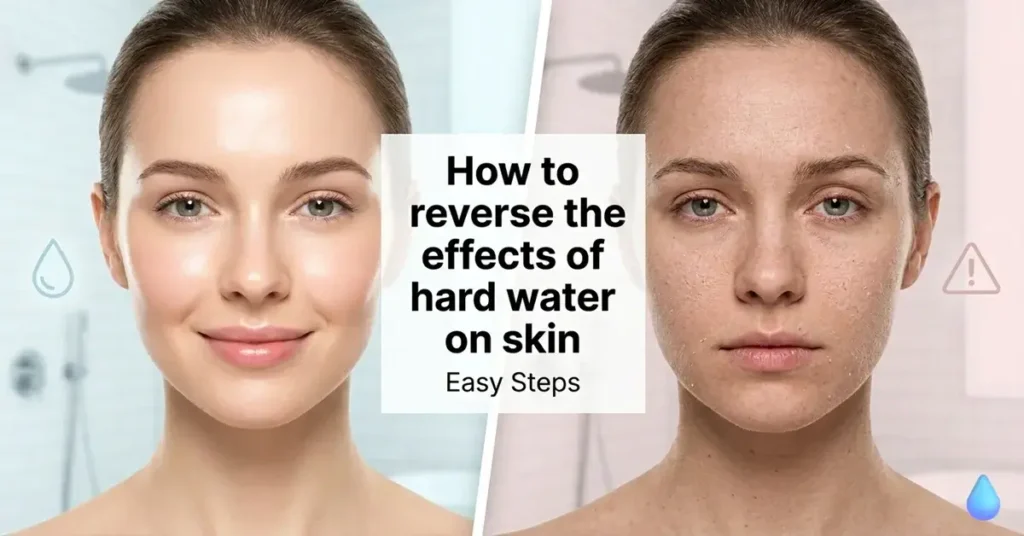
If you’re searching for how to reverse the effects of hard water on skin, here’s the simple truth: yes, you can fix it—but not by just adding more moisturizer.
Hard water leaves a thin layer of minerals on your skin that blocks your cleanser, clogs pores, and slowly weakens your skin barrier.
To reverse it, you need to do three things: remove that mineral buildup (using gentle exfoliation or a chelating cleanser with ingredients like EDTA that help bind and lift away minerals).
Repair your skin barrier with ingredients like ceramides and hydrating humectants, and reduce daily exposure by improving your water (even small changes like a shower filter or a final rinse can help).
Most people miss one of these steps—that’s why their skin never fully recovers.
In this guide, I’ll walk you through everything you need to know about the effects of hard water on your skin—and more importantly, how to actually fix them step by step.
You’ll learn how to tell if hard water is the real cause of your skin issues, what’s really happening beneath the surface, and the exact routine you can follow to restore your skin back to normal.
🧪 Why Hard Water Damages Your Skin (Simple Science)
Hard water is rich in minerals like calcium and magnesium ions, and while that might sound harmless, it can seriously affect your skin over time.
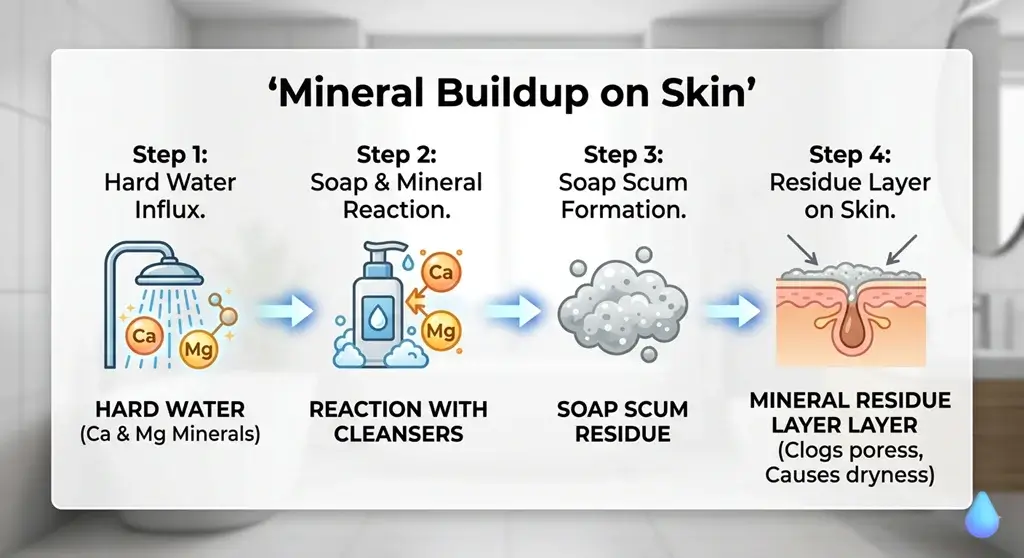
When you wash your face, these minerals react with the surfactants in your cleanser, creating a residue often called soap scum.
This residue doesn’t rinse off easily—it stays on your skin, leading to mineral buildup on skin, clogged pores, and that “not fully clean” feeling many people experience.
But the problem goes deeper than just buildup. This mineral film can disrupt your skin barrier, which is responsible for keeping moisture in and irritants out.
Research From Healthline shows that exposure to hard water is linked to reduced skin hydration, increased irritation, and higher levels of inflammation, especially in sensitive or acne-prone skin. Over time, this can lead to dryness, redness, and even conditions like eczema or breakouts (Source).
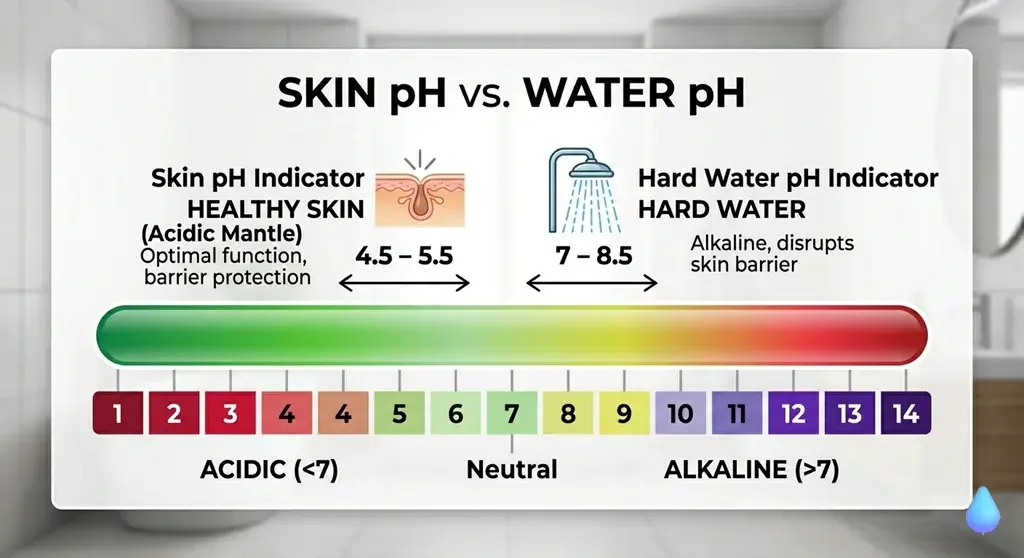
Another key issue is pH imbalance. Hard water tends to be more alkaline, which can interfere with your skin’s natural acidic layer (the acid mantle).
When this balance is disturbed, your skin becomes more vulnerable to bacteria, irritation, and increased transepidermal water loss (TEWL)—a process where your skin loses moisture faster than it can retain it.
In simple terms: hard water doesn’t actually clean your skin properly. Instead, it leaves behind a layer that blocks your products, weakens your skin barrier, and slowly leads to hard water skin damage over time.
🔍 How Hard Water Affects Your Skin (What You’ll Actually Notice)
Hard water doesn’t damage your skin overnight—it shows up slowly, often in ways that are easy to miss or blame on the wrong products.
The effects of hard water on skin are usually subtle at first, but they build up over time and can completely change how your skin looks and feels.
One of the most common signs is persistent dryness, especially right after washing your face or showering. Your skin may feel tight, rough, or slightly irritated—even if you’re using a good moisturizer. This happens because mineral residue prevents your skin from holding onto moisture properly.
You might also notice that your skincare products stop working the way they used to. Cleansers don’t fully cleanse, serums don’t absorb well, and moisturizers sit on top of your skin instead of penetrating.
This is a classic sign of mineral buildup on skin, which creates a barrier between your skin and your prod
For many people—especially those with oily or acne-prone skin—hard water can lead to clogged pores and u. The residue left behind can tra
Over time, hard water can also make your skin more sensitive and reactive. You may experience redness
💡 Quick Reality Check:
If your skin feels worse after cleansing—not better—hard water might be the hidden reaso
signs of hard water on skin (How to Tell for Sure)
Not sure if hard water is actually affecting your skin? These are the most common signs of hard water skin damage—and once you notice them, it becomes much easier to fix the problem.
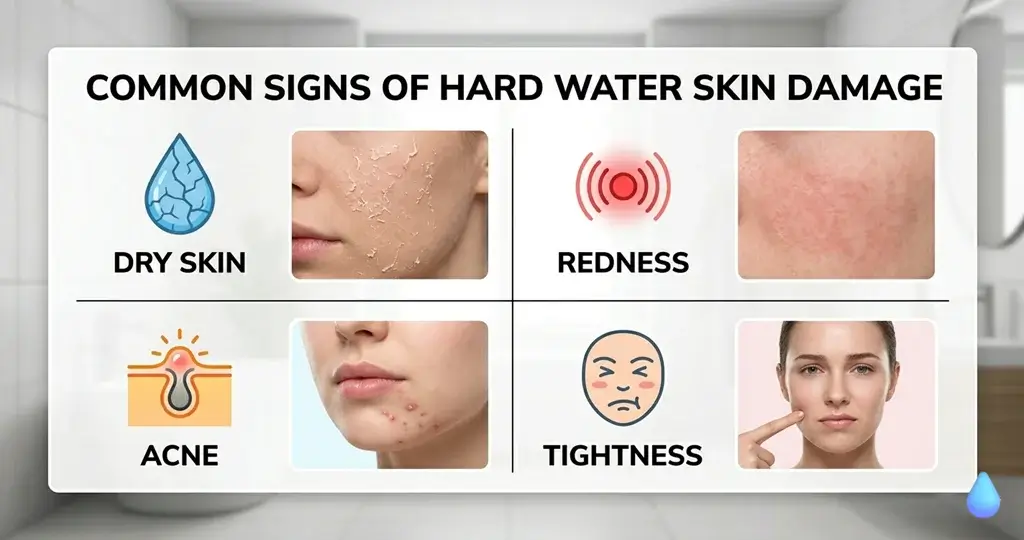
1. Dry, Tight Skin After Washing
If your skin feels dry, tight, or slightly uncomfortable right after cleansing, that’s a major red flag. Hard water leaves behind mineral residue on skin, which prevents moisture from being retained properly.
2. Increased Acne or Clogged Pores
Breakouts that don’t make sense? Hard water can trap oil, dirt, and bacteria on your skin, leading to clogged pores and hard water acne, even if your routine is correct.
3. Irritation, Redness, or Sensitivity
If your skin suddenly becomes more sensitive or reactive, hard water might be weakening your skin barrier, making it easier for irritation and redness to appear.
4. Your Skincare Products Stop Working
One of the most overlooked signs: your products feel less effective. This happens because mineral buildup creates a layer that blocks proper absorption.
💡 Quick Tip:
If you notice 2 or more of these signs consistently, there’s a high chance hard water is affecting your skin.
Can You Really Reverse Hard Water Damage?
You might be wondering: Can you reverse hard water damage? The short answer is yes, but it depends on the severity and duration of exposure. Here’s how it works:
1. Temporary vs Chronic Damage
- Temporary damage ✅: dryness, minor irritation, dullness—usually improves quickly once mineral buildup is removed.
- Chronic exposure ⚠️: long-term exposure weakens your skin barrier, causing deeper damage that takes longer to repair.
2. Timeline for Recovery
- Immediate (1–3 days): skin feels less tight, minor dryness improves.
- Short-term (2–4 weeks): noticeable improvement in hydration, fewer breakouts, better product absorption.
- Long-term (6+ weeks): skin barrier fully restored with consistent routine and reduced exposure to hard water.
3. Key Steps That Make a Difference
- Use chelating cleansers to remove mineral buildup.
- Repair your skin barrier with ceramide and hyaluronic acid moisturizers.
- Minimize exposure using shower filters or final filtered water rinse.
- Avoid over-cleansing or harsh exfoliants that worsen effects of hard water.
- investing in natural skin and hair products
4. Monitoring Your Progress
- Track changes in tightness, redness, and breakouts.
- Adjust your routine if improvements are slow—sometimes your skin type or water hardness affects recovery speed.
💡 Pro Tip:
Consistent steps and patience are key. Reversing hard water damage isn’t instant, but a structured approach gives real results without relying on guesswork.
how to reverse the effects of hard water on skin (Step-by-Step Plan)
Reversing hard water skin damage requires a structured approach. Here’s a step-by-step plan that covers both removing mineral buildup and restoring your skin barrier for long-lasting results.
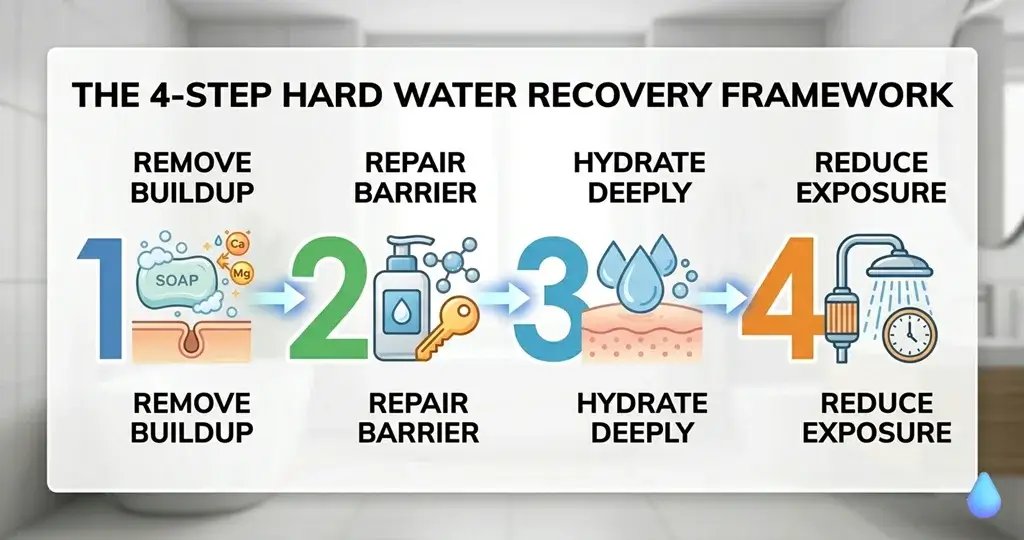
Step 1: Remove Mineral Buildup
- Gentle exfoliation (1–2 times per week) to slough off dead skin cells and trapped minerals.
- Chelating cleansers containing EDTA or citric acid help bind calcium and magnesium ions, lifting the minerals off your skin.
🟢 Pro advice : Avoid scrubs with harsh microbeads—they can irritate already compromised skin.
Step 2: Repair Your Skin Barrier
- Ceramides: strengthen the lipid barrier and lock in moisture.
- Hyaluronic acid: attracts and holds water, hydrating deep layers of the skin.
- Avoid harsh actives temporarily: Retinoids or strong acids can worsen barrier damage in the first weeks.
Step 3: Hydrate Deeply
- Layering hydration: apply serum first, then moisturizer to seal in water.
- Occlusives if needed: petrolatum or shea butter at night for extra protection.
💡 Pro Tip: Applying moisturizer on slightly damp skin maximizes absorption.
Step 4 – Reduce Hard Water Exposure
- Shower filters: reduce minerals before they hit your skin.
- Shorter showers: limit exposure to hot, mineral-rich water.
- Final rinse with filtered water: removes residual minerals from skin and hair.
🧾 Quick Summary Table
💥 Golden Tip for Acne-Prone Skin:
If you struggle with water-induced acne, focus on Step 1 + Step 2 consistently. Removing mineral buildup and repairing your skin barrier reduces clogged pores and bacterial overgrowth.
Use non-comedogenic ceramide moisturizers and gentle chelating cleansers to prevent breakouts while fixing the underlying hard water damage.
🧴 Skincare routines to combat hard water effects (Step-by-Step)
To truly protect your skin from hard water skin damage and see visible improvements, it’s not enough to just use a moisturizer or cleanser. Follow this daily routine designed to remove mineral buildup, repair your skin barrier, and lock in hydration.
1️⃣ Cleanser – Remove Mineral Residue
- Use a chelating cleanser containing EDTA or citric acid to bind calcium and magnesium.
- Frequency: once or twice daily, depending on skin sensitivity.
💡 Pro Tip: Avoid harsh exfoliating scrubs—they can worsen barrier damage.
2️⃣ Toner – Restore Skin pH and Barrier
- Apply a hydrating, pH-balancing toner with ingredients like aloe vera or glycerin.
- Purpose: Neutralizes leftover minerals, restores acid mantle, and prepares skin for hydration.
💡 Pro Tip: Gently pat toner on damp skin to enhance absorption.
3️⃣ Serum – Deep Hydration & Repair
- Use hyaluronic acid, niacinamide, or ceramide serums to repair the skin barrier and retain moisture.
- Targeted benefit: Reduces dryness, irritation, and water-induced acne.
💡 Pro Tip: Layer your serum before moisturizer while skin is still slightly damp.
4️⃣ Moisturizer – Lock in Hydration
- Choose a non-comedogenic, ceramide-rich moisturizer suitable for your skin type.
- Purpose: Seal in hydration and support barrier repair.
💡 Pro Tip: For acne-prone skin, opt for lightweight gels or lotions instead of heavy creams.
5️⃣ Sunscreen – Protect Skin from Environmental Stress
- Apply broad-spectrum SPF 30+ every morning.
- Protects your recovering barrier from UV damage and environmental aggressors.
💡 Pro Tip: Even short exposure to sunlight can compromise barrier repair, so don’t skip sunscreen.
🧬 Can Hard Water Cause Acne?
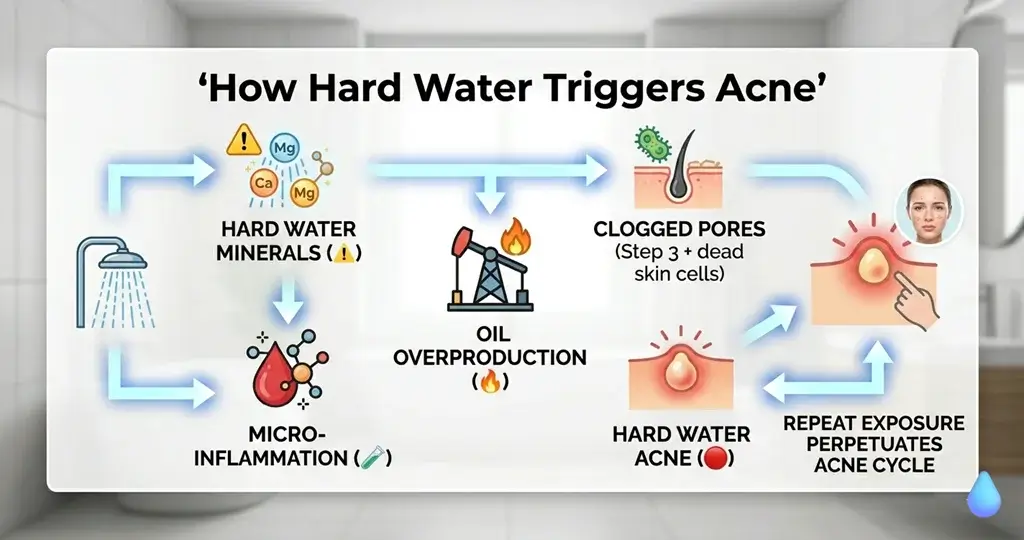
Hard water can be a hidden trigger for acne that many people overlook. Even if your skincare routine seems perfect, mineral residue from hard water can clog pores, leading to breakouts.
On top of that, dryness caused by mineral buildup can make your skin overproduce oil, creating a perfect storm for water-induced acne.
Finally, the alkaline pH of hard water can disrupt your skin’s natural acid mantle, making it more prone to irritation and bacteria growth.
How to Fix Hard Water Acne
- Double Cleansing – Start with a gentle chelating cleanser to remove minerals, then follow with your regular cleanser to fully clean your skin.
- Barrier Repair – Use ceramide-rich moisturizers and hydrating ingredients like hyaluronic acid to restore the skin barrier and reduce inflammation.
- Avoid Over-Cleansing – Harsh scrubs or excessive washing can strip natural oils, worsen dryness, and trigger more acne.
💡 Expert Advice:
For those prone to water-induced acne, consider a final rinse with filtered water after washing your face or showering. This simple step removes leftover minerals that can clog pores and worsen breakouts.
Consistency is key—doing this daily can drastically reduce flare-ups over time.
🧬 Does Hard Water Cause Dry Skin? (Hidden Culprit)
Many people wonder: “does hard water cause dry scalp & skin?” The answer is yes — and more often than you think.
Even if your moisturizer is rich, hard water can leave a thin mineral film on your skin, which blocks hydration and weakens your skin barrier. Over time, this leads to persistent dryness, tightness, and irritation, especially for sensitive or acne-prone skin.
Key Mechanisms
- Mineral Residue Blocks Moisture – Calcium and magnesium ions combine with cleansers and leave a layer that prevents water retention.
- Weakened Skin Barrier – Hard water can disrupt the acid mantle and outer lipids, making it harder for your skin to stay hydrated.
- Alkaline pH – The higher pH of hard water can trigger irritation, dryness, and exacerbate water loss.
Quick Fixes for Dry Skin
- Chelating Cleansers (EDTA or citric acid) to remove mineral buildup.
- Barrier Repair with ceramide-rich or hyaluronic acid moisturizers.
- Filtered Water Rinse – Splash your face with filtered water at the end of your shower to remove leftover minerals.
- Shorter Showers with lukewarm water to minimize exposure.
💡 Golden Tip:
If your skin feels tight immediately after washing, try the filtered water splash before applying moisturizer. This simple step alone can make a huge difference in how well your skin absorbs hydration and prevent water-induced dryness.
🚿 Shower Filter vs Water Softener (What Actually Works?)
If you’ve been struggling with hard water skin damage, you might be wondering: Which solution really works — a shower filter or a full water softener? Here’s a simple comparison:
| Option | Pros | Cons |
|---|---|---|
| Shower Filter | Easy to install and maintain | Limited effectiveness; only filters water at the shower head |
| Water Softener | Highly effective; reduces hardness throughout the home | Expensive installation and maintenance |
Takeaway:
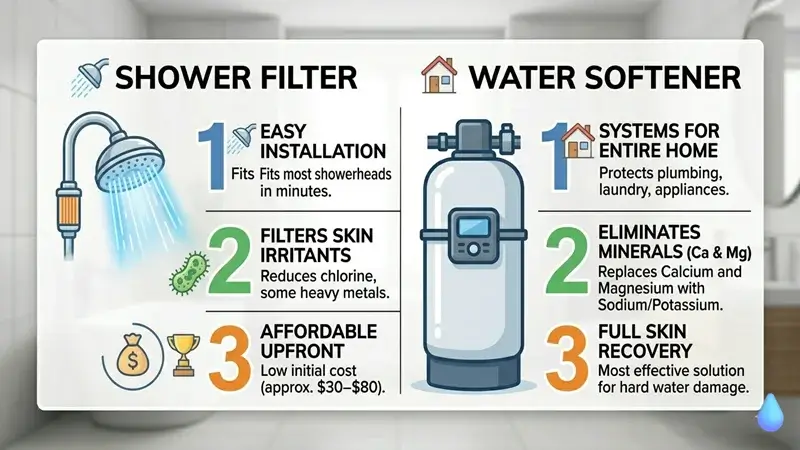
- Shower filters are a great first step if you want an affordable and convenient solution for face and body.
- Water softeners provide a more comprehensive fix, especially if hard water is affecting your hair, laundry, and overall skin condition.
💡 Pro Tip:
Even with a shower filter, combining it with chelating cleansers and barrier-repair moisturizers maximizes your results and reduces water-induced dryness and acne.
⏳ How Long Does It Take to See Results?
Recovery from hard water damage depends on how severe the exposure is and how consistently you follow your routine:
- 3–7 days: Minor improvement in tightness and dryness.
- 2–4 weeks: Noticeable hydration, reduced breakouts, and better product absorption.
- 6+ weeks: Skin barrier mostly restored, long-term protection against mineral buildup.
Have you ever tried filtering your water or using a softener to improve your skin? 💬
We’d love to hear your experience — share your story in the comments below!
FAQ About hard water skin
Mineral buildup from hard water can irritate sensitive skin and weaken the skin barrier, which may trigger redness, flushing, and inflammation associated with rosacea.
Coconut oil acts as an occlusive moisturizer, sealing hydration, but it doesn’t clean minerals left by hard water. For best results, combine it with a chelating cleanser.
Hard water can contribute to dullness and uneven tone. Prevent this by using SPF daily, cleansing properly, and reducing mineral residue with filtered water.
Use a gentle chelating cleanser, avoid over-cleansing, and support your skin with ceramides and hydrating ingredients to reduce clogged pores and breakouts.
Use mild exfoliation, natural hydrators like aloe vera, and rinse with filtered water to gradually reverse hard water damage.
Hard water leaves a mineral film that blocks moisture and disrupts the skin barrier, leading to tight, dry skin even after moisturizing.
The buildup left on your skin can trap oil and bacteria, increasing the risk of acne and blackheads.
These ingredients bind minerals and help remove buildup, allowing your skin to stay clean and hydrated.
Taking care of your skin in a world of hard water isn’t always easy—but now you know exactly how to reverse the effects of hard water on skin in a simple, effective, and realistic way. With the right routine, a bit of patience, and smart product choices, your skin can absolutely recover and feel healthy again.
Thank you so much for taking the time to read this guide 💕 I truly hope it helped you understand what’s really happening to your skin—and more importantly, how to fix it.
✨ If you found this helpful, don’t forget to subscribe so you never miss new skincare tips designed to make your routine easier and more effective.
💬 And I’d love to hear from you:
Have you experienced hard water damage before? What worked for you? Share your journey in the comments—your experience might help someone else too.
Remember, your skin doesn’t need perfection… it just needs the right care 💫

Akram Boulaid is a dedicated Skincare Researcher and Analyst with over 7 years of intensive focus on dermatology and cosmetic ingredient science. As a globally recognized expert, his insights have been featured in major international publications, including the New York Post and GB News. A verified expert on Qwoted, Akram connects with health journalists to provide evidence-based analysis. He founded Beauty Blurb to bridge the gap between complex clinical data and practical skincare routines, specializing exclusively in the needs of oily and acne-prone skin through rigorous analysis of peer-reviewed scientific literature.