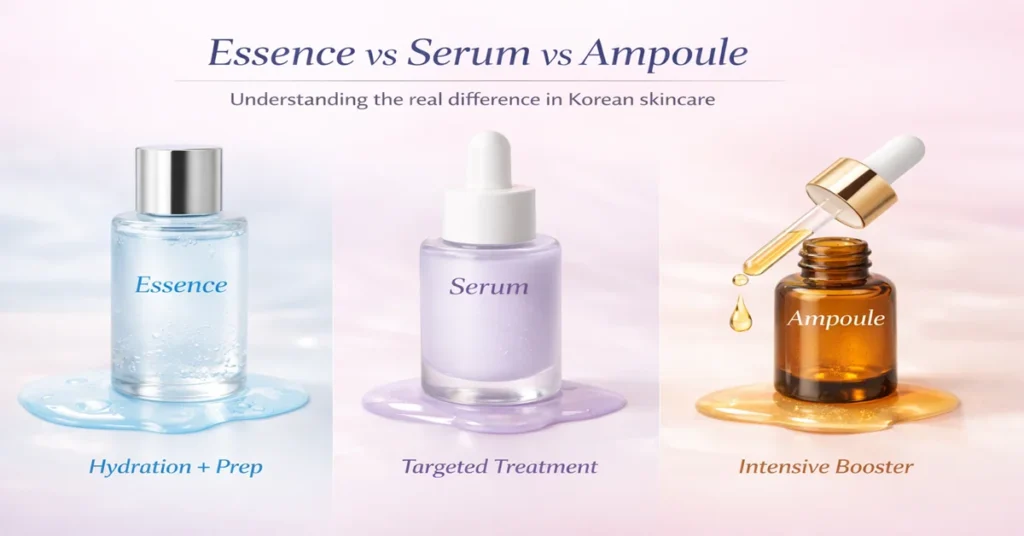
An essence is mainly used to hydrate and prepare the skin for better absorption, a serum targets specific concerns like acne, dark spots, or wrinkles with concentrated active ingredients, while an ampoule is a more intensive treatment designed to give the skin a powerful boost when it needs extra care or faster results.
In this guide, we’ll break down everything you need to know about these popular Korean skincare products in a simple and practical way.
You’ll learn how each product works, the correct layering order, which one is best for your skin type, whether you really need all three, and how to choose the right option for concerns like dryness, acne, sensitivity, or anti-aging.
What Is an Essence?
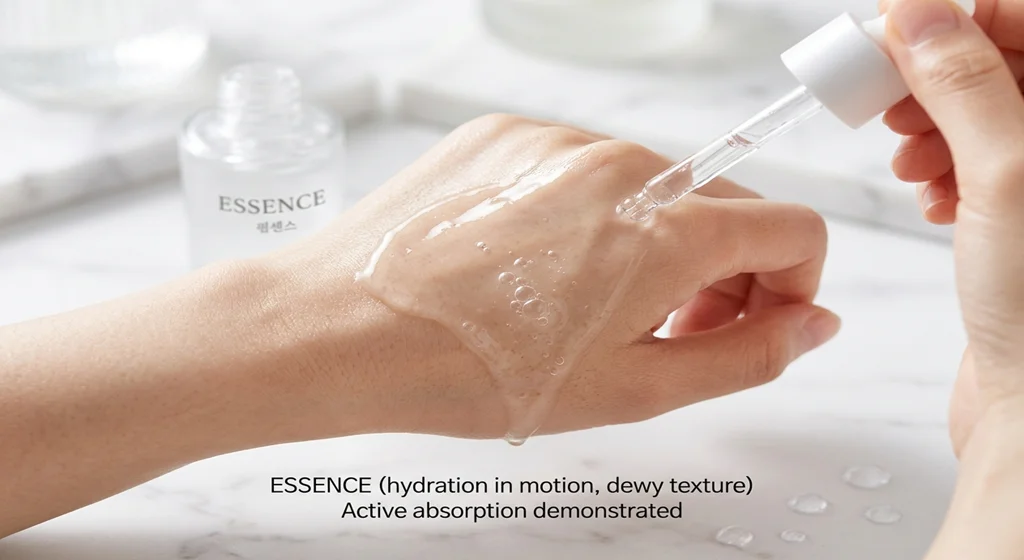
An essence is one of the hidden secrets of Korean skincare. It is a very lightweight skincare product designed to deeply hydrate the skin while significantly improving the absorption of the products that come after it in your routine.
Think of it like this: in Korean skincare routines, essence is used as a preparatory step after cleansing and sometimes after toner, depending on your routine. It adds an extra layer of hydration without making the skin feel heavy, greasy, or oily.
Unlike thick creams or highly concentrated treatments, essence focuses more on long-term skin health and balance. It helps keep the skin in a stable, healthy condition over time rather than acting as a harsh or intensive treatment.
Most essences have a watery or silky-light texture, which makes them perfect for Korean skincare routines, whether you follow a simple 5-step routine or a more advanced 10-step routine.
If your skin often feels tight, dull, dehydrated, or sensitive, adding an essence can make it softer, calmer, and more hydrated without clogging pores.
What Does an Essence Do?
Let’s make this simple and clear — the main role of an essence is to lightly hydrate the skin and prepare it for the rest of your skincare routine.
Think of dry skin like a hard sponge. If you apply a thick serum or cream directly, it won’t absorb properly. Essence is like Water wetting that sponge first, it makes the skin softer and ready to fully absorb everything you apply afterward, increasing the effectiveness of your routine.
A good essence can help:
- Add an extra hydration layer to prevent dryness and water loss
- Improve product absorption, making serums and ampoules more effective
- Support the skin barrier and maintain balance
- Soothe irritation and sensitivity with calming ingredients
- Improve overall skin texture and give a healthy glow over time
Many Korean skincare essences also contain fermented ingredients, which are widely used in K-beauty because they help improve hydration, texture, and radiance while remaining gentle on sensitive skin.
Common Ingredients in Essences
Some of the most common ingredients found in essences include:
- Hyaluronic Acid — helps attract and retain moisture in the skin
- Fermented Extracts — widely used in Korean skincare for hydration and a healthy glow
- Rice Extract — helps brighten and smooth dull skin
- Snail Mucin — one of the most popular K-beauty ingredients for skin repair and deep hydration
- Glycerin — a classic humectant that keeps the skin soft and well-hydrated
These ingredients work together to keep the skin hydrated, healthy-looking, and well-prepared for stronger treatment steps like serums or ampoules.
Who Should Use an Essence?
Essence can be beneficial for almost all skin types, but it is especially useful if your skin needs extra hydration or barrier support.
You should consider using an essence if you have:
- Dry skin that feels rough or flaky.
- Dehydrated skin that feels tight even after moisturizing.
- Sensitive skin that reacts easily to strong active ingredients.
- A weakened or damaged skin barrier caused by over-exfoliation or harsh products.
This isn’t just marketing. A 2023 study published in the Journal of Clinical Medicine found that daily use of galactomyces ferment filtrate. the hero ingredient in many Korean essences — significantly reversed signs of aging including wrinkles, dark spots, and roughness over 12 months (Source).
Even oily or acne-prone skin can benefit from a lightweight essence, especially when the skin is dehydrated due to acne treatments or over-cleansing.
What Is a Serum?
A serum is a highly concentrated skincare treatment designed to deliver active ingredients in much higher potency compared to an essence.
While essences focus on hydrating and preparing the skin, serums go deeper by directly targeting specific skin concerns in a more powerful and effective way. They are widely used in both Western and Korean skincare because they can deliver visible, long-term improvements in the skin.
Think of it like this: if your skin is a thick wall, moisturizers protect the surface, but a serum is like a smart liquid with tiny molecular particles that can pass through the surface layers and reach deeper areas where real change happens.
Once inside, it delivers a concentrated “treatment dose” that works on problems such as dark spots, wrinkles, acne, or uneven texture.
In simple terms, if essence is the preparation step that wakes the skin up, serum is the problem-solving step that goes in and actively repairs and improves it.
Texture & Consistency of serum
Serums are usually thicker than essences but still lighter than moisturizers.
Their texture can vary depending on the formulation:
- Watery serums (often hydrating or vitamin-based).
- Gel-like serums (common for calming or acne-prone skin).
- Slightly silicone-based serums (used for smoothing texture and blurring pores).
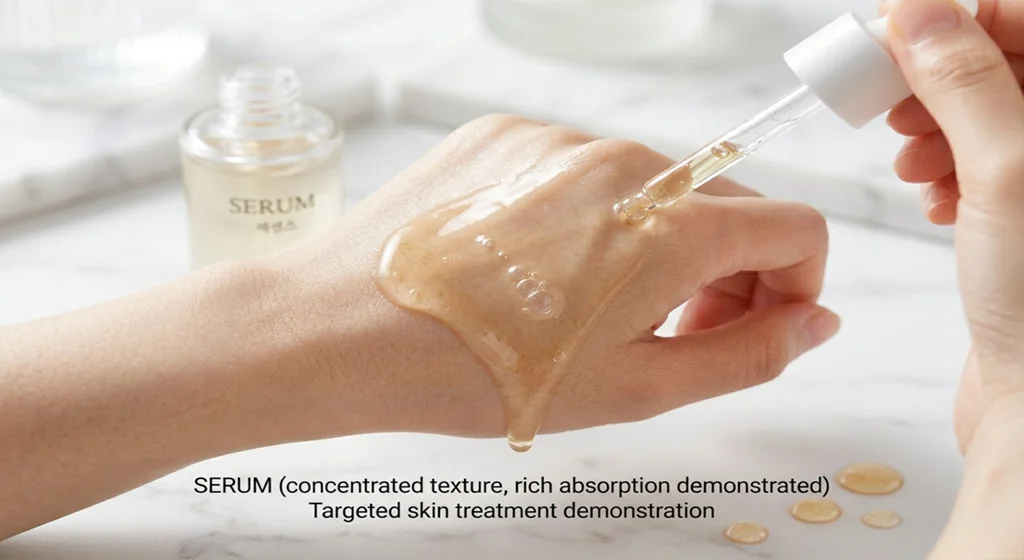
Even though serums feel lightweight, they are packed with active ingredients, which makes them more intense and results-driven compared to essences.
What Does a Serum Do for Your Skin?
A serum is specifically designed to target skin concerns rather than just provide general hydration.
It works by delivering concentrated active ingredients that can penetrate deeper into the skin due to their smaller molecular size. This allows serums to focus on real issues such as acne, dark spots, fine lines, wrinkles, and uneven skin tone.
In simple terms, if essence supports hydration and balance, serum is the step that actually fixes skin problems at a deeper level.
Key Ingredients to Look For
Serums often contain powerful active ingredients such as:
- Vitamin C — helps brighten skin and reduce dullness.
- Retinol — supports skin renewal and anti-aging.
- Niacinamide — helps minimize pores and even out skin tone.
- Hyaluronic Acid — boosts hydration and plumps the skin.
- Peptides — support firmness and improve elasticity.
- AHA/BHA (like salicylic acid) — exfoliate dead skin cells and improve skin texture.
Who Should Use a Serum?
Serums are best suited for:
- Anyone dealing with specific skin concerns like dark spots, acne, or fine lines.
- People who want visible, results-driven skincare.
- Intermediate to advanced skincare users who understand their skin needs.
A March 2025 randomized study in the Journal of Cosmetic Dermatology, showed that a niacinamide-based serum achieved significant pigmentation reduction comparable to prescription hydroquinone.
while also improving skin hydration and barrier function, something hydroquinone failed to do (Source).
👉 If you have oily or acne-prone skin, it’s especially important to choose the right serum for your concerns. I’ve already prepared a guide on the best Korean serums for oily skin, where each serum is matched to a specific skin problem — make sure to check it before choosing one.
Final Insight:
When comparing serum vs essence, the difference is clear: essence prepares your skin and builds hydration, while serum is the step that actively transforms your skin by targeting deeper concerns over time.
What Is an Ampoule?
An ampoule is the most concentrated skincare product among the three: essence, serum, and ampoule. It is designed to deliver a very high dose of active ingredients in a short period of time, making it more of an intensive treatment rather than an everyday skincare step.
The name itself comes from the medical and pharmaceutical world, where “ampoules” refer to small sealed vials used to store powerful, single-use formulas in a highly concentrated form.
In Korean skincare, ampoules are often considered a “booster step” — something you use when your skin needs extra help, faster results, or recovery support rather than long-term maintenance.
Think of it like this: if essence is hydration preparation and serum is targeted repair, then ampoule is the emergency rescue team that arrives when the skin needs a powerful intervention.
Texture & Consistency
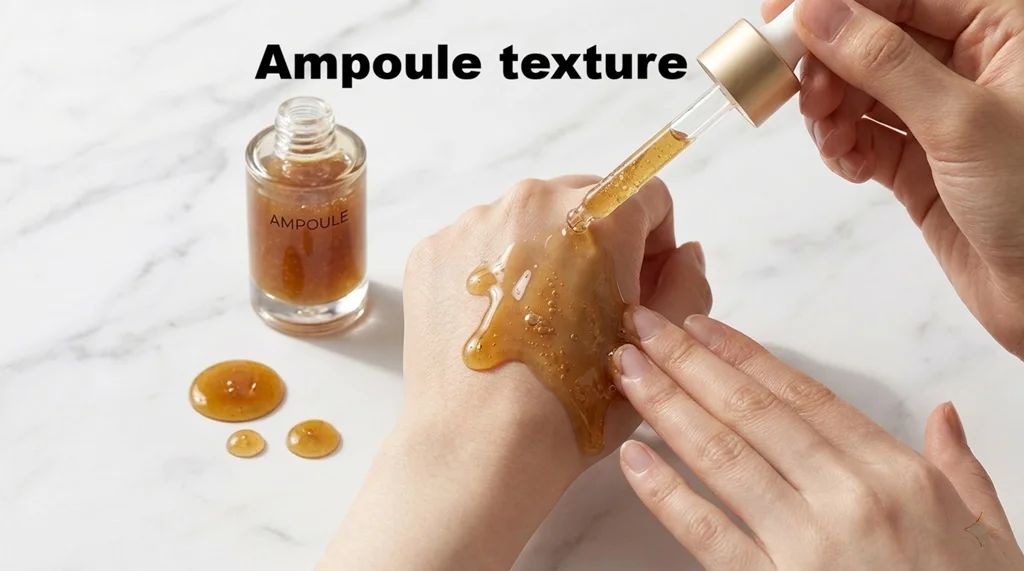
Ampoules usually come in small dropper bottles or single-use vials, depending on the brand and formulation.
Their texture is often more viscous and richer than serums, although this can vary depending on the ingredient profile. Because of their high concentration, only a few drops are enough to cover the entire face.
A useful way to understand it: where a serum is already “strong,” an ampoule feels like a concentrated extract of that strength — refined into a smaller, more powerful dose.
What Does an Ampoule Do for Your Skin?
An ampoule delivers an intense burst of active ingredients directly to the skin, making it ideal for short-term treatment plans rather than long-term maintenance.
It is often used in “treatment courses” lasting 7 to 14 days, depending on the skin concern and formulation.
In simple terms, if serum is the problem-solver, ampoule is the results accelerator — the product you turn to when you want visible improvement in a shorter time.
This is where the comparison of ampoule vs serum becomes important: while serums work steadily over time, ampoules focus on fast, concentrated action.
Key Ingredients to Look For
Ampoules often contain high-performance active ingredients such as:
- Growth factors — support skin regeneration and repair.
- High-dose niacinamide — helps improve tone and reduce imperfections.
- Concentrated vitamin C — boosts brightness and reduces dullness.
- Peptide complexes — improve firmness and skin structure.
- Adenosine — known for its anti-aging and smoothing benefits.
These ingredients are usually delivered at higher concentrations than in serums, which is what gives ampoules their intensive effect.
Who Should Use an Ampoule?
Ampoules are best suited for:
- Experienced skincare users who understand how their skin reacts to actives.
- People dealing with a specific or urgent skin concern (breakouts, irritation, dullness).
- Pre-event skin preparation (such as weddings or important occasions).
- Short-term seasonal treatment courses, especially during harsh weather changes.
Ampoule results are real and measurable. Three clinical studies on peptide-vitamin C ampoules showed an 11.5% reduction in wrinkles after just 29 days, with skin cell turnover accelerating from 19.2 to 17.1 days — that’s the intensive, fast-acting difference that makes ampoules worth it (Source).
In simple terms, an ampoule is not something you always need — but when you do need it, it becomes one of the most powerful tools in your skincare routine.
Comparison Table: Essence vs Serum vs Ampoule
| Feature | Essence | Serum | Ampoule |
|---|---|---|---|
| Concentration | Low–Medium | Medium–High | Highest |
| Texture | Watery, thin | Light to medium | Concentrated, dropper-based |
| Primary Purpose | Hydration + prep | Targeted treatment | Intensive booster |
| When to Use | AM + PM | AM + PM | As needed / treatment courses |
| Frequency | Daily | Daily | Weekly or short cycles |
| Skin Type | All skin types | All (depends on formula) | Targeted / specific concerns |
| K-Beauty Origin | Yes | Both East & West | Medical-inspired K-beauty |
| Price Range | $15–$60 | $20–$100+ | $25–$120+ |
| Routine Step | After toner | After essence | After essence, before/with serum |
how to Layer Essence, Serum, and Ampoule in Your Routine
When it comes to essence serum ampoule order, the biggest mistake people make is focusing on how many products they use instead of how they layer them correctly. In Korean skincare, layering is not about quantity — it’s about allowing each step to absorb properly so the next one can work more effectively.
1: The Golden Rule: Thinnest to Thickest
Skincare layering always follows one simple principle: apply from the lightest texture to the heaviest. This ensures proper absorption and prevents products from sitting on top of the skin without delivering results.
The correct layering essence serum ampoule routine looks like this:
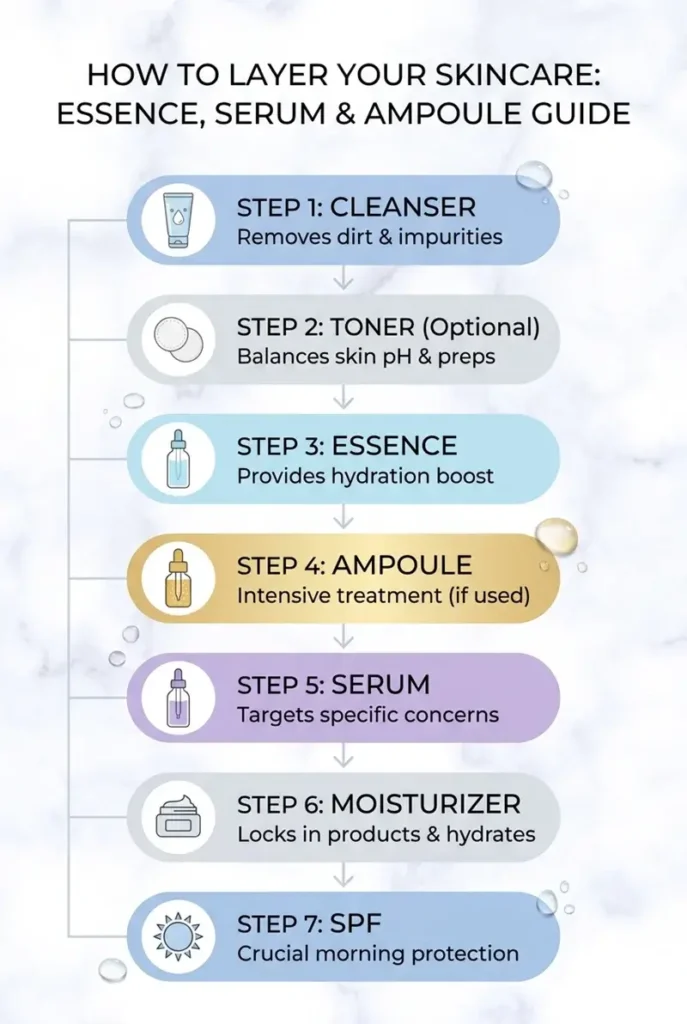
- Cleanser.
- Toner (Optional).
- Essence ← hydration + prep step.
- Ampoule ← optional booster (before serum if both are used).
- Serum ← targeted treatment step.
- Moisturizer.
- SPF (morning only).
Think of it like building layers of support: essence prepares the skin, serum treats it, and ampoule boosts it when needed.
2: How Long to Wait Between Layers?
You don’t need to wait long between steps, but giving each layer a moment helps improve absorption.
- Wait around 30–60 seconds between each product
- Gently pat, don’t rub, especially after applying essence
- Let the skin naturally absorb each layer before moving to the next
This simple habit can significantly improve how effective your routine feels.
3: Can You Use All Three Together?
Yes — but not always.
Using essence, serum, and ampoule together is possible, but it depends on your skin’s needs and how much treatment your skin can handle.
- Yes, you can layer all three.
- But it’s not necessary for everyone.
- It depends on your skin goals and condition.
In some cases, users even mix a drop of ampoule with their essence in the palm before applying it, especially when the skin needs extra hydration and calming in one step.
4: Morning vs Night Routine
Your routine can also change depending on the time of day:
- Morning (AM):
Essence like snail mucin + Vitamin C serum→ a great combination for hydration and brightening throughout the day - Night (PM):
Essence + retinol or peptide serum → or an ampoule treatment course for repair and recovery while you sleep
At night, your skin is more receptive to active ingredients, which makes this the ideal time for stronger treatments.
If you love Korean skincare and want to build a complete routine for oily skin, I highly recommend checking out our detailed guide on Korean skincare routine for oily skin . It covers the exact product order, the best steps for oily and acne-prone skin, and how to avoid the most common mistakes that make oily skin worse.
Which One Should You Choose for Your Skin Type?
The truth is, there’s no single “best” option between essence, serum, and ampoule — the right choice depends entirely on your skin type and what your skin is currently struggling with.
Dry skin usually benefits more from hydration-focused products like essences, while oily or acne-prone skin often sees better results from targeted serums.
Ampoules, on the other hand, are best used when your skin needs an extra boost or intensive treatment for a short period of time.
If You Have Dry Skin
If your skin often feels tight, flaky, or rough, hydration should be your main priority.
Start with a hydrating essence to help your skin hold moisture more effectively throughout the day. Then follow with a hydrating serum, especially one containing ingredients like hyaluronic acid, peptides, or ceramides.
An ampoule is optional, but it can be extremely helpful during winter or when your skin barrier feels damaged and dehydrated.
A good routine for dry skin could look like this:
- Hydrating essence.
- Hyaluronic acid serum.
- Moisturizer.
- Optional moisture-repair ampoule at night.
If You Have Oily or Acne-Prone Skin
Many people with oily skin think they should avoid hydration completely, but dehydrated oily skin can actually produce even more oil.
Instead of skipping hydration, focus on lightweight formulas.
Choose:
- A lightweight fermented essence.
- A niacinamide or BHA-based serum.
- A targeted ampoule only when needed.
For oily or acne-prone skin, the goal is balance — not stripping the skin dry.
If you’re comparing essence vs serum for oily skin, the serum usually plays the bigger role because it actively targets acne, pores, excess oil, and post-acne marks.
If You Have Combination Skin
Combination skin usually needs flexibility rather than a complicated routine.
A lightweight essence works well to keep the skin hydrated without feeling greasy, while a niacinamide serum can help balance both oily and dry areas at the same time.
Ampoules are usually best used occasionally or only on targeted zones instead of the entire face.
For example:
- Use an ampoule only on dry cheeks.
- Or use a calming ampoule on irritated areas during breakouts.
If You Have Sensitive Skin
Sensitive skin needs a slow and gentle approach.
Instead of introducing multiple products at once, add one step at a time so your skin can adjust properly.
Look for calming ingredients such as:
- Centella asiatica.
- Madecassoside.
- Panthenol.
- Ceramides.
A soothing essence is often the safest starting point for sensitive skin because it focuses more on hydration and barrier support rather than aggressive treatment.
If you plan to use an ampoule, avoid high-concentration formulas in the beginning until your skin becomes more comfortable with active ingredients.
If You’re on a Budget
You do not need to buy an essence, serum, and ampoule all at once.
If you’re building your first skincare routine, start with one good serum that targets your main skin concern. This usually gives the most noticeable results for the money.
For many Western skincare users, essence is the most optional step of the three, while ampoules are better saved for specific goals like barrier repair, brightening, or intensive hydration treatments.
In simple terms:
- Start with a serum.
- Add an essence if your skin needs more hydration.
- Use an ampoule only when your skin needs extra support or faster results.
A simple routine done consistently will always work better than a complicated routine you can’t maintain.
Skincare Myths You Should Stop Believing
There’s a lot of confusion around essence vs serum vs ampoule, especially in Korean skincare. Many people assume that more expensive, more concentrated, or more complicated automatically means better — but that’s not always true.
Let’s clear up some of the biggest skincare myths.
Ampoules Are Always Stronger Than Serums
Not necessarily. Many ampoules are highly concentrated, but concentration alone does not determine how “strong” or effective a product is.
Some Western serums contain powerful active ingredients like high-percentage retinol, exfoliating acids, or prescription-level actives that can actually be stronger than certain Korean ampoules.
In many cases, Korean ampoules focus more on soothing, hydration, and barrier repair rather than aggressive treatment.
So when comparing ampoule vs serum, the better question is not “Which one is stronger?” but:
“Which one is more suitable for my skin concern?”
Do You Really Need All Three for Good Skin
You really don’t. One of the biggest mistakes people make after discovering Korean skincare is thinking they need a 10-step routine filled with essences, serums, ampoules, masks, and treatments all at once.
The truth is:
- Some people only need a good serum.
- Others benefit more from adding hydration through an essence.
- Ampoules are usually optional and used for short-term skin goals.
A simple routine that you use consistently will almost always perform better than an overloaded routine that irritates your skin.
Western Serums Are Weaker Than Korean Ampoules
This is another common misconception. Korean skincare and Western skincare simply follow different philosophies.
Many Korean products focus on:
- long-term skin health.
- hydration.
- barrier support.
- gentle layering.
Meanwhile, Western serums are often more aggressive and treatment-focused, especially when it comes to ingredients like retinol, glycolic acid, or exfoliating acids.
That means a Western serum can absolutely be stronger than a Korean ampoule depending on the formula and ingredient concentration.
More Layers = Better Results
Not always. Layering too many active products can actually damage your skin barrier, especially if you mix strong serums and ampoules without understanding the ingredients.
Healthy skin is not about using the maximum number of products.
It’s about using the right products in the right order for your skin’s actual needs
Common Mistakes People Make
When learning the difference between essence & serum & ampoule, many people end up damaging their skin or wasting money simply because they use the products incorrectly.
Korean skincare is not just about layering more products — it’s about using the right products in the right way and giving them enough time to work.
- Using an ampoule every single day even when the formula contains highly concentrated active ingredients
- Applying serum before essence, which reduces absorption and weakens the effectiveness of your skincare routine
- Expecting instant results from an essence even though its main role is hydration and long-term skin balance
- Layering too many active ingredients together, such as vitamin C, retinol, and exfoliating acids, without understanding ingredient interactions
- Skipping moisturizer after using a serum or ampoule, which can lead to moisture loss and skin barrier damage
- Judging an essence by its watery texture and assuming it “does nothing” when many essences work gradually and subtly over time
- Buying multiple serums and ampoules at once instead of focusing on one specific skin concern first
- Following complicated Korean skincare routines from social media without understanding what your skin actually needs
Best Products by Category (Optional but Powerful)
To make your choice easier, here are some of the most effective essence, serum and ampoule picks based on real skin needs. These recommendations focus on performance, skin type suitability, and popular Korean skincare logic.
| Category | Product Type | Recommended Product | Rating |
|---|---|---|---|
| Best Essence for Dry Skin | Essence | Missha Time Revolution First Treatment Essence | ★★★★★ |
| Best Serum for Hyperpigmentation | Serum | Beauty of Joseon Glow Deep Serum (Rice + Alpha Arbutin) | ★★★★★ |
| Best Ampoule for Barrier Repair | Ampoule | Skin1004 Madagascar Centella Ampoule | ★★★★★ |
| Best Budget Picks | Mixed | Cosrx Advanced Snail Essence / Serum | ★★★★☆ |
| Best Korean Skincare Picks | K-Beauty Set | Mixsoon Bean Essence + Beauty of Joseon Serum | ★★★★★ |
you don’t need all three to get results. Start with one strong serum that matches your main concern, then gradually add an essence if your skin needs extra hydration support.
If you want more guidance, explore our detailed skincare guides or drop your skin type — and we’ll help you build the perfect routine for your skin.
FAQ About Ampoule, serum & essence
Essence focuses on hydration and preparing your skin, serum delivers targeted treatment for specific concerns, and ampoule acts as an intensive booster for faster or more powerful results.
The key takeaway is simple: you don’t need all three to build an effective routine, especially when you’re just starting out.
A smart approach is to begin with a serum that targets your main skin concern, then add an essence later if your skin needs extra hydration and better absorption support.
If you’re still unsure where to start, explore our guides on the best serums for different skin concerns — or drop your skin type in the comments, and we’ll help you choose the right routine for your skin.
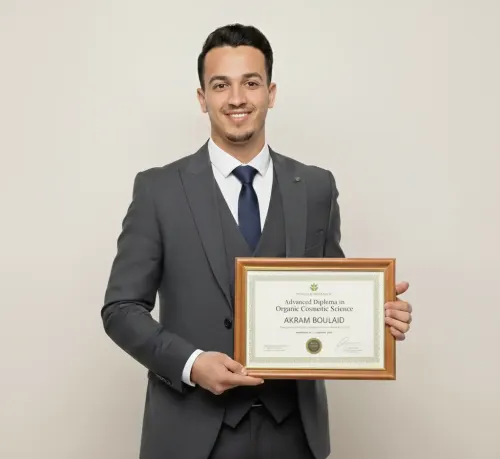
Akram Boulaid is a dedicated Skincare Researcher and Analyst with over 7 years of intensive focus on dermatology and cosmetic ingredient science. As a globally recognized expert, his insights have been featured in major international publications, including the New York Post and GB News. A verified expert on Qwoted, Akram connects with health journalists to provide evidence-based analysis. He founded Beauty Blurb to bridge the gap between complex clinical data and practical skincare routines, specializing exclusively in the needs of oily and acne-prone skin through rigorous analysis of peer-reviewed scientific literature.