
is niacinamide good for oily skin? are well-known — and honestly, they live up to the hype. This multitasking form of vitamin B3 helps your skin stay balanced by reducing excess oil, shrinking the look of pores, and calming redness or breakouts.
If your skin’s always shiny or acting up, niacinamide might be exactly what it needs.

In this article, we’ll explore Best niacinamide benefits for oily skin in detail — from how it works on a cellular level to real user results and how to properly include it in your skincare routine.
Whether you’re new to niacinamide or want to maximize its impact, this guide covers everything you need to know to get clearer, more balanced skin.
🟠 What Is Niacinamide?
Before we dive into is niacinamide good for oily skin Or Not, let’s take a quick step back — because understanding what it actually is makes a huge difference, right?
So, my friend, niacinamide (also known as vitamin B3) is a water-soluble vitamin that your skin absolutely loves. It works deep within your skin cells to support barrier function, reduce inflammation, and improve overall skin tone and texture.
But what makes it really special? It’s gentle, non-irritating, and fits into almost any skincare routine — even if your skin is super oily or sensitive.
It’s not just a trend — it’s backed by science, trusted by dermatologists, and loved by skincare lovers around the world.
is niacinamide good for oily skin: 7 Proven Benefits
Let’s be real — oily skin can feel like a never-ending battle. Blotting sheets, mattifying powders, skincare experiments… we’ve all been there. But here’s where things get interesting: niacinamide isn’t just another trend. It’s one of those rare ingredients that actually understands oily skin.
The benefits of niacinamide for oily skin aren’t just hype — they’re real, proven, and pretty impressive once you see them in action. Ready to find out what this little vitamin can really do? Let’s get into it.
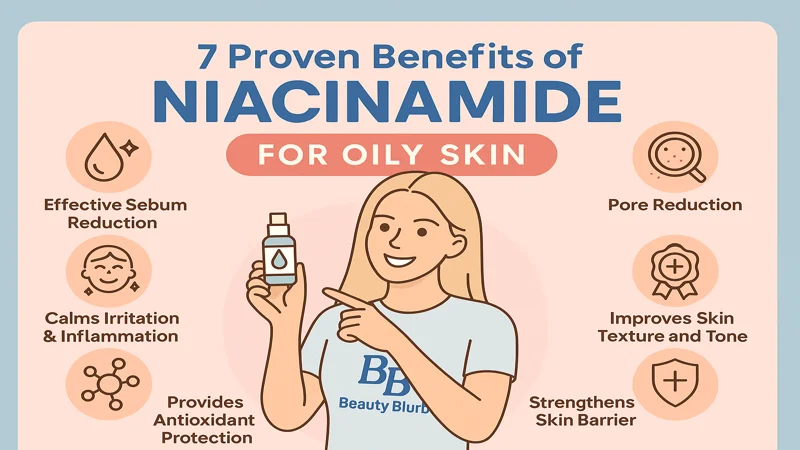
1: Effective Sebum Reduction – Say Bye to That Shine
Niacinamide is proven to significantly reduce sebum production—that’s the oily film that leaves your T-zone looking shiny and your skin feeling congested.
It works by calming and regulating oil output in your sebaceous glands, making your face look smoother and less greasy over time.
A- 📊 What the Science Says
- A solid clinical trial by Dr. Zoe Diana Draelos and team (Wake Forest University) looked at 2% topical niacinamide over 4–6 weeks in two groups—Japanese and Caucasian participants.
- The Japanese group showed a 21–22% decrease in sebum excretion rate (SER) after 4 weeks, while the Caucasian group had significant declines in surface sebum levels over 6 weeks compared to untreated facial areas. Source.
- In another updated analysis, dermatological reviews also confirm that 2–5% niacinamide formulations consistently deliver noticeable sebum reduction in both Asian and Caucasian skin types.
TL;DR: Using 2% niacinamide daily for a month can noticeably decrease oil production, reduce shine, and limit pore congestion.
.
B- 💡 How You Benefit from This
Now, the key question: where should you use this benefit to see real results?
- Serums are your best bet. They often contain 2–5% niacinamide in a lightweight formula, allowing deeper absorption and targeted oil control.
- Toners or cleansing foams can support this benefit too, especially products with niacinamide designed to prep and purify oily skin. But they usually don’t deliver stable concentrations like serums.
- Cleansers with niacinamide can be helpful—but most rinse off too quickly to give real sebum-regulating impact.
So, lovely, if oily skin is something you’re constantly dealing with, adding a niacinamide serum to your routine might be the smartest move.
Why? Because niacinamide serum benefits for oily skin go deeper than surface-level results — they help balance oil production from within, without stripping or irritating your skin.
Look for a serum with 2–5% concentration, and use it consistently in your morning or evening routine for long-term, visible improvements.
2: Pore Reduction — Shrink Those Enlarged Openings
Niacinamide has a calming impact on oily skin that goes deeper than just managing oil. One of its major perks? It helps visibly reduce the appearance of enlarged pores.
When your skin produces less sebum and inflammation goes down, pores look smaller and your complexion appears smoother overall.
📚 What the Science Says For is niacinamide good for oily skin
- A solid clinical study published in the Journal of Cosmetic Dermatology evaluated an emulsion combining niacinamide with botanical extracts over 56 days.
- Participants with oily skin showed noticeable improvement in acne, blackheads, and conspicuous facial pores, all verified by VISIA imaging, dermatologist assessment, and subjective reports. Source.
- Additionally, another randomized trial tested a 4% niacinamide serum (with kinetin) applied twice daily over 12 weeks.
- It showed a 20.8% and 15.9% decrease in pore count at weeks 8 and 12, respectively, compared to the control side of the face
So yes — that’s real, measurable pore-minimizing action in play.
So the next time you’re picking a product, go for a niacinamide serum around 4% concentration, and make it a nightly or twice-daily routine for smoother, less noticeable pores over time.
3: Calms Irritation & Inflammation
Niacinamide isn’t just a superhero for oil control—it’s also a calming BFF for angry, red, or congested skin. The niacinamide benefits for oily skin include reducing inflammation, soothing redness, and helping blemish-prone areas stay chill instead of flaring up.
📚 A scientific study on this
- One comprehensive review published in Skin Pharmacology and Physiology highlights the anti-inflammatory powers of niacinamide—showing that it dampens inflammatory signaling pathways, reduces cytokines like IL‑6 and IL‑8, and helps calm acne-associated redness and swelling.
- That means less irritation even if your skin tends to freak out during mask-wearing, hormonal shifts, or product mixing.
To sum up: niacinamide tackles inflammation at the cellular level, making angry, oily skin feel more balanced and less “reactive.”
4: Improves Skin Texture and Tone
Alright, beautiful, let’s be real: uneven skin texture and patchy tone can be like that one annoying playlist that keeps skipping your favorite song — totally ruining the vibe.
But guess what? Niacinamide is like the DJ who smooths out those bumps and balances the beat, turning your skin into a flawless track.
Niacinamide, also known as Vitamin B3, is a multitasking skincare hero. When applied topically, it helps to improve skin texture and tone by reducing the appearance of uneven pigmentation and fine lines. This results in a smoother, more radiant complexion.
📚 What the Experts Say
- A study published in the Journal of Clinical and Aesthetic Dermatology found that niacinamide significantly improved skin texture and tone in participants with photodamaged skin.
- The study concluded that niacinamide is an effective agent for enhancing skin appearance and reducing signs of aging.
To reap the full benefits of niacinamide, consider incorporating a niacinamide toner into your skincare routine.
Toners help to prepare the skin, allowing for better absorption of subsequent products. Using a toner with niacinamide can enhance its effectiveness in improving skin texture and tone.
💡 Quick Tip: If you’re serious about taming oily skin and want a step-by-step guide that dermatologists actually recommend, don’t miss my article on Dermatologist Recommended Skin Care Routine for Oily Skin — it’s packed with pro tips to keep your skin fresh and shine-free all day!
5: Tackles Acne and Breakouts
If you’re wondering, “is niacinamide good for oily acne-prone skin?” the answer is a resounding yes! Niacinamide isn’t just a hydrator; it’s a breakout buster. For those with oily skin, excess sebum can clog pores and lead to acne.
Niacinamide steps in to regulate oil production, reduce inflammation, and calm active breakouts, giving your skin the relief it craves.
- A study published in the Journal of Clinical and Aesthetic Dermatology found that topical application of niacinamide significantly reduced acne lesions and improved overall skin appearance in participants with oily, acne-prone skin.
To harness the full potential of niacinamide for acne control, consider incorporating a niacinamide serum into your skincare routine. Serums offer higher concentrations of active ingredients and are designed for deeper penetration, making them effective for targeting acne and oily skin concerns.
6: Strengthens the Skin Barrier
If you’ve been battling oily skin, you might think it’s all about controlling shine and breakouts. But here’s the kicker: a compromised skin barrier can make your skin even oilier and more prone to irritation. That’s where niacinamide comes in.
This powerhouse ingredient not only helps regulate oil production but also fortifies your skin’s natural barrier, keeping moisture in and harmful irritants out.
💡 How to Maximize This Benefit
To harness the full potential of niacinamide for strengthening your skin barrier, consider incorporating a niacinamide toner into your skincare routine. Toners help to prepare the skin, allowing for better absorption of subsequent products. Using a toner with niacinamide can enhance its effectiveness in improving skin texture and tone.
7: Boosts Skin Hydration
You might be thinking, “Wait, Does Oily Skin Need Moisturizer, right?” Well, here’s the twist: oily skin can still be dehydrated. When the skin lacks moisture, it can overcompensate by producing more oil.
Niacinamide helps to strengthen the skin’s barrier, reducing water loss and keeping the skin hydrated without adding extra oil. This balance is essential for maintaining healthy, glowing skin.
- A study published in the Journal of Clinical and Aesthetic Dermatology found that niacinamide significantly improved skin hydration and barrier function in participants with oily skin.
- The study concluded that niacinamide is an effective agent for enhancing skin appearance and reducing signs of aging.
You’ve seen it all—how niacinamide tackles excess oil, shrinks pores, calms irritation, evens skin tone, fights acne, strengthens your skin barrier, and boosts hydration.
So if you’ve been wondering, is niacinamide good for oily skin? the answer is a big YES! It’s like your skin’s best friend that helps keep everything balanced and glowing without feeling greasy or heavy.
Ready to give niacinamide a shot? Remember, consistency is key, and choosing the right products—like serums and toners—will make all the difference.
Now, I want to hear from you! What’s your biggest oily skin challenge? Is it:
- Excess shine that won’t quit?
- Annoying breakouts?
- Enlarged pores?
- Redness and irritation?
- Or maybe something else entirely?
Drop your answer in the comments below — let’s chat and help each other out!
🧴 How to Use Niacinamide for Oily Skin (Step-by-Step Guide)
After discovering what are the benefits of using niacinamide for oily skin, now it’s time to get practical and strategic about how to use niacinamide for oily skin — the kind of routine that helps you outshine the pros!
1/ Patch Test First — because even best friends sometimes need a trial
Start small. Apply a tiny bit of product on your jawline or inner arm, and wait 24 hours to make sure your skin gives a thumbs-up (no stinging, burning, or redness).
2/ Cleanse Gently — no stripping allowed
Use a mild, oil-balancing cleanser to wash away makeup, dirt, and excess sebum. Think gentle foam or gel without strong fragrances. Clean skin is key before diving into niacinamide application.
3/Use Toner (Optional But Helpful)
If you’re using a toner, choose one that hydrates and balances pH—this helps your skin better absorb the niacinamide that comes next.
This step also enhances Niacinamide Toner Benefits for Oily Skin by prepping your face for deeper product penetration.
4/ Apply Niacinamide Serum — your main weapon
When it comes to “Is niacinamide good for oily skin?”, here’s the secret sauce: a niacinamide serum is where most of the magic happens.
Use a lightweight serum with around 2–5% niacinamide (up to 10% if your skin tolerates it). Pat it gently on slightly damp skin — this helps absorption and boosts results.
5/ Layer Other Actives the Right Way
Niacinamide loves good company: it plays well with hyaluronic acid, peptides, and even retinol.
However, give vitamin C a 15-minute head-start if you’re layering it too (modern formulas handle it better these days). Stick to the rule: thinner to thicker textures for optimal results.
6/ Moisturize & Protect
Lock in the goodness with a light, non-comedogenic moisturizer—and never skip SPF in the morning. Niacinamide doesn’t replace sunscreen—so use a broad-spectrum SPF to shield your skin and prolong your results.
7/Frequency & Consistency — Duration over intensity
For most oily skin types, using niacinamide once or twice daily is ideal. Consistent use over several weeks leads to visible results—think calmer skin, less shine, and smaller pores.
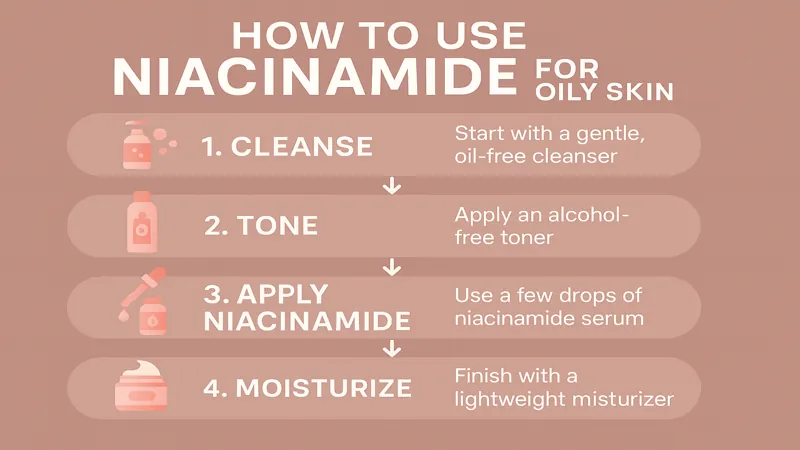
So now you’ve got the full scoop on how to use niacinamide for oily skin like a total pro—serum, toner, routine and all. But wait, before you fully commit, let’s take a moment to talk about something important: Are there any side effects of niacinamide on oily skin? Because even skincare superheroes have their quirks, right?
⚠️ Are There Any Side Effects of Niacinamide on Oily Skin?
Niacinamide is generally loved for being gentle and well-tolerated — but hey, even the most popular skincare ingredients can have their drama moments, especially if misused. So, let’s get real.
1: 📝 Quick Overview: What You Should Know
- Niacinamide is non-irritating for most people.
- Side effects are rare but can happen, especially with high concentrations.
- It’s often the formulation or combination with other actives that causes issues.
- Knowing your skin type and tolerance is key.
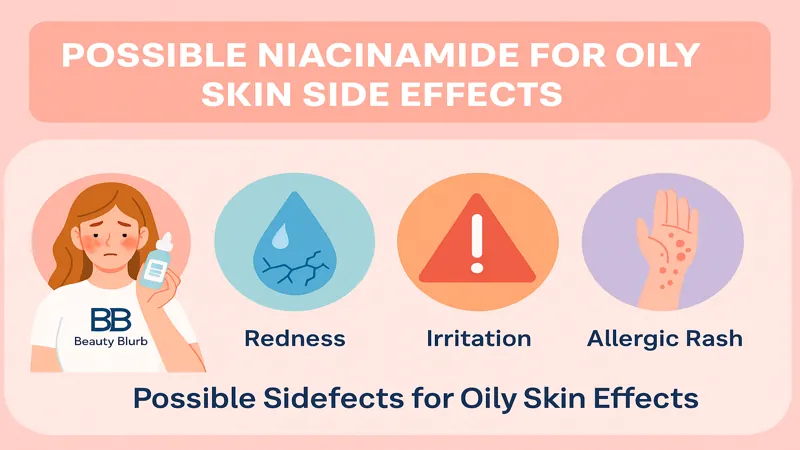
2: Possible niacinamide for oily skin side effects
Temporary Redness or Warmth: Some users feel mild flushing when first applying niacinamide — especially with higher percentages (10%+). It usually goes away within minutes.
Purging (Looks Like Breakouts): Niacinamide doesn’t technically cause purging, but when paired with exfoliants like AHAs or BHAs, it might speed up skin turnover. This can look like acne getting worse before it gets better.
Dry Patches or Flakiness: If you’re overusing it, or mixing it with harsh ingredients like strong retinoids, your skin barrier may freak out a little.
Itching or Burning Sensation: Rare, but may happen if your skin is very sensitive or if you’re using a poorly formulated product.
2: 💡 Tips to Avoid These Side Effects
- Start Low, Go Slow: Begin with 2–5% niacinamide and increase gradually if needed.
- Don’t Mix Too Much: Avoid layering it with too many actives at once (like strong acids or vitamin C unless the formula is designed for it).
- Hydrate Always: Follow with a soothing, non-comedogenic moisturizer.
- Patch Test First: Always! Especially if your skin is reactive.
- Give It Time: Some initial reactions can be normal. If irritation continues beyond 1–2 weeks, stop and reassess the product.
🧴 Final Thought on Side Effects
While side effects are uncommon, they do remind us that skincare isn’t one-size-fits-all. Listening to your skin and choosing well-formulated products is your best defense. When used correctly, niacinamide remains one of the safest and most effective ingredients for oily skin out there.
🌿 Can I Use Niacinamide with Other Ingredients for Oily Skin?
Now that we’ve answered the big question — is niacinamide good for oily skin? (Spoiler: Yes, it’s amazing!), let’s take it a step further.
If you’re anything like me, your skincare shelf looks more like a mini lab. So naturally, you’re wondering: “Can niacinamide play nice with the other power players in my routine?” The answer is a confident yes — but with a few smart rules.
Let’s break it down:
| ✅ Ingredient | 🤝 Compatibility | ✨ Benefits for Oily Skin |
|---|---|---|
| Hyaluronic Acid | Perfect Match 💧 | Boosts hydration without heaviness |
| Salicylic Acid | Yes, but alternate or layer carefully ⚖️ | Targets breakouts while niacinamide soothes |
| Zinc | Great combo 🌿 | Enhances oil control & reduces acne |
| Retinol | Yes, but start slow 🕒 | Combats acne & signs of aging (use PM only) |
| Vitamin C (L-Ascorbic) | Can be tricky ⚠️ | Use in AM; niacinamide in PM to avoid irritation |
💡 Tips for Combining Actives
- Layer light to rich: Apply serums like hyaluronic acid first, then niacinamide.
- Alternate strong actives (like retinol or acids) to avoid sensitivity.
- Patch test if you’re unsure how your skin reacts to combos.
Niacinamide is a friendly ingredient—it plays well with most others, especially when you respect your skin’s limits. In fact, combining it strategically can supercharge your oily-skin routine.
⚔️ Niacinamide vs Salicylic Acid for Oily Skin: Who’s Better?
If you’ve got oily skin, you’ve likely heard of both niacinamide and salicylic acid. They’re skincare legends—but for totally different reasons. Maybe you’re wondering: “Which one should I use first? Do I even need both?” Well, beautiful, let’s break it down.
These two ingredients target oily skin differently, and knowing how they work will help you decide which deserves a place in your routine—or whether they can work together like a dream team.
📊 Comparison Table: Niacinamide vs Salicylic Acid
| Feature | Niacinamide | Salicylic Acid |
|---|---|---|
| Type | Vitamin B3 (water-soluble) | Beta Hydroxy Acid (BHA) |
| Main Benefit | Regulates oil & strengthens barrier | Deep exfoliation, unclogs pores |
| Best For | Redness, pores, dullness | Blackheads, acne-prone skin |
| How It Works | Improves moisture balance & calms skin | Penetrates pores to dissolve oil |
| Skin Compatibility | Gentle and widely tolerated | Can be drying if overused |
| Recommended Use | Daily – AM or PM | 2–3x/week – PM preferred |
| Can You Combine? | Yes – niacinamide after salicylic acid | Yes – start slow and monitor |
🧴 Final Verdict: Do You Really Have to Choose?
Here’s the good news: You don’t have to pick just one! If your skin can tolerate both, they can work beautifully together. Use salicylic acid to unclog and exfoliate, then follow up with niacinamide
But if your skin is new to actives or easily irritated, you might want to start with one — and spoiler: niacinamide is usually the safer bet for sensitive oily skin.
💡 Pro Tip: Still not sure which ingredient is your skin’s soulmate? I’ve got you covered. Check out this detailed post that goes deeper into the debate: 👉 Niacinamide or Salicylic Acid: Which Is Better for Oily Skin?
⚔️ niacinamide or hyaluronic acid for oily skin: Who’s Better?
Okay, oily-skin queens, let’s settle another skincare debate: niacinamide or hyaluronic acid for oily skin — which one should take center stage on your bathroom shelf?
Both are icons in their own right. Niacinamide is the multitasking B-vitamin that does everything from calming inflammation to reducing shine. Hyaluronic acid? It’s the ultimate hydrator. But oily skin has its own unique drama, so let’s see who plays the lead role best.
📊 Comparison Table: Niacinamide vs hyaluronic
| Feature | Niacinamide | Hyaluronic Acid |
|---|---|---|
| Type | Vitamin B3 | Humectant (Sugar-derived molecule) |
| Main Benefit | Regulates oil & minimizes pores | Intensely hydrates & plumps skin |
| Best For | Oily, acne-prone, sensitive skin | All skin types, especially dehydrated oily skin |
| How It Works | Balances sebum, calms inflammation | Pulls moisture into the skin layers |
| Skin Compatibility | Gentle, multi-tasking | Super gentle & non-comedogenic |
| Recommended Use | Daily – AM or PM | Daily – usually AM and/or PM |
| Can You Combine? | Yes – works great with hydrators | Yes – layer under niacinamide or actives |
✨ Final Word:
So, here’s the tea: if your skin is oily and dehydrated (yup, that’s a thing!), you don’t need to choose. Layer hyaluronic acid first on damp skin, then follow up with niacinamide for oil control and barrier support. It’s like pairing water with a shield—hydration and protection in one go.
If you have to start with one though? Niacinamide for oily skin tends to deliver quicker visible results in oiliness and texture.
What Is The Best Niacinamide Products for Oily Skin?
By now, you’re probably sold on niacinamide’s magic for oily skin — and you’re ready to shop. But let’s be real, the skincare aisle (both physical and digital) can feel like a jungle. So, I’ve done the digging for you.
Here are some of the best niacinamide products for oily skin — based on performance, ingredients, and community love. These picks are lightweight, non-comedogenic, and designed to keep shine and breakouts in check.
The Ordinary Niacinamide 10% + Zinc 1%:
A cult favorite for a reason! Great for minimizing oil production and calming redness — all without breaking the bank.

Paula’s Choice 10% Niacinamide Booster:
Silky smooth and perfect for layering. Helps refine texture and reduce the look of pores.
Naturium Niacinamide Serum 12% + Zinc 2%:
A powerful formula with a gentle feel — balances sebum and brightens uneven skin tone.
La Roche-Posay Effaclar Ultra Concentrated Serum:
A dreamy combo of niacinamide + salicylic acid. Perfect for oily, acne-prone skin that needs multi-tasking.
CeraVe AM Facial Moisturizing Lotion with SPF 30:
Lightweight hydration, SPF protection, and niacinamide in one — yes, please!
Good Molecules Niacinamide Brightening Toner:
An affordable option that preps the skin, tightens pores, and leaves your face looking refreshed (without the grease).
🎯 Quick Tip: Start slow, especially if you’re new to actives. A serum with 2–5% niacinamide is usually a sweet spot for oily skin beginners.
💬 My Personal Experience with Niacinamide for Oily Skin
Okay, real talk, beautiful — I was that girl with a forehead shiny enough to signal ships. My makeup would slide off by noon, and breakouts? Oh, they had a VIP pass to my face.
Then came niacinamide. I started with a 5% serum (shoutout to The Ordinary 👋), applying it once a day after cleansing. Within 2 weeks, the excessive shine started calming down. A month in, my pores looked smaller, and the texture on my cheeks? Way smoother. And here’s how it all went down:
✨ Days 1–4:
Honestly? Not much happened — which is normal. I was mostly praying it wouldn’t cause purging or breakouts. The formula felt smooth and light, and it didn’t sting or clog anything. That was a win already.
🗓️ After 1 Week:
This is when I noticed the first small win: less oil around my nose and forehead by midday. I wasn’t blotting my face every 3 hours anymore. My skin also felt a little smoother to the touch — like it had a soft-focus filter IRL.
💥 After 10–14 Days:
Boom — the real results started to show.
My pores (especially on my cheeks) looked less obvious. Redness from old breakouts started fading, and my skin tone felt more balanced overall. I even caught myself in the mirror and thought, “Wait… is that glow real?” Yep, niacinamide magic was kicking in.
🧘 After 1 Month:
Consistent use really paid off. My oily skin didn’t magically disappear (let’s be honest, that’s just my skin type), but it became manageable. No more midday grease meltdown. Fewer breakouts. Better texture. Even my makeup started sitting better.
So, is niacinamide good for oily skin?
From my experience: absolutely YES. Just be patient, stay consistent, and treat your skin like the queen she is. 👑
Would love to hear your experience too:
👉 What’ Drop it in the comments — we glow better together! 💬
FAQ Of Niacinamide Good For Oily Skin
🧴 Final Thoughts – You’ve Got This, Beautiful! 💖
First off, kudos to you for taking the time to learn more about your skin and how to care for it — that alone makes you amazing.
💫 If you’ve read this far, you’re clearly serious about finding what works for your oily skin, and that’s something to be proud of!
So, is niacinamide good for oily skin? After everything we’ve covered — from sebum control to texture improvement — the answer is a glowing yes.
It’s gentle, effective, and backed by science. Whether you’re battling shine, large pores, or uneven tone, niacinamide can truly be a game-changer in your skincare routine.
Now, it’s your turn to take action. Try it consistently, listen to your skin, and don’t be afraid to tweak your routine as you go. Your future skin will thank you. 💁♀️✨

Akram Boulaid is a dedicated Skincare Researcher and Analyst with over 7 years of intensive focus on dermatology and cosmetic ingredient science. As a globally recognized expert, his insights have been featured in major international publications, including the New York Post and GB News. A verified expert on Qwoted, Akram connects with health journalists to provide evidence-based analysis. He founded Beauty Blurb to bridge the gap between complex clinical data and practical skincare routines, specializing exclusively in the needs of oily and acne-prone skin through rigorous analysis of peer-reviewed scientific literature.