
If you’ve been asking yourself, “Is niacinamide good for oily acne-prone skin?” the answer is promising.
Niacinamide is a gentle yet powerful ingredient known for controlling excess oil, calming acne inflammation, and helping skin heal — making it a great option for those struggling with oily and acne-prone skin.

In this article, we’ll dive deeper into the question, Is niacinamide good for acne oily skin? You’ll learn how it works specifically for oily and acne-prone skin types, the best way to use it, what concentration to look for, and some tips to avoid common mistakes so you get the best results.
What Is Niacinamide and Why Target Oily, Acne‑Prone Skin?
Niacinamide (also known as Vitamin B3 or nicotinamide) is a powerhouse skincare ingredient recognized for its multi-functional benefits—especially when acne and excess oil are part of the picture.
In clinical trials, topical niacinamide (around 2–4%) reduced sebum production and inflammation significantly in acne-prone individuals, delivering results comparable to certain antibiotic treatments, with minimal irritation. Source.
Why is niacinamide acne treatment such a smart approach for oily, acne-prone skin?
- Controls oil production without stripping skin: Niacinamide helps limit sebum output while reinforcing skin barrier lipids like ceramides, maintaining hydration without triggering rebound oiliness.
- Soothes inflammation and redness: Its action stabilizes inflammatory responses, reduces mast-cell activation, and calms swollen, red blemishes, making it ideal for active acne lesions.
- Antimicrobial support without antibiotics: Niacinamide boosts antimicrobial peptide production and supports neutrophil function—helping the skin defend itself against Cutibacterium acnes without contributing to antibiotic resistance.
TL;DR:
When you search with the intent of niacinamide acne, you’re looking for more than “oil control.”
You’re tapping into a skincare ingredient that balances oil regulation, calms inflammation, and supports overall healing—all at once. That synergy makes niacinamide especially well-suited for oily, acne-prone skin.
Is Niacinamide Good for Acne-Prone Skin?
Absolutely—and here’s why it works so well. Niacinamide is one of the few ingredients that can target multiple skin concerns at once without overwhelming sensitive, acne-prone skin.
If you’re struggling with breakouts and excess shine, niacinamide acts like a calming multitasker.
1: ✅ Targets Acne-Causing Bacteria — Without Antibiotics
Unlike most acne treatments, niacinamide doesn’t just treat the symptom — it strengthens your skin’s natural defense system.
It boosts the production of antimicrobial peptides (AMPs) and supports neutrophil activity, helping your skin fight off Cutibacterium acnes — the bacteria responsible for inflammatory breakouts — from the inside out.
Why this matters for acne-prone skin: Unlike topical antibiotics, niacinamide doesn’t contribute to antibiotic resistance, making it a sustainable long-term solution for chronic breakouts.
Study: A comprehensive review in Antioxidants (2024) confirmed that niacinamide at 2–4% topical concentration reduced acne severity comparably to certain antibiotic treatments, while maintaining a significantly better safety profile (Source).
2: ✅ Shuts Down Inflammatory Breakouts at the Source
Inflammatory acne — the red, painful, swollen kind — is driven by cytokine signals like IL-8 and TNF-α that trigger immune responses inside the pore.
Niacinamide blocks these inflammatory pathways directly, calming active lesions and reducing the post-inflammatory redness that lingers long after the breakout itself clears.
Clinical Study: A randomized controlled trial comparing 4% niacinamide gel to 1% clindamycin found both achieved nearly identical reduction in inflammatory acne lesions after 8 weeks — with niacinamide producing fewer side effects and no risk of bacterial resistance (source).
3: ✅ Repairs the Barrier That Acne Treatments Destroy
Here’s what most acne routines miss: salicylic acid, benzoyl peroxide, and retinoids all work — but they weaken your skin barrier over time. A compromised barrier means more irritation, more sensitivity, and paradoxically, more breakouts.
Niacinamide directly stimulates ceramide synthesis, rebuilding the lipid layer that keeps moisture in and irritants out. This makes it the ideal companion to aggressive acne treatments — it lets them do their job without destroying your skin in the process.
proven study: A clinical trial published in Dermatologic Therapy demonstrated a 67% improvement in barrier function after 4 weeks of niacinamide use, with measurable increases in ceramide levels and skin elasticity (source).
4: ✅ Controls the Sebum That Feeds Breakouts
Oily skin doesn’t just look shiny — it provides the environment acne needs to thrive. More sebum means more fuel for C. acnes, more clogged follicles, and more breakouts.
Niacinamide regulates sebaceous gland activity at the cellular level, reducing how much oil your skin produces without triggering the rebound oiliness that harsh cleansers cause.
Study: A double-blind trial with 100 participants applying 2% niacinamide twice daily showed a statistically significant reduction in sebum excretion rate after just 4 weeks — directly reducing one of acne’s primary triggers (source).
5: ✅ Fades Post-Acne Marks Faster
Clearing breakouts is only half the battle. The dark spots and red marks they leave behind — post-inflammatory hyperpigmentation (PIH) — can persist for months without the right treatment.
Niacinamide inhibits the transfer of melanin to skin cells, gradually lightening existing marks and preventing new ones from forming after future breakouts.
Study: An 8-week trial using 5% niacinamide on participants with PIH showed significant reduction in dark spot intensity and overall skin tone improvement, without the irritation associated with hydroquinone or strong AHAs.
6: ✅ Enhances the Results of Your Acne Treatments
Used alone, niacinamide is effective. Used alongside your existing acne treatments, it becomes a force multiplier.
With Benzoyl Peroxide: A randomized study found that combining 5% niacinamide with benzoyl peroxide achieved a 51% reduction in non-inflammatory lesions, compared to 34% with benzoyl peroxide alone — niacinamide essentially made the benzoyl peroxide work harder.
With Salicylic Acid: While BHA exfoliates and unclogs pores, niacinamide rebuilds what the acid strips away, preventing over-exfoliation and maintaining barrier integrity.
With Retinoids: Niacinamide significantly reduces the dryness, peeling, and irritation that retinoids cause during the adjustment phase, making it easier to stay consistent with treatment.
🧷 In Short
Niacinamide doesn’t just help acne-prone skin — it addresses the four core problems simultaneously: excess sebum, bacterial activity, inflammation, and barrier damage. That’s why it works when other single-target ingredients fall short.
🔗 For an in-depth look at niacinamide effectiveness on oily skin in general, check out our main article: Is Niacinamide Good for Oily Skin.
Best Niacinamide Percentage for Acne Oily Skin
Now that we’ve answered: Is niacinamide good for oily, acne-prone skin?, let’s talk about the ideal concentration and how to use it safely to see results without irritation.
1: ✅ Recommended Concentrations for Acne-Prone, Oily Skin
2–5% niacinamide is the sweet spot for acne and oil control: Clinical studies show 4% niacinamide gel significantly reduces inflammatory acne, while 2% helps regulate sebum production—without irritation.
5–10% can offer extra benefits like improved tone, pore refinement, and hyperpigmentation fading, but higher concentrations may lead to irritation in sensitive or acne-prone skin.
2: How to Use Niacinamide safely
- Patch test first: Apply a small amount on the jawline or inner arm for 3–5 days to check for redness, itchiness, or breakout—especially if you have acne-prone skin.
- Start slow: Begin using a 2–5% product two to three times a week. Assess how your skin responds before increasing the frequency to daily.
- Layer right: Apply niacinamide after cleansing (and toner if you use one), and before moisturizer. Use SPF during the day. It’s safe both morning and night as it doesn’t cause photosensitivity.
In summary: For oily, acne-prone skin, niacinamide works best with starting concentrations between 2–5%, patch‑testing first, introducing gradually, and pairing with hydrating or complementary actives.
This approach gives you effective results—without overloading or irritating the skin.
Is 10% niacinamide too much for acne prone skin?
o, you’ve learned that niacinamide is good for oily, acne‑prone skin—but what about when it’s 10%? Let’s break it down:
1: ✅ Does 10% Work Any Better than 5%?
- Most clinical experts consider 4–5% the ideal sweet spot: effective for reducing acne and oil production without irritation.
- According to Dr. Ho, higher concentrations like 10% lack proven added advantages and may increase irritation risk.

2: Can 10% Niacinamide Cause Irritation or Breakouts?
- Yes — while niacinamide is generally gentle, at 10% it may provoke redness, irritation, or contact dermatitis in sensitive or acne-prone skin.
- Many Reddit users with oily or acne-prone skin report that 10% caused breakouts or increased oiliness, despite earlier tolerance for 5%. Some even noted persistent blemishes until they lowered the concentration.
3: Who Might Tolerate 10% Safely?
For users whose skin is already acclimated to niacinamide, and with otherwise healthy barrier function, 10% may be acceptable if the formula is well buffered and contains soothing ingredients.
However, users who start with once or twice weekly usage—and patch-tested it first—find better long-term tolerance.
| Tip | Benefit | Supporting Info |
|---|---|---|
| Use 2–4% to start | Controls sebum gently for oily acne-prone skin | Based on mechanistic studies |
| Avoid high percentages (>10%) initially | Prevents redness, dryness, or irritation | Supported by clinical advice |
| Pair with hydrating ingredients like hyaluronic acid | Supports the skin barrier Niacinamide strengthens | Recommended by dermatologists |
| Use with salicylic acid or benzoyl peroxide | Enhances acne efficacy; niacinamide soothes skin | Clinical studies confirm |
📌 Bottom Line:
Is 10% niacinamide too much for acne-prone skin?
- It can be, particularly for those with sensitive, oily, or breakout-prone skin.
- Unless your skin is already tolerant and the product is formulated thoughtfully with calming ingredients, sticking with 2–5% is safer and usually just as effective.
Can I Use Niacinamide with Other Ingredients for Acne Prone Skin?
Using niacinamide alone can do wonders for oily, acne-prone skin, but many wonder: Can I safely combine it with other skincare actives? The good news is yes! However, knowing which ingredients pair well and which don’t is key to avoiding irritation and maximizing benefits.
Key Compatibility Points to Consider:
Niacinamide + Salicylic Acid (BHA):
These two are a power combo for acne control. Salicylic acid exfoliates clogged pores while niacinamide soothes inflammation and supports the skin barrier. Use them at different times of the day or layer with caution to prevent irritation.
For a detailed comparison of niacinamide and salicylic acid in treating acne, including their benefits, usage tips, and how they can complement each other in your skincare routine, please refer to our comprehensive guide: Niacinamide or Salicylic Acid for Acne .
Niacinamide + Benzoyl Peroxide:
Benzoyl peroxide kills acne-causing bacteria but can be drying. Niacinamide’s barrier-strengthening and anti-inflammatory effects help reduce irritation when used alongside. Apply benzoyl peroxide first, then niacinamide.
Niacinamide + Retinoids (Retinol, Tretinoin):
Retinoids speed up cell turnover but often cause dryness and peeling. Niacinamide can improve tolerance and minimize irritation when layered correctly—usually niacinamide in the morning and retinoids at night.
Niacinamide + Vitamin C (Ascorbic Acid):
Previously thought incompatible due to pH differences, recent research shows they can be combined without issues. Using both can brighten skin and reduce acne scars. Start slowly and observe how your skin reacts.
Niacinamide + Hyaluronic Acid:
A perfect hydrating duo. Hyaluronic acid attracts moisture, while niacinamide strengthens the skin barrier—ideal for oily acne-prone skin that still needs hydration.
Summary
Niacinamide pairs well with many common acne-fighting ingredients, but timing and order of application matter to avoid irritation.
Starting slow and patch testing new combos helps your skin adjust smoothly while maximizing the benefits of this versatile ingredient.
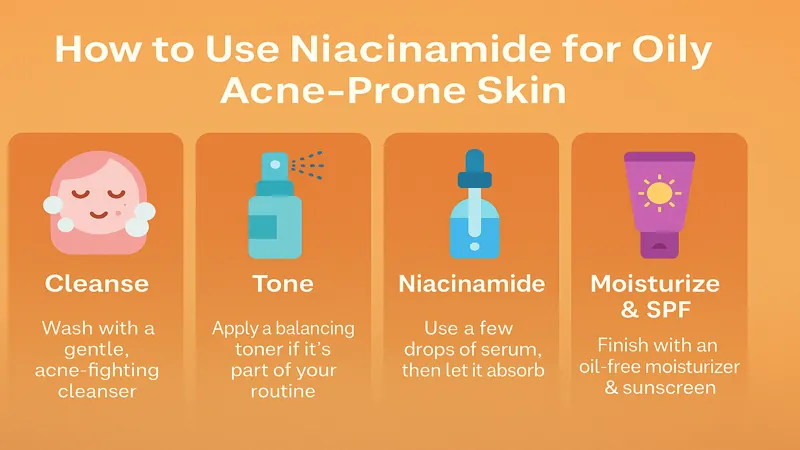
How to Use Niacinamide for Acne-Prone Skin
Using niacinamide correctly can make a huge difference in managing oily, acne-prone skin. Here’s a simple guide to help you get the best results while keeping your skin calm and balanced.
Steps to Use Niacinamide Effectively:
- . Cleanse first — and make it count Start with a gentle, acne-fighting cleanser that contains salicylic acid or tea tree oil. This doesn’t just remove dirt and excess oil — it actively unclogs your pores and preps your skin to absorb niacinamide more effectively. Think of it as clearing the path before the real work begins.
- 2. Apply toner — but choose wisely Not all toners are created equal for acne-prone skin. Go for an alcohol-free toner with witch hazel or BHA to help calm active breakouts and balance your skin’s pH. If your skin is inflamed, skip anything with fragrance — your skin will thank you later.
- 3. Apply niacinamide serum — your acne-fighting MVP Use a serum with 2–5% niacinamide and apply it in thin, even layers — focusing especially on areas where breakouts love to show up. Already dealing with an active pimple? Dab a little extra serum directly on it and let niacinamide work its anti-inflammatory magic.
- 4. Spot treat — the acne-prone skin bonus step This is the step oily skin routines skip — but you shouldn’t. After your niacinamide serum, apply a targeted spot treatment with benzoyl peroxide or salicylic acid directly on active breakouts. Wait about 10 minutes before moving on so each ingredient can do its job without interference.
- 5. Layer with moisturizer — lightweight is non-negotiable Lock everything in with a non-comedogenic moisturizer — ideally one with centella asiatica or zinc to calm redness and support healing. Avoid anything with heavy oils or thick creams that could clog pores and undo all your hard work.
- 6. Protect with sunscreen — and pick the right one Niacinamide doesn’t make your skin sun-sensitive, but your acne treatments might. Choose a mineral sunscreen with zinc oxide — it protects your skin from UV damage while quietly helping to calm inflammation at the same time. Win-win.
- 7. Introduce gradually — and listen to your skin Start with every other day, then build up to daily use as your skin adjusts. If you notice increased breakouts in the first week or two, don’t panic — that’s your skin recalibrating. Give it at least 4 weeks before deciding if niacinamide is working for you.
Tips to Maximize Benefits:
- Avoid combining niacinamide with acidic exfoliants in the same application to prevent irritation.
- Patch test new products to monitor for sensitivity or reactions.
- Consistency is key—expect visible improvements after 4 to 8 weeks of regular use.
Summary
Niacinamide is a gentle yet powerful ingredient for oily, acne-prone skin when used properly. By following a simple, consistent routine and protecting your skin, you’ll help balance oil production, calm inflammation, and improve your skin’s overall health.
Note: For a complete dermatologist-recommended Skin care routine for oily skin, check out our detailed guide: Dermatologist Recommended Skin Care Routine for Oily Skin.
best niacinamide for oily acne-prone skin
Choosing the right niacinamide product is key to effectively managing oily, acne-prone skin. Here are some top picks backed by science and loved by dermatologists:
1: The Ordinary Niacinamide 10% + Zinc 1%
This serum combines a high concentration of niacinamide with zinc, which helps regulate sebum production and reduce inflammation. The formula is lightweight and non-comedogenic, making it ideal for oily acne-prone skin.
Supporting Study: A 2017 clinical trial published in the Journal of Clinical and Aesthetic Dermatology showed that topical niacinamide at 4% to 5% improved acne severity by reducing sebum output and inflammation, with zinc enhancing these effects.
Why it works: Zinc complements niacinamide by balancing oil production and soothing irritated skin, which is common in acne-prone individuals.
2: Paula’s Choice 10% Niacinamide Booster
Paula’s Choice offers a concentrated booster that’s easily incorporated into any skincare routine. Its gentle formula targets enlarged pores, uneven skin tone, and excess oil.
Supporting Study: Research from the International Journal of Cosmetic Science (2019) found that topical niacinamide at 10% concentration significantly improved skin barrier function and reduced redness, ideal for sensitive, acne-prone skin.
Why it Good: The booster’s formulation supports long-term skin barrier repair while controlling acne-related inflammation.
3: CeraVe PM Facial Moisturizing Lotion
Combining niacinamide with ceramides and hyaluronic acid, this moisturizer not only controls oil but also repairs the skin’s natural barrier and maintains hydration without clogging pores.
Supporting Study: A 2020 study in Dermatologic Therapy emphasized the importance of ceramides in restoring the skin barrier, which niacinamide also supports, making such combinations effective for acne-prone skin recovery.
Why it The best: It addresses both the symptoms of acne and the underlying barrier dysfunction common in oily skin.
4: La Roche-Posay Mela-D Pigment Control Glycolic Acid Serum
Though primarily marketed for pigmentation, this serum contains niacinamide which helps reduce acne scars and brightens the skin while controlling oil with glycolic acid exfoliation.
Supporting Study: A 2018 study in Clinical, Cosmetic and Investigational Dermatology showed that niacinamide combined with glycolic acid improved acne scarring and skin texture significantly.
Why it Amazing: The dual-action formula exfoliates dead skin cells and promotes skin renewal while niacinamide calms inflammation.
Note: Choosing the right product depends on your personal preferences and your specific skin type. Always remember to patch test new products on a small area before applying them to your entire face.
FAQ Of Niacinamide for Acne-Prone Skin
So, is niacinamide good for oily acne-prone skin? Absolutely—when used consistently and correctly, it can help balance oil production, calm inflammation, and strengthen your skin barrier without causing irritation.
It’s a gentle yet powerful addition to any skincare routine dealing with breakouts and excess shine.
Thank you for reading! We’d love to know—have you tried niacinamide for your oily, acne-prone skin? Share your experience or any questions in the comments below.
Your voice could help someone else on their skincare journey too! 💬✨

Akram Boulaid is a dedicated Skincare Researcher and Analyst with over 7 years of intensive focus on dermatology and cosmetic ingredient science. As a globally recognized expert, his insights have been featured in major international publications, including the New York Post and GB News. A verified expert on Qwoted, Akram connects with health journalists to provide evidence-based analysis. He founded Beauty Blurb to bridge the gap between complex clinical data and practical skincare routines, specializing exclusively in the needs of oily and acne-prone skin through rigorous analysis of peer-reviewed scientific literature.