
Is Niacinamide Good for Dark Spots? Yes — niacinamide can help fade dark spots. Clinical studies show that a 4% concentration can significantly reduce hyperpigmentation within 8 weeks by slowing melanin transfer in the skin.
This makes it effective for fading sunspots, acne marks, and uneven tone — especially when combined with daily sunscreen. For oily skin, niacinamide also helps regulate excess sebum, offering a double benefit.

If you’ve ever wondered about using niacinamide for dark spots, this guide is for you.
In the next sections, we’ll explore how it actually works, what science says about its effectiveness, the best concentrations for oily skin, and practical tips on how to include it safely in your skincare routine.
By the end, you’ll know whether niacinamide is the right choice for your skin concerns.
What Is Niacinamide and How Does It Work on Dark Spots?
Niacinamide, also known as vitamin B3, is a water-soluble nutrient that your skin actually needs to stay healthy.
Unlike some active ingredients that can be harsh or irritating, niacinamide is generally well-tolerated and suitable for almost every skin type, including oily and sensitive skin.
Think of it as a multitasking ingredient: it strengthens your skin barrier, calms redness, balances oil production, and—most importantly for dark spots—targets uneven pigmentation.
So, how does it work on dark spots? Dark spots appear when your skin produces too much melanin, the pigment responsible for giving skin its color.
Niacinamide steps in by slowing down the transfer of melanin from pigment-producing cells (melanocytes) to the surface layers of your skin.
With consistent use, this process helps prevent new discoloration from forming and gradually fades existing spots. The result? A smoother, more even complexion that looks brighter and healthier over time.
And if this sounds a bit technical, don’t worry. In the next sections, everything will become clearer step by step. Just keep reading—you’ll finish this guide with all the information you need to confidently use niacinamide for dark spots, before and after you start your routine.
Causes of Dark Spots and Hyperpigmentation
Before we dive deeper into how niacinamide works, it’s important to understand why dark spots appear in the first place. Hyperpigmentation happens when your skin produces more melanin than usual. This extra pigment doesn’t spread evenly, so it clusters in certain areas—showing up as sunspots, acne marks, or patches of uneven tone.
Several factors can trigger this overproduction of melanin:
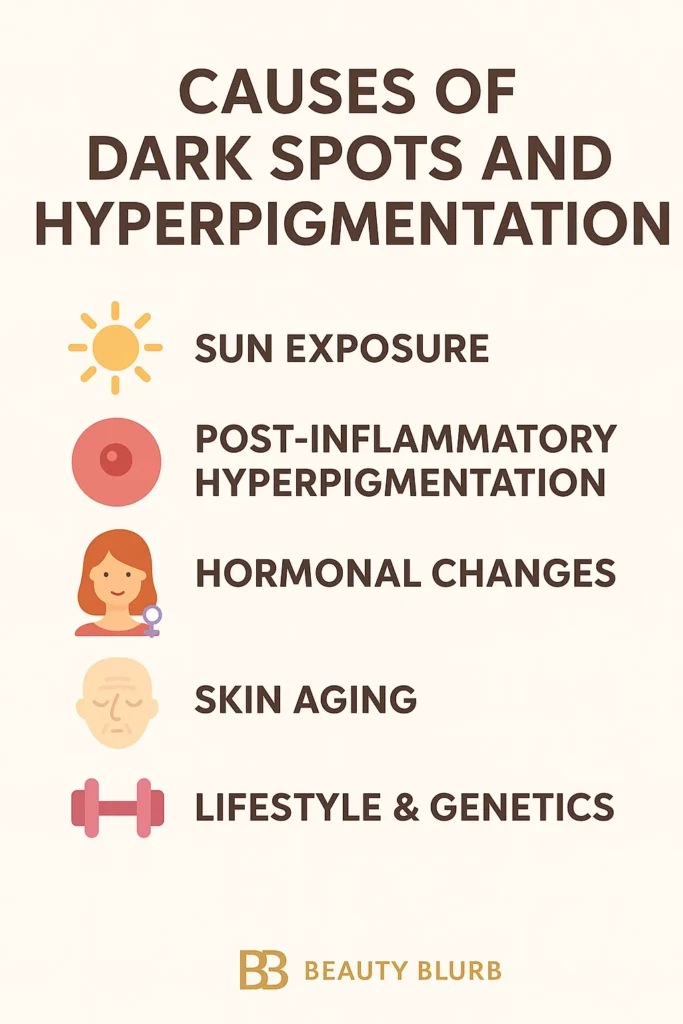
- Sun exposure: UV rays are the number one cause of dark spots, often leading to freckles, sunspots, or early signs of aging.
- Post-inflammatory hyperpigmentation (PIH): If you’ve ever noticed dark marks after a breakout, scratch, or irritation, that’s PIH. It’s very common in oily and acne-prone skin.
- Hormonal changes: Conditions like melasma are often linked to pregnancy, birth control, or hormonal shifts.
- Skin aging: As we get older, cell turnover slows down, and spots become more visible and harder to fade.
- Lifestyle and genetics: Stress, lack of sleep, and family history can also play a role.
Understanding these causes makes it easier to see why ingredients like niacinamide are so valuable. Instead of just covering up spots, they work at the root of the problem—helping to regulate melanin activity and prevent new discoloration from forming.
For people with oily or acne-prone skin, post-inflammatory hyperpigmentation is often the biggest culprit. Every breakout has the potential to leave behind a lingering dark mark, even after the pimple is gone. That’s why choosing ingredients that both calm breakouts and fade discoloration—like niacinamide for acne—can be a game changer.
Is Niacinamide Good for Dark Spots?
If you’ve been asking yourself “does niacinamide fade dark spots?”, the short answer is yes—but the full story is even more interesting.
Niacinamide isn’t just a trendy skincare ingredient; it’s one of the most well-researched options for targeting hyperpigmentation.
Unlike harsh treatments that can irritate the skin, niacinamide works gently yet effectively, making it a reliable choice for anyone struggling with sunspots, acne marks, or uneven tone.
This Is niacinamide benefits for dark spots:
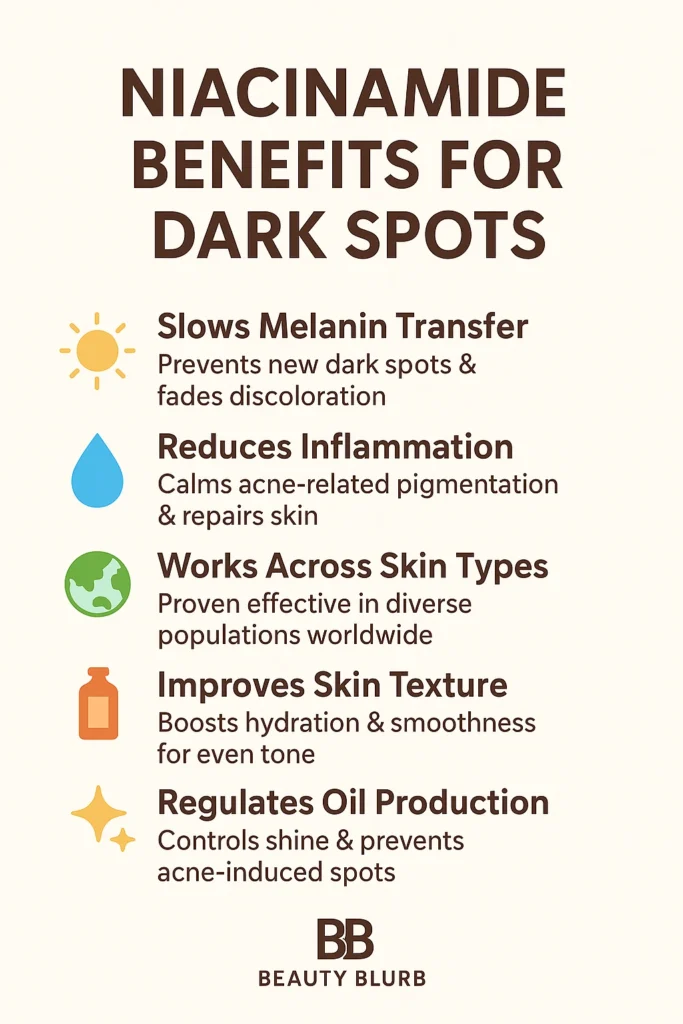
1: Slows Down Melanin Transfer (Reduces New Pigmentation)
Niacinamide works by inhibiting the transfer of melanin from melanocytes (pigment-producing cells) to the surrounding skin cells.
This mechanism helps prevent the formation of new dark spots and allows your existing discoloration to fade more uniformly—even if you’re oily or acne-prone.
Clinical Evidence:
- In a double-blind randomized clinical trial conducted by Navarrete-Solís et al. (2011), 4% niacinamide cream was compared to the standard 4% hydroquinone on melasma patients over an 8-week period.
- About 44% of participants using niacinamide showed “good to excellent” improvement, compared to 55% with hydroquinone.
- Importantly, niacinamide had a much better side-effect profile—only 7% experienced mild effects, compared to 18% with hydroquinone—and was well tolerated, making it a viable long-term option. Source.
2: Reduces Inflammation and Improves Skin Health
Beyond fading dark patches, niacinamide reduces inflammatory infiltrates and improves the skin’s underlying structure. This action can contribute to calmer, stronger skin over time—especially useful for hyperpigmentation triggered by acne (PIH).
What did science say:
- In the same trial (Navarrete-Solís et al. 2011), histological analysis revealed significant decreases in mast cell infiltration and solar elastosis in treated areas, showcasing niacinamide’s anti-inflammatory and skin-repair qualities.
- These results underline why niacinamide not only targets discoloration but also supports overall skin healing.
3: Shown Effective Across Different Populations and Contexts
Niacinamide’s benefit isn’t limited to one ethnicity or treatment context — it demonstrates broad applicability in targeting pigmentation issues globally.
Proven study:
- A 2022 integrative review of randomized clinical trials concluded that all included studies showed niacinamide improves melanic hyperpigmentation in adult women with melasma across diverse populations, including Brazilian, Mexican, and Korean patients.
- The consistent results across countries speak volumes about its universal effectiveness. Source.
4: Enhances Skin Texture
Niacinamide doesn’t only target dark spots—it also improves overall skin texture. By stimulating ceramide production, it strengthens the skin barrier and increases hydration levels.
This results in smoother, softer, and more even-looking skin, which further complements the fading of hyperpigmentation.
Great point! Let’s add the two missing benefits to make the section more complete and valuable for readers.
Clinical Evidence:
- In a randomized, double-blind clinical trial published in the Journal of Dermatological Science (2005), 24 participants applied a 5% niacinamide moisturizer for 12 weeks.
- Researchers found significant improvements in skin smoothness, fine lines, and barrier function compared to placebo.
- The findings confirmed niacinamide’s dual role in both aesthetic (texture, smoothness) and therapeutic (pigmentation) improvements.
5: Regulates Oil Production
For those with oily or acne-prone skin, niacinamide is especially beneficial. It helps regulate sebum (oil) production, which not only reduces shine but also minimizes the risk of post-inflammatory hyperpigmentation caused by acne breakouts.
Clinical Evidence:
- A clinical study published in the International Journal of Cosmetic Science (2006) examined the effects of a 2% topical niacinamide formulation on 50 Japanese women with oily skin.
- After 4 weeks of daily use, participants showed a significant reduction in sebum excretion rates, especially on the nose and forehead areas.
- This sebum‑balancing property helps reduce acne-related pigmentation over time.
Niacinamide Benefits – Clinical Evidence
| Benefit | Clinical Evidence |
|---|---|
| Slows melanin transfer | Navarrete-Solís et al. (2011): 4% niacinamide comparably effective to hydroquinone, fewer side effects |
| Reduces inflammation & solar damage | Same study: Significant reductions in mast cells & solar elastosis post-treatment |
| Effective across diverse groups | Integrative review (2022): Consistent improvement in melasma among women from multiple regions |
| Enhances skin texture | Journal of Dermatological Science (2005): 24 participants, 12 weeks → improved smoothness & barrier |
| Regulates oil production | Int. Journal of Cosmetic Science (2006): 50 women, 4 weeks → reduced sebum production significantly |
So, what does niacinamide do for dark spots, the answer is simple yet powerful: it works on multiple levels.
From slowing down melanin transfer to calming inflammation, refining texture, and even balancing oil production, niacinamide is more than just a trend—it’s a dermatologist-backed solution for a brighter and more even skin tone.
Whether you’re dealing with sunspots, acne marks, or stubborn hyperpigmentation, consistency is key. By choosing a well-formulated niacinamide product and giving it time to work, you can gradually fade dark spots and reveal healthier, smoother, and more radiant skin.
How to Use Niacinamide for Dark Spots
After answering the big question “Is Niacinamide Good for Dark Spots On Face”, it’s time to move into the practical side: how you can actually include it in your oily-skin routine.
The good news is that niacinamide is a very beginner-friendly ingredient, and with the right steps, you can maximize its benefits while keeping your skin balanced and healthy.

Step-by-Step Routine for Use niacinamide for hyperpigmentation and dark spot:
- Cleanser – Start with a gentle foaming cleanser to remove excess oil, dirt, and impurities without stripping your skin.
- Toner (optional) – Use a lightweight, alcohol-free toner to prep your skin and balance its pH.
- Niacinamide Serum – Apply 2–3 drops of a 5%–10% niacinamide serum evenly across your face. This is the step where the magic against dark spots and excess oil happens.
- Moisturizer – Lock in hydration with a lightweight, oil-free moisturizer to keep your skin barrier strong.
- Sunscreen (morning routine) – Never skip this! Apply a broad-spectrum SPF 30 or higher. Sunscreen prevents new dark spots and protects your progress.
💡 Pro tip: If you’re already using actives like vitamin C, AHAs, or retinol, introduce niacinamide slowly (once daily or every other day) to avoid irritation, then build up to twice daily if your skin tolerates it.
Building a consistent skincare routine with niacinamide can make a real difference in fading dark spots, evening skin tone, and controlling excess oil. If you stick with it, you’ll likely start noticing visible improvements within a few weeks.
I’d love to hear from you—have you tried niacinamide in your routine? Share your experience in the comments below so others in our community can learn from your journey too! 💬✨
💡 Pro Insight:
If you want to take your skincare game one step further, check out our full guide on a dermatologist recommended skin care routine for oily skin. It’s packed with expert tips that complement niacinamide perfectly and help you maintain clearer, brighter skin in the long run.
how long does it take for niacinamide to work on dark spots
Patience is key when it comes to fading dark spots. Niacinamide isn’t a quick-fix ingredient—it works gradually by regulating melanin transfer, calming inflammation, and strengthening the skin barrier.
So, how long does it take for niacinamide to fade dark spots? Most people start noticing early improvements in skin brightness and reduced redness within 2–4 weeks of consistent use.
For stubborn hyperpigmentation, acne marks, or melasma, visible fading often takes around 8–12 weeks. The exact timeline depends on factors like skin type, severity of pigmentation, sun exposure, and how regularly you stick to your routine.
Timeline of Results From niacinamide
| Timeline | What to Expect |
|---|---|
| Week 2–4 | Subtle brightening and calmer, less inflamed-looking skin |
| Week 4–6 | Visible lightening of post-acne marks and a more even skin tone |
| Week 8 | Significant reduction in dark spots; results become clear |
| 8–12 Weeks | Continued improvements—especially when used with sunscreen and complementary actives |
| 3+ Months | Maximum benefit: more uniform tone, smoother texture, and long-term glow |
Consistency is your best friend. Niacinamide works best when used daily, alongside sunscreen and a gentle routine. Remember, the goal isn’t overnight results—it’s building healthier, more even-toned skin over time.
Why Is My Skin Getting Darker After Using Niacinamide?
If you’ve started using niacinamide for dark spots but noticed your skin looking darker instead of lighter, don’t panic—it’s a more common concern than you think. In most cases, it doesn’t mean the ingredient is harming your skin, but rather that something in your routine needs adjustment.
1: Possible Reasons
- Skipping Sunscreen
Niacinamide helps fade pigmentation, but if you’re not protecting your skin from UV rays, new dark spots can appear or existing ones can deepen. Sunscreen is non-negotiable. - Using High Concentrations Too Soon
Jumping straight into a 10% or 20% serum can overwhelm sensitive or oily skin, causing irritation, redness, and temporary darkening. - Skin Purging or Adjustment Phase
While niacinamide itself doesn’t usually cause purging, introducing it alongside actives like retinol or acids may lead to breakouts, which can leave behind new marks. - Mixing With Incompatible Ingredients
Combining niacinamide with strong exfoliants or not layering products properly may irritate the skin barrier, slowing down the brightening process.
2: How To Use Niacinamide Safely
- Be Consistent but Gentle: Stick with a 5%–10% niacinamide serum and give it time to work.
- Use Daily Sunscreen: This is the single most important step to prevent dark spots from worsening.
- Simplify Your Routine: Avoid overloading your skin with too many actives at once.
- Consult a Dermatologist: If pigmentation keeps getting worse despite careful use, it’s worth seeking professional advice.
When to Stop Using Niacinamide
While niacinamide is generally safe and well-tolerated, there are certain situations where you should pause its use:
- Severe Irritation or Burning: Mild tingling is normal at first, but if you experience persistent burning, swelling, or rash, stop immediately.
- Unusual Darkening: If your skin continues to get darker even after adjusting your routine and using sunscreen, discontinue use and consult a dermatologist.
- Allergic Reaction: Redness, itching, or hives are rare but possible signs of an allergy.
👉 Remember: the goal of niacinamide for dark spots is a healthier, more even skin tone. If your experience is the opposite, it’s best to seek expert guidance.
✅ Bottom line: Niacinamide remains one of the safest, most effective ingredients for dark spots. If your skin seems darker after starting it, the issue is usually external factors—not the ingredient itself. With consistency, patience, and proper sun protection, niacinamide will help reveal a brighter, more even complexion.
What percentage of niacinamide is good for oily skin and dark spots?
When it comes to treating niacinamide hyperpigmentation concerns, the right concentration and formula can make all the difference—especially for oily or acne-prone skin.
Using niacinamide in the wrong way may slow down results, while the right choice can significantly boost your journey toward clearer skin.
Recommended Concentrations
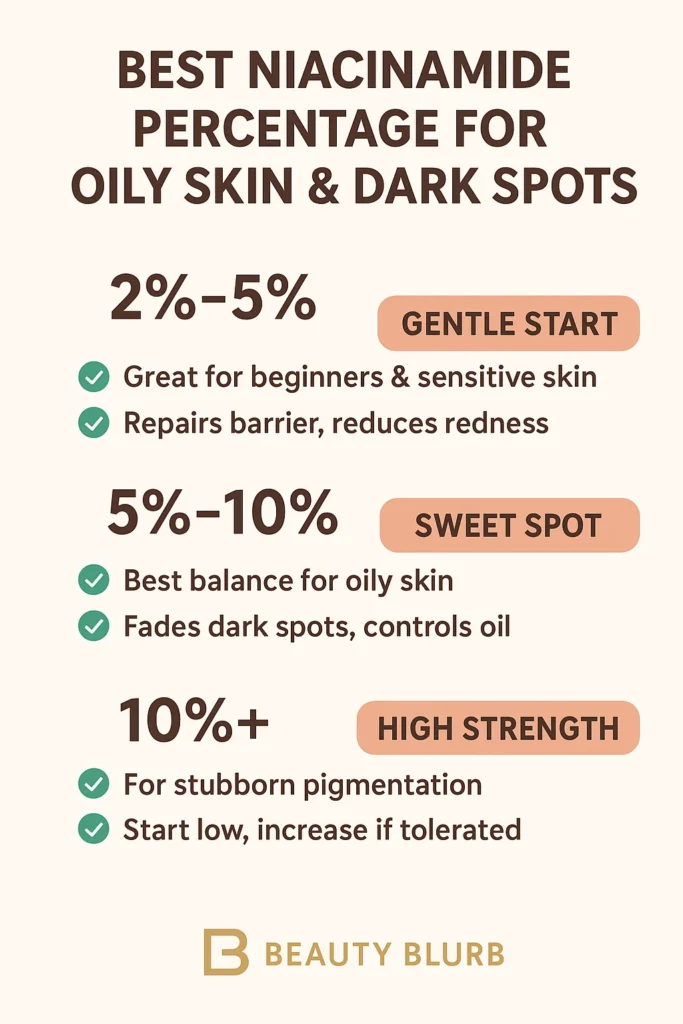
- 2%–5% Niacinamide:
Best for beginners or those with very sensitive skin. This level gently supports skin barrier repair and reduces redness while laying the foundation for long-term results. - 5%–10% Niacinamide:
The sweet spot for most people dealing with niacinamide for hyperpigmentation. At this strength, niacinamide effectively reduces excess melanin transfer, fades dark marks, and helps balance oil production—making it ideal for oily skin. - 10%+ Niacinamide:
High-strength options can deliver faster results for stubborn pigmentation, but they’re not always necessary. Dermatologists often recommend starting low and increasing only if your skin tolerates it well.
Formula Types That Work Best
- Serums
Lightweight and fast-absorbing, serums deliver concentrated niacinamide directly to the skin. Perfect for targeting niacinamide for dark spots while keeping pores clear. - Moisturizers
Combining niacinamide with hydrating ingredients like hyaluronic acid or ceramides makes it gentle for daily use, especially if your skin tends to get irritated by actives. - Toners or Essences
Lower concentrations of niacinamide can be layered in toners or essences to gradually improve skin tone while prepping your skin for other treatments.
Pro Tips for Oily Skin & Dark spots
- From our experience, the best way to maximize results with niacinamide on oily skin is to combine it strategically.
- Pairing niacinamide with ingredients like zinc PCA, salicylic acid, or lightweight gel-based moisturizers helps control excess oil while enhancing the brightening effects.
- We’ve also found that keeping the routine simple—but consistent—makes a huge difference. And of course, we always recommend finishing with a broad-spectrum sunscreen to lock in the benefits and protect against new dark spots.
What Are the Disadvantages of Niacinamide on the Face?
While niacinamide is one of the most well-tolerated skincare ingredients, it’s important to acknowledge that no active is completely free of side effects.
Understanding the possible downsides will help you use it safely and effectively. Here’s what you need to know about niacinamide for dark spots side effects:
1. Mild Irritation or Redness: Some people experience tingling, redness, or warmth when first starting niacinamide, especially with higher concentrations (10% or more). This is usually temporary and improves as your skin adjusts.
2. Allergic Reactions (Rare): Though uncommon, certain individuals may develop itching, rashes, or swelling. If you notice these symptoms, discontinue use and seek professional guidance.
3. Worsening of Pigmentation (Very Rare): In cases where niacinamide is used without sunscreen, dark spots may appear more noticeable due to ongoing sun exposure. This isn’t caused by niacinamide itself but by unprotected UV damage.
4. Interaction With Other Actives: Layering niacinamide incorrectly with strong acids or exfoliants can sometimes compromise the skin barrier, leading to irritation or dryness.
Bottom Line:
The disadvantages of niacinamide are minimal compared to its benefits, especially when used properly.
Most users tolerate it well, and issues like irritation or sensitivity are usually easy to fix by lowering concentration, reducing frequency, or simplifying your routine.
When used consistently and paired with sunscreen, niacinamide remains one of the safest and most effective ingredients for targeting dark spots.
Vitamin C vs Niacinamide for Dark Spots
Many people wonder: which is better for dark spots niacinamide or vitamin c? Both are powerhouse skincare ingredients known for brightening and evening out the skin tone, but they work in different ways.
Understanding how each one functions can help you decide which is best for your skin type and specific concerns.
| Aspect | Niacinamide | Vitamin C |
|---|---|---|
| Primary Function | Reduces melanin transfer, controls oil, strengthens skin barrier. | Antioxidant that brightens skin and protects from free radical damage. |
| Effectiveness on Dark Spots | Gradual but steady fading of hyperpigmentation. | Faster visible brightening but may be unstable or irritating. |
| Skin Tolerance | Generally well-tolerated, even for sensitive and oily skin. | Can cause stinging or irritation, especially on sensitive skin. |
| Best Suited For | Oily, acne-prone, or sensitive skin needing balance and brightening. | Dull, sun-damaged, or aging skin needing fast radiance boost. |
| Synergy | Works well with most skincare ingredients. | May be unstable when mixed with other actives if not formulated correctly. |
Both niacinamide and vitamin C are effective for dark spots, but they shine in different ways. If you have oily or sensitive skin, niacinamide is often the safer and more versatile choice. On the other hand, vitamin C can deliver a faster brightening effect, especially for dull or sun-damaged skin—but it may come with a higher risk of irritation. Ideally, many dermatologists suggest incorporating both into your routine (at different times of day or in well-formulated products) to enjoy the best of both worlds.
Salicylic Acid or Niacinamide for Dark Spots
When addressing uneven skin tone, many people ask whether salicylic acid or niacinamide is more effective. While both ingredients can help with pigmentation, they act through different mechanisms and suit different skin profiles. Understanding their unique strengths will guide you toward the right choice.
| Aspect | Salicylic Acid | Niacinamide |
|---|---|---|
| Primary Function | Exfoliates pores, accelerates cell turnover, reduces post-acne marks. | Regulates melanin transfer, reduces redness, strengthens skin barrier. |
| Effectiveness on Dark Spots | Fades post-acne pigmentation faster due to exfoliation. | Gradual fading of dark spots and hyperpigmentation over weeks. |
| Skin Tolerance | Can irritate sensitive skin if overused. | Gentle and well-tolerated, suitable for sensitive and oily skin. |
| Best Suited For | Acne-prone, congested, or textured skin needing brightening and pore clearing. | Oily, combination, or sensitive skin aiming for consistent brightening and barrier support. |
| Pace of Results | Noticeable improvements within weeks due to active exfoliation. | Steady results over 8–12 weeks with minimal side effects. |
From our perspective, salicylic acid and niacinamide aren’t really competitors—they complement each other.
Salicylic acid accelerates skin renewal, while niacinamide calms and strengthens. We’ve seen the best results when our readers combine them wisely:
using salicylic acid a few times per week and niacinamide daily. This balanced approach not only tackles dark spots but also promotes clearer, healthier-looking skin.
Best Niacinamide for Dark Spots (Top Product)
Our team at Beauty Blurb conducted extensive research to identify the best niacinamide products for dark spots and oily skin. After reviewing dermatologist recommendations, ingredient quality, and user feedback, we compiled a comprehensive list of trusted products that deliver real results.
| Product | Niacinamide Concentration | Key Benefits | Dermatologist Recommended |
|---|---|---|---|
| La Roche-Posay Niacinamide 10 Serum | 10% | Brightens dark spots, reduces oiliness, strengthens skin barrier | Yes |
| Paula’s Choice 10% Niacinamide Booster | 10% | Improves skin tone, minimizes pores, balances oil production | Yes |
| The Ordinary Niacinamide 10% + Zinc 1% | 10% | Fades blemishes, controls sebum, supports healthy skin barrier | Yes |
| First Aid Beauty Dark Spot Serum with Niacinamide | 5% | Reduces hyperpigmentation, soothes skin, strengthens barrier | Yes |
We encourage you to try one of these dermatologist-approved niacinamide products to target dark spots and improve oily skin. Remember, consistency is key—apply daily, follow your routine, and protect your skin with sunscreen.
We’d love to hear about your experience! Share your results in the comments so others can benefit from your journey. 💬✨
My Experience with Niacinamide for Dark Spots
I started my journey with niacinamide for dark spots about a month ago, and I was really excited to see how it would affect my oily skin. At first, I was a bit nervous—wondering if it would actually work on my dark spots or if it might cause irritation.
Week 1
During the first few days, my skin felt a little tingly but never uncomfortable. I used the La Roche-Posay Niacinamide 10% Serum morning and night after cleansing, followed by a lightweight moisturizer and sunscreen in the daytime.
Week 2–3
I started noticing subtle changes: the dark spots on my cheeks appeared slightly lighter, and the excess oil on my face felt more balanced. I loved how my skin felt smoother without being greasy.
Week 4
By the end of the month, the difference was clear: some of my older hyperpigmentation spots started fading gradually, and my skin’s natural oil balance was much improved. My complexion looked brighter overall. It wasn’t instant magic, but the progress was satisfying and motivating.
My Personal Note
My experience with niacinamide for dark spots was really positive, but it’s important to remember that results may vary from person to person. This was a personal journey of one of my friends, so always perform a patch test before trying any new product, and consult your dermatologist if you have specific skin conditions or sensitivities.
niacinamide for dark spots before and after
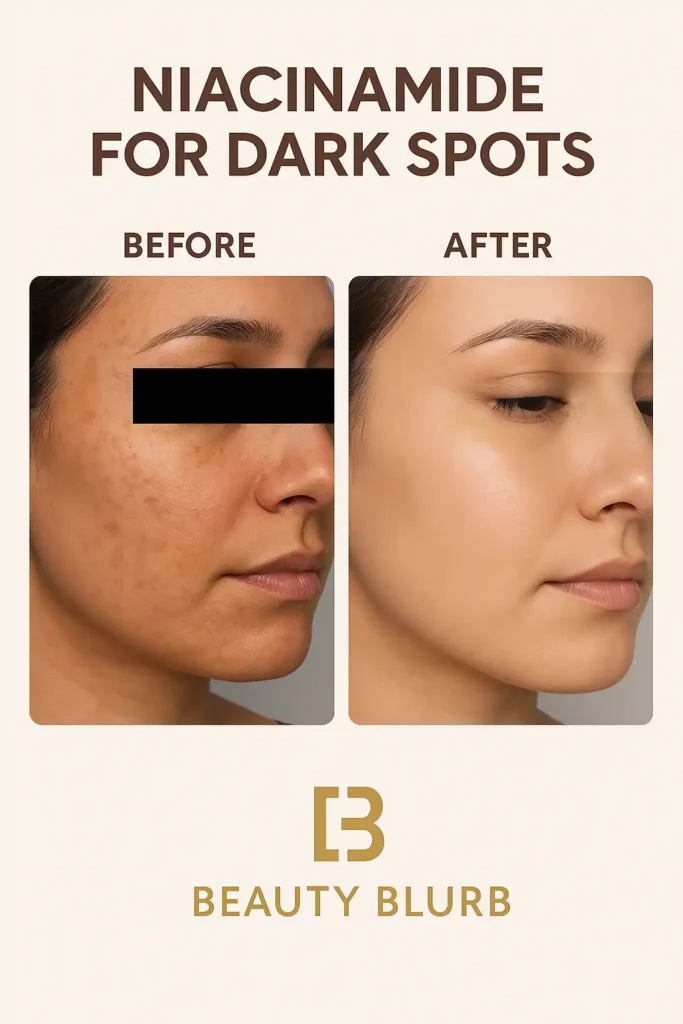
- 🔹 Before:
- Visible dark spots across the cheeks.
- Uneven skin tone.
- Skin looks dull and slightly rough.
- 🔹 After:
- Dark spots noticeably faded.
- More even and radiant skin tone.
- Smoother, healthier-looking skin.
👉 In short: Niacinamide helped transform the skin from dull and spotty to clear, bright, and glowing.
FAQ Of Niacinamide for Dark Spots
Both niacinamide and kojic acid are effective for dark spots. Niacinamide is gentler, suitable for sensitive skin, and reduces pigmentation over time. Kojic acid works faster but may irritate sensitive skin. Combining them can be effective if tolerated.
Retinol is powerful for skin renewal and fading dark spots, but can cause dryness or irritation. Niacinamide is gentler, improves skin tone, and can be used with retinol to reduce irritation while enhancing results.
Alpha arbutin directly inhibits melanin production and may fade spots faster, while niacinamide strengthens skin barrier and evens tone. Many people combine them for faster, safer results.
Azelaic acid is great for inflammation-related spots and acne-prone skin, while niacinamide targets overall pigmentation and barrier health. Choice depends on your skin type and sensitivity.
Look for serums containing niacinamide, vitamin C, alpha arbutin, or licorice extract. Lightweight, non-comedogenic serums absorb well and allow layering with moisturizers and sunscreen.
Completely removing dark spots in 7 days is unrealistic. Consistent use of brightening ingredients like niacinamide, vitamin C, and sunscreen can show improvement over weeks. Avoid harsh treatments that may irritate skin.
Dermatologists usually recommend sunscreen, topical brightening agents (niacinamide, vitamin C, hydroquinone), and gentle exfoliation. Severe cases may need chemical peels or laser treatments.
Look for gradual brightening, more even skin tone, and reduced redness over 4-12 weeks. Improvements are subtle, so patience is key.
If you experience persistent redness, itching, burning, or breakouts after a few uses, your skin may be sensitive to niacinamide. Reduce frequency or discontinue and consult a dermatologist if needed.
Niacinamide is generally compatible with most ingredients, including retinol and vitamin C. Some very acidic formulas may reduce its effectiveness, so avoid layering high-concentration acids immediately before or after.
Vitamin C brightens and protects skin from free radicals. Niacinamide strengthens the skin barrier and reduces inflammation. Using both can complement each other for even better results.
There is no single “best” product. Effective dark spot treatment usually combines sunscreen, brightening serums (niacinamide, vitamin C, alpha arbutin), and consistent skincare routine tailored to your skin type.
Thank you so much for reading! If you’ve been wondering Is Niacinamide Good for Dark Spots, the answer is yes – when used consistently and correctly, it can help even out your skin tone and gently reduce dark spots. Remember, patience and consistency are the keys to seeing real results.
We’d love to hear from you! Share your journey with niacinamide in the comments, the changes you’ve noticed, and any tips you have – every experience adds value for other readers too. 💖

Akram Boulaid is a dedicated Skincare Researcher and Analyst with over 7 years of intensive focus on dermatology and cosmetic ingredient science. As a globally recognized expert, his insights have been featured in major international publications, including the New York Post and GB News. A verified expert on Qwoted, Akram connects with health journalists to provide evidence-based analysis. He founded Beauty Blurb to bridge the gap between complex clinical data and practical skincare routines, specializing exclusively in the needs of oily and acne-prone skin through rigorous analysis of peer-reviewed scientific literature.