
Can I use glycolic acid and niacinamide together? Yes, you can safely use glycolic acid and niacinamide together — and when done correctly, they’re one of the most effective skincare combinations.
Glycolic acid exfoliates to smooth texture and fade dark spots, while niacinamide calms irritation, reduces excess oil, and strengthens the skin barrier.
To use them safely, you can either choose a product that’s already formulated with both ingredients, or layer them in your routine with a short waiting period in between.
This way, you get all the benefits — brighter, clearer, and more balanced skin — without unnecessary irritation.

In this guide, we’ll dive deeper into everything you need to know about niacinamide and glycolic acid together.
how they work, the benefits of pairing them, possible side effects, and the safest way to include them in your skincare routine.
You’ll also find practical step-by-step tips, expert FAQs, and product recommendations to help you get the best results without compromising your skin’s health.
What Is Glycolic Acid and How Does It Work?
Glycolic acid is one of the most popular alpha hydroxy acids (AHAs) in skincare, known for its powerful yet gentle exfoliation.
Thanks to its small molecular size, it penetrates the skin easily and helps dissolve the bonds that hold dead skin cells on the surface. This process speeds up cell turnover, revealing fresher, smoother, and more radiant skin underneath.
Beyond exfoliation, glycolic acid also supports collagen stimulation, which can improve skin firmness and reduce the early signs of aging.
Over time, consistent use helps fade dark spots, minimize post-acne marks, and create a more even skin tone.
When it comes to glycolic acid for oily skin, this ingredient can be especially effective. By clearing away buildup and reducing congestion in the pores, it helps control excess oil and shine.
The result is skin that feels cleaner, looks clearer, and stays balanced throughout the day.
What Is Niacinamide and How Does It Work?
Niacinamide, also known as vitamin B3, is a water-soluble vitamin that offers a wide range of skin benefits.
Unlike acids that exfoliate, niacinamide works at a deeper cellular level to strengthen the skin barrier and improve its overall resilience.
One of its standout features is its strong anti-inflammatory effect, which helps calm redness, irritation, and sensitivity.
Another key benefit is its ability to regulate sebum production, making niacinamide for oily skin a game changer.
By balancing oil levels, it reduces shine and minimizes clogged pores, leading to fewer breakouts and a smoother complexion.
It also supports hydration, improves elasticity, and helps reduce the appearance of fine lines and enlarged pores over time.
Niacinamide is also widely recognized for its role in brightening dull skin and reducing hyperpigmentation. Regular use can help fade acne scars, even out skin tone, and give the complexion a healthier, more balanced glow.
Now that you understand how glycolic acid and niacinamide work individually, the real question is: can you use glycolic acid and niacinamide together in the same routine?
In the next section, we’ll break down the science, debunk common myths, and explain how these two powerhouse ingredients can complement each other when used correctly.
can i use glycolic acid and niacinamide together on face
Yes — you absolutely can use glycolic acid and niacinamide together safely, especially in skincare routines tailored for oily skin. When formulated or layered properly, they work in harmony rather than cancelling each other out.
pH and Compatibility
One common concern is that glycolic acid, being an alpha hydroxy acid (AHA), needs acidic pH (≈ 3.0-4.0), while niacinamide typically works well at pH around 5.0-7.0. But in practice, using them together is fine if you follow simple rules:
- If you’re using separate products, apply glycolic acid first to exfoliate the skin, then follow with niacinamide once your skin has absorbed the acid — ideally after a short waiting period 30 min.
or in a different routine (glycolic acid at night, niacinamide in the morning) to minimize irritation. - If using a combined formulation: ensure it’s designed so buffering agents keep both ingredients effective without causing irritation.
So, the myth that “niacinamide cancels glycolic acid” is scientifically unfounded under normal, cosmetic-use conditions. There is no evidence that niacinamide neutralizes glycolic acid if used in moderate concentrations (e.g. glycolic acid 5-10%, niacinamide 2-5%) in well-formulated products. What matters more is how often you use them, the overall routine, and your skin’s tolerance.
Clinical Evidence & Study Example
While no large randomized controlled trial exists yet that tests only glycolic acid + niacinamide vs placebo.
there are relevant studies combining them with other actives showing positive results, which support the safety and benefit of using them together.
Study: Villani et al. (2020):
Efficacy and safety of a topical gel formulation containing retinol encapsulated in glycospheres.
and hydroxypinacolone retinoate, an antimicrobial peptide, salicylic acid, glycolic acid and niacinamide for the treatment of mild acne [PubMed, Italy].
- Subjects: 25 patients, aged 14-30, with mild acne.
- Duration: 8 weeks, applied once daily in the evening.
- Results:
- At week 4: ~57% reduction in total acne lesions versus baseline.
- At week 8: ~80% reduction.
- No impairment of skin barrier function (measured via TEWL). Tolerability was good; side effects minimal. Source.
This provides strong evidence that a product combining glycolic acid and niacinamide — along with other complementary ingredients — can be both effective and safe for oily or acne-prone skin, especially when used as directed.
Benefits of Using Glycolic Acid and Niacinamide Together
Pairing glycolic acid and niacinamide together offers a powerful synthesis of exfoliation and skin barrier support that can transform oily or acne-prone skin.
Individually, each active has impressive benefits—but when combined properly, the result is amplified: improved texture, fewer breakouts, fading of dark spots, and a more even, radiant complexion without compromising comfort.
Key Benefits (in bullet points):
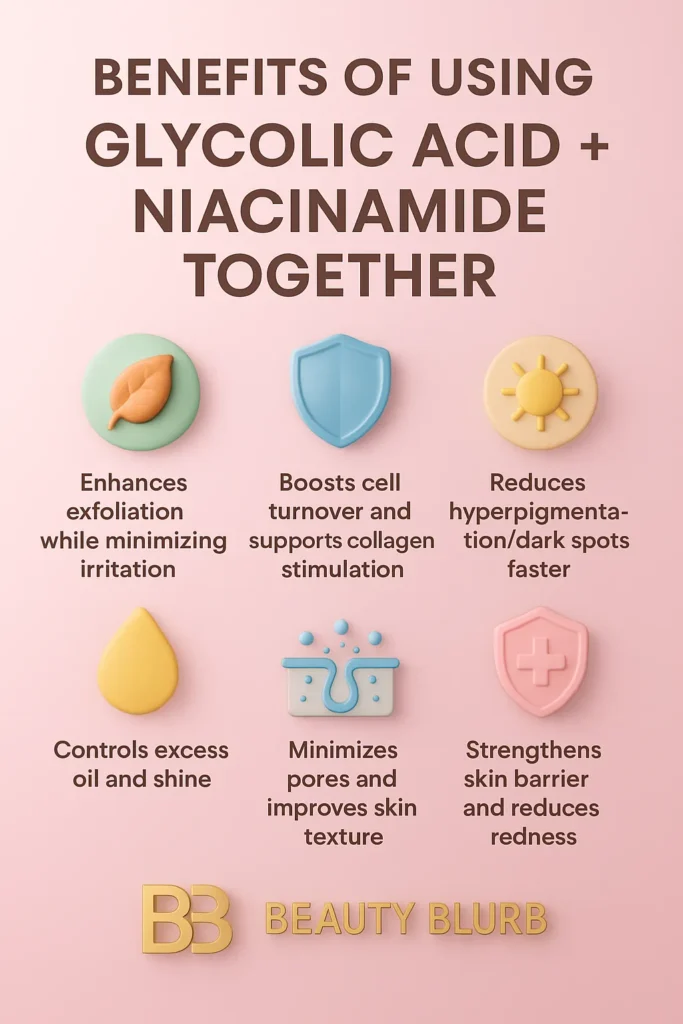
- Enhances exfoliation while minimizing irritation: Glycolic acid gently removes dead skin cells; niacinamide soothes and strengthens the skin barrier to prevent over-peeling or sensitivity.
- Boosts cell turnover and supports collagen stimulation: the dual action helps reduce fine lines, improve firmness, and smooth uneven texture.
- Reduces hyperpigmentation/dark spots faster: glycolic acid fades dark marks, while niacinamide interferes with pigment transfer and calms inflammation that can worsen discoloration.
- Controls excess oil and shine: ideal for niacinamide and glycolic acid for oily skin routines — glycolic acid clears clogged pores, niacinamide regulates sebum production.
- Minimizes pores and improves skin texture: smoother, tighter skin with a refined look over time.
- Strengthens skin barrier and reduces redness: niacinamide enhances ceramide production and calms irritation caused by exfoliation.
- Brightening dull skin: this combo helps reveal fresher skin, combats dullness, and gives a more radiant tone when used consistently.
Clinical Study:
Study: Vichy Serum B3 (2025) — Randomized study comparing 5% niacinamide + ~1.5% glycolic acid plus other actives vs hydroquinone 4% for melasma. PMC
- Participants: 60 females aged 20-50 with facial melasma.
- Duration: 5 months.
- Results: Significant reduction in pigmentation (MASI scores), improved skin barrier/hydration; better tolerance than hydroquinone; fewer side effects like irritation.
- Implication: Even low concentrations of glycolic acid + niacinamide in a serum can yield depigmenting, brightening, and calming benefits over time, especially for sensitive or pigment-prone skin.
Bringing glycolic acid and niacinamide together in your skincare routine isn’t just safe—it’s synergistic.
You get the exfoliating power to fade dark spots and smooth texture, coupled with calming, oil-regulating, skin barrier strengthening effects.
If you want all these benefits without risking irritation, consistency and correct formulation (or layering) matter most:
choose stable products, begin gradually, protect your skin with moisturizer and sunscreen, and listen to how your skin reacts.
How to Use Glycolic Acid and Niacinamide Together
When done right, combining can glycolic acid and niacinamide be used together in your skincare routine gives you maximum benefit with minimal irritation.
Here’s your definitive guide to layering, scheduling, and applying these ingredients safely and effectively
This video explains how to use the ordinary glycolic acid toner and niacinamide together:

Tips for Safe & Effective Use
- Start with low concentrations: begin with glycolic acid at 5-10% and niacinamide at 2-5% to test tolerance.
- Patch test: apply a small amount on jawline or behind the ear, observe for 24-48 hours.
- Texture order: apply from thinnest to thickest; serums before creams.
- Avoid applying both on freshly irritated or compromised skin: If skin barrier is weak, skip glycolic acid until healed.
- Always use sunscreen during the day: Glycolic acid increases photosensitivity; SPF 30+ broad spectrum is essential.
- Hydrate and moisturize: Use barrier-supporting moisturizers with ceramides, hyaluronic acid.
- Listen to your skin: redness, stinging, peeling? Pull back to every-other-day or alternate routines.
Common Mistake to Avoid
- Skipping the wait time or using them back-to-back: Using glycolic acid and niacinamide consecutively without allowing absorption can overwhelm skin and reduce effectiveness.
- Using high concentration acids + strong exfoliants in the same session: increases risk of irritation.
- Neglecting sun protection: even the best routine fails without sunscreen when using acids like glycolic.
Now that you know exactly how to use glycolic acid and niacinamide together, it’s time to put theory into practice.
Choose the routine that fits your skin type and lifestyle best — whether it’s layering in the same routine, splitting AM and PM, or alternating days.
Stick with it consistently, listen to your skin, and you’ll soon notice smoother texture, fewer dark spots, and a more radiant glow. ✨
👉 We’d love to hear from you! Try one of these routines and share your experience in the comments — your feedback can help others on the same skincare journey.
Professional Note:
If you’re looking for a dermatologist-approved step-by-step plan beyond just these two ingredients, make sure to check out our full guide: Dermatologist Recommended Skin Care Routine for Oily Skin.
It walks you through a complete routine with expert insights tailored specifically for oily and acne-prone skin.
How Often Should You Use Niacinamide and Glycolic Acid Together?
Consistency is key in skincare, but so is moderation. While niacinamide is generally safe for daily use (even twice a day), glycolic acid is a potent exfoliant that should be used more cautiously.
How often you can pair them depends on your skin type, tolerance level, and product concentration. The golden rule: start slow, then adjust based on your skin’s response.
Who Should Avoid This Combination?
Although many people benefit from using niacinamide and glycolic acid together, this duo isn’t for everyone. You may want to avoid or limit this combination if:
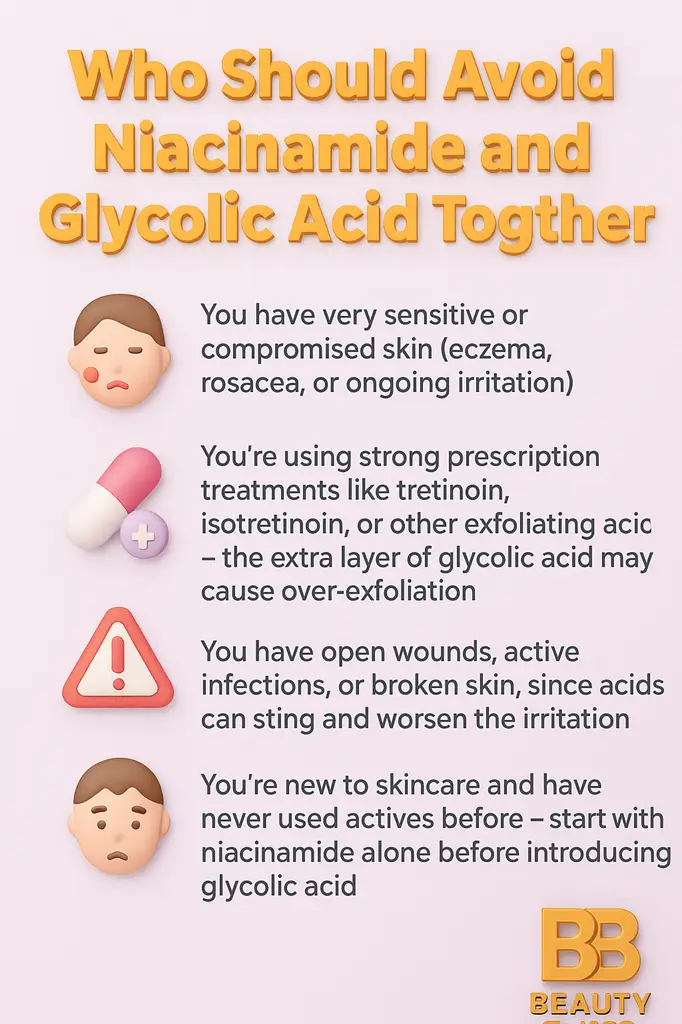
- You have very sensitive or compromised skin (eczema, rosacea, or ongoing irritation).
- You’re using strong prescription treatments like tretinoin, isotretinoin, or other exfoliating acids — the extra layer of glycolic acid may cause over-exfoliation.
- You have open wounds, active infections, or broken skin, since acids can sting and worsen the irritation.
- You’re new to skincare and have never used actives before — start with niacinamide alone before introducing glycolic acid.
👉 When in doubt, consult a dermatologist to personalize your skincare routine and avoid unnecessary irritation.
So, Is It OK to Use Glycolic Acid and Niacinamide Together?
Yes — when used correctly, glycolic acid and niacinamide can absolutely be paired together. The key is to respect your skin’s tolerance, choose the right concentrations, and follow safe routines:
whether that’s layering them in the same session with a short waiting period, splitting AM and PM, or using them on alternating days.
This combination allows you to enjoy the exfoliating benefits of glycolic acid while still receiving the barrier-strengthening, oil-regulating, and calming effects of niacinamide.
Always patch-test new products, introduce actives gradually, and don’t forget sunscreen during the day.
By following these guidelines, you can confidently include both actives in your routine and achieve smoother, brighter, and healthier-looking skin — without over-irritation or risk.
Side Effects of Using Glycolic Acid and Niacinamide Together
While combining glycolic acid and niacinamide is generally safe for most skin types, it’s important to understand potential side effects and how to prevent them. Overlooking proper use, product concentration, or application method can sometimes lead to irritation or discomfort.
- Mild redness or tingling: Often occurs during initial use, especially with higher concentrations of glycolic acid.
- Dryness or flaking: Excessive exfoliation can disrupt the skin barrier.
- Increased sensitivity to sunlight: Glycolic acid can make skin more susceptible to UV damage.
- Breakouts or purging: Some users may experience temporary acne flare-ups as the skin adjusts.
- Stinging or burning sensation: Usually occurs if both actives are applied too quickly without waiting, or if skin is compromised.
Most side effects are mild and preventable with correct layering, proper concentration, and gradual introduction.
By following the best practices & tips I gave you, you can safely enjoy the benefits of niacinamide and glycolic acid together while minimizing discomfort.
Best Products with Glycolic Acid and Niacinamide
When it comes to achieving glowing, smooth, and balanced skin, choosing the right products with glycolic acid and niacinamide can make all the difference. Whether you’re new to chemical exfoliation or a seasoned skincare enthusiast, selecting formulations that are safe, effective, and compatible with your skin type is key.
1: Best Glycolic Acid Products
Here’s a curated list of some of the most trusted glycolic acid toners and serums, complete with a star-based rating system to help you compare effectiveness, texture, and user satisfaction:
💡 Pro Tip: Luckily, I’ve personally tried The Ordinary Glycolic Acid 7% Toning Solution — check out my full review before deciding to purchase it. It gives detailed insights into how it feels on oily skin, absorption, and visible results.
2: Best Niacinamide Products
Similarly, here are top niacinamide serums and moisturizers that pair beautifully with glycolic acid for optimal results:
These products make it easy to introduce glycolic acid and niacinamide into your skincare routine safely and effectively. Don’t be afraid to try them — start slow, follow the tips in this guide, and see what works best for your skin.
✨ We’d love to hear from you! Pick one of these products, try it for a few weeks, and share your experience in the comments. Your insights can help others choose the best routine for their skin type.
FAQ Of glycolic acid and niacinamide together
Frequently Asked Questions
For best absorption and minimal irritation, use **glycolic acid toner** on clean skin, wait about 30 minutes, and then follow with **niacinamide serum**. This layering respects pH levels and allows both ingredients to work effectively.
Apply **glycolic acid toner** first, wait 30 minutes, then layer **niacinamide serum**, followed by **hyaluronic acid** or a hydrating moisturizer. This combination exfoliates, strengthens the skin barrier, and deeply hydrates.
Vitamin C (L-ascorbic acid) has a low pH similar to glycolic acid. To prevent reduced effectiveness or irritation, use **vitamin C in the morning** and **glycolic acid + niacinamide at night** or alternate days.
Apply **glycolic acid toner** first (night), wait 30 minutes, then use **niacinamide serum**. If using **salicylic acid**, it’s safer to apply it on alternate days or in a separate routine to avoid over-exfoliation.