
If you’re searching for The Ordinary Niacinamide Serum Review, you’re probably wondering whether this cult-favorite serum is actually worth it for oily or acne-prone skin.
Yes—this $6 serum (30ml bottle) is one of the most affordable ways to reduce excess oil, refine pores, and improve overall skin texture. However, it’s not perfect:
some users experience pilling when layered with other products, mild irritation if their skin is very sensitive, or frustration with the sticky texture.
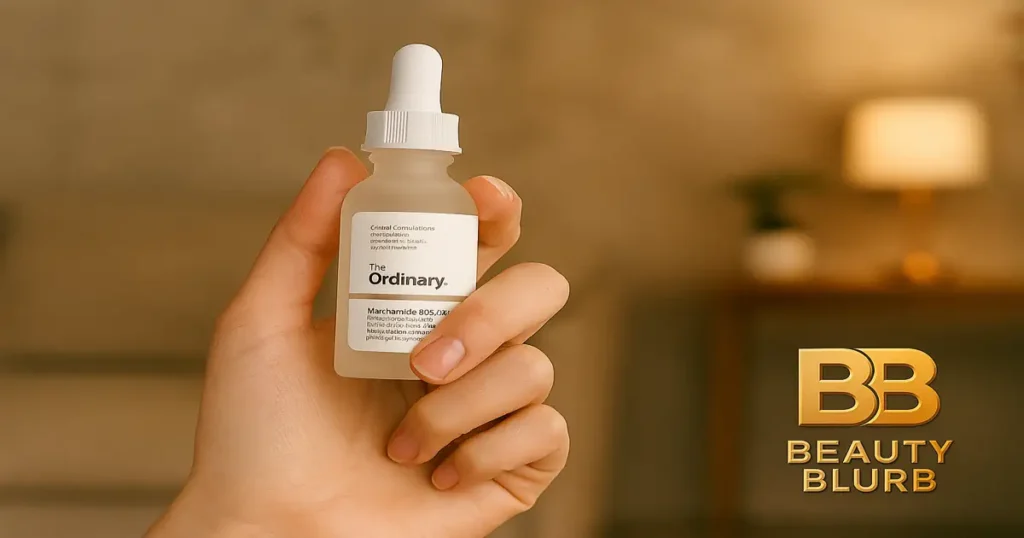
⭐ Quick Review: The Ordinary Niacinamide 10% + Zinc 1% Serum
Price: $6 (30ml)
Main Ingredients:
- Niacinamide 10% (Vitamin B3)
- Zinc PCA 1%
- Dimethyl Isosorbide
- Glycerin
- Aqua (Water)
Pros:
- Extremely affordable ($6)
- Reduces excess oil and shine
- Helps minimize appearance of pores
- Improves skin texture and tone
- Lightweight, water-based formula
Cons:
- Can pill when layered with heavy creams
- Mild irritation on very sensitive skin
- Sticky finish for some users
Overall Rating: ⭐⭐⭐⭐☆ (4.5/5)
In this the ordinary niacinamide 10% + zinc 1% review, I’ll walk you through everything you need to know before trying it yourself:
the ingredients and how they work, my 6-week test results, benefits and side effects, the best way to use it in your routine, and how it compares to other niacinamide serums on the market.
By the end, you’ll know exactly if this budget-friendly serum deserves a place in your skincare routine.
What Is The Ordinary Niacinamide 10% + Zinc 1% Serum?
The Ordinary Niacinamide 10% + Zinc 1% is a lightweight serum with a water-based texture, created to address multiple skin concerns—especially for oily skin and acne-prone skin.
At only $6 for a 30ml bottle, it’s one of the most affordable skincare options available, yet it delivers impressive results.
This serum combines two star ingredients: Niacinamide (Vitamin B3) and Zinc (1%). Niacinamide is well-known for its ability to reduce enlarged pores, control excess oil, brighten dull skin, and improve overall skin texture.
On the other hand, Zinc acts as a soothing mineral that calms irritation, reduces redness, and strengthens the skin’s natural barrier—making it especially helpful for those with breakouts and congestion.
The synergy of these two ingredients makes the formula effective in balancing sebum production, smoothing uneven texture, and restoring radiance.

If you’re looking for Niacinamide for oily skin that’s gentle, effective, and budget-friendly, this serum is one of the best choices to add to your daily routine.
the ordinary niacinamide serum ingredients & How Does it Work
When you look at the ingredients list of The Ordinary Niacinamide Serum, the formula is surprisingly simple but highly effective. Let’s break down the star ingredients and see what science says about how they benefit your skin:
1. Niacinamide (10%) – The Multitasker
Niacinamide, also known as Vitamin B3, is the hero of this formula. It’s clinically proven to:
- Reduce enlarged pores and refine skin texture.
- Control excess oil production (a game-changer for oily skin).
- Brighten dull skin and improve uneven tone.
- Strengthen the skin barrier, reducing sensitivity.
Clinical Study From Pubmed:
- 📑 A clinical trial published in PubMed by Zoe Diana Draelos et al.
- (2006) with 100 Japanese subjects using 2% niacinamide over 4 weeks, and 30 Caucasian subjects in a split-face study over 6 weeks.
- found that topical niacinamide significantly reduced sebum excretion rates (SER) in the Japanese group by weeks 2 and 4.
- In the Caucasian group, casual sebum levels (CSL) were significantly reduced by week 6. Source.
2. Zinc (1%) – The Skin’s Bodyguard
Zinc PCA is a mineral-derived ingredient that supports skin health by:
- Reducing inflammation and calming redness
- Helping to regulate sebum activity alongside Niacinamide
- Protecting against bacterial growth that can lead to acne
📑 Another PubMed-backed study (Shalita et al., 2012, 48 participants, 8 weeks) compared topical zinc-based formulas with standard acne treatments. Results showed noticeable improvements in breakouts and oil control, especially when paired with niacinamide. Source.
3. Supporting Ingredients
- Aqua (Water) – gives the serum its light, fast-absorbing texture.
- Pentylene Glycol – helps hydration and improves ingredient penetration.
- Tamarind Seed Extract (in trace amounts) – offers extra soothing and hydrating benefits.
How It All Comes Together
The combination of 10% Niacinamide and 1% Zinc makes this serum one of the most effective and affordable skincare products for acne-prone and oily skin types.
Niacinamide does the heavy lifting by targeting texture, tone, and oiliness, while Zinc provides a calming, protective layer against irritation and breakouts.
Ingredients List — Ordered by Importance
These are the ingredients in The Ordinary Niacinamide 10% + Zinc 1%, categorized into actives, humectants & texture agents, supportive ingredients, and preservatives.
Key Active Ingredients
Humectants & Texture Agents
Supportive Ingredients
Preservatives & Stabilizers
In short, The Ordinary created a formula that’s simple, science-backed, and powerful enough to compete with serums three times the price.
Honestly, when I went through all these ingredients and their skin-loving benefits, I literally got a little chill down my spine — the good kind! It’s the kind of formula that makes you want to roll up your sleeves and try it on your skin ASAP.
You know that feeling when you find a skincare product that looks too good to skip? Yep, that’s exactly the vibe here.
The Ordinary Niacinamide Serum Review (The Truth)
When it comes to cult-favorite skincare products, few serums have sparked as much conversation as this one.
In this the ordinary niacinamide review, I’ll share not just my own experience but also insights gathered from other users who’ve tested it over weeks and months.
If you’ve ever struggled with oily skin, visible pores, or recurring blemishes, this little $6 serum has probably landed on your radar. But does it actually live up to the hype? Let’s break it down.
✅ Pros of The Ordinary Niacinamide Serum
Discover the best benefits of the ordinary niacinamide according to my trial and the experiences of countless skincare lovers online:
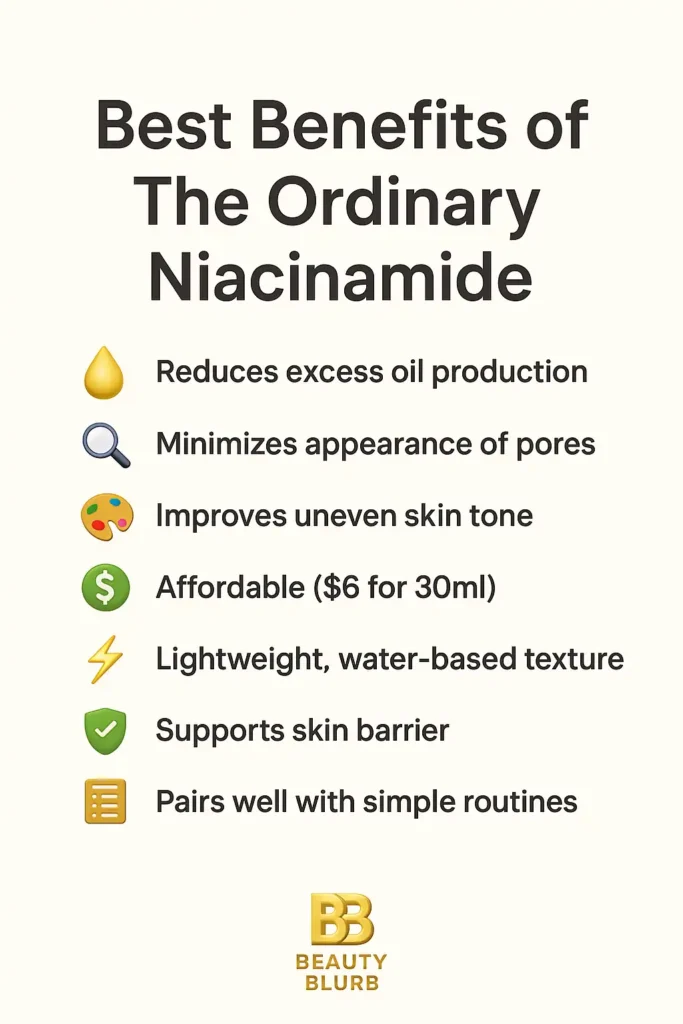
- Reduces excess oil production → keeps skin looking fresh without that midday shine.
- Minimizes appearance of pores → skin looks smoother and more refined over time.
- Improves uneven skin tone → helps fade post-acne marks and dull patches.
- Affordable ($6 for 30ml) → one of the most budget-friendly serums with clinically studied actives.
- Lightweight, water-based texture → absorbs quickly without stickiness.
- Supports skin barrier → thanks to Niacinamide for oily skin, it strengthens the skin’s natural defenses.
- Pairs well with simple routines → easy to slot in without complicating your regimen.
⚠️ Cons of The Ordinary Niacinamide Serum
What are the side effects of the ordinary niacinamide serum? ,While it has plenty of fans, no product is perfect. Here are some common drawbacks worth knowing:
- May cause purging or irritation in the first weeks, especially if your skin is sensitive.
- Can pill under heavy moisturizers or makeup, depending on how it’s layered.
- Not hydrating enough on its own → most users need to pair it with a moisturizer.
- Results vary → some people notice dramatic changes, while others see only subtle improvements.
- Incompatibility with certain actives (like strong vitamin C serums) can limit how you use it.
So, What Is The Ordinary Niacinamide Serum Good For? If you’ve been wondering what exactly this serum can do for you, here’s the bottom line:
The Ordinary Niacinamide 10% + Zinc 1% is best suited for oily and acne-prone skin types that need help balancing sebum, minimizing pores, and reducing blemish-related marks.
It’s not a miracle cure, but when used consistently, it delivers clear, noticeable improvements in skin texture and tone.
Simply put, it’s a budget-friendly solution for anyone who wants a reliable serum that tackles shine, congestion, and unevenness without breaking the bank.
What I Loved About The Ordinary Niacinamide 10% + Zinc 1% Review
Here’s what really stood out to me while testing this serum—and why so many people keep coming back to it:
✅ Quantity & Packaging:
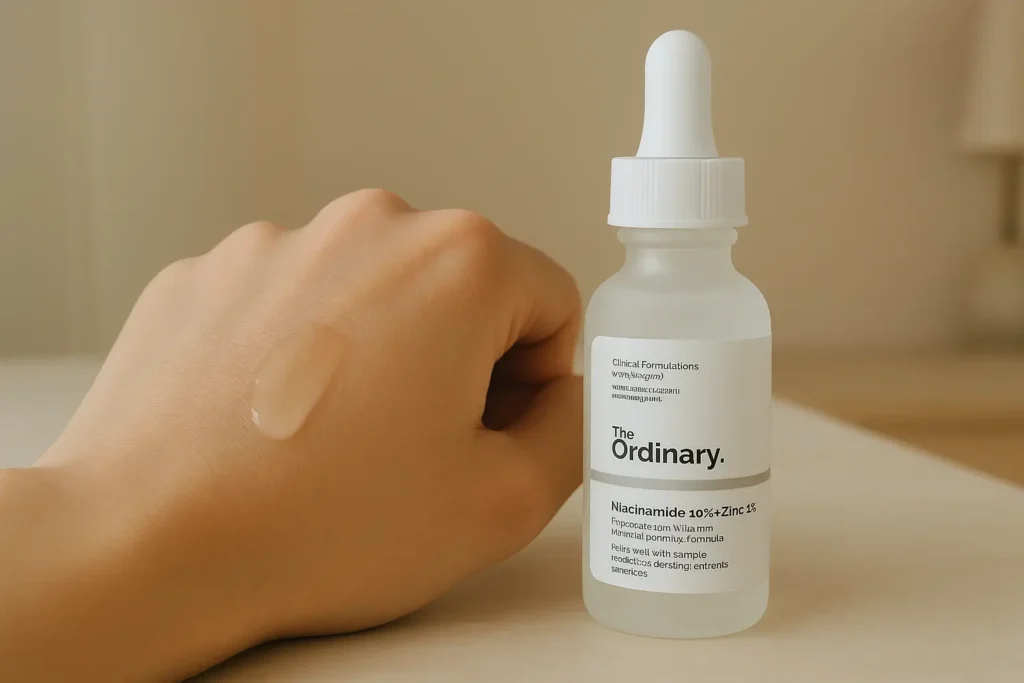
The serum comes in a 30ml frosted glass bottle with a simple dropper applicator. It feels minimalistic yet functional, very much in line with The Ordinary’s no-frills aesthetic. The dropper makes it easy to control the exact amount you need, avoiding waste.
✅ Appearance & Texture:
The Ordinary Niacinamide has a clear, slightly viscous texture that feels lightweight and spreads smoothly across the skin. It absorbs fairly quickly, though if you apply too much at once, it can leave a temporary tacky finish.
Layered properly, it works well under moisturizer and sunscreen.
✅ Scent:
What does The Ordinary Niacinamide smell like? Technically, it has no added fragrance, which is great for sensitive or acne-prone skin.
Some users (myself included) notice a very faint “clinical” or slight chemical smell if you sniff the dropper closely, but on the skin, it’s virtually scentless.
✅ Ease of Use:
This serum plays nicely in most routines—it doesn’t sting, doesn’t burn, and layers easily under hydrating serums or lightweight creams. For beginners, it’s one of the most accessible and fuss-free niacinamide serums out there.
How to Use The Ordinary Niacinamide and Zinc
I know you’re wondering: Can I use Niacinamide The Ordinary everyday? The answer is yes—you can safely use The Ordinary Niacinamide 10% + Zinc 1% once or twice daily, both morning and evening.
It’s a gentle yet effective formula that helps regulate oil production, refine pores, and strengthen the skin barrier. For most people, it fits seamlessly into a simple routine.
Still, to avoid irritation, it’s always smart to patch-test first, especially if you’re combining it with other actives like retinol or strong vitamin C.
Now, here’s the fun part: I’ll show you my own method, based on personal experience, that actually doubled the serum’s results in a short time.
And since many of you found me through the ordinary niacinamide serum review oily skin, this routine is especially helpful if your main concern is shine, breakouts, or enlarged pores.
Step-by-Step Skincare Routine With The Ordinary Niacinamide Serum
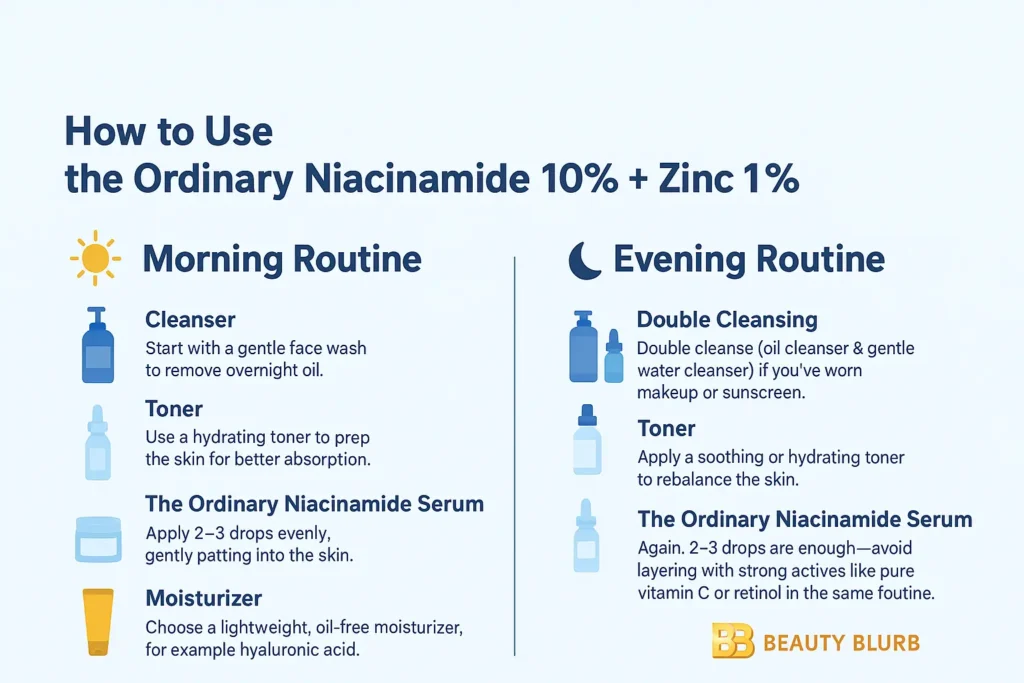
🌞 Morning Routine
- Cleanser → Start with a gentle face wash to remove overnight oil.
- Toner → Use a hydrating toner to prep the skin for better absorption.
- The Ordinary Niacinamide Serum → Apply 2–3 drops evenly, gently patting into the skin.
- Moisturizer → Choose a lightweight, oil-free moisturizer, for example hyaluronic acid .
- Sunscreen (SPF 50+) → This is non-negotiable. Niacinamide strengthens your barrier, but UV rays can undo progress. Always finish with a broad-spectrum SPF 50+.
🌙 Evening Routine
- Cle → Double cleanse (oil cleanser & gentle water cleanser) if you’ve worn makeup or sunscreen.
- Toner → Apply a soothing or hydrating toner to rebalance the skin.
- The Ordinary Niacinamide Serum → Again, 2–3 drops are enough—avoid layering with strong actives like pure vitamin C or retinol in the same routine.
- Moisturizer → End with a richer cream at night to lock in hydration.
💡 Pro Tip: Apply the serum on slightly damp skin (after toner) to boost absorption and minimize any sticky feeling. This small tweak made a big difference in my results—faster pore refinement and less oil breakthrough during the day.
Can I Use Niacinamide 10% as a Beginner?
If you’re just stepping into the world of serums, jumping straight into 10% niacinamide may feel tempting—but it’s not always the best move.
Think of niacinamide like gym training for your skin: start light, then progress. For beginners, dermatologists often recommend 5% niacinamide to allow your skin to adapt.
Once your skin barrier is comfortable and shows no irritation, you can safely level up to 10% for maximum results.
In fact, clinical studies suggest that both 5% and 10% concentrations are effective for improving texture, reducing oiliness, and brightening.
The difference? With 10%, you may see faster improvements, but it also carries a slightly higher chance of irritation—especially if your skin is sensitive.
That’s why a step-up approach is the safest and smartest strategy.
How often should you use ordinary niacinamide?? (Step-Up Plan)
✨ Key Takeaway: Yes, you can use The Ordinary Niacinamide 10% as a beginner—but it’s smarter to build tolerance with 5% first, then transition.
This reduces the risk of purging or irritation while still giving you all the long-term brightening and oil-controlling benefits.
What to Avoid When Using The Ordinary Niacinamide 10% + Zinc 1% Serum
I know you’re probably wondering, “What not to mix with niacinamide?”—and it’s a really important question. While The Ordinary Niacinamide 10% + Zinc 1%
has a neutral pH (around 6–7), while actives like AHAs (glycolic, lactic) or BHAs (salicylic) work in a more acidic environment (pH 3–4). If you apply them together, you risk neutralizing their effectiveness and putting stress on your skin barrier.
That’s why dermatologists often recommend waiting at least 20–30 minutes before layering niacinamide after acids, to let your skin’s pH rebalance.
When it comes to Vitamin C (L-Ascorbic Acid), the old concern was that it would “cancel out” niacinamide.
While newer stabilized formulas have made them more compatible, using them in separate routines (Vitamin C in the AM, Niacinamide in the PM) is still the safest way to get maximum benefits without risking irritation.
And if you’re adding retinoids, keep in mind that both retinoids and niacinamide influence cell turnover. Beginners might experience peeling or redness when combining them too soon, so it’s best to introduce them gradually and alternate nights.
Here’s what you should avoid pairing with it:
- High-strength AHAs (like glycolic or lactic acid): Combining these acids with niacinamide at the same time can overwhelm your skin barrier and trigger sensitivity.
- BHAs (like salicylic acid): Both niacinamide and BHAs can regulate oil, but layering them together may cause dryness or irritation for acne-prone skin. Instead, alternate days or routines.
- Pure Vitamin C (L-Ascorbic Acid): While modern formulations are more stable, many dermatologists still recommend separating niacinamide and vitamin C into AM/PM routines to avoid reducing their effectiveness.
- Strong Retinoids: Retinoids and niacinamide can be complementary, but when used together by beginners, they often cause irritation. It’s safer to build tolerance first.
So, What’s the Safe Approach?
If you’re focusing on breakouts and oily skin (yes, I’m talking to you if you came here looking for the ordinary niacinamide serum review acne).
the safest strategy is to use niacinamide alongside a gentle cleanser, moisturizer, and SPF 50+ in the morning—while saving stronger actives like acids or retinoids for the evening on alternate days.
This way, you’ll still get all the pore-minimizing, oil-regulating, and brightening benefits of niacinamide without overloading your skin barrier.
How Long Does It Take for The Ordinary Niacinamide Serum to Work?
If you’re wondering “how fast does The Ordinary Niacinamide 10% + Zinc 1% show results?” — the short answer is: you’ll usually see noticeable improvements within 4 to 8 weeks of consistent use.
That’s because niacinamide works gradually to rebalance oil, minimize pores, brighten skin tone, and support the skin barrier. Unlike an exfoliating essence or peeling solution, it doesn’t deliver “overnight miracles” — instead, it builds long-term skin health and clarity.
| Timeframe | What to Expect | Skin Notes |
|---|---|---|
| 1–2 weeks | Subtle decrease in oiliness and shine | Skin feels a bit smoother; less greasy T-zone |
| 4 weeks | Visible reduction in redness and early breakouts | Pores may start to look smaller |
| 6–8 weeks | Brighter skin tone, more even texture | Noticeable improvement in acne-prone areas |
| 12+ weeks | Maximum benefits — balanced oil, stronger barrier, refined texture | Long-term clarity & glow if consistency is maintained |
So, how long does it take for niacinamide to work? Think of it like training your skin — patience is key. If you’re consistent with your routine (and always pair it with SPF 50+ during the day), the rewards are worth it:
fewer breakouts, less oil, smoother texture, and a naThe Ordinary Niacinamide Serum isn’t a quick-fix, it’s a skin investment.
My 6-Week Test — Results & Experience
When I first started this niacinamide and zinc the ordinary review, I honestly wasn’t sure what to expect. The serum comes out as a clear, water-based formula that feels lighter than a gel but not completely watery.
On the skin, it’s a bit… sticky (at least for the first few seconds) — kind of like when you accidentally spill a drop of honey on your hand 🍯. The good news? It sinks in quickly, leaves no greasy residue, and a little goes a long way.
Days 1–3: The First Impressions
The serum felt lightweight and slightly sticky at first (like a watered-down gel). No strong scent, just a faint chemical note if you sniffed the dropper closely 👃. My skin didn’t react badly — no redness or stinging — but I did notice some minor tightness after it dried.
Week 1: Small Bumps Appear
By the end of the first week, I started seeing tiny bumps on my forehead and a bit of dryness around my chin. Not full-on purging, but my skin was clearly adjusting. I cut back from daily use to every other night, which helped calm things down.
Week 4: The Turning Point
Around the 4-week mark, things got interesting. My skin texture started feeling smoother, the annoying forehead bumps disappeared, and my T-zone wasn’t shining like a disco ball anymore 💃.
Breakouts? Barely any new ones, and the few that showed up healed quicker than usual.
Week 6: Clearer, More Balanced Skin
By week six, the serum had officially earned a spot in my routine. Oil production was much more controlled, my skin felt hydrated but not greasy, and I noticed fewer flaky patches around my chin.
Old acne scars didn’t vanish, but new breakouts were rare and much smaller than before. Overall, my skin looked
👉 Note: Please remember, this is just my personal experience with The Ordinary Niacinamide 10% + Zinc 1%. Everyone’s skin is different, so don’t take this as medical advice. Always patch-test before trying any new product, especially active serums.
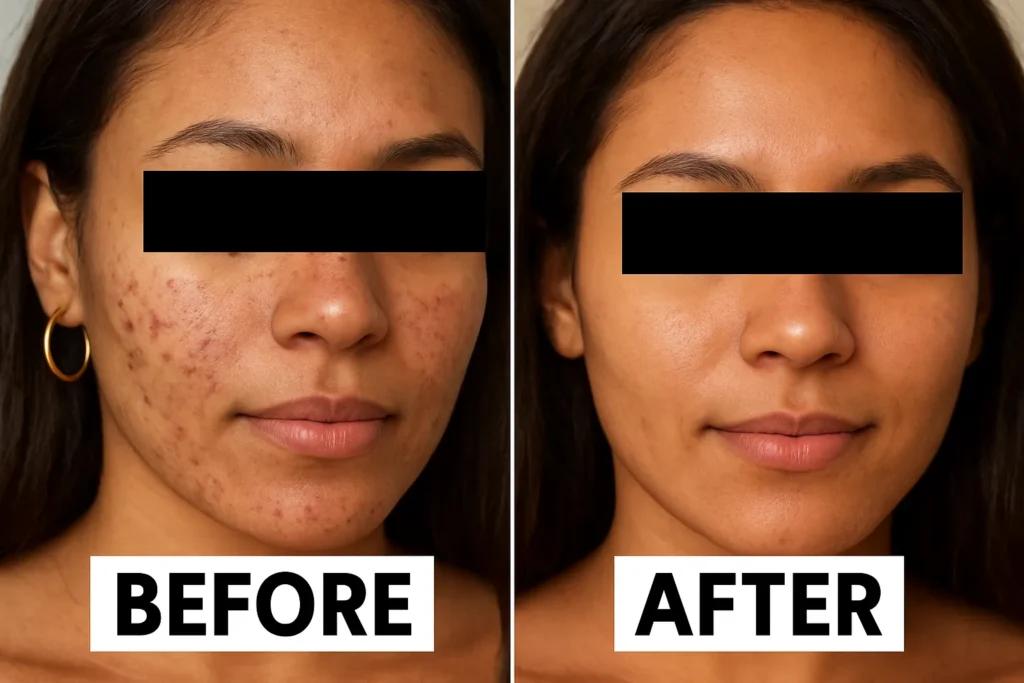
the ordinary niacinamide serum review before and after
One of the best ways to judge a product is by seeing real transformations. So, to give you a clear picture of what this serum can (and can’t) do, here are some before and after results from people who’ve actually used it.
These photos show how skin can look more balanced, smoother, and less oily with consistent use — though results always vary depending on your skin type and routine.
The Ordinary Niacinamide Serum vs Plum Niacinamide Serum
If you’re torn between The Ordinary Niacinamide 10% + Zinc 1% and Plum 10% Niacinamide Face Serum, here’s the quick answer:
👉 Both serums are great for oily and acne-prone skin, but The Ordinary focuses more on oil-control and simplicity, while Plum adds soothing and hydrating ingredients like rice water and squalane — making it slightly gentler for beginners or those with sensitive skin.
Final Verdict: Which One Should You Choose?
If your main concern is oiliness, frequent breakouts, or congested pores, then The Ordinary Niacinamide 10% + Zinc 1% is your best bet — affordable, effective, and straightforward.
But if you have sensitive or combination skin, and you’re looking for extra hydration, soothing benefits, and dark spot care, then Plum 10% Niacinamide Serum might be the gentler, more nourishing choice.
Where to Buy The Ordinary Niacinamide Serum
If you’re wondering where to buy The Ordinary Niacinamide Serum, the good news is that it’s widely available both online and in major beauty retailers. The most trusted places to get authentic The Ordinary products are:
- Amazon 🛒 (fast delivery + verified sellers)
- Sephora 💄 (official retailer with loyalty points)
- Cult Beauty & LookFantastic (for international shipping)
- The Ordinary Official Website (direct source, always safe)
💡 To save you time, we’ve added quick access buttons below. Just click on your preferred store and shop directly for your The Ordinary Niacinamide 10% + Zinc 1% Serum.
If you decide to shop through these links, I’ll earn a few cents (yes… literally cents 🪙). Don’t worry, I won’t spend them on anything serious—most likely on an iced coffee or a bar of chocolate 🍫😂.
FAQ Of niacinamide the ordinary review
Niacinamide targets oil control, pore appearance, redness and pigmentation — it’s an active that improves skin texture and barrier function. Hyaluronic acid (HA) is a humectant: it draws moisture into the skin and plumps surface dehydration lines.
For most routines, use both: apply HA on damp skin to hydrate, then follow with niacinamide to lock in benefits. This combo is especially useful for oily but dehydrated skin types.
Niacinamide (topical Vitamin B3) is widely regarded as safe during pregnancy and breastfeeding when used in standard cosmetic concentrations. However, every pregnancy is unique — if you have concerns or are using multiple actives, ask your OB/GYN or dermatologist for personalised advice.
Niacinamide helps strengthen the skin barrier and reduce inflammation, which may improve symptoms like redness and dryness. Many dermatologists include niacinamide in barrier-repair routines. If you have atopic dermatitis (eczema), use low-irritant formulations and consult your dermatologist before adding new actives.
After mild sunburn, niacinamide’s anti-inflammatory and barrier-supporting properties may help calming and repair. For acute or severe burns, follow first-aid steps (cooling, hydration, medical care) and seek professional advice before applying new actives.
Many people with rosacea find niacinamide soothing because it reduces inflammation and supports barrier repair. Start with a low frequency (every other day) and use fragrance-free, gentle formulations. If you have active rosacea flares, consult your dermatologist first.
Modern formulations often allow compatibility, but a conservative approach is to use Vitamin C in the morning (L-Ascorbic Acid) and niacinamide in the evening, or wait ~20–30 minutes between applications. This maximizes each ingredient’s effectiveness while minimizing irritation.
A little goes a long way: 2–3 drops spread evenly across a damp face is enough for most people. Start with less if you’re sensitive and increase frequency before increasing amount. Over-applying won’t speed results and may increase pilling or irritation.
Niacinamide typically does not cause purging because it doesn’t accelerate cell turnover like retinoids or exfoliating acids. If you see more bumps after starting it, consider frequency/amount, and patch-test. If irritation persists, stop and consult a dermatologist.
Thank you so much for staying with me through this The Ordinary Niacinamide Serum Review 💖. If you’ve made it this far, I know you truly care about your skin and want the best results possible.
I’d love for you to give this serum a try and see how it transforms your routine. And if you’ve already used it, please share your journey in the comments — your story might inspire another reader! 🌸
Don’t forget to subscribe to my blog so you’ll never miss new reviews, skincare tips, and honest experiences. Your support means the world and keeps this little corner of the internet glowing. 🌟

Akram Boulaid is a dedicated Skincare Researcher and Analyst with over 7 years of intensive focus on dermatology and cosmetic ingredient science. As a globally recognized expert, his insights have been featured in major international publications, including the New York Post and GB News. A verified expert on Qwoted, Akram connects with health journalists to provide evidence-based analysis. He founded Beauty Blurb to bridge the gap between complex clinical data and practical skincare routines, specializing exclusively in the needs of oily and acne-prone skin through rigorous analysis of peer-reviewed scientific literature.


What’s up everyone, it’s my first visit at this site, and article is truly fruitful in support of me, keep up posting these types of articles or
reviews.
Thanks ma’am appreciate it