
Glycolic Acid for Oily Skin can be a real game-changer. This powerhouse AHA (alpha-hydroxy acid) gently exfoliates dead skin cells, reduces excess oil, clears clogged pores, and smooths rough texture, leaving your complexion brighter and more balanced.
The key is to start low and slow: begin with a mild concentration once or twice per week, then gradually increase frequency as your skin builds tolerance.
Always apply it at night and never skip sunscreen during the day, since glycolic acid makes oily skin more sensitive to the sun.

You might be wondering, is glycolic acid good for oily skin in the long run, or should you stick with other acids like salicylic?
In this guide, we’ll cover everything you need to know—from the science behind glycolic acid and its unique benefits for oily skin, to step-by-step instructions, safety tips, comparisons with other exfoliating acids, and expert-approved product recommendations.
By the end, you’ll know exactly how to add glycolic acid to your routine with confidence and get the most out of it.
What is Glycolic Acid and How Does It Work?
Glycolic acid is one of the most popular AHA exfoliants in skincare. It’s a type of alpha hydroxy acid derived from sugarcane, and what makes it stand out is its tiny molecular size.
Because the molecules are so small, glycolic acid can penetrate the outer layer of skin more effectively than many other exfoliating acids.
Once it enters the skin, glycolic acid gently loosens the bonds that hold dead cells on the surface. This process—often called cell turnover—helps sweep away buildup that can clog pores and make oily skin look dull or uneven.
By removing this layer, glycolic acid not only smooths texture but also allows other treatments (like niacinamide or salicylic acid) to work better. Think of it as a deep cleanse on a microscopic level, giving your skin a fresh, more refined look.
Is Glycolic Acid Good for Oily Skin?
My friend, if you’ve ever asked yourself is glycolic acid good for oily skin, the answer is a confident yes. Among the many glycolic acid benefits for oily skin, the most important are its ability to control excess sebum, unclog stubborn pores, and refine uneven texture.
By gently exfoliating dead skin cells while encouraging healthier cell turnover, glycolic acid not only keeps oily skin clearer and smoother, but also helps other products in your routine work more effectively.
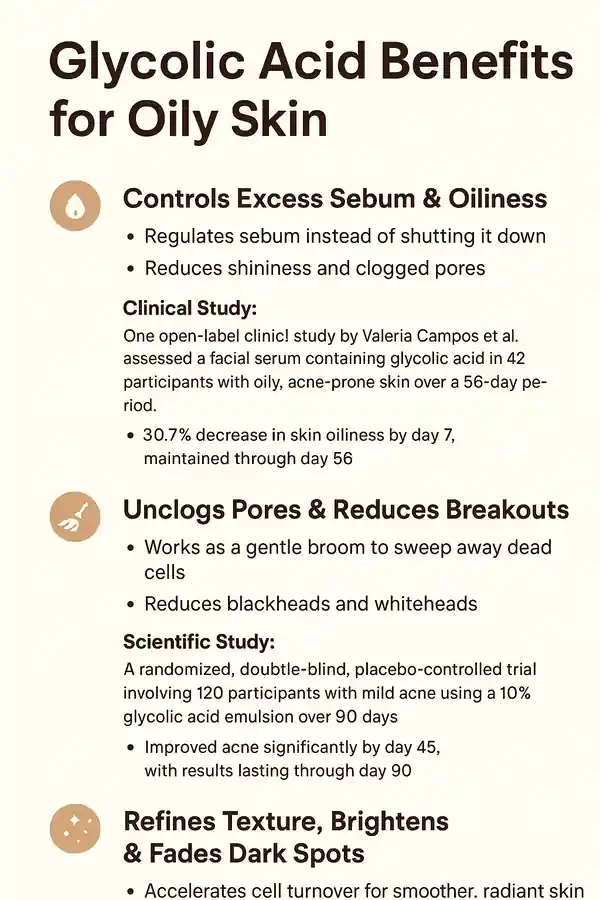
1: Controls Excess Sebum and Oiliness
When your skin is oily, it’s like a little oil factory running non-stop—leaving you with shine, clogged pores, and frequent breakouts. Glycolic acid acts like a gentle traffic cop for your sebum production.
As an AHA exfoliant, it dissolves the sticky buildup on the skin’s surface that traps oil, helping your skin look less greasy and more balanced. In simple terms, it doesn’t shut down oil production—it just helps your skin regulate it better.
Clinical Study:
- One open-label clinical study by Valeria Campos et al.
- assessed a facial serum containing glycolic acid (among other actives) in 42 participants with oily, acne-prone skin over a 56-day period.
- The study found a significant 30.7% decrease in skin oiliness by day 7, maintained through day 56. Source.
2: Unclogs Pores & Reduces Breakouts
Think of glycolic acid as a gentle broom sweeping away the old cells that clog pores and lead to those stubborn blackheads or whiteheads.
For oily and acne prone skin, especially when you’re exploring glycolic acid for oily acne prone skin, using a low-percentage product helps clear blocked pores without harsh scrubbing.
This makes it easier for your skin to breathe and heal, while also reducing the frequency of breakouts over time.
Scientific study:
- A randomized, double-blind, placebo-controlled trial led by Christoph Abels and colleagues involved 120 participants with mild acne using a 10% glycolic acid emulsion over 90 days.
- By day 45, acne improved significantly compared to placebo, with results lasting through day 90 and no increase in irritation reported. Source.
3: Refines Texture, Brightens Complexion & Fades Dark Spots
If oily skin leaves you with uneven tone or persistent dark spots, glycolic acid is your ally. By accelerating cell turnover, it gently removes dull surface cells and reveals smoother, more radiant skin beneath.
In fact, many people turn to glycolic acid for dark spots because it speeds up the fading of post-acne marks and sun damage—making it a top pick for anyone looking for a glowy, refined complexion.
What does science say about this:
- In a 56-day open-label study of 42 subjects struggling with acne-related hyperpigmentation and oily skin.
- treatment with a glycolic-containing serum led to a 29.4% reduction in post-inflammatory dark spots, and a 30.7% decrease in oiliness—all noticeable by day 7. Source.
At the end of the day, my friend, oily skin doesn’t have to feel like a never-ending battle against shine and breakouts. With the right approach, glycolic acid can be your secret weapon—not a scary chemical.
Whether you’re looking to control oil, smooth out texture, or even fade stubborn dark spots, adding a glycolic acid cream for oily skin to your routine can make a real difference.
And hey, remember: skincare is a journey, not a sprint. Start slow, listen to your skin, and never underestimate the power of a good sunscreen.
Who knows? In a few weeks, you might be the one giving glowing skin advice to your friends—while secretly wondering why you didn’t start with glycolic acid sooner. 😉
How to Use Glycolic Acid for Oily Skin On Face
I know, my friend—you’re probably asking yourself right now: can I use glycolic acid toner for oily skin? The good news is yes, you can, but only if you follow a few simple rules to keep your skin balanced and irritation-free.
Let’s walk through exactly how to introduce glycolic acid into your routine safely.
1: Choose the Right Concentration
When starting out, less is more. Beginners should stick with low concentrations (around 5–7%) whether in a glycolic acid for oily skin or a toner. This allows your skin to build tolerance without experiencing redness or stinging. Higher concentrations can come later, once your skin adjusts.
2: Start Slowly and Build Tolerance
Jumping straight into daily use is a recipe for irritation. Begin with glycolic acid once or twice per week, then gradually increase usage depending on how your skin responds. Think of it as training your skin muscles—you wouldn’t start with the heaviest weights on day one, right?
3: Apply in the Evening
Glycolic acid works best at night because it makes your skin more sensitive to the sun. Always apply it after cleansing, and follow with a good moisturizer. In the morning, make sunscreen your best friend—no excuses. This one step can make or break your results.
4: Pair with a Moisturizer
Exfoliation without hydration is like cleaning your floor but never polishing it.
After using glycolic acid, always follow with a lightweight, non-comedogenic moisturizer to restore hydration and protect your barrier. This helps reduce dryness and keeps oily skin balanced.
5: Avoid Harsh Combinations
Don’t mix glycolic acid with other strong exfoliants in the same routine (like salicylic acid or physical scrubs).
Overdoing it can lead to redness, peeling, and irritation. Instead, pair it with soothing ingredients such as niacinamide or hyaluronic acid for best results.
This video explains 9 Glycolic Acid Hacks For The Best Skin Of Your Life, From Dr. Idriss.

Now I’d love to hear from you: have you ever tried glycolic acid before? Or maybe you already have your own special way of using it? Share your experience in the comments—your tips could be the exact thing someone else with oily skin needs to hear. 🌿✨
Best Skincare Routine for Oily Skin with Glycolic Acid
Now my dear, how to use glycolic acid in your skincare routine for oily skin is a question many people ask, and the truth is—it’s easier than you think. Building a balanced routine helps you enjoy the full glycolic acid benefits for oily skin without irritation.
Let’s break it down step by step, so you know exactly what to do morning, evening, and weekly.
☀️ Morning Routine (AM)
- Gentle Cleanser
Start your day with a mild, foaming cleanser to remove overnight oil buildup without stripping your skin barrier. This is the foundation of any skincare routine for oily acne prone skin. - Hydrating Serum
Apply a lightweight serum for oily skin—preferably with niacinamide or hyaluronic acid. This step helps regulate oil, calm redness, and prep your skin for the next layers.
Based on my humble experience, I advise you to use Vitamin C Repair Serum (AM only). - Lightweight Moisturizer
Choose the best moisturizer for oily skin—light, non-comedogenic, and hydrating. This keeps skin balanced and prevents overproduction of oil. - Acne Treatment (if needed)
If you’re using an acne treatment, the morning is usually the safer time to apply it, especially on days when you use glycolic acid at night. - Broad-Spectrum Sunscreen (SPF 30+)
Never skip sunscreen. A good sunscreen for oily acne prone skin protects you from UV damage and prevents dark spots from returning.
🌙 Evening Routine (PM)
- Double Cleansing
Begin with an oil cleanser for oily skin to break down makeup, sunscreen, and sebum. Follow it with a gentle foaming cleanser. - Glycolic Acid (2–3 nights a week)
Apply your glycolic acid product—this could be a glycolic acid toner for oily skin or a glycolic acid cream for oily skin. Start with low concentrations (5–7%). - Hydrating Serum
Follow with a hydrating serum, ideally with hyaluronic acid to restore moisture, or niacinamide to refine pores. This step balances out the exfoliation and keeps oily skin calm. - Moisturizer
Seal in hydration with a non-comedogenic moisturizer. - Acne Treatment (if needed)
Don’t combine acne treatment directly with glycolic acid on the same night. Alternate—glycolic acid one night, acne treatment the next, or use the treatment in the morning.
So, what does glycolic acid do for oily skin If you follow this routine? In short, it helps control excess oil, unclogs pores, smooths out rough texture, and even fades dark spots—leaving your skin looking balanced, clear, and radiant.
If you follow this routine consistently, my friend, you’ll start to see results that truly last.
Pro tip (with a smile):
While glycolic acid for oily skin is a game-changer, even superheroes need a sidekick.
If you’re curious about what dermatologists actually recommend beyond acids, don’t miss my guide on the dermatologist recommended skin care routine for oily skin—because sometimes, your skin deserves expert-level TLC (and a little pampering too 😉).
How Often Should I Use Glycolic Acid on Oily Skin?
When it comes to Glycolic Acid for Oily Skin, less is definitely more at the beginning. Most people see the best results by starting just 1–2 times a week with a low concentration (5–7%).
As your skin builds tolerance, you can slowly increase to 2–4 nights per week, but only if there’s no irritation. Always apply it at night, pair it with a moisturizer, and never skip sunscreen in the morning—this balance is what keeps your glow healthy, not harsh.
| Skin Type / Experience | Frequency | Notes |
|---|---|---|
| Beginners (oily, acne-prone) | 1–2 times per week | Start with 5–7% concentration, patch test first. |
| Intermediate users | 2–3 times per week | Alternate nights; always follow with moisturizer. |
| Advanced / Tolerant skin | 3–4 times per week | Only if no irritation; strict daily SPF is a must. |
So, can I use glycolic acid every day? Not really, my friend. While it may be tempting to think that more equals faster results, using glycolic acid daily can actually backfire—causing irritation, redness, or even damaging your skin barrier.
Most dermatologists recommend keeping it to a few nights a week, depending on your skin’s tolerance. This way, you give your skin time to renew without overwhelming it, and you’ll still enjoy all the glow-boosting benefits.
So, my friend, the trick isn’t about using glycolic acid every single night—it’s about finding the sweet spot where your skin stays balanced and glowing. Think of it as training at the gym: consistency beats intensity.
Start slow, listen to your skin, and let Glycolic Acid for Oily Skin work its magic over time. 🌿
⚠️ Side Effects and Safety Tips of Glycolic Acid for Oily Skin
When we talk about Glycolic Acid for Oily Skin, it’s easy to get excited about the glow, smoother texture, and all the well-known benefits of glycolic acid for oily skin.
But just like any powerful skincare ingredient, it comes with a few side notes you should never ignore. Think of it as driving a fast car—you enjoy the speed, but only if you respect the rules of the road.
1. Common Side Effects
- Mild tingling, redness, or dryness in the first weeks.
- Peeling or flaking if the concentration is too high.
- Increased sun sensitivity (which makes sunscreen non-negotiable).
2. Who Should Be Careful
- If you have sensitive skin, rosacea, eczema, or a weakened skin barrier, glycolic acid may be too harsh.
- Pregnant or breastfeeding women should consult a dermatologist before use.
3. Safety Tips to Minimize Risk
- Always patch test before applying all over your face.
- Start with low concentration (5–7%) and increase slowly.
- Use it at night and pair with a good moisturizer.
- Apply sunscreen every single morning—skipping this step can undo all the benefits.
- Avoid mixing with strong actives like retinoids or benzoyl peroxide on the same night.
4. When to Stop and Seek Professional Help
If you experience severe burning, persistent redness, or worsening breakouts, stop immediately and see a dermatologist. Sometimes your skin
✨ Mini Conclusion
Glycolic acid is a true skincare hero, but even heroes have their limits. Use it wisely, listen to your skin, and you’ll maximize the glow while minimizing the risk.
What shouldn’t I mix glycolic acid with?
When it comes to what not mix with Glycolic Acid for Oily Skin, one of the biggest mistakes people make is thinking they can layer it with every other active ingredient. My friend, the truth is that mixing glycolic acid with the wrong products can cancel out its benefits or even damage your skin barrier.
The golden rule? Keep it simple: pair glycolic acid with hydrating and soothing products, and avoid combining it with equally strong actives in the same routine.
| Do Not Mix With | Why It’s a Problem | Better Alternative |
|---|---|---|
| Retinoids (Retinol, Tretinoin) | Too harsh together → irritation, peeling. | Alternate nights, never layer. |
| Vitamin C (L-Ascorbic Acid) | Different pH levels reduce effectiveness. | Use Vitamin C in the morning, glycolic at night. |
| Salicylic Acid (BHA) | Double exfoliation → over-drying, irritation. | Alternate days, never same night. |
| Benzoyl Peroxide | Strong combo → excessive dryness, redness. | Use benzoyl peroxide in the morning, glycolic at night. |
❓ How can I still use these ingredients with glycolic acid?
Great question, my friend! You don’t have to completely give up on powerful actives like Vitamin C or Benzoyl Peroxide—you just need to separate when you use them. The golden rule is:
- Use glycolic acid at night → it works best while your skin is in repair mode.
- Save Vitamin C and Benzoyl Peroxide for the morning → Vitamin C shines under SPF protection, and benzoyl peroxide helps keep acne under control during the day.
This way, you get the full benefits of each ingredient without irritating your skin or canceling out their effects.
my friend, remember: skincare isn’t a race to layer every active ingredient at once. It’s about balance. Avoid mixing glycolic acid with these strong players in the same routine, and you’ll protect your skin barrier while still reaping all the glow-enhancing benefits.
Think of glycolic acid as the star of the show—give it the spotlight, and it will shine for you. 🌟
What can you mix with glycolic acid?
When it comes to building the perfect routine, glycolic acid doesn’t have to work alone. Sweety, some ingredients pair beautifully with it, balancing out its exfoliating power and giving your oily skin that healthy, hydrated glow.
Think of glycolic acid as the main dancer on stage, and these supportive ingredients as the backup crew that makes the performance unforgettable.
what can you use with glycolic acid:
| Safe to Mix With | Why It Works | How to Use |
|---|---|---|
| Hyaluronic Acid | Deeply hydrates and prevents dryness from exfoliation. | Apply right after glycolic acid to lock in moisture. |
| Niacinamide | Strengthens skin barrier, reduces redness, balances oil. | Layer after glycolic acid or use in the morning routine. |
| Azelaic Acid | Targets blemishes, pigmentation, and calms inflammation. | Alternate nights with glycolic acid to avoid irritation. |
| Ceramides | Repair and protect the skin barrier after exfoliation. | Use as part of your moisturizer step after glycolic acid. |
So, don’t be afraid to let glycolic acid mingle with the right friends. Pairing it with hydrating and barrier-supporting ingredients can actually boost its results and keep your oily skin happy.
Now it’s your turn: try out one of these combinations, see how your skin responds, and tell me in the comments—what’s your favorite way to mix glycolic acid? Your experience might just inspire someone else’s glow journey. 🌟
What Is The Best Acid for Oily Skin
Which acid is best for oily skin? The truth, is that there isn’t a one-size-fits-all winner—different acids target different oily skin concerns.
If you struggle with clogged pores and acne, salicylic acid may be your hero. For texture, glow, and reducing dark spots, glycolic acid works wonders. And if your skin is sensitive but still oily, mandelic or lactic acid can give you gentler results. The best acid is the one that fits your unique skin story.
| Acid | Best For | Key Benefits | Rating |
|---|---|---|---|
| Glycolic Acid | Oily, acne-prone, uneven texture | Exfoliates, brightens, fades dark spots | ⭐⭐⭐⭐⭐ |
| Salicylic Acid | Oily, clogged pores, blackheads | Unclogs pores, reduces oil, prevents acne | ⭐⭐⭐⭐⭐ |
| Mandelic Acid | Oily + sensitive skin | Gentle exfoliation, improves tone | ⭐⭐⭐⭐ |
| Lactic Acid | Oily + dehydrated skin | Exfoliates gently, hydrates, smooths | ⭐⭐⭐⭐ |
the best acid for oily skin really depends on your skin’s personality. Salicylic acid is your deep-cleaning bestie, glycolic acid is your glow-booster, and mandelic or lactic acid are the gentle guardians.
Test, listen to your skin, and discover which one becomes your holy grail. And hey—when you do, drop a comment below and let us know which acid stole your heart (and your oil). 💖
salicylic acid or glycolic acid for oily skin
Maybe you’re wondering, which is better for oily skin: salicylic acid or glycolic acid? is that both are amazing—but in different ways.
Salicylic acid goes deep into pores to dissolve oil and fight acne, while Glycolic Acid for Oily Skin works more on the surface, brightening, smoothing texture, and fading dark spots.
The right choice depends on whether your biggest concern is clogged pores and breakouts, or uneven tone and dullness.
| Feature | Salicylic Acid | Glycolic Acid |
|---|---|---|
| Type | BHA (oil-soluble) | AHA (water-soluble) |
| Main Action | Penetrates pores, dissolves oil, fights acne | Exfoliates surface, smooths texture, brightens |
| Best For | Oily, acne-prone skin, blackheads | Oily skin with uneven tone, dark spots, dullness |
| Irritation Risk | Generally low, but can be drying | Higher risk if overused, increases sun sensitivity |
| Can You Use Together? | Yes, but not on the same night—alternate days to avoid over-exfoliation. | |
In the end, salicylic acid and glycolic acid aren’t rivals—they’re teammates. If acne and clogged pores are your main struggle, salicylic acid is your go-to.
But if your oily skin is more about uneven texture and dark spots, Glycolic Acid for Oily Skin will be your best friend. And for the ultimate glow-up? Use them on alternate nights and let each acid shine in its own way. 🌟
What Is The Best Glycolic Acid for Oily Skin
When it comes to choosing the best glycolic acid for oily skin, my friend, it really depends on the product type and how your skin responds. From our experience and testing, toners are the most popular choice because they’re lightweight and easy to add into a routine.
So Best Glycolic Acid for Oily Skin For Us, Is The Ordinary Glycolic Acid 7% Toning Solution is a gentle yet effective option that’s affordable and widely loved.
If you prefer a cleanser, Murad AHA/BHA Exfoliating Cleanser or SkinMedica AHA/BHA Exfoliating Cleanser can give you that dual-action exfoliation to unclog pores. And for a leave-on treatment, Drunk Elephant T.L.C.
Framboos Glycolic Night Serum stands out—it’s powerful, elegant, and designed for visible results overnight.
Top Glycolic Acid Products For Oily Skin :
| Product | Type | Best For | Rating ⭐ |
|---|---|---|---|
| The Ordinary Glycolic Acid 7% Toning Solution | Toner | Beginners, gentle exfoliation | ⭐⭐⭐⭐⭐ (4.8/5) |
| Murad AHA/BHA Exfoliating Cleanser | Cleanser | Deep cleansing, unclogging pores | ⭐⭐⭐⭐ (4.5/5) |
| SkinMedica AHA/BHA Exfoliating Cleanser | Cleanser | Texture improvement, acne-prone skin | ⭐⭐⭐⭐ (4.4/5) |
| Drunk Elephant T.L.C. Framboos Glycolic Night Serum | Serum | Overnight glow, stubborn texture | ⭐⭐⭐⭐⭐ (4.7/5) |
At the end of the day, the best glycolic acid for oily skin is the one that fits your routine and your tolerance level. Whether it’s a toner, cleanser, or serum, consistency is the real game-changer.
So, my friend, if you’ve tried one of these products before, share your experience in the comments—we’d love to hear your story (and I bet other readers would too 😉).
The Ordinary Glycolic Acid for Oily Skin
When it comes to glycolic acid products, one of the most talked-about and budget-friendly options is definitely The Ordinary Glycolic Acid 7% Toning Solution.
For oily skin, it’s often the first choice because it’s affordable, easy to find, and effective without being overly complicated.
🌸 Key Benefits of The Ordinary Glycolic Acid Toner
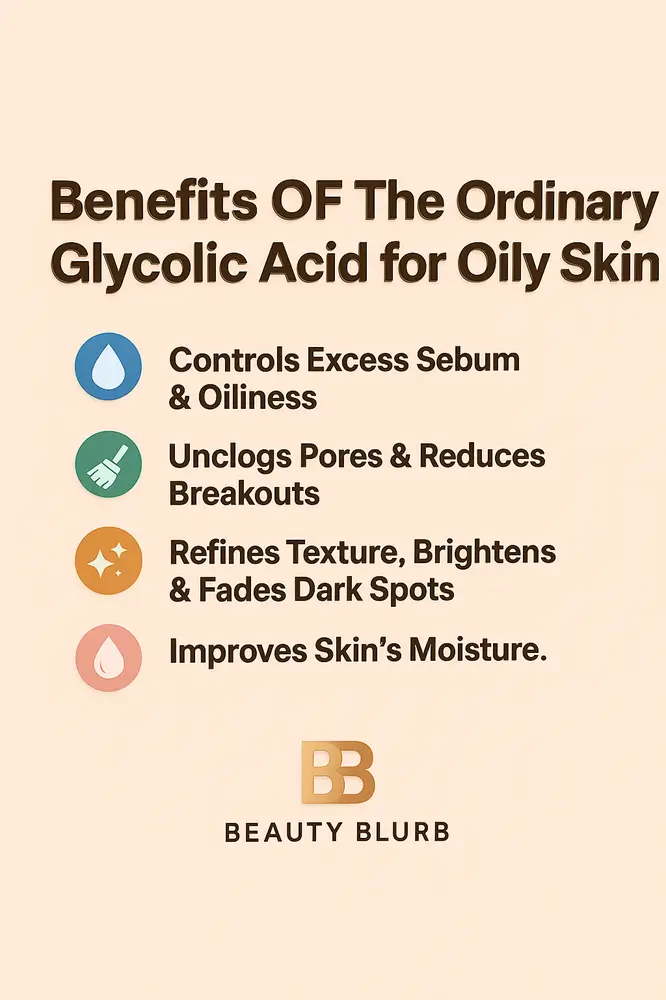
- Helps unclog pores and minimize excess oil production.
- Smooths skin texture, making it look brighter and more even.
- Supports gentle exfoliation, reducing buildup of dead skin cells.
- Fades post-acne marks and improves overall skin radiance.
- Lightweight and simple to incorporate into a nightly routine.
Lucky you, my friend! I’ve already done a full review of this product. You can check it out here 👉 [The Ordinary Glycolic Acid Toner Review] — where I dive deep into the pros, cons, and the best way to use it for oily skin. 💕
FAQ Of Glycolic Acid For Oily Skin
Thank you so much for joining me on this skincare journey, my friend! I hope this guide gave you clarity and confidence about using Glycolic Acid For Oily Skin in your routine.
If you haven’t tried it yet, I encourage you to give it a go—start slowly, listen to your skin, and enjoy the glow that comes with consistency. ✨
Don’t forget to subscribe so you won’t miss future tips and guides tailored just for you. And most importantly, I’d love to hear from you: share your experience in the comments!
Tell us about your own glycolic acid journey—what worked, what didn’t, and the little tricks you’ve discovered along the way. Your story could inspire and help another reader out there. 💕

Akram Boulaid is a dedicated Skincare Researcher and Analyst with over 7 years of intensive focus on dermatology and cosmetic ingredient science. As a globally recognized expert, his insights have been featured in major international publications, including the New York Post and GB News. A verified expert on Qwoted, Akram connects with health journalists to provide evidence-based analysis. He founded Beauty Blurb to bridge the gap between complex clinical data and practical skincare routines, specializing exclusively in the needs of oily and acne-prone skin through rigorous analysis of peer-reviewed scientific literature.