
If you’re wondering, does salicylic acid cause purging? Yes — it can, especially if you have oily or acne-prone skin.
When you start using salicylic acid, it clears out clogged pores and speeds up how quickly your skin sheds dead cells.
Because it works deep inside oily pores, it can bring hidden congestion to the surface faster than usual. That’s why you might suddenly notice more small pimples, blackheads, or whiteheads in areas where you normally break out.
This reaction usually begins within the first 1–2 weeks and improves within 4–6 weeks as your skin adjusts. If breakouts appear in completely new areas or keep getting worse after 6–8 weeks, it’s likely irritation — not purging.

In this article, I’ll explain exactly how salicylic acid purging works, how to tell if it’s really purging or just a breakout, what the typical purge timeline looks like (especially for oily skin), and what you can do to calm your skin while staying on track with your treatment.
Skin Purge vs Breakout: What’s the Real Difference?
Here’s the short answer:
Skin purging happens because a product like salicylic acid is speeding up your skin’s renewal process. A breakout happens because something is clogging, irritating, or inflaming your skin.
- Purging means your pores are clearing out faster.
- A breakout means your skin is reacting badly.
Now let’s make it even simpler:
When you’re dealing with salicylic acid purging, the pimples usually appear in areas where you normally get acne — especially if you have oily skin or clogged pores. It’s basically congestion that was already forming under the surface coming up faster than usual.
A regular acne breakout, on the other hand, can show up anywhere — even in places where you rarely break out. It often feels more inflamed, lasts longer, and doesn’t improve with time.
How to Tell If It’s Purging or a Breakout
Here’s a simple side-by-side comparison:
| Skin Purging | Breakout |
|---|---|
| Starts after using a new active ingredient (like salicylic acid or retinol) | Can happen anytime |
| Appears in areas where you usually break out | Appears in new or unusual areas |
| Small whiteheads, blackheads, or surface pimples | Painful, deep, or cystic acne |
| Improves within 4–6 weeks | Can last longer or worsen |
| Skin texture gradually gets better | Skin becomes more irritated over time |
A Simple Rule to Remember
If your skin looks worse before it looks better — but only for a few weeks — it’s likely skin purging.
If it keeps getting worse, spreads to new areas, or feels painful and irritated, it’s probably a breakout caused by irritation, not purging.
And here’s something important for oily skin:
Because salicylic acid penetrates oil-filled pores, people with oily or acne-prone skin are slightly more likely to experience a short purging phase. But that doesn’t mean the product isn’t working — it often means it is.
summary:
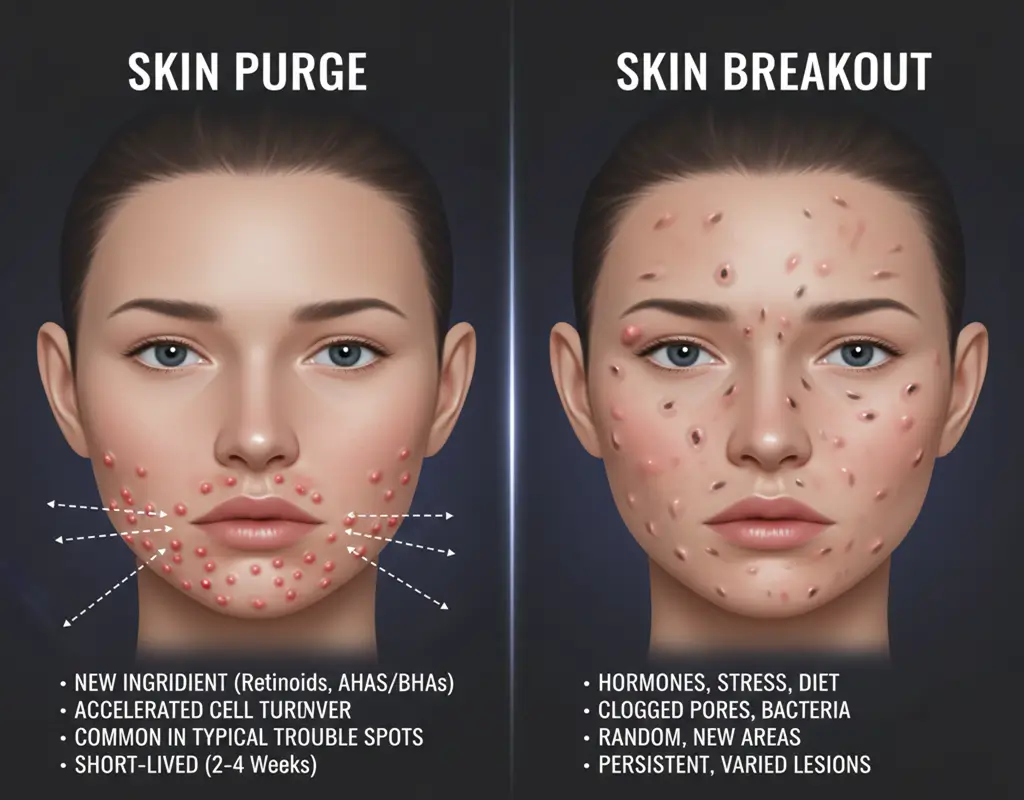
If your skin gets a bit worse for a short time — usually a few weeks — and only in areas you normally break out, it’s likely a skin purge.
Purging happens because salicylic acid accelerates cell turnover and clears oil-filled pores, so small pimples or comedones can appear before your skin improves.
On the other hand, if breakouts spread to new areas, feel painful, or continue worsening, it’s probably irritation or a normal breakout. For those with oily or acne-prone skin, a brief purge is common and actually shows that the product is working, not harming your skin.
Does Salicylic Acid Cause Purging? (What It Means for Oily Skin)
A lot of people ask: can salicylic acid cause acne or skin purging? The short answer is yes — it can, especially when you’re using salicylic acid for acne-prone skin for the first time or increasing how often you use it.
Before we go deeper, it helps to understand how this ingredient actually works in the first place.
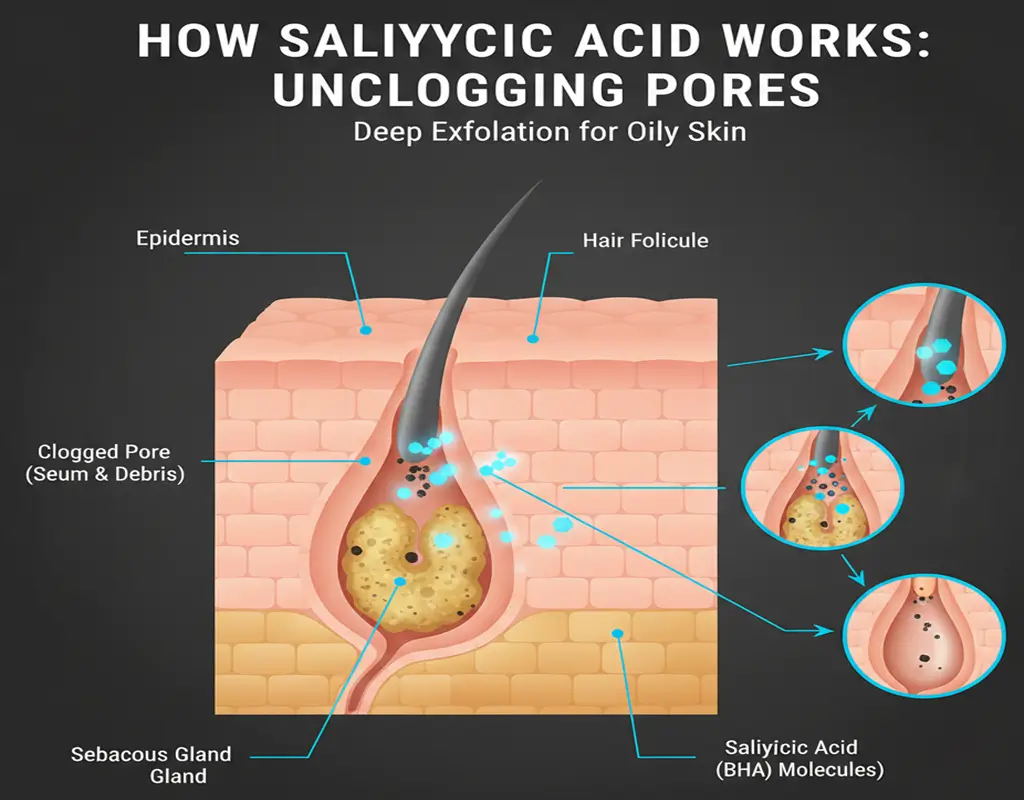
Salicylic acid is a beta hydroxy acid (BHA) that’s special because it dissolves in oil and penetrates deep into clogged pores to clear them from the inside out.
It gently loosens the “glue” that holds dead skin cells together and helps flush out excess oil and debris that can cause breakouts.
A 2025 clinical review of common acne-fighting ingredients found that salicylic acid typically begins showing effects within about 2–4 weeks, and many people start noticing improvements around 3–4 weeks of consistent use.
This timeline makes sense with what many people experience during a purge phase — a short period when your skin seems worse before it gets better (Source).
So why does purging happen?
When salicylic acid speeds up how fast your skin renews itself and clears pores, it brings hidden congestion (like tiny micro-comedones) up to the surface faster than usual.
That’s why you might notice a temporary increase in small pimples, whiteheads, or clogged bumps — especially in areas where you normally get breakouts.
This isn’t a sign that the product is harming your skin — it’s your skin clearing out existing buildup more rapidly than it did before… which for many people with oily or acne-prone skin is actually the “working” phase of the treatment.
Why oily skin is more likely to purge
Because the oil in your pores traps debris and dead skin cells, salicylic acid’s ability to dissolve oil makes it particularly effective — and sometimes a bit intense — for oily skin types.
When those deeper blockages are pushed up quickly, it can look like “a breakout” even though your skin is just clearing out longer-term congestion.
How long does salicylic acid purging last
Many people notice this temporary phase within a few weeks of consistent use (around 2–4 weeks), and by about 4–6 weeks their skin has usually settled and started to show clearer results.
If your skin keeps worsening after 6–8 weeks (40-60 days) , or if you see large painful pimples in new areas, that may be a sign of irritation rather than true purging — and adjusting how you use salicylic acid might help (we’ll get into that later).
How to tell if your reaction is purging (not irritation)
- ✔️ Happens soon after starting or increasing salicylic acid.
- ✔️ Mostly affects areas you normally break out.
- ✔️ Small whiteheads/blackheads rather than deep cystic acne.
- ✔️ Gets better after a few weeks.
These subtle clues help you spot true salicylic acid purging compared to an irritation reaction (which we’ll explain in detail later).
Salicylic Acid Purge Timeline (Week-by-Week Guide)
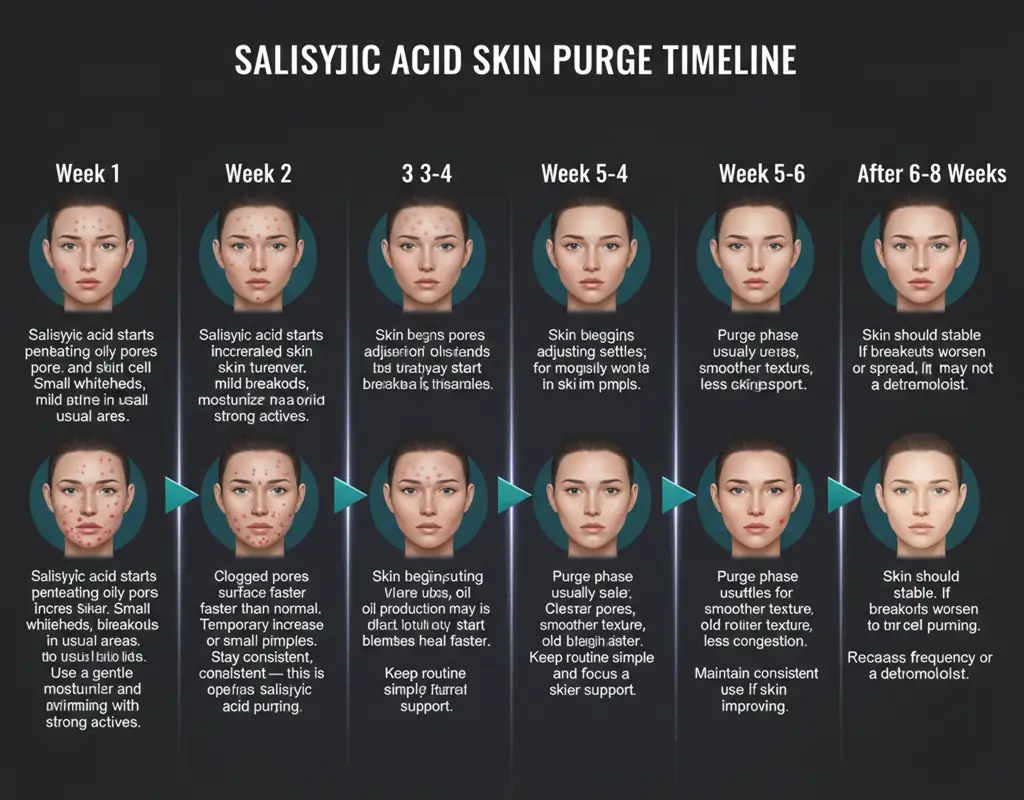
If you’re wondering how long salicylic acid purging lasts, here’s the simple answer: most purge phases begin within the first 1–2 weeks and settle within 4–6 weeks as your skin adjusts.
For oily or acne-prone skin, the timeline may feel more noticeable because clogged pores are clearing out faster than usual.
Now let’s break it down week by week.
| Week | What’s Happening | What You Might Notice | What To Do |
|---|---|---|---|
| Week 1 | Salicylic acid starts penetrating oily pores and increasing skin cell turnover. | Small whiteheads, mild breakouts in usual areas. | Use a gentle moisturizer and avoid mixing with strong actives. |
| Week 2 | Clogged pores surface faster than normal. | Temporary increase in blackheads or small pimples. | Stay consistent — this is often peak salicylic acid purging. |
| Week 3–4 | Skin begins adjusting; oil production may start balancing. | Fewer new breakouts; old blemishes heal faster. | Keep routine simple and focus on barrier support. |
| Week 5–6 | Purge phase usually settles for most oily skin types. | Clearer pores, smoother texture, less congestion. | Maintain consistent use if skin is improving. |
| After 6–8 Weeks | Skin should be stable. | If breakouts worsen or spread, it may not be purging. | Reassess frequency or consult a dermatologist. |
Final Thoughts on the Salicylic Acid Purge Timeline
Here’s what you should remember:
- Salicylic acid purging is temporary.
- It usually starts within the first 1–2 weeks.
- Most purge timelines improve within 4–6 weeks.
- Oily skin may experience a more noticeable clearing phase.
- If breakouts continue past 6–8 weeks or appear in new areas, it’s likely irritation — not purging.
If you’re using salicylic acid for oily skin, patience and consistency matter. A short purge phase can feel frustrating, but for many people, it’s simply part of the skin-clearing process.
The key is knowing the difference between a normal purge timeline and a reaction that needs adjustment.
What Percentage of Salicylic Acid Causes Purging?
Many people don’t realize that the concentration of salicylic acid in a product can influence how likely it is to trigger purging. Let’s break it down in a simple, easy-to-understand way — especially for oily or acne-prone skin.
A 2025 clinical trial examined a salicylic acid‑containing gel used twice daily for acne management in people with mild‑to‑moderate acne and oily or combination skin.
The study found that salicylic acid significantly reduced sebum (oil) production and decreased acne severity over just 21 days, while remaining well‑tolerated overall.
Only a small percentage of participants reported mild, temporary itching, indicating that lower irritation is possible when the formula is balanced for sebum regulation and skin barrier support (Source).
This kind of evidence shows two important things:
- Salicylic acid is effective at treating acne and regulating oil, which is exactly why it’s widely used for salicylic acid for oily skin routines.
- Its effect is dose‑dependent, meaning the concentration you use can influence how strong the reaction is — including purging.
How Concentration Influences Purging
Here’s the general idea you should know:
- Low concentrations (0.5%–1%)
These are the most gentle. They still help clear pores but tend to cause minimal purging in most people. This range is ideal if you’re new to exfoliants or have slightly oily or sensitive skin. - Moderate concentrations (1%–2%)
This is the most commonly used range in over‑the‑counter products. At this level, salicylic acid penetrates pores more effectively and increases cell turnover, which can lead to noticeable purging — especially if you’re dealing with clogged pores or acne. For many, this purge is temporary and part of the clearing process. - Higher concentrations (>2%) or peels
Used mainly in professional settings, higher concentrations can exfoliate more aggressively. Because they speed up pore clearing even more rapidly, they’re more likely to cause a visible purge phase or irritation if not used correctly.
Why This Matters
Understanding these concentration levels can help you:
- Choose a product that matches your tolerance and skin goals
- Predict whether you’ll experience purging or irritation
- Adjust use frequency so your skin can adapt
For example, if you start with a 1% salicylic acid toner or serum, your skin is more likely to adjust gradually with a manageable purge phase, especially when paired with soothing and barrier‑supporting steps in your routine.
Quick Tip for Beginners
If you’re just starting out with salicylic acid:
- Start low (0.5–1%) to let your skin adapt.
- Gradually increase concentration only if needed.
- Monitor your purging vs breakout carefully.
By understanding how concentration affects purging, you can choose the right product for your oily skin without unnecessary irritation — a tip most competitors miss entirely.
How Do I Use Salicylic Acid Without Purging?
Purging from salicylic acid can feel frustrating, especially if you have oily or acne-prone skin, but the good news is that you can control it with a few smart steps. Here’s a simple guide that’s easy to follow and works in real life.
| Step | What to Do | Why It Helps |
|---|---|---|
| 1. Start Low & Slow | 0.5–1%, 1–2x/week | Allows skin to adjust, reduces intense purging |
| 2. Patch Test | Test a small area for 2–3 days | Detects irritation before full-face use |
| 3. Observe Skin | Check for dryness, redness, unusual pimples | Differentiates purging vs irritation |
| 4. Increase Gradually | Every other day → daily | Consistency ensures effective pore clearing |
| 5. Support Barrier | Moisturize, avoid harsh cleansers, add soothing serum | Prevents irritation and dryness |
| 6. Sun Protection | Broad-spectrum SPF daily | Prevents UV damage and promotes skin recovery |
| 7. Be Patient | Wait 2–6 weeks for purge to settle | Skin is clearing hidden congestion; monitor for extended irritation |
1️⃣ Start Low and Slow
- Begin with a low concentration of salicylic acid (0.5–1%).
- Use it only once or twice a week at first.
- This helps your skin adjust without triggering a strong purge.
2️⃣ Patch Test First
- Test a small area (like jawline or cheek) for 2–3 days.
- Watch for redness, irritation, or tiny breakouts.
- No drama? You’re ready to go full-face gradually.
3️⃣ Observe Your Skin
- Check daily for signs of over-drying, redness, or unusual pimples.
- Normal purge shows up in areas you usually break out.
- Irritation or allergic reaction shows up in new areas or is very painful.
4️⃣ Increase Gradually
If your skin is handling it well, slowly increase frequency (every other day → daily).
- Don’t rush — the key is consistency, not intensity.
5️⃣ Support Your Skin Barrier
- Use a gentle non-comedogenic moisturizer.
- Avoid harsh cleansers or mixing too many active ingredients at the same time.
- Consider soothing ingredients like niacinamide or hyaluronic acid after salicylic acid application.
6️⃣ Protect Your Skin
- Salicylic acid can increase sun sensitivity.
- Always use broad-spectrum SPF every morning.
- This prevents damage and helps your skin recover faster.
7️⃣ Be Patient — It’s a Process
- Purging usually lasts 2–6 weeks.
- Remember, this is your skin clearing out hidden congestion.
- If breakouts continue beyond 6–8 weeks, re-evaluate the product or consult a dermatologist.

This video by Riya Shah Talwar covers the do’s and don’ts of using salicylic acid to treat acne, pimples, and blackheads without triggering unnecessary purging.
She emphasizes starting with a low-concentration wash-off product (like 1% salicylic acid face wash) to gently unclog pores and calm the skin, while avoiding over-washing, which can damage the skin barrier and cause dryness.
Applying 2–3 drops on clean skin is sufficient, and targeting acne-prone areas like the nose can prevent blackheads and whiteheads.
Riya also highlights ingredient pairing, recommending niacinamide and hyaluronic acid for hydration, while cautioning against combining salicylic acid with Vitamin C, retinol, or benzoyl peroxide to prevent irritation.
Sun protection (SPF) is essential during the day, and following up with a moisturizer keeps the skin balanced after exfoliation.
She explains the correct skincare routine order — wash, serum, moisturizer, then sunscreen — to maximize benefits and achieve faster results in treating acne safely.
FAQ About can salicylic acid cause purging
Your skin may appear a bit congested or bumpy for a short period. Unlike irritation, these pimples are generally mild, confined to typical breakout zones, and improve within 2–6 weeks as your skin adjusts to salicylic acid.
Continue using a low concentration and follow your routine consistently. Only pause or reduce usage if you experience severe redness, irritation, or new breakouts in unusual areas.
Salicylic acid accelerates cell turnover and unclogs pores, which can temporarily push underlying pimples to the surface. Expect this to improve within a few weeks if it’s purging rather than irritation.
Purging can also include slight redness or tiny bumps, but it typically does not involve deep cystic acne. It usually resolves in 2–6 weeks as your skin adjusts.
Purging duration varies but is generally short-lived. Keeping a consistent routine with low concentration salicylic acid helps your skin adjust faster.
Introduce salicylic acid into your routine gradually, patch test first, avoid over-exfoliating, and always follow with moisturizer and SPF to minimize purging.
Because salicylic acid penetrates oil-filled pores, a brief purging phase is common for oily skin. This indicates the product is working, and skin usually improves in a few weeks.
Thank you so much for reading! We hope this guide has helped you understand does salicylic acid cause purging and how to navigate it with confidence. Skincare is a journey, and every skin type reacts differently — so don’t be discouraged if you experience a brief purge.
We’d love for you to subscribe for more tips and updates on caring for your skin. And don’t forget — share your experiences in the comments below! Tell us how your skin reacted, what worked for you, or any questions you have. Your journey might inspire and help someone else going through the same purging phase.
Remember, patience and consistency are key, and with the right approach, your skin will thank you! 💜

Akram Boulaid is a dedicated Skincare Researcher and Analyst with over 7 years of intensive focus on dermatology and cosmetic ingredient science. As a globally recognized expert, his insights have been featured in major international publications, including the New York Post and GB News. A verified expert on Qwoted, Akram connects with health journalists to provide evidence-based analysis. He founded Beauty Blurb to bridge the gap between complex clinical data and practical skincare routines, specializing exclusively in the needs of oily and acne-prone skin through rigorous analysis of peer-reviewed scientific literature.


wish you all the best
Thanks ma’am I appreciate it.
wish you best and best