
Is vitamin C good for oily skin? Yes sure — and it does much more than just brighten your complexion.
This potent antioxidant helps regulate sebum production, reducing unwanted shine and minimizing clogged pores that often lead to breakouts.
It also fades dark spots and post-acne scars, helping to even out skin tone for a clearer, more balanced look.
Beyond that, vitamin C shields oily skin from environmental stressors like pollution and UV damage by neutralizing free radicals before they can trigger excess oil or irritation.
It even has anti-inflammatory properties, calming redness and preventing new blemishes.
Regular use supports collagen synthesis and strengthens the skin barrier, giving you a smoother texture and a natural glow — without the greasy finish.
The key, however, is to pick the right form and concentration: lightweight, non-comedogenic, and stable enough to work effectively on oily or acne-prone skin.

In this guide, we’ll walk you through everything you need to know about vitamin C for oily skin — from how it works to why it’s worth adding to your daily routine.
You’ll learn about its proven benefits, possible side effects, and the right way to use it for clear, balanced results.
We’ll also cover the best forms and products of vitamin C for oily skin, smart tips for combining it with other active ingredients, simple DIY recipes.
You will discover dermatologist-approved advice to help you get the most out of this brightening, skin-loving ingredient.
What Is Vitamin C and How Does It Work?
Vitamin C — also known as ascorbic acid — is one of the most powerful and well-studied antioxidants in skincare.
It’s a water-soluble vitamin naturally found in fruits like oranges, kiwis, and berries, but when applied topically, vitamin C for skin becomes a true multitasker.
It protects, repairs, and rejuvenates at the cellular level, making it one of the most recommended actives for oily and acne-prone skin.
Here’s how it works: vitamin C helps neutralize free radicals — unstable molecules created by sun exposure, pollution, and stress — that can damage healthy cells and speed up oil oxidation.
By blocking this oxidative stress, it reduces inflammation and prevents the chain reaction that often leads to excess oil, breakouts, and dullness.
Beyond protection, vitamin C boosts collagen production, the protein responsible for firmness and elasticity.
This not only helps minimize enlarged pores (common in oily skin) but also improves texture, giving your complexion a smoother, more refined finish.
It also supports a stronger skin barrier, which helps your skin stay balanced and less reactive to environmental triggers.

When used consistently, a good vitamin C serum enhances natural radiance and improves the skin’s ability to repair itself — all while keeping that tricky oily shine under control.
That’s why understanding how vitamin C works is the first step toward choosing the right formula for your skin type and seeing real results
is vitamin c good for oily skin (top benefits)
When it comes to vitamin C for oily skin, this potent antioxidant does more than brighten your face — it helps balance oil, protect against oxidative stress, and strengthen your skin’s natural defenses.
In simple terms, vitamin C works beneath the surface to keep your skin clear, calm, and resilient, making it one of the smartest actives for managing shine and breakouts.
Let’s learn about vitamin c benefits for oily skin:

1. Regulating Excess Oil & Balancing Sebum Production
For those with oily skin, one of the key issues is overactive sebaceous glands and elevated sebum production.
While direct human studies on vitamin C’s effect on sebaceous glands are limited, the broader research shows nutrients like vitamin C influence epidermal differentiation and lipid metabolism.
For instance a dietary-based study found that vitamin C intake was associated with lower sebum content in a cohort of young adults (Source).
In plain terms: when you apply a well-formulated vitamin C serum, you’re giving your oily skin a tool to bring some of that shine and oiliness under control — as part of a broader routine.
2. Antioxidant Shield Against Environmental Stress
Oily skin isn’t just about oil — it’s also prone to accelerated oxidative stress, thanks to excess sebum oxidation and environmental triggers (pollution, UV light).
Topical vitamin C is one of the best-studied antioxidants in this regard: it neutralises reactive oxygen species (ROS), protects skin cells and helps maintain a healthier tone and texture.
A review of topical vitamin C notes:
- Vitamin C is the most plentiful antioxidant in human skin… it works by donating electrons to neutralise free radicals generated by UV and pollution.
- For oily skin, this means fewer oxidised lipids, less inflammatory cascade from oil breakdown, and smoother, calmer skin overall (source).
3. Supporting Collagen and the Skin Barrier
It’s easy to think of oily skin as “just oil”, but in reality it often comes with enlarged pores, less firm texture, and a compromised barrier.
Vitamin C supports collagen production (the structural protein that keeps skin firm) and helps stabilise the skin barrier.
One of Clinical studies notes vitamin C’s role in collagen synthesis, as well as in reducing degradation of connective tissue.
When the barrier is healthier and collagen production is supported, oily skin doesn’t just “shine” less — it can also look smoother, feel tighter, and be less prone to red-inflamed breakout sites.
4. Anti-Inflammatory and Brightening Effects
While sebum control and antioxidation are huge, another advantage of vitamin C is its anti-inflammatory effect: by inhibiting pro-inflammatory cytokines (like TNF-α, IL-1) it helps calm redness and breakouts.
Also, because oily/acne-prone skin often leaves behind post-inflammatory hyperpigmentation (PIH) or dark marks, vitamin C’s action in inhibiting melanin formation (via tyrosinase inhibition) is crucial for an even tone.
Clinical study from Pubmed:
- A recent open-label clinical study (2023), found that a topical formulation containing vitamin C (alongside astaxanthin and fermented turmeric).
- applied two times daily for 12 weeks significantly improved skin quality—including oily skin types—by reducing signs of discoloration and improving texture Source.
While this formula wasn’t limited to oily skin, its inclusion of oily-skin participants strengthens the evidence that vitamin C can benefit oilier complexions when properly formulated.
5. Prevents Acne Breakouts
One of the most overlooked benefits of vitamin C for oily and acne-prone skin is its ability to help prevent future breakouts.
Oily skin often experiences clogged pores and inflammation triggered by oxidized sebum — and this is where vitamin C steps in.
As a potent antioxidant, vitamin C reduces lipid oxidation within the pores, preventing the cascade that leads to bacterial overgrowth and acne formation. Its anti-inflammatory properties further calm the redness and swelling that often accompany active pimples.
In a 2022 clinical review published in Antioxidants (Basel), researchers noted that topical vitamin C significantly improved inflammatory acne lesions by decreasing oxidative stress and modulating the skin’s immune response Source.
In simpler terms — consistent use of a stable vitamin C serum doesn’t just fade acne scars; it actually helps reduce the frequency and severity of breakouts over time.
When combined with a gentle cleanser and non-comedogenic moisturizer, vitamin C becomes a core ally for clear, balanced, and healthier-looking skin.
So, can you use vitamin C for oily skin? Absolutely — and you should, as long as you choose the right formula.
When used correctly, vitamin C helps control excess oil, prevent acne breakouts, fade dark spots, and strengthen your skin’s natural barrier.
Go for a lightweight, non-comedogenic serum with stable vitamin C (like ascorbic acid or sodium ascorbyl phosphate), start slow, and apply it daily under sunscreen.
With consistency, your oily skin can look clearer, smoother, and naturally radiant — without the unwanted shine.
In Which Skincare Products Is Vitamin C Commonly Found?
Vitamin C appears in many skincare products — but not all are equally effective for oily skin. Here’s where you’ll most often find it, and what each does:
- Serums: The most potent and popular form of Vitamin C. Lightweight, fast-absorbing, and perfect for oily or acne-prone skin.
- Moisturizers: Provide added hydration without heaviness — ideal if you prefer a simpler routine.
- Cleansers: Offer mild brightening benefits but stay on the skin too briefly to deliver deep results.
- Toners: Help prep the skin and boost radiance when paired with a Vitamin C serum.
- Face Masks: Deliver a short burst of Vitamin C for glow and freshness — great for a weekly treatment.
- Sunscreens: Some formulas combine Vitamin C with SPF to enhance protection from UV-induced free radicals.
💡 Quick Tip: For oily skin, serums and light moisturizers deliver the best results — they offer the antioxidant benefits of Vitamin C without clogging pores or adding shine.
How to Use Vitamin C Serum for Oily Skin (The Smart Routine)
Using vitamin C for oily skin is one of the best ingredients for oily skin when done right — yet many skip the “how” and end up frustrated. H
ere’s your clear, step-by-step guide to maximise results, avoid common mistakes, and get that balanced, shine-free glow.
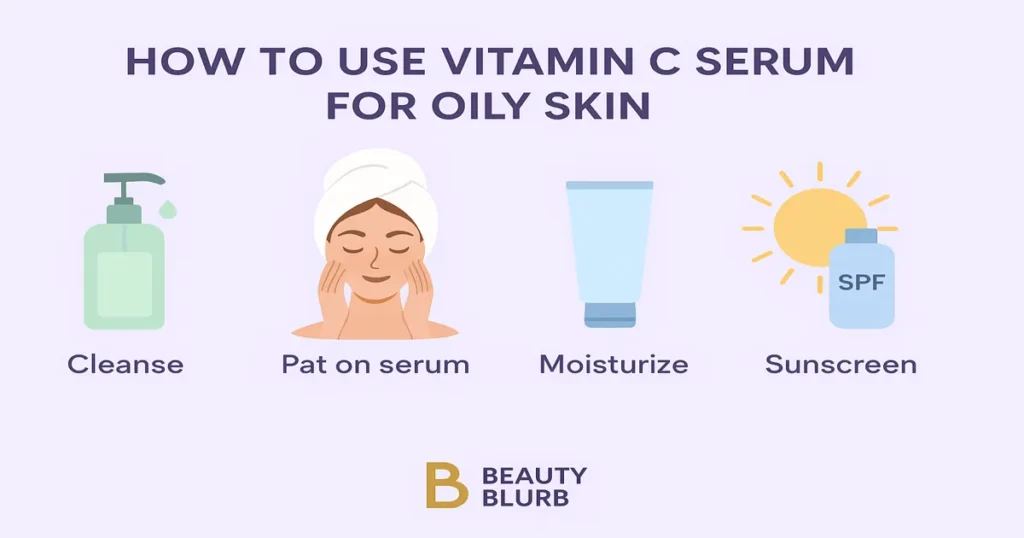
- Start with a Clean Canvas
Use a gentle, oil-free cleanser to remove excess sebum and impurities. This helps your vitamin C serum penetrate better and reduces the risk of clogging. - Apply on Slightly Damp Skin
Pat your face lightly after cleansing. On slightly damp (not wet) skin, apply 2–4 drops of a lightweight, non-comedogenic vitamin C serum. This improves absorption without adding extra oil.
tip: best vitamin C serum for oily skin, non-comedogenic vitamin C - Layer Smartly: Serum → Moisturiser → Sunscreen (Morning Only)
In the morning routine:- Vitamin C serum
- Lightweight, oil-control moisturiser
- Broad-spectrum SPF 30+ (essential because vitamin C boosts protection and oily skin is often exposed)
Using the serum at night is possible, but for oily/acne-prone skin, morning lets you fight environmental triggers all day.
oily skin morning routine, vitamin C with SPF
- Build Tolerance Gradually
If you’re new to vitamin C, begin every other morning for the first 2-3 weeks before transitioning to daily use. Starting too fast can increase irritation, especially with oily/acne-prone skin. - Avoid Conflicting Actives in the Same Layer
Do not apply vitamin C at the same time as strong acids for oily skin (AHAs/BHAs), benzoyl peroxide, or high-strength retinol — these can destabilise your vitamin C or cause excess irritation. Use vitamin C in the morning, and retinol/acids at night. - Store It Right to Maintain Potency
Vitamin C is highly unstable when exposed to light, heat or air. Choose opaque, airtight packaging and store your serum in a cool, dark place.
A degraded product won’t deliver results and for oily skin, could cause unexpected reactions.
💡 Pro Tip (and a little secret):
If your oily skin still feels like it’s running its own oil factory, don’t worry — you might just need a smarter routine, not stronger products. 😉
Check out my detailed guide on skincare routine for oily skin — it’s basically your roadmap to keeping the glow and ditching the grease (for good).

tips for using vitamin c oily skin
When you use vitamin C for oily skin, small habits make a big difference in your results. Follow these dermatologist-approved tips to keep your skin glowing — not greasy:
- Choose the right serum: Always go for a lightweight, non-comedogenic vitamin C serum that won’t clog pores or feel heavy. Formulas with ascorbic acid or sodium ascorbyl phosphate tend to work best for oily and acne-prone skin.
- Start slow: Begin applying it every other day to allow your skin to adjust. Once your skin builds tolerance, move to daily use for maximum antioxidant and brightening benefits.
- Do a patch test first: Before applying your serum to the entire face, test a small amount on your inner arm or behind your ear for 24 hours.
This helps ensure your skin won’t react negatively — especially important for sensitive or acne-prone oily skin. - Avoid over-exfoliating: Don’t layer vitamin C with strong actives like retinoids, AHAs, or BHAs in the same routine.
Instead, use vitamin C in the morning and retinol at night to avoid irritation and maintain balance. - Don’t skip moisturizer: Even oily skin needs hydration. Use a gel-based or oil-free moisturizer after your vitamin C serum to lock in moisture and keep your skin barrier balanced.
Well-hydrated skin actually produces less oil over time. - Store it properly: Keep your serum in a cool, dark place to protect its potency. Vitamin C oxidizes easily, and an unstable product can lose its effectiveness — or even cause redness and breakouts.
- Never skip sunscreen: Vitamin C boosts your skin’s defense, but it also increases sun sensitivity. Always finish your vitamin C morning routine with a broad-spectrum SPF 30 or higher to prevent UV damage and dark spots.
⚠️ Common Mistakes When Using Vitamin C on Oily Skin
Even though vitamin C is one of the best ingredients for oily skin, a few simple missteps can make it less effective—or even cause breakouts.
Here’s what to avoid if you want that clear, matte glow:
- Over-layering too many actives: Combining vitamin C with exfoliating acids (like glycolic or salicylic acid), or retinoids in the same routine can cause pH imbalance, irritation, and dryness.
Keep your vitamin C in the morning routine and acids or retinol for nighttime care. - Using the wrong concentration: Starting with a high-strength serum (20% or more) may seem tempting, but for oily or acne-prone skin, it can trigger redness or skin purging.
Begin with 10–15% and gradually increase as your skin builds tolerance. - Skipping moisturizer or SPF: Oily skin still needs hydration and sun protection.
Without them, your vitamin C serum won’t work properly and you may experience dullness or increased oil production.
Always finish with a lightweight, oil-free moisturizer and broad-spectrum sunscreen. - Ignoring product oxidation: If your vitamin C turns dark orange or brown, it’s oxidized—and no longer effective. Using it in this state can irritate oily skin.
To avoid this, store it in an airtight, opaque bottle away from heat and sunlight. - Applying on dirty or overly dry skin: Vitamin C penetrates best on clean, slightly damp skin. Applying it after harsh cleansers or scrubbing can strip the barrier and reduce absorption.
- Expecting instant results: Even with consistent use, visible changes take 3–6 weeks. Stay patient—vitamin C works gradually by regulating sebum, fading spots, and rebuilding your skin barrier.
✨ When used correctly, vitamin C for oily skin doesn’t just brighten—it transforms your complexion into smoother, clearer, and more balanced skin.
🧴 How to Make Vitamin C Serum for Oily Skin (DIY Recipe & Expert Tips)
When it comes to DIY skincare, creating your own vitamin C serum for oily skin can be one of the most effective, affordable, and science-backed ways to brighten and balance your complexion — if done correctly.
Vitamin C (L-ascorbic acid) is a powerhouse antioxidant that helps regulate excess oil, reduce acne marks, and protect your skin from pollution and UV damage.
Unlike store-bought formulas that may contain heavy silicones or fragrances, a homemade vitamin C serum allows you to control every ingredient — making it ideal for oily, acne-prone, or sensitive skin types.
This method ensures you get maximum antioxidant benefits without risking bacterial growth or irritation from an oxidized (spoiled) serum.
🧪 Ingredients You’ll Need
(Optimized for stability, efficacy, and oily/acne-prone skin)
- Pure L-Ascorbic Acid Powder: A high-quality, pharmaceutical grade powder.
- Distilled Water (or high-quality Rose Water): Purity is essential to prevent contamination.
- Your Favorite Oil-Free Serum or Moisturizer Base: This is your carrier (e.g., a simple hyaluronic acid serum or a lightweight, oil-free lotion).
- A Small, Clean Glass Bowl & Stirrer: Sanitize your tools first!
🧴 Step-by-Step Instructions
How to Make & Use Your Fresh Vitamin C Booster
This method ensures you activate the potent Vitamin C right before application, maximizing freshness and effectiveness while avoiding the need for preservatives or stability concerns.
Prepare Your Tools:
Ensure your bowl and stirrer are clean and dry. Hygiene is paramount.
Mix Fresh Daily:
- Measure the Powder: Scoop a very small amount of L-ascorbic acid powder (e.g., a pinch or the amount that fits on the head of a small spoon) into your clean bowl.
- Add Liquid: Add 2-3 drops of distilled water or rose water.
- Dissolve Completely: Stir the mixture until the powder is fully dissolved and the liquid is clear.
- Introduce the Base: Immediately mix in 2-3 drops of your oil-free serum or a pea-sized amount of your lightweight moisturizer.
- Mix & Apply: Stir everything together quickly and apply the mixture immediately to your clean, dry face and neck.
⚠️ Important Notes
- Listen to Your Skin: This method provides powerful results but might cause a slight tingle. If irritation occurs, reduce the frequency of use.
- No Storage: This mixture is for immediate use only. Discard any leftover mixture.
- Patch Test: Always perform a patch test when trying new ingredients.
- Sunscreen is Mandatory: Vitamin C increases sun sensitivity. Always follow up with a broad-spectrum SPF in the morning.
he takeaway? While DIY vitamin C can offer a temporary glow, the risks associated with bacterial contamination and rapid oxidation often outweigh the benefits of commercial alternatives.
L-ascorbic acid provides potent benefits for fading acne marks and protecting from pollution. However, achieving a safe, stable, and genuinely effective serum requires professional formulation, including appropriate preservatives and stabilizers like Vitamin E and niacinamide, which are tested in controlled lab environments.
So, if you’ve ever wondered whether making a complex vitamin C serum at home is worth it—the answer is generally no. Opt for the fresh, mix-as-you-go booster method, or invest in a professionally formulated product to ensure skin safety and maximum results.
How to Choose the Right Vitamin C for Oily Skin
Choosing the right vitamin C for oily skin can be the difference between a radiant, balanced complexion and unwanted greasiness or irritation.
Not every form of vitamin C is created equal — some are too strong, others too unstable, and a few can even clog pores if the formulation isn’t right. The key lies in knowing what to look for on the ingredient label.
🧪 1. Choose the Right Form of Vitamin C
For oily or acne-prone skin, look for L-ascorbic acid, sodium ascorbyl phosphate (SAP), or magnesium ascorbyl phosphate (MAP).
- L-ascorbic acid: The purest and most effective form, ideal for brightening and fading acne marks.
- SAP and MAP: Gentler, more stable derivatives that help control sebum and reduce breakouts without irritation.
💬 Dermatologists often recommend SAP for oily skin because it not only brightens but also has antibacterial properties against acne-causing bacteria.
🌿 2. Focus on Concentration and pH
The ideal concentration of vitamin C for oily skin is between 10–15%, which delivers strong antioxidant and brightening effects without overwhelming your skin barrier.
- Higher percentages (20% or more) can cause tingling or sensitivity, especially if combined with exfoliating acids.
- A pH range of 3.0–3.5 ensures the serum penetrates deeply enough to work effectively while remaining skin-friendly.
🧴 Tip: Start with a lower strength and gradually build up as your skin adjusts — consistency matters more than high concentration.
💧 3. Pick a Lightweight, Non-Comedogenic Base
Oily skin needs hydration — but not heaviness. Choose a water-based or gel-based vitamin C serum labeled “non-comedogenic” or “oil-free.”
Avoid formulations with heavy oils like coconut or olive oil. Instead, look for soothing bases such as aloe vera, glycerin, or sodium hyaluronate
💬 Lightweight serums absorb faster, layer well under sunscreen, and won’t leave a greasy film — making them perfect for daytime use.
🔒 4. Check Packaging and Stability
Vitamin C is notoriously unstable — it oxidizes quickly when exposed to air, heat, or sunlight. Always go for products packaged in dark, airtight glass bottles with pump or dropper dispensers.
- Amber or opaque bottles prevent oxidation.
- Avoid jars or clear containers that allow light exposure.
If the serum changes color (from clear to orange or brown), it has oxidized and lost effectiveness.
🧴 5. Look for Added Supportive Ingredients
The best vitamin C serum for oily skin often includes other synergistic actives that enhance performance:
- Niacinamide – balances oil production and improves texture.
- Vitamin E or ferulic acid – stabilizes vitamin C and boosts antioxidant protection.
- Green tea extract – soothes inflammation and fights acne-causing bacteria.
These combinations provide a complete defense against excess oil, acne, and dullness.
💡 Expert Tip (that most people overlook!)
Here’s something few skincare blogs mention:
Store your vitamin C serum in the fridge — not just for longer shelf life, but to reduce skin irritation and redness upon application.
The cool temperature helps calm oily, acne-prone skin while keeping the formula stable and potent for weeks longer.
This small trick significantly improves results, especially if you live in a warm or humid climate.
✅ Final takeaway:
When choosing vitamin C for oily skin, think form, strength, texture, and stability.
Pick a lightweight serum with the right concentration, supportive ingredients, and smart packaging — and you’ll get all the glow, minus the grease.
Best vitamin C serum for oily skin recommended by dermatologist
I know you’re wondering — which vitamin C is best for oily skin?
After reviewing product pages and dermatologist guidance, two standout options are SkinCeuticals Silymarin CF (formulated specifically for oily/blemish-prone skin).
and La Roche-Posay Vitamin C12 Oil Control Serum (lightweight, oil-control formula). Both are designed to reduce oil oxidation and refine texture — ideal if you want the brightening power of vitamin C without added grease.
| Product | Key Ingredients / Why it works for oily skin | Texture & Suitability | Rating |
|---|---|---|---|
| SkinCeuticals Silymarin CF | 15% L-ascorbic acid, silymarin (milk thistle), ferulic acid + 0.5% salicylic acid. Clinically formulated to reduce oil oxidation (helps prevent oil from turning into pore-clogging gunk) and refine texture — built specifically for oily/blemish-prone skin. :contentReference[oaicite:2]{index=2} |
Lightweight, oil-free serum — fast-absorbing, non-greasy. Best for oily, combination, and acne-prone skin that needs brightening + oil control. Derm-approved | ★★★★☆ (4.6/5) |
| La Roche-Posay Vitamin C12 Oil Control Serum | 12% pure vitamin C (stable delivery), + formulating tech for oil control and salicylic acid in some variants — designed to rebalance oily skin, reduce shine and improve radiance. Good stability and accessible price bracket. :contentReference[oaicite:3]{index=3} |
Clear, fast-absorbing liquid/gels texture — non-sticky, suitable for morning routines under SPF. Good for oily/combination skin wanting brightening without weight. Oil control | ★★★★☆ (4.4/5) |
Conclusion:
Both of these serums were selected because they combine effective vitamin C forms with oil-friendly formulas (lightweight, non-comedogenic, and often include supportive ingredients like salicylic acid or stabilizers).
If you try either product, please tell us about your experience in the comments — your review helps others choose the right serum for their oily skin.
Even dermatologist-recommended vitamin C serums aren’t one-size-fits-all; their results depend on consistent use within a balanced skincare routine that includes cleansing, moisturizing, and daily sunscreen protection.
⚠️ Side Effects of Vitamin C on Oily Skin
Vitamin C is generally safe for oily skin, but like any potent active ingredient, it can trigger mild side effects — especially when used incorrectly or in high concentrations.
Some people may experience slight tingling, redness, or temporary dryness during the first few uses. These reactions usually fade as your skin adjusts.
Here are the most common side effects of vitamin C on oily or acne-prone skin:
- 🔸 Mild irritation or tingling: Especially when starting with high-strength L-ascorbic acid (above 15%).
- 🔸 Redness or flushing: Can happen if your skin barrier is weak or you over-exfoliate.
- 🔸 Increased breakouts: Often caused by unstable or heavy formulas that clog pores.
- 🔸 Dryness or tightness: Sometimes occurs when Vitamin C is layered without proper hydration.
- 🔸 Sensitivity to sunlight: Vitamin C can make skin slightly more photosensitive if you skip sunscreen.
✅ How to avoid irritation:
- Start with a lower concentration (10–15%) and gradually build tolerance.
- Always apply it on clean, dry skin, followed by a lightweight, oil-free moisturizer.
- Use sunscreen daily, as Vitamin C can make your skin more sensitive to UV rays.
So, is Vitamin C safe for oily skin? Absolutely — when used correctly and consistently, it remains one of the most effective and skin-friendly antioxidants for controlling excess oil and enhancing radiance.
Which Is Best for Oily Skin Vitamin C or E?
When it comes to managing oily skin, Vitamin C takes the lead. It not only helps regulate sebum production and minimize clogged pores but also brightens dull skin and fights acne with its potent antioxidant power.
On the other hand, Vitamin E — while beneficial for dry or mature skin — tends to be too rich for oily or acne-prone types. Its oil-soluble nature can clog pores, leading to blackheads and breakouts.
💧 Comparison: Vitamin C vs. Vitamin E for Oily Skin
| Feature | Vitamin C | Vitamin E |
|---|---|---|
| Main Function | Brightens, balances oil, and boosts collagen | Deeply moisturizes and repairs dry skin |
| Best for | Oily, acne-prone, and combination skin | Dry, sensitive, or mature skin |
| Texture | Lightweight, absorbs quickly | Thick, oil-based, can feel greasy |
| Comedogenic Level | Low — helps prevent clogged pores | High — may clog pores and cause acne |
| Antioxidant Strength | Strong — neutralizes free radicals effectively | Moderate — supports repair but heavier on skin |
| Ideal Use | Daily morning use before sunscreen | Occasional use for deep hydration (dry skin only) |
So, if you’re wondering which vitamin is best for oily skin, the answer is clear — Vitamin C wins.
It offers lightweight hydration, brightens dull tone, prevents acne, and keeps excess oil in check.
Vitamin E, while nourishing, is better reserved for dry or mature skin types that need extra moisture rather than oil control.
FAQ About vitamin c for oily skin
💖 Frequently Asked Questions about Vitamin C for Oily Skin
Thank you for staying with me till the end, beautiful! 💕
By now, you probably have a clear answer to the question “is Vitamin C good for oily skin” — and yes, when used the right way, it can truly transform how your skin looks and feels.
From balancing excess oil to brightening dull spots and refining texture, Vitamin C is that little daily glow-booster your oily skin will love.
If you decide to try it, I’d love to hear about your experience — what worked, what didn’t, and how your skin responded. Drop a comment below and share your personal journey so other glow-seekers can learn from you. ✨
And hey, don’t forget to subscribe to our newsletter for more skincare tips, dermatologist-backed advice, and real product recommendations made just for you. Your best skin is just a few drops away! 🌿💫

Akram Boulaid is a dedicated Skincare Researcher and Analyst with over 7 years of intensive focus on dermatology and cosmetic ingredient science. As a globally recognized expert, his insights have been featured in major international publications, including the New York Post and GB News. A verified expert on Qwoted, Akram connects with health journalists to provide evidence-based analysis. He founded Beauty Blurb to bridge the gap between complex clinical data and practical skincare routines, specializing exclusively in the needs of oily and acne-prone skin through rigorous analysis of peer-reviewed scientific literature.