Quick Answer:
You might be wondering, is urolithin A good for skin? The short answer is: it looks very promising—but it’s not a miracle ingredient (yet).
Early research suggests that urolithin A can support skin health by helping your cells “clean up” damaged components (a process linked to healthier mitochondria 🔋), which may lead to better collagen production, improved hydration, and reduced signs of photoaging like fine lines and dullness.
Some studies—especially on topical formulas around 1%—have shown encouraging results in smoother-looking skin and less redness after UV exposure.
The honest part: Most of the strongest evidence still comes from lab and early-stage human studies, so while the science is exciting, it’s still evolving.
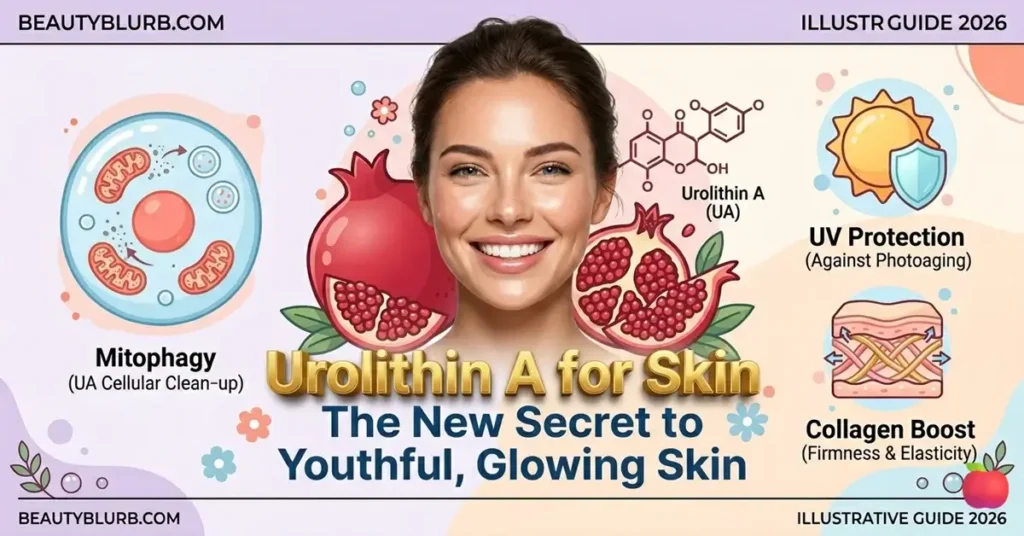
As someone who constantly monitors emerging ingredients for oily and acne-prone skin, I’ve been diving deep into the latest clinical trials to see if Urolithin A actually lives up to the hype…
In this guide, we’ll break down everything you need to know about Urolithin A for skin—from how it actually works inside your cells, to its real benefits, potential side effects, and how to use it correctly in your skincare routine.
We’ll also compare it to popular ingredients like retinol, so you can decide if it truly deserves a place in your routine or if it’s just another trend backed by early hype.
What Is Urolithin A? (Simple Explanation)
Urolithin A is a natural compound your body produces after you eat foods rich in ellagic acid—like pomegranates, berries, and nuts.
But here’s the interesting part: your body doesn’t get it directly from these foods. Instead, your gut bacteria convert those compounds into urolithin A, which is why not everyone produces it at the same rate.
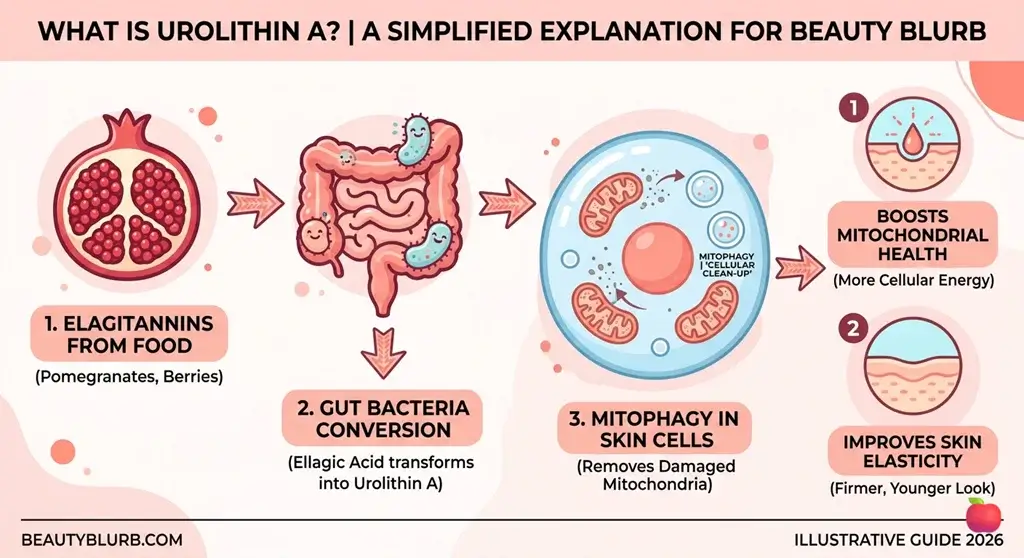
What makes urolithin A for skin so interesting is how it works at a deeper, cellular level. It supports a process called Mitophagy—which is essentially your body’s way of removing damaged parts inside cells.
This process focuses on the Mitochondria, the tiny structures responsible for producing energy in your skin cells.
Think of it like this:
👉 Urolithin A helps “clean up” worn-out cell components so your skin cells can function better.
When your cells are healthier and more efficient, they’re better at:
- Producing collagen
- Fighting oxidative stress
- Maintaining smoother, more resilient skin
That’s why urolithin A is now being studied as a potential anti-aging ingredient that targets skin health from the inside out—not just on the surface.
How Does Urolithin A Work on Skin?
You might be wondering: how does urolithin A actually improve skin elasticity and reduce signs of aging?
The answer comes down to how it supports your skin at a cellular level—not just on the surface. Instead of acting like a quick fix, it helps your skin function better from within.
Here’s how urolithin A for skin works in simple terms:
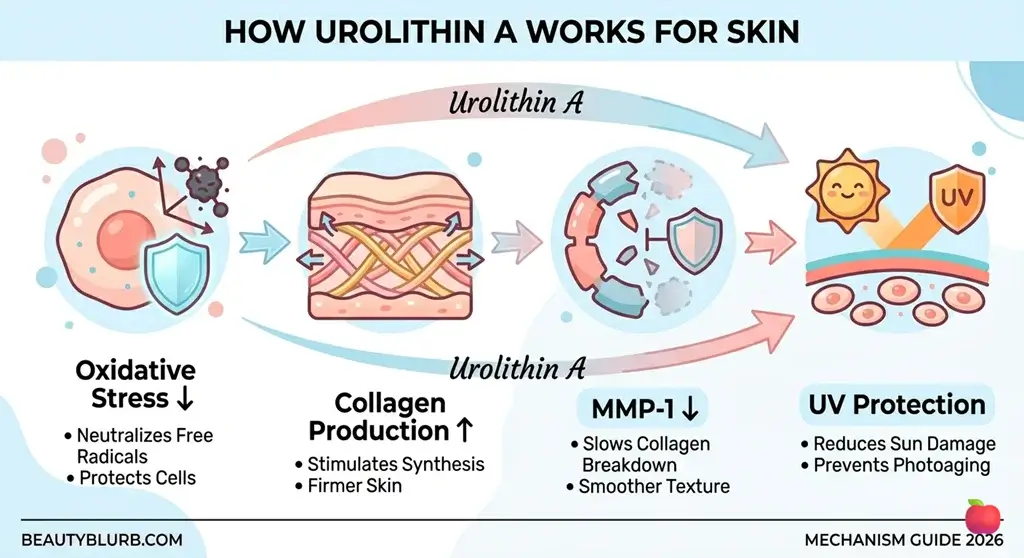
- Reduces oxidative stress
It helps neutralize harmful molecules (free radicals) that damage skin cells and accelerate aging. - Supports collagen production
By improving cell function, it may help your skin produce more collagen—the protein responsible for firmness and elasticity. - Decreases MMP-1 (collagen breakdown)
MMP-1 is an enzyme that breaks down collagen. Urolithin A may help slow this process, keeping skin smoother for longer. - Protects against UV damage
Early research suggests it can reduce skin stress and redness caused by UV exposure, one of the main causes of premature aging.
👉 In simple words: it helps your skin.
what are the Benefits of Urolithin A for Skin?
So, what makes Urolithin A for skin so promising? Unlike many skincare ingredients that only work on the surface, urolithin A targets how your skin cells function from the inside, supporting processes linked to aging, repair, and long-term skin health.
Here are the key science-backed benefits explained in a simple and practical way:
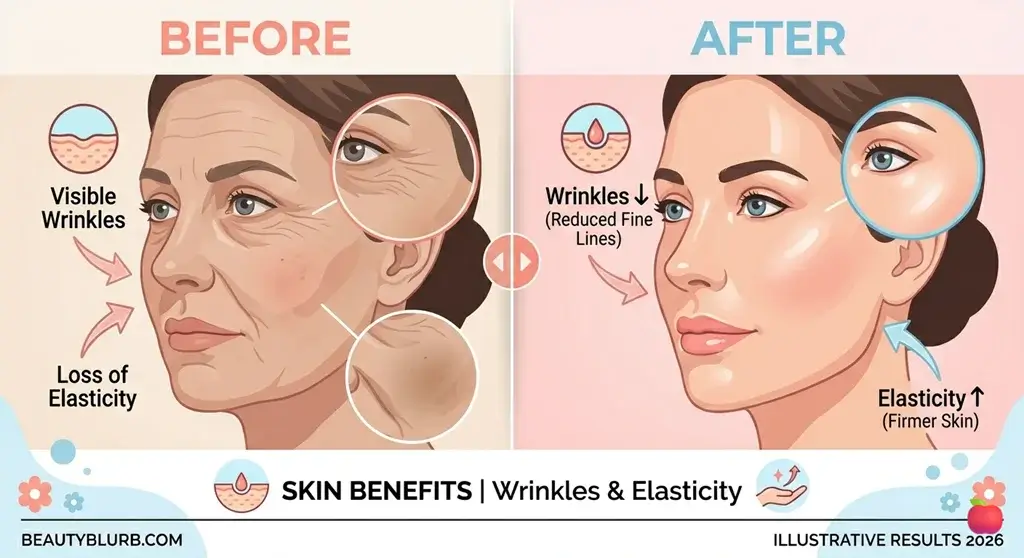
- Reduces wrinkles and fine lines
Clinical studies suggest that topical formulas around 1% can visibly reduce wrinkle depth and improve skin smoothness, especially for mature skin. - Supports collagen production and skin structure
Urolithin A helps your skin maintain and rebuild collagen, which is essential for firmness, elasticity, and a youthful appearance. - Protects against UV-induced damage
It helps defend skin cells from UVA/UVB exposure, which contributes to premature aging, dark spots, and changes in skin texture. - Boosts cellular renewal (mitophagy)
By promoting mitophagy—the removal of damaged mitochondria—it revitalizes skin cells, helping them function better and look more radiant. - Supports skin longevity and anti-aging
Instead of providing only temporary surface results, it works at the cellular level to help skin age more gracefully and resiliently over time. - Reduces inflammation and skin stress
Early research indicates it may help calm redness and irritation caused by environmental stressors like sun and pollution. - May enhance skin repair and regeneration
Evidence suggests it can accelerate tissue renewal, helping skin recover from damage or stress more efficiently.
So, what does urolithin A do for skin?
It helps your skin look smoother, feel firmer, repair itself better, and age more gracefully—all by supporting collagen, protecting from damage, and optimizing cellular function.
📊 Scientific Evidence: What Do Studies Really Say About Urolithin A and Skin?
In this section, we break down the strength of evidence behind Urolithin A for skin using a clear Evidence Level Rating—so you understand what’s supported by clinical data, what comes from lab research, and how strong each piece truly is.
Human Clinical Evidence (Top Level)
Topical Urolithin A slows intrinsic skin aging and protects against UVB damage:
- In several randomized clinical trials 2023, topical application of 1% urolithin A creams significantly reduced wrinkle depth, improved skin hydration, and decreased UV-induced redness (erythema) compared to untreated skin.
- Collagen synthesis pathways were up‑regulated in skin biopsies, and cellular biomarkers linked to mitophagy and anti‑inflammatory effects were also enhanced.
- These studies showed that daily topical use was safe and well‑tolerated, with no significant negative effects on the skin barrier (Source).
Why this matters: This is the strongest evidence we have because it comes from humans, with real improvements in wrinkles, hydration, and UV protection.
🟡 Lab & Ex Vivo Studies (Moderate Evidence)
Protective effects in human skin cells
- Study From Pubmed 2022: Research on human dermal fibroblasts (skin cells) showed that urolithin A can protect cells from UVA‑induced photoaging, help reduce accumulated reactive oxygen species (ROS), and activate mitophagy and antioxidant pathways (e.g., NRF2).
- Urolithin A improved mitochondrial health within fibroblasts and helped them resist signs of aging at the cellular level (Source).
Anti‑aging effects on skin fibroblasts
- Another study found that urolithin A significantly increased type I collagen expression and reduced MMP‑1, an enzyme that breaks down collagen. It also lowered oxidative stress in aging skin cells, indicating anti‑aging potential at the molecular level (Source).
Why this matters: These lab results help explain how urolithin A works at the cellular level, giving scientific basis behind what is observed in clinical skin tests.
Indirect or Related Biological Evidence (Supportive)
Skin regeneration and wound healing
- A study From PMC 2022, found urolithin A enhanced angiogenesis (formation of new blood vessels) and tissue regeneration in a full‑thickness skin wound model, and accelerated collagen remodeling in wound healing.
- While not strictly about cosmetic aging, these effects suggest that urolithin A supports deeper biological repair mechanisms in skin tissue (Source).
Why this matters: These findings aren’t directly tied to everyday skincare use, but they support the idea that urolithin A can improve complex biological processes relevant to skin structure and healing.
📊 Evidence Level Rating
| Evidence Level | Source Type | Key Takeaways |
|---|---|---|
| 🟢 High | Human clinical trials | Less wrinkles, better hydration, UV protection, safe topical usage. |
| 🟡 Moderate | Lab & ex vivo studies | Cellular protection, increased collagen production, reduced oxidative stress. |
| 🔴 Supportive | Related biological models | Enhanced wound healing and tissue regeneration. |
🧠 What This Means for Urolithin A for Skin
The strongest evidence comes from clinical studies where people used urolithin A on their skin and saw improvements in wrinkles, hydration, and resilience to UV damage—results that matter most to anyone concerned with aging and skin health.
Lab studies back this up by showing cellular mechanisms like improved collagen expression and protection from oxidative stress, while other biological research suggests urolithin A may aid deeper healing pathways.
Together, this body of evidence paints a picture of urolithin A as a promising anti‑aging ingredient that works not just on the surface, but at the cellular level too.
Urolithin A vs Retinol: Which Is Better for Your Skin?
Many people ask: “Which is better for my skin—Urolithin A or Retinol?” The honest answer is: it depends on what you want to achieve. Both ingredients are promising, but they work in very different ways.
Retinol has been studied for decades and is known for improving cell turnover and reducing wrinkles, while Urolithin A is an emerging ingredient that focuses on improving cellular energy and protecting your skin from the inside out.
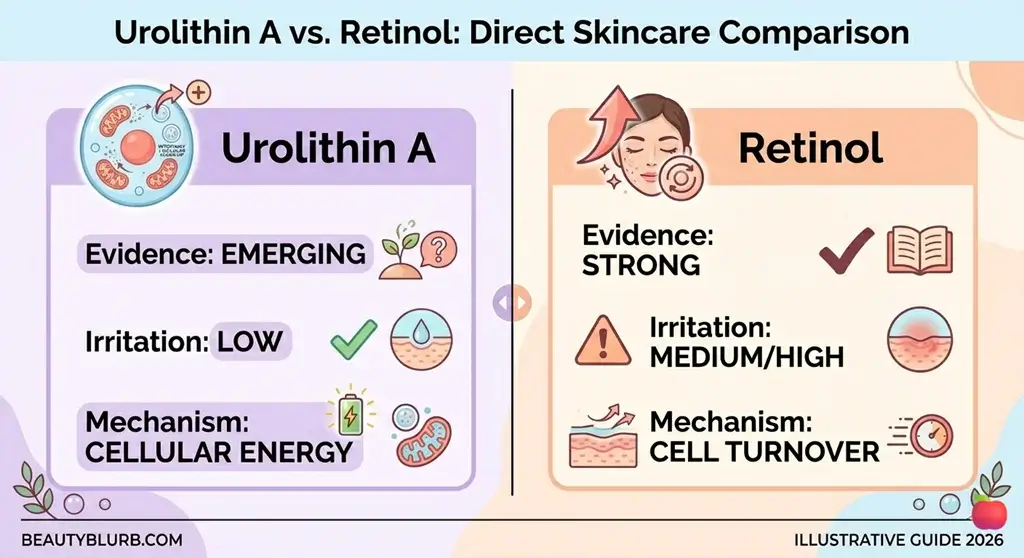
Here’s a clear comparison to help you understand the differences:
Key takeaway: Retinol is a proven powerhouse for surface-level anti-aging, while Urolithin A is a gentle, science-backed ingredient that works from the inside out to improve long-term skin health.
For many skincare routines, they can even complement each other when used thoughtfully.
Can You Use Urolithin A and Retinol Together?
Yes, in most cases, Urolithin A and Retinol can be used together, and they can actually complement each other. Here’s why:
- Retinol works primarily on the surface of your skin by speeding up cell turnover and stimulating collagen production.
- Urolithin A works at the cellular level, improving mitochondrial health, supporting mitophagy, and helping your skin repair and maintain itself from the inside out.
By combining them thoughtfully:
- Retinol addresses visible signs of aging like fine lines and uneven texture.
- Urolithin A helps your skin cells stay healthy, resilient, and less stressed, which may reduce irritation from retinol and enhance long-term results.
Tip: Start slowly when layering ingredients. Apply Urolithin A in the morning or as a gentle serum, and use Retinol at night. Always pair with SPF during the day to protect your skin.
Topical vs Supplement: Which Is Better for Skin?
Many people wonder: “Should I use Urolithin A topically or take it orally?” The answer depends on your goals, but understanding how each option works can help you make an informed choice.
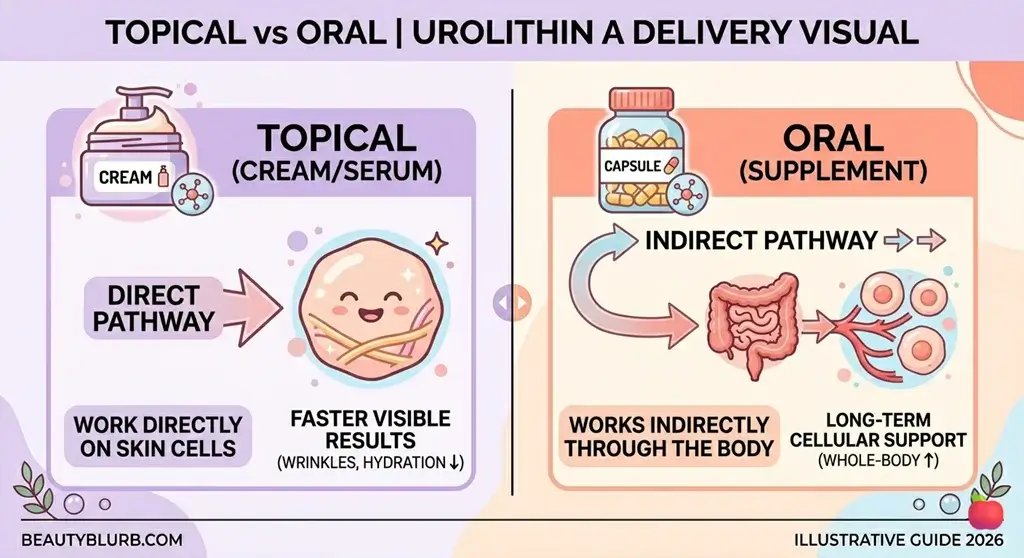
Topical Urolithin A
- Works directly on the skin: The active ingredient is applied to the surface, where it can penetrate and reach skin cells.
- Benefits you can see faster: Early studies suggest topical 1% formulas improve hydration, reduce redness from UV exposure, and may reduce the appearance of fine lines.
- Targeted application: Ideal for specific areas like under-eye, forehead, or around the mouth.
Oral (Supplement) Urolithin A
- Works indirectly through the body: Urolithin A produced in the gut travels through the bloodstream to reach skin cells.
- Long-term cellular support: It may improve mitochondrial health and cellular renewal across the whole body, not just the skin.
- Systemic benefits: Can support muscle, immunity, and overall cellular health, which may indirectly reflect on skin health.
Which should you choose?
- If your goal is immediate, visible skin improvements, topical application is likely the best option.
- If you’re interested in long-term skin health and overall cellular support, oral supplementation may be valuable.
- Some people choose a combination approach, using topical for targeted effects and oral supplements for systemic benefits.
⚠️ Side Effects & Safety: Is Urolithin A Safe?
A common question is: “Is Urolithin A safe for skin?” The short answer is yes—it is generally considered safe, especially when used topically in the concentrations studied (around 1%).
However, as with any active ingredient, there are a few important considerations to keep in mind.
Safety Overview
- Generally safe: Studies show that topical Urolithin A is well-tolerated and does not typically cause irritation, redness, or peeling like some other anti-aging ingredients (e.g., retinol).
- Limited long-term data: Most research is relatively new, so long-term effects are still being studied. While early evidence is promising, we recommend monitoring your skin and using the ingredient as directed.
- Possible sensitivity: Some individuals with very sensitive skin may experience mild reactions. To be safe, always perform a patch test before applying Urolithin A to larger areas of your face or body.
Tips for Safe Use
- Start with a small amount and gradually increase if your skin tolerates it.
- Avoid combining multiple strong actives on the same day (e.g., high-strength acids + retinol) until you know how your skin reacts.
- Pair with daily SPF during the day, as UV protection is crucial for anti-aging and skin health.
Bottom line: Urolithin A for skin is a gentle, emerging anti-aging ingredient with a strong safety profile—but caution and patch testing are always recommended for best results.
🧴 How to Use Urolithin A for skin
Adding Urolithin A for skin to your routine doesn’t have to be complicated, but knowing the right timing and compatibility makes a big difference.
Morning vs Night
- Morning: Applying a light topical formula in the morning can help protect your skin from UV-induced stress and environmental damage. Pair with a broad-spectrum SPF for maximum protection.
- Night: Using it in the evening allows your skin to focus on repair and cellular renewal while you sleep, especially when combined with gentle hydration.
Layering and Compatibility
- With acids (AHAs/BHAs): Apply Urolithin A after your acid exfoliant if using both, or on alternate days to avoid overloading sensitive skin.
- With Retinol: Urolithin A can complement retinol by supporting cellular energy and reducing potential irritation. Use retinol at night and Urolithin A either in the morning or in a separate layer at night for best results.
Pro Tip from Experience:
lways start slowly when introducing Urolithin A into your routine. Even though it’s gentle, observing how your skin responds will ensure optimal results and minimal irritation.
Since I focus more on oily skin care, if your skin is oily, you can check out my detailed 2026 guide on skincare routines for oily skin, which explains exactly how to incorporate ingredients like Urolithin A, acids, and retinol without clogging pores or causing breakouts.
👤 Who Should Use Urolithin and Who Avoid it
Urolithin A for skin is ideal for:
- Aging skin: Helps reduce wrinkles, improve elasticity, and support long-term skin health.
- Dull or tired skin: Promotes cellular renewal and mitochondrial health for a brighter, more radiant complexion.
- Early prevention: Even if your skin looks healthy, using it can support anti-aging at the cellular level before visible signs appear.
Who Should Avoid
- Pregnancy or breastfeeding: Safety data is limited, so it’s best to avoid as a precaution.
- Very sensitive or compromised skin: If you have active eczema, psoriasis, or recent chemical peels, introduce with caution and patch test first.
💬 Your Turn: If you’ve tried Urolithin A before, I’d love to hear your experience! Share your results, thoughts, or questions in the comments below.
Your feedback can help others make informed choices about this emerging anti-aging ingredient.
best Urolithin A Products for skin
If you’re curious about trying Urolithin A for skin and overall health, there are now several high‑quality products on the market that bring the science of urolithin A into real‑world use.
Some focus on cellular support from within, while others deliver the compound directly to the skin’s surface for visible effects.
These are among the most recommended options based on clinical relevance, formulation quality, and real user feedback.
✅ 1. Timeline Mitopure Softgels (Oral Supplement)
Why this stands out:
Timeline’s Mitopure is one of the most widely studied forms of urolithin A and has been used in multiple clinical trials. It supports mitochondrial health and may benefit skin indirectly through improved cellular function and reduced oxidative stress.
- Clinically relevant dosage (often 500–1000 mg)
- Third‑party tested and certified
- Available in capsule, gummy, or powder form
Great choice if your priority is overall aging support, which many people feel translates to better skin resilience with regular use.
✅ 2. California Gold Nutrition Urolithin A Capsules (Oral Supplement)
Why this is worth considering:
This product delivers 500 mg of Urolithin A per serving with a liquid veggie‑capsule format that may improve tolerability and absorption.
- Suitable for vegans and vegetarians
- Free of major allergens (gluten, soy, etc.)
- Convenient daily dosing
A solid option if you want a well‑formulated, straightforward oral supplement without extra ingredients.
✅ 3. Timeline Mito‑Biotic Firming Serum (Topical)
Why this works for skin:
Timeline’s Mito‑Biotic line includes Urolithin A (as Mitopure®) in topical skincare formulas designed to energize skin cells and reduce visible signs of aging.
The 1 % concentration aligns with clinical research showing benefits for hydration, texture, and cellular performance.
- Targets fine lines and loss of firmness
- Combines Urolithin A with supportive skincare actives (e.g., hyaluronic acid)
- Designed for everyday use
Perfect if your goal is direct skin benefits instead of just systemic support.
✅ 4. Timeline Mito‑Biotic Eye Cream (Topical)
Why this is a standout texture/targeted product:
This eye cream brings the same longevity‑focused science into a lightweight formula tailored for the delicate eye area. It helps with hydration, puffiness, and fine lines by delivering Urolithin A directly where many signs of aging first appear.
- Specifically formulated for under‑eye concerns
- Includes skin‑friendly ingredients like ceramides and niacinamide
- Builds on the same science used in other topical products
A great pick if you want to target a common aging zone with a gentle formula.
🧠 Quick Tip Before You Buy
When choosing the best Urolithin A for skin or supplements, keep these tips in mind to get the most effective and safe product:
- Check the concentration/dosage:
- Topical products: look for ~1 % Urolithin A, the level used in clinical studies.
- Oral supplements: aim for at least 500 mg per serving, ideally standardized and clinically tested.
- Verify ingredient transparency:
Make sure the label clearly lists Urolithin A (Mitopure®) and any additional ingredients. Avoid products with unnecessary fillers or allergens. - Look for third-party testing:
Independent verification ensures potency, purity, and safety. Certifications from labs or brands with strong quality control are preferred. - Consider your goals:
- Topical: for visible improvements in wrinkles, hydration, and skin firmness.
- Oral: for systemic cellular support, longevity, and overall mitochondrial health.
- Check reviews and user experiences:
Real-life feedback can provide insight into tolerability, texture, and results over time.
💡 Pro tip: Start with one product at a time—especially if combining oral and topical—to monitor how your skin responds and avoid irritation.
FAQ About Urolithin A For skin
Urolithin A primarily enhances **mitophagy**, helping cells recycle damaged mitochondria and supporting skin longevity. CoQ10 is an antioxidant that protects mitochondria but does not trigger the same cellular recycling. For skin appearance and anti-aging, early studies suggest Urolithin A may offer **more direct cellular rejuvenation**.
Topical Urolithin A can improve hydration and redness in **2–4 weeks**, while oral supplementation supports cellular health gradually over **4–12 weeks**. Patience and consistent use are key for both approaches.
Urolithin A promotes **cellular energy and collagen deposition**, while collagen supplements provide building blocks for your skin. Taking both can enhance skin firmness and elasticity more effectively than either alone.
For **cellular anti-aging**, few compounds currently match Urolithin A’s mitophagy effects. Other anti-aging ingredients like **retinol, peptides, or NAD+ precursors** have proven benefits but target skin differently. Combining strategies may offer the best overall results.
Supplements like **Urolithin A, collagen peptides, NMN, and antioxidants** each target aging differently. A consistent, multi-pronged routine including healthy lifestyle, sleep, sunscreen, and evidence-based supplements is most effective.
Clinical studies of Urolithin A, both oral and topical, show **minimal adverse effects**. However, people with liver disease should always consult a healthcare professional before starting any supplement.
By promoting **mitophagy and collagen production**, Urolithin A can help rejuvenate skin cells. While it is not a replacement for medical treatments, it may improve skin texture and reduce mild post-acne scarring over time when used consistently.
Urolithin A is usually well-tolerated topically. However, those with **highly sensitive skin** should perform a **patch test** on a small area before full application. Monitor for redness or irritation, and introduce slowly into your routine.
Thank you so much for reading this deep dive into Urolithin A for skin! 🌸 I hope you found it helpful and easy to understand.
If you’ve tried Urolithin A before, or if a friend has, I’d love to hear about your experiences — feel free to share them in the comments below. Your insights not only help others but also make this community stronger.
And don’t forget — if you want to stay updated on the latest skincare breakthroughs, tips, and product recommendations, subscribe to the Beauty Blurb newsletter. We promise to bring you only the most trustworthy, science-backed skincare insights right to your inbox. 💌
Here’s to glowing, healthy skin — together! ✨
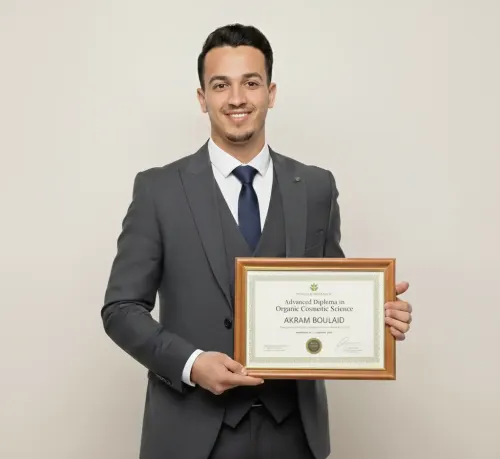
Akram Boulaid is a dedicated Skincare Researcher and Analyst with over 7 years of intensive focus on dermatology and cosmetic ingredient science. As a globally recognized expert, his insights have been featured in major international publications, including the New York Post and GB News. A verified expert on Qwoted, Akram connects with health journalists to provide evidence-based analysis. He founded Beauty Blurb to bridge the gap between complex clinical data and practical skincare routines, specializing exclusively in the needs of oily and acne-prone skin through rigorous analysis of peer-reviewed scientific literature.