
💡 Quick Insight
If you’re wondering “is snail mucin good for oily skin?” the answer is definitely yes — and the reasons go deeper than basic hydration.
Snail mucin doesn’t just moisturize without clogging pores; it also helps oily skin regain balance by improving the moisture–oil ratio, which naturally reduces excess sebum over time.
What truly sets it apart is its rich blend of skin-supporting ingredients:
- Zinc: helps regulate oil production and calm active breakouts.
- Copper peptides: soothe inflammation and support skin repair.
- Hyaluronic acid: provides deep water-based hydration.
- Allantoin: softens and protects the skin barrier.
This combination makes snail mucin especially effective for oily, acne-prone, or sensitive skin, helping reduce redness, improve texture, and heal post-acne marks — all without leaving any greasy residue.
In short, snail mucin hydrates, repairs, and balances oily skin at the same time, making it a must-have for a healthier, calmer complexion.

In this guide, we’ll break down everything you need to know about Snail Mucin for Oily Skin — from the real, science-backed benefits to how to use it correctly in your routine.
You’ll also discover ingredient pairings that boost its results, who should avoid it, how to prevent breakouts when using it, and the best snail mucin products specifically formulated for oily and acne-prone skin.
By the end, you’ll know exactly how to integrate snail mucin into your routine for a clear, oil-free glow.
What Exactly Is Snail Mucin?
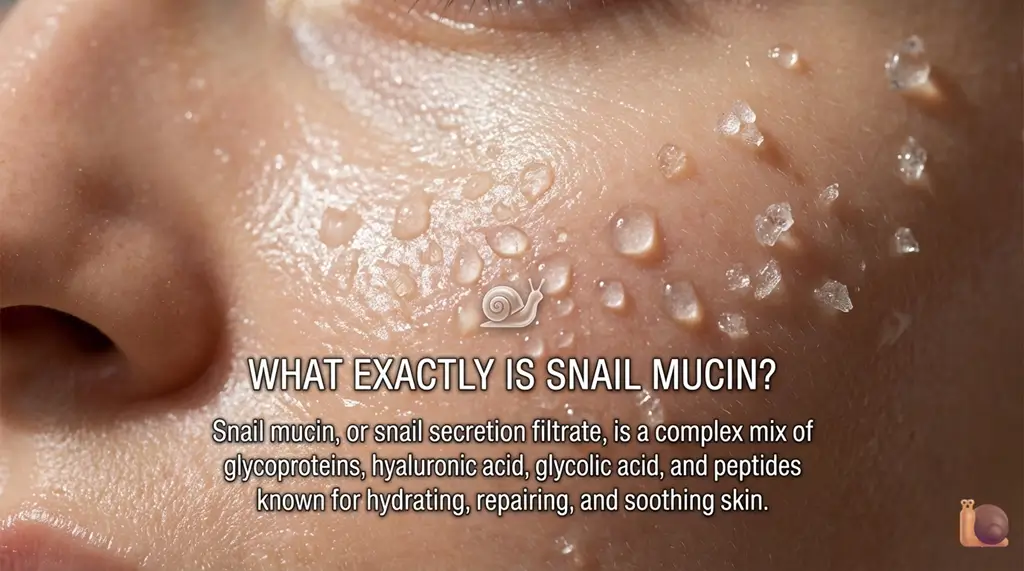
Snail mucin, also known as snail secretion filtrate, is a skincare ingredient derived from the natural mucus snails produce to protect and repair their skin.
In skincare, this ingredient is carefully purified and filtered to create a lightweight, water-based substance that delivers hydration and repair without heaviness.
Despite its unusual origin, snail mucin has been widely used in Korean skincare for years and is now gaining global popularity — especially among people with oily and acne-prone skin.
What makes snail mucin unique is its naturally balanced composition.
It contains hyaluronic acid for deep hydration, glycoproteins that support skin repair, allantoin to soothe irritation, and trace elements like zinc and copper peptides, which help calm inflammation and support skin regeneration.
This combination allows snail mucin to hydrate the skin while strengthening the skin barrier — a key factor for managing excess oil and breakouts.
Unlike heavy creams or occlusive ingredients, snail mucin absorbs quickly, making it ideal for those searching for lightweight hydration for oily skin.
Because it is non-comedogenic, snail mucin does not clog pores, which is why it’s often recommended for oily, combination, and acne-prone skin types.
Instead of adding oil, it helps the skin stay properly hydrated, reducing the need for the skin to overproduce sebum.
This is why many dermatologists and skincare experts consider snail mucin one of the most effective multitasking ingredients for improving texture, calming redness, and supporting clearer-looking skin over time.
How Is Snail Mucin Collected — And Are Snails Harmed?
One of the most common questions people ask before using this ingredient is how snail mucin is collected — and whether the process harms the snails.
The good news is that modern, reputable skincare brands use ethical and cruelty-free methods to collect snail mucin without injuring the animals.
In controlled environments, snails are placed on smooth, stress-free surfaces where they naturally produce mucus as they move.
This secretion is then carefully collected, filtered, and purified for cosmetic use. The snails are not crushed, harmed, or killed during this process, and they are returned to their environment afterward.
This method allows the snails to continue producing mucin naturally without suffering.

It’s important to note that not all brands follow the same standards, which is why choosing products from transparent and reputable companies matters — especially if you care about ethical skincare.
High-quality snail mucin products usually disclose their sourcing practices and emphasize cruelty-free collection.
From a skincare perspective, this gentle extraction process also ensures that the snail secretion filtrate remains pure, effective, and suitable for sensitive, oily, and acne-prone skin.
Is Snail Mucin Good for Oily Skin? (Top Benefits)
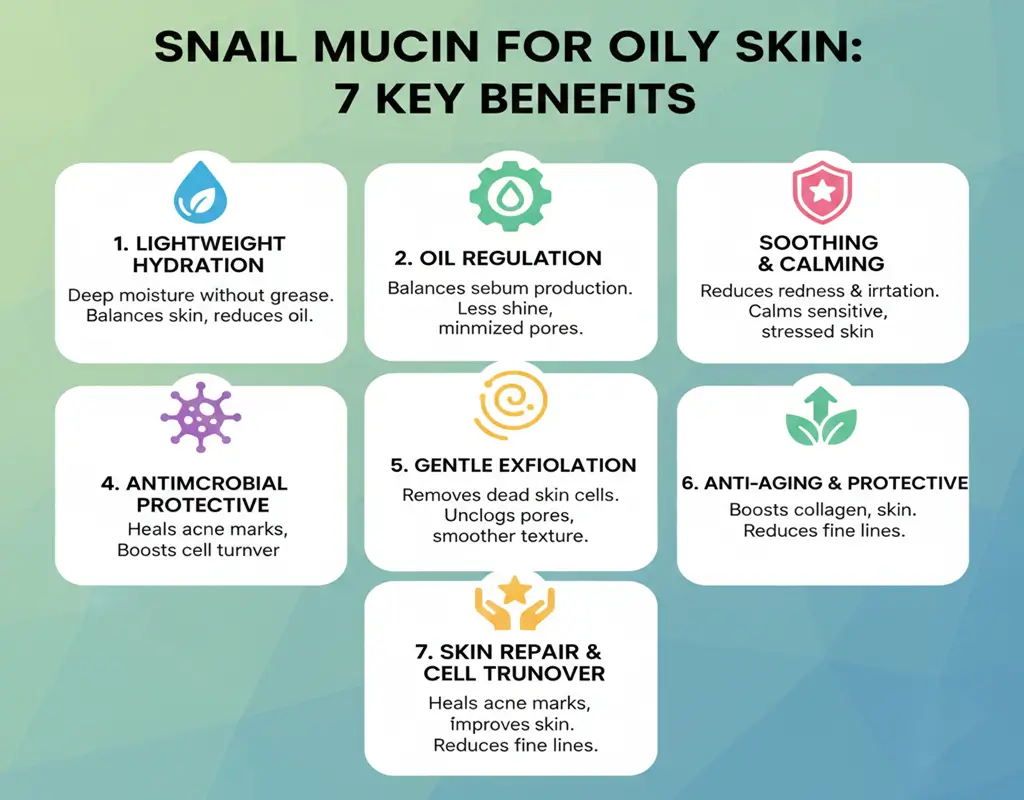
After reviewing recent studies and insights from dermatologists, we’ve compiled the most effective benefits of snail mucin for oily skin — focusing only on what truly helps balance oil, calm breakouts, and hydrate without heaviness.
1. Deep, Lightweight Hydration Without Greasiness
One of the main reasons snail mucin works so well for oily skin is its ability to provide deep hydration without feeling heavy or greasy.
Unlike thick creams that sit on the surface of the skin, snail mucin’s water-based structure draws moisture into the skin and helps lock it in,
making the skin more balanced and less prone to overproducing oil. This makes it perfect for people looking for lightweight hydration for oily and combination skin without clogging pores.
Scientific research From Healthline, shows that snail mucin contains compounds like hyaluronic acid and glycoproteins, which help attract and retain moisture, improving skin hydration and elasticity over time (Source).
2. Oil Regulation and Sebum Balance
For many people with oily skin, the challenge isn’t hydration — it’s when the skin produces too much oil (sebum) to compensate for dryness.
Snail mucin helps balance the skin’s natural oil production by keeping the skin properly hydrated without suffocating it, which reduces excess sebum output and helps minimize shiny areas.
Clinical Study (2024-2025) From PUBMED: snail mucin benefits identifies its role in anti-acne and sebum-related skincare applications.
While more large-scale clinical trials are needed, evidence supports its role in reducing acne severity and managing oil-related skin concerns (Source).
3. Soothing Anti-Inflammatory Effects
Oily and acne-prone skin often comes with irritation, redness, and inflammation — especially after breakouts or when using strong actives.
Snail mucin contains soothing agents like proteoglycans, allantoin, and peptides that help calm stressed skin, reduce redness, and promote a less reactive complexion.
Medically reviewed sources note snail mucin’s anti-inflammatory properties, which can help reduce irritation and support a calmer skin surface.
4. Enhances Skin Repair and Cell Turnover
Another benefit of snail mucin for oily and acne-prone skin is its role in skin repair. The ingredient supports faster healing of minor wounds and acne marks by encouraging healthy cell regeneration and turnover.
This helps improve skin texture, fade post-breakout dark marks, and give a smoother appearance over time.
Scientific literature highlights snail mucin’s potential to enhance skin regeneration and aid wound healing due to its unique composition of regenerative compounds (Source).
5. Gentle Exfoliation and Smoother Texture
Snail mucin naturally contains small amounts of glycolic acid and other enzymes that help promote mild exfoliation — removing dead skin cells that can trap oil and contribute to breakouts.
This helps refine skin texture, unclog pores gently, and support a clearer, more even complexion.
2025-2026 Industry discussions and ingredient breakdowns show that glycolic acid and mucin together can support more even skin texture and mild exfoliation (Source).
6. Antimicrobial and Protective Qualities
Acne-prone oily skin can be negatively impacted by bacteria that worsen inflammation and breakouts.
Snail mucin exhibits antimicrobial properties that help protect the skin from harmful microbes while supporting the skin’s own defense mechanisms. These properties also play a role in improving overall skin health.
Laboratory investigations have shown that snail mucins have antimicrobial activity against bacteria associated with acne vulgaris, suggesting a protective effect for troubled skin (Source).
7. Anti-Aging and Skin Elasticity Benefits
Although oily skin is often associated with youth, improving elasticity and reducing early signs of aging is still valuable — especially as it ages. Snail mucin naturally contains peptides and antioxidants that support collagen synthesis and help maintain firmness and resilience in the skin.
Scientific reviews note that snail mucin’s peptide content can help promote skin firmness and elasticity, making it useful not only for hydration but also for preventative anti-aging care.
So, can you use snail mucin for oily skin?
Yes — snail mucin can be an excellent addition to an oily skin routine when used correctly. Thanks to its lightweight, non-comedogenic nature, it hydrates without adding grease, helps calm inflammation, supports skin repair, and contributes to better oil balance over time.
That said, results depend on how you use it and what you pair it with. In the next section, we’ll walk through the right way to use snail mucin and how to seamlessly integrate it into an oily skin routine for the best possible results.
How to Use Snail Mucin for Oily Skin (The Right Way)
Quick answer:
To use snail mucin for oily skin, apply a lightweight snail mucin essence or serum on clean, slightly damp skin, then seal it with a non-comedogenic moisturizer. Used correctly, it hydrates, calms inflammation, and helps balance oil without clogging pores.
Now, let’s break down how to get the best results step by step — and avoid the mistakes many oily-skin users make.

1. Start With a Gentle Cleanse (Don’t Over-Strip)
Always begin with a gentle, low-pH cleanser designed for oily or acne-prone skin. Over-cleansing strips natural oils, which can actually trigger more sebum production — the opposite of what you want.
Clean skin allows snail mucin to absorb properly instead of sitting on top of excess oil and impurities, making this step essential for anyone using snail mucin for oily skin.
Pro tip: Cleanse twice daily only — morning and night.
2. Use an Alcohol-Free Toner to Prep the Skin
A lightweight, alcohol-free toner helps remove leftover residue and lightly hydrates the skin, creating the ideal environment for snail mucin absorption. This step improves penetration and helps oily skin feel balanced rather than tight.
Look for toners with calming or oil-regulating ingredients like green tea, centella asiatica, or niacinamide — they pair well with snail secretion filtrate.
3. Apply Snail Mucin on Slightly Damp Skin
This is where most people go wrong.
Apply your snail mucin essence or serum while the skin is still slightly damp. Use 1–2 pumps (or a pea-sized amount) and gently pat, not rub, it into the skin. Patting improves absorption and keeps the texture lightweight.
Snail mucin absorbs quickly, delivering hydration, soothing inflammation, and supporting skin repair — without leaving an oily residue.
4. Seal With a Lightweight, Non-Comedogenic Moisturizer
Yes — even oily skin needs moisturizer.
After snail mucin, apply a gel-based or oil-free moisturizer to lock in hydration. Skipping this step can cause water loss, leading your skin to produce more oil to compensate.
During the day, always finish with broad-spectrum SPF 30+. At night, snail mucin can be layered with actives like niacinamide or retinol (introduced slowly).
5. How Often Should You Use Snail Mucin?
For best results:
- Morning: Hydration + oil balance under sunscreen
- Night: Skin repair and calming benefits while you sleep
Snail mucin is gentle enough for daily use, even for sensitive, oily, or acne-prone skin.
Consistency — not quantity — is what delivers results.
Common Mistakes to Avoid
- Using too much product (more ≠ better)
- Applying on dry skin
- Pairing with heavy, pore-clogging creams
- Expecting instant oil control without routine balance
Why This Method Works for Oily Skin
This approach respects how oily skin functions: hydrate first, regulate oil naturally, and protect the skin barrier. When used this way, snail mucin doesn’t make skin greasy — it helps train it to stay balanced.
Who Shouldn’t Use Snail Mucin?
Quick answer:
Snail mucin is generally safe for most skin types, but it’s not ideal for everyone. Certain skin conditions, allergies, or personal preferences may make it unsuitable or require extra caution.
Let’s break down who should avoid snail mucin — or use it carefully.
1. People With Shellfish or Mollusk Allergies
If you have a known allergy to shellfish or mollusks, snail mucin may trigger a reaction. While topical use is different from ingestion, allergic responses like itching, redness, or swelling are still possible.
What to do: Always perform a patch test before full application.
2. Those With Extremely Sensitive or Reactive Skin
Very sensitive skin — especially skin prone to contact dermatitis — may react to snail mucin, particularly when used in high concentrations or combined with strong actives.
Symptoms can include mild stinging, redness, or discomfort.
Tip: Start with a low-concentration snail mucin product and avoid layering it with exfoliating acids initially.
3. People Experiencing Active Skin Infections or Open Wounds
If your skin has active infections, oozing acne lesions, or open wounds, it’s best to pause snail mucin use until the skin barrier has recovered. While snail mucin supports healing, compromised skin may react unpredictably.
4. Those Who Prefer Vegan or Animal-Free Skincare
Snail mucin is an animal-derived ingredient. Even though many brands claim ethical harvesting methods, it’s not suitable for strict vegans or those avoiding animal-based skincare entirely.
5. Users Who Layer Too Many Strong Actives
Snail mucin itself is gentle, but problems can arise when it’s combined with multiple strong actives (high-strength retinoids, AHAs, BHAs, or benzoyl peroxide) without proper spacing. This can overload the skin and cause irritation.
Solution: Use snail mucin as a buffer — either before actives or on recovery days.
6. The “Purging” Myth:
Snail mucin is non-comedogenic (doesn’t clog pores), but if you notice small red bumps immediately after use, it’s likely an allergic reaction (contact dermatitis) rather than “purging.”
Snail mucin does not contain active cell-turnover ingredients (like Retinol or AHAs), so it should not cause purging
So… Is Snail Mucin Right for Your Skin? (Quick Self-Check)
Ask yourself the following:
- ✅ Do I have oily or acne-prone skin that still gets dehydrated?
- ✅ Am I looking for lightweight, non-comedogenic hydration?
- ❌ Do I have a known shellfish/snail allergy?
- ❌ Is my skin currently irritated, broken, or inflamed?
If you answered “yes” to the first two and “no” to the last two, snail mucin is very likely a good fit for your routine.
This balance — knowing who should use it and who shouldn’t — is what makes snail mucin effective when used intentionally, not blindly.
What Are the Disadvantages of Snail Mucin?
Quick answer:
Snail mucin is generally safe and well-tolerated, but like any skincare ingredient, it has potential downsides depending on skin type, formulation, and how it’s used.
Here are the most important disadvantages you should be aware of before using snail mucin — especially for oily and acne-prone skin.
1. Potential for Allergic Reactions
Although uncommon, snail mucin can cause allergic reactions in some people — especially those with sensitivities to mollusks or shellfish. Symptoms may include itching, redness, or small bumps shortly after application.
Why it matters:
Even “gentle” ingredients can trigger reactions if your immune system is sensitive.
How to reduce risk:
Always patch test new snail mucin products for 24 hours.
2. Breakouts From Poor-Quality Formulations
Snail mucin itself is non-comedogenic, but not all products are created equal. Some formulas include heavy silicones, pore-clogging emollients, or fragrance that can worsen breakouts on oily skin.
Key takeaway:
Breakouts often come from the formula, not the snail mucin.
3. Sticky or Heavy Texture for Some Users
While many modern formulas absorb well, certain snail mucin products can feel sticky or uncomfortable — especially when over-applied or layered with incompatible products.
For oily skin, this can feel suffocating rather than hydrating.
Solution:
Use a thin layer and choose gel-like or essence textures.
4. Limited Results Without Consistent Use
Snail mucin doesn’t deliver instant oil control or overnight acne clearing. Its benefits — hydration, repair, calming — build gradually with consistent use.
Users expecting fast, dramatic results may feel disappointed.
5. Ethical and Sustainability Concerns
Some consumers are uncomfortable with how snail mucin is sourced. While many brands claim ethical harvesting, transparency varies, and this can be a drawback for eco-conscious or vegan users.
6. Not a Standalone Acne Treatment
Snail mucin supports oily and acne-prone skin, but it does not replace targeted acne treatments like salicylic acid, retinoids, or benzoyl peroxide when needed.
Think of it as a supporting ingredient, not a cure.
Bottom Line on Snail Mucin Disadvantages
Snail mucin isn’t harmful — but it’s not magic either. Most downsides are avoidable by choosing the right product, using the correct amount, and understanding what it can (and can’t) do for oily skin.
When used intentionally, the benefits usually outweigh the disadvantages.
Best Snail Mucin for Oily Skin (editor’s picks)
Quick answer:
If you’re wondering “which snail mucin is best for oily skin?” — based on my experience and research, I personally recommend COSRX Advanced Snail 96 Mucin Power Essence. It’s lightweight, non-greasy, and perfect for balancing oily and acne-prone skin.
Below is a table of the top 5 snail mucin products suitable for oily skin, with pros, cons, and star ratings to make it easy for you to compare.
| Product Name | Star Rating | Pros | Cons |
|---|---|---|---|
| COSRX Advanced Snail 96 Mucin Power Essence | ⭐⭐⭐⭐⭐ | Lightweight, absorbs quickly, calms irritation, improves hydration, non-comedogenic | Slightly sticky at first; patch test recommended |
| Mizon All In One Snail Repair Cream | ⭐⭐⭐⭐ | Hydrating, rich in peptides, supports skin repair, affordable | Heavier cream; may feel greasy for very oily skin |
| Benton Snail Bee High Content Essence | ⭐⭐⭐⭐ | Contains anti-inflammatory bee venom, lightweight, reduces redness | Can be sensitive for very reactive skin |
| I’m From Snail Cream | ⭐⭐⭐⭐ | High concentration of snail filtrate, nourishes skin, improves texture | Thick cream texture; best at night |
| Secret Key Starting Treatment Essence (Snail 94%) | ⭐⭐⭐⭐ | Hydrating, helps improve elasticity, non-comedogenic | Slightly watery; may require layering for deep hydration |
Personal Note:
I personally reviewed COSRX Advanced Snail 96 Mucin Power Essence, and you can check out my full review to see detailed results, textures, and tips.
If you’ve tried any of these products before, I’d love to hear about your experience — leave a comment below and share which snail mucin worked best for your oily skin!
Snail Mucin vs Other Ingredients for Oily Skin
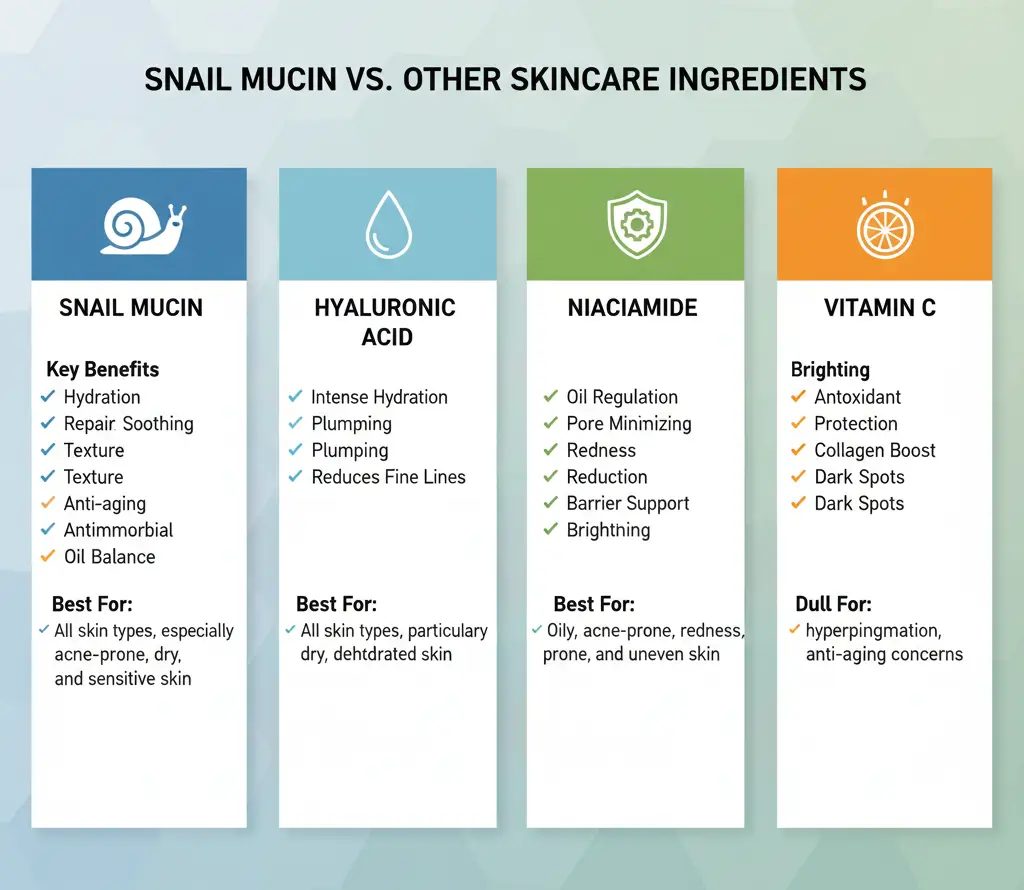
When it comes to oily skin, choosing the right active ingredients can be confusing. Many people wonder how snail mucin compares to other popular skincare ingredients, like hyaluronic acid, niacinamide, and vitamin C. Here’s a clear breakdown based on research and dermatologists’ insights.
1: Snail Mucin vs Hyaluronic Acid
Both snail mucin and hyaluronic acid are excellent for hydration, but they work slightly differently.
- Hyaluronic acid (HA) is purely a humectant — it draws water into the skin to provide moisture. It’s lightweight, non-greasy, and perfect for oily skin, but it doesn’t provide the added skin-repairing or anti-inflammatory benefits that snail mucin does.
- Snail mucin, on the other hand, hydrates while also delivering zinc, copper peptides, glycoproteins, and allantoin, which help repair the skin barrier, soothe acne, and regulate oil production.
Best use: For oily skin, you can actually layer HA under snail mucin for maximum hydration without greasiness.
2: Snail Mucin vs Niacinamide
Niacinamide is known for controlling sebum, reducing redness, and improving skin texture.
- While niacinamide targets oil regulation and pore size, it lacks the wound-healing and hydration depth of snail mucin.
- Snail mucin complements niacinamide by soothing inflammation, repairing acne marks, and providing lightweight hydration.
Best use: Many dermatologists recommend combining them — niacinamide for oil control, snail mucin for skin repair and hydration. This combo is particularly effective for oily, acne-prone skin.
3: Snail Mucin vs Vitamin C
Vitamin C is a powerful antioxidant that brightens the skin, reduces dark spots, and protects against environmental damage.
- Vitamin C can sometimes be too strong for sensitive or acne-prone oily skin, causing mild irritation or stinging.
- Snail mucin provides soothing and calming effects, making it an excellent partner for Vitamin C. Using snail mucin before or after vitamin C can reduce potential irritation while supporting hydration and skin repair.
Best use: Apply snail mucin either before or after vitamin C serum depending on your product’s texture, then seal with a lightweight moisturizer. This keeps oily skin balanced, hydrated, and protected.
Key Takeaways
- Snail mucin is multifunctional: hydration + repair + anti-inflammatory benefits.
- Hyaluronic acid: pure hydration, lightweight for oily skin.
- Niacinamide: controls oil, reduces redness, but less hydrating.
- Vitamin C: brightens and protects, can be sensitizing alone; snail mucin reduces irritation.
Pro tip: For oily skin, layering snail mucin with other key actives (HA, niacinamide, or vitamin C) enhances results without clogging pores.
FAQ About snail mucin for oily skin
Thanks to its lightweight, non-greasy formula and anti-inflammatory properties, snail mucin hydrates without clogging pores, making it ideal for oily, combination, or acne-prone skin.
Ingredients like zinc and copper peptides in snail mucin regulate sebum and soothe inflammation, reducing the chance of excess shine or breakouts when used correctly.
For dry skin, it delivers hydration via hyaluronic acid. For oily skin, it provides moisture without clogging pores and reduces redness from acne, making it a universal ingredient.
Snail mucin hydrates and repairs the skin barrier, while alpha arbutin targets pigmentation. Use them together for oily, acne-prone skin to boost radiance without irritation.
It’s non-toxic and gentle, but always check ingredient labels for additional actives that may not be recommended during pregnancy.
Studies show snail mucin promotes collagen and elastin production, helping to fade post-acne marks over time with consistent use.
Apply morning and night after cleansing and toning. Always layer with a lightweight, non-comedogenic moisturizer and sunscreen during the day.
Snail mucin contains compounds like glycoproteins and peptides that reduce redness, soothe irritation, and support faster healing of acne-prone skin.
Conclusion
Thank you so much for reading! We hope this guide has helped answer your top questions and given you a clear understanding of is snail mucin good for oily skin.
Snail mucin can be a game-changer for balancing oily, acne-prone, or sensitive skin — providing hydration, repair, and soothing benefits all at once.
We’d love for you to subscribe to stay updated with our latest skincare tips and discoveries. And most importantly, if you’ve tried snail mucin yourself, share your experience in the comments — we’re excited to hear about your journey and results. Your story could help others find their perfect oily skin solution too!

Akram Boulaid is a dedicated Skincare Researcher and Analyst with over 7 years of intensive focus on dermatology and cosmetic ingredient science. As a globally recognized expert, his insights have been featured in major international publications, including the New York Post and GB News. A verified expert on Qwoted, Akram connects with health journalists to provide evidence-based analysis. He founded Beauty Blurb to bridge the gap between complex clinical data and practical skincare routines, specializing exclusively in the needs of oily and acne-prone skin through rigorous analysis of peer-reviewed scientific literature.