
If you’re struggling with breakouts, you’ve probably asked yourself: Salicylic Acid or Retinol for Acne — which one actually works better?
The quick answer is that salicylic acid goes deep into your pores to dissolve excess oil and dead skin cells, making it a go-to for blackheads, whiteheads, and oily, acne-prone skin.
Retinol, on the other hand, speeds up skin cell turnover, helping to prevent future clogs while also fading acne scars and improving overall texture.
In simple terms: salicylic acid fights active pimples fast, while retinol works on the long-term health and clarity of your skin.
In this guide, we’ll break down everything you need to know to decide is retinol or salicylic acid better for acne.
You’ll learn how each ingredient works, their pros and cons, when to use one over the other, whether you can combine them safely, and even dermatologist-approved routines to get clearer skin without the guesswork.
What Is Retinol and How Does It Work
Retinol is a vitamin A derivative (a milder form of retinoid) commonly used in skincare. When applied topically, it converts into retinoic acid in skin cells, binding to receptors (RAR & RXR) and influencing gene expression.
The result: faster skin cell turnover, reduced formation of comedones (clogged pores), promotion of collagen, and improved texture.
For acne-prone and oily skin, retinol helps clear out pores and reduce sebum over time while also targeting leftover marks and roughness.
| Study | Participants | Duration | Key Findings Relevant to Acne or Oily Skin |
|---|---|---|---|
| The Anti-Acne and Reduction of Hyperpigmentation Effects of Products Containing 0.2% Retinol, Niacinamide & Ceramides by Z. Kuai et al. (2025) | 43 Chinese women (mean age ~25) | 8 weeks | The formulation with 0.2% retinol + niacinamide + ceramides significantly improved acne vulgaris symptoms and post-inflammatory hyperpigmentation. Sebum production and inflammatory lesion counts were reduced. (MDPI) |
| Comparative Efficacy of Pharmacological Treatments for Acne Vulgaris – Network Meta-Analysis by Huang et al. (2023) | 65,601 patients across 221 RCTs | Median duration ~12 weeks | Topical retinoids (including retinol and stronger retinoids) among the monotherapies showed solid efficacy for reducing both inflammatory and non-inflammatory acne lesions. Retinoids ranked near the top among treatments when used properly. (PMC) |
Key Benefits of Retinol for Acne & Oily Skin

- Helps speed up cell turnover, shedding dead skin and preventing clogged pores.
- Reduces appearance of post-inflammatory hyperpigmentation and acne scars.
- Improves skin texture and smoothness.
- Can help regulate sebum production over time (especially in oily skin) with consistent use.
- Mild to moderate concentrations (e.g. 0.1-0.3%) are often well tolerated when introduced gradually.
While retinol is a proven powerhouse for long-term acne management, scars, and overall skin renewal, it’s only one side of the story.
To truly understand which ingredient fits your skin needs, we also need to look closely at salicylic acid—especially when comparing salicylic acid vs retinol for acne.
In the next section, we’ll break down how salicylic acid works, its unique benefits for oily and acne-prone skin, and why many dermatologists recommend it as a first step before introducing retinol.
What Is Salicylic Acid and How Does It Work
Salicylic acid is a beta-hydroxy acid (BHA) that is oil-soluble, which means it can penetrate deep into pores to exfoliate inside the follicle.
It helps dissolve dead skin cells, reduce excess sebum, and calm inflammation—making it especially useful for acne-prone skin and oily skin types.
When used properly, salicylic acid works as a comedolytic (opening clogged pores), anti-inflammatory, and gentle exfoliant, helping improve texture and prevent new blemishes.
| Study | Participants & Skin Type | Duration | Key Findings Relevant to Salicylic Acid for Acne Prone / Oily Skin |
|---|---|---|---|
| Clinical Efficacy of a Salicylic Acid-Containing Gel on Acne Management and Skin Barrier Function by Ye Liu et al. | 42 participants (37 female, 5 male), mild-to-moderate acne, oily or combination skin; mean age ~25.9 years. | 21 days (twice daily application) | Sebum levels dropped ~23.7%, skin hydration rose ~40.5%, skin barrier improved (TEWL dropped ~49%); acne severity (IGA score) improved ~23.8%. (PubMed) |
| Antioxidant-Optimized 1.5% Salicylic Acid Cream in Treatment of Facial Acne by Yue Zheng et al. | 20 patients (2 male, 18 female), ages 19–32, facial mild-to-moderate acne, normal/oily skin mix. | 4 weeks (1.5% SA cream, twice daily) | 95% showed improvement: ~20% complete clearing, 30% significant, 15% moderate, 30% mild; very few side effects, good safety profile. (PubMed) |
✅ Key Benefits of Salicylic Acid For Acne Prone & Oily Skin

- Unclogs pores by dissolving dead skin cells and excess sebum → reduces blackheads and whiteheads.
- Helps control oil / sebaceous secretion especially in oily skin, reducing shine and greasy texture.
- Gentle exfoliation: smooths skin surface and improves texture over time.
- Anti-inflammatory action: calms redness and swelling around pimples.
- Improves skin barrier and tolerability when formulation is gentle (e.g. with moisturizing agents) — minimizes irritation.
⚠️ Things to Consider & Best Use Practices
- Start slow: lower concentrations (0.5%-2%) and maybe once daily, then increase as tolerated.
- Use with non-comedogenic moisturizers to prevent dryness or flaking.
- Always wear sunscreen — SA can increase skin sensitivity to UV.
- Not ideal for everyone: very sensitive skin or broken skin may need milder or buffered formulas.
Now that you understand how salicylic acid works and its strong benefits for oily, acne-prone skin, we can better see the difference between retinol and salicylic acid.
In the next section, we’ll dive into how they compare directly — when one outperforms the other, and how to choose based on your skin type and acne severity.
Is Retinol or Salicylic Acid Better for Acne?
You may be wondering: what is better for acne, retinol or salicylic acid? The short answer is that salicylic acid is often the best first step for active pimples and oily skin, while retinol is better for long-term acne scars, texture, and overall skin renewal.
Many dermatologists recommend starting with salicylic acid to control breakouts, then introducing retinol gradually for long-term results.
| Criteria | Salicylic Acid | Retinol |
|---|---|---|
| Mechanism | Oil-soluble BHA, exfoliates inside pores, reduces sebum | Vitamin A derivative, boosts cell turnover, rebuilds collagen |
| Best For | Active pimples, blackheads, oily skin | Acne scars, hyperpigmentation, long-term skin texture |
| Time to See Results | 1–3 weeks for reduction in breakouts | 8–12 weeks for noticeable improvement |
| Side Effects | Possible dryness, mild irritation if overused | Purging, peeling, sun sensitivity |
| Skin Type Suitability | Best for acne-prone & oily skin types | Better for adults with acne scars, aging, uneven skin tone |
In short, salicylic acid works faster for oily, acne-prone skin with active breakouts, while retinol shines in fading scars, improving texture, and providing long-term skin health benefits.
The best approach is not always choosing one over the other but learning how to use them strategically. Later in this article, we’ll explore how to combine both safely for maximum results.
Can I do salicylic acid and retinol together?
Yes, you can use salicylic acid and retinol in the same skincare routine — but not at the same time.
Dermatologists recommend alternating nights or starting with one ingredient before adding the other, since both are strong exfoliants that may irritate sensitive skin.
Always pair with a hydrating moisturizer and broad-spectrum sunscreen.
How to Combine salicylic acid and retinol Safely
- ✅ Introduce slowly: Start with one ingredient for 2–3 weeks before adding the other.
- 🌙 Alternate nights: Use salicylic acid one night and retinol the next to avoid irritation.
- 📉 Low concentrations: Begin with gentle formulas (0.5–1% SA, 0.25% retinol).
- 💧 Moisturize adequately: Apply a nourishing moisturizer to maintain your skin barrier.
- ☀️ Daily SPF: Both increase sun sensitivity — broad-spectrum SPF 30+ is a must.
- 🚨 Watch for irritation: If redness or peeling occurs, reduce frequency or pause use.
- 👩⚕️ Consult a professional: A dermatologist can personalize your routine safely.
Why Combine Them?
- Target different concerns: salicylic acid unclogs pores + controls oil, while retinol improves scars, pigmentation, and texture.
- Enhanced results: Using both strategically offers a complete acne care routine (treating active breakouts + preventing future scars).
- Long-term skin health: Balanced routine reduces acne and improves overall skin renewal.
If you’re still unsure about which ingredient to start with first, don’t worry — in the next section we’ll compare retinol vs salicylic acid order of application, so you know exactly how to build a safe and effective acne routine.
How to use salicylic acid and retinol together in Skincare Routine
You might be wondering: Salicylic acid or retinol first? The golden rule is that salicylic acid comes first because it exfoliates inside the pores, allowing retinol to penetrate more effectively.
But ✋ the truth is, the order isn’t the only thing that matters — it’s how you combine them. Dermatologists often recommend separating them:
salicylic acid in the morning and retinol at night, or alternating evenings. This way, you get maximum results without damaging your skin barrier.
How to Incorporate Salicylic Acid or Retinol
Start with One Ingredient:
Test salicylic acid for oily skin or retinol for acne alone first, giving your skin 1–2 weeks to adjust.
Low & Slow Rule:
Begin with lower concentrations (1–2% salicylic acid, 0.25–0.5% retinol). Use only 2x per week at the start.
Gradually Increase Frequency:
Once your skin adapts, you can increase to 3–4 times per week or as tolerated.
When Using Both Together (for advanced routines):
- Separate by Time of Day: Salicylic acid in the morning, retinol at night.
- Alternate Nights: One night salicylic, the next retinol, then a rest night with just moisturizer.
- Advanced Layering (if your skin tolerates): Cleanser → Salicylic Acid → wait 20 min → Retinol → Hydrating moisturizer.
Step-by-Step Skincare Routine for Acne-Prone Skin
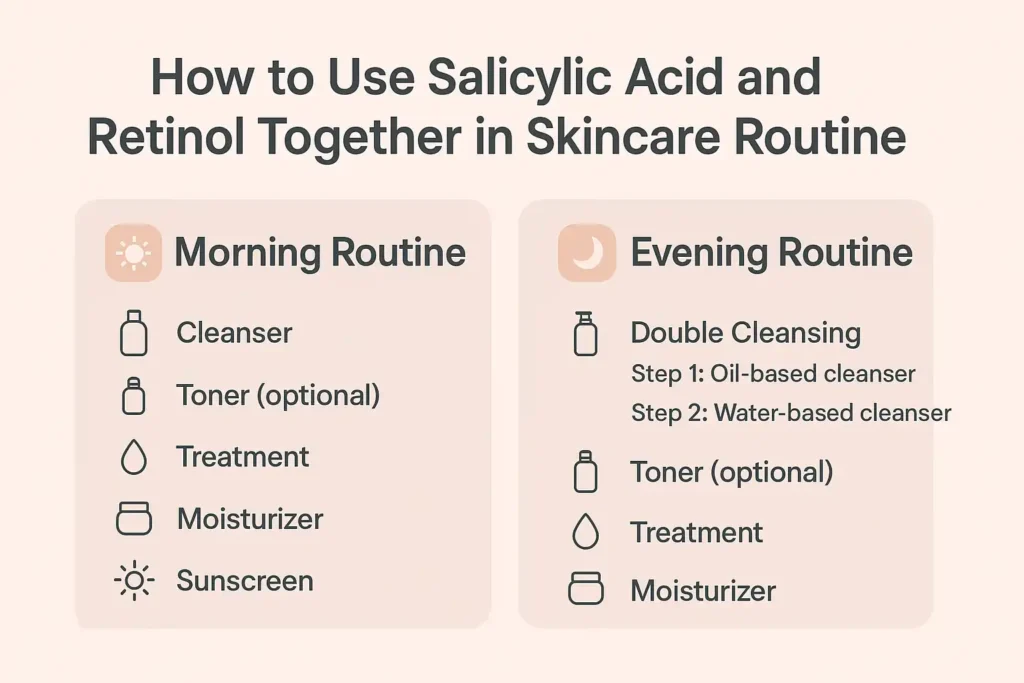
- 🧼 Morning Routine
- Cleanser: Use a gentle, sulfate-free cleanser to remove overnight oil and sweat.
- Toner (optional): Apply a lightweight, alcohol-free toner to balance your skin’s pH and prep for treatments.
- Treatment: Apply salicylic acid — especially effective for oily or acne-prone skin, as it clears pores and reduces excess sebum.
- Moisturizer: Lock in hydration with a non-comedogenic moisturizer.
- Sunscreen: Always finish with broad-spectrum SPF 30+ (crucial when using actives like salicylic acid or retinol).
- 🌙 Evening Routine
- Double Cleansing:
- Step 1: Start with an oil-based cleanser to remove makeup, sunscreen, and excess sebum.
- Step 2: Follow with a gentle water-based cleanser to deeply clean pores.
- Toner (optional): A soothing toner with hydrating ingredients (like glycerin or green tea) to calm skin.
- Treatment: Apply retinol — ideal for acne scars, uneven texture, and long-term skin renewal (retinol for acne scars).
- Moisturizer: Use a nourishing, barrier-supporting moisturizer to reduce dryness and irritation.
- Double Cleansing:
In short, whether you start with salicylic acid or retinol depends on your skin’s needs — salicylic acid is ideal for oily, breakout-prone skin, while retinol shines in reducing acne scars and improving texture.
The best results often come from using them strategically in your routine rather than layering both at once.
✨ Now it’s your turn, gorgeous! Try this skincare routine step by step and give your skin the chance to glow as it truly deserves. Notice the little changes along the way — every bit of progress is a win 💕.
Share your journey with us in the comments, because your story might inspire other readers who are on the same path.
Side Effects of Retinol and Salicylic Acid For Acne-prone skin
When adding strong actives like retinol and salicylic acid into your acne skincare routine, it’s important to know the potential side effects and how to minimize them.
Both ingredients are powerful, but misusing them can cause setbacks instead of progress.
1: Common Side Effects
- Retinol Side Effects for Acne-Prone Skin:
- Initial purging (temporary increase in breakouts).
- Dryness, peeling, redness.
- Increased sun sensitivity.
- Salicylic Acid Side Effects on Skin:
- Dryness or stinging, especially in sensitive skin.
- Irritation if overused or layered incorrectly.
- Potential allergic reaction in people sensitive to aspirin.
2: Who Should Avoid Them?
- Retinol:
- Pregnant or breastfeeding women (not dermatologist-approved).
- Those with severe eczema, rosacea, or highly sensitive skin.
- Salicylic Acid:
- People with aspirin allergy.
- Those with extremely dry or compromised skin barrier.
According to the American Academy of Dermatology (AAD), both retinol and salicylic acid are safe and effective for acne when introduced gradually and combined with moisturizing and sun protection.
However, if irritation persists or your acne worsens, it’s best to consult a dermatologist before continuing.
Salicylic Acid or Retinol for Acne Scars
When it comes to acne scars and post-inflammatory hyperpigmentation, the roles of salicylic acid and retinol are slightly different from how they work on active acne.
- Retinol for Acne Scars:
Retinol speeds up skin cell turnover, boosts collagen production, and smooths uneven texture. It’s especially effective for post-acne dark spots, fine lines, and shallow scars. - Salicylic Acid for Acne Scars:
While primarily used for active breakouts, salicylic acid can also improve the appearance of scars by gently exfoliating the skin surface and brightening post-acne marks. It works best for people with oily or acne-prone skin where clogged pores and discoloration overlap.
Which Works Better?
- If your main concern is hyperpigmentation and skin texture, retinol is usually more effective.
- If you’re still experiencing breakouts + marks, salicylic acid can help manage both at the same time.
- Many dermatologists recommend using them together, on alternate nights, for faster and more balanced results.
Best Products with Retinol or Salicylic Acid for Acne
Finding the right product can be overwhelming, especially with so many skincare options available. To make things easier, here’s a curated list of dermatologist-recommended products with retinol and salicylic acid.
These products are effective for oily skin, acne-prone skin, and acne scars, and they are widely trusted by skincare enthusiasts.
1: Best Retinol Products for Acne
Retinol is best for improving skin texture, acne scars, and anti-aging concerns. Beginners should always start with lower concentrations.
| Product | Key Benefits | Best For |
|---|---|---|
| The Ordinary Retinol 0.2% in Squalane | Gentle formula, affordable, improves skin turnover | Retinol beginners, sensitive skin |
| Differin Gel (Adapalene 0.1%) | FDA-approved retinoid, reduces acne & prevents new breakouts | Persistent acne, oily skin |
| CeraVe Resurfacing Retinol Serum | Reduces post-acne marks, supports skin barrier with ceramides | Acne scars, uneven texture |
2: Best Salicylic Acid Products for Acne
Salicylic acid is perfect for oily and acne-prone skin. It unclogs pores, reduces oiliness, and helps fade post-acne marks.
| Product | Key Benefits | Best For |
|---|---|---|
| Paula’s Choice 2% BHA Liquid Exfoliant | Unclogs pores, reduces blackheads & whiteheads | Acne-prone skin, blackheads |
| CeraVe SA Cleanser | Gentle daily exfoliation, hydrates with ceramides | Oily skin, everyday use |
| The Inkey List Salicylic Acid Cleanser | Affordable, targets breakouts, controls oil | Teen acne, oily skin |
⚡ Good news: I’ve already published a full in-depth guide — The Ordinary Salicylic Acid Review — you can check it out for detailed insights.
FAQ Of Salicylic Acid or Retinol for Acne
Choosing between Salicylic Acid or Retinol for Acne is not always simple — every skin is unique, and what works wonders for one person might take more time for another.
The good news? With patience, consistency, and the right routine, both ingredients can truly transform acne-prone and oily skin for the better. 🌸
Thank you so much for spending your time with me today 💖. If you enjoyed this guide, I’d love for you to subscribe to my blog so you never miss skincare tips, product reviews, and science-backed routines that actually work.
And now it’s your turn: have you tried salicylic acid, retinol, or maybe both in your skincare journey? ✨ Share your story in the comments — your experience could inspire and guide another beauty lover just like you.

Akram Boulaid is a dedicated Skincare Researcher and Analyst with over 7 years of intensive focus on dermatology and cosmetic ingredient science. As a globally recognized expert, his insights have been featured in major international publications, including the New York Post and GB News. A verified expert on Qwoted, Akram connects with health journalists to provide evidence-based analysis. He founded Beauty Blurb to bridge the gap between complex clinical data and practical skincare routines, specializing exclusively in the needs of oily and acne-prone skin through rigorous analysis of peer-reviewed scientific literature.