
If you’ve been wondering whether Retinol is good for oily skin, the answer is a big yes! Retinol helps balance oil production, clear out clogged pores, and improve the overall texture of oily skin.
It’s a gentle powerhouse that can transform your skincare routine and give you that fresh, glowing complexion you’ve been dreaming of.

In this article, we’ll dive into everything you need to know about finding the good retinol for oily skin. From the benefits it offers to tips on how to use it safely without irritation, I’ll guide you step-by-step.
So, if you’re ready to give your skin some love and care, keep reading—you’re in the right place!
What Is Retinol and How Does It Work?
If you’ve been curious about why retinol is good for oily skin, it all starts with what it actually is. Retinol is a form of vitamin A for oily skin that works wonders by speeding up the way your skin renews itself.
This process keeps pores clear, smooths rough texture, and helps control that stubborn shine—without making your skin feel dry or tight.
When you apply retinol, it transforms into retinoic acid, the active form that communicates directly with your skin cells. This is where the magic happens: boosting collagen, refining skin texture, and balancing oil production over time.
The retinol benefits for oily skin are huge—fewer breakouts, a softer look, and a healthy glow that feels just as good as it looks. Adding it to your retinol skincare routine could be the game-changer your skin has been waiting for.
Retinol Is Good for Oily Skin: 5 Benefits
Retinol isn’t just another trending skincare ingredient—it’s a real game-changer for oily skin. By helping your skin renew itself faster, it tackles several common oily skin struggles at once. Here’s why retinol is good for oily skin and how it can completely transform your complexion:
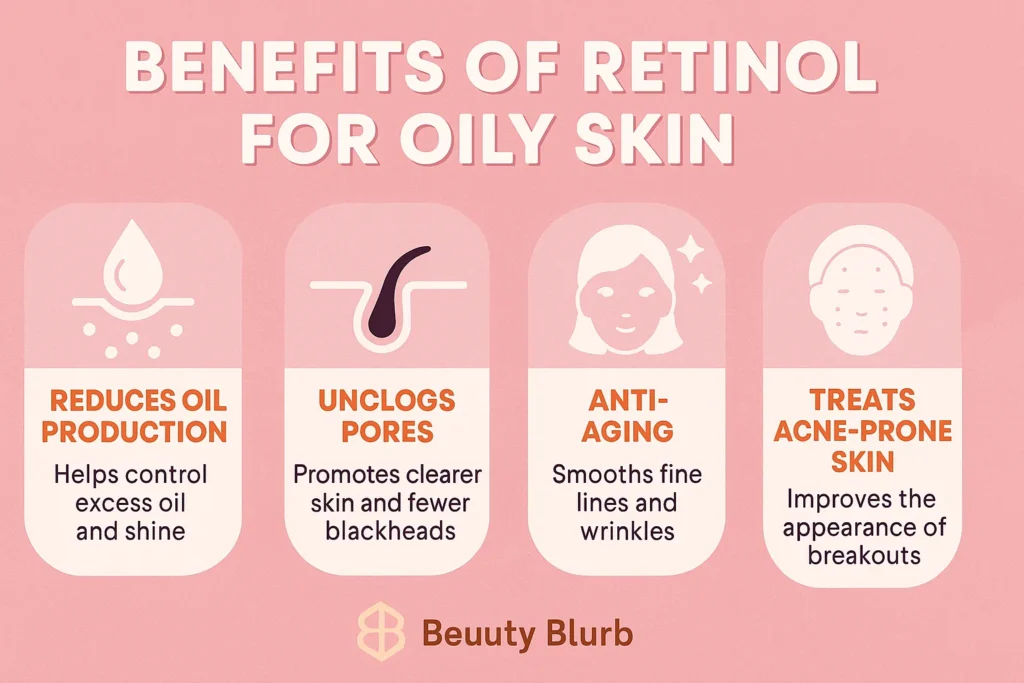
1: Controls Oil Production
When your skin produces too much oil, it can lead to shine, clogged pores, and breakouts. Retinol helps regulate sebum production, giving your skin a fresh and balanced look without feeling dry.
Clinical evidence shows that topical tretinoin (0.05% applied twice daily for 8 weeks) can reduce sebum production by around 25%. This highlights how effective retinoids may be at curbing excess oil. Source.
2: Clarifies Pores & Refines Skin Texture
Large and clogged pores can make skin look uneven and textured. Retinol encourages cell turnover, helping to gently clear out build-up and reveal smoother, more radiant skin.
One randomized controlled trial in the Journal of Dermatology found that using a retinol-based cream for 12 weeks not only reduced acne lesions but also visibly decreased pore size.
3: Fights Signs of Aging (Anti-Aging)
Even if oily skin ages more slowly, fine lines and dullness can still sneak in. Retinol helps boost collagen, strengthens skin structure, and brings back that youthful glow—without stripping your skin of its natural smoothness.
A randomized, controlled study using 0.4% topical retinol over 24 weeks demonstrated significant reductions in fine wrinkles and increases in collagen and glycosaminoglycan production—key components for plumping and smoothing aging skin. Source.
4: Helps Clear Acne-Prone Skin
Oily skin often means blackheads, whiteheads, and bumps. Retinol gently exfoliates inside the pores, preventing blockages and calming inflammation for a clearer complexion.
Topical retinoids—like retinol—are established first-line treatments for acne. They work by normalizing follicular cell turnover, reducing sebum, and speeding up resolution of post-inflammatory marks. Source.
Tretinoin, a form of retinoic acid, is particularly effective in treating acne and fading post-acne pigmentation.
5: Minimizes the Appearance of Pores
We can’t literally make pores vanish (unfortunately), but with retinol, we can make them look less noticeable. By smoothing and tightening the skin around pores, retinol gives that refined, polished finish we all love.
Multiple expert sources confirm that retinol won’t physically shrink pores, but it does improve their appearance.
It does that by speeding up cell turnover, unclogging pores, and stimulating collagen—making your skin look firmer and more refined.
Now that you’ve learned why retinol is good for oily skin and all the amazing ways it can transform your complexion—from controlling shine to smoothing fine lines—it’s time to talk about the fun part: actually using it.
How To Use Retinol For Oily Skin
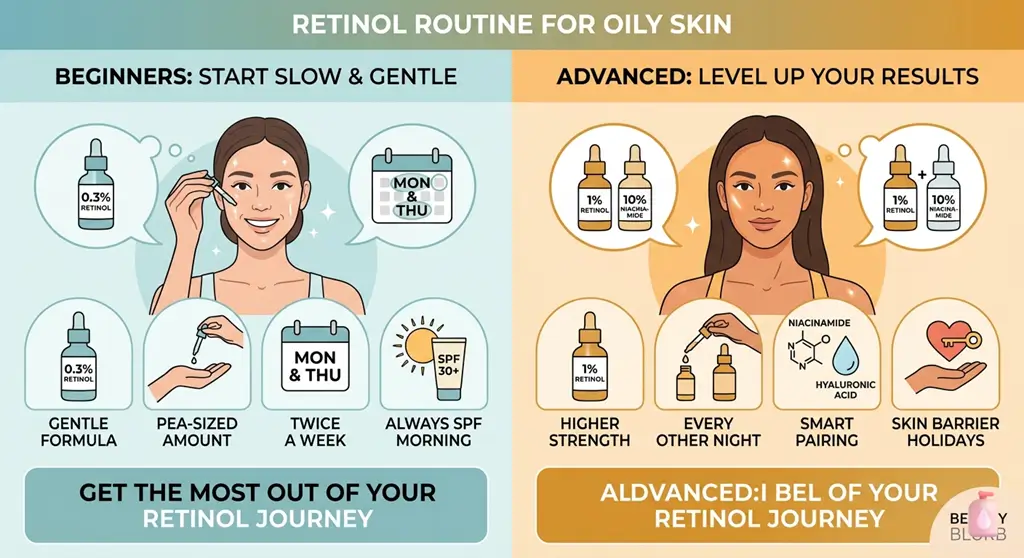
1: How to Start Using Retinol for Beginners
If you’re just stepping into the world of retinol, slow and steady wins the race. The goal here is to let your skin build tolerance while still enjoying the glow-boosting benefits.
- Step 1 – Choose a gentle formula: Look for retinol serums for beginners or creams with 0.25%–0.3% retinol. These are enough to make a difference without overwhelming your skin.
- Step 2 – Start with two nights a week: Apply a pea-sized amount after cleansing and before moisturizing, twice a week for the first month.
- Step 3 – Moisturize generously: A non-comedogenic moisturizer helps lock in hydration and reduce irritation.
- Step 4 – Always use SPF in the morning: Retinol can make your skin sun-sensitive, so a broad-spectrum sunscreen is non-negotiable.
Pro Tip: If your skin feels irritated, try the “sandwich method”: moisturizer → retinol → moisturizer.
2; Advanced Retinol Routine for Experienced Users
If your skin is already friends with retinol, you can level up for even better results—think refined pores, smoother texture, and a brighter tone.
- Step 1 – Upgrade the strength: Move to 0.5%–1% retinol or even prescription-strength tretinoin if your dermatologist approves.
- Step 2 – Increase frequency: Use it every other night or even nightly, depending on your skin’s tolerance.
- Step 3 – Layer smartly: Pair with hydrating serums like hyaluronic acid, or use exfoliating acids (like salicylic acid) on alternate nights for a smoother surface.
- Step 4 – Target specific concerns: If your main goal is retinol for acne and oily skin, you can combine it with niacinamide for oil control and calming benefits. For anti-aging, pair it with peptides to boost collagen production.
Pro Tip: Even if you’re experienced, give your skin a “retinol holiday” once a week—skip the actives and focus only on hydration to keep your skin barrier happy.
Skin Expert Tip:
If you want to get the most out of your retinol journey, it’s important to know how it fits into your overall skincare.
I’ve put together a complete dermatologist-recommended skin care routine for oily skin that shows you exactly when and how to layer retinol with cleansers, moisturizers, and treatments—so you can enjoy clear, balanced, and glowing skin every single day.
how much percentage of retinol is good for oily skin
We already know that good retinol for oily skin it helps control excess shine, clear breakouts, and even smooth fine lines.
But here’s the thing: the percentage you choose makes all the difference. Pick the right strength, and you’ll see glowing, healthy skin. Go too strong, and you might face irritation or peeling. Let’s figure out exactly how much retinol your oily skin needs.
| Skin Experience Level | Recommended Retinol % | Best For | Notes |
|---|---|---|---|
| Beginner | 0.25% – 0.3% | First-time users, sensitive oily skin | Start 1–2 nights/week. Use with moisturizer; sandwich method helps reduce irritation. |
| Intermediate | 0.5% | Mild acne, early fine lines, uneven tone | Increase to every other night as tolerated. Pair with niacinamide for oil control. |
| Advanced | 1% | Stubborn acne, visible signs of aging | Only if fully acclimated; monitor irritation and use SPF daily. |
| Prescription | 0.025% – 0.1% tretinoin* | Severe acne, strong anti-aging | Consult dermatologist; start low and follow medical guidance. |
Choosing the right percentage is like picking the right pair of shoes—it has to fit you. If you’re new to retinol, always start low and go slow.
For oily skin that’s already used to actives, you can level up for faster results. And remember—consistency is what makes retinol a true game-changer for smooth, clear, and radiant skin.
what retinol is best for oily skin
If you’ve been wondering what retinol is best for oily skin, you’re not alone. With so many formulas out there, it can feel overwhelming to choose the right one—especially when you’re trying to control shine, prevent breakouts, and keep your skin smooth.
That’s why I’ve rounded up the best retinol products for oily skin, carefully selected for their light textures, oil-control properties, and proven results.
Whether you’re a beginner or a skincare pro, these top retinol recommendations will help you find your perfect match without risking irritation. Let’s explore the oil-control retinol formulas that dermatologists and beauty lovers swear by.
| Product Type | Best For | Example Products | Key Benefits |
|---|---|---|---|
| Retinol Serum (0.3% – 0.5%) | Beginners & mild oiliness | The Ordinary Retinol 0.2% in Squalane, La Roche-Posay Retinol B3 Serum | Lightweight, quick absorption, reduces excess sebum without clogging pores. |
| Encapsulated Retinol | Sensitive oily skin | Neutrogena Rapid Wrinkle Repair Retinol Oil, Medik8 Crystal Retinal | Slow release for minimal irritation, suitable for gradual introduction. |
| Retinol Cream (0.5% – 1%) | Combination to oily skin with early signs of aging | CeraVe Skin Renewing Retinol Cream, Paula’s Choice 1% Retinol Booster | Hydration plus anti-aging benefits, balances oil production. |
| Prescription Retinoids | Severe acne & oil control | Tretinoin, Adapalene 0.3% Gel | Strong acne-fighting power, noticeable skin texture improvement—must be dermatologist prescribed. |
| Retinol Cream for Oily Skin | Oily skin needing hydration + retinol benefits | Olay Regenerist Retinol 24 Night Moisturizer, Murad Retinol Youth Renewal Night Cream | Lightweight cream texture, hydrates without greasiness, smooths skin texture while controlling excess oil. |
Now you know exactly what retinol is best for oily skin and which formulas can keep your skin smooth, balanced, and shine-free. If you’d like me to do a detailed review of these products, just let me know in the comments—I’d be more than happy to create it just for you, my friend. 🌸
how often to use retinol for oily skin
If you’ve just discovered how much retinol is good for oily skin, you might be tempted to use it every single night. But here’s the secret—when it comes to retinol, more isn’t always better. Even oily skin can get dry, red, or irritated if you start too fast.
For beginners, start with just 1–2 nights a week. This gives your skin time to adjust and build tolerance. Once your skin feels comfortable, you can slowly increase to every other night, and eventually up to 3–5 nights a week if needed.
Always listen to your skin—if you notice peeling or sensitivity, take a short break and hydrate well.
is retinol good for oily acne-prone skin
Yes, absolutely! If your skin is both oily and prone to breakouts, retinol can be a real game-changer.
While many people think of it only as an anti-aging ingredient, retinol also works deep within the skin to unclog pores, reduce excess oil production, and prevent the buildup of dead skin cells that can trigger acne. This means fewer breakouts, smoother texture, and a more even tone over time.

The magic lies in how retinol speeds up cell turnover. For oily acne-prone skin, this helps fade old acne marks, keep pores clear, and balance oil levels—without over-drying when used correctly.
Dermatologists often recommend starting with the best retinol for oily acne-prone skin in a lower concentration, then gradually working your way up.
💡 Pro Tip: If you’re also using acne treatments like salicylic acid or benzoyl peroxide, don’t apply them at the same time as retinol. Alternate nights to avoid irritation and give your skin room to breathe.
Which is better for oily skin retinol or vitamin C
When it comes to skincare for oily skin, retinol and vitamin C are two powerhouse ingredients—but they work in very different ways.
Retinol is known for its ability to boost cell turnover, clear pores, and control excess oil, while vitamin C is loved for brightening, fighting free radicals, and improving skin tone.
So, which one should you choose for oily skin? Let’s compare them side by side so you can decide which fits your goals best.
| Feature | Retinol | Vitamin C |
|---|---|---|
| Main Benefit | Boosts cell turnover, clears pores, reduces oiliness. | Brightens skin, evens tone, protects against free radicals. |
| Best For | Oily, acne-prone skin; anti-aging concerns. | Dull, uneven skin tone; pigmentation issues. |
| Usage Time | Nighttime (sensitive to sunlight). | Morning (boosts SPF protection). |
| Possible Side Effects | Dryness, redness, peeling if overused. | Mild tingling, potential sensitivity in high concentrations. |
| Can You Combine? | Yes—but alternate times (Vitamin C in the morning, Retinol at night) to avoid irritation. | |
Final Thought:
Both retinol and vitamin C can do wonders for oily skin—just in different ways. You might even find that using both at different times of the day gives you the best results.
I’d love to hear about your experience! Have you tried retinol, vitamin C, or both? Tell me in the comments—I’m excited to know what worked best for you, my friend.
is hyaluronic acide or retinol better for oily skin
If you have oily skin, you’ve probably heard of both hyaluronic acid and retinol—but which one should you choose? The truth is, they’re completely different types of ingredients.
Hyaluronic acid is like a big glass of water for your skin, giving it plumpness and hydration without adding oil. Retinol, on the other hand, is like your skin’s personal trainer—pushing it to renew faster, clear out pores, and smooth texture.
Let’s break down the differences so you can decide which fits your skincare goals best.
| Feature | Hyaluronic Acid | Retinol |
|---|---|---|
| Main Benefit | Hydrates and plumps skin without adding oil. | Boosts cell turnover, clears pores, reduces oiliness. |
| Best For | Dehydrated oily skin, fine lines caused by dryness. | Oily, acne-prone skin; anti-aging concerns. |
| Usage Time | Morning or night (safe anytime). | Nighttime (sun-sensitive). |
| Possible Side Effects | Very rare; generally well-tolerated. | Dryness, redness, peeling if overused. |
| Can You Combine? | Yes! Use hyaluronic acid before or after retinol to keep skin hydrated. | |
Hyaluronic acid and retinol aren’t really in competition—they’re a dream team. Use hyaluronic acid to keep your skin hydrated and balanced, and retinol to improve texture and control oil.
Have you tried using them together? Tell me in the comments, my friend—I’d love to know your results.
Retinol vs. Urolithin A: The Next Frontier in Skin Longevity
While Retinol remains the gold standard for accelerating cellular turnover and treating oily skin concerns, the emergence of Urolithin A is shifting the anti-aging conversation toward mitochondrial health.
Unlike Retinol, which primarily focuses on surface renewal and collagen synthesis, Urolithin A works via mitophagy—the process of recycling damaged mitochondria to recharge skin cells from within.
Integrating these two powerhouses can offer a multi-dimensional approach to skin rejuvenation without the inflammatory “purge” often associated with high-strength retinoids.
If you are looking to optimize your routine beyond traditional derivatives, understanding the benefits of Urolithin A is essential. While Retinol handles texture and acne, Urolithin A acts as a cellular energizer that improves skin barrier resilience.
For a deeper scientific breakdown of how this postbiotic compound compares to Vitamin A, check out our comprehensive guide on Urolithin A for skin, where we dissect the latest clinical trials and formulation efficacy.
My Experience with Retinol for Oily Skin
Okay, let me spill the tea ☕—when I first heard about retinol, I imagined it as this super fancy, magical potion that would instantly give me glowing skin. Spoiler alert: it’s not that instant (I wish!), but oh girl… it’s worth the wait.
When I started, my skin was super oily, shiny by noon, and the occasional breakout loved to show up uninvited. I began using a gentle retinol serum just twice a week at night.
The first week? My skin felt a tiny bit dry (and I panicked for a second), but I kept going—because every skincare queen knows that good things take time.
By week four, I noticed my skin felt smoother, less oily during the day, and my makeup wasn’t sliding off by lunch. The best part? Those little texture bumps on my cheeks… gone.
I honestly felt like I had joined some secret skincare club where everyone’s skin looks like they’ve had 10 hours of beauty sleep.
Would I recommend it? 100% yes—just be patient, start slow, and don’t forget your sunscreen in the morning. Oh, and prepare yourself for that glow-up moment when someone asks, “Wow, what are you using on your skin?”
FAQ Of Retinol For Oily Skin
Yes — The Ordinary offers affordable, beginner-friendly retinol formulas that can work well for oily skin when used correctly.
Products like The Ordinary Retinol 0.2% in Squalane are lightweight and non-greasy. Start with a low concentration, patch test, and follow a retinol routine for oily skin (slow build-up + moisturizer + SPF).
Yes — retinol can balance oily areas and improve texture in dry patches when used carefully.
Use a light serum on oily zones and add extra moisturizer on dry areas. Layer with hydrating ingredients like hyaluronic acid.
Avoid strong AHAs/BHAs, benzoyl peroxide, or very acidic vitamin C in the same routine as retinol.
Alternate nights for active ingredients, or stick to gentle pairings like niacinamide and hyaluronic acid.
Mid-20s to early 30s is common for anti-aging benefits, but younger people with acne may start earlier under guidance.
It’s about skin needs more than age — start low, go slow.
Yes — retinol can help regulate oil production over time, improving shine control and reducing clogged pores.
Once your skin adjusts, yes. Start with 1–2 nights a week, then increase gradually if there’s no irritation.
Some texture and oil control improvements appear in 4–8 weeks, with fuller results in 12+ weeks.
Thank you, my beautiful friend, for joining me on this skincare journey!
Now that you know why Retinol is good for oily skin, I truly encourage you to give this routine a try and see how it transforms your complexion. ✨
Your skin deserves that extra love and glow, and I can’t wait to hear your own success story.
Share your experience in the comments — tell me all about your retinol journey, the changes you noticed, and how confident it made you feel.
Your story might inspire another beauty to take the first step!

Akram Boulaid is a dedicated Skincare Researcher and Analyst with over 7 years of intensive focus on dermatology and cosmetic ingredient science. As a globally recognized expert, his insights have been featured in major international publications, including the New York Post and GB News. A verified expert on Qwoted, Akram connects with health journalists to provide evidence-based analysis. He founded Beauty Blurb to bridge the gap between complex clinical data and practical skincare routines, specializing exclusively in the needs of oily and acne-prone skin through rigorous analysis of peer-reviewed scientific literature.