💡 Quick Insight
If you’re wondering is vitamin E good for oily skin? the answer is yes — but with a smart approach.
Vitamin E can be incredibly beneficial for oily and acne-prone skin because of its strong antioxidant power that protects sebum from oxidizing, a key trigger for inflammation and breakouts. However, not every form of vitamin E works the same.
Heavy or pure oil formulations may clog pores and make your skin greasier, while lightweight, water-based serums with controlled concentrations can balance oil production, calm irritation, and strengthen the skin barrier without causing congestion.
In other words, vitamin E isn’t your enemy — it’s about how, when, and in what form you use it.

In this article, we’ll break down everything you need to know about vitamin E for oily skin.
from how it works and the real science behind its benefits, to the safest ways to use it, dermatologist-backed tips, and even simple DIY recipes you can try at home.
You’ll also discover the best vitamin E-based products that won’t clog your pores and how it compares with other popular ingredients like niacinamide and vitamin C.
By the end, you’ll know exactly how to make vitamin E work for your skin, not against it.
What Is Vitamin E and How Does It Work on Skin?
Vitamin E isn’t just another trendy skincare ingredient — it’s one of the most powerful antioxidants & best vitamin for oily skin your skin can get.
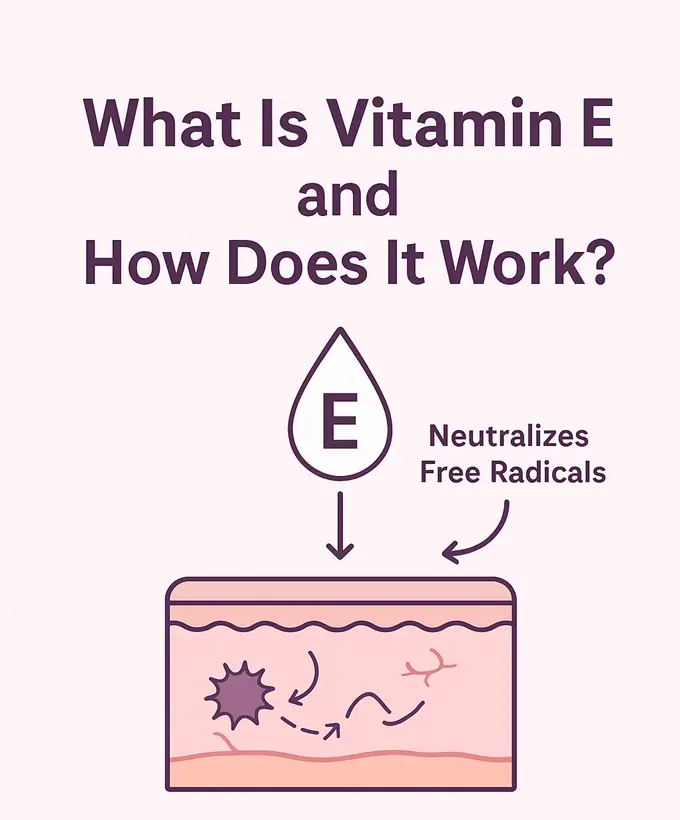
Scientifically known as tocopherol, this fat-soluble vitamin protects your cells from free-radical damage caused by pollution, UV rays, and everyday stress.
These unstable molecules break down collagen and oxidize the natural oils (sebum) on your face — a process that leads to dullness, clogged pores, and premature aging.
In simple terms, vitamin E acts like a protective shield for your skin barrier. It neutralizes free radicals before they can trigger inflammation or excess oil production.
When used correctly, it helps your skin stay balanced, hydrated, and calm — which is especially valuable for oily or acne-prone skin types that struggle with oxidation and sensitivity.
There’s another side to it too. Vitamin E is naturally present in the skin’s sebum, but environmental stress and harsh cleansers can deplete it over time.
That’s where topical vitamin E products — like lightweight serums and gel-based moisturizers — come in.
They help restore your antioxidant levels, strengthen your barrier function, and improve the overall texture of your skin without making it greasy.
So, when people talk about the benefits of vitamin E for oily skin, they’re not exaggerating.
It’s scientifically backed, dermatologically accepted, and when formulated correctly, it can be your skin’s quiet hero — working behind the scenes to keep your complexion balanced, protected, and clear.
is vitamin e good for oily skin (top benefits)
We previously answered your question by pointing out that it has many benefits, and here are the best vitamin e benefits for oily skin:
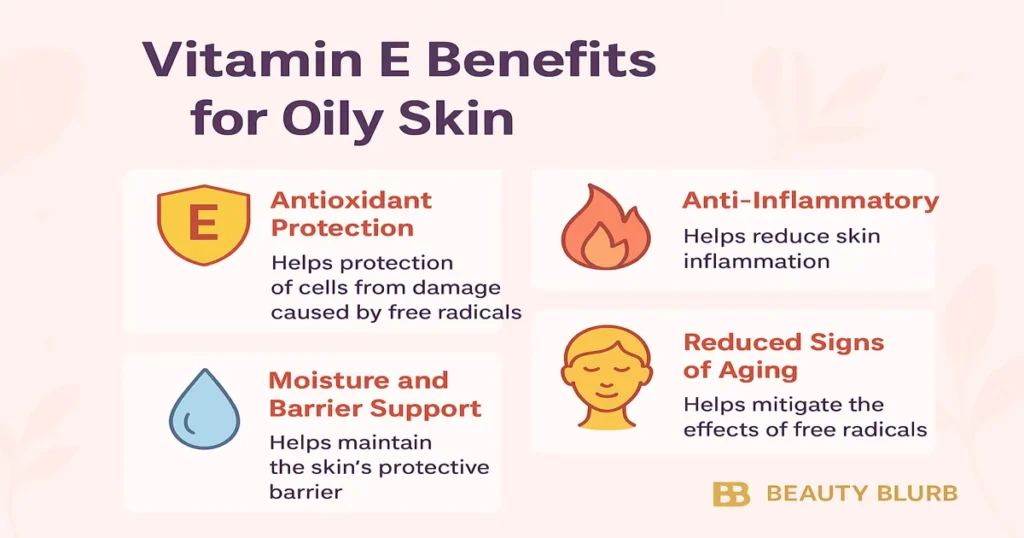
Benefits of Vitamin E for Oily and Acne-Prone Skin
✅ 1. Protects Sebum from Oxidation
Vitamin E (especially α-tocopherol) acts as a potent antioxidant, guarding not just your skin cells but the very oils your skin produces (sebum).
In fact, a clinical trial found that facial sebum levels of vitamin E increased by ~87% after 21 days of supplementation, suggesting that sebum itself serves as a delivery route for vitamin E. Source
For oily skin, this matters: when sebum oxidizes, it becomes more irritating, more likely to clog pores, and more prone to triggering inflammation.
By helping to keep sebum stable, vitamin E helps reduce one of the root causes of breakouts and congestion.
✅ 2. Soothes Inflammation & Redness
Oily and acne-prone skin often comes hand-in-hand with irritation, redness and post-acne marks. Vitamin E has anti-inflammatory properties that help calm irritated skin and reduce the visible signs of inflammation.
For instance, a meta-analysis found that patients with acne had significantly lower serum vitamin E levels compared to controls. Source
So when you use vitamin E for oily skin, you’re not only helping oil control — you’re also fighting inflammation and helping your skin recover faster.
✅ 3. Strengthens the Skin Barrier without Weight
Many people with oily skin skip “barrier repair” because they fear added heaviness. Here’s where vitamin E shines:
it supports the skin’s natural barrier (stratum corneum) and helps maintain hydration without leaving a greasy residue. As reviewed in the dermatological literature:
“Vitamin E is an important fat-soluble antioxidant … in dermatology.” PubMed
In practice: a lightweight serum formulated with vitamin E (and non-comedogenic base) can help your oily skin feel balanced, less reactive, and more resilient — so you’re less likely to over-wash or strip your skin, which often leads to more oil.
✅ 4. Supports Post-Acne Healing & Marks
After breakouts clear up, the journey’s not over: there are dark spots, textures, and leftover marks. Vitamin E contributes to tissue repair and regeneration.
Although direct large-scale studies on oily skin + vitamin E patches are limited, evidence shows lower vitamin E levels in those with more severe acne. PubMed
By incorporating vitamin E for oily skin in your routine, you give your skin the tools it needs to heal more effectively — less downtime, fewer lingering marks, and smoother texture.
✅ 5. Supports Synergy with Other Ingredients
Vitamin E doesn’t have to do the job alone; it plays nicely with other star ingredients.
For example, when paired with vitamin C or niacinamide, it helps boost antioxidant strength, improves overall skin tone, and supports oil-balancing routines.
Using vitamin E in the right form within a routine tailored for oily skin enhances results.
| ✨ Benefit | 💧 How It Helps Oily / Acne-Prone Skin |
|---|---|
| Sebum oxidation control | Prevents facial oils from becoming irritating and clogging pores. |
| Anti-inflammatory support | Reduces redness and calms skin prone to breakouts and irritation. |
| Barrier repair without heaviness | Maintains hydration and resilience without leaving a greasy finish. |
| Post-acne healing | Speeds recovery, helps fade marks, and smooths uneven texture. |
| Synergy with actives | Boosts results when combined with Vitamin C or Niacinamide for oily skin. |
So, vitamin E capsule good for oily skin or not? Yes — but only when used wisely.
Vitamin E can be a game-changer for oily and acne-prone skin because of its antioxidant and barrier-strengthening benefits, yet the key lies in how you use it.
Avoid applying thick or pure oil capsules directly on your face, as they can clog pores; instead, choose lightweight vitamin E serums or formulations blended with non-comedogenic ingredients.
When used properly, vitamin E helps balance oil production, calm inflammation, and leave your skin smoother, clearer, and naturally radiant — without the greasy shine.
How to Use Vitamin E for Oily Skin (Dermatologist-Backed Routine)
Using vitamin E for oily skin isn’t as simple as applying a capsule directly. Pure tocopherol oil is thick and highly emollient, meaning it can trap sebum and clog pores if used without dilution.
The right application method ensures you get all the antioxidant and soothing benefits — without the shine or breakouts.
Step-by-Step: How to Use Vitamin E Safely on Oily Skin
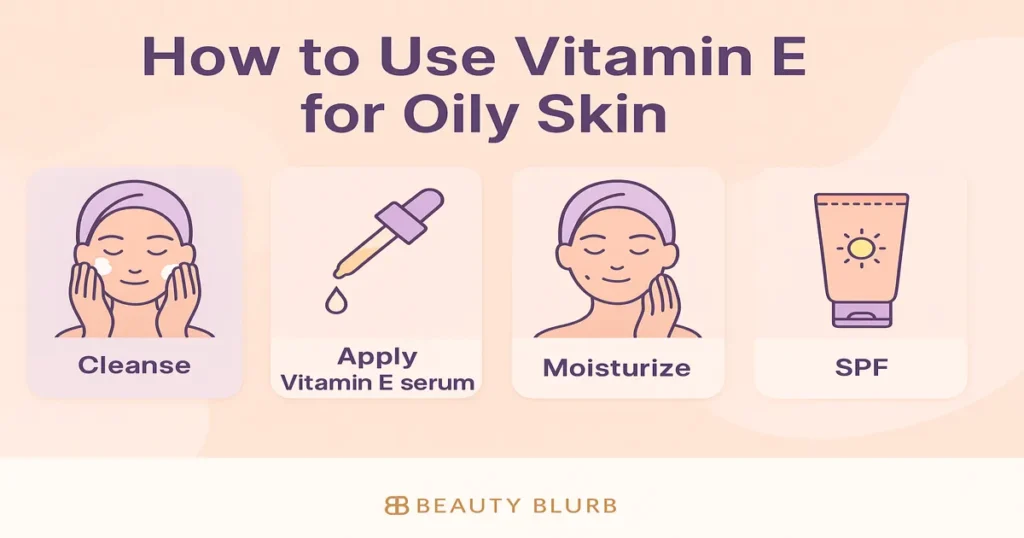
1. Start with a Clean Canvas
- Begin with gentle cleansing to remove excess oil, dirt, and sunscreen. This step is crucial because applying vitamin E on uncleansed skin can trap impurities and cause congestion.
2. Dilute It — Never Use Pure Vitamin E Oil
- If you’re using a vitamin E capsule for oily skin, pierce it and mix one drop with 2-3 drops of a light, non-comedogenic carrier oil like jojoba oil or grapeseed oil.
- 💬 Why it works: Jojoba oil closely mimics human sebum and helps vitamin E absorb better without clogging pores.
3. Or Choose a Lightweight Vitamin E Product
- If DIY mixing isn’t your thing, look for vitamin E serums or moisturizers that list tocopheryl acetate or encapsulated vitamin E among ingredients. These forms are more stable and lighter on oily skin.
- Try products labeled “oil-free,” “non-comedogenic,” or “gel-based.”
4. Apply a Thin Layer — Less Is More
- Take a small amount of the diluted mix or serum and gently massage it into your skin using circular motions. Focus on dry or inflamed areas rather than the whole face. Avoid the eye zone and corners of the nose.
5. Keep It On for 20–30 Minutes, Then Rinse
- For oily or acne-prone skin, avoid leaving vitamin E overnight. Instead, let it sit for 20–30 minutes, then wash off with lukewarm water. This allows antioxidants to penetrate without over-coating the skin.
6. Follow with Your Regular Routine
- After rinsing, pat dry and apply a light moisturizer or hydrating serum (preferably containing niacinamide or hyaluronic acid).
- During the day, always finish with broad-spectrum SPF — vitamin E enhances your sunscreen’s effect but doesn’t replace it.
🧠 Pro Tips from Dermatologists
- Use vitamin E 2–3 times per week, not daily, to avoid over-moisturizing.
- Store capsules or serums away from direct sunlight — vitamin E breaks down when exposed to heat or light.
- Combine vitamin E with vitamin C for enhanced antioxidant protection and brighter skin tone.
- Patch-test on your jawline before full-face use to check for any comedogenic reaction.
🔬 Science-Backed Note
A study published in the Journal of Cosmetic Dermatology found that topical vitamin E improves skin barrier recovery and hydration, even in individuals with oily or combination skin types.
When used in light, diluted, or serum form, vitamin E oil for oily skin — it protects from oxidative stress, calms inflammation, and supports healing without clogging pores, as long as you respect dosage, formulation, and timing.
⚠️ Side Effects of Vitamin E for Oily Skin (and How to Avoid Them)
Let’s be real — not everything that’s “natural” automatically works for everyone. While vitamin E can do wonders for oily or acne-prone skin when used correctly, using it the wrong way might cause more harm than help.
Here’s what you need to know before slathering it all over your face.
🚫 1. It Can Clog Pores if Used Pure
- Here’s the tricky part: pure vitamin E oil (especially from capsules) is thick, sticky, and highly emollient.
- If your skin already produces too much sebum, that texture can easily clog pores, leading to new blackheads or tiny under-skin bumps.
- So, if you’ve ever noticed breakouts after using vitamin E, that’s not a coincidence — your skin is telling you it’s too rich.
- 💡 Tip: Always choose non-comedogenic vitamin E serums or gel-based products designed for oily or combination skin.
🌡️ 2. Overuse Can Make Skin Feel Greasy
- Vitamin E is an oil-soluble antioxidant — meaning it loves fat. And oily skin? Already has plenty.
- Using vitamin E too often or layering too much can make your skin feel greasy, shiny, or heavy.
- Think of it like dessert: a small serving is amazing, but too much ruins the meal.
- ✅ Use only 2–3 times a week if you have oily or acne-prone skin.
🌸 3. Possible Allergic Reactions
- Some people are sensitive to tocopherol (the active form of vitamin E) — especially when it’s used in high concentrations.
- You might notice redness, itching, or small bumps.
- It doesn’t mean vitamin E is “bad,” just that your skin needs a gentler formula.
- 💬 Friendly tip: Always do a patch test behind your ear or on your jawline before using it all over your face.
🧴 4. Mixing with the Wrong Ingredients
- Here’s a common mistake: combining vitamin E oil with strong actives like retinol or AHA/BHA acids in the same routine.
- These ingredients can destabilize each other or overwhelm your skin barrier — especially if your skin is oily but sensitive.
- 🔁 Instead: Alternate nights — acids one night, vitamin E the next. That way you get the glow and the balance.
🌞 5. Sun Sensitivity — If Stored Incorrectly
- This one’s sneaky: vitamin E breaks down when exposed to heat or sunlight.
- When that happens, it loses its antioxidant power and can even turn slightly comedogenic.
- 👉 Store it in a cool, dark place, and always use sunscreen during the day — even though vitamin E helps your SPF, it’s not a replacement for it.
So, are the side effects of vitamin E for oily skin something to fear? Not really — as long as you use it smartly.
Choose the right formula, use it sparingly, and give your skin space to breathe. Used wisely, vitamin E will protect and nourish your skin — not clog or confuse it.
How to Make Vitamin E for Oily Skin at Home (Simple & Effective DIY Recipes)
Sometimes, the best skincare doesn’t come in a fancy bottle — it comes straight from your kitchen.
If you love natural skincare, making your own DIY Vitamin E face mask for oily skin is an easy, budget-friendly way to get glowing results without clogging pores.
Here are three dermatologist-friendly recipes that keep things light, non-greasy, and effective:
🧴 1. DIY Vitamin E + Aloe Vera Face Mask (Soothing & Oil-Balancing)
Best for: calming acne-prone or inflamed oily skin
Ingredients:
- 1 vitamin E capsule (pierced)
- 1 tablespoon pure aloe vera gel
- 2 drops of tea tree oil (optional, for extra antibacterial power)
How to use vitamin E capsule for oily skin:
- Mix the aloe vera gel with the vitamin E oil in a clean bowl.
- Stir until you get a smooth, lightweight gel consistency.
- Apply a thin layer to your face and leave it on for 15–20 minutes.
- Rinse off with lukewarm water and pat dry.
another way to make it in this video:

💡 Why it works: Aloe vera hydrates without heaviness, while vitamin E fights free radicals and soothes redness.
🍯 2. Vitamin E & Honey & Lemon Mask (Brightening & Pore-Clearing)
Top for: dull, oily skin with dark spots or post-acne marks
Ingredients:
- 1 vitamin E capsule
- 1 teaspoon raw honey
- ½ teaspoon fresh lemon juice
How to make vitamin E capsule for oily skin:
- Combine all ingredients in a small bowl and blend well.
- Apply gently using your fingertips, avoiding the eye area.
- Let it sit for 10–15 minutes, then rinse thoroughly.
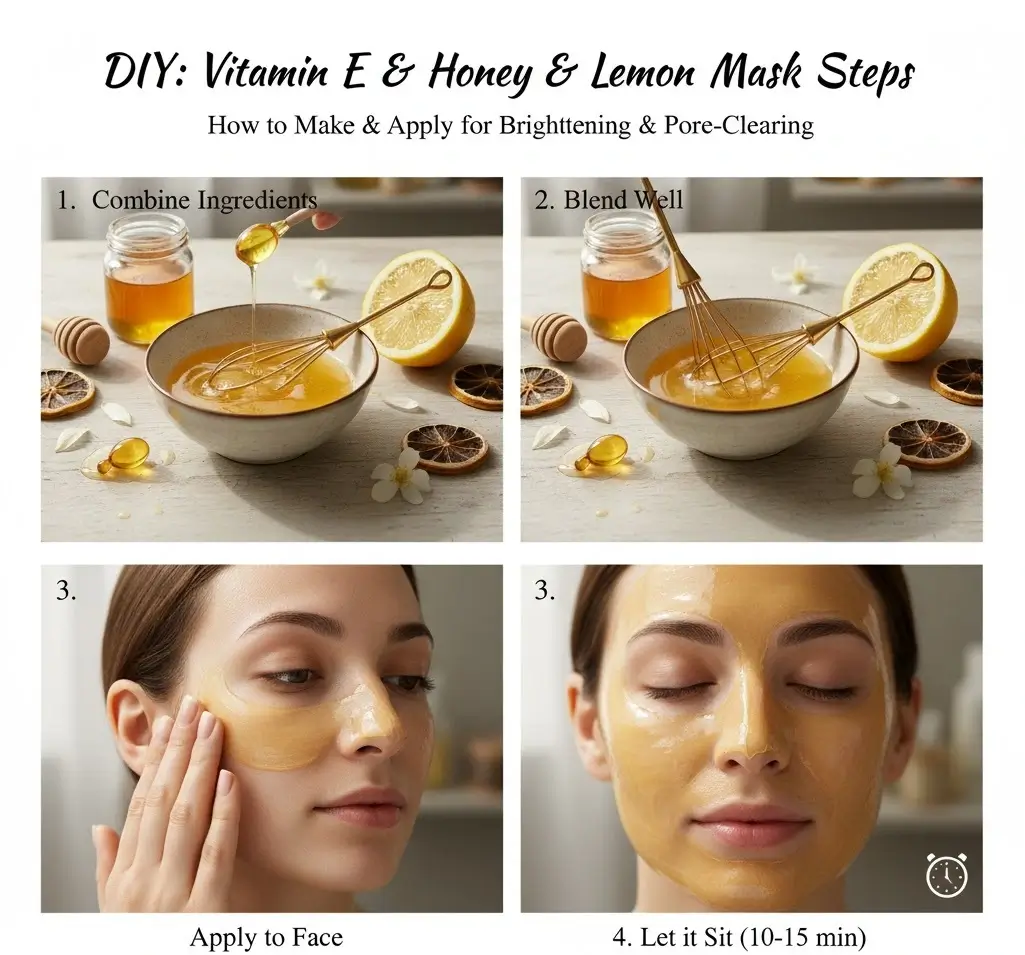
While lemon juice can help brighten skin, it’s also very acidic and can cause irritation or photosensitivity, especially for oily or sensitive skin types.
Always dilute it well, use it only at night, and never apply it on open acne or wounds. Don’t forget to apply sunscreen the next morning to protect your skin from UV damage.
💬 Friendly tip: Do this only at night and use sunscreen the next morning — lemon juice can make your skin slightly sun-sensitive.
3. Homemade Vitamin E Serum for Oily Skin (Light & Non-Greasy)
Perfect for: everyday use to balance oil and hydration
Ingredients:
- 1 vitamin E capsule
- 1 tablespoon rose water
- ½ teaspoon jojoba oil (non-comedogenic)
How to make it:
- Mix rose water with jojoba oil, then add the vitamin E capsule oil.
- Shake or stir until fully blended.
- Apply 2–3 drops to damp skin after cleansing.
✨ Pro tip: Store it in a small dark bottle in the fridge for up to 7 days.
It’s your own homemade vitamin E serum for oily skin — fresh, light, and gentle enough for daily use.
🧠 Bonus: Don’t Forget Hygiene
Always use clean tools and wash your hands before mixing or applying your DIY mask. Natural skincare can work beautifully — as long as it’s kept clean, fresh, and simple.
How to Choose the Right Vitamin E Product for Oily Skin
Choosing the right vitamin E product for oily skin can make all the difference between glowing and greasy.
If your skin tends to produce excess oil or break out easily, the key is to go for lightweight, non-comedogenic, and stable formulas that deliver antioxidants without blocking pores. Here’s what to look for 👇
- Go lightweight: Pick gel-based or water-based vitamin E serums instead of thick oils or creams.
- Check the label: Look for words like oil-free, non-comedogenic, or for oily/acne-prone skin.
- Pick the right form: Choose tocopheryl acetate or encapsulated vitamin E, which absorb better and feel less greasy.
- Smart blends win: Products combining vitamin E + niacinamide or vitamin E + hyaluronic acid help balance hydration and oil.
- Avoid comedogenic oils: Stay away from formulas heavy in coconut, olive, or mineral oil — they can clog pores.
- Mind the packaging: Vitamin E breaks down with light and air, so choose dark glass bottles or airless pumps.
- Always patch test: Even gentle formulas can trigger a reaction — test it first before full application.
Now that you know how to choose the right vitamin E product for oily skin.
let’s explore the best dermatologist-recommended options we’ve carefully analyzed — from serums to moisturizers that truly work for oily and acne-prone skin.
Best Vitamin e for oily skin (Top picks)
Maybe you’re wondering, Which vitamin is best for oily skin?
Dermatologists often agree that Vitamin E and Vitamin B3 (Niacinamide) are the perfect duo — Vitamin E protects your skin barrier while B3 controls excess oil and breakouts.
After deep research and reviewing dozens of formulas, two standout products truly impressed both experts and users alike:
- La Roche-Posay Pure Vitamin E Serum — a lightweight, water-based antioxidant serum that calms irritation and strengthens oily skin without leaving residue.
- The Body Shop Vitamin E Gel Moisture Cream — an ultra-light gel moisturizer that hydrates deeply while keeping shine under control.
Here are the top 5 vitamin E products for oily and acne-prone skin that dermatologists and users love the most.
| Product | Texture | Best For | Key Benefit | Rating |
|---|---|---|---|---|
| The Body Shop Vitamin E Gel Moisture Cream | Light gel-cream | Oily & combination skin | Hydrates deeply without shine | ⭐⭐⭐⭐⭐ |
| La Roche-Posay Pure Vitamin E Serum | Water-based serum | Acne-prone & sensitive skin | Soothes irritation, antioxidant protection | ⭐⭐⭐⭐⭐ |
| CeraVe Skin Renewing Vitamin E Lotion | Light lotion | Oily to normal skin | Supports skin barrier with ceramides | ⭐⭐⭐⭐ |
| Neutrogena Hydro Boost + Vitamin E Serum | Hydrating gel-serum | Very oily & dehydrated skin | Balances oil & boosts glow | ⭐⭐⭐⭐⭐ |
| Typology Vitamin E + F Serum | Light oil blend | Combination skin | Antioxidant boost with minimal grease | ⭐⭐⭐⭐ |
If you’ve tried any of these vitamin E products for oily skin, tell us about your experience in the comments — your feedback might help someone find their next holy-grail product!
Which Is Better for Oily Skin, Vitamin E or Vitamin C?
If you’re wondering which vitamin works better for oily skin, the quick answer is clear — Vitamin C wins.
It helps regulate oil production, brightens the complexion, and offers powerful antioxidant protection without clogging pores.
While Vitamin E can still be beneficial, it’s oil-soluble and thicker, which makes it better suited for dry or mature skin rather than oily or acne-prone types.
| Feature | Vitamin C | Vitamin E |
|---|---|---|
| Texture & Absorption | Light, water-based, fast-absorbing | Thick, oil-based, slower absorption |
| Effect on Oil Control | Balances sebum and minimizes shine | Can increase oiliness or clog pores |
| Antioxidant Strength | High — neutralizes free radicals effectively | Moderate — protects but less stable in air/light |
| Best For | Oily, acne-prone, and dull skin | Dry, mature, or sensitive skin |
| Recommended Form | L-ascorbic acid, Sodium Ascorbyl Phosphate | Tocopheryl acetate, Encapsulated Vitamin E |
| Risk of Breakouts | Very low | Higher — may clog pores if used pure |
Both vitamins are powerful antioxidants, but Vitamin C is the better choice for oily and acne-prone skin — it keeps your pores clear, reduces oil, and brightens your skin tone without the heavy residue.
If you still love Vitamin E, use it sparingly or in a lightweight blend with Vitamin C for the perfect balance of glow and protection.
FAQ About vitamin e for oily skin
Pure vitamin E oil can be too heavy and clog pores, making it a poor choice for oily or acne-prone skin. However, lightweight, water-based serums or moisturizers that contain tocopheryl acetate or encapsulated vitamin E can provide antioxidant benefits without greasiness.
Aloe vera soothes and hydrates without clogging pores, while vitamin E protects the skin barrier. Mixing a small amount of vitamin E into aloe gel creates a balanced DIY mask or serum suitable for oily skin — just avoid pure oil forms and rinse after 20 minutes.
Vitamin E promotes healing and improves skin elasticity, which may gradually soften acne scars. Clinical results are mixed, so consistent use of products combining vitamin E with vitamin C or niacinamide often yields better results.
Vitamin C and E work synergistically to boost antioxidant protection and brighten skin. Choose serums formulated with both to ensure stability and avoid layering thick oils that may cause buildup on oily skin.
Niacinamide helps regulate sebum, shrink pores, and calm inflammation. Pairing it with lightweight vitamin C serums can further reduce shine and improve overall tone for oily skin.
Heavy oils under makeup can break foundation or add shine. Opt for fast-absorbing serums with encapsulated vitamin E instead of pure oil before applying makeup.
Vitamin E supports scalp circulation and reduces oxidative stress, but avoid pure oils. Use shampoos or serums that combine vitamin E with lightweight carriers like argan or jojoba oil to avoid buildup.
Leaving pure vitamin E overnight can trap sebum and cause breakouts. Instead, use it as a short-term mask for 20–30 minutes or choose night creams containing low-dose vitamin E derivatives.
And that’s a wrap on our little skincare journey! Now that you know the full answer to “is vitamin E good for oily skin,” it’s time to put what you’ve learned into action.
Try it out for yourself, listen to your skin, and see how it responds. 💧
If you’ve already experimented with vitamin E — whether in capsules, serums, or DIY masks — we’d love to hear about your experience! 💬
Share your skincare story in the comments below and don’t forget to subscribe so you never miss our next glow-up guide. ✨

Akram Boulaid is a dedicated Skincare Researcher and Analyst with over 7 years of intensive focus on dermatology and cosmetic ingredient science. As a globally recognized expert, his insights have been featured in major international publications, including the New York Post and GB News. A verified expert on Qwoted, Akram connects with health journalists to provide evidence-based analysis. He founded Beauty Blurb to bridge the gap between complex clinical data and practical skincare routines, specializing exclusively in the needs of oily and acne-prone skin through rigorous analysis of peer-reviewed scientific literature.