
If you’ve ever wondered, Can I use lactic acid and glycolic acid together? — the short answer is yes, but only with the right approach.
Both are powerful exfoliating acids that can transform your skin’s texture and clarity, yet using them at the same time can easily cause redness or sensitivity if you’re not careful.
The key isn’t just whether you can combine them, but how you do it.
With proper spacing, balanced concentrations, and enough hydration, lactic acid and glycolic acid can actually complement each other — offering smoother, brighter skin without damaging your barrier. Think of it as teamwork, not a race.
In this guide, we’ll break down everything you need to know about lactic acid and glycolic acid together.
First we will discover how they work, whether you can layer them safely, dermatologist-approved tips, and real examples of how to build a balanced skincare routine using both.
Whether you have oily, sensitive, or combination skin, you’ll learn exactly how to get glowing results while keeping irritation away.
Understanding Lactic & Glycolic Acids?
Before we get into whether you can actually use these acids together, it’s important to understand what each one does on its own.
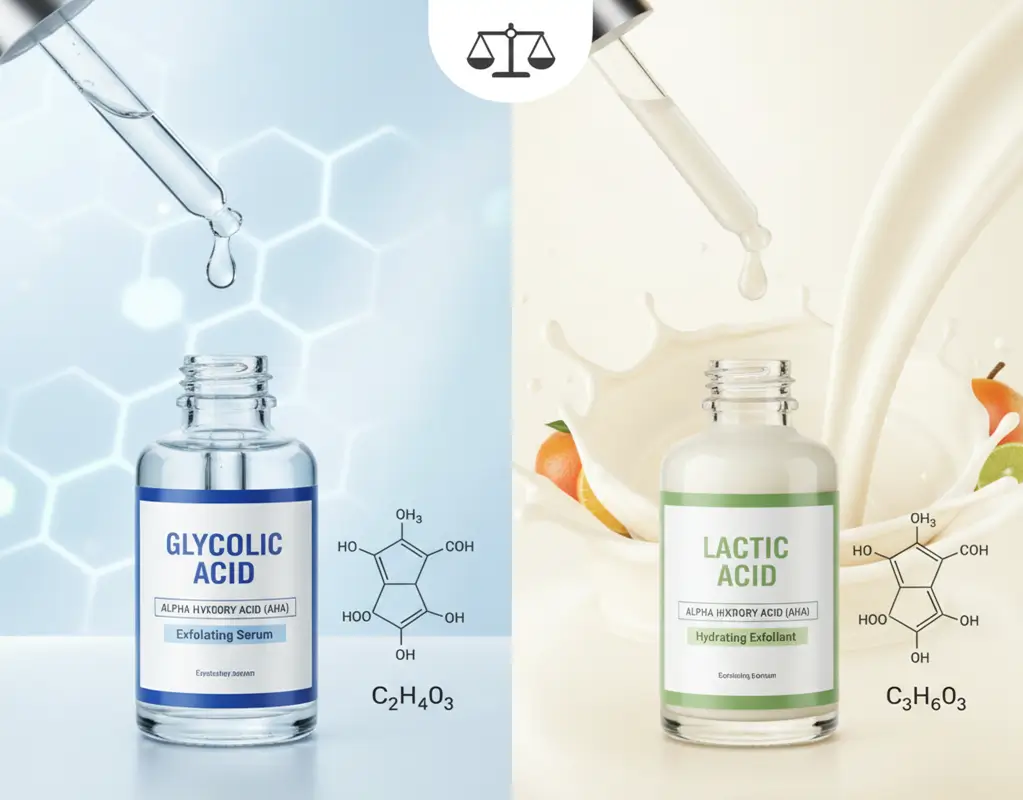
Both lactic acid and glycolic acid belong to the family of alpha hydroxy acids (AHAs) — gentle chemical exfoliants that remove dead skin cells, brighten dull complexions, and smooth uneven texture.
However, they’re not identical. Each has its own unique strength, molecule size, and skin benefits, which is why knowing their differences is key before deciding how to combine them in your skincare routine.
What Is Lactic Acid?
Lactic acid is a gentle AHA naturally derived from milk or fermented sugars. It works by dissolving the bonds that hold dead skin cells together, revealing a softer and more hydrated surface underneath.
Because its molecular size is larger than glycolic acid, it doesn’t penetrate as deeply, making it ideal for sensitive or dry skin types and also you can use lactic acid for oily skin that can’t handle stronger exfoliants.
Beyond exfoliation, lactic acid benefits include improving skin tone, boosting hydration, and helping fade mild discoloration.
Many dermatologists consider it a “beginner-friendly acid” because it exfoliates without stripping the skin barrier.
You’ll often find it in low concentrations (5–10%) in toners or serums designed to smooth and moisturize the skin simultaneously.
💡 Pro tip: If your skin tends to feel tight or flaky after using acids, start with lactic acid — it’s a gentle introduction to chemical exfoliation.
What Is Glycolic Acid?
Glycolic acid, on the other hand, is the most potent AHA and is derived from sugarcane.
Thanks to its smaller molecular size, it penetrates deeper into the skin, making it especially effective for oily or acne-prone skin.
This acid removes buildup inside pores, fades post-acne marks, and stimulates collagen production, leading to a smoother, more refined texture over time.
However, because of that deeper penetration, glycolic acid can be more irritating if overused — especially when mixed carelessly with other exfoliants.
That’s why understanding its strength and pairing it with hydrating ingredients (like hyaluronic acid or ceramides) is crucial for maintaining a healthy balance.
💬 In short: Think of glycolic acid as the “deep cleaner” and lactic acid as the “gentle polisher.” When used wisely, they can complement each other perfectly — but timing and concentration make all the difference.
| Feature | Lactic Acid | Glycolic Acid |
|---|---|---|
| Molecule Size | Larger – penetrates slower, gentler on skin | Smaller – penetrates deeper and faster |
| Exfoliation Strength | Mild to moderate | Strong and more intense |
| Best For | Sensitive, dry, or mature skin | Oily, acne-prone, or textured skin |
| Hydration Level | Hydrating — helps retain moisture | Can be drying if overused |
| Common Concentration | 5% – 10% | 7% – 15% |
| Main Benefits | Gentle exfoliation, brightens, improves hydration | Deep exfoliation, clears pores, fades dark spots |
| Risk Level | Low — suitable for beginners | Moderate to high — may irritate sensitive skin |
So, which is better glycolic acid or lactic acid? The truth is, neither is universally “better”; it depends entirely on your skin’s needs and tolerance.
Glycolic acid goes deeper and delivers faster results for oily or acne-prone skin, while lactic acid is gentler and adds hydration — perfect for sensitive or dry skin.
If your barrier is strong, alternating or combining them carefully can give you the best of both worlds:
smoother texture, brighter tone, and a healthy glow without irritation. Always listen to your skin, start slow, and remember — balance is the secret to long-term radiance.
Can I Use Lactic Acid and Glycolic Acid Together?
Short Answer: Yes — but only when done carefully and intentionally.
Both lactic acid and glycolic acid are powerful exfoliants (AHAs) with real benefits, yet using them at once or without proper spacing and skincare support can increase the risk of over-exfoliation, sensitivity or barrier damage.
Why Combining AHAs Requires Caution
Because both acids belong to the alpha-hydroxy acid family, they accelerate skin cell turnover and loosen the bonds between dead skin cells.
When you apply them together or too frequently, you double down on that exfoliation effect — which may sound good, but it also means your skin’s protective barrier can become compromised.
By following a structured approach, you get the benefits of both acids
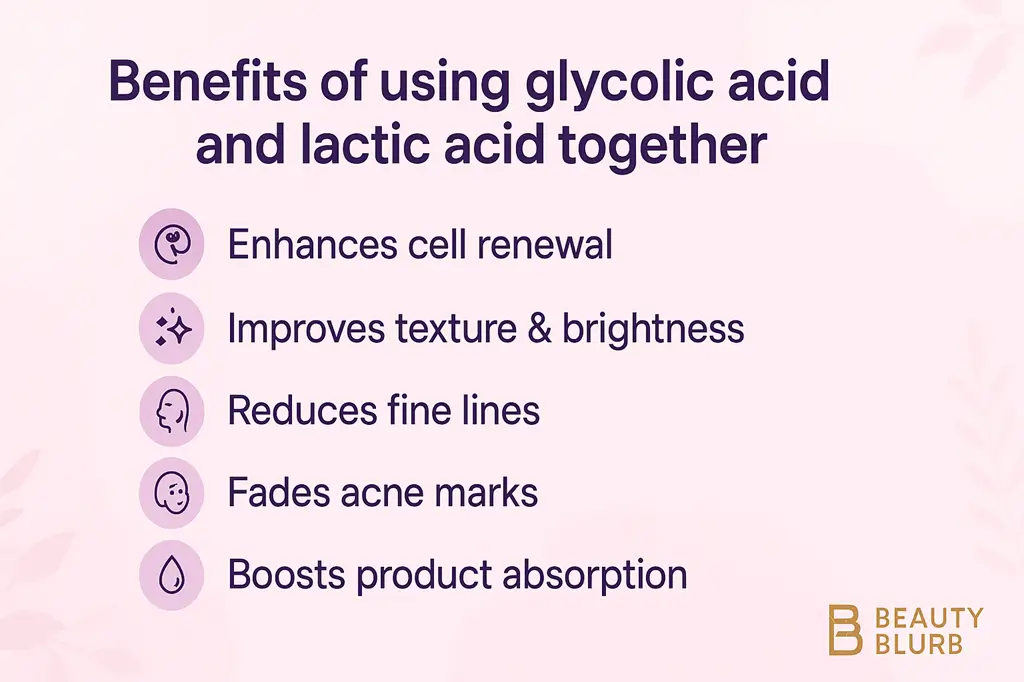
benefits of using glycolic acid and lactic acid together
When used correctly, combining lactic acid and glycolic acid together can offer enhanced benefits for skin texture, tone, and renewal — more than using each acid alone — while still maintaining safety and barrier integrity.
Here’s how and why this synergy works:
1. Enhanced Exfoliation Efficiency
Glycolic acid penetrates deeply due to its small molecular size, helping to break down bonds between dead skin cells more effectively.
Lactic acid, being slightly larger in size, offers milder exfoliation but adds hydration and barrier-support.
When you alternate or layer them smartly, you’re benefiting from stronger cell turnover and balanced exfoliation.
Clinical Study:
- In a 22-week randomized controlled trial using 8% glycolic acid and 8% L-lactic acid.
- 76% of participants using glycolic and 71% using lactic acid showed at least one grade of improvement in photodamaged skin vs. 40% for vehicle (Source).
2. Improved Texture, Brightness & Pore Refinement
With regular use, this acid duo can smooth uneven texture, fade dullness, and improve luminosity.
Lactic acid’s hydrating properties reduce rough patches, while glycolic acid addresses clogged or enlarged pores common in oily skin.
Proven study:
- A study comparing 40% glycolic acid vs 60% lactic acid for melasma found lactic acid to have slightly better tolerability with similar efficacy.
- highlighting the value of a gentler exfoliant in a regimen. Source
3. Balanced Hydration and Barrier Support
One risk of potent exfoliants is barrier damage and dryness.
By incorporating lactic acid, which is known for its humectant and barrier-friendly effects, you mitigate the dryness or irritation that glycolic acid alone might cause.
A 2024 article details that lactic acid supports skin hydration and has a pKa around 3.86, indicating its functional barrier-friendly acid properties. Source
4. Long-Term Skin Renewal & Collagen Support
Exfoliating regularly but safely stimulates cellular renewal and collagen production, contributing over time to more resilient, youthful-looking skin.
While many studies focus on each acid individually, the logic of combining them (in different sessions or suitable concentrations) is that you get both deep and gentle exfoliation — maximizing renewal without over-taxing the skin.
⚠️ Note: These benefits are tied to correct use: alternating, using safe concentrations, patch-testing, hydrating, and applying broad-spectrum sunscreen.
Without these controls, the risk of over-exfoliation and skin barrier compromise increases.
When used thoughtfully, combining lactic acid and glycolic acid together can deliver smoother, brighter, and more balanced skin — but only when you respect your skin’s limits.
The real secret isn’t just knowing their benefits; it’s understanding how to apply them safely and effectively. Let’s move on to the right way to use both acids without irritation or barrier damage.
How to Use Lactic and Glycolic Acid Together Safely
The safest approach is to alternate them on different days or use a product that combines both acids in a balanced formula.
Always start with low concentrations, apply a gentle moisturizer afterward, and wear sunscreen daily, since both acids increase sun sensitivity.
Avoid layering them directly unless your skin is already well-tolerant and healthy.
Step-by-Step Routine for Safe Use
- 1. Start with one acid first.
Begin with lactic acid 5–10% or glycolic acid 7% for two to three weeks. This helps your skin build chemical tolerance. - 2. Alternate days, don’t layer.
Use lactic acid on Monday, Wednesday, Friday, and glycolic acid on Tuesday, Thursday.
→ Avoid applying both on the same day until your skin shows no signs of irritation. - 3. Introduce layering slowly (optional).
After 4–6 weeks, if your skin feels stable, try a product formulated with both acids — not two separate serums. This ensures the pH and concentration are balanced for safe synergy. - 4. Always moisturize afterward.
After each acid, follow with a soothing barrier-repair moisturizer containing ceramides, panthenol, or hyaluronic acid. - 5. Sunscreen is non-negotiable.
Both AHAs increase sun sensitivity. Always use SPF 30 or higher daily, even if you stay indoors.
💡 Pro Tip: If your skin tends to get shiny by noon, it’s probably trying to tell you something! Check out our guide on skincare routine for oily skin .
it pairs perfectly with these acids and keeps your glow under control (without turning into a grease zone).
Tailored Advice for Skin Types
For Oily or Acne-Prone Skin:
Glycolic acid works best here because of its smaller molecular size and deeper pore-cleansing ability — making it the go-to glycolic acid for oily skin.
Use glycolic 2–3× per week and lactic once weekly to maintain hydration without over-drying.
For Sensitive or Dry Skin:
Lactic acid’s humectant nature makes it safer and more hydrating. Start with lactic acid for oily skin (if mildly oily or combination), or pure lactic acid for sensitive types, and introduce glycolic only once weekly.
For Combination Skin:
Alternate both acids: glycolic at night for the T-zone, lactic on alternate nights for cheeks and dry areas.
Expert Tip & Precautions
- Never combine AHAs with retinoids, benzoyl peroxide, or vitamin C in the same routine — this can cause barrier stress.
- Watch for dryness or stinging beyond mild tingling — that’s your sign to scale back.
- Dermatologists suggest that users with darker skin tones or post-inflammatory hyperpigmentation (PIH) start with lactic acid first to avoid unwanted pigmentation flares .
- When in doubt, consult a board-certified dermatologist for personalized AHA layering guidance.
Used correctly, this routine allows you to enjoy the deep-cleansing power of glycolic acid and the gentle hydration of lactic acid without irritation.
When You Shouldn’t Combine Lactic and Glycolic Acid
Even though glycolic acid and lactic acid together can transform skin texture, there are situations where combining them is not safe.
If your skin barrier is compromised—for example, if you’re experiencing dryness, tightness, or flaking—it’s best to pause all AHAs until your skin recovers. Applying acids to a weak barrier only worsens irritation and sensitivity.
You should also avoid using both acids if you have active acne lesions, eczema, rosacea, or any open wounds.
Exfoliating acids can sting, disrupt healing, and lead to post-inflammatory hyperpigmentation, especially in darker skin tones.
If you’re currently using retinoids, vitamin C serums, or benzoyl peroxide, never layer AHAs on the same day—these combinations can over-exfoliate and inflame the skin.
“Dermatologists warn that combining multiple AHAs can increase irritation and weaken the skin barrier if tolerance isn’t built first.” source
Watch for warning signs like persistent redness, peeling, or burning—these indicate over-exfoliation and mean it’s time to step back and rebuild your skin barrier first.
Common Mistakes When Using Lactic and Glycolic Acid Together
Even though using lactic and glycolic acid together can brighten and smooth your skin, applying them incorrectly can do the exact opposite — irritation, redness, and barrier damage.
Understanding the most common mistakes helps you use AHAs safely and get that healthy, even glow without side effects.
💣 Top Mistakes to Avoid
- 1. Layering both acids at once
Applying lactic and glycolic acid in the same routine doubles exfoliation strength and can disrupt your skin barrier. Always alternate days or use a pre-formulated product designed for dual AHA use. - 2. Starting with high concentrations
Jumping into 10–15% AHAs might sound effective, but it’s a shortcut to sensitivity. Begin with mild formulas (5–7%) to let your skin build tolerance. - 3. Skipping moisturizer afterward
AHAs thin the top layer of dead skin — without hydration, your skin loses water quickly. Always follow with a barrier-repair moisturizer to lock in moisture and maintain balance. - 4. Ignoring sunscreen
Both lactic and glycolic acid make your skin more photosensitive. Forgetting SPF 30+ the next morning is one of the biggest skincare sins — it can undo your exfoliation progress and worsen pigmentation. - 5. Mixing with retinoids or vitamin C
Combining AHAs with strong actives like retinol, vitamin C, or benzoyl peroxide can trigger over-exfoliation and inflammation. Keep them for alternate nights. - 6. Using them on broken or sensitive skin
Applying acids when you have active breakouts, eczema, or irritation can sting and cause micro-peeling. Wait until your skin barrier feels stable. - 7. Over-exfoliating due to impatience
More isn’t better. Using AHAs every day leads to redness and dryness — the opposite of what you want from a brightening AHA skincare routine.
✨ Final Note
By following these expert-backed tips, gathered from dermatologists and my own research.
you’ll avoid every major lactic and glycolic acid mistake and keep your skin glowing, balanced, and irritation-free. Consistency and patience always win over quick fixes.
Best Products That Combine Both Acids
If you’re searching for the best products that combine lactic acid and glycolic acid, here are my top two recommendations right away:
- The Ordinary Glycolic Acid 7% Toning Solution (perfect for glycolic acid for oily skin and texture refinement).
- The Ordinary Lactic Acid 10% + HA (ideal for mild exfoliation and hydration, great as lactic acid for oily skin).
While these two come separately, they’re affordable, dermatologist-approved, and safe to alternate — giving you professional results without breaking the bank.
If you prefer a single formula that already combines both AHAs, check out the options below.
Top Dual-Acid Products| Product | Key Features | Suitable Skin Type | Rating |
|---|---|---|---|
| Drunk Elephant T.L.C. Sukari Babyfacial | 25% AHA blend (glycolic + lactic), professional-level exfoliation | Normal to oily skin | ★★★★★ |
| The Ordinary Lactic Acid 10% + HA | Gentle resurfacing, hydrates while exfoliating | Sensitive / oily skin | ★★★★☆ |
| The Ordinary Glycolic Acid 7% Toning Solution | Brightens and smooths texture, low-cost favorite | Oily and combination skin | ★★★★☆ |
| Sunday Riley Good Genes All-In-One Lactic Acid Treatment | Targets dullness, fine lines, and uneven texture | All skin types | ★★★★★ |
| Paula’s Choice AHA Gel Exfoliant | Balanced mix of glycolic & lactic acids for clear skin | Oily / acne-prone skin | ★★★★☆ |
| Farmacy Honeymoon Glow AHA Resurfacing Serum | Glycolic + lactic + flower acids, hydrates & brightens overnight | Combination / dull skin | ★★★★★ |
Whether you prefer a single product that combines both acids or like to alternate between The Ordinary Glycolic Acid and Lactic Acid, the key is consistency and skin awareness.
Choose what fits your skin’s tolerance, follow with SPF daily, and you’ll see smoother, brighter skin in no time. ✨
How Often Should You Use Lactic or Glycolic Acid?
Finding the right frequency for lactic acid and glycolic acid use depends on your skin type, product strength, and how experienced your skin is with exfoliating acids.
Overdoing it can weaken your barrier and cause irritation — especially if you have oily or sensitive skin. Here’s a dermatologist-inspired guide to help you find your sweet spot.
🧴 Lactic Acid (Gentler AHA – Ideal for Beginners)
| Concentration | Recommended Frequency | Notes |
|---|---|---|
| 5–10% | Every other day → daily (once skin adjusts) | Great for sensitive or oily skin types starting with chemical exfoliants. |
| 10–15% | 2–3× per week | Provides visible glow and texture improvement without irritation. |
| 20–30% | Weekly or biweekly | Use as a treatment mask or professional peel only. |
💡 Tip: Lactic acid also adds mild hydration, making it perfect for those balancing exfoliation + moisture.
🌿 Glycolic Acid (Stronger AHA – Deep Exfoliation)
| Concentration | Recommended Frequency | Notes |
|---|---|---|
| Up to 7–10% | 2–3× per week (can increase to daily for oily skin) | Ideal for glycolic acid for oily skin to unclog pores and refine texture. |
| 10–20% | 1–2× per week | More intense; suitable for experienced users only. |
| 20–30%+ | Once weekly (professional use only) | Always patch-test and follow with SPF. |
⚠️ Caution: High-strength acids (≥ 30–35%) should only be applied by licensed professionals. DIY use can cause burns, hyperpigmentation, and permanent damage.
✨ Pro Advice from my ex:
“Start low and go slow. Skin needs time to build tolerance — exfoliation should feel like renewal, not punishment.”
🔁 Quick Routine Insight
Alternate between both acids (for example: glycolic on Monday, lactic on Thursday) rather than layering them on the same night. This keeps the skin barrier happy while maximizing results.
my exprience with glycolic and lactic acid together (other user)

Summary — At-Home Glycolic & Lactic Combination Peel (key points)
Intro & purpose
- The creator explains she’s testing a combined glycolic + lactic acid peel at home aimed at improving texture, unclogging pores, and brightening the skin. (intent: show results + teach safe at-home technique.)
Skin prep
- Cleanse thoroughly (remove makeup, oil, sunscreen).
- Optionally use alcohol-free toner to ensure skin is dry.
- Patch test on inner forearm or behind ear (24–48 hours) before full-face application.
Product details & concentrations
- She names the specific product(s) used (e.g., a peel pad or a mixed solution) and states the % of glycolic and lactic acid (video typically shows something like glycolic 10% / lactic 5–10% or a commercial pad formula).
- Notes whether product is designed as a combined formula or a layered DIY mix (and recommends prefabricated blends for beginners).
Application method
- Applies the solution/pad evenly across face, avoiding eyelids and lips.
- Uses gentle sweeping motions; does not rub aggressively.
- Mentions an approximate leave-on time (often 1–5 minutes for at-home peels depending on strength and tolerance).
- Emphasizes monitoring sensation — mild tingling is normal; sharp burning = neutralize immediately.
Neutralization / removal
- Rinses off with cool to lukewarm water at end of recommended time (or uses a neutralizer if the product requires it).
- Pat dry, do not rub or scrub.
Immediate aftercare
- Applies a calming, fragrance-free moisturizer (ceramides / hyaluronic acid recommended).
- Avoids active ingredients (retinoids, vitamin C, benzoyl peroxide) for a few days.
- Strong emphasis on daily broad-spectrum SPF 30+ starting the morning after (and ideally the same day if going outdoors).
Frequency & progression
- Recommends starting with 1 session every 1–2 weeks for beginners; increase frequency only as skin tolerance builds.
- Advises against using multiple acid peels back-to-back (space treatments to allow barrier recovery).
Observed results (creator’s report)
- Short term: smoother texture, immediate glow; mild redness possible that subsides in 24–48 hours.
- Medium term (after several sessions): reduced roughness, improved clarity; notes that hyperpigmentation/PIH needs longer and sometimes professional help.
Warnings & safety
- Strong warning about over-doing it: high concentrations (≥20–30%) should be left to professionals.
- Advises people with active acne, eczema, dermatitis, or recently injured skin to avoid peels.
- Recommends consulting a dermatologist if uncertain or if severe irritation occurs.
- Notes special caution for darker skin tones to prevent PIH — suggests lower concentrations and professional guidance.
Tone / credibility
- The presenter mixes practical tips with personal reaction (tingling, mild redness), making the demo personal and relatable.
- Often reminds viewers to patch test and wear sunscreen — reinforces safety messaging.
Call to action / follow-up
- Encourages viewers to like/comment with their experience, and to check related routine videos (e.g., “skincare routine for oily skin”) or product reviews for alternatives.
Short takeaway you can paste into your article
At-home combination peels (glycolic + lactic) can smooth and brighten skin when used correctly:
prep clean skin, patch-test, follow manufacturer leave-on times, neutralize/rinse, moisturize, and use daily SPF. Beginners should start slow (every 1–2 weeks) and avoid doing high-strength peels at home.
FAQ about glycolic acid and lactic acid together
You can combine lactic acid and glycolic acid with niacinamide, but the key is timing and formulation. If your acids are strong or freshly introduced, apply niacinamide in the morning and the acids in your evening routine (or alternate nights). Use products with balanced concentrations, and always follow with a hydrating moisturizer and SPF. If irritation appears, simplify back to niacinamide first, then reintroduce acids slowly.
Because glycolic acid has a smaller molecular size, it penetrates the skin more deeply — which makes it more potent and effective especially for oily skin, pore refining and texture smoothing. On the other hand, lactic acid is gentler, hydrates while exfoliating and might be better for sensitive or less tolerant skin. Choose based on your skin’s needs and tolerance.
By boosting cell turnover and increasing exfoliation, both AHAs (glycolic and lactic acid) help fade dullness and discolouration when used consistently, paired with daily sunscreen. They’re not instant bleachers but support brighter, clearer skin over weeks. For best results, stick to a routine of exfoliation + hydration + protection.
Treatment for hyperpigmentation often involves stronger exfoliants like high-concentration glycolic acid peels, TCA or professional treatments. Among at-home acids, high-strength glycolic (15-30%) or combinations of AHA + BHA + brighteners may be more effective, but only under guidance. Always pair with SPF and barrier support to avoid worsening pigmentation.
For oily skin, you may use glycolic acid 2-3 times/week and lactic acid on alternate nights to maintain balance and minimize irritation. Ensure your skincare routine includes a gentle cleanser, moisturizer and daily SPF. Patch test first, start low, and adjust based on how your skin reacts.
After initial use of low-concentration glycolic (5-10%) or lactic (5%) acids, wait about 4-6 weeks while monitoring your skin’s response. If there is no persistent redness, dryness or peeling, you may then move to stronger formulas. Always increase gradually and support with barrier care and SPF.
Do not mix high-strength acids like lactic/glycolic with retinoids, benzoyl peroxide, or vitamin C in the same routine — this increases risk of irritation and barrier damage. Space them out, use buffer nights, and always follow with SPF and hydration.
Thank you so much for reading — it truly means a lot! 💕
Now that you know how to use lactic acid and glycolic acid together safely and effectively, I’d love for you to take that first step toward smoother, brighter skin.
If you decide to try this combination, start slow, listen to your skin, and protect it with SPF — your glow will thank you later! ✨
Don’t forget to subscribe to our newsletter for more dermatologist-backed skincare guides and real product reviews.
And I’d absolutely love to hear from you — tell me in the comments how your acid journey goes, what worked, what didn’t, or what you’re excited to try next. Let’s make glowing skin a shared story 💬💖

Akram Boulaid is a dedicated Skincare Researcher and Analyst with over 7 years of intensive focus on dermatology and cosmetic ingredient science. As a globally recognized expert, his insights have been featured in major international publications, including the New York Post and GB News. A verified expert on Qwoted, Akram connects with health journalists to provide evidence-based analysis. He founded Beauty Blurb to bridge the gap between complex clinical data and practical skincare routines, specializing exclusively in the needs of oily and acne-prone skin through rigorous analysis of peer-reviewed scientific literature.