
💡 Quick Insight
If you’re wondering which vitamin is best for oily skin, the clear winner is Vitamin C — but it’s not the only one your skin needs.
While Vitamin C works to balance oil production, fight acne-causing free radicals, and brighten post-acne marks, combining it with other nutrients delivers far better results.
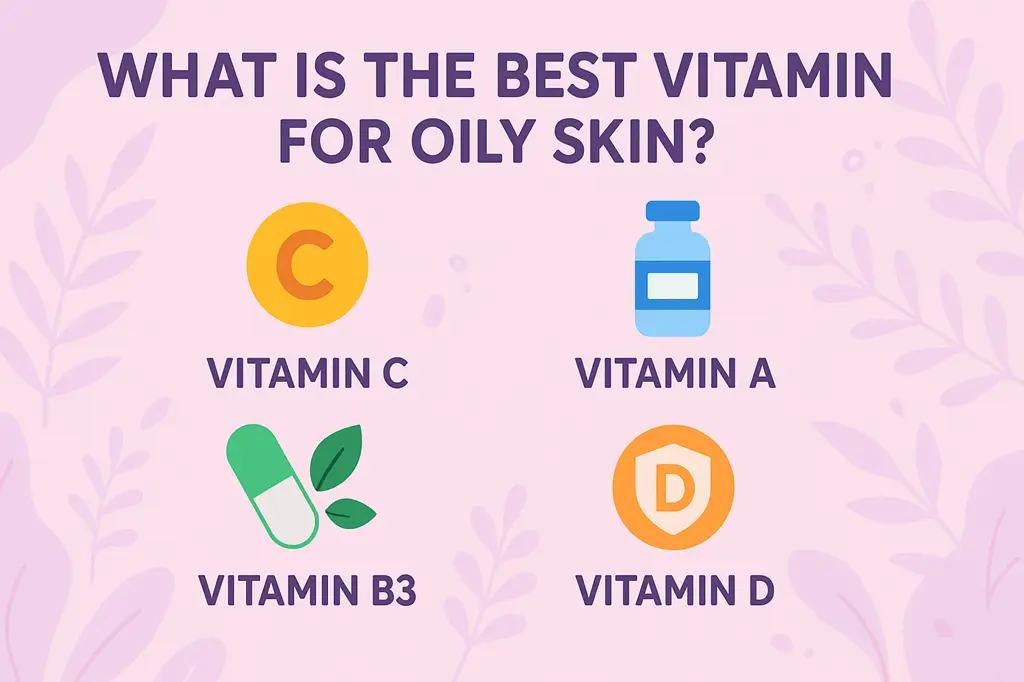
Vitamin A (Retinol) supports cell renewal and keeps pores clear, Vitamin B3 (Niacinamide) calms excess sebum and refines texture, and Vitamin D strengthens your skin’s barrier while fighting bacteria naturally.
In short, oily skin isn’t about one miracle vitamin — it’s about a smart blend that targets oil control, clarity, and lasting balance.

In this complete guide, we’ll uncover the Best Vitamin for Oily Skin and how each nutrient works beneath the surface to transform your complexion.
You’ll learn which vitamins dermatologists truly recommend, how to use them safely, the right dosages, and even what foods or serums deliver the best results.
Whether you’re dealing with shine, clogged pores, or stubborn breakouts, this article will help you choose — and combine — the right vitamins for healthier, balanced skin.
Understanding Oily Skin
Oily skin arises when your sebaceous glands become overactive — producing more sebum than your skin needs.
Hormonal imbalances, especially elevated androgens like testosterone and IGF-1, stimulate these glands and cause excess oil.
Genetics also play a key role: your inherited skin type influences how large and active your sebaceous glands are.
Diet and lifestyle factors further modulate oil production — for example, high-glycemic foods and refined carbohydrates can elevate insulin/IGF-1 levels, which in turn boost sebum output.
How vitamins affect sebum production
Vitamins regulate sebum glands and oxidative stress levels, which are key in oily skin management. For example, vitamins A, B3 (niacinamide), C, D and E influence skin-immune processes, lipid regulation and sebocyte function.
Vitamin C acts as an antioxidant that mitigates free radical damage around sebaceous units, thereby reducing lipid peroxidation and helping maintain balanced oil production.
Vitamin B3 (niacinamide) and vitamin A help regulate keratinization and follicular turnover, preventing clogged pores which exacerbate oily skin.
Meanwhile vitamin D contributes to skin barrier integrity and modulates microbial balance, indirectly dampening excessive sebum output. Together, they form a nutrient network that supports clearer, less oily skin.
What is the Best Vitamin for Oily Skin
Finding the best vitamins for oily skin isn’t about chasing a single magic nutrient — it’s about understanding how each vitamin supports your skin’s natural balance from the inside out.
While topical products only manage surface oil, vitamins act at a cellular level to regulate sebum production, strengthen the skin barrier, and reduce oxidative stress.
The right blend can even minimize hormonal triggers behind excess shine and breakouts.
In this section, you’ll discover the most effective vitamins backed by dermatological research — not just to control oil temporarily, but to help your skin stay balanced, smooth, and clear over time.
1: Vitamin A (Retinol & Retinoids)
Vitamin A (in its active retinoid forms such as retinol, retinaldehyde, and isotretinoin) plays a critical role in skin health—especially for oily and acne-prone skin.
It helps regulate the sebaceous glands, reduces excessive sebum production, accelerates cell turnover to clear clogged pores, and promotes a more even skin texture.
In effect, retinol supports fewer breakouts, smaller-looking pores and less oil-driven shine when used correctly.
Clinical Evidence:
Here are key findings from peer-reviewed studies that support Vitamin A’s effects on oily skin / sebum control:
- A double-blind dose-response study of oral 13-cis-retinoic acid (a vitamin A derivative) in 48 acne patients showed marked reduction in sebum excretion rate (SER) and free fatty acid production, alongside microbial reduction. PubMed
- A review article on “Oily Skin: A review of Treatment Options” lists topical retinoids among the established treatments for seborrhea/oily skin, noting their role in regulating sebum production. PubMed
- A review of retinoids (Vitamin A derivatives) explains their mechanism: “retinoids regulate cell differentiation and proliferation… and affect sebaceous gland activity” — thereby supporting oil-control.
Summary of evidence in bullet form
- Reduced sebum production in subjects with acne/oily skin (retinoid therapy)
- Regulatory effect on sebaceous gland cells and lipid synthesis
- Improvement in pore size, skin texture and oiliness markers
- Strong mechanistic background: Vitamin A derivatives affect sebocyte differentiation & adnexal structure
Recommended Dosage / Usage
- For topical retinol: Start with a low concentration (e.g., 0.025 % to 0.1 % retinol) applied once nightly, especially for oily and acne-prone skin. Increase gradually as tolerated.
- For stronger retinoids (prescription only, e.g., isotretinoin): strictly under dermatologist supervision; doses vary widely depending on condition.
- Pro Tip: On nights when you apply retinol, use a gentle cleanser and non-comedogenic moisturizer; always follow with morning broad-spectrum SPF (oily skin still needs sun protection).
- For oral Vitamin A supplementation: Not generally recommended solely for oily skin unless advised by a healthcare professional; fat-soluble vitamins accumulate and overdosing is a risk.
Potential Risks & Safety Considerations
While Vitamin A derivatives can be very effective, they carry some risks—especially in the context of oily/acne-prone skin treatments. Keep these in mind:
- Irritation / dryness / flaking is common when starting retinol; this can temporarily disrupt the skin barrier and paradoxically increase visible oiliness if barrier is compromised.
- Photosensitivity: retinol makes skin more sensitive to UV light → morning SPF is mandatory.
- Pregnancy & breastfeeding caution: Oral isotretinoin is strictly contraindicated; topical retinoids may also be restricted—always consult your dermatologist.
- Overuse risk: Too high concentration too soon can cause barrier damage, leading to rebound sebum or irritation-driven oiliness.
- Vitamin A toxicity (hypervitaminosis A): rare in topical use but possible with high-dose oral vitamin A supplements—symptoms include liver damage, birth defects, bone pain.
2: Vitamin B3 (Niacinamide)
Niacinamide for oily skin — the vitamin B3 — plays a pivotal role in regulating excess oil production and refining skin texture.
By modulating sebaceous gland activity, it helps reduce sebum output, minimise visible pores, and smooth the skin surface without causing the harsh dryness or irritation often associated with stronger actives.
It also supports the skin barrier, which means your oily skin is less likely to over-compensate by producing excess oil.
Clinical study
- In a double-blind, placebo-controlled trial of 100 Japanese subjects applying topical 2 % niacinamide for 4 weeks, the sebum excretion rate (SER) was significantly reduced in the treatment group compared with placebo (Source).
- A split-face study in 30 Caucasian subjects over 6 weeks showed significant reductions in casual sebum levels (CSL) with 2 % niacinamide versus control.
In bullet points:
- 2 % topical niacinamide → significant reduction in SER/CSL over 4-6 weeks.
- Reduces oiliness and shine, improves pore appearance, strengthens barrier.
- Works via sebaceous gland modulation + lipid synthesis regulation + barrier support.
Recommended Dosage About using Vitamin B3
For oily skin, a topical niacinamide serum at 2 % to 5 % concentration is supported by clinical evidence and is a good starting point. Higher concentrations (up to 10 %) may be used gradually once tolerance is confirmed.
Apply once or twice daily after cleansing and before light moisturizer; suitable for AM or PM use.
Pair with non-comedogenic moisturizer and broad-spectrum synscreen spf 30+ in the morning, since improved barrier can make skin more responsive to UV.
Internal supplementation of vitamin B3 is less relevant for oil control and should only be considered on dermatologist advice — focus on topical form for oily skin benefits.
Possible side effect of Vitamin B3
Vitamin B3 is well-tolerated by most skin types, including “oily/acne-prone skin”, but high concentrations (e.g., 10 %+) may cause mild redness or flushing especially when combined with other actives.
Because the skin’s oil balance is complex, some users report a temporary increase in visible oiliness during the “adjustment phase” (first 1-2 weeks) as the skin barrier adapts.
Always check product formulation: even if it has “niacinamide for oily skin”, it may contain heavy occlusive emollients or oils that could counteract the oil-control benefit.
As with any active, patch test first — especially if you are using other strong actives (like retinoids or acids) simultaneously.
3: Vitamin C (Topical & Serum-Form)
Perhaps you’re wondering “Is vitamin C good for oily skin?” — the answer is a resounding yes, but with a key nuance: not all vitamin C serums are created equal.
When properly formulated and paired with a lightweight, non-comedogenic base, a quality vitamin C serum can help brighten skin, reduce oxidative stress around your sebaceous glands, and improve clarity without adding excess oil.
For individuals with oily or acne-prone skin, choosing a stabilised form of vitamin C in a mattifying or water-based serum is crucial because heavy, greasy formulas can counteract the benefit.
The right vitamin C product, used consistently, supports skin renewal, evens tone and enhances radiance — while still granting the oil-control support your skin needs.
Clinical studies
Here are salient findings from recent dermatological research related to vitamin C, antioxidant dynamics, and skin performance (including oily/acne-prone skin implications):
- A review titled From Pubmed “Topical Vitamin C and the Skin: Mechanisms of Action and Clinical Applications”.
found that vitamin C (ascorbic acid derivatives) offers strong antioxidant and photoprotective effects.
it decreases oxidative stress on skin tissue, which indirectly helps manage sebum and oil-driven inflammation. Source - A 2025 in-vivo study of a 12 % vitamin C serum (pH 6) demonstrated improvements in skin tone, texture and barrier function across diverse phototypes.
while oily skin wasn’t the sole focus, the barrier improvements are relevant to oily/acne-prone skin types because a stronger barrier often means less compensatory oil production.
Key takeaway-style bullets:
- Vitamin C scavenges free radicals and reduces oxidative stress around sebaceous glands → may help reduce oil over-production.
- Better skin barrier and even tone often correlate with less oil compensatory response (in oily skin).
- For oily/acne-prone skin, formulation matters: look for non-comedogenic, lightweight vitamin C serum in stable form (e.g., L-ascorbic acid, sodium ascorbyl phosphate).
Recommended Dosage / Usage
- Use a serum with a concentration of about 10 % to 20 % vitamin C (e.g., L-ascorbic acid) for most effective results; if skin is sensitive or very oily, start at ~10 %.
- Apply once daily (preferably in the morning) after cleansing and before moisturizer and SPF. Using vitamin C in the morning helps protect against environmental oxidative stress which triggers oil/sebum production.
- Ensure the formulation is oil-free or non-comedogenic, especially if your skin is oily/acne-prone; a water-based serum is ideal.
- Store the serum in an air-tight opaque container to preserve potency (vitamin C oxidises quickly).
- Pair with broad-spectrum SPF if using in the morning, as antioxidant protection works best with sun protection.
Potential Risks & Safety Considerations
Even though vitamin C is generally well-tolerated, especially in serums, oily skin users should be aware of certain pitfalls:
- Some vitamin C serums may include heavy emollients or silicones which can increase shine or clog pores, reducing the oil-control benefit.
- High concentrations (above ~20 %) might cause mild tingling or irritation, especially if your skin is already using actives like acids or retinol; initial irritation may temporarily increase visible oiliness.
- Stability matters: oxidised vitamin C loses efficacy and may even become irritating; check formulation quality.
- Since oily skin can also be acne-prone, always patch test new vitamin C serum to avoid any adverse reaction.
- Avoid layering heavy oils or rich creams immediately after a vitamin C serum if your skin is oily — this can counteract the intended lightweight effect.
4: Vitamin E (Tocopherols & Skin Barrier Support)
If you’re wondering What vitamin E do for oily skin? here’s the concise view: Vitamin E (typically α-tocopherol or tocotrienols) functions as a potent antioxidant in the sebum and skin lipids.
It helps neutralise free radicals, prevents lipid peroxidation of sebum compounds (which can make oily skin more comedogenic), and supports skin barrier integrity — all of which mean that.
while it doesn’t directly stop oil production, it helps your oily skin behave less aggressively and show fewer signs of inflammation or clogged pores
Research Insights & Key Findings
- In vitro and sebum-analysis studies found that vitamin E deficiency in the sebum is linked with increased squalene oxidation — a process that makes oily skin more comedogenic.
- A review From Healthline noted that while oily skin tends to have higher baseline vitamin E levels (because sebum carries it).
topical application of vitamin E-enriched products may improve overall skin texture and barrier resilience in oily skin types.
In bullet format:
- Protects sebum components from oxidation → less comedogenic by-products.
- Supports skin barrier → fewer triggers for excess oil compensation.
- Improves skin texture in oily/acne-prone areas via antioxidant + anti-inflammatory action.
- Does not primarily reduce sebum excretion rate (SER) — so it must be paired with oil-control actives.
Recommended Usage & Formulation Tips
- For oily or combination skin, choose a lightweight vitamin E serum or a product listing “tocopherol” as an ingredient — ideally in a non-comedogenic, oil-free or lightweight emulsion base.
- Avoid using pure vitamin E oil (or thick emollients with vitamin E) as these may clog pores or increase shine in oily/acne-prone skin.
- If using topical: apply after cleansing and toning, but before heavier moisturisers; 1–2 times per week may suffice initially for oily skin.
- For oral supplementation: general adult RDA ~15 mg (22.4 IU for α-tocopherol) per day, but supplements should only be used under medical advice — especially if you have oily/acne-prone skin.
Caution & Potential Drawbacks (Especially for Oily Skin)
- Formulation risk: Many vitamin E oils or capsules contain heavy carrier oils (soybean, mineral oil) which can be highly comedogenic and worsen breakouts on oily skin.
- Misplaced expectations: If you’re expecting vitamin E alone to reduce oil or control acne, you may be disappointed — over-reliance on it without other oil-control actives may lead to sub-optimal results.
- Always patch-test vitamin E products even if mild, because some people report increased oil secretion or clogged pores when barrier is disrupted.
5: Vitamin D (Calciferol & Skin Oil Regulation)

Many women ask: “Is vitamin D good for oily skin?” The answer is: yes — especially when your skin is oily or breakout-prone.
but as with all “vitamins for oily skin”, the benefit comes from smart use not miracle-cure claims.
Vitamin D plays a role in regulating oil production, soothing inflammation around sebaceous glands, and supporting the skin barrier — all of which help an oily skin type behave better (less shine, fewer clogged pores, more resilience).
Choosing the right form — whether a light topical product or a diet/ supplement approach, and combining it intelligently with your routine is what turns vitamin D from “nice to have” into a genuinely helpful asset for oily skin.
What it does & Key Mechanisms
- Sebaceous glands and surrounding sebocytes express vitamin D receptors (VDRs). Vitamin D binding to these receptors influences sebocyte activity — including lipid synthesis and secretion.
- In lab studies, vitamin D was shown to reduce sebum production in sebocytes treated with Propionibacterium acnes (the bacteria linked to oily/acne skin) and UV stress.
- In a case-control & randomized trial of 80 acne patients vs. 80 controls, 48.8% of acne patients were vitamin D deficient (<12 ng/mL) versus 22.5% of controls.
after 1000 IU/day oral vitamin D for 2 months, inflammatory lesions dropped by ~34.6% vs ~5.8% in placebo.
Summary in bullet form:
- Vitamin D receptors are present in oil-gland cells → potential direct influence on oil production.
- Deficient vitamin D status often seen in oily/acne skin types.
- Supplementation or correction of deficiency improves skin outcomes (especially inflammation + oiliness).
Recommended Dosage / Use for Oily Skin
- For those with oily skin and suspected low vitamin D: blood test for 25[OH]D level recommended. If deficient, a typical adult dosage of 1000–2000 IU/day of vitamin D3 (cholecalciferol) is common, but always under medical supervision.
- Topical use: Some serums or lotions include vitamin D analogues or vitamin D + niacinamide blends — if you use one, ensure it is labelled “non-comedogenic” and suitable for oily skin.
- Sunlight + diet: Include fatty fish (salmon, mackerel), egg yolks, fortified dairy/plant milk — these support vitamin D status alongside skincare.
- Integration tip: For oily skin, pair vitamin D support with oil-reducing actives (like niacinamide, B3) — this amplifies outcome synergy.
Safety & Considerations for Oily/Acne-Prone Skin
- While vitamin D appears safe, supplementation should be guided by lab results — excessive intake (especially fat-soluble vitamins) can lead to hypercalcemia and other issues.
- Topical vitamin D products may use rich emollient bases — if you have oily skin, check that the product is oil-free / non-comedogenic.
- If you are already using strong oil-control treatments (retinoids, acids, benzoyl peroxide), introducing vitamin D support helps barrier recovery — don’t rely on it alone to reduce oil production dramatically.
- Always patch test topical vitamin D-based products: some people with oily/acne skin report initial increased oiliness as the skin adjusts.
6: Zinc & Vitamin B5 (Pantothenic Acid)
Zinc for oily skin and vitamin B5 for oily/blemish-prone skin are two “support nutrients” that often get less spotlight, but they have meaningful roles in managing oiliness, sebum production and skin barrier health.
Zinc
Zinc is a trace mineral with anti-inflammatory, antibacterial and sebostatic effects. Studies show that oral or topical zinc may help reduce sebum output and calm oily/acne-prone skin
Key points (Zinc for oily skin):
- Lower serum zinc levels are often found in individuals with acne and oily skin phenotypes.
- Zinc may inhibit sebaceous gland activity and limit free-fatty acid production from sebum, thereby reducing shine and pore congestion.
- Suggested forms: zinc sulphate, zinc gluconate, zinc PCA — choose “zinc supplement for oily skin” or “topical zinc gel for oily skin” type formulations.
Vitamin B5 (Pantothenic Acid)
Vitamin B5 supports lipid metabolism (via co-enzyme A synthesis) and skin barrier repair — making it relevant for oily/acne-skin types.
Highlights (Vitamin B5 oily skin):
- In a 12-week placebo-controlled trial, a pantothenic acid-based oral supplement reduced facial lesion count by ~67% compared to placebo in mild-to-moderate acne.
- Vitamin B5 may help “dampen” sebum production indirectly by improving barrier function and reducing compensatory oil production.
Recommended Use & Tips
- Zinc: For oily/acne-prone skin consider 80-140 mg elemental zinc per day (under medical supervision) or a topical formulation of around 1-5% zinc PCA/gluconate.
- Vitamin B5: Look at supplements or skincare with ~2.2 g pantothenic acid daily in the studied trial; many over-the-counter care products include panthenol (a precursor) for topical support.
- Combine these with your core actives (vitamin C, niacinamide, retinol) — but ensure formulations are lightweight and non-comedogenic if your skin is oily.
Safety & Considerations

- High doses of zinc can cause GI upset or interfere with copper absorption; never exceed recommended upper limits without professional guidance.
- Vitamin B5 supplementation is generally well tolerated, but long-term high-dose effects for oily skin specifically are not yet robustly studied — treat as adjunctive.
- For oily skin types, always check vehicle/formulation: a heavy oil-based “zinc cream” or rich “vitamin B5 balm” might counteract benefits by adding physical occlusion or shine.
🩵 Conclusion — So, Which Vitamin Helps Oily Skin?
So, which vitamin helps oily skin? — There isn’t just one magic answer.
The best vitamin for oily skin is actually a synergistic blend that works together to balance oil, calm inflammation, and strengthen your skin barrier.
Vitamin C leads the way for its antioxidant and brightening power.
Vitamin A (Retinol) refines pores and boosts cell turnover.
Niacinamide (B3) controls sebum naturally.
Vitamin D supports barrier health.
Zinc + Vitamin B5 keep oil and breakouts in check.
When combined — through your skincare, supplements, and diet — these nutrients help transform oily skin from constantly shiny to consistently balanced, clear, and healthy-looking.
How to Include Vitamins in Your Skincare Routine (Without Overwhelming Your Skin)
If you’ve ever wondered how to use all these vitamin serums without confusing your skin, you’re not alone. Oily skin often needs multiple nutrients — but the secret isn’t in using more, it’s in using them smartly.
Layering vitamins in the right order helps you control oil, prevent breakouts, and build a balanced, resilient skin barrier.
🌞 Morning Routine: Brighten & Protect
1. Cleanse gently — Start with a water-based cleanser to remove excess sebum without stripping your skin.
2. Apply a Vitamin C Serum (10–15%) —
Use a lightweight vitamin C serum for oily skin to brighten and neutralize free radicals.
It minimizes post-acne marks and preps your skin for environmental stress.
💡 Pro tip: Pair Vitamin C with niacinamide (B3) — the combo balances sebum and improves glow without irritation.
3. Seal with SPF 30+ —
Always follow Vitamin C with sunscreen; it amplifies UV protection and prevents oxidation.
🌙 Night Routine: Renew & Restore
1. After cleansing, apply Niacinamide (Vitamin B3) or a Vitamin B5 serum to calm oil glands and refine pores.
Niacinamide supports barrier repair overnight and reduces sebum output — ideal for acne-prone oily skin.
2. Layer your Retinol (Vitamin A) —
Retinol enhances cell turnover, clears clogged pores, and evens texture.
If you’re new to it, start with 0.25–0.3% and use 2–3 nights a week.
⚠️ Avoid layering Vitamin C and Retinol at the same time — use them in opposite routines (morning vs night).
3. Moisturize with Vitamin E or D-based creams —
Opt for oil-free formulas with Vitamin E + Hyaluronic Acid or Vitamin D + Ceramides to strengthen your barrier.
These provide light hydration without greasiness.
🔬 Pro Tips for Layering Vitamins Like a Pro
- ✅ Introduce one vitamin at a time — allow 1–2 weeks before adding another.
- ✅ Choose non-comedogenic, lightweight serums to prevent clogged pores.
- ✅ Apply serums to a clean, slightly damp face for better absorption.
- ✅ Use Vitamin C in the morning and Retinol at night for the best balance.
- ✅ Always finish with SPF during the day — it protects all your vitamin work.
| Vitamin | Best Time | Works Well With | Avoid Mixing With |
|---|---|---|---|
| C | Morning | Niacinamide, SPF | Retinol (same time) |
| A (Retinol) | Night | Vitamin E | Vitamin C (same time) |
| B3 (Niacinamide) | Morning/Night | All | — |
| D | Night | Ceramides, Hyaluronic Acid | — |
| E | Night | Retinol, B5 | — |
Bonus Tip — Combine Inside & Out:
- Topical care works best when you feed your skin from the inside.
- Add citrus fruits (Vitamin C), salmon (Vitamin D), nuts (Vitamin E), and whole grains (Vitamin B5) to your diet for a glow that lasts beyond the surface.
⚠️ Common Mistakes When Using Vitamin Serums for Oily Skin
Even the best vitamin skincare routine can backfire if applied incorrectly. Oily skin reacts quickly to overloaded routines or heavy serums, which can clog pores and trigger breakouts.
Let’s uncover the most common mistakes people make when using vitamin serums for oily skin—and how to avoid them.
🚫 1. Using Too Many Actives at Once
- Layering multiple actives like vitamin C, retinol, and niacinamide in a single routine can stress your skin barrier.
- Start with one vitamin serum at a time and allow your skin to adapt over one or two weeks before introducing another.
- This helps maintain balance while preventing excess oil or irritation.
🚫 2. Ignoring Product Texture and Formula
Oily skin thrives on lightweight, water-based formulas.
Rich, oil-heavy serums can trap sebum and make your face look shiny.
Choose a lightweight vitamin serum labeled “oil-free,” “non-comedogenic,” or “gel-based” to keep your pores clear and your skin matte.
🚫 3. Mixing Incompatible Vitamins
- Some vitamins simply don’t get along.
- Avoid applying retinol (vitamin A) and vitamin C at the same time—they can irritate your skin and reduce each other’s effectiveness.
- Instead, use vitamin C serum in your morning routine (followed by sunscreen) and apply retinol or vitamin B5 at night for balanced results.
🚫 4. Skipping Sunscreen After Vitamin C or Retinol
- Using vitamin C or retinol makes your skin more sensitive to sunlight.
- Without SPF, you risk redness and new dark spots.
- Always finish your morning routine with a broad-spectrum sunscreen (SPF 30 or higher)—it enhances the brightening benefits of vitamin C and keeps oily skin protected all day long.
🚫 5. Expecting Instant Results
- Vitamins work beneath the surface, so results take time.
- You may notice smoother texture and reduced oil production after 4–8 weeks of consistent use.
- Patience and routine matter more than intensity—stick with it, and your skin will gradually become clearer, brighter, and more balanced.
✅ Final Takeaway:
Using vitamins for oily skin isn’t just about what products you choose—it’s about how you use them. Apply them in the right order, pick lightweight formulas, and always protect your skin with sunscreen.
With steady, consistent care, you’ll achieve a balanced, healthy glow without the greasy shine.
Best Vitamins Products for Oily Skin
Think of your skincare routine as a VIP party for your skin — you wouldn’t invite products that show up in heavy oil-slick tuxedos, right?
For oily or combination skin, the right “vitamin-serum guests” are lightweight, non-comedogenic, and multitask like pros.
Below are some of the top vitamin serums and treatments for oily skin, designed to tame shine, refine pores, and boost skin clarity without feeling like a greasy mess.
🛍️ Top Product Picks
| Product | Key Benefit | Skin Type Fit | Rating |
|---|---|---|---|
| The Ordinary Niacinamide 10% + Zinc 1% | Reduces shine & minimizes pore appearance | Oily & acne-prone | ★★★★☆ |
| SkinCeuticals C E Ferulic (or Silymarin CF for oily skin) | Antioxidant vitamin C + reduces oil & texture | Oily / combination | ★★★★★ |
| Sunday Riley B3 Nice 10% Niacinamide Serum | High-strength B3 to regulate sebum & refine skin texture | Oil-prone, textured skin | ★★★★☆ |
| TruSkin Vitamin C Super All-in-One + Niacinamide | Budget vitamin C serum with niacinamide for oil control | Oily, budget-friendly | ★★★☆☆ |
| [Bonus Pick] Lightweight Vitamin E / D combination cream (oil-free) | Barrier support & calming for oily + stressed skin | Oily with sensitivity | ★★★☆☆ |
Choosing a serum isn’t about buying hundreds of bottles — it’s about selecting the right formulas for oily skin and using them consistently.
Focus on non-comedogenic textures, oils-free bases, and ingredients that work with your shine-friendly complexion (think niacinamide, vitamin C serum for oily skin, zinc control).
Use them smartly with your routine, and watch your oily skin transform into a clearer, balanced, and confidently glow-free zone.
FAQ About Vitamins for oily skin
When your body lacks essential vitamins like B6, B3 (niacin), or zinc, your skin’s barrier and immune function are weakened, leading to red, flaky or greasy-looking rashes. For example, low vitamin B6 is linked with seborrheic-type eruptions on the face and scalp. :contentReference[oaicite:0]{index=0}
If you’re seeing persistent rashes despite skincare routine changes, it’s worth checking your diet, supplements, and possibly discussing a blood test with your healthcare provider.
Low vitamin B12 can cause facial skin changes such as darkened patches (especially around the nails and face folds), dry or shiny tongue (glossitis), and occasionally oily-looking patches that flare into acne-like bumps. :contentReference[oaicite:1]{index=1}
If you notice these signs along with fatigue or nerve-tingling, consider discussing vitamin B12 levels with your doctor.
There isn’t one vitamin whose lack *alone* creates oily skin, yet deficiencies in zinc, vitamin B2, and vitamin B3 have been linked to increased sebum production and clogged pores. For instance, low zinc status often correlates with more oily and acne-prone skin. :contentReference[oaicite:2]{index=2}
Focus on a balanced diet and consult your dermatologist rather than assuming one missing vitamin is the culprit.
While both niacinamide (vitamin B3) and retinol (vitamin A derivative) benefit oily or acne-prone skin, applying them *both at the same time* may cause irritation or reduced effectiveness. For best results, apply niacinamide in your morning routine and retinol at night—or use them on alternating nights.
Choose lightweight, non-comedogenic formulas and always follow with SPF in the morning to protect oily skin.
Your body needs time to adjust and your skin needs time to respond. With oily or acne-prone skin, expect to see initial improvements (smoother texture, less visible pores) in about a month, and deeper oil-control or clarity gains after 8-12 weeks.
Track your progress under consistent lighting and avoid switching products too quickly — this gives your vitamin routine a fair chance to work.
While **oral supplements** (vitamins A, D, zinc, etc.) can support overall skin health from the inside, they don’t replace the precision action of targeted **topical vitamin serums for oily skin**. The most effective routines combine both approaches — but always consult a dermatologist before high-dose supplements.
A solid routine for oily skin often includes a morning vitamin C serum, a barrier-mending nightly serum, and food-based vitamins paired with sun protection and oil-control cleansing.
Hey beautiful, thank you for taking the time to read this guide all the way through 💕
We hope it helped you finally understand your skin a little better — and maybe even feel excited to start your vitamin journey toward that healthy, balanced glow you’ve been dreaming of.
If you found this article helpful, don’t forget to subscribe to our newsletter for more science-backed beauty tips and real-life skincare advice tailored to oily and combination skin. 🌿
And now, we’d love to hear from you!
Share your experience in the comments — which vitamin made the biggest difference for your skin? Your story might inspire someone else struggling with the same oily-skin challenges.
Remember: finding the best vitamin for oily skin isn’t about perfection — it’s about patience, consistency, and listening to what your skin truly needs. You’ve got this, gorgeous! ✨

Akram Boulaid is a dedicated Skincare Researcher and Analyst with over 7 years of intensive focus on dermatology and cosmetic ingredient science. As a globally recognized expert, his insights have been featured in major international publications, including the New York Post and GB News. A verified expert on Qwoted, Akram connects with health journalists to provide evidence-based analysis. He founded Beauty Blurb to bridge the gap between complex clinical data and practical skincare routines, specializing exclusively in the needs of oily and acne-prone skin through rigorous analysis of peer-reviewed scientific literature.