Is aloe vera a good moisturizer for oily skin?
Yes — and it’s more than just “good.” Aloe vera is one of the few natural ingredients that can hydrate oily skin without adding extra shine or clogging pores.
Its lightweight gel texture sinks in quickly, delivering moisture where your skin needs it most.
What makes aloe vera stand out is its dual action: it acts as a humectant, drawing water into the skin, while its natural salicylic and astringent properties help balance sebum levels and calm irritation.
This means you get hydration, oil control, and soothing relief — all in one gentle formula.
Plus, its antibacterial and anti-inflammatory effects can help reduce breakouts over time, making it a smart choice for acne-prone oily skin.
If you’ve ever struggled to find the best aloe vera moisturizer for oily skin, this guide is for you. We’ll break down everything you need to know;
from the real benefits of aloe vera and dermatologist-approved products, to simple DIY recipes you can make at home.
By the end, you’ll know exactly how to pick and use an aloe-based moisturizer that keeps your skin fresh, smooth, and perfectly balanced all day long.
What Is Aloe Vera and How Does It Work on Oily Skin?
Aloe vera is a succulent plant known for its clear gel — a natural skincare ingredient packed with over 75 active compounds, including vitamins, minerals, amino acids, and antioxidants.
What makes it special is its ability to deliver moisture without adding oil, making it a perfect match for oily and acne-prone skin types.
Inside aloe vera gel, you’ll find polysaccharides, glucomannan, and lignin, which help your skin absorb hydration while creating a breathable protective layer.
Unlike heavy creams that sit on the surface, aloe vera penetrates deeply, cooling, calming, and balancing your skin from within. That’s why many dermatologists call it a “water-based moisturizer with healing powers.”
For oily skin, aloe vera works by regulating sebum production and reducing surface shine.
It has natural astringent and antibacterial properties that help unclog pores, prevent breakouts, and support faster healing of acne scars.
Over time, regular use can make your skin feel smoother, clearer, and more balanced — hydrated but not greasy.
If you often wonder “why does my face get oily after moisturizing?” or “can aloe vera replace a moisturizer for oily skin?”, the answer lies here:
aloe vera helps your skin retain just the right amount of moisture, preventing the overproduction of oil that happens when your skin feels dehydrated.
It’s lightweight, fast-absorbing, and non-comedogenic — exactly what oily skin needs to stay healthy and matte.
Aloe Vera Moisturizer Benefits for Oily Skin
If your skin often feels greasy yet tight at the same time, aloe vera could be the light, refreshing solution you’ve been looking for.
This gentle plant-based moisturizer understands oily skin — it hydrates where needed and calms where necessary, all without clogging your pores or leaving residue.
✅ Key Benefits
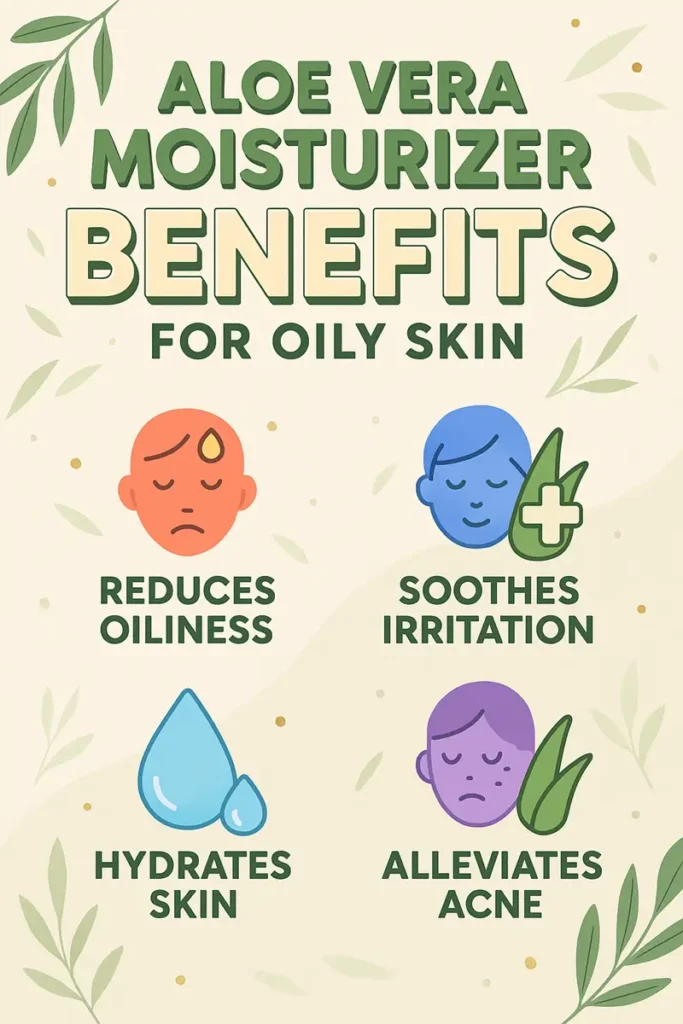
1. Hydrates without greasiness
Aloe vera is made up of nearly 98% water, which gives it an ultra-lightweight texture that instantly quenches thirsty skin without adding oil.
Its humectant properties draw moisture into the skin, leaving it soft, plump, and matte instead of shiny.
2. Controls excess oil naturally
By providing balanced hydration, aloe vera “tells” your sebaceous glands to slow down oil production.
This helps regulate sebum levels, reducing that constant greasy look common with oily and combination skin types.
3. Calms acne and irritation
Rich in anti-inflammatory and antibacterial compounds like salicylic acid, zinc, and polysaccharides, aloe vera helps soothe redness, shrink pimples, and prevent new breakouts — all while being gentle enough for sensitive skin.
4. Minimizes pores and purifies skin
Aloe vera has natural astringent properties that help tighten pores and clear away trapped impurities. With consistent use, it can make pores appear smaller and skin texture smoother.
5. Supports gentle exfoliation
Containing trace amounts of natural salicylic acid and enzymes, aloe vera provides mild exfoliation that helps remove dead skin cells, unclog pores, and enhance cell renewal — without harsh scrubbing.
6. Restores skin balance
Aloe vera helps restore the skin’s ideal oil-moisture and pH balance, preventing dehydration that triggers excess oil. The result? Calm, balanced, and naturally radiant skin that feels clean but never stripped.
🧬 Clinical Evidence
- A review of aloe vera in skincare found that its bioactive compounds (polysaccharides, vitamins, amino acids) help hydrate, reduce inflammation and even support acne-prone skin. Source
- In a study titled “The Effect of Aloe vera on Skin and Its Commensals”, conducted on 31 acne patients, researchers observed improved skin microbiome balance and fewer acne lesions when aloe vera gel was applied topically in combination with other treatments. pmc
In short: A high-quality aloe vera moisturizer can do more than just feel light—it can act as a smart hydrator for oily skin, offering balance, calm and clarity.
When chosen well (look for non-comedogenic, >70% aloe content, oil-control additions) and used consistently, it fits seamlessly into an oily-skin routine that doesn’t trigger more oil.
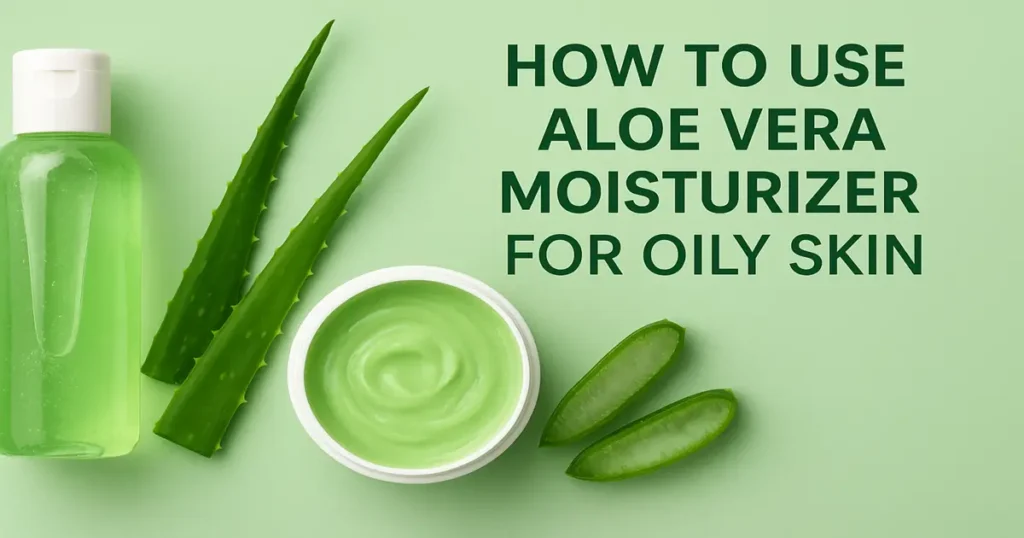
How to Use Aloe Vera as a Moisturizer for Oily Skin
If you have oily or acne-prone skin, you’ve probably struggled to find a moisturizer that hydrates without adding shine.
The good news? Aloe vera gel for oily skin is naturally lightweight, refreshing, and oil-free — it gives your skin the moisture it needs without clogging pores or making it greasy.
Here’s exactly how to use aloe vera gel as a moisturizer for oily skin — both in your daily routine and as a soothing mask.
☀️ Daily Use (Morning & Night Routine)
- Cleanse your face
Start with a gentle, foaming cleanser designed for oily or combination skin. This removes excess sebum and preps your skin to absorb aloe’s nutrients better. - Pat dry, don’t rub
Use a clean towel to lightly pat your face dry — never rub, as friction can irritate oily and sensitive skin. - Apply aloe vera gel
Take a small, pea-sized amount of pure aloe vera gel (97–99% organic is best). Spread a thin, even layer over your face and neck using clean fingertips. - Let it absorb completely
Allow the gel to absorb for about 30–60 seconds. You’ll notice a cooling, tightening sensation — that’s aloe balancing your skin’s oil and hydration levels. - Follow with a lightweight moisturizer
In the morning, layer a non-comedogenic moisturizer and always finish with SPF 30+. At night, you can use aloe alone or follow it with a water-based night cream for extra hydration.
Great question — and one that confuses almost everyone! 😅
If you’re using a pure aloe vera gel (97–99%), think of it as a hydrating layer — like a lightweight serum. You can follow it with a non-comedogenic moisturizer to lock in the hydration, especially at night or in dry climates.
But if your product is labeled as an “aloe vera moisturizer” (a creamy or lotion texture), then it is your moisturizer — no extra step needed! 🌿
💁♀️ Pro Tip (and a tiny secret):
If your skin still acts like a “glazed donut” by noon, don’t worry — it’s not you, it’s your routine! 😅
Check out our full guide on skincare routine for oily skin to learn how to build a shine-free, balanced routine that your pores will thank you for. 🌿✨
🌙 As a 15-Minute Aloe Mask
Once or twice a week, try an aloe mask for deep hydration and oil control.
- Start with a freshly cleansed face.
- Apply a thin, even layer of aloe gel all over your face (you can mix in 1 drop of tea tree oil if your skin tolerates it).
- Leave it on for 10–15 minutes.
- Rinse with cool water, then follow with your usual moisturizer.
This quick mask helps unclog pores, calm active acne, and refresh dull, oily skin.

💡 Expert Tips for Best Results
- Choose the right product: Look for pure aloe vera gel for oily skin — avoid gels with alcohol, added fragrance, or colorants that may irritate acne-prone skin.
- Start small: Use a small amount at first; too much can create a sticky feeling.
- Nighttime is magic: Using aloe vera as a leave-on moisturizer overnight helps balance oil production while you sleep.
- Don’t mix with harsh ingredients: Avoid combining aloe with lemon or undiluted essential oils — they can disrupt your skin’s pH and cause irritation.
- Always patch-test first: Especially if your skin is reactive or sensitive.
🧴 Quick FAQ
Can I leave aloe vera on my face overnight?
Yes! As long as you’re using a pure, non-comedogenic aloe vera gel, it’s perfectly safe to leave it on overnight for deep hydration and oil control.
How often should I use aloe vera gel moisturizer for oily skin?
You can use it daily — once in the morning and once before bed — especially during hot or humid weather when oily skin tends to feel greasy.
✨ Final Thought
Aloe vera isn’t just another moisturizer; it’s a balancing treatment that helps oily skin stay hydrated, calm, and matte all day long.
Whether you use it as a daily gel or a soothing mask, consistency is key — with time, you’ll notice smoother texture, fewer breakouts, and a fresh natural glow.
How to Make Aloe Vera Moisturizer for Oily Skin (3 easy DIY Recipes)
How to Make Aloe Vera Moisturizer for Oily Skin (3 Simple DIY Recipes)
If you’re looking for a homemade moisturizer for oily skin that feels fresh, hydrating, and completely chemical-free, you’re in the right place.
Aloe vera is one of the best natural moisturizers for oily and acne-prone skin because it provides lightweight hydration without adding oil.
These easy DIY recipes are gentle, soothing, and take just a few minutes to prepare — perfect if you love natural skincare.
1. Aloe Vera & Tea Tree Gel — Acne-Fighting Moisturizer
This DIY aloe vera moisturizer is ideal for oily and breakout-prone skin. Tea tree oil helps control excess sebum and bacteria while aloe keeps your skin calm and hydrated.
ingredients:
- 2 tablespoons of pure aloe vera gel (fresh or store-bought 99%)
- 2 drops of tea tree essential oil
- ½ teaspoon of rose water
How to make it:
- In a small glass bowl, combine aloe vera gel and rose water.
- Then, Add the tea tree oil drop by drop, then mix well until fully blended.
- Finally, Apply a thin layer on cleansed skin, especially on oily areas like the T-zone.
- Let it absorb — no need to rinse! Use at night for best results.
💡 Why it works: Aloe soothes inflammation, while tea tree purifies pores and keeps breakouts away — a perfect oil-free moisturizer for oily skin.
2. Aloe Vera & Lemon Brightening Gel (Use Once a Week)
If you want glowing, balanced skin, this DIY aloe vera moisturizer will help brighten dull areas and minimize dark spots — but it should be used sparingly.
ingredients:
- 2 tablespoons of fresh aloe vera gel
- ½ teaspoon of lemon juice (freshly squeezed)
- 1 teaspoon of honey
How to make it:
- First, Mix the aloe vera and honey first until smooth.
- Then, Add the lemon juice and stir until everything is well combined.
- After that, Apply a thin layer to clean skin and leave it on for 10–15 minutes.
- Rinse with cool water, then follow with a light moisturizer.
⚠️ Note: Lemon juice can be strong — always do a patch test and use this recipe only at night.
3. Aloe Vera & Cucumber Cooling Moisturizer
Perfect for summer days or after sun exposure, this natural aloe vera moisturizer for oily skin hydrates and refreshes without clogging pores.
ingredients:
- 2 tablespoons of aloe vera gel
- 1 tablespoon of fresh cucumber juice
- ½ teaspoon of vitamin E oil (optional, for extra softness)
How to make it:
- Blend the cucumber and strain the juice.
- Mix it with aloe vera gel until it forms a light, smooth consistency.
- Add vitamin E oil if you have dry patches.
- Store the mixture in a clean jar and keep it refrigerated for up to 5 days.
- Apply a small amount every morning as a lightweight gel moisturizer — it absorbs instantly and keeps shine under control.
✨ Final Tip
Using a homemade aloe vera moisturizer for oily skin 2–3 times per week can help restore your skin’s natural balance, especially if you alternate between these recipes.
Always store your DIY blends in the fridge, use clean fingers or a spatula, and discard after a few days to keep them fresh and bacteria-free.
Best Aloe Vera Moisturizers for Oily Skin (Top Products)
You might be wondering: “Which moisturizer is best for oily skin?” If you’ve had it with heavy creams that make your face glisten by noon, here are four top choices designed to hydrate oily, breakout-prone skin without the grease.
1. Benton Aloe Propolis Soothing Gel
A Korean “soothing gel” featuring ~80% aloe vera plus propolis & other calming botanicals — great for oily skin with breakouts.
How it performs on oily skin: Calms redness, reduces breakout irritation, offers hydration without heaviness.
Pros & Cons:
- Pros: High aloe content, excellent for acne-prone oily skin.
- Cons: Gel format may need a finishing mattifier for very shiny skin.
2. POND’S Aloe Extract & Vitamin B3 Gel Moisturizer
A classic gel moisturizer combining aloe vera with Vitamin B3 (niacinamide) and made for oily and combination skin.
How it performs on oily skin: Hydrates, helps brighten skin tone, controls oil and shine under makeup or during the day.
Pros & Cons:
- Pros: Combines aloe + niacinamide, popular brand, great for oily/combination skin.
- Cons: May have fragrance or other additives — check label if you have sensitive skin.
3. ALODERMA Pure Aloe Vera Gel + Tea Tree Oil
An organic aloe gel made within 12 hours of harvest, infused with tea tree oil — suitable for oily skin, body, and multi-use.
How it performs on oily skin: Tea tree oil helps combat excess oil and bacteria, aloe hydrates and calms. Especially useful for oily zones and breakout-prone areas.
Pros & Cons:
- Pros: Organic, multi-purpose, strong oil-control for breakout-prone oily skin.
- Cons: Might feel a bit lighter than a full “moisturizer” (more like a gel) for some users.
🧭 How to choose the right moisturizer for you:
- If your skin is very shiny and you need strong oil control: go for the ALODERMA or the Benton.
- If you want a budget daily gel moisturizer: Veda Harvest is solid.
- If you’re also concerned with uneven tone + oil: POND’S (with niacinamide) is a smart pick.
- Always check for “oil-free”, “non-comedogenic”, and “gel/water-based” on the label if you have oily skin.
Common Mistakes When Using Aloe Vera for Oily Skin
If you’re using aloe vera in your skincare routine for oily or breakout-prone skin, it’s great you’re taking that step. But even the best ingredients can backfire if used the wrong way.
Here are the most common mistakes — and how to avoid them — so your aloe vera moisturizer for oily skin actually works the way you want it to.
⚠️ Mistake 1: Using it as a thick cream instead of a light gel
Many people apply an aloe-based product but choose a dense formula (cream or balm) expecting the same lightweight effect. Because your skin is oily, heavy textures can trap sebum and lead to extra shine or even breakouts.
Fix: Choose pure aloe vera gel or a product clearly labeled for “oily/acne-prone skin” and with a water-based, non-comedogenic texture.
⚠️ Mistake 2: Applying it on top of occlusive products
If you apply aloe vera gel and then immediately layer on a heavy oil or occlusive cream, you may block the gel’s benefits and create a “seal” that traps oil and bacteria.
Fix: If you layer, use aloe first, let it fully absorb (~30-60 seconds), then apply an ultra-light, oil-free moisturizer or skip additional layers altogether.
⚠️ Mistake 3: Using too much — more isn’t better
Even a great product can misbehave if over-used. Too thick a layer of aloe gel can feel sticky, may not absorb properly, and can mix with the excess oil on your skin to create a greasy appearance.
Fix: Use a pea-sized amount (or a rice-grain amount for smaller faces), spread evenly, and let your skin absorb. If there’s residue — you used too much.
⚠️ Mistake 4: Mixing with strong actives or exfoliants without caution
Combining aloe vera gel with high-strength acids (like undiluted lemon juice, strong mandelic/ glycolic acids) or heavy exfoliation can irritate oily and breakout-prone skin instead of soothing it.
Fix: Use aloe as a calming layer after exfoliation, or on different nights than strong actives. Patch test if combining.
Takeaway: Aloe vera works — but only when used properly and consistently in the right form. Misusing it (wrong texture, layering incorrectly, over-use) may reduce its benefit.
✅ Tip From My ex:
Store your gel in the fridge for a cooling and oil-control boost. And if your skin gets shiny by late afternoon, consider a matte-finish sunscreen or setting powder over the gel in your daytime routine.
Homemade vs Product of Aloe Vera for Oily Skin
If you love DIY skincare, you might wonder whether homemade aloe vera moisturizer for oily skin is as effective as store-bought gels and creams.
Both can work beautifully — but they come with different strengths and limitations. Let’s break it down so you can pick what’s best for your routine.
| Feature | Homemade Aloe Vera Gel | Store-Bought Aloe Vera Product |
|---|---|---|
| Purity & Freshness | 100% natural, fresh from the leaf — contains active enzymes and antioxidants. | Includes preservatives for stability, ensuring consistent texture and safe long-term use. |
| Effectiveness on Oily Skin | Soothes and hydrates but can feel sticky if not blended well. | Formulated to absorb fast and balance sebum, leaving skin matte and smooth. |
| Shelf Life | 3–7 days in the fridge; spoils quickly. | 6–12 months or longer with proper storage. |
| Safety & Irritation Risk | Higher contamination risk if not handled properly. | Dermatologically tested and stabilized; safer for acne-prone skin. |
| Customization | Can add tea tree oil, rose water, or cucumber for extra benefits. | Less flexible but more consistent in results and formulation. |
| Cost | Very affordable and eco-friendly if you grow aloe at home. | More expensive, but you pay for quality, safety, and convenience. |
🌿 Which Is Better for Oily Skin?
If your priority is freshness and you enjoy DIY skincare, homemade aloe can be a soothing, quick-fix option.
But for long-term results and acne-safe consistency, a high-quality store-bought aloe vera moisturizer for oily skin usually performs better — especially those formulated with lightweight humectants and natural astringents.
✨ Pro Tip: You can blend both worlds — use homemade aloe for cooling masks and a store-bought gel daily as your primary lightweight moisturizer.
FAQ About Aloe Vera moisturizer for oily skin
Thank you so much for spending your time with me today! 💚
If you’ve made it this far, you’re already taking one of the best steps toward healthier, balanced skin.
Using an aloe vera moisturizer for oily skin can truly transform your skincare routine — giving you that hydrated, fresh, and shine-free glow you’ve been searching for.
Don’t forget to subscribe to stay updated with more skincare guides, product tips, and DIY recipes designed just for your skin type. 🌸
And I’d love to hear from you — have you tried aloe vera as a moisturizer before? What changes did you notice? 💬
Share your story in the comments below and let’s grow this self-care journey together. 💕

Akram Boulaid is a dedicated Skincare Researcher and Analyst with over 7 years of intensive focus on dermatology and cosmetic ingredient science. As a globally recognized expert, his insights have been featured in major international publications, including the New York Post and GB News. A verified expert on Qwoted, Akram connects with health journalists to provide evidence-based analysis. He founded Beauty Blurb to bridge the gap between complex clinical data and practical skincare routines, specializing exclusively in the needs of oily and acne-prone skin through rigorous analysis of peer-reviewed scientific literature.