
💡 Quick Take
When it comes to daily cleansing, the debate of micellar water vs cleansing oil which is better never really ends. The truth is, neither one is universally “better” — it all depends on your skin type and your routine.
Micellar water is ideal for those who wear light makeup, have sensitive or acne-prone skin, or want a quick, no-rinse cleanse that feels refreshing.
Cleansing oils, on the other hand, excel at melting away heavy or waterproof makeup, sunscreen, and deep-seated impurities.
They’re especially beneficial for dry or combination skin that needs extra nourishment, yet they can also work wonderfully for oily skin when rinsed properly.
The secret lies not in choosing one side, but in understanding how each fits into your skincare rhythm.

In this guide, we’ll break down everything you need to know about cleansing oil or micellar water — how they work, what makes them different, and which one fits best into your skincare routine.
You’ll also find dermatologist-backed tips, real-life comparisons, and a simple routine plan so you can decide with confidence which cleanser your skin will truly love.
What Is Oil Cleanser and How Does It Work?
An oil cleanser is a facial cleanser formulated primarily with lipophilic (oil-soluble) ingredients that work under the principle of “oil attracts oil.” I
n practice, when you massage a cleansing oil onto dry skin, the formula breaks down makeup, sunscreen, excess sebum and other oil-based debris.
Once you introduce water, many of these oil cleansers emulsify into a milky rinse-off, effectively carrying away impurities without stripping your skin’s natural barrier.
How oil cleanser Works — Deep Dive
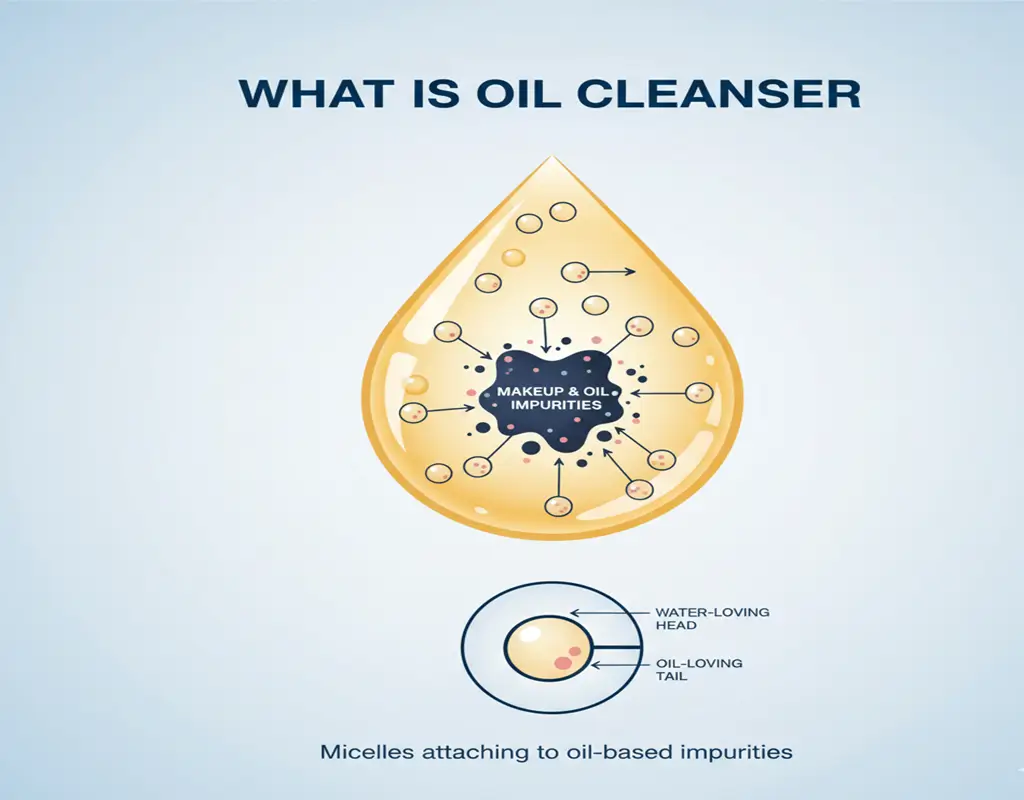
- Lipids in the cleanser bind with sebum and oil-based grime via hydrophobic interactions, helping dissolve hardened residues and waterproof makeup (a key benefit for many oily or combination skin users).
- Upon adding water, surfactant/emulsifier systems in the cleanser turn the oil-based mixture into a milky emulsion, allowing for gentle rinsing without excessive friction.
- Because the skin’s barrier (stratum corneum) remains relatively undisturbed, the risk of rebound oil production (a common issue with harsh foaming cleansers) is reduced.
✅ Key Benefits of oil cleanser for Your Skin
- Helps preserve skin barrier integrity, reducing transepidermal water loss (TEWL) and minimizing the risk of over-drying which could trigger rebound oiliness.
- Efficiently removes heavy or waterproof makeup, sunscreen, and excess sebum, all of which are common in oily-skin routines.
- Notably, a 2019 randomized study found that a cleansing oil removed ~5.8% ± 3.3% residue for waterproof sunscreen vs 36.8% ± 8.8% with a standard cleanser. PubMed
- Offers nourishment and hydration, making it especially suitable for dry or combination skin, and when formulated with non-comedogenic oils, can even be beneficial for oily or acne-prone skin types.
👤 Who It’s Best For cleansing oil (and When to Use It)
- Dry or combination skin types: Ideal for nights when heavier makeup or sunscreen has accumulated.
- Oily skin types: Can be highly effective — especially in a double cleansing routine (cleansing oil first, followed by a gentle water-based cleanser) to ensure true removal of oil-based debris without overwashing.
- Use it in the evening when you need to remove sebum buildup and makeup; less often in the morning unless you’re wearing heavy products.
📚 Evidence & Clinical Insight
A 2009 study entitled “The optimal cleansing method for the removal of sunscreen:
Water, foaming cleanser, or cleansing oil” found that for waterproof sunscreen, cleansing oil achieved dramatically better residue removal (5.8% ± 3.3%) compared to water only (59.3% ± 10.4%). PubMed
Another clinical trial from Pubmed assessed daily facial cleanser use in participants with mild facial acne and normal-to-oily skin over 2 weeks.
It reported that the cleanser was gentle, didn’t damage the skin barrier, and did not lead to sebum over-compensation (which is common when removing too many oils). PubMed
Although this study did not test cleansing oils specifically, the principle supports that a well-formulated cleanser (including oil-based ones) can be compatible with oily skin without excessive rebound oil production.
Based on my personal experience with oily skincare, it can be use cleansig oil on oily skin in the evening, and immediately afterward, you should use a water-based cleanser.
Many dermatologists also recommend rinsing your face thoroughly with lukewarm water after using it.
🧠 Pro Tips for Max Effectiveness
- Choose a non-comedogenic and preferably fragrance-free cleansing oil when you have oily or acne-prone skin.
- Use as the first step in a double-cleansing routine: massage 30–60 seconds on dry skin, then emulsify with warm water and follow with your regular gentle water-based cleanser.
- Always rinse thoroughly — if a greasy residue remains, it could clog pores and negate the benefit.
- Use 1× per day (usually in the evening) rather than multiple washes that could mess with your natural lipid balance.
For oily or combination skin types, the key is not to avoid oil‑based cleansers altogether.
but to select a non‑comedogenic formula and follow it with a gentle water‑based cleanser to ensure no residue remains,» says Kseniya Kobets, MD, Director of Cosmetic Dermatology at Montefiore Einstein Advanced Care.
What Is Micellar Water (and How It Works)
Micellar water is a gentle facial cleanser built on micelle technology — tiny surfactant-clusters that attract oil and dirt while remaining water-based.
Simply put: the hydrophobic “tails” of micelles latch onto sebum, makeup, and sunscreen, while the hydrophilic “heads” stay in the water, letting you swipe impurities away with no harsh foaming or vigorous scrubbing.
⚙️ Deep Dive: Mechanism & Key Features

- A micellar solution typically consists of ultra-mild surfactants, humectants (e.g., glycerin, panthenol) and water. This design allows for efficient removal of light makeup, oil and grime, while maintaining a skin-friendly pH and respecting the skin-barrier.
- When applied with a cotton pad or dispensed into hands, you gently press and sweep. The micelles encapsulate oil-based debris and lift them from the skin surface — no heavy rubbing required.
- One 2024 evaluation by Dr. Dēna Skadiņa et al. (Faculty of Medicine, Riga Stradin University) tested 30 micellar waters and found pH levels ranged from 4.25 to 7.87, with 70% claiming “no‐rinse” formulas.
- This indicates most micellar waters maintain a skin-friendly acidity but many leave rinsing optional — something to note for oily skin users. ResearchGate+1
- Another clinical study (“Efficacy and safety results of micellar water, cream and …” by A. Guertler et al., 2020).
showed that in individuals with sensitive, redness-prone skin (rosacea), a micellar-water-based regimen reduced facial erythema by approx. 16% and improved quality of life by ~54.5% after 8 weeks.
🧴 In simple terms, micellar water works like a magnet for dirt and oil — its gentle micelles lift away impurities while keeping your skin’s natural moisture intact.
✅ Primary Benefits of Micellar Water for Skin
- Gentle cleansing for sensitive or compromised skin — because micellar water typically uses milder surfactants, it’s less likely to strip or irritate.
- Convenience & no-rinse options make it ideal when you’re tired, traveling, or need a quick AM cleanse.
- Maintains skin-barrier integrity — many formulations hold a pH near the natural skin (~4.5–5.5) and avoid harsh foaming agents.
- Works for light makeup / light sebum removal — but with caveats for heavier products or oily skin (see below).
👤 Who It’s Best For Micellar Water (and Where the Limitations Lie)
- Ideal for: sensitive skin, dry skin, combination skin with minimal makeup, quick cleanses.
- Good fit for oily skin? Yes—but with conditions: since micellar water may leave a light residue or may not fully remove heavy sunscreen/makeup.
- oily-skin users should either choose a micellar water designed for oil control (look for “mattifying”, “oil-control”, “non-comedogenic”) or pair it with a water-based rinse/second cleanser.
- Important limitation: While micellar water removes many impurities, it may not be sufficient alone for heavy waterproof makeup, thick sunscreen, or deeply embedded sebum/impurities — in these cases, a deeper cleansing method (like oil cleanser) may be required.
🧠 Pro Tips for Max Effectiveness
- When choosing for oily or combo skin, look for keywords: “mattifying micellar water”, “sebum control micellar”, “non-comedogenic micellar water”.
- Use as a first step: morning cleanse or pre‐cleanse before your regular water/foam cleanser.
- Even if labelled “no rinse”, if you have oily skin and heavy makeup/sunscreen, consider a brief rinse or follow up with a water-based cleanser to avoid leftover film.
- Store the bottle upright and press the cotton pad gently — avoid heavy rubbing which defeats the gentle cleansing benefit.
Oil Cleanser vs Micellar Water (what i should use)
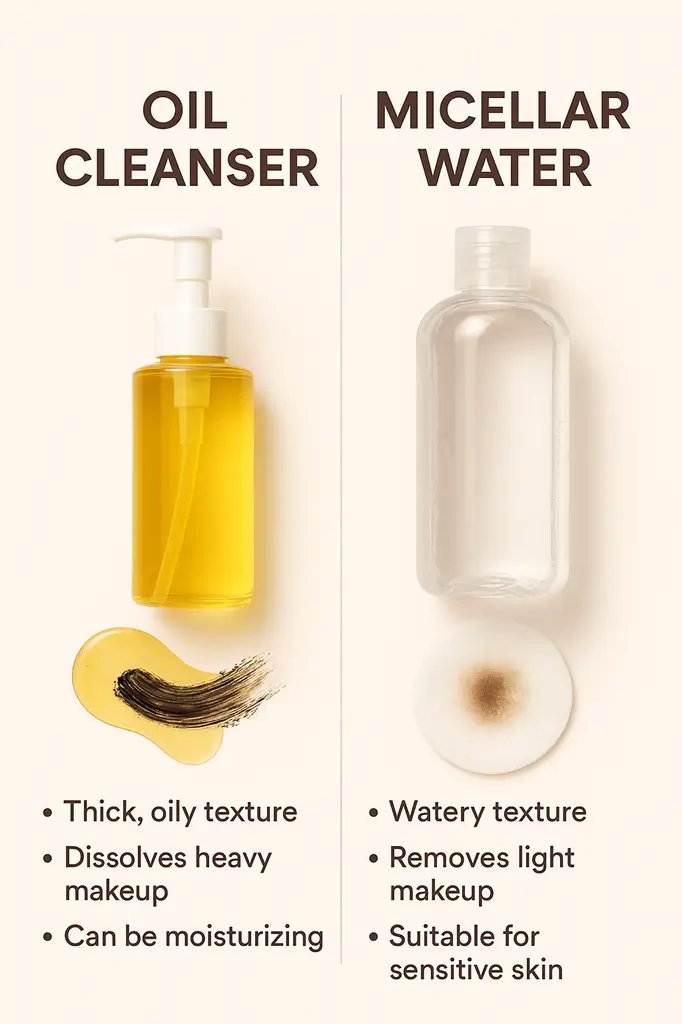
Perhaps you’re wondering: Should you use micellar water or cleansing oil?
Here’s the thing: it’s not just about which cleanser is “better” — it’s about choosing the right tool for your skin’s needs and the makeup you wear.
Micellar water excels for quick, gentle cleansing, especially if you have sensitive or acne-prone skin and light makeup.
Cleansing oils, on the other hand, are engineered to dissolve waterproof makeup, sunscreen, and deep sebum — while nourishing your skin at the same time.
| Feature | Oil Cleanser | Micellar Water |
|---|---|---|
| Makeup Removal | Heavy & waterproof | Light to medium makeup |
| Sunscreen Removal | Excellent for all types | Limited for thick SPF or waterproof |
| Cleansing Mechanism | Dissolves sebum & makeup via emulsification | Micelles encapsulate oil & dirt |
| Skin Types | Dry, Combination, Oily (non-comedogenic) | Sensitive, Dry, Light Makeup, Quick Cleanses |
| Time Required | 1–2 minutes massage + rinse | Quick swipe; optional rinse |
| Hydration | Hydrating, preserves barrier | Gentle; may need follow-up moisturizer |
| Best Use | Evening, double cleansing routine | Morning, travel, or quick refresh |
Here’s the added value: if your goal is balanced, healthy skin, knowing when to use each can prevent breakouts, avoid over-stripping oils, and save time.
For example: you might use micellar water in the morning for a refreshing cleanse, and oil cleanser at night to remove stubborn sunscreen and makeup — this method maximizes both efficiency and skin health.
How to Choose the Right Cleanser for Your Skin Type

When to Use an Oil Cleanser:
- Ideal for dry and combination skin, and can also be used by oily skin if the formula is lightweight and non-comedogenic.
- Effectively removes waterproof makeup, sunscreen, and excess sebum.
- Best used in the evening, especially as the first step in a double cleansing routine, to fully dissolve makeup and impurities.
When to Use Micellar Water:
- Perfect for sensitive skin or when you want a quick morning cleanse.
- Gently lifts away light makeup and daily grime without foaming or harsh rubbing.
- Can be used alone or as a first step before a water-based cleanser, especially if you wear minimal makeup or just sunscreen.
In a 2025 clinical study, Patel et al. found that a soap‑free cleansing lotion was safe and effective across diverse skin types (dry, oily, mixed), highlighting that selecting a cleanser tailored to your skin type and barrier health matters.” Source
According to Kuang et al. (2025), oily‑sensitive skin demonstrates distinct biophysical features (increased sebum, enlarged pores), which underscores the need for personalized cleanser choices rather than one‑size‑fits‑all. Source
Is micellar water better than oil cleanser for removing makeup?
Perhaps you’re wondering: who is better than oil cleanser for removing makeup? The simple answer: neither is universally better — it all depends on your skin type, makeup habits, and cleansing routine
How Each Cleanser Works
Oil Cleansers:
- Designed to dissolve heavy or waterproof makeup, sunscreen, and sebum through emulsification.
- Ideal for dry, combination, and even oily skin (choose non-comedogenic formulas).
- Benefits: deeply cleanses, nourishes, and hydrates the skin.
- Drawbacks: may feel oily if not rinsed properly, requires an extra step in the routine.
Micellar Water:
- Uses micelles, tiny surfactant clusters, to lift oil and dirt gently from the skin.
- Perfect for light makeup, sensitive, or acne-prone skin.
- Benefits: lightweight, convenient, no-rinse option, preserves skin barrier.
- Drawbacks: may struggle with waterproof mascara or heavy foundation.
When to Choose Micellar Water
- You wear light makeup (tinted moisturizer, powder, or sheer foundation).
- Your skin is sensitive or acne-prone.
- You want a quick, convenient cleanse without a full double cleanse.
Pro Tip: For oily skin, follow micellar water with a gentle water-based cleanser to remove any residual oil and prevent clogged pores.
🔹 When to Choose an Oil Cleanser
- You wear heavy or waterproof makeup including mascara or long-wear foundation.
- Your skin is dry or combination and needs extra nourishment while cleansing.
- You’re performing double cleansing: oil cleanser first, then water-based cleanser.
Pro Tip: Massage gently in circular motions for 1–2 minutes before rinsing to fully dissolve makeup and sebum.
🔹 Key Takeaways
- Oil cleansers = heavy makeup, waterproof sunscreen, nourishing, deep cleanse.
- Micellar water = light makeup, sensitive skin, convenient, gentle.
- Double cleanse can combine both: oil cleanser first (evening), micellar water for quick morning refresh.
- Choose based on skin type and makeup habits, not on blanket statements like “better” or “worse”.
Can I Use Cleansing Oil and Micellar Water Together
Yes — and in fact, combining cleansing oil and micellar water can be a game-changer for your skincare routine, especially if you wear makeup regularly or sunscreen daily.
This method is commonly called double cleansing, and it’s designed to thoroughly remove both oil-based and water-based impurities while protecting your skin barrier.
🔹 Why Combining Both Makes Sense
- Cleansing oils excel at breaking down waterproof makeup, sunscreen, and excess sebum. They gently dissolve heavy products without stripping natural oils, leaving your skin nourished.
- Micellar water is perfect for lifting residual dirt, sweat, and light debris, especially in sensitive areas like the eyes and along the T-zone. It also helps refresh skin in the morning without over-cleansing.
- Using them together allows you to maximize cleansing efficiency while minimizing friction and irritation, which is crucial for oily, combination, or sensitive skin types.
Pro Tip: For oily skin, ensure your oil cleanser is lightweight and non-comedogenic, and follow with micellar water or a gentle water-based cleanser to prevent clogged pores.
🔹 How to Use Cleansing Oil and Micellar Water Together Step by Step
Classic Double Cleanse:
- Step 1 — Oil Cleanser First: Massage a generous amount of cleansing oil onto dry skin for 1–2 minutes to dissolve makeup, sunscreen, and natural oils.
- Step 2 — Micellar Water Second: Use a cotton pad soaked with micellar water to gently remove remaining residue, especially around the eyes and T-zone.
Alternative Approach:
- Micellar Water First: For stubborn eye makeup or delicate areas, swipe micellar water on a cotton pad before applying cleansing oil on the rest of the face.
- Daily Quick Cleanse: Use micellar water in the morning to lift dirt and sweat, then follow with a gentle water-based cleanser at night if needed.
🔹 Quick Takeaways: Should I use micellar water or oil cleanser first?
- Oil cleanser first → removes heavy, waterproof products.
- Micellar water second → lifts residual impurities and refreshes skin.
- Alternative: Micellar water first for stubborn eye makeup.
- Double cleansing is effective, gentle, and customizable for your skin type.
Common Mistakes When Using Cleansing Oil or Micellar Water
Many people make simple mistakes when using cleansing oils or micellar water, such as skipping rinsing, over-swiping, or using the wrong formula for their skin type.
Avoiding these pitfalls ensures your skin stays clean, balanced, and healthy, while maximizing the benefits of your cleanser.

1. Skipping Rinsing After Oil Cleansing
- Mistake: Leaving oil cleanser residue on the skin without rinsing.
- Why it matters: Residual oil can clog pores and cause breakouts, especially for oily or combination skin.
- Tip: Always rinse thoroughly with lukewarm water after massaging the oil, or follow with a gentle water-based cleanser for a full double cleansing routine.
2. Overusing Micellar Water
- Mistake: Excessive swiping or using too much micellar water.
- Why it matters: Can strip natural oils and irritate sensitive skin.
- Tip: Use just enough on a cotton pad to lift dirt or makeup. If you wear heavy makeup, combine with an oil cleanser first.
3. Using the Wrong Formula for Your Skin Type
- Mistake: Choosing a heavy oil cleanser for oily skin or a harsh micellar water for sensitive skin.
- Why it matters: Can lead to breakouts, dryness, or irritation.
- Tip:
- Oily skin: Lightweight, non-comedogenic oil cleansers.
- Sensitive skin: Micellar water with soothing ingredients (like glycerin or panthenol).
- Combination skin: Adjust based on area (oil cleanser T-zone, micellar water for dry cheeks).
4. Rubbing Aggressively
- Mistake: Scrubbing the face hard to remove makeup.
- Why it matters: Can damage the skin barrier, increase redness, and worsen sensitivity.
- Tip: Gently press and sweep, especially around the eyes. Let the cleanser do the work.
5. Ignoring Double Cleansing
- Mistake: Using only micellar water for heavy or waterproof makeup.
- Why it matters: Leaves residues that can clog pores and reduce the effectiveness of skincare.
- Tip: For evening cleansing, start with oil cleanser and follow with micellar water or gentle water-based cleanser.
Quick Takeaways
- Rinse oil cleansers properly to avoid residue.
- Use micellar water sparingly; avoid over-swiping.
- Match cleanser formulas to your skin type.
- Be gentle — no harsh rubbing.
- Double cleanse when wearing heavy makeup.
Best Products: Cleansing Oils & Micellar Waters
Looking for the best cleansing oil and micellar water? For oily and combination skin, try Dermalogica PreCleanse Cleansing Oil for removing stubborn makeup.
and Bioderma Sensibio H2O Micellar Water for gentle, daily cleansing. These two products are widely recommended by dermatologists and beauty experts for their effectiveness and skin-friendly formulas.
1: Best Oil Cleansers for oily and combination skin
| Product | Best For | Key Benefits | Rating |
|---|---|---|---|
| DHC Deep Cleansing Oil | Oily/Combination Skin, Waterproof Makeup | Dissolves stubborn makeup, lightweight, nourishes skin | ⭐⭐⭐⭐⭐ |
| The Face Shop Rice Water Bright Light Cleansing Oil | Normal/Dry Skin | Hydrates, removes makeup gently, suitable for sensitive skin | ⭐⭐⭐⭐ |
| Kose Softymo Speedy Cleansing Oil | All Skin Types, Daily Makeup | Fast emulsifying, lightweight, smooth finish | ⭐⭐⭐⭐⭐ |
2: Best Micellar Waters for oily skin
| Product | Best For | Key Benefits | Rating |
|---|---|---|---|
| Bioderma Sensibio H2O Micellar Water | Sensitive, Acne-Prone Skin | Gentle, removes light makeup, soothes irritation | ⭐⭐⭐⭐⭐ |
| Garnier SkinActive Micellar Cleansing Water | Oily/Combination Skin | Removes makeup quickly, non-rinse formula, lightweight | ⭐⭐⭐⭐ |
| La Roche-Posay Micellar Water Ultra | Sensitive, Redness-Prone Skin | Calms irritation, lightweight, effective on daily grime | ⭐⭐⭐⭐⭐ |
Quick Tips for Choosing the Right Product
- Check your skin type first: oily, combination, dry, or sensitive.
- Look for key ingredients: hydrating oils for dry skin, soothing agents (glycerin, panthenol) for sensitive skin.
- Consider your makeup routine: waterproof makeup needs a strong oil cleanser; light makeup can rely on micellar water.
- Patch test any new product before full use to avoid irritation.
FAQ About Oil Cleanser and Micellar Water
Korean skincare emphasizes gentle yet thorough cleansing. Cleansing oils lift waterproof makeup, sunscreen, and excess sebum without stripping the skin, making it ideal for layering in double cleansing routines. This approach leaves skin soft, hydrated, and ready for subsequent steps like toner or serum.
Oil cleansers work best for waterproof makeup and oily or dry skin needing hydration, while micellar water is ideal for sensitive or acne-prone skin and for quick cleansing without rinsing. Choosing the right one depends on skin type, makeup load, and personal routine.
For acne-prone skin, a lightweight, non-comedogenic oil cleanser can remove makeup without clogging pores, followed by micellar water or a gentle water-based cleanser to remove any residue. Avoid harsh scrubbing to prevent irritation and excess oil production.
Sunscreens, especially water-resistant formulas, contain oil-based ingredients. Cleansing oils break down these products efficiently, while micellar water alone may require multiple swipes. For best results, use an oil cleanser first, then follow with micellar water or a gentle rinse.
Look for hydrating oils, glycerin, or soothing extracts. Avoid alcohol-heavy or overly foaming cleansers that strip skin barrier. Matching your cleanser to skin type ensures effective cleansing without irritation or dryness.
Start with an oil cleanser to dissolve heavy makeup and sunscreen, then follow with micellar water to remove any leftover impurities. This layered approach maximizes cleansing while maintaining skin hydration and barrier health.
Oil cleansers can be used daily for makeup removal, especially in the evening. Micellar water can be used both morning and night for light cleansing or refreshing. Avoid over-cleansing to prevent irritation and maintain natural moisture balance.
Look for micellar waters with glycerin, panthenol, or aloe. Avoid products with fragrance or harsh surfactants. Properly applied, micellar water gently removes dirt and light makeup without irritation.
Thank you so much for reading! We hope this guide on Oil Cleanser vs Micellar Water helped you find the perfect fit for your skin.
Don’t forget to subscribe for more skincare tips and tricks, and we’d love to hear about your cleansing journey in the comments below — share your experience and favorite products!

Akram Boulaid is a dedicated Skincare Researcher and Analyst with over 7 years of intensive focus on dermatology and cosmetic ingredient science. As a globally recognized expert, his insights have been featured in major international publications, including the New York Post and GB News. A verified expert on Qwoted, Akram connects with health journalists to provide evidence-based analysis. He founded Beauty Blurb to bridge the gap between complex clinical data and practical skincare routines, specializing exclusively in the needs of oily and acne-prone skin through rigorous analysis of peer-reviewed scientific literature.