
If you’ve ever wondered what not to use with glycolic acid, the answer is simple — but crucial for your skin’s health.
Avoid combining glycolic acid with other potent actives such as retinoids, salicylic acid, vitamin c, benzoyl peroxide, or strong exfoliating acids.
When layered together, these ingredients can over-exfoliate your skin, leading to redness, dryness, or even a damaged barrier.
What most people don’t realize, however, is that it’s not only what you mix, but when you mix it.
Alternating glycolic acid with these actives on different days or using them at opposite times (glycolic acid at night, retinoids on alternate nights) allows your skin to benefit from both — without the irritation.

In this guide, we’ll break down exactly what should you not use with glycolic acid — and why.
You’ll learn which ingredients to avoid, safe combinations that actually enhance your glow, and expert-approved tips on how to layer your products correctly.
By the end, you’ll know how to build a balanced skincare routine that keeps your oily skin smooth, bright, and irritation-free.
Why You Should Be Careful When Mixing Glycolic Acid
Using strong actives without caution can undo the benefits of Glycolic acid — and expose your skin to unnecessary risk.
Because glycolic acid typically works at a low pH (around 3–4), it loosens dead skin cells, increases permeability, and opens the skin’s barrier.
This heightened penetration means that if you layer another exfoliating acid, a potent retinoid, or a strong oxidant such as benzoyl peroxide.
the effect is often doubled or even tripled — which can lead to redness, dryness, burning sensations, and long-term barrier damage.
Because the skin barrier is the first line of defense, when it’s compromised your oily skin can actually become more reactive, more dehydrated, or break out more frequently.
Furthermore, when glycolic acid is combined with other low-pH or high-turnover ingredients, the cumulative effect can increase trans-epidermal water loss (TEWL), impair lipid renewal, and lead to sensitivity.
That’s why it’s not only about what you use with glycolic acid, but also when and how you use it, and whether your routine gives time for your skin barrier to recover.
To summarise: mixing too many active treatments at once may seem like you’re getting more results.
but in fact you may be reducing the benefit, increasing irritation, and creating setbacks that prolong downtime in your skincare routine. Source
what not to use with glycolic acid
Glycolic acid works best alone or with gentle, barrier-supporting ingredients. Mixing it with other strong actives can cause irritation, redness, or barrier breakdown — especially for those with sensitive or oily skin types.
Below are the key ingredients dermatologists recommend avoiding when using glycolic acid.
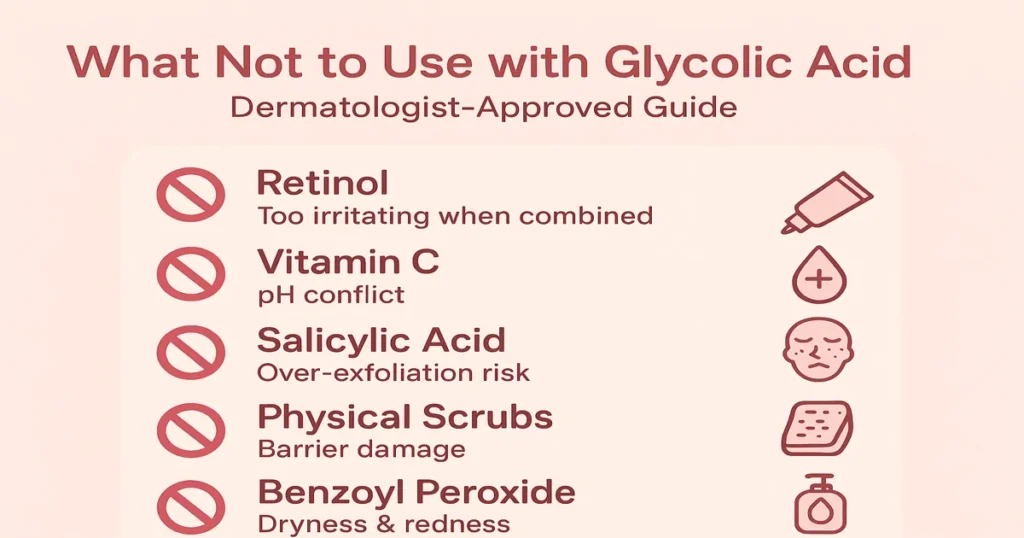
1: Retinol (Vitamin A)
Both glycolic acid and retinol accelerate cell turnover, which makes them powerful on their own but risky together.
When layered, they can over-exfoliate the skin, leading to flaking, sensitivity, and long-term barrier disruption.
A clinical study on PubMed comparing retinoic acid and glycolic acid found that the two actives both thin the horny layer and increase exfoliation. (Source).
Safer alternative: Use glycolic acid at night and retinol on alternate nights. This spacing allows your skin to absorb both benefits without overlapping irritation.
As dermatologist Dr. Shari Marchbein explains, “Using acids and retinoids separately helps the skin rebuild its tolerance and reduces inflammation.”
2: Vitamin C (L-Ascorbic Acid)
Glycolic acid and vitamin C both work at different pH levels. Vitamin C serums are most stable around pH 4–6, while glycolic acid performs at a lower pH 3–4.
Using them together can destabilize vitamin C and irritate the skin.
For example A PubMed study highlights that L-ascorbic acid rapidly oxidizes when mixed with acidic solutions under pH 3.5, reducing its antioxidant efficacy (Source).
Safer alternative: Apply vitamin C in the morning to protect against free radicals and glycolic acid at night for exfoliation. This approach supports healthy brightness without triggering sensitivity.
3: Salicylic Acid (BHA)
Combining glycolic and salicylic acid means double exfoliation — and double irritation risk. Both are chemical exfoliants that remove dead skin cells, but their mechanisms differ: glycolic acid penetrates deeply into the dermis, while salicylic acid works inside pores. When used together, they can strip too much oil and compromise the barrier.
Safer alternative: Use one acid at a time. If your goal is to treat acne or glycolic acid for oily skin, alternate nights or choose a product that blends both acids in dermatologist-tested, low concentrations.
4: Niacinamide
Niacinamide isn’t inherently harmful with glycolic acid, but timing matters. Since niacinamide is most effective at a neutral pH (5–7), using it immediately after glycolic acid can temporarily raise the skin’s pH, reducing glycolic acid’s exfoliating effect.
Safer alternative for glycolic acid & niacinamide: Apply niacinamide two hours after glycolic acid or use it in your morning routine. This separation allows both actives to perform optimally without counteracting each other.
5: Physical Exfoliants (scrubs / brushes)
Using scrubs, cleansing brushes, or microbeads alongside glycolic acid can cause over-exfoliation. The combination disrupts the protective lipid barrier and may lead to microtears or redness.
as documented in studies assessing the mechanical stress of physical exfoliation (Source).
Safer alternative: Use physical exfoliants only on days you skip chemical acids. This gives your skin recovery time while maintaining smooth texture.
Combining glycolic acid with other powerful actives may seem like a shortcut to flawless skin, but it often does the opposite—leaving your complexion dry, irritated, or inflamed.
By understanding how each ingredient behaves and giving your skin time to recover, you can enjoy the benefits of glycolic acid safely and effectively.
Always remember: in skincare, balance and patience bring the best results.
What Can You Pair with Glycolic Acid?
You might wonder — after all those “don’ts” — what can you safely pair with glycolic acid?
Good news: glycolic acid doesn’t have to work alone. When balanced with the right hydrating and barrier-supporting ingredients, it becomes even more effective and far less irritating.
The key is combining it with products that restore moisture, soothe the skin, and protect your barrier — especially if you have oily or sensitive skin.
Below are the safest and most dermatologist-approved pairings to keep your skin glowing, smooth, and healthy.
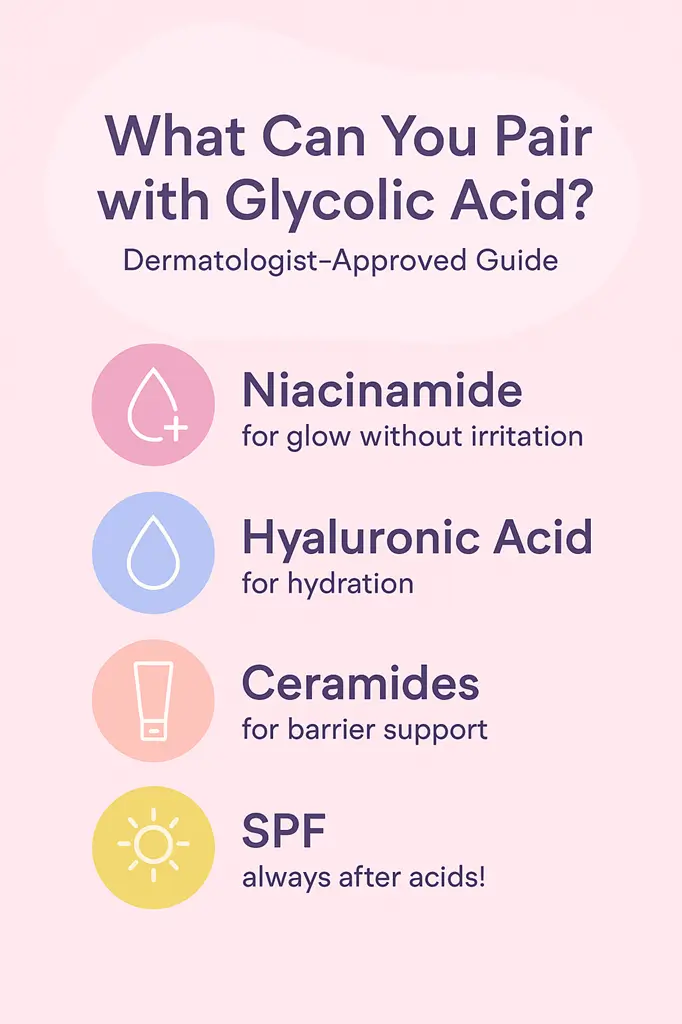
1: Hyaluronic Acid and glycolic acid
When using glycolic acid, your skin temporarily loses moisture through exfoliation.
That’s where hyaluronic acid comes in — it binds up to 1000 times its weight in water, helping your skin stay plump and hydrated after exfoliating.
Using a hyaluronic serum right after your glycolic acid step replenishes hydration and minimizes any tightness or irritation.

Tip: Always seal it in with a lightweight moisturizer to prevent transepidermal water loss (TEWL).
2: Glycerin and glycolic acid
If you want to enhance hydration even more, glycerin is another gentle and powerful humectant. It attracts moisture from the air and helps retain it within the skin — which is exactly what you need after exfoliation.
It’s safe to pair glycerin with glycolic acid both immediately after exfoliating or in your next skincare step. Together, they create a balanced routine that’s both exfoliating and moisturizing.
💧 Pro tip: Look for toners or moisturizers that combine glycolic acid and glycerin — they help buffer the acid’s strength for sensitive users.
3: Aloe Vera and glycolic acid
Aloe vera is one of the most soothing natural ingredients you can use alongside glycolic acid.
Its polysaccharides and antioxidants calm the skin, reduce redness, and help repair micro-irritations that sometimes occur after exfoliation.
When you apply an aloe-based gel or serum post-AHA, you help your skin bounce back faster and maintain a healthy glow.
🌿 Dermatologist note: A 2021 study in Clinical, Cosmetic and Investigational Dermatology confirmed aloe vera’s anti-inflammatory and wound-healing benefits when used after exfoliation (source).
4: Ceramides & Moisturizers
After exfoliation, your skin barrier needs lipid replenishment — and that’s where ceramides shine. They fill the gaps between skin cells, locking in moisture and preventing irritation from over-exfoliation.
Using a ceramide-rich moisturizer after glycolic acid helps restore the barrier, reduce sensitivity, and enhance long-term tolerance to acids.
🧴 Best combo: glycolic acid (night) → hyaluronic serum → ceramide moisturizer.
5: Sunscreen (Morning Only)
No matter how gentle your routine is, sun protection is non-negotiable after using glycolic acid. Exfoliation makes the skin more photosensitive, which means UV damage can happen faster and deeper.
Dermatologists recommend a broad-spectrum SPF 30 or higher every morning — even on cloudy days.
☀️ Remember: glycolic acid at night, sunscreen in the morning. That’s the golden rule for a radiant, even-toned complexion.
How to Layer Glycolic Acid the Right Way
If you want glycolic acid to actually work — without irritation or dryness — it’s not just about the product, it’s about how you layer it. A correct sequence allows your skin to absorb all the benefits while protecting its natural barrier. Here’s the dermatologist-approved, step-by-step guide on how to layer glycolic acid the right way, including realistic wait times between steps.
🧴 Step-by-Step Glycolic Acid Routine
- 1️⃣ Cleanse (AM or PM)
Start with a gentle, sulfate-free cleanser to remove oil, makeup, and pollutants. Avoid harsh foaming cleansers that can strip the skin — your skin should feel clean but still soft.
🕒 Wait time: 1–2 minutes after rinsing to allow the skin to dry completely. Glycolic acid should never be applied on wet skin (it penetrates too fast and may cause stinging). - 2️⃣ Apply Glycolic Acid (5–10%)
Use a cotton pad or fingertips to apply your glycolic acid toner or serum evenly, avoiding the eyes, lips, and nostrils. Start with a lower concentration (5%) if you’re new to acids.
🕒 Wait time: 8–10 minutes for full absorption and to let the pH of your skin rebalance before layering anything else.
💡 Pro Tip: Apply a thin layer of petroleum jelly or balm around the eyes, corners of the mouth, and sides of the nose before application to prevent irritation. - 3️⃣ Hydrate and Soothe (Hyaluronic Acid or Glycerin Serum)
Once the glycolic has absorbed, follow with a hydrating serum that restores moisture — ideally something with hyaluronic acid or glycerin. This step offsets any dryness from exfoliation.
🕒 Wait time: 2–3 minutes before applying your moisturizer. - 4️⃣ Moisturize (Barrier Repair Stage)
Now it’s time to seal everything in. Use a ceramide-rich or peptide-infused moisturizer to replenish lipids and strengthen the skin barrier. This step is essential to prevent micro-tears and over-exfoliation. - 5️⃣ Protect (Morning Only – SPF 30+)
If it’s daytime, always finish with a broad-spectrum sunscreen (SPF 30 or higher). After using glycolic acid, your skin is more photosensitive and vulnerable to UV damage — even from indoor light.
🕒 Wait time: 5 minutes after moisturizer for SPF to set smoothly.
🌙 Additional Tips for Safe & Effective Use
- Start slow: 2–3 times per week is enough for beginners; increase only if your skin tolerates it.
- Avoid mixing with strong actives like retinol, vitamin C, or salicylic acid on the same day. Alternate them (e.g., glycolic on Monday, retinol on Wednesday).
- Night is best: Glycolic acid makes your skin more sun-sensitive; nighttime use ensures deeper repair with minimal UV exposure.
- Listen to your skin: If you feel excessive tingling, redness, or peeling, pause use and reintroduce gradually.
- Prep smart: For sensitive skin, apply a lightweight moisturizer before glycolic acid as a buffer layer.
🔑 Key Takeaway
Layering glycolic acid correctly isn’t complicated — it’s just mindful.
Cleanse → Apply → Wait → Hydrate → Seal → Protect.
Respect your skin’s rhythm, and glycolic acid will reward you with refined pores, smoother texture, and a radiant glow — without the burn.
💡 Note:
If your skin gets shiny faster than your phone screen, you’ll love my guide on a balanced skincare routine for oily skin — it’s your oil-control survival plan (without turning into a desert).
Common Myths About Using Glycolic Acid (And What’s Actually True)
When it comes to acids and exfoliants, there’s a lot of confusion online. Let’s set the record straight once and for all.
Here are the top myths about glycolic acid — and the real science behind them.
Myth #1: “All Exfoliants Can Be Mixed Freely”
Not all exfoliants are created equal — and they definitely don’t all play nicely together.
While glycolic acid can technically be combined with other AHAs or BHAs, doing so without proper formulation or guidance can cause over-exfoliation, redness, and barrier damage.
Professional chemists know how to balance actives safely; DIY layering at home is a whole different story.
💡 Truth: Stick to one exfoliant per routine and alternate between them (for example, glycolic acid on Monday, salicylic acid on Wednesday).
Myth #2: “More Actives = Faster Results”
It’s tempting to think that stacking multiple actives — glycolic, retinol, vitamin C, niacinamide — will fast-track your skincare glow-up.
But the reality? Your skin doesn’t need more; it needs balance. Overloading with actives can trigger inflammation, dryness, and breakouts.
💡 Truth: Gradual consistency beats intensity. Let your skin adjust, rest, and recover — that’s how you build long-term glow, not short-term chaos.
Myth #3: “You Can’t Mix Glycolic Acid with Anything Else”
Good news — it’s not all doom and gloom! Glycolic acid can coexist with other ingredients like hyaluronic acid, ceramides, and aloe vera, as long as you know what to avoid (like retinol or vitamin C in the same routine).
The secret is spacing your actives properly and keeping hydration as your safety net.
💡 Truth: Smart layering is everything — exfoliate, hydrate, and protect. That’s the golden skincare triangle.
Myth #4: “Glycolic Acid Is Only for Dry Skin”
This one’s surprisingly common — and totally false.
In fact, glycolic acid can work beautifully for oily and acne-prone skin by unclogging pores and smoothing texture.
The key is to choose a lower concentration (5–7%) and balance it with lightweight hydration and barrier repair.
💡 Truth: Glycolic acid isn’t just for dry skin — it’s for anyone who wants a refined, balanced complexion when used correctly.
Myth #5: “One Routine Works for Everyone”
Your skin is as unique as your fingerprint. What works for your best friend or favorite influencer might not suit your skin type or lifestyle.
The best skincare routine is the one that’s customized to your skin’s needs, tolerance, and goals.
💡 Truth: Observe, adjust, and personalize. That’s how you make glycolic acid (and any skincare ingredient) truly work for you.
Takeaway:
Glycolic acid isn’t a one-size-fits-all miracle — but it is one of the most effective and versatile actives when used smartly.
Learn the facts, skip the myths, and your skin will thank you with a healthy, even-toned glow. ✨
Common Mistakes When Using Glycolic Acid with Other Ingredients
Even though glycolic acid is one of the most powerful exfoliants in skincare, using it the wrong way — especially when combined with other actives — can do more harm than good.
Here are the most common mistakes people make, and how to fix them easily.
❌ Mixing Too Many Actives at Once
- Combining glycolic acid with strong ingredients like retinol, vitamin C, or salicylic acid in the same routine can overwhelm your skin.
- This often leads to over-exfoliation, redness, or irritation.
- ✅ Better: Alternate them. Use glycolic acid on one night, and other actives on different days for safer, more effective results.
⚖️ Ignoring pH Conflicts
- Each skincare ingredient thrives at a specific pH level.
- For example, glycolic acid works best around pH 3–4, while niacinamide performs at a higher, more neutral range.
- Mixing them together can reduce both ingredients’ effectiveness.
- ✅ Better: Use niacinamide in the morning and glycolic acid at night — or space them out by at least 30-120 min.
💧 Skipping Moisturizer After Acids
- Some people think skipping moisturizer helps glycolic acid “work better.” It doesn’t.
- Without hydration, acids can strip your skin barrier, causing tightness, dryness, and sensitivity.
- ✅ Better: Follow with a hydrating serum or cream that contains hyaluronic acid, glycerin, or ceramides to lock in moisture.
🌞 Forgetting Sunscreen the Next Day
- After exfoliating with glycolic acid, your skin becomes extra sensitive to the sun.
- Skipping SPF can easily undo all your progress — leading to hyperpigmentation and early aging.
- ✅ Better: Apply broad-spectrum SPF 30+ every morning, especially if you use glycolic acid the night before.
⚡ Using It Too Often, Too Soon
- When you see results quickly, it’s easy to overdo it. But using glycolic acid every day — especially at high concentration — can break your skin barrier.
- ✅ Better: Start 2–3 times a week and slowly increase frequency if your skin feels balanced and calm.
🚫 Applying on Broken or Irritated Skin
- Never apply glycolic acid on skin that’s already red, peeling, or has open pimples.
- Doing so can worsen inflammation and cause stinging or burning.
- ✅ Better: Wait until your skin has fully healed before reintroducing acids.
💬 Tip From My Experience:
From my own testing and working with oily and sensitive skin types, I’ve learned one golden rule: patience always wins.
Less product, more consistency. Keep your hydration strong, protect your skin with SPF, and your glycolic acid routine will do wonders — safely and beautifully. ✨
FAQ About what can you not mix with glycolic acid
The perfect pair for glycolic acid is hyaluronic acid or ceramides. After exfoliation, your skin needs moisture and barrier support. These ingredients help balance hydration, reduce irritation, and lock in smoothness. Always finish with SPF during the day.
Both vitamin C and glycolic acid are potent actives, but their pH levels conflict. Using them together can cause irritation or make both less effective. Apply vitamin C in the morning and glycolic acid at night for best results.
After using glycolic acid, apply a moisturizer rich in ceramides or hyaluronic acid. In the morning, always follow up with a broad-spectrum sunscreen (SPF 30+) to protect your freshly exfoliated skin from UV damage.
For most people, using glycolic acid 2–3 times per week is ideal. Once your skin adjusts, you can increase frequency depending on your tolerance. Overuse can cause dryness or peeling, so always listen to your skin’s response.
Glycolic acid can be used on sensitive skin if you choose a low concentration (around 5%) and avoid using it daily. Always patch-test first and follow with a soothing moisturizer to minimize irritation.
Both retinol and glycolic acid increase cell turnover. Using them together can cause irritation or dryness. It’s safer to alternate: glycolic acid on one night, retinol on the next.
Glycolic acid exfoliates and removes dead skin cells, which can leave your skin feeling dry. Always follow with a hydrating moisturizer to restore moisture and keep your barrier healthy.
Glycolic acid helps fade post-acne marks and smooth uneven texture by promoting cell renewal. For deep scars, combine it with other proven treatments (like retinoids or niacinamide) under dermatologist guidance for faster, safer results.
Thank you so much for reading, beautiful! 💕
Now that you know what not to use with glycolic acid, you’re already one step closer to building a smarter, gentler, and more effective skincare routine.
Remember — great skin isn’t about using more products, it’s about using the right ones in harmony with your skin’s needs.
If you found this guide helpful, I’d love for you to subscribe to our newsletter — you’ll get weekly skin tips, dermatologist insights, and gentle reminders to love your skin just as it is.
And don’t forget to share your experience in the comments below!
Tell me how your journey with glycolic acid is going — what worked for you, what didn’t, and what glow-up moment made you say “yes, this is it!” 🌿
Your story might inspire someone else to start theirs ✨

Akram Boulaid is a dedicated Skincare Researcher and Analyst with over 7 years of intensive focus on dermatology and cosmetic ingredient science. As a globally recognized expert, his insights have been featured in major international publications, including the New York Post and GB News. A verified expert on Qwoted, Akram connects with health journalists to provide evidence-based analysis. He founded Beauty Blurb to bridge the gap between complex clinical data and practical skincare routines, specializing exclusively in the needs of oily and acne-prone skin through rigorous analysis of peer-reviewed scientific literature.