
If you’re looking for an effective Face Scrub for Oily Skin Homemade, the solution is surprisingly simple.
One of the best options is mixing two teaspoons of finely ground oatmeal with a spoonful of plain yogurt.
This quick blend gently exfoliates dead skin cells, absorbs excess oil, and soothes irritation at the same time.
Massage it onto your face in gentle circular motions for a minute or two, then rinse with cool water to reveal a fresh, balanced glow.

In this guide, we’ll go beyond just one recipe. You’ll discover several easy ways to make a natural face scrub for oily skin, tailored for common concerns like acne, blackheads, and even hyperpigmentation.
We’ll also share dermatologist tips, the science behind key ingredients, and mistakes to avoid so you can safely achieve smoother, healthier skin at home.
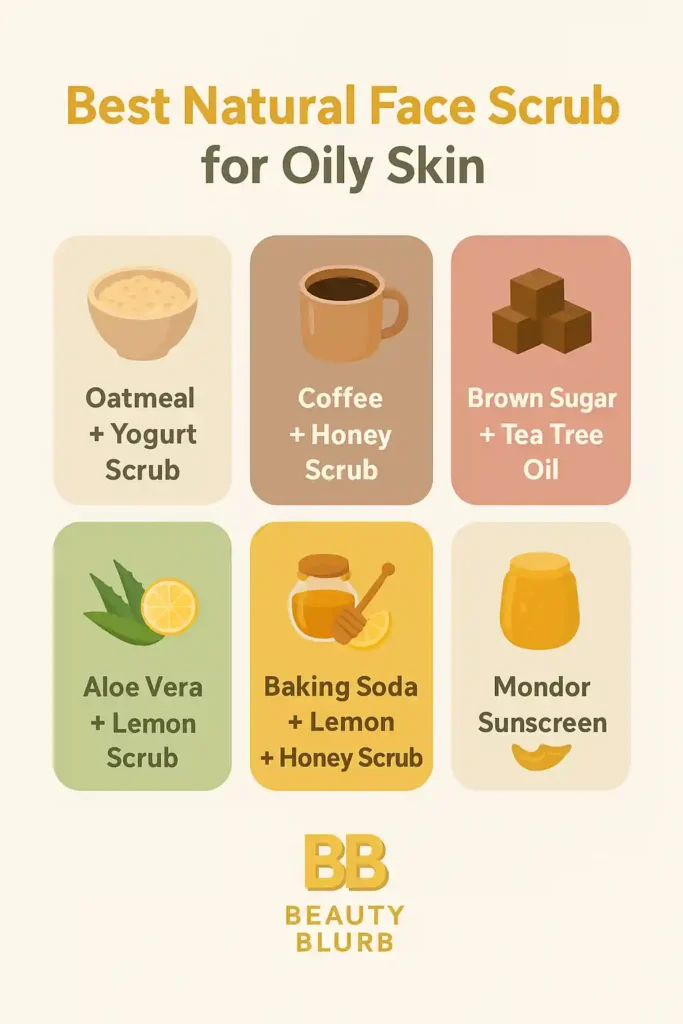
Quick Table: Best Natural Face Scrub for Oily Skin
Before we dive into the details of each recipe, here’s a quick look at all the homemade scrubs we’ll be exploring in this article.
| Recipe | Key Ingredients | Benefits | Use Frequency |
|---|---|---|---|
| Oatmeal + Yogurt Scrub | Ground oats, plain yogurt | Absorbs oil, soothes skin | 2–3 times/week |
| Coffee + Honey Scrub | Coffee grounds, honey | Gentle exfoliation, antibacterial | 1–2 times/week |
| Brown Sugar + Tea Tree Oil | Brown sugar, tea tree oil | Clears pores, reduces acne | 1–2 times/week |
| Aloe Vera + Lemon Scrub | Aloe vera gel, lemon juice (few drops) | Brightens skin, controls excess oil | 1–2 times/week |
| Baking Soda + Lemon + Honey Scrub | Baking soda, lemon juice, raw honey | Targets blackheads, reduces shine | 1 time/week |
Why Exfoliation for Oily Skin Is Essential (and How It Works)
Exfoliation for oily skin is more than just a beauty ritual—it’s a must if you want clear, balanced skin.
When excess sebum mixes with dead skin cells, it clogs the pores and leads to common issues like blackheads, acne breakouts, and an unwanted greasy shine.
Using the best exfoliator for oily skin, especially one made with natural ingredients, helps remove this buildup before it turns into a bigger problem.
Gentle scrubbing not only keeps pores clean but also smooths your skin’s texture and reduces that constant oily appearance.
Another reason natural exfoliation for oily skin is so important is that it improves how your skincare products work.
When you exfoliate properly, cleansers and moisturizers can penetrate more effectively, giving you better results from your routine.
If you’re wondering how to exfoliate oily skin at home, the key is balance—2 to 3 times per week is usually enough to keep your skin fresh without over-drying or irritating it.
Done right, exfoliation is the secret to maintaining a healthy, shine-free glow.
What is the Best Ingredient for Exfoliating Oily Skin?
When it comes to choosing the best exfoliator for oily skin homemade, there isn’t a single “magic” ingredient—but some natural options consistently stand out. The key is finding something that balances oil control with skin barrier protection, so you don’t end up stripping your face and triggering even more sebum production.
- Oatmeal: A gentle, soothing exfoliant that removes dead cells without causing micro-tears. Perfect for sensitive, acne-prone oily skin.
- Brown Sugar: Mild granules that smooth skin texture while promoting circulation. Works well in DIY scrubs for weekly use.
- Coffee Grounds: Rich in antioxidants and slightly more abrasive, ideal for deep-cleansing days when your skin feels extra greasy.
- Aloe Vera with Natural Acids (like Lemon or Citric Extracts): Combines hydration with mild chemical exfoliation, helping fade post-acne marks.
- Baking Soda (with Caution): Useful for blackheads, but best used sparingly to avoid disrupting your skin’s natural pH.
👉 If your goal is to exfoliate oily skin at home, start with oatmeal or brown sugar scrubs—they’re safer, effective, and versatile.
Reserve stronger exfoliants like baking soda or lemon for occasional use, and always follow up with SPF.
Expert Takeaway
The best ingredient for oily skin exfoliation is the one that matches your skin’s sensitivity level. For everyday safety, oatmeal and brown sugar are winners.
For targeted issues—like blackheads or post-acne marks—coffee, lemon, or baking soda can step in.
Pairing exfoliation with hydration is what turns a good scrub into the best exfoliator for oily skin homemade.
Face Scrub for Oily Skin Homemade (Top 5 Diy)
Let’s be honest—having oily skin can sometimes feel like you’re carrying a built-in highlighter you never asked for. The good news? You don’t need fancy products to fix it.
With the right DIY face exfoliator for oily skin, you can control shine, keep breakouts in check, and reveal a smoother glow using ingredients already sitting in your kitchen.
Ready to turn everyday foods into your skin’s new best friend? Let’s dive into the recipes!
1: Oatmeal and Yogurt Scrub For Oily skin
Oatmeal is amazing for oily skin because it acts as a gentle, natural exfoliant that doesn’t scrape away too much.
The finely ground oats help remove dead skin cells and excess oil without irritating sensitive areas.
Oats also contain beta-glucan, avenanthramides, and antioxidants that reduce inflammation and soothe irritation—very helpful if oily skin often means redness, clogged pores, or breakouts.
Using oatmeal in your DIY face exfoliator for oily skin can calm things down while keeping your skin’s natural barrier strong.
Yogurt brings its own skin superpowers. It’s rich in lactic acid, a mild alpha hydroxy acid (AHA), which gently dissolves dead skin cell buildup and can help clear pores.
On top of that, yogurt has probiotics and nutrients like zinc, which may support healing and reduce irritation. Plus, the creamy texture hydrates without adding oil, so it’s ideal for oily or acne-prone skin that still needs moisture.
Clinical Study:
- A randomized controlled trial of colloidal oatmeal (a very finely ground form of oats). showed it improves skin barrier function, moisturization, and reduces irritation.
- In the study, participants with dry or compromised skin saw significant improvements in skin smoothness and reduced redness after using a lotion containing colloidal oat. Source.
This supports the idea that oatmeal can be more than just an exfoliant—it helps repair and protect the skin.
Ingredients:
- 2 tablespoons of finely ground oatmeal (or colloidal oatmeal)
- 1 tablespoon plain yogurt (unsweetened, full-fat or low-fat depending on preference)
- Optional: 1 teaspoon Lemon juice or honey or a drop of tea tree oil (if your skin tolerates these)
How to Use Oatmeal and Yogurt Scrub:
- Mix the finely ground oatmeal and the plain yogurt until you get a smooth paste. If it’s too thick, add a few drops of water to adjust.
- Wash your face with a gentle cleanser and pat dry.
- Apply the paste in gentle, circular motions on oily areas (T-zone, chin, cheeks) for about 1-2 minutes. Don’t scrub too hard.
- Rinse off with lukewarm water followed by a splash of cooler water to close the pores. Pat dry with a clean towel.
- Finish by applying a lightweight, non-comedogenic moisturizer to keep the skin balanced.

Give this Oatmeal + Yogurt scrub a shot this week—just 2-3 times should already start making a difference: less shine, smoother skin, clearer pores.
I can’t wait to hear what you think—drop a comment below and tell me how your skin felt and looked after trying it!
2: Honey and coffee scurb For oily skin
Coffee grounds are a powerful natural exfoliant for oily skin—they buff away dead skin cells, stimulate circulation, and help reduce the look of pores and oil shine.
Coffee also contains caffeine and chlorogenic acids, which are antioxidants that calm inflammation and protect against free radical damage.
Honey adds both hydration and healing: it’s naturally antibacterial, soothing, and helps keep skin balanced without adding extra oil. It also supports skin repair and reduces irritation after exfoliation.
Clinical Support:
- A double-blind, placebo-controlled trial found that coffee polyphenols (CPPs), reduced skin dryness and improved skin barrier function.
- when consumed daily over 8 weeks in human subjects.
- While this study dealt mostly with ingestion rather than topical scrub usage, it supports the idea that coffee-derived bioactives can help skin health and reduce irritation. PubMed
Ingredients:
- 1 tablespoon fresh coffee grounds (preferably fine grind)
- 1 teaspoon raw honey (pure, unprocessed)
- Optional: drop of lemon juice or tea tree oil (if your skin tolerates them)
How to Make Honey and coffee scurb
- First, Mix the coffee grounds and honey until you get a paste that’s spreadable but not too runny.
- Then, Wash your face first with a gentle cleanser and pat dry.
- After that, Apply the scrub in gentle circular motions, especially on oily zones (forehead, nose, chin), for about 1 minute. Don’t press too hard.
- Rinse off with lukewarm water, then splash with cooler water to help close pores. Pat dry with soft towel.
- Follow up with a lightweight, non-comedogenic moisturizer.

This Honey + Coffee Scrub might just become your new favorite go-to when your skin feels oily or dull.
Use it 2-3 times a week and see how your glow starts to look less “greasy spotlight” and more “fresh morning light”.
Try it tonight—drop a comment later and tell me what you see (shiny forehead wins bonus points 😄)!
3: Brown Sugar and Tea Tree Oil Scrub
Looking for the Best Face Scrub for Oily Skin and Acne? If acne is part of your oily-skin story, then this next scrub is one of the Best Ingredients for Oily Skin you can use at home.
Brown sugar is one of the gentler physical exfoliants you can use—it has smaller, softer crystals than white sugar or salts, which means less risk of micro-tears.
It helps to polish away dead cells, smooth rough texture, and promote blood circulation.
Tea tree oil is a natural powerhouse for acne-prone and oily skin. It has antimicrobial and anti-inflammatory properties that reduce the number of acne lesions, calm redness, and fight bacteria like Cutibacterium acnes.
Clinical Study Support:
- A 2017 study investigated a gel with 5% tea tree oil applied twice daily to treat mild to moderate acne.
- Over 12 weeks, participants saw a significant reduction in acne lesions and overall severity.
- The participants tolerated the treatment well with minimal side effects. PubMed
This supports using tea tree oil in your at-home scrub, especially if acne is part of what oily skin brings for you.
Ingredients:
- 1 tablespoon brown sugar (fine granules)
- 2-3 drops tea tree oil (diluted with a carrier or mixed in the paste)
- Optional: ½ teaspoon raw honey or plain yogurt to add soothing/ moisturizing effect
how to make facial scrub safe for acne
- Mix the brown sugar and your carrier base (honey or yogurt if using) until you get a spreadable paste. Add tea tree oil (already diluted or mixed) and stir well.
- Cleanse your face and pat dry.
- Gently apply the paste to oily and acne-prone areas, like forehead, nose, cheeks. Use very light circular motions for about 1 minute.
- Rinse off with lukewarm water, then splash with cool water. Pat dry.
- Apply a non-comedogenic, soothing moisturizer.
Go ahead, give this Best Face scrub for oily skin and acne-prone skin a try for 1–2 weeks.
Track how your skin responds—if breakouts mellow and shine calms, this might become your favorite acne-fighting routine. I’d love to hear what you discover in the comments (especially those stubborn blackheads—let’s conquer them together)!
4: Aloe Vera and Lemon Scrub
f you’re after a Face Scrub for Oily Skin Homemade that calms inflammation, helps reduce oil without over-drying, and gives a brightening boost, this aloe vera + lemon combo is one of your best bets.
Aloe vera gel is packed with polysaccharides and bioactive compounds that soothe irritation, reduce redness, and help maintain skin hydration. It supports skin barrier repair and has natural antimicrobial properties.
Lemon introduces citric acid, a natural alpha hydroxy acid (AHA) that gently helps remove dead skin cells and fade mild dark spots or hyperpigmentation that often follow acne.
Clinical / Scientific Support:
A recent review Role of Aloe Vera in Skincare:
exploring its therapeutic benefits, formulations, and future innovations confirms that Aloe barbadensis (aloe vera) offers hydrating, anti-inflammatory.
ALSO antimicrobial properties which are helpful especially in managing acne, soothing irritated skin, and supporting skin barrier functions. Source.
Ingredients:
- 1 tablespoon pure aloe vera gel
- ½ teaspoon freshly squeezed lemon juice (use organic if possible)
- Optional: pinch of sugar for light physical exfoliation or a drop of honey for extra moisture
How to Prepare & Use
- First, Mix aloe vera gel with lemon juice until blended well. If you use sugar or honey, add them now and stir to form a slightly gritty but smooth paste.
- Cleanse your skin and gently pat dry.
- Apply the scrub gently over oily areas and acne-prone zones. Use light circular motions for about 1 minute—don’t rub too hard.
- Finally, Rinse off with lukewarm water, follow with a splash of cooler water. Pat dry.
- Always use a lightweight, non-comedogenic moisturizer afterward to seal in moisture and avoid tightness.
Tip: Use this aloe-lemon scrub just once a week if you have sensitive or acne-prone skin, or up to twice a week if your skin tolerates it well. It’s great for brightening and calming those red spots that show after breakouts.
Warning: Lemon juice is acidic. Too much or leaving it on too long can irritate skin, especially around sensitive areas or if you have thin skin.
Always do a patch test first and avoid using lemon if your skin feels stung or looks inflamed.
5: Baking Soda & Lemon & Honey Scrub for oily skin
If you want a homemade face scrub for oily skin and blackheads that tackles both oil and blackheads, this mix of baking soda, lemon, and honey can work well.
Baking soda gently breaks up sebum and dead skin that clog pores (great for blackhead trouble), while the lemon (as acidity) adds mild exfoliation. Honey soothes and balances so the scrub isn’t too harsh.
Clinical Insight:
- There’s limited but suggestive evidence: in a review “The Benefits and Risks of Using Baking Soda on Your Face” by Verywell Health.
- baking soda showed potential antibacterial and anti-inflammatory effects, as well as exfoliating action when used sparingly.
- This supports using baking soda in home recipes—but under controlled conditions.
Ingredients:
- 1 teaspoon baking soda (sodium bicarbonate)
- ½ teaspoon fresh lemon juice
- 1 teaspoon raw honey
How to Prepare & Use
- My swetty Mix baking soda and honey first, then add the lemon juice to form a paste.
- Cleanse and pat your face dry.
- Then, Apply the scrub gently with fingertips in light circular motions, especially on blackhead-prone areas (nose, chin). Do for about 30 seconds–1 minute.
- Rinse off with lukewarm water, then mist or splash with cool water. Pat dry.
- Finish with a gentle, non-comedogenic moisturizer.
Use this scrub once a week if your skin is sensitive; you can increase to 2 times per week only if there’s no irritation. It helps with blackheads and shine without going overboard.
Effective Exfoliation Tips for Oily Skin
Getting the most out of your Face Scrub for Oily Skin Homemade isn’t just about the recipe—it’s about how you use it. Follow these smart exfoliation habits to maximize results and keep your skin balanced:
- Always Do a Patch Test First
Before trying any new scrub, test it on a small area (like your jawline or behind your ear). This helps you avoid unexpected irritation or allergic reactions. - Pick the Right Texture
Choose scrubs with fine, gentle particles (like oatmeal or brown sugar). Avoid overly coarse scrubs that can cause micro-tears in the skin. - Exfoliate 2–3 Times Per Week, Not Daily
Over-exfoliation can strip your skin’s natural barrier, leading to rebound oiliness and irritation. Less is more when it comes to oily skin. - Cleanse Before Scrubbing
Start with a gentle, pH-balanced cleanser to remove surface dirt and oil. This way, your scrub can work more effectively. - Be Gentle With Your Motions
Apply scrubs in light, circular movements using your fingertips. Pressing too hard won’t clean deeper—it will just stress your skin. - Hydrate Right After
Even oily skin needs hydration. Use a lightweight, non-comedogenic moisturizer to keep your barrier strong after exfoliating. - Don’t Combine Too Many Actives
Skip using strong acids (like salicylic acid peels) or retinoids on the same day as your scrub. Mixing too much can cause redness and peeling. - Always Wear Sunscreen (SPF 30+)
Exfoliation makes your skin more sensitive to UV rays. Apply a broad-spectrum SPF 30+ every morning—even if you’re indoors most of the day.
Tip From my exprience:
Think of exfoliation like training at the gym: consistency and good form matter more than intensity.
If you scrub the right way—patch test first, stay gentle, hydrate afterward, and protect with SPF—you’ll notice your oily skin becoming clearer, smoother, and easier to manage over time.
The real secret? It’s not just about removing what your skin doesn’t need (excess oil, dead cells), but protecting what it does—your natural barrier. That’s the difference between quick fixes and lasting results.
ingredients to avoid oily skin
Not every DIY ingredient is your skin’s friend. While some natural scrubs work wonders, others can backfire—causing irritation, breakouts, or even long-term damage to your skin barrier.
If you’re serious about finding the best natural exfoliator for oily skin, here are the ingredients you should avoid:
1. Harsh Physical Exfoliants
Scrubs made with large, jagged particles like walnut shells, coarse salt, or sugar crystals that aren’t finely ground can cause micro-tears in oily skin.
These tiny scratches lead to more inflammation and, ironically, more oil production.
2. Undiluted Lemon Juice or Vinegar
Yes, they’re popular in DIY recipes, but applying raw acidic ingredients on oily skin can cause redness, burning, and even chemical burns over time.
A safer option? Use a few diluted drops in aloe vera or yogurt-based scrubs.
3. Excess Baking Soda
Baking soda pops up in many homemade scrubs, but using too much—or applying it directly—can disrupt your skin’s natural pH balance.
This leaves your oily skin vulnerable to acne, dryness, and irritation.
4. Alcohol-Based Products
If your exfoliant contains isopropyl alcohol or ethanol, skip it. These strip away natural oils too aggressively, tricking your skin into producing more sebum to compensate.
5. Undiluted Essential Oils
Tea tree and peppermint oil can help oily, acne-prone skin—but only when properly diluted. Direct application often causes stinging, peeling, and irritation.
Pro Tip: If you’re not sure whether an ingredient is safe, do a patch test on a small area of your skin before using it on your face. Remember, the goal of exfoliation is to keep skin balanced—not to wage war on oil.
How to Add a Face Scrub into Your Skincare Routine
Adding exfoliation to your daily regimen doesn’t need to be complicated. With the right approach, you can maximize the benefits of your face scrub for oily skin homemade while protecting your skin barrier.
Here’s a dermatologist-approved sequence to follow:
- Start with a Gentle Cleanser: Always wash away surface dirt, makeup, and excess oil before exfoliating. This ensures your scrub works directly on your skin—not on top of residue.
- Exfoliate at the Right Frequency: Use your scrub 1–3 times per week depending on how oily or sensitive your skin is. Focus on areas prone to clogged pores—like the T-zone—but avoid over-scrubbing. Remember, consistency beats intensity.
- Follow with Lightweight Hydration: After exfoliating, your skin needs balance. Apply a gel-based moisturizer, aloe vera, or a non-comedogenic lotion to restore hydration without clogging pores.
- Protect with Sunscreen (SPF 30+): Exfoliation makes your skin more sensitive to UV rays. A broad-spectrum sunscreen is non-negotiable if you want to prevent dark spots, hyperpigmentation, and premature aging.
- Timing Matters: Evening exfoliation is often best for oily skin, since it allows your skin to recover overnight. But if you scrub in the morning, double down on SPF.
Note:
For a complete routine beyond exfoliation, check out my detailed guide: Dermatologist Recommended Skin Care Routine for Oily Skin.
Pairing that regimen with the right homemade scrubs ensures you’re not just fixing the surface, but building healthier skin long-term.
FAQ Of Best Face Scrub for Oily Skin
Thank you so much for joining me on this skincare journey! 💕 I hope these simple yet effective face scrub for oily skin homemade recipes inspire you to take a little extra time for your self-care routine.
If you enjoyed this guide, don’t forget to subscribe so you never miss my latest skincare tips and DIY beauty secrets.
I’d also love to hear from you — share your own exfoliation journey or favorite scrub recipe in the comments below. Your story might inspire another beauty out there to embrace glowing, healthy skin! 🌿✨

Akram Boulaid is a dedicated Skincare Researcher and Analyst with over 7 years of intensive focus on dermatology and cosmetic ingredient science. As a globally recognized expert, his insights have been featured in major international publications, including the New York Post and GB News. A verified expert on Qwoted, Akram connects with health journalists to provide evidence-based analysis. He founded Beauty Blurb to bridge the gap between complex clinical data and practical skincare routines, specializing exclusively in the needs of oily and acne-prone skin through rigorous analysis of peer-reviewed scientific literature.