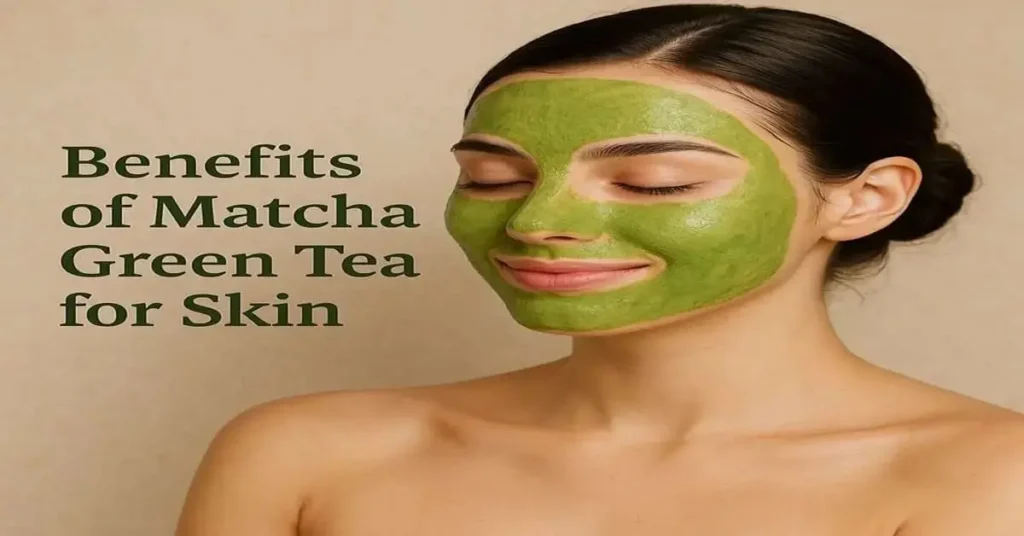
If you’re searching for the best homemade face mask for open pores, you probably want quick, natural solutions that can really make a difference.
Some of the most effective ingredients are ones you already know—like clay to absorb excess oil, oatmeal and yogurt for gentle exfoliation, and cucumber or honey to soothe and tighten skin.
Recent studies also show that green tea and aloe vera bring strong antioxidant benefits, while egg whites help give the skin a firmer look.
When combined in simple DIY recipes, these natural ingredients don’t just cleanse your pores—they also help reduce oil, calm irritation, and give your face a fresh, smooth appearance.

In this article, we’ll explore everything you need to know about using a face mask for open pores at home.
You’ll discover science-backed explanations, step-by-step recipes, safety tips, and even answers to the most common questions people ask about pore care.
By the end, you’ll know exactly which homemade masks to try, how to use them safely, and when it might be time to consider professional treatments.
Quick Table: Natural face mask for open pores
Before we dive into the details of each recipe and how to prepare them, here’s a quick summary of the most popular ingredients used in homemade masks for open pores.
This overview will help you see at a glance which ingredients may suit your skin best.
| ⭐ Rating | Key Ingredients | Main Benefit | Best For | Caution |
|---|---|---|---|---|
| ⭐⭐⭐⭐☆ | Multani Mitti, Rose Water | Absorbs oil, tightens pores | Oily, acne-prone skin | May dry sensitive skin |
| ⭐⭐⭐⭐⭐ | Oatmeal, Yogurt | Gentle exfoliation, lactic acid | All skin types | Avoid if lactose sensitive |
| ⭐⭐⭐☆☆ | Egg White, Lemon Juice | Temporary tightening, antibacterial | Large open pores | Lemon may irritate skin |
| ⭐⭐⭐⭐☆ | Green Tea, Aloe Vera | Antioxidants, soothes inflammation | Red, irritated skin | Safe, patch test recommended |
| ⭐⭐⭐☆☆ | Honey, Cinnamon | Antimicrobial, reduces acne | Acne-prone oily skin | Cinnamon may sting |
| ⭐⭐⭐⭐☆ | Tomato, Cucumber | Natural astringent, cooling | Hot weather, enlarged pores | Acidic, avoid daily use |
| ⭐⭐⭐⭐☆ | Turmeric, Gram Flour, Milk | Cleanses pores, anti-inflammatory | Combination/oily skin | May stain skin temporarily |
These natural masks are easy to make, gentle on the skin, and can give your face a refreshed, smoother look. Try experimenting with the recipes that match your skin type best, and always remember to patch test before applying them fully.
Note: There is no scientific evidence that homemade masks can permanently close pores. From experience, the results are usually temporary and vary from person to person.
What Causes Open Pores?
Open pores are a very common skin concern, especially for people with oily or combination skin.
They often look larger when excess sebum mixes with dead skin cells, making the pores more visible on the surface.
While open pores are not harmful, they can affect how smooth your skin appears and sometimes make makeup application difficult.
Understanding the main causes of open pores is the first step to managing them effectively.
Key Causes of Open Pores (bullet points):
- Excess Oil Production: Oily skin tends to stretch the pore walls, making them look larger.
- Clogged Pores: When sebum, dirt, and dead skin build up, pores expand to release the blockage.
- Genetics: If large pores run in your family, you’re more likely to experience them.
- Aging & Collagen Loss: With age, skin loses elasticity and firmness, causing pores to appear more open.
- Sun Damage: UV exposure thickens the skin, reduces collagen, and enlarges pores over time.
- Improper Skin Care: Using heavy creams or skipping cleansing can worsen clogged pores.
The good news is that every skin concern has a solution, and open pores are no exception.
With the right skincare routine, natural remedies, and some lifestyle adjustments, you can minimize their appearance and restore a smoother, healthier glow to your skin.
Can a face mask reduce pores?
The honest answer is: no & yes, mask can permanently shrink pores, because pore size is largely determined by genetics and skin structure.
However, homemade face masks can reduce the appearance of open pores and make them look smaller temporarily.
This happens when masks cleanse away oil, dirt, and dead skin cells, which often stretch pores and make them more visible. Some natural ingredients also tighten the skin’s surface, giving a smoother and refined look.
How Homemade Masks Minimize Pores (key points):
- Deep Cleansing & Detoxifying: Ingredients like clay, charcoal, or multani mitti absorb excess sebum and impurities from within the pores.
- Gentle Exfoliation: Natural acids from yogurt, oatmeal, or fruit enzymes help remove dead skin cells, preventing clogged pores.
- Tightening & Soothing: Aloe vera, egg white, and cucumber provide a mild tightening effect, while calming irritation that can worsen the appearance of pores.
- Oil Control: Masks with turmeric, honey, or green tea balance oil production, especially useful for people with oily or acne-prone skin.
So while homemade masks won’t change your pores forever, they can give your skin a cleaner, firmer, and healthier look when used regularly.
If you have oily skin, the best homemade face mask for open pores for oily skin, is usually one that combines cleansing (like clay), with soothing ingredients (like aloe vera or cucumber) for balanced results.
best homemade face mask for open pores
I’m going to share with you some of the best homemade face masks for open pores and glowing skin that, according to my deep research, practical experience, and scientific studies, have shown real benefits in improving the appearance of enlarged pores.
Remember, your skin is unique—what works beautifully for one person may not give the exact same results for another.
Always listen to your skin’s needs and adjust the remedies accordingly. Let’s start with the first mask.
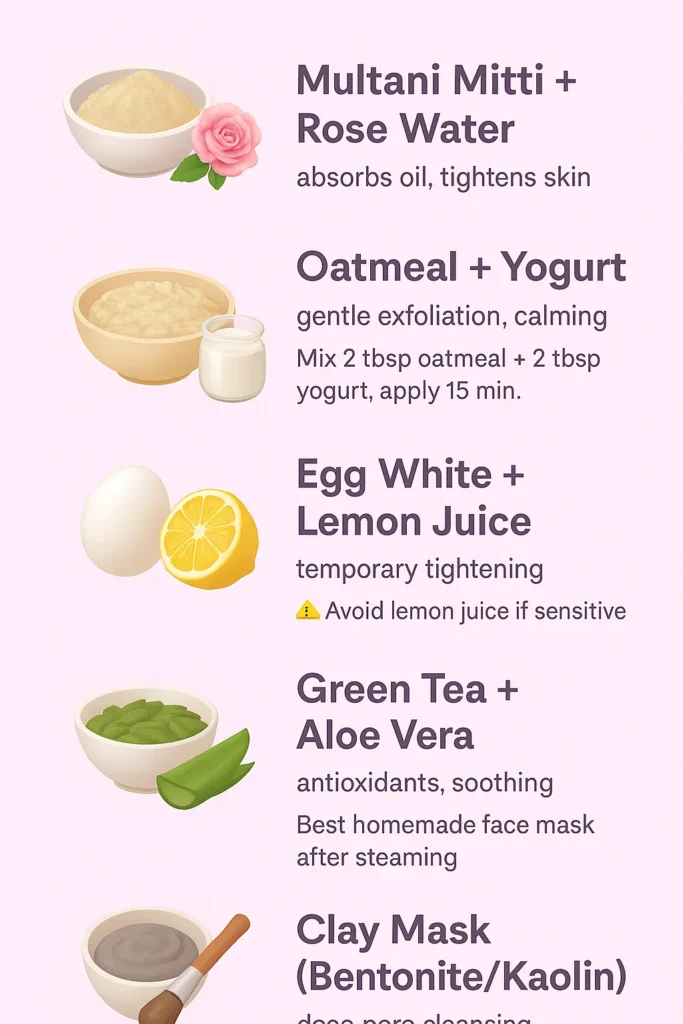
1: Multani Mitti & Rose Water for Open Pores
Multani Mitti (also known as Fuller’s Earth) has long been celebrated for its oil-absorbing and cleansing powers.
It helps draw out excess sebum, dirt, and impurities from deep within pores, which can reduce the visible appearance of open pores.
For oily skin especially, Multani Mitti acts as a natural mattifier and can help balance oil levels while gently exfoliating the skin surface.
Rose water (distilled from rose petals, especially Rosa damascena) is a gentle, soothing, and toning ingredient.
It helps restore the skin’s pH, reduce redness, and calm irritation, which is beneficial when using clays that may temporarily dry or stress the skin.
Rose water also has mild antioxidant and astringent properties that can assist in enhancing the tightening effect on pores.
Clinical / Research Evidence
One study titled “Formulation and Evaluation of Herbal Face Pack” (Bhosale et al., 2025):
- formulated a herbal face pack combining Multani Mitti, rose petal powder, and other natural ingredients.
- The study reported that the formulation was non-irritant and effective in cleansing pores and improving skin texture, though it noted further research is needed for direct human efficacy claims. Source
Ingredients & Preparation (DIY Recipe)
| Ingredients | Amount |
|---|---|
| Multani Mitti (Fuller’s Earth) | 2 tablespoons |
| Rose Water | 2–3 tablespoons (adjust to form paste) |
| (Optional) Aloe Vera Gel | 1 teaspoon |
| (Optional) A pinch of Turmeric | ~⅛ teaspoon |
How to make face mask for open pores :
- In a clean bowl, mix the Multani Mitti with rose water, stirring gradually until you get a smooth paste (not too runny, not too thick).
- If desired, add aloe vera gel or a pinch of turmeric to boost soothing or antimicrobial effects.
- Cleanse your face thoroughly and pat it slightly damp.
- Apply the paste evenly over your face, avoiding the eye area.
- Leave it on for 10–15 minutes, or until partially dry (don’t let it crack too much).
- Rinse off gently with lukewarm water, then splash cold water to help tighten pores.
- Follow with a lightweight, non-comedogenic moisturizer.
This combination is one of the best homemade face masks for open pores you can try in your skincare routine for oily skin.
It’s simple, natural, and often very gentle on the skin. I encourage you to try it consistently (twice a week) for a few weeks and observe how your skin responds.
Please leave a comment with your results—did your pores appear smaller? Did your skin feel smoother? I’d love to hear your feedback.
2: Oatmeal & Yogurt for Open Pores
Oatmeal (especially in its finely ground or colloidal form) is rich in antioxidant and anti-inflammatory compounds such as avenanthramides.
It helps soothe irritation, reduce redness, and gently exfoliate the skin by removing dead cells, oil, and debris without harsh abrasion. This makes it ideal for oily or sensitive skin struggling with enlarged pores.
Yogurt contains lactic acid (a natural AHA) which provides mild chemical exfoliation, helping to dissolve the bonds between dead skin cells and thus improve skin texture.
Its moisturizing properties also help maintain hydration, which can reduce the appearance of pores stretched by dryness or over-cleansing.
Clinical / Research Evidence
- A study titled “Clinical efficacy of facial masks containing yoghurt and Opuntia humifusa Raf. (F-YOP)”
- found that a yogurt-based face mask improved skin moisture, reduced transepidermal water loss (TEWL), and maintained skin elasticity in test subjects. PubMed
While the study did not directly measure pore size reduction, the improvements in barrier function and hydration suggest favorable conditions for minimizing the appearance of open pores.
| Ingredients | Amount |
|---|---|
| Ground Oatmeal (colloidal or fine) | 2 tablespoons |
| Plain Yogurt (unsweetened) | 2–3 tablespoons |
| (Optional) Honey | 1 teaspoon |
| (Optional) Rose Water or Aloe Vera | a few drops |
How to make oatmeal and yogurt face mask:
- First, Mix the ground oatmeal with yogurt gradually to form a smooth, cream-like paste.
- If you wish, add a bit of honey or rose water / aloe vera to boost soothing or antiseptic effects.
- Then, Cleanse your face and pat it slightly damp (not dripping wet).
- Apply the mask evenly, avoiding the eye area.
- Leave it on for 10–15 minutes (don’t let it dry completely hard).
- Finally, Rinse off gently with lukewarm water, then splash with cooler water to help tighten pores.
- Follow by applying a light, non-comedogenic moisturizer.
Closing Tip (from our experience)
This is one of the gentlest and most effective DIY pore tightening masks you can incorporate into your routine.
Our advice: start by using it once or twice a week and listen closely to how your skin reacts.
If you notice improvements—smoother texture, less oiliness—continue. If your skin feels tight or irritated, reduce frequency or simplify ingredients.
And please, share your experience below—did your pores look smaller? Did your skin feel calmer or more balanced?
3: Egg White & Lemon Juice for Open Pores
Egg white is dense in proteins (mainly albumin) and is often hailed in DIY skincare for its temporary tightening effect.
Many believe it helps absorb excess oil, reduce shine, and create a subtle “lift” on the skin, making pores appear less visible. It is often used in pore-tightening masks for oily skin thanks to these properties.
Some beauty writers claim that egg whites, when whipped, form a thin film over the skin, which compresses the skin surface slightly as it dries.
However, it’s important to understand this effect is superficial and temporary—not a permanent shrinkage of pore size.
Why Lemon Juice Matters (in small amounts)
Lemon juice contains citric acid, a natural AHA (alpha hydroxy acid), that can help gently exfoliate dead skin cells and brighten the skin.
When used carefully, diluted lemon can support oil control and help reduce the buildup in clogged pores, which may improve the look of skin texture.
For those with oily or acne-prone skin, the combination of egg white + lemon juice is often promoted as a DIY remedy for reducing visible pores.
However, citrus is acidic and may irritate or damage sensitive skin or skin exposed to sunlight if used incorrectly.
Evidence & Caution
Medical News Today notes that there is no strong scientific evidence proving that egg white masks effectively shrink pores, though proponents argue they may absorb oil and tighten skin surface. Medical News Today
Healthline explicitly warns that egg whites can cause irritation or even infection, and that their benefits for skin tightening or pore reduction lack substantial backing. Healthline
Thus, while many DIY and beauty blogs claim that egg white + lemon masks minimize pores, you should treat these claims with caution and test on your skin carefully.
Ingredients & How to Prepare
- 1 Egg white (from a fresh, clean egg)
- ½ teaspoon fresh lemon juice (or less, depending on your skin tolerance)
- (Optional) ½ teaspoon honey or aloe vera for soothing effect
Method / Instructions
- Separate the egg white into a clean bowl (discard the yolk or reserve for another use).
- Whisk the egg white until slightly frothy.
- Add the lemon juice slowly, mixing gently. If your skin is sensitive, start with a smaller amount of lemon.
- Cleanse your face and pat dry.
- Apply a thin layer of the mixture to areas with large pores (avoid eyes, lips).
- Let it sit for 10 minutes or until it begins to dry lightly (don’t let it crack harshly).
- Rinse gently with lukewarm water, then splash some cool water to help tighten the appearance of pores.
- Follow with a gentle moisturizer.
Advice from Experience
In our experience, this mask can offer a mild tightening sensation and help reduce surface oil temporarily, making your pores look smaller for a short time, especially when using bolder DIY options in your skincare rotation.
Use it no more than 1–2 times per week, always patch test first, and avoid leaving it on too long.
Warning: Lemon juice can irritate or burn skin, especially under sunlight or on sensitive skin. Always dilute lemon, avoid sun exposure right after using, and stop using immediately if you experience stinging, redness or discomfort.
4: Green Tea & Aloe Vera for Open Pores
Green tea contains powerful polyphenols (especially EGCG) which offer antioxidant and anti-inflammatory effects.
These compounds help reduce oxidative stress, calm irritation, and may regulate excess sebum production that contributes to visible pores.
A controlled clinical study using a skincare system with green tea, found improvements in skin hydration and reduced redness;
pore size improvements were not statistically significant, but the formula showed benefits in overall skin health. Source
Aloe vera gel is light, soothing, and hydrating. It contains amino acids, polysaccharides, and zinc, which help moisturize the skin and act as an astringent to tighten the appearance of pores.
In its pure form, aloe vera does not clog pores, making it safe for sensitive or acne-prone skin.
| Ingredient | Amount / Notes |
|---|---|
| Green Tea (cooled brew or matcha) | 1 tablespoon |
| Pure Aloe Vera Gel | 2–3 tablespoons |
| Kaolin Clay (optional) | ½ teaspoon |
| Tea Tree Oil (optional) | 1–2 drops (if tolerated) |
How to Prepare & Apply
- Brew and cool the green tea (or use matcha).
- Mix green tea with aloe vera gel until smooth.
- Optionally add clay or tea tree oil for extra benefits.
- Right after steaming your face (pores are open) apply the mask — this is one of the best homemade face masks after steaming.
- Leave on 10–12 minutes; don’t let it dry completely stiff.
- Rinse with lukewarm water, pat dry, and apply a light, non-comedogenic moisturizer.
Tip from Our Experience
We’ve found this mask to be especially refreshing and calming—great as a pore refining mask post-steam.
The combination helps reduce redness, balance oil, and give your skin a cleaner appearance. Use it once or twice a week and observe how your skin responds.
5: Best Clay Mask for Open Pores
Clay masks are known for absorbing excess oil, drawing out impurities and helping to tighten pores temporarily.
Clays like kaolin, bentonite or volcanic clay reduce surface sebum and help minimize the look of open pores.
For oily or combination skin, a clay mask is one of the most effective reduce open pores naturally remedies.
Clinical Evidence:
- A strong recent study titled “Comprehensive assessment of the efficacy and safety of a clay mask in oily and acne skin” (Zhang et al., 2023).
- evaluated a clay mask used twice weekly for 4 weeks on 75 adults with oily or combination skin.
- Results showed significant improvements in sebum content (oiliness), texture, and skin hydration.
- Although pore area did not significantly decrease, participants reported visibly clearer-looking pores and smoother skin. Source
How to Make Clay mask for open pores:
- In a clean bowl, mix kaolin clay and bentonite clay (if using) with warm water or cooled green tea until you get a smooth paste.
- Then, Add aloe vera or rose water as soothing medium.
- After That, Cleanse face and pat dry / slightly damp.
- Apply clay mask evenly, avoid the eye area.
- Leave on until the mask starts to dry (around 10–15 minutes) but don’t let it fully harden or crack.
- Rinse with lukewarm water; finish with cold splash to tighten pores.
- Use once or twice per week—more often may dry out skin.

From our experience, this is one of the most effective clay-based options if you’re searching for the best ingredients for oily skin and open pores.
It works beautifully as a balancing mask: absorbing excess oil, leaving skin matte, and making pores look visibly refined.
Use it once or twice weekly, and remember—consistency matters more than frequency.
Lifestyle & Skincare Tips for Open Pores
Taking care of open pores goes beyond DIY masks.
While homemade remedies like clay or oatmeal masks can temporarily refine the skin’s texture, daily habits and a consistent skincare routine are what truly determine long-term results.
If you’ve been struggling with oily skin and visible pores, these evidence-backed lifestyle shifts can make a real difference.
Daily Tips to Minimize Open Pores
- Gentle Double Cleansing: Remove makeup, sunscreen, and excess oil with a mild cleanser followed by a water-based wash. This prevents pore congestion without stripping the skin.
- Use Non-Comedogenic Products: Look for moisturizers and sunscreens labeled as oil-free or non-comedogenic. This ensures hydration without clogging pores.
- Incorporate Niacinamide: Known for its pore-refining and oil-regulating effects, niacinamide is considered one of the best ingredients for oily skin and open pores.
- Weekly Exfoliation (but not daily!): Gentle AHAs or BHAs help shed dead skin cells that enlarge pores. Over-exfoliating, however, can trigger irritation and even more oil production.
- SPF is Non-Negotiable: Sun damage weakens collagen, making pores look larger. Daily sunscreen keeps skin firm and minimizes pore visibility over time.
- Hydration Inside & Out: Drinking water and maintaining a diet rich in antioxidants (think leafy greens, berries, and omega-3s) improves skin resilience and oil balance.
- Avoid Constant Touching: Hands carry bacteria and oils that can worsen congestion around pores.
Tip From me
Masks can be a great addition, but a holistic skincare routine and lifestyle approach are essential for sustainable results.
If you want to go beyond home remedies and explore a doctor-approved regimen, check out our detailed guide on the skin care routine for oily skin.
Note: If you have active acne or frequent breakouts, be cautious with oil cleansers. Some heavy or comedogenic oils may clog pores.
If you prefer double cleansing, choose a lightweight, non-comedogenic oil cleanser (like those with squalane or sunflower oil) and always follow up with a gentle water-based face wash.
How to Treat Open Pores Effectively
Not everyone sees dramatic results from all natural face masks.
While they can improve texture and temporarily reduce the look of pores, some people may need more advanced solutions for oily skin and enlarged pores.
Here’s what you can do if home remedies don’t give you the results you want:
Step Up Your Skincare Routine
- Niacinamide: A proven pore-refining ingredient that regulates oil production and strengthens the skin barrier.
- Salicylic Acid (BHA): Penetrates deep into pores, dissolving oil and debris that cause congestion.
- Topical Retinoids: Stimulate cell turnover and collagen production, helping skin look smoother over time.
Consider Professional Treatments
If over-the-counter products don’t help, dermatologists may recommend:
- Chemical Peels to exfoliate deeply and refine texture.
- Microneedling to stimulate collagen and improve pore appearance.
- Laser Treatments designed to resurface skin and shrink pore visibility.
Lifestyle Adjustments
- Keep skin hydrated with lightweight, non-comedogenic products.
- Protect from UV damage daily with broad-spectrum sunscreen (SPF 30+).
- Maintain a balanced diet and manage stress, both of which influence skin health.
So, how do I close an open pore? The truth is, you cannot permanently close pores—they are a natural part of your skin.
But with consistent care, the right products, and sometimes professional help, you can make them look significantly smaller and less noticeable.
Combining smart skincare with the best homemade face mask for open pores can give you the best of both worlds: natural support and scientifically proven results.
FAQ Of Naturel face mask for open pores
Thank you for staying with me through this guide 💕. I truly hope you found inspiration and confidence to try the best homemade face mask for open pores and give your skin the gentle care it deserves.
Remember, every skin type has its own story — what works for one may need tweaking for another. That’s why your journey matters.
🌸 I’d love to hear from you: share your results, tips, or even the challenges you faced in the comments below.
Don’t forget to subscribe so you never miss more simple, science-backed skincare advice tailored just for you.
Your skin deserves consistency, kindness, and a little self-love — and I’m here to support you every step of the way. 💖

Akram Boulaid is a dedicated Skincare Researcher and Analyst with over 7 years of intensive focus on dermatology and cosmetic ingredient science. As a globally recognized expert, his insights have been featured in major international publications, including the New York Post and GB News. A verified expert on Qwoted, Akram connects with health journalists to provide evidence-based analysis. He founded Beauty Blurb to bridge the gap between complex clinical data and practical skincare routines, specializing exclusively in the needs of oily and acne-prone skin through rigorous analysis of peer-reviewed scientific literature.