
If you’re wondering whether to choose Niacinamide or Hyaluronic Acid for Oily Skin, the quick answer is that niacinamide is usually the better option because it helps control excess oil, minimize the look of pores, and reduce breakouts.
Hyaluronic acid, on the other hand, works by keeping your skin hydrated and balanced without clogging pores. Many dermatologists actually recommend using both together:
first apply a lightweight hyaluronic acid serum to lock in hydration, then layer a niacinamide product on top to regulate oil and improve overall skin texture. This way, you get the benefits of hydration and oil control in one routine.

In this article, we’ll break down everything you need to know to finally answer the question: which is better for oily skin hyaluronic acid or niacinamide.
You’ll learn the science behind each ingredient, how they affect oily skin differently, when to use one over the other, and how to combine them safely for the best results.
We’ll also share sample routines, expert tips, and answer the most common questions people ask about these two popular skincare ingredients.
What is Niacinamide and How Does It Work?
Niacinamide, also known as vitamin B3, is a water-soluble vitamin that has earned a strong reputation in the skincare world thanks to its versatility and gentle effectiveness.
Unlike harsh actives that can irritate sensitive complexions, niacinamide works at a cellular level to strengthen the skin barrier, improve resilience, and restore balance. This makes it a widely recommended option by dermatologists for people who struggle with oiliness, breakouts, or uneven texture.
When applied topically, niacinamide interacts with the skin in multiple ways. It helps regulate the activity of sebaceous glands, which directly reduces excess oil and visible shine, a common frustration for those with oily skin types.
At the same time, it minimizes the appearance of enlarged pores and calms redness caused by inflammation. These combined effects make niacinamide for oily skin a game-changer ingredient, because it doesn’t just mask the problem, it targets the root cause of imbalance.
Beyond oil control, niacinamide also plays a role in overall skin health. It supports hydration by strengthening the lipid barrier, which prevents moisture loss and keeps the skin balanced even in challenging environments.
By improving texture, evening out skin tone, and offering antioxidant protection, niacinamide stands out as more than just an oil-regulating ingredient.
It is a multifunctional solution that allows people with oily or acne-prone skin to achieve clearer, smoother, and healthier-looking skin over time.
What is Hyaluronic Acid and How Does It Work?
Hyaluronic acid is a naturally occurring substance in the body that has gained huge popularity in skincare because of its powerful ability to hold water.
In fact, just one molecule of hyaluronic acid can bind up to 1,000 times its weight in water, making it one of the most effective ingredients for skin hydration.
Unlike heavy creams that can leave an oily residue, hyaluronic acid is lightweight and non-comedogenic, which means it hydrates without clogging pores — a key benefit for anyone with oily or acne-prone skin.
When applied topically, hyaluronic acid for oily skin works by drawing water into the outer layer of the skin, keeping it plump, smooth, and balanced. This hydration effect prevents the skin from overproducing oil, which often happens when the skin barrier is dehydrated.
By maintaining proper moisture levels, hyaluronic acid helps reduce that greasy shine many people with oily skin struggle with, while also improving elasticity and overall skin texture.
What makes hyaluronic acid even more unique is its ability to fit into almost any skincare routine. It can be layered easily under serums, moisturizers, or sunscreens, and works well both in the morning and at night.
For oily or combination skin types, using a serum with low to medium molecular weight hyaluronic acid ensures deep hydration without heaviness. Over time, consistent use of this ingredient supports healthier, more supple skin that feels hydrated but never greasy — a perfect balance for those managing excess oil.
Niacinamide Benefits for Oily Skin
You might be wondering, “Should I use niacinamide if I have oily skin?” The quick answer: yes, niacinamide is an excellent choice because it not only helps balance oil production and reduce shine, but also refines pores and calms inflammation—providing both immediate comfort and long-term improvement.
Now, let’s explore the benefits of niacinamide for oily skin in more depth.
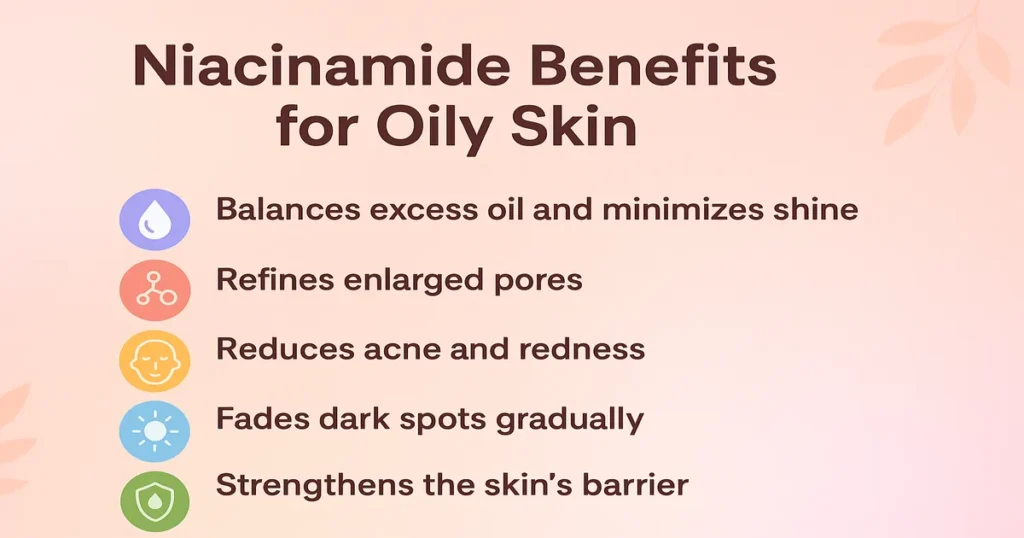
- Balances excess oil and minimizes shine, ensuring your complexion stays matte and looking smooth throughout the day.
- Refines enlarged pores, giving skin a more even texture and helping prevent clogged pores that lead to breakouts.
- Reduces acne and redness, thanks to its anti-inflammatory properties that soothe irritation and calm flare-ups.
- Fades dark spots gradually by inhibiting melanin transfer to surface skin cells, resulting in a brighter and more uniform tone.
- Strengthens the skin’s barrier, enhancing hydration and preventing moisture loss, which helps maintain oily skin’s balance without stripping it.
Clinical Study: Real Results That Matter
- A well-regarded double-blind, placebo-controlled study conducted by Dr. Zoe Diana Draelos at Wake Forest University examined the effects of 2% niacinamide applied daily.
- In Japan, 100 participants (50 used the niacinamide formula, 50 used a placebo) showed a significant reduction in sebum excretion rate (SER) after just 2 and 4 weeks of application.
- Meanwhile, a parallel split-face study in 30 Caucasians over 6 weeks revealed a notable decrease in casual sebum levels (CSL) compared to untreated sides. Source: PubMed.
Such findings clearly demonstrate niacinamide’s ability to reduce oiliness at its source.
In short: if you’re dealing with oily skin and tired of temporary fixes, make niacinamide a cornerstone of your skincare journey.
It offers more than just oil control—it strengthens the skin, reduces dark spots, smooths texture, and keeps hydration intact without greasiness. Start today, and within a few weeks, your skin will begin to thank you with greater clarity, balance, and glow.
Hyaluronic Acid Benefits for Oily Skin
You might be asking yourself, “Do I need hyaluronic acid if I use niacinamide?” The quick answer: absolutely—adding hyaluronic acid to your routine brings vital hydration without heaviness, helping your skin stay balanced and preventing it from overproducing oil in response to dryness.
Now, let’s move into the main benefits of hyaluronic acid for oily skin.
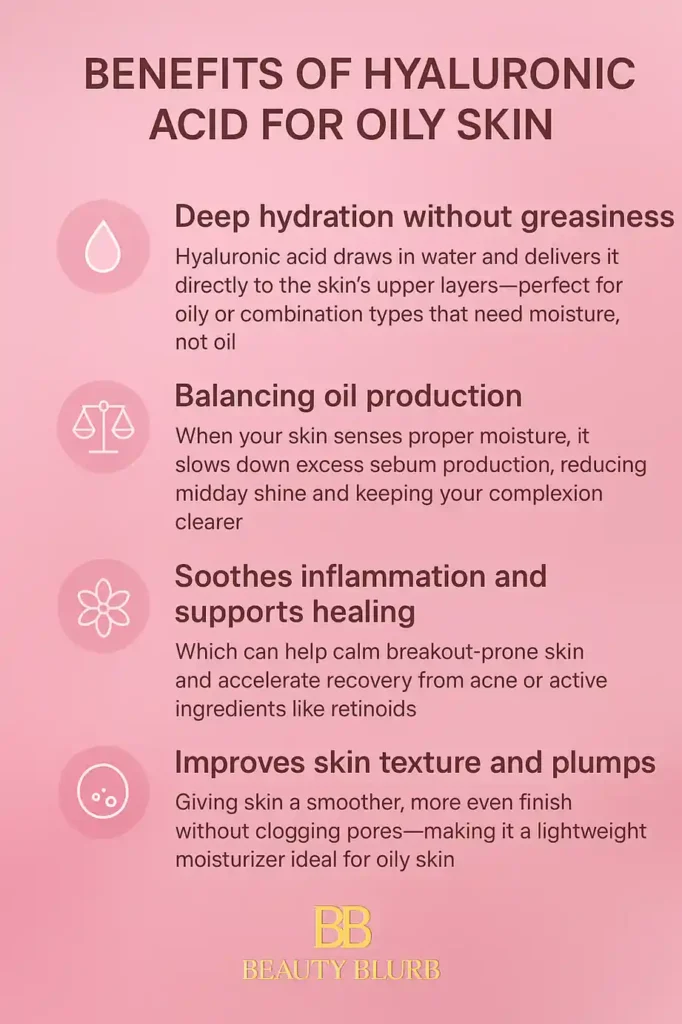
- Deep hydration without greasiness, since hyaluronic acid draws in water and delivers it directly to the skin’s upper layers—perfect for oily or combination types that need moisture, not oil.
- Balancing oil production—when your skin senses proper moisture, it slows down excess sebum production, reducing midday shine and keeping your complexion clearer.
- Soothes inflammation and supports healing, which can help calm breakout-prone skin and accelerate recovery from acne or active ingredients like retinoids.
- Improves skin texture and plumps, giving skin a smoother, more even finish without clogging pores—making it a lightweight moisturizer ideal for oily skin.
- Non-comedogenic and universally compatible, allowing you to layer it under any product without fear of clogging pores or causing breakouts.
Clinical Evidence: How Hyaluronic Acid Truly Works
- In a notable clinical study, researchers applied hyaluronic acid in a controlled, split-face, double-blind trial involving 20 individuals with oily skin.
- The results demonstrated a significant reduction in sebum production on the side treated with HA, compared to the placebo side.
This study confirms that hyaluronic acid doesn’t just hydrate—it actually signals the skin to produce less oil, a valuable ally in managing oily skin in a scientific way. Source: PubMed
In short, yes—you can and should use hyaluronic acid even if you’re already using niacinamide. It’s the perfect complement that hydrates, calms, refines texture, and keeps oil levels in check—all without adding grease.
Together, these two powerhouse ingredients balance, soothe, and improve the appearance of your skin, giving you a glow that’s clear, supple, and resilient.
Now that we’ve explored the unique benefits of both niacinamide and hyaluronic acid and learned how each works for oily skin, it’s time to bring them head-to-head.
You may be asking yourself: “Niacinamide vs Hyaluronic Acid for oily skin—which is better?” Let’s dive deeper into their differences, strengths, and how to choose the right one for your specific skin concerns.
Niacinamide or Hyaluronic Acid for Oily Skin
You might be wondering, “hyaluronic acid vs niacinamide for oily skin — who wins?” The short answer: niacinamide is better for controlling oil and pores, while hyaluronic acid excels at lightweight hydration. When used together, they balance oily skin beautifully.
| Feature | Niacinamide | Hyaluronic Acid |
|---|---|---|
| Oil Control | Reduces sebum, shrinks pores | Indirectly balances oil via hydration |
| Hydration | Supports skin barrier, prevents water loss | Powerful humectant, plumps skin |
| Dark Spots | Fades hyperpigmentation over time | Does not target pigmentation directly |
| Best Skin Type | Oily, acne-prone, enlarged pores | Dehydrated oily skin, sensitive skin |
| Layering | Apply after HA for oil control | Apply first for hydration boost |
So, Is Niacinamide or Hyaluronic Acid Better for Combination Skin?
For combination skin, there’s no single winner. If your T-zone is very oily, niacinamide should be your top pick because it reduces shine and minimizes pores. If your cheeks or dry areas feel tight or dehydrated, hyaluronic acid provides lightweight hydration.
In reality, using both together delivers the best of both worlds—hydrated yet balanced skin that looks healthy and radiant.
Niacinamide or Hyaluronic Acid for Acne prone skin
When it comes to breakouts, many people ask whether to choose Niacinamide or Hyaluronic Acid for Acne prone skin. The truth is, they work in very different but complementary ways.
Niacinamide helps calm redness, reduce sebum, and minimize pore congestion, which makes it a strong ally against acne flare-ups.
Hyaluronic acid, on the other hand, doesn’t treat acne directly but keeps the skin barrier hydrated and resilient. This is crucial because dehydrated oily skin often produces even more oil, leading to clogged pores and worsening acne.
By maintaining hydration, hyaluronic acid prevents irritation from harsh acne treatments like retinoids or benzoyl peroxide.
For best results, dermatologists often recommend layering the two:
apply hyaluronic acid first for deep hydration, then follow with niacinamide to target oil control and inflammation. Used together, they create the perfect balance of moisture and clarity for acne-prone skin.
How to Use Hyaluronic Acid and Niacinamide Together
A common question many women ask is: “Should I use niacinamide or hyaluronic acid first?” The best answer: apply hyaluronic acid first, then layer niacinamide on top.
Here’s why—hyaluronic acid is a lightweight humectant that instantly draws water into the skin, creating a hydrated base. Applying niacinamide afterwards helps lock in that hydration, while also targeting oil regulation, pore size, and overall skin clarity.
This sequence allows both ingredients to perform at their peak without interfering with each other.
Step-by-Step Routine for Oily Skin With
- Cleanse and tone – Start with a gentle cleanser and toner to prep your skin.
- Apply hyaluronic acid – Since it has a watery consistency, spread a few drops over damp skin to maximize hydration.
- Layer niacinamide serum – Once HA has absorbed, use niacinamide to regulate oil production, refine pores, and calm redness.
- Seal with moisturizer – Choose a lightweight, non-comedogenic moisturizer to lock in hydration and strengthen the barrier.
- Don’t skip SPF (morning routine) – Finish with a broad-spectrum sunscreen to protect your skin and enhance the benefits of both actives.

Why This Order Works
This routine follows the “thin to thick” rule of layering skincare. Hyaluronic acid, being thinner, hydrates first, while niacinamide, slightly denser, locks everything in and balances oil. The result is hydrated, shine-free skin that feels soft, smooth, and protected all day long.
👉 “Now it’s your turn! Try this simple routine with niacinamide and hyaluronic acid for oily skin, and let us know in the comments how your skin feels after a few weeks—we’d love to hear your experience!”
Pro Tip: Listen and Adjust to Your Skin
Both hyaluronic acid and niacinamide are safe, gentle, and effective to use together, but every skin type has its own rhythm.
Pay attention to how your skin feels in the first weeks—if you notice tightness, excessive dryness, or new breakouts, simply adjust the frequency or alternate their use between morning and night.
Remember, skincare is not one-size-fits-all: consistency, patience, and small tweaks will help you unlock the perfect balance for your oily skin.
Common Mistakes When Using Niacinamide and Hyaluronic Acid for Oily Skin
Even though niacinamide and hyaluronic acid are gentle and safe, many women with oily skin fall into simple mistakes that stop them from seeing real results. Avoiding these errors will help you get the most out of your skincare routine.
- Using too much product: Applying large amounts of serum can clog pores and leave a sticky finish. A few drops of each ingredient are more than enough for oily skin.
- Layering with heavy creams: Hyaluronic acid works best with lightweight, oil-free moisturizers. If you use thick or greasy creams, you may end up with more shine and breakouts instead of balance.
- Not giving products enough time: Niacinamide usually takes 6–8 weeks of consistent use to improve oil control, minimize pores, and fade dark spots. Stopping too early can make you think it’s not working when it actually just needs patience.
- Skipping moisturizer: Many people with oily skin think they don’t need moisturizer, but this is a mistake. Without it, your skin may produce even more oil to compensate for dehydration.
- Skipping sunscreen: Leaving out SPF exposes your skin to UV damage, which worsens oiliness, enlarges pores, and makes dark spots harder to fade—even if you’re using niacinamide.
By avoiding these common mistakes, your oily skin can finally enjoy the best of both worlds: deep hydration from hyaluronic acid and shine-free clarity from niacinamide.
Which Acid Is Best for Oily Skin?
Choosing the right acid for oily skin can feel overwhelming—there are so many options, from niacinamide to salicylic acid, glycolic acid, and hyaluronic acid. Each one targets oily skin in a different way: some regulate oil and shrink pores, while others hydrate or exfoliate.
To make things simple, we’ve compared the most popular acids below so you can easily decide which one is best for your skin.
When it comes to the best acid for oily skin, niacinamide and salicylic acid stand out as top performers thanks to their oil-controlling and acne-fighting powers.
Hyaluronic acid is a strong support player if your oily skin still struggles with dehydration, while glycolic and lactic acid are great options for texture and glow. The key is to choose (or combine) acids based on your personal skin concerns.
Hyaluronic Acid or Niacinamide or Salicylic Acid
When your skin is oily, it often feels like a never-ending guessing game: should you hydrate, balance, or exfoliate? That’s where the “big three” come in—hyaluronic acid, niacinamide, and salicylic acid.
Each one plays a different role in keeping your complexion fresh, shine-free, and healthy. Instead of giving you another boring breakdown, let’s look at them side by side in a fresh way.
So, who wins? Honestly, it depends on your skin’s “mood.” If your face shines like a disco ball, niacinamide has your back. If your pores are staging a protest, salicylic acid is the peacekeeper.
And if your skin feels like it skipped its morning coffee, hyaluronic acid brings the hydration boost. The truth? Your oily skin probably wants all three—because teamwork makes the dream work, even in skincare. 😅
FAQ Of Hyaluronic Acid Or Niacinamide For Oily Skin
Niacinamide regulates oil, minimizes pores, and calms redness — perfect for oily skin. Hyaluronic acid hydrates deeply without making skin greasy. Vitamin C brightens skin tone and fights free radicals. Many people combine all three in one routine for balanced results.
Hyaluronic acid attracts water to the skin, while niacinamide strengthens the barrier and prevents moisture loss. Using both helps oily skin stay hydrated without extra shine.
Hyaluronic acid is safe even for sensitive and oily skin. The only caution: in very dry climates with no humidity, it may pull water out of the skin if not sealed with moisturizer.
BHAs are oil-soluble, so they penetrate pores to clear sebum and prevent acne. AHAs are water-soluble and better for surface exfoliation and glow.
They reduce excess oil, refine pores, and improve texture. Pairing them with hyaluronic acid ensures hydration without clogging pores.
Hyaluronic acid is lightweight and water-based, so it won’t block pores. However, heavy creams paired with it might cause congestion in oily skin.
Look for water-based serums that list niacinamide high in the ingredients list. Popular dermatologist-approved options include The Ordinary, Paula’s Choice, and La Roche-Posay. These are effective yet gentle on oily skin.
Thank you so much for spending your time with me on this skincare journey. By now, you’ve discovered the real differences between Niacinamide or Hyaluronic Acid for Oily Skin, and how each can support a balanced, radiant complexion.
I’d love for you to try the routine that feels right for you and then share your experience in the comments — your journey can inspire other women who are also struggling with oily skin. 💕
If you enjoyed this guide, don’t forget to subscribe to stay updated with more skincare tips, expert-backed routines, and ingredient breakdowns. Your healthier, glowier skin starts here — and I can’t wait to hear about your results! ✨

Akram Boulaid is a dedicated Skincare Researcher and Analyst with over 7 years of intensive focus on dermatology and cosmetic ingredient science. As a globally recognized expert, his insights have been featured in major international publications, including the New York Post and GB News. A verified expert on Qwoted, Akram connects with health journalists to provide evidence-based analysis. He founded Beauty Blurb to bridge the gap between complex clinical data and practical skincare routines, specializing exclusively in the needs of oily and acne-prone skin through rigorous analysis of peer-reviewed scientific literature.