
can i use hyaluronic acid and niacinamide together? Yes, you can use hyaluronic acid & niacinamide , and doing so can maximize your skincare results.
These two ingredients complement each other perfectly: hyaluronic acid deeply hydrates your skin by drawing in moisture, while niacinamide strengthens the skin barrier, controls excess oil, and evens out skin tone.
For the best results, apply hyaluronic acid first on slightly damp skin to boost absorption, then follow with niacinamide to lock in hydration and target oiliness, large pores, and uneven texture.

In this article, we’ll guide you through everything you need to know about using niacinamide and hyaluronic acid together effectively.
You’ll learn the best order to apply them, how often to include them in your routine, and tips for pairing them with other skincare ingredients safely.
We’ll also cover common mistakes to avoid and recommend some of the top products that combine both ingredients, so you can get maximum hydration, balanced oil control, and healthier-looking skin without any guesswork.
What Are Hyaluronic Acid and Niacinamide
Hyaluronic Acid (HA)
Hyaluronic acid is a powerful humectant, meaning it draws water into your skin to keep it hydrated and plump. It’s lightweight, water-based, and safe for all skin types, especially oily and acne-prone skin.
Using hyaluronic acid for oily skin can help control shine while keeping your skin soft and smooth.
Niacinamide (Vitamin B3)
Niacinamide is a versatile skincare ingredient that strengthens your skin barrier, reduces excess oil, minimizes pores, and evens out skin tone. It works well alongside hydration-focused ingredients like HA.
People searching for niacinamide benefits for oily skin or niacinamide for acne-prone skin will find that this ingredient provides consistent, gentle results without irritation.
can i use hyaluronic acid and niacinamide together everyday
I see many people, especially women, asking: “Can you use them together every day?” yes — and not only is it safe, but using them daily can significantly improve your skin’s hydration, texture, and overall health.
These two water-based ingredients complement each other perfectly: hyaluronic acid draws in moisture to plump your skin, while niacinamide strengthens the skin barrier, controls oil, and evens out tone.
For the best results, apply hyaluronic acid first on slightly damp skin, then follow with niacinamide to lock in hydration and target concerns like oiliness, enlarged pores, and uneven texture.
If you prefer simplicity, some serums contain both ingredients in the perfect balance for daily use.
Now that we’ve answered this common question, let’s explore the key benefits of using niacinamide and hyaluronic acid together and why this combination works so well for oily and combination skin.
Benefits of Using Hyaluronic Acid and Niacinamide Together
Combining hyaluronic acid and niacinamide in your skincare routine can offer significant advantages, especially for those with oily skin.
These two ingredients work synergistically to address common concerns such as excess oil production, enlarged pores, and uneven skin tone, all while maintaining hydration and strengthening the skin barrier.
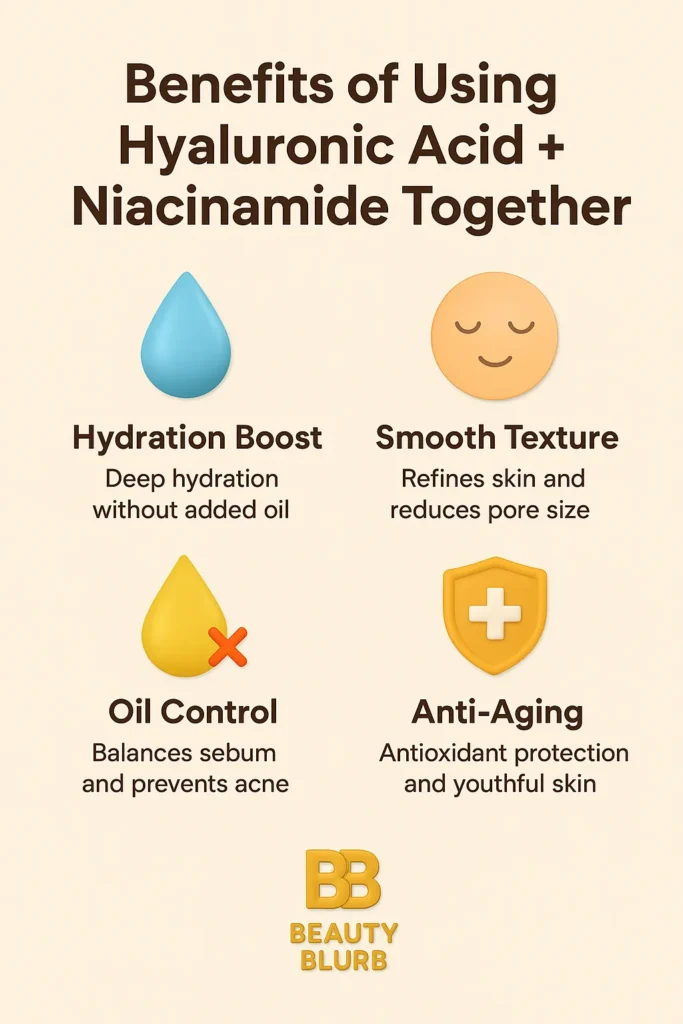
1. Enhanced Hydration Without Added Oil
- Hyaluronic Acid: As a powerful humectant, hyaluronic acid attracts moisture from the environment into the skin, providing hydration without contributing to excess oiliness. This is particularly beneficial for oily skin types.
- Niacinamide: Complementing hyaluronic acid, niacinamide improves the skin’s barrier function, helping to retain moisture and prevent dehydration. It also regulates sebum production, which can reduce the greasy appearance often associated with oily skin.
Clinical Stuy:
- A study conducted by Dr. S. Hsin in 2025 evaluated the efficacy of a topical serum containing hyaluronic acid and niacinamide, for improving facial skin quality.
- The results demonstrated significant improvements in skin hydration, elasticity, and texture among participants with oily skin types.
- The study concluded that this combination is effective in enhancing overall skin appearance and health. Source
2. Improved Skin Texture and Reduced Pore Size
Regular use of a combination of hyaluronic acid and niacinamide can lead to smoother skin texture.
Niacinamide has been found to reduce the appearance of enlarged pores by regulating sebum production and improving skin elasticity.
This results in a more refined and even skin surface, which is a common concern for individuals with oily skin.
3. Oil Control and Acne Prevention
- Niacinamide: Plays a crucial role in controlling oil production. By balancing sebum levels, it helps prevent the clogging of pores, which can lead to acne breakouts. Additionally, its anti-inflammatory properties can soothe existing acne, reducing redness and swelling.
Clinical Study:
- Another study by Dr. D. Rusic in 2024 assessed the effects of a serum containing niacinamide, hyaluronic acid, and postbiotics on facial skin.
- The findings indicated a reduction in sebum levels and an improvement in skin barrier function, highlighting the benefits of this combination for oily skin. Source.
4. Antioxidant Protection and Anti-Aging Benefits
- Antioxidant Properties: Both hyaluronic acid and niacinamide possess antioxidant properties that protect the skin from environmental stressors and free radicals. This protection is vital for preventing premature aging signs, such as fine lines and wrinkles.
- Collagen Production: Niacinamide also stimulates collagen production, contributing to firmer and more youthful-looking skin.
So, now that you know the powerful benefits of using hyaluronic acid and niacinamide together for oily skin, here’s the key takeaway:
to truly see these results, my friend, you need to follow the correct way of applying them in your routine. Using the right order, proper concentrations, and pairing them thoughtfully with other products will maximize hydration, control oil, refine pores, and keep your skin healthy and glowing.
In the next section, we’ll guide you step by step on how to layer hyaluronic acid and niacinamide together correctly, so you can enjoy all these benefits without any guesswork.
how to use niacinamide and hyaluronic acid together
I understand you’re wondering: What goes first hyaluronic acid or niacinamide? The answer is: Start with hyaluronic acid. Apply it to damp skin to draw in moisture, then follow with niacinamide to lock in hydration and address oil control.
This approach is supported by a 2024 clinical study by Dr. P. Bogdanowicz, which found that a formulation containing both niacinamide and hyaluronic acid improved skin hydration, reduced fine lines, and enhanced skin elasticity over two months of use (nature.com).
Step-by-Step routine for Oily Skin
- Cleanse: Use a gentle, water-based cleanser to remove impurities without stripping natural oils.
- Apply Hyaluronic Acid: While your skin is still damp, apply a few drops of hyaluronic acid serum. This helps attract and retain moisture.
- Apply Niacinamide: Once the hyaluronic acid has absorbed (about 30 seconds), apply niacinamide serum. This ingredient helps regulate sebum production and strengthens the skin barrier.
- Moisturize: Seal in the benefits with a lightweight, oil-free moisturizer to maintain hydration without clogging pores.
- Apply SPF (Morning Routine): Finish with a broad-spectrum sunscreen to protect your skin from UV damage.
💡 Pro Tip: Want to take your oily skin routine to the next level? Don’t just stop here — check out our Dermatologist Recommended Skin Care Routine for Oily Skin. It’s like giving your face a personal trainer… but without the sweat!

Key Tips
- Layering Order: Always apply products from thinnest to thickest consistency.
- Absorption Time: Allow each product to absorb for about 30 seconds before applying the next to prevent pilling.
- Patch Test: Before full application, perform a patch test to ensure compatibility with your skin.
- Consistency: Use this routine consistently for optimal results.
By following this method, you can effectively combine niacinamide and hyaluronic acid serum together to address oily skin concerns, such as excess sebum and dehydration, while enhancing overall skin health.
What Percentage of Niacinamide Is Safe to Use with Hyaluronic Acid?
Not all skincare routines are created equal, especially when it comes to combining potent active ingredients.
Many people focus on what to use, but the percentage of niacinamide can make all the difference between glowing, balanced skin and irritation — particularly for oily skin.
Using niacinamide at the right concentration alongside hyaluronic acid ensures maximum hydration, oil control, and barrier support without overloading your skin.
Here’s a clear, easy-to-follow guide for niacinamide percentages safe to use with hyaluronic acid, including considerations for pregnant women:
| Niacinamide % | Best For | Key Benefits | Notes for Oily Skin | Pregnant Women |
|---|---|---|---|---|
| 2–3% | Sensitive or new users | Gentle hydration, barrier support, minimal risk of irritation | Ideal for oily skin beginners | Safe, but consult OB if using other actives |
| 4–5% | Daily routine | Balanced oil control, smooth texture, pore refinement | Works well for most oily skin types | Generally safe, always patch test first |
| 6–10% | Targeted treatment | Strong oil control, reduces blemishes, evens skin tone | Best for oily or acne-prone skin; may cause slight tingling | Only use under dermatologist guidance |
| >10% | Intensive therapy | Maximum sebum regulation, advanced texture improvement | May irritate oily/sensitive skin; not recommended for daily use | Avoid during pregnancy |
💡 Pro Tip: Think of niacinamide as your skin’s oil manager and hyaluronic acid as the hydration hero — get the balance right, and your oily skin can finally breathe and glow.
Hyaluronic Acid and Niacinamide Together Side Effects
Using hyaluronic acid and niacinamide together is generally very safe for most skin types, including oily skin. Both are water-based, non-irritating ingredients, which makes them compatible and effective when layered.
Possible Side Effects (Rare):
- Mild Tingling or Warm Sensation: Some people might feel a slight tingle when applying niacinamide, especially at higher concentrations (6–10%).
- Breakouts: Very rarely, using a new serum or layering multiple products may trigger minor breakouts in acne-prone skin.
- Allergic Reactions: Extremely uncommon, but always perform a patch test if you have sensitive skin or are prone to allergies.
How to Minimize Side Effects:
- Start with Lower Concentrations: Begin with 2–5% niacinamide before moving to higher percentages.
- Apply HA First: Applying hyaluronic acid on slightly damp skin helps reduce potential irritation.
- Patch Test: Always test new serums on a small area of skin before full application.
- Avoid Mixing with Harsh Actives: Be cautious when layering with strong acids (AHA/BHA) or retinoids initially.
💡 Pro Tip: Think of HA as your hydration shield and niacinamide as your oil-control ally. When used correctly, side effects are minimal, and your skin gets the benefits of both without drama.
What Not to Mix with Niacinamide and Hyaluronic Acid
Hyaluronic acid and niacinamide are among the best ingredients for oily skin.
They hydrate, balance oil production, and strengthen the skin barrier. However, even these powerhouse ingredients require caution when combined with certain other actives.
Mixing them with incompatible products can reduce effectiveness or irritate your skin.
Here’s a guide to ingredients you should be careful with when using hyaluronic acid and niacinamide together:
| Ingredient | Why to Avoid Mixing | Notes for Oily Skin |
|---|---|---|
| Vitamin C (Ascorbic Acid) | Niacinamide + Vitamin C may temporarily reduce potency if mixed directly | Use Vitamin C in the morning, HA + Niacinamide at night |
| Strong Acids (AHA/BHA) | Combining with niacinamide can cause irritation or redness | Apply acids in a separate routine (morning vs evening) |
| Retinol / Retinoids | May increase sensitivity and irritation when layered with niacinamide | Use retinol at night and HA + Niacinamide in the morning or alternate nights |
| Benzoyl Peroxide | Can oxidize niacinamide, reducing its effectiveness | Use in a separate time slot; avoid direct layering |
| Copper Peptides | Niacinamide may interfere with copper peptide activity | Use at different times or alternate days |
Tips for Safe Layering:
- Separate routines: Use potentially conflicting actives in different times of the day or on alternate days.
- Apply HA + Niacinamide first: This ensures hydration and barrier support before adding strong actives later.
- Patch test new combinations: Especially important if you have oily, acne-prone, or sensitive skin.
Best Products to Combine Hyaluronic Acid and Niacinamide Together
Finding the right products is just as important as understanding how these ingredients work.
Not every serum or moisturizer is formulated to pair safely, but the good news is there are several dermatologist-approved options designed to maximize the benefits of hyaluronic acid and niacinamide together.
The key is to choose moderate concentrations, lightweight textures, and formulas with supporting ingredients such as glycerin, ceramides, or soothing botanical extracts to enhance hydration and reduce potential irritation.
| Category | Product | Why It Works |
|---|---|---|
| Cleanser | CeraVe Hydrating Cleanser | Gentle, non-stripping cleanser with ceramides and hyaluronic acid—prepares skin for layering. |
| Serum | The Ordinary Niacinamide 10% + Zinc 1% | Lightweight serum that controls oil, refines pores, and complements HA for hydration. |
| Serum | La Roche-Posay Hyalu B5 Serum | Combines hyaluronic acid with vitamin B5 to deeply hydrate and plump skin. |
| Moisturizer | Neutrogena Hydro Boost Water Gel | Oil-free, fast-absorbing gel that locks in moisture without feeling heavy on oily skin. |
| SPF (Morning) | EltaMD UV Clear Broad-Spectrum SPF 46 | Contains niacinamide to soothe skin while providing sun protection—perfect final step. |
Choosing the right product isn’t only about the percentage of active ingredients—it’s about the overall formula.
Supportive elements like ceramides, glycerin, and soothing extracts can make a noticeable difference, allowing you to layer hyaluronic acid and niacinamide together safely and effectively for optimal results.
💡 Luckily, I’ve done a full review of The Ordinary Niacinamide 10% + Zinc 1% — you can check it out here to see how it works, its benefits, and tips for oily skin!
FAQ Of niacinamide and hyaluronic acid serum together
Vitamin C (ascorbic acid) is acidic and can reduce niacinamide’s effectiveness if applied simultaneously. To maximize benefits, apply vitamin C in the morning, and layer hyaluronic acid + niacinamide in your evening routine or in separate steps. This approach keeps your skin hydrated, balanced, and radiant.
Apply retinol at night on clean, dry skin. Follow with hyaluronic acid to hydrate, then niacinamide to support the skin barrier and reduce irritation. This ensures you get anti-aging benefits without over-drying or sensitivity, especially for oily skin types.
Apply glycolic acid in the evening first. Wait for it to absorb fully. Then layer hyaluronic acid for hydration and finish with niacinamide to strengthen the barrier. This prevents irritation while still getting exfoliation and oil balance benefits.
Use vitamin C in the morning on clean skin. Follow with hyaluronic acid to hydrate and niacinamide to calm and control oil. Keeping them in separate time slots maximizes antioxidant benefits without reducing niacinamide effectiveness.
You can apply hyaluronic acid and niacinamide in both morning and evening routines. Morning use hydrates and preps skin under sunscreen; evening use locks in moisture and supports the skin barrier overnight. Always patch test new products and adjust based on how your oily skin reacts.
Apply lighter water-based serums first (like hyaluronic acid), then niacinamide, and finish with heavier or oil-based formulas. This ensures full absorption, avoids pilling, and keeps oily skin balanced.
Thank you so much for spending time with me today! 💖 I hope you now feel confident about using hyaluronic acid and niacinamide together to achieve balanced, hydrated, and radiant skin.
I’d love for you to join our community — subscribe to stay updated with the latest tips, product reviews, and expert skincare routines. And don’t forget to share your journey in the comments below:
tell us how combining hyaluronic acid and niacinamide is transforming your skin, what works best for you, or any questions you have. Your experience might just inspire someone else!
Remember, consistent use and the right technique make all the difference. Let’s make your oily skin glow together! ✨

Akram Boulaid is a dedicated Skincare Researcher and Analyst with over 7 years of intensive focus on dermatology and cosmetic ingredient science. As a globally recognized expert, his insights have been featured in major international publications, including the New York Post and GB News. A verified expert on Qwoted, Akram connects with health journalists to provide evidence-based analysis. He founded Beauty Blurb to bridge the gap between complex clinical data and practical skincare routines, specializing exclusively in the needs of oily and acne-prone skin through rigorous analysis of peer-reviewed scientific literature.