
If you’re wondering whether salicylic acid for dark spots actually works, the short answer is yes. Salicylic acid is a type of beta-hydroxy acid (BHA) that gently exfoliates the skin, clearing away dead cells and unclogging pores so fresh, brighter-looking skin can come to the surface.
This makes it especially helpful for fading spots left behind after acne or mild sun damage.
While it won’t erase every type of discoloration overnight, consistent use can gradually soften the look of dark marks and give your skin a more even tone — especially when paired with daily sunscreen to prevent new spots from forming.
In this guide, we’ll dive deeper into how salicylic acid for hyperpigmentation really works, what science and skincare experts say, and which products deliver the best results.
You’ll also discover how to build a safe routine step by step, common mistakes to avoid, and answers to the questions people ask most about using salicylic acid for discoloration.
What Are Dark Spots & Why They Appear
Dark spots are patches of skin that look darker than the rest of your face, and they often show up after your skin has been through some kind of stress.
The medical name for these marks is hyperpigmentation, which simply means your skin is making more melanin — the natural pigment that gives skin its color — in certain areas.
For many people, the most common type is post-inflammatory hyperpigmentation (PIH), which happens after a breakout, rash, or irritation. Once the pimple heals, it can leave behind a stubborn brown or purplish mark that takes weeks or months to fade.
Other dark spots can come from sun spots (caused by UV exposure) or even leftover acne scars.
The good news is that most dark spots are not permanent, and treatments like salicylic acid can help speed up the fading process.

By understanding what causes these marks in the first place, it becomes easier to pick the right skincare ingredients and build a routine that really works.
What Is Salicylic Acid & How It Works on Skin
Salicylic acid is a type of beta-hydroxy acid (BHA) that has been a go-to ingredient in skincare for decades.
Unlike water-based exfoliants, salicylic acid is oil-soluble, which means it can dive deep into your pores, dissolve excess sebum, and loosen up the buildup of dead skin cells that often leads to breakouts and uneven tone.
This deep-cleaning action makes salicylic acid especially useful for acne-prone skin and for people struggling with clogged pores.
By encouraging gentle exfoliation and boosting the skin’s natural cell turnover, it helps fresh, evenly toned skin rise to the surface — a key step in fading stubborn dark spots.
Another benefit is its natural anti-inflammatory properties. If your skin is prone to redness or post-acne irritation, salicylic acid not only clears away impurities but also calms the skin, reducing the chances of new marks forming.
In short, this single ingredient works on multiple levels: cleansing, renewing, and soothing your skin so it looks clearer and more balanced over time.
Benefits of Salicylic Acid for Dark Spots
You may be wondering: is salicylic acid good for hyperpigmentation? The short answer is yes. While it’s not a miracle overnight fix, salicylic acid has proven benefits in gently fading discoloration and preventing new marks from forming.
Let’s break down the most important benefits supported by science.
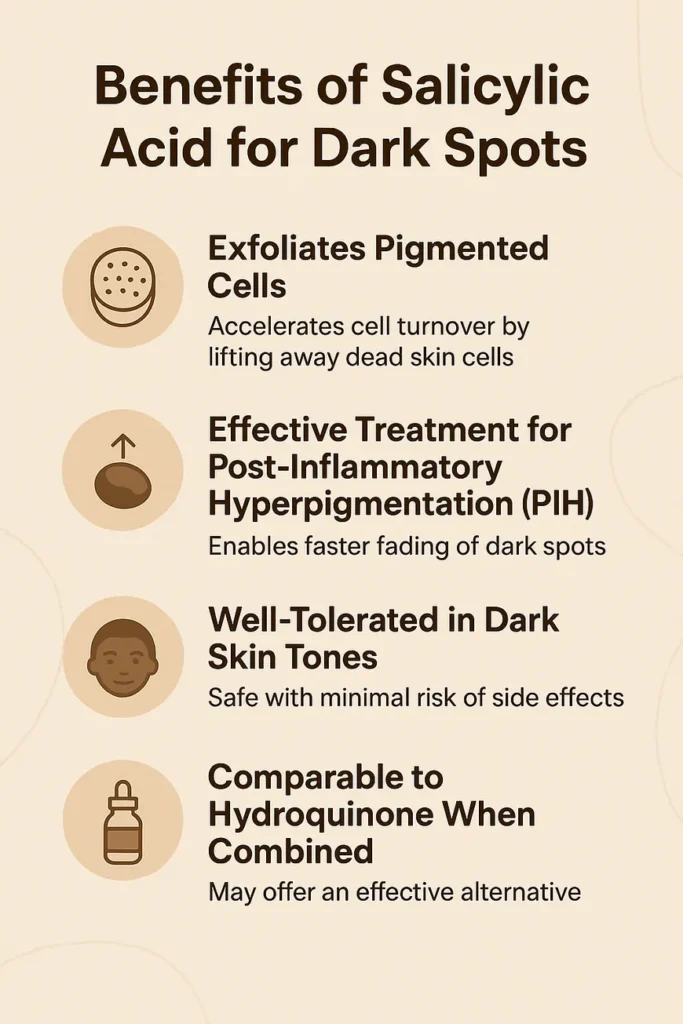
1: Exfoliates Pigmented Cells
Salicylic acid, as a beta-hydroxy acid (BHA), accelerates cell turnover by lifting away dead skin cells—especially the pigmented ones—helping fresher, more evenly toned skin emerge.
Clinical Evidence:
- A comprehensive review of salicylic acid peels confirms its effectiveness in treating pigmentation issues like melasma, freckles, and photoaging across different skin types.
- It highlights salicylic acid’s ability to disrupt cellular connections and aid in pigmentation control. Source.
2: Effective Treatment for Post-Inflammatory Hyperpigmentation (PIH)
PIH often follows acne or irritation. Salicylic acid peels gently exfoliate, enabling faster fading of these dark spots without causing further trauma to the skin.
Clinical Evidence:
- In a clinical study with 45 participants, comparing treatment groups using salicylic acid peeling (20–30%) alone versus combined with topical tretinoin (0.1%).
- the combination approach showed significantly better improvement in PIH, with good tolerability.
3: Well-Tolerated in Dark Skin Tones
For individuals with darker skin types (Fitzpatrick IV–VI), safety and minimal risk of adverse effects are critical. Salicylic acid peels offer an effective treatment path with careful application.
Clinical study:
- A controlled study involving subjects with darker skin types received multiple salicylic acid peels (20% followed by 30%).
- Though blinded clinician-rated improvement did not reach statistical significance, subjects reported significant improvement in dark spots (via self-rating).
- This underscores a positive patient-perceived outcome with minimal side effects.
4: Comparable to Hydroquinone When Combined
While hydroquinone is a strong depigmenting agent, combining salicylic acid with other brightening ingredients may offer a safer yet effective alternative.
Clinical Evidence:
- A 12-week double-blind trial compared a formula containing 0.1% salicylic acid plus ellagic acid to standard 4% hydroquinone.
- Results showed similar efficacy in spot reduction, with better cosmetic acceptability (texture, feel) for the salicylic-based formulation.
So, what does salicylic acid do for dark spots? In essence, it exfoliates, targets inflammation, works safely across diverse skin types, and can match stronger treatments when combined appropriately.
But does salicylic acid lighten skin permanently? Not exactly. Its benefits are cumulative and maintenance-dependent—continuous use and sun protection are key to lasting results.
How to Use Salicylic Acid for Hyperpigmentation
You may be wondering: can I use salicylic acid for dark spots? The answer is yes — but only if you use it the right way.
Start with a low-concentration product (0.5–1%) like a gentle cleanser or serum, introduce it slowly 2–3 times a week, and never skip broad-spectrum SPF 30+ sunscreen to protect your new, delicate skin cells.
Applied correctly, salicylic acid doesn’t just fade hyperpigmentation — it also clears clogged pores, smooths rough texture, and gradually reveals brighter, more even-toned skin.
In fact, knowing how to use salicylic acid for dark spots safely is what separates lasting results from unnecessary irritation. In the steps below, I’ll guide you through a dermatologist-inspired routine that’s easy, beginner-friendly, and effective.
1. Start Slow with a Low Concentration
For beginners, it’s best to start with a product that contains 0.5% to 1% salicylic acid. This could be a gentle cleanser or a lightweight serum.
- Frequency: Use 2–3 times per week at first.
- Goal: Allow your skin to build tolerance and avoid dryness.
💡 Pro tip: If you notice redness or peeling, scale back and moisturize generously.
2. Build Your Routine Step by Step
Once your skin adjusts, you can create a simple salicylic acid routine for hyperpigmentation:
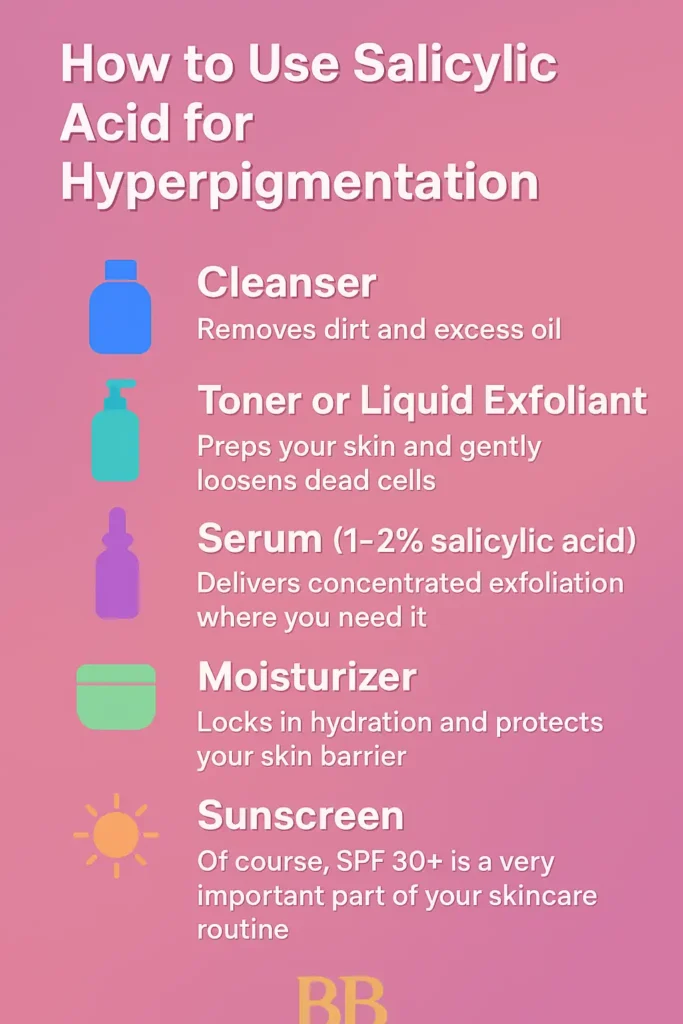
- Cleanser: Removes dirt and excess oil.
- Toner or Liquid Exfoliant: Preps your skin and gently loosens dead cells.
- Serum (1–2% salicylic acid): Delivers concentrated exfoliation where you need it.
- Moisturizer: Locks in hydration and protects your skin barrier.
👉 This layering method ensures the best way to apply salicylic acid for pigmentation without overwhelming your skin. - Sunscreen: Of course, SPF 30+ is a very important part of your skincare routine, especially for oily skin.
3. Hydration & Smart Layering
Salicylic acid works best when paired with hydration.
- Use moisturizers with hyaluronic acid or ceramides to replenish moisture.
- Avoid layering with other strong actives like retinoids or AHAs at the same time — alternate on different nights to reduce irritation.
- Yes, you can use salicylic acid every day once your skin adapts, but patience and balance are key.
4. Daily Sun Protection
Because salicylic acid reveals fresher skin, it also makes it more sun-sensitive.
- Always apply broad-spectrum SPF 30+ every morning.
- Reapply every 2 hours if you’re outdoors.
☀️ Without sunscreen, even the best routine won’t prevent new dark spots.
5. Timeline of Results
How long does it take for salicylic acid to remove dark spots:
- 2 weeks: Skin feels smoother, less oily, fewer new breakouts.
- 4 weeks: Early fading of post-acne marks and mild hyperpigmentation.
- 8 weeks: Noticeable improvement in skin tone and dark spots.
- 12 weeks: Significant fading of stubborn pigmentation, with continued improvement if maintained.
6. Know Your Skin & When to Seek Help
- If you experience redness, burning, or excessive peeling, reduce usage.
- Sensitive or reactive skin types should consult a dermatologist before starting.
- Remember: does salicylic acid lighten skin permanently? Not exactly. Results last as long as you maintain your routine and protect your skin with SPF.
✅ Summary Table: How to Use Salicylic Acid for Dark Spots On face
| Step | What to Do | Frequency | Keywords to Remember |
|---|---|---|---|
| Start Slow | Use 0.5%–1% salicylic acid in a gentle cleanser or serum to build tolerance and avoid irritation. | 2–3× per week initially | can I use salicylic acid for dark spots |
| Build a Routine | Layer: Cleanser → Toner/Liquid exfoliant → Serum (1–2%) → Moisturizer. Keep it simple and consistent. | Daily as tolerated | salicylic acid routine for hyperpigmentation |
| Hydration & Layering | Use hyaluronic acid or ceramide moisturizers; avoid combining potent AHAs/retinoids the same night—alternate instead. | Alternate nights if using other actives | best way to apply salicylic acid for pigmentation |
| Sun Protection | Apply broad-spectrum SPF 30+ every morning and reapply while outdoors—this prevents new pigmentation and protects results. | Every morning (reapply every 2 hours outdoors) | does salicylic acid lighten skin permanently |
| Timeline of Results | Expect smoother skin in 2 weeks, early fading at 4 weeks, noticeable improvement by 8 weeks, and best results around 12 weeks with consistent use. | 2–12 weeks (consistent use) | how to use salicylic acid for age spots |
So, does salicylic acid remove dark spots? Yes — if you follow these steps consistently. The key is patience, protection, and persistence. Don’t expect overnight miracles, but within a few weeks you’ll start noticing smoother, brighter, and more even-toned skin.
✨ Ready to give it a try? Start slow, stay consistent, and let me know in the comments how your skin transforms with this routine — your journey might inspire someone else too!
✨ Pro Tip (and a little secret 😉):
If you’ve got oily skin that seems to have its own personality (and maybe its own zip code 🙈), then mastering salicylic acid is just half the battle.
For the full dermatologist-approved game plan to keep that shine under control while still looking radiant, check out my guide here 👉 Dermatologist Recommended Skin Care Routine for Oily Skin. Trust me, your future glow will thank you!
Salicylic Acid for Dark Spots on Body: Possible Side Effects
When using salicylic acid for oily skin and dark spots, it’s important to know that while it can deliver great results, it may also cause some side effects — especially if used incorrectly or in high concentrations. Here are the most common ones to watch out for:
- Dryness & Flakiness
Salicylic acid is an exfoliant, which means it sheds dead skin cells. But too much can leave your skin feeling tight, flaky, or rough. - Redness & Irritation
Sensitive skin types may experience redness, itching, or stinging — especially if the product is used daily without a break. - Peeling
Some mild peeling is normal, but excessive peeling means your skin barrier is stressed and needs a rest. - Increased Sun Sensitivity
Because salicylic acid reveals newer skin cells, your skin may burn or tan faster under the sun if you skip sunscreen. - Allergic Reactions (rare)
Though uncommon, some people may develop hives, swelling, or rash. If this happens, stop use immediately and consult a dermatologist.
Final Advice:
To minimize these issues, always start with a low concentration, use salicylic acid just a few times per week at first, and never forget sunscreen. Pairing it with a gentle moisturizer can also help keep your skin barrier healthy.
And remember — when it comes to salicylic acid for dark spots and acne, consistency and balance matter more than using “the strongest” product. Treat your skin kindly, and it will reward you with the glow you’re aiming for ✨.
Glycolic or Salicylic Acid for Hyperpigmentation
Maybe you’ve heard many women asking: which is better for dark spots glycolic acid or salicylic acid? The truth is — both acids are powerful, but they shine in different ways.
Glycolic acid (an AHA) works on the surface, gently exfoliating to brighten and smooth skin tone. Salicylic acid (a BHA), on the other hand, dives deeper into the pores, making it excellent for those who deal with both dark spots and breakouts.
So, the “better” option really depends on your skin type and your main concern. Let’s break it down:
| Feature | Glycolic Acid ✨ | Salicylic Acid 🌸 |
|---|---|---|
| Best For | Surface dark spots, dullness | Dark spots + acne-prone skin |
| Depth of Action | ⭐️⭐️⭐️☆☆ Works on the surface | ⭐️⭐️⭐️⭐️☆ Penetrates pores |
| Exfoliation Strength | ⭐️⭐️⭐️⭐️☆ Strong exfoliator | ⭐️⭐️⭐️☆☆ Gentle exfoliator |
| Oil Control | ⭐️⭐️☆☆☆ Limited effect | ⭐️⭐️⭐️⭐️☆ Excellent for oily skin |
| Overall for Hyperpigmentation | ⭐️⭐️⭐️⭐️☆ | ⭐️⭐️⭐️⭐️☆ |
So, who wins in the glycolic vs salicylic acid battle? Honestly — it’s a tie! 🎀 If your skin is dull with surface-level spots, glycolic is your glow-getter. But if you’re juggling both dark spots and breakouts, salicylic might just be your new best friend.
Think of it like this: glycolic is the “smooth talker,” while salicylic is the “problem solver.” Why not keep both in your skincare squad? After all, who said your vanity shelf can’t have room for two heroes? 💅✨
Vitamin C or Salicylic Acid for Dark Spots
Maybe you’ve also heard this common debate: which is better for dark spots, vitamin C or salicylic acid? The truth is, both are heavy-hitters in the skincare world — but they work in completely different ways.
- Vitamin C (a powerful antioxidant) helps to brighten skin tone, reduce oxidative stress from UV exposure, and block the enzyme that produces excess pigment. That makes it amazing for overall glow and fading hyperpigmentation.
- Salicylic Acid (a beta-hydroxy acid) is an exfoliant that unclogs pores, reduces breakouts, and fades post-acne dark spots while smoothing skin texture.
So, if you’re torn between vitamin C serum for hyperpigmentation and salicylic acid for dark spots, let’s compare them side by side:
| Feature | Vitamin C 🍊 | Salicylic Acid 🌸 |
|---|---|---|
| Best For | Brightening & UV-related pigmentation | Post-acne marks & oily skin |
| Mode of Action | ⭐️⭐️⭐️⭐️⭐️ Antioxidant + melanin blocker | ⭐️⭐️⭐️⭐️☆ Exfoliation + pore-clearing |
| Glow Boost | ⭐️⭐️⭐️⭐️⭐️ Bright & radiant | ⭐️⭐️⭐️☆☆ Improves clarity |
| Oil Control | ⭐️⭐️☆☆☆ Minimal effect | ⭐️⭐️⭐️⭐️☆ Excellent for oily skin |
| Overall for Dark Spots | ⭐️⭐️⭐️⭐️☆ | ⭐️⭐️⭐️⭐️☆ |
So, when it comes to salicylic acid vs vitamin C for skin, the real answer is… why not both? 💕 Use vitamin C in the morning to protect and brighten, and salicylic acid at night to exfoliate and tackle spots.
Think of them as the ultimate skincare “power couple” — one brings the glow, the other keeps your skin clear. And unlike some real-life couples, these two actually get along (just don’t layer them at the same time if your skin is sensitive 😉).
What Is The Best Acid for dark spots
When it comes to treating stubborn pigmentation, many people search for the best acid for Hyperpigmentation. The truth is, there isn’t a single “magic” acid that works for everyone — instead, each one has unique strengths depending on your skin type and your concerns.
Here’s a quick breakdown of the top players dermatologists often recommend:
| Acid | Best For | How It Works | Overall Rating |
|---|---|---|---|
| Salicylic Acid 🌸 | Oily, acne-prone skin & post-acne marks | Exfoliates inside pores, fades PIH, reduces oil | ⭐️⭐️⭐️⭐️☆ |
| Glycolic Acid ✨ | Surface-level pigmentation & dullness | Removes dead cells, smooths texture, boosts glow | ⭐️⭐️⭐️⭐️☆ |
| Vitamin C 🍊 | UV-related dark spots & overall brightening | Antioxidant, inhibits melanin, boosts collagen | ⭐️⭐️⭐️⭐️⭐️ |
| Lactic Acid 🥛 | Sensitive skin with mild hyperpigmentation | Gentle exfoliation, hydrates while brightening | ⭐️⭐️⭐️⭐️☆ |
| Kojic Acid 🌿 | Stubborn pigmentation & melasma | Blocks melanin production, fades deep spots | ⭐️⭐️⭐️⭐️☆ |
So, which one is truly the best acid for hyperpigmentation? It depends on your skin’s personality 😏:
- Salicylic acid if you’re fighting acne and dark spots together.
- Glycolic acid if dullness and uneven texture are your main issues.
- Vitamin C if you want a bright, glowing, antioxidant shield.
- Lactic acid if your skin is sensitive but still needs exfoliation.
- Kojic acid if you’re dealing with stubborn melasma or deeper pigmentation.
Bottom line? You don’t have to choose just one — sometimes the best results come from combining these acids smartly into a balanced skincare routine ✨.
What Is The Best Salicylic Acid for Dark Spots (Top Products)
If you’re looking for the best salicylic acid for dark spots, dermatologists often recommend starting with proven, science-backed products.
For stubborn hyperpigmentation, the Paula’s Choice Skin Perfecting 2% BHA Liquid Exfoliant remains a cult favorite because of its powerful yet gentle formula. If your skin is sensitive or needs extra hydration, The Ordinary Salicylic Acid 2% Anhydrous Solution is a great pick.
For everyday cleansing that fights both breakouts and discoloration, try CeraVe Acne Control Cleanser or the NoLIO Salicylic Acid Cleanser. And if you love toners, La Roche-Posay Effaclar Clarifying Solution works wonders to brighten and smooth uneven skin tone.
These dermatologist-approved options aren’t just trendy—they’re effective, accessible, and trusted worldwide for fading dark spots while keeping your skin balanced.
| Product | Type | Why It’s Great for Dark Spots |
|---|---|---|
| Paula’s Choice Skin Perfecting 2% BHA Liquid Exfoliant | Leave-on Exfoliant | Cult-favorite formula that unclogs pores and fades post-acne marks quickly. |
| The Ordinary Salicylic Acid 2% Anhydrous Solution | Serum | Gentle, moisturizing version ideal for sensitive or dry skin with spots. |
| CeraVe Acne Control Cleanser | Cleanser | Foaming wash with niacinamide that reduces oil and lightens dark spots gradually. |
| La Roche-Posay Effaclar Clarifying Solution | Toner | Combines salicylic acid with glycolic acid for double exfoliation and clearer skin tone. |
| NoLIO Salicylic Acid Cleanser | Cleanser | Dermatologist-developed to calm inflammation and fade hyperpigmentation. |
So, what’s the best salicylic acid for hyperpigmentation? If you want something quick and effective, Paula’s Choice is the gold standard. For sensitive skin, The Ordinary offers a gentler alternative.
If you prefer an easy swap in your daily wash, cleansers like CeraVe or NoLIO are excellent picks. And for those who love a multitasking step, La Roche-Posay’s toner brightens while refining pores.
💡 Bottom line: choose the format that fits your routine, stick with it consistently, and your dark spots won’t stand a chance! ✨
salicylic acid for dark spots before and after
The photo you see above is from one of our Beauty Blurb community members, who kindly reached out to us via email to share her skincare journey. She wanted to inspire others struggling with dark spots by showing her real results after using salicylic acid consistently.
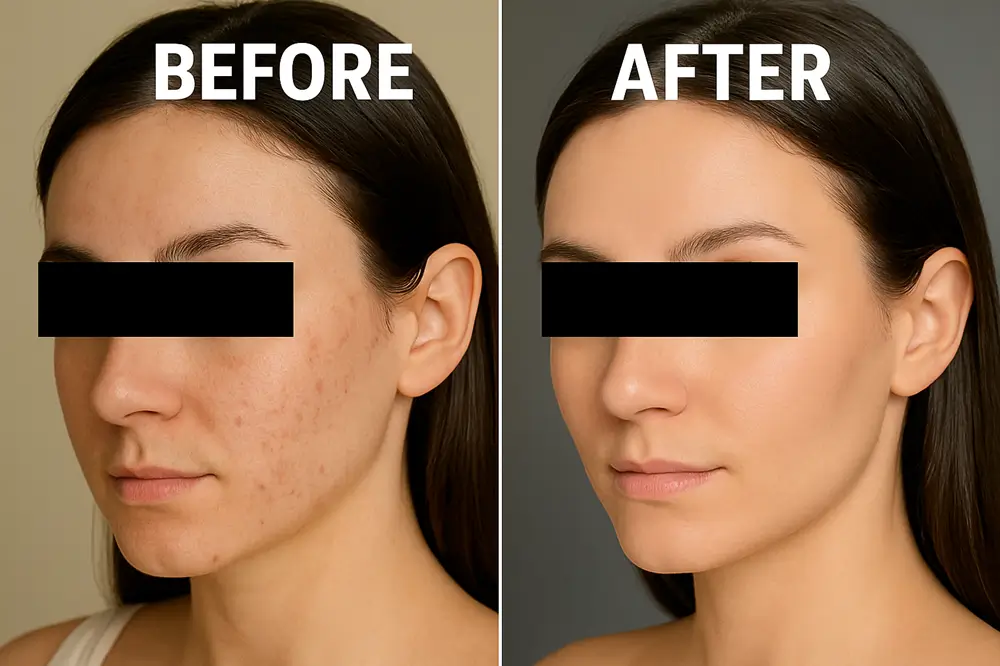
Here’s what she told us about her experience:
- ✨ First 2 weeks: She noticed her skin felt smoother, and the stubborn clogged pores started to clear up.
- 🌸 After 1 month: The darker acne marks began to fade slightly, and her overall skin tone looked more even.
- 💧 By 2 months: With consistent use and daily sunscreen, her hyperpigmentation was visibly reduced, and her skin looked healthier.
- 🌟 Now: She feels more confident, wears less makeup, and swears by salicylic acid as a game-changer in her skincare routine.
FAQ Of salicylic acid for hyperpigmentation
For a fast visual improvement, use a color-correcting concealer or a light-reflecting primer — these hide spots immediately. Topical actives like salicylic acid, vitamin C, or mild chemical peels take days to weeks to fade pigmentation; they are not instant.
If you need a quick event-ready fix, combine a hydrating primer with targeted camouflage. For lasting results, follow a consistent routine (exfoliation, targeted serums, and daily SPF) which actually lightens dark spots over time.
Niacinamide reduces pigment transfer in the skin and strengthens the barrier — it’s excellent for brightening and calming redness without irritation. Salicylic acid is a BHA that exfoliates inside pores and speeds cell turnover, which helps fade post-acne dark spots (PIH).
If you have acne-related marks and oily skin, salicylic acid + niacinamide (used in separate steps or products) is a powerful combo: BHA clears the pore, niacinamide soothes and evens tone.
Kojic acid inhibits tyrosinase, the enzyme that makes melanin, so it’s effective for slowing pigment formation. Salicylic acid accelerates turnover, helping pigmented cells shed faster. For stubborn melasma or deep pigmentation, kojic (or combination treatments) may be more directly effective; for post-acne PIH, salicylic acid is often the better first step.
Many routines pair a gentle BHA with a pigment inhibitor like kojic or azelaic acid — this tackles both shedding and pigment production safely.
Daily use of salicylic acid can be fine for some skin types (especially in low concentrations like 0.5–2% in leave-on products), but it’s best to introduce it 2–3 times per week and increase frequency as tolerated. Overuse can dry or irritate, which may worsen pigmentation.
If you aim for daily application, choose a gentle formula, pair it with hydrating ingredients (ceramides, hyaluronic acid), and always use sunscreen. If irritation appears, reduce frequency.
A 2% salicylic acid product is a commonly used, effective concentration for treating acne and post-inflammatory hyperpigmentation (PIH). It helps exfoliate pigmented cells and reduce oil/clogging that causes new marks.
Expect gradual improvement over 4–12 weeks; combining BHA with sunscreen and a brightening ingredient (niacinamide, vitamin C, or azelaic acid) speeds and stabilizes results.
Topical salicylic acid in over-the-counter low concentrations (as found in cleansers or spot treatments) may be used in older teens under guidance, but for young children it’s best to avoid or seek professional advice. Children’s skin can be more sensitive and absorb active ingredients differently.
Always check with a healthcare provider before introducing acids to a child’s routine and prefer gentler, pediatric-safe alternatives when advised.
Baking soda has a high pH and is abrasive, which can disrupt your skin’s protective barrier, cause irritation, and even worsen pigmentation. It’s not recommended by dermatologists for topical skincare.
Stick to proven, pH-balanced treatments (chemical exfoliants like BHAs/AHAs, vitamin C, azelaic acid) and always pair with sunscreen. These options are safer and more effective for fading dark spots over time.
True pigment fading takes weeks. In three days, focus on camouflage (concealer), gentle exfoliation to smooth texture, and strict sunscreen to prevent darkening. Over-exfoliating or using harsh DIYs to speed results can backfire and increase pigmentation.
Commit to a consistent routine (BHA/AHA as appropriate, brightening serums, sunscreen) and expect visible changes in 4–12 weeks rather than days.
Thank you so much for reading all the way through 💖. We hope this guide gave you clarity and confidence about using Salicylic Acid for Dark Spots in your skincare journey.
If you enjoyed this article, don’t forget to subscribe to Beauty Blurb so you never miss our latest tips, product reviews, and dermatologist-inspired routines.
And now, it’s your turn ✨ — have you ever tried salicylic acid for your dark spots? What was your experience like? Share your journey in the comments below — your story might inspire someone else to finally take that step toward clearer, glowing skin!

Akram Boulaid is a dedicated Skincare Researcher and Analyst with over 7 years of intensive focus on dermatology and cosmetic ingredient science. As a globally recognized expert, his insights have been featured in major international publications, including the New York Post and GB News. A verified expert on Qwoted, Akram connects with health journalists to provide evidence-based analysis. He founded Beauty Blurb to bridge the gap between complex clinical data and practical skincare routines, specializing exclusively in the needs of oily and acne-prone skin through rigorous analysis of peer-reviewed scientific literature.