
Can you use glycolic acid and salicylic acid together? The answer is yes, but it requires a careful approach.
Both are powerful exfoliants—glycolic acid (an AHA) targets the skin’s surface to improve texture and fade dark spots, while salicylic acid (a BHA) penetrates pores to control oil and prevent breakouts.
To safely maximize benefits, use a product specifically formulated to balance both acids, or alternate their application—one in the morning, the other at night, or on different days.
Always start slowly, monitor your skin’s response, and follow up with a gentle moisturizer and broad-spectrum SPF to maintain a healthy skin barrier.
In this article, we’ll break down everything you need to know about using glycolic and salicylic acid together safely and effectively.
You’ll discover the best routines for oily and acne-prone skin, the ideal concentrations, step-by-step application methods, potential side effects, and tips to minimize irritation.
so you can get the most out of both acids while keeping your skin smooth, clear, and radiant.
What is Salicylic Acid?
Salicylic acid for oily skin is a beta hydroxy acid (BHA) known for its ability to deeply cleanse pores and regulate excess oil.
Unlike surface exfoliants, it penetrates the pores to dissolve sebum and dead skin cells, helping prevent clogged pores, blackheads, and acne breakouts.
Its anti-inflammatory properties also help reduce redness and soothe irritated skin, making it a top choice for oily and acne-prone skin types.
Salicylic acid can be found in cleansers, toners, serums, and spot treatments. Using it correctly ensures that your skin stays clear, balanced, and healthy without over-stripping.
For maximum effectiveness, incorporate it into your routine gradually and pair it with a gentle moisturizer and broad-spectrum SPF.
This foundation prepares your skin perfectly if you plan to combine it with glycolic acid later in your routine.
What is Glycolic Acid?
Glycolic acid for oily skin is an alpha hydroxy acid (AHA) derived from sugarcane, well-known for its ability to exfoliate the skin’s surface and improve texture.
It works by breaking down the bonds between dead skin cells, promoting cell turnover and revealing smoother, brighter skin.
For oily and acne-prone skin, glycolic acid helps reduce the appearance of dark spots, uneven tone, and clogged pores, complementing the deep pore cleansing action of salicylic acid.
When used correctly, glycolic acid can be integrated into cleansers, toners, and serums to enhance your skincare routine.
Start with lower concentrations to avoid irritation, gradually increasing as your skin builds tolerance. Pairing it with gentle moisturizers and sunscreen is essential to protect your skin and maintain its natural barrier.
Understanding how glycolic acid works is key to using it safely alongside salicylic acid, allowing both acids to provide maximum benefits without compromising skin health.
Can You Use Glycolic Acid and Salicylic Acid Together
I know you might be wondering, Can I use salicylic acid and glycolic acid on alternate days? The short answer is yes—you can.
In fact, alternating between the two is one of the safest and most effective ways to enjoy the benefits of both acids without overwhelming your skin.
The real secret, however, isn’t just whether you use them together or separately, but how you use them. Before we dive into the exact methods and routines, let’s first understand the key benefits of combining glycolic acid and salicylic acid.
Benefits of Using Glycolic Acid and Salicylic Acid Together
1. Superior Acne and Breakout Control
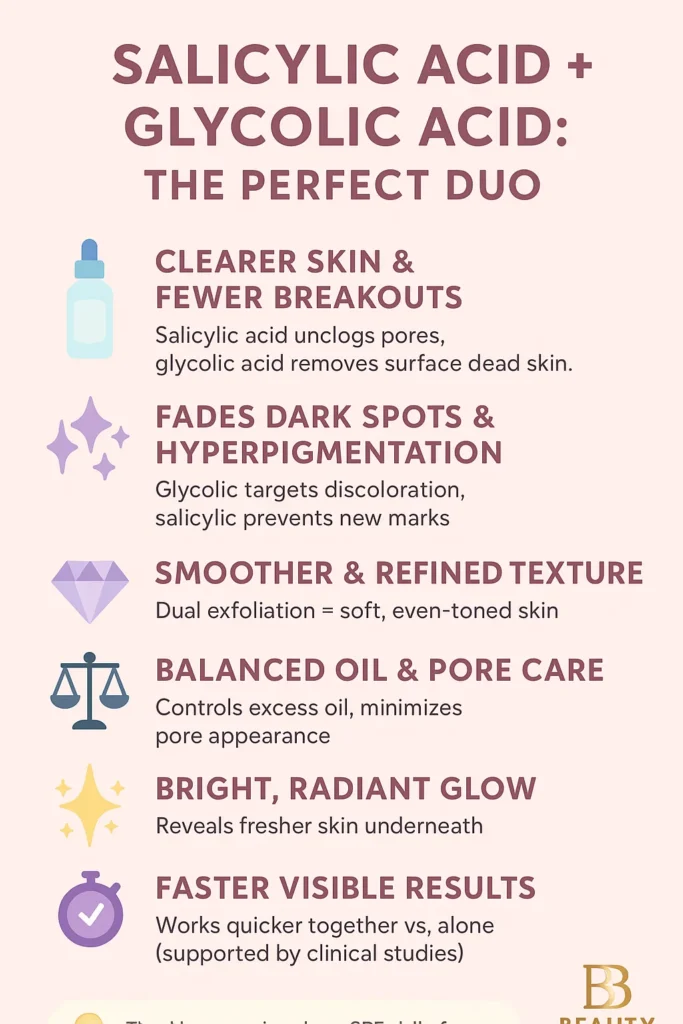
Using glycolic and salicylic acid together offers a one-two punch: glycolic acid exfoliates the skin’s surface to remove dead skin cells, while salicylic acid penetrates pores to dissolve excess oil and unclog blockages.
For salicylic acid for oily skin routines, this helps reduce both inflammatory lesions (papules, pustules) and non-inflammatory ones (blackheads/comedomes) more effectively than using either alone.
Clinical Evidence:
- In a 2021 trial by Dr. Rewan Hossam Abdel-Maged Mohamed, Dr. Mohamed Hamed Khater & Dr. Elsayed Mohamed Galal Elsayed Khater (Egyptian Journal of Hospital Medicine).
a buffered solution of 50% glycolic acid + 0.5% salicylic acid showed “excellent improvement” in 54.2% of acne lesions in mild-to-moderate acne vulgaris. ejhm.journals.ekb.eg - Also, the study “Two is better than one: The combined effects of glycolic acid and salicylic acid on acne-related disorders” (66 patients, ages 17-46).
reported that over 90% of participants noticed significant improvement in both oily skin and acne, with decrease in comedonal and cystic acne. PubMed
2. Faster Fading of Post-Acne Dark Spots and Hyperpigmentation
Glycolic acid boosts cell turnover, helping fade dark spots and uneven tone, while salicylic acid combats inflammation that can worsen hyperpigmentation.
Together, they help break the cycle: glycolic acid lifts pigmented dead skin cells; salicylic acid prevents further pigmentation by reducing inflammation and controlling oil.
3. Improved Texture and Smoother Skin Appearance
Both exfoliants remove different layers of dull, rough skin. Glycolic acid smooths the outer layer; salicylic acid works inside pores.
Combined use tends to refine skin texture, shrink the look of pores, and boost radiance—key benefits in chemical exfoliation for oily and acne-prone skin routines.
4. Reduced Risk of Side Effects Compared to High-Strength Peels Used Alone
High concentration single-acid peels can cause redness, peeling, downtime.
- The clinical study with 50% GA + 0.5% SA (above) showed few adverse effects, because the acids were buffered (pH adjusted), balancing strength with tolerability.
- Also, the split-face study comparing a mixture of glycolic + salicylic acids to 50% pyruvic acid found fewer side effects with the mixture, while achieving comparable results. PubMed
5. Increased Hydration and Skin Barrier Support (When Used Properly)
Although exfoliants can be drying, combination treatments that are formulated properly or used alternately allow time for skin barrier repair.
- In the split-face study with glycolic+salicylic vs pyruvic acid, the side treated with the acid mixture maintained or increased hydration better than harsh single peels. PubMed
So, my friend, now that you’ve discovered the science, the studies, and all the juicy benefits of using glycolic and salicylic acid together, you might be thinking:
“Great… but how do I actually put this into practice without turning my face into a science experiment?”
Don’t worry—I’ve got you covered. The real magic isn’t just in knowing the benefits, but in mastering the layering game.
Up next, we’ll walk step-by-step through how to layer these two powerhouse acids safely, when to use them, and little tricks to keep your skin glowing (and your barrier happy).
How to Use Salicylic Acid and Glycolic Acid Together
I know you’re wondering, Should you use glycolic acid or salicylic acid first? The honest answer: it depends on your skin’s tolerance and your chosen routine.
But most dermatologists will tell you: if your skin can handle it, use salicylic acid first (because it penetrates pores), wait a little, then apply glycolic acid (for surface exfoliation).
If irritation occurs, it’s safer to alternate them or use them on different times or days.
Let’s walk step by step through the safest, most effective ways to layer or alternate these acids without damaging your skin barrier.
1. Safe Layering Rules
- Never stack high-strength glycolic + high-strength salicylic acid at once.
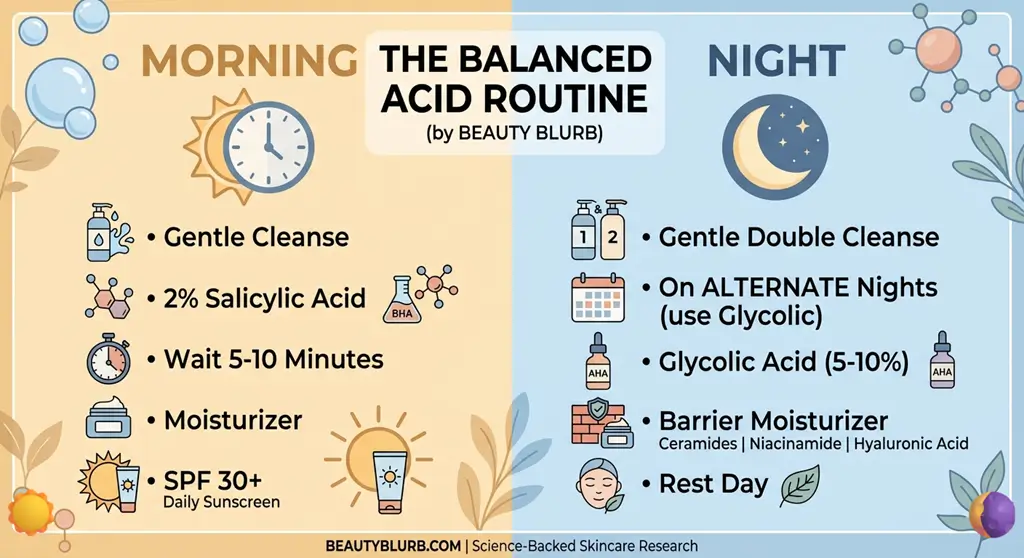
- Start with low concentrations (e.g. 2% salicylic, 5-10% glycolic) to test tolerance.
- Patch test on jawline/behind ear for 2–3 nights before applying to full face.
- Apply the weaker acid first if you layer; or better: alternate.
2. Methods to Combine / Alternate
a) Alternate Days
Use glycolic acid one night, salicylic acid the next night. This reduces risk of over-exfoliation.
- Day 1 (Night): Glycolic.
- Day 2 (Night): Salicylic.
- Day 3: Rest or hydrating only.
- Repeat.
b) Different Times of Day.
- Morning: Salicylic acid (if light, non-peeling formula).
- Evening: Glycolic acid (stronger or more exfoliating formula).
Make sure to keep enough time gap and avoid layering in same moment.
c) Targeted Application
If your skin is combination:
- Use salicylic acid on oily zones (T-zone, nose, chin)
- Use glycolic acid on flatter or pigmented areas (cheeks, jawline)
This “split zone” technique helps you benefit from both while minimizing irritation.
3. Example Routine for Oily / Acne-Prone Skin
| Time | Product | Notes |
|---|---|---|
| Morning | Gentle cleanser gel + The ordinary 2% Salicylic Acid serum | Wait 5–10 min, then apply moisturizer + SPF 30+ |
| Night (Alternate) | Glycolic Acid serum (5–10%) i recommend L’Oreal Paris Revitalift 10% Pure Glycolic Acid Serum | On alternate nights, use salicylic or take a rest day |
| Hydration (AM/PM) | Non-comedogenic moisturizer Like La Roche-Posay Toleriane Double Repair | Look for ceramides, niacinamide, hyaluronic acid |
| Rest Day | Skip acids | Focus on gentle cleansing + barrier repair + SPF |
💡 Pro Tip (and a little wink!):
If you’ve made it this far, you clearly care about your skin as much as a dermatologist does 😅. For an even deeper dive into keeping oily skin happy and balanced, don’t miss my guide:
Dermatologist Recommended Skin Care Routine for Oily Skin. Your future glow will thank you!

For those who didn’t understand the explanation, watch this video; it will explain in a simple way how to combine them together. (From my friend Melissa’s channel)
4. Clinical Support (Real Evidence)
- In the study “Two is better than one:
The combined effects of glycolic acid and salicylic acid”, a serum combining both acids was applied nightly on 66 patients with mild-to-moderate acne.
Over 90% reported significant improvement in comedonal and cystic acne, smoother texture, reduced oiliness, and better skin tone. PubMed - Another study compared 35% glycolic acid peel vs a 20% salicylic + 10% mandelic acid, combination peel in 45 patients with acne and post-acne pigmentation.
The combination peel group achieved ~74.14% reduction in lesion count over 12 weeks, with fewer adverse effects. PMC
These studies support the idea that combining or alternating these acids — when done smartly — can yield effective results with tolerable side effects.
5. Pro Tips and Safety Measures
- Always wear SPF 30+ daily — both acids increase photosensitivity.
- Start with 2–3 times per week; gradually increase frequency if your skin tolerates it.
- If you experience stinging, burning, peeling: reduce usage or stop one acid temporarily.
- Avoid using other strong actives (retinoids, physical scrubs, vitamin C) on the same nights.
- Listen to your skin — it’s okay to back off if it’s reacting badly.
- Encourage readers: “Give this method a try for a few weeks (gently!) and tell us in comments your experience — your skin story helps.”
So, Can I Use Salicylic Acid in the Morning and Glycolic Acid at Night?
Yes, you can — and in fact, this timing can work beautifully for many skin types when done with balance.
Salicylic acid in the morning helps keep pores clear throughout the day, reduces midday shine, and sets up a smoother base under makeup or sunscreen.
Meanwhile, glycolic acid at night supports your skin’s natural overnight renewal process, enhancing cell turnover while your skin is in its repair phase.
The key is moderation: think of it as giving your skin “day defense” with salicylic acid and “night renewal” with glycolic acid.
If at any point your skin feels tight, flaky, or overly sensitive, don’t push it—add rest days or scale back the frequency.
Always pair this approach with barrier-friendly hydration and daily SPF, and you’ll maximize benefits while minimizing risks.
Try it consistently for a few weeks, listen to your skin, and you may find this AM/PM strategy to be the sweet spot between clarity and glow.
What Percentage of Glycolic Acid Is Safe to Use with Salicylic Acid?
The safest way to combine glycolic acid and salicylic acid together at home is to keep them in low to moderate concentrations.
Dermatologists generally recommend glycolic acid under 10% (for leave-on products) and salicylic acid at 0.5–2%.
These levels are effective enough for oily and acne-prone skin without overwhelming your barrier.
Higher strengths (like 20–50% glycolic acid or 20–30% salicylic acid) are usually reserved for professional chemical peels, not daily skincare.
For pregnant or breastfeeding women, avoid salicylic acid in high concentrations. A 2% topical is usually considered low-risk when used sparingly.
but it’s always safest to consult your doctor before combining acids. Glycolic acid under 10% is generally safer, but again—medical advice first.
Recommended Safe Concentrations
| Skin Type | Glycolic Acid % | Salicylic Acid % | Notes |
|---|---|---|---|
| Oily / Acne-Prone | 5–10% | 1–2% | Helps reduce breakouts, unclog pores, improve texture |
| Sensitive Skin | ≤5% | 0.5–1% | Use sparingly, 2–3 nights per week max |
| Pregnant / Breastfeeding | ≤8–10% | Avoid or ≤0.5% with doctor’s approval | Always consult a healthcare provider first |
| Professional Peel | 20–50% | 20–30% | Only under dermatologist supervision |
Final Thoughts
When it comes to acids, strength doesn’t always mean better. Consistency at safe concentrations is more effective (and skin-friendly) than pushing your limits.
Pairing glycolic acid and salicylic acid at low levels can deliver results like smoother texture, reduced acne, and faded dark spots without compromising your barrier.
If you’re tempted to jump straight into higher percentages, remember: dermatologists use strong peels in controlled settings for a reason. Start low, go slow, and let your skin adapt.
That’s how you unlock the real benefits of using salicylic acid and glycolic acid together.
Myth vs Truth: Glycolic and Salicylic Acid Together
❌ Myth #1: You can’t use glycolic and salicylic acid together.
✅ Truth: You actually can. When kept at safe levels (glycolic acid ≤10%, salicylic acid ≤2%), this duo works as a powerful but gentle exfoliation system. Clinical studies even show that combination peels with glycolic and salicylic acid together can deliver better acne reduction and skin texture improvement than single-acid treatments.
❌ Myth #2: Stronger acids mean faster, better results.
✅ Truth: More isn’t always more. Pushing glycolic acid above 20% or salicylic acid above 2% at home usually leads to redness, burning, or barrier damage. Consistency with moderate concentrations is far more effective—and safer—than chasing instant results.
❌ Myth #3: Acids thin your skin permanently.
✅ Truth: This is one of the biggest misconceptions. AHAs and BHAs only exfoliate the outer dead cell layer (stratum corneum). Over time, glycolic acid can even stimulate collagen, which thickens and strengthens the living skin beneath.
❌ Myth #4: Pregnant women must avoid all acids.
✅ Truth: While high-strength salicylic acid should be avoided, low-strength glycolic acid (≤8–10%) is generally considered safe during pregnancy. Some dermatologists may also allow ≤0.5% salicylic acid in spot treatments—but always check with your doctor before adding acids to your pregnancy skincare routine.
❌ Myth #5: If you don’t see peeling, it’s not working.
✅ Truth: Visible peeling is not required for acids to work. Glycolic and salicylic acid often deliver results on a microscopic level—improving cell turnover, unclogging pores, and brightening tone without causing flaking.

✨ Bottom line: Don’t let myths stop you from enjoying the proven benefits of using glycolic and salicylic acid together. When used smartly, they can clear acne, smooth texture, and boost glow—without the scary side effects many people fear.
Salicylic Acid and Glycolic Acid Together Side Effects
When combining salicylic acid and Glycolic acid together, most people experience positive results like fewer breakouts, smoother skin texture, and reduced post-acne marks. However, just like any active skincare combination, there are potential side effects you should be aware of before adding both to your routine.
1. Initial Irritation
Both acids exfoliate, so your skin may feel a bit tingly or warm at first. This usually settles within a few minutes. If burning persists, wash off immediately and reapply on alternate days instead of daily.
2. Redness and Dryness
Overusing this combo can strip natural oils, leading to dry patches, redness, or a tight feeling. Always buffer with a hydrating moisturizer and introduce acids slowly (2–3 times a week).
3. Sensitivity to Sunlight
Like most exfoliating acids, salicylic and Glycolic acids can increase photosensitivity. Daily use of broad-spectrum sunscreen SPF 30+ is non-negotiable when you’re trying to balance exfoliation with protection.
4. Risk of Over-Exfoliation
Using them together with other strong actives (like retinoids or high-strength AHAs) can disrupt your skin barrier. The safest way is to keep your routine simple: cleanser → Glycolic acid → moisturizer → SPF (AM) and salicylic acid in the PM, or alternate days.
5. Not Always Pregnancy-Safe
While Glycolic acid is generally considered safe during pregnancy, salicylic acid (especially high concentrations) should be avoided unless your doctor approves.
✨ Key Takeaway: When used carefully, this pairing works wonders for acne-prone and sensitive skin. But to maximize results while minimizing irritation, keep your routine minimal, hydrate generously, and never skip sunscreen.
👉 And if you’re wondering what else belongs in a smart routine, don’t miss my breakdown of the best ingredients for oily skin—because combining acids is just one piece of the clear-skin puzzle.
What Not to Mix with Salicylic Acid and Glycolic Acid
Even though salicylic acid and Glycolic acid are safe and effective, they don’t play well with every ingredient. Mixing them with the wrong actives can cause irritation, dryness, or even make them less effective. Here’s a quick cheat sheet:
🚫 Ingredients You Shouldn’t Mix
| Ingredient | Why Avoid Mixing |
|---|---|
| Retinoids (Retinol, Tretinoin) | Too harsh together → irritation, redness, peeling. |
| High-strength AHAs (Lactic, Mandelic in high %) | Increases risk of over-exfoliation and dryness. |
| Vitamin C (Ascorbic Acid) | Can destabilize Vitamin C and cause stinging. |
| Benzoyl Peroxide | May cause extreme dryness and irritation when paired. |
| Physical Scrubs | Too abrasive with chemical exfoliants, damages barrier. |
Can I use glycolic acid with salicylic acid and Niacinamide?
Yes, you can use glycolic acid with salicylic acid and niacinamide, but not all in the same step.
The safest way is to layer acids first (salicylic or glycolic depending on your skin concern), let them absorb fully, and then follow with niacinamide to calm, hydrate, and strengthen the skin barrier.
👉 Quick tip: If you have oily or acne-prone skin, start with salicylic acid to clear pores, then use glycolic acid on alternate nights for surface exfoliation. Finish with niacinamide daily—it balances oil, reduces redness, and supports long-term skin health.
Best Products to Combine Salicylic Acid and Glycolic Acid Together
Finding the right products makes all the difference when you want to use salicylic acid and glycolic acid together.
Not every serum or toner is formulated to work well in the same routine. Some are too strong, while others may lack balance.
The key is to look for dermatologist-tested formulas with safe concentrations, hydrating bases, and complementary ingredients that protect your skin barrier.
Here’s a curated list of tried-and-true options:
| Product | Type | Key Benefits | Best For |
|---|---|---|---|
| The Ordinary Glycolic Acid 7% Toning Solution | Toner (AHA) | Exfoliates surface, brightens, fades dark spots | Dull skin, uneven tone |
| The Ordinary Salicylic Acid 2% Solution | Serum (BHA) | Deep pore cleaning, reduces acne, controls oil | Oily and acne-prone skin |
| Paula’s Choice Skin Perfecting 2% BHA Liquid Exfoliant | Liquid Exfoliant | Unclogs pores, reduces blackheads, smoother texture | Blackhead-prone skin |
| Pixi Glow Tonic (5% Glycolic Acid) | Toner | Gentle exfoliation, glow-boosting, hydrating | Sensitive or beginner-friendly routines |
| COSRX AHA/BHA Clarifying Treatment Toner | Toner Spray | Balances pH, mild exfoliation, soothes skin | Daily gentle exfoliation |
The secret isn’t about choosing the “strongest” acid—it’s about choosing products with balanced formulations that work well together. Start slow, alternate usage, and always listen to your skin.
And here’s the exciting part: I’ve personally reviewed both The Ordinary Salicylic Acid Serum and The Ordinary Glycolic Acid Toner, so if you want an in-depth breakdown of how they perform individually and in combination, check out my full reviews.
✨ Pro tip: Start by using glycolic acid 2–3 nights per week and salicylic acid every other morning. Once your skin builds tolerance, you can adjust frequency—but remember, balance always beats intensity.
Top 5 Science-Backed Products with glycolic acid and salicylic acid
Can’t Choose? Here Are the Best 2-in-1 Products 🧪✨
My top picks for you? If you want a professional-grade exfoliation, go for the Paula’s Choice Advanced Smoothing Treatment. If you prefer a daily wash that keeps breakouts away, the La Roche-Posay Effaclar Serum is your gold standard.
Below is a curated list of the top 5 products currently dominating the market for their stability and results:
| Product Name | Acid Blend | Price | Rating | Best For |
|---|---|---|---|---|
| Paula’s Choice Advanced Smoothing | 10% AHA + 2% BHA | $$$ | ★★★★★ | Anti-Aging & Texture |
| La Roche-Posay Effaclar Serum | Glycolic + Salicylic + LHA | $$ | ★★★★☆ | Adult Acne |
| Murad Outsmart BHA Treatment | Salicylic + Glycolic | $$$ | ★★★★☆ | Severe Breakouts |
| The Ordinary AHA 30% + BHA 2% | High Conc. Blend | $ | ★★★★★ | Experienced Users |
| CeraVe Acne Control Gel | 2% Salicylic + AHA Blend | $ | ★★★★☆ | Sensitive Oily Skin |
*Prices are estimated: $ (Budget), $$ (Mid-range), $$$ (Premium).
How to Use Them Safely? (Pro-Tip) 💡
Using both acids at once is powerful, but you need to be smart about it. Think of it like a “workout” for your skin—you don’t want to overtrain and cause a chemical burn.
The Golden Protocol:
- Patch Test: Always try the product on a small area first.
- Night Use Only: These acids make your skin sensitive to the sun.
- The “Sandwich” Method: If you have sensitive skin, apply a thin layer of moisturizer before the acid to buffer the strength.
Example Routine:
- Monday Night: Double Cleanse -> Combined Acid Serum -> Hydrating Moisturizer.
- Tuesday Night: Double Cleanse -> Barrier Support Serum (Ceramides) -> Moisturizer.
- Always wear SPF 50 the next morning!
FAQ Of Glycolic Acid and salicylic acid together
Clear, friendly answers to the most common skincare questions.
Both are exfoliating acids, so layering them in the same routine can cause irritation. The safest way is to use salicylic acid in the morning (controls oil and unclogs pores) and glycolic acid at night (improves texture and fades spots). Alternatively, use them on alternate days. Always follow with moisturizer + SPF.
If you’re using both in the same routine (not recommended for beginners), use salicylic acid first because it penetrates pores more effectively. Wait a few minutes, then follow with glycolic acid. But for sensitive skin, alternate days instead.
Oily and acne-prone skin often tolerates daily use of 1–2% salicylic acid. If you have sensitive or dry skin, start with 2–3 times per week. Overuse may cause redness or dryness, so adjust based on tolerance.
Begin with a lower percentage (5% or less) and use it only 1–2 times a week. Always pair with moisturizer and SPF. If redness or stinging persists, reduce frequency or switch to a gentler exfoliant like lactic acid.
Low-strength glycolic acid is generally considered safe during pregnancy. For salicylic acid, small topical amounts may be fine, but avoid high concentrations and always consult your OB-GYN before use.
Glycolic acid exfoliates, allowing niacinamide to penetrate better. Use glycolic acid first, wait 10–15 minutes, then apply niacinamide. This combo brightens skin and strengthens the barrier.
Both are potent exfoliants. Using them together may cause irritation. Alternate nights: glycolic acid on some days, retinol on others. Always moisturize well and apply SPF in the morning.
Both acids increase sun sensitivity. Without SPF, your skin risks burns, irritation, and dark spots. Always finish your AM routine with a broad-spectrum sunscreen (SPF 30 or higher).
Thank you for staying with me until the end, my friend! 💕 By now, you’ve learned not only whether salicylic acid and glycolic acid together can truly transform your skin.
but also the safest ways to use them, what to avoid, and which products deliver the best results.
If you’re just starting this journey, remember: patience and consistency are your best beauty tools. ✨ Don’t be afraid to test, adjust, and listen to your skin — it’s the best guide you’ll ever have.
I’d love to hear about your experience! Drop a comment below sharing how your routine with these acids is going (the wins, the struggles, or even your funny skincare fails 🤭).
And if you found this guide helpful, don’t forget to subscribe so you’ll never miss new tips, routines, and dermatologist-backed secrets for glowing, healthy skin.
Your clear-skin journey is just beginning, and I can’t wait to see you shine! 🌸

Akram Boulaid is a dedicated Skincare Researcher and Analyst with over 7 years of intensive focus on dermatology and cosmetic ingredient science. As a globally recognized expert, his insights have been featured in major international publications, including the New York Post and GB News. A verified expert on Qwoted, Akram connects with health journalists to provide evidence-based analysis. He founded Beauty Blurb to bridge the gap between complex clinical data and practical skincare routines, specializing exclusively in the needs of oily and acne-prone skin through rigorous analysis of peer-reviewed scientific literature.