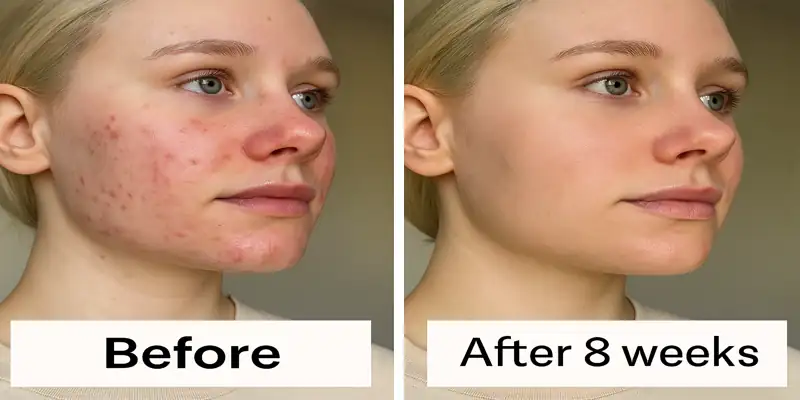
If you’re struggling with acne scars, salicylic acid for acne scars can be a game-changer. This powerful ingredient helps exfoliate your skin, unclog pores, and fade discoloration, making your skin smoother and more even-toned.
Many people see noticeable improvements when used consistently as part of their skincare routine.
You might be wondering, is salicylic acid good for acne scars? In this article, we’ll break down how it works, the best concentrations for oily skin, a step-by-step morning and evening routine.
Then I will give you some tips for combining it with other products, and what results you can realistically expect. By the end, you’ll have a clear plan to tackle your acne scars effectively.
Let’s dive deeper into how salicylic acid works, the best ways to use it for oily skin, and practical tips to get the most out of your skincare routine. By following this guide, you’ll know exactly what to do to reduce acne scars safely and effectively.
What Is Salicylic Acid and How Does It Work?
You’ve probably heard of salicylic acid, but what makes it so popular in skincare, especially for people with oily skin and acne scars? Simply put, it’s one of the most trusted ingredients when it comes to exfoliation and scar treatment. Let’s break it down.
Salicylic acid is a BHA (beta hydroxy acid) that comes from willow bark. Unlike AHAs such as glycolic acid, it is oil-soluble, which means it can pass through the skin’s natural oils and reach deeper layers.
This unique property makes it ideal for people with clogged pores and persistent breakouts.

Why It’s Different From AHAs:
Many exfoliating acids fall under the AHA family (like glycolic or lactic acid). These are water-soluble, which means they mainly work on the outer surface of the skin.
Salicylic acid, being oil-soluble, goes further by working inside the pores. This makes it especially suited for scar treatment related to acne, where clogged pores and excess sebum are usually part of the problem.
Because of its oil-penetrating properties, salicylic acid has become one of the most trusted choices for managing oily skin. It doesn’t just sweep away debris—it also helps maintain a clearer environment inside the pores, which is critical for anyone prone to breakouts and the scars that often follow.
summary:
In simple terms, salicylic acid works by entering the pores, breaking down excess oil and dead skin buildup, and encouraging your skin to renew itself more effectively. This unique mechanism is what makes it a foundation ingredient in many scar treatment routines.
Salicylic Acid for Acne Scars (Is It Good?)
Does salicylic acid remove acne scars? The short answer is yes—salicylic acid can significantly improve the appearance of acne scars, but it works gradually. It doesn’t erase scars overnight, but by promoting skin renewal and keeping pores clear, it helps scars fade and the skin look smoother over time.
Here are the key benefits of salicylic acid for acne scars:
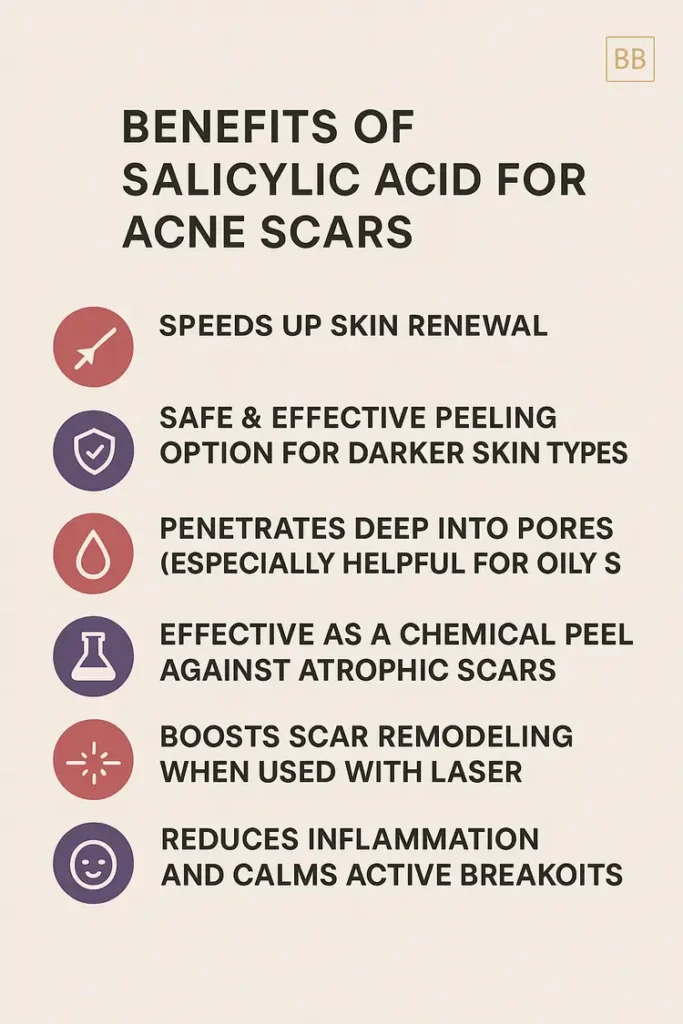
1. Speeds Up Skin Renewal
Salicylic acid gently encourages your skin to shed old, damaged surface cells, making room for fresher, smoother skin underneath. It’s not a quick fix, but used consistently, it supports long-term improvement in scar texture.
A Cochrane review notes that chemical peels like 20% salicylic acid help reduce superficial acne scars and pigmentation (source: Cochrane Database). Source.
2. Safe & Effective Peeling Option for Darker Skin Types
Salicylic acid peels are shown to be both effective and well-tolerated, even in patients with darker or sensitive skin tones.
Study details:
- Lead researcher: Kim KE and colleagues
- Participants: 35 Korean patients (Asian skin, Fitzpatrick types IV–V)
- Duration: 12 weeks of biweekly 30% salicylic acid peels
- Results: Significant reduction in both inflammatory and non-inflammatory acne lesions; patients were very satisfied and side effects were mild and tolerable. Source.
3. Penetrates Deep into Pores (Especially Helpful for Oily Skin)
Because salicylic acid is oil-soluble, it penetrates through sebum-blocked pores—unlike water-soluble acids—making it especially effective for oily, acne-prone skin that’s prone to scarring.
Clinical insight:
Salicylic acid works by breaking down intercellular lipids and comedone blockages, which helps reduce scarring (source: Wikipedia on medical uses and mechanism).
4. Effective as a Chemical Peel Against Atrophic Scars
In more intensive treatments, using higher concentrations of salicylic acid as a chemical peel can visibly improve atrophic (depressed) acne scars.
What did science say:
A randomized trial (32 patients) evaluated the effectiveness of 30% salicylic acid in polyethylene glycol vs placebo and showed significant improvement in treatment-resistant acne scars. Source.
5. Boosts Scar Remodeling When Used with Laser
Combined treatment with salicylic acid and laser can deliver noticeably better results than laser alone.
Scientific Insight:
- A study by Dr. Yu Jie Zhang and colleagues at Chongqing Medical University (2022) enrolled 72 patients with facial atrophic acne scars.
- They compared fractional CO₂ laser alone versus laser combined with 30% supramolecular salicylic acid.
- After four sessions, the combined group achieved a 95.8% effective rate versus 67.2% in the laser-only group. Patients also reported less pain and higher satisfaction. Source.
6. Promotes Collagen Production
Collagen is your skin’s natural support structure. By helping boost collagen, salicylic acid makes acne scars look firmer and less noticeable over time.
Scientific study:
- A double-blind, randomized, placebo-controlled trial at Xi’an Jiaotong University (2024) involved 36 participants with photodamaged hands.
- Researchers applied 30% supramolecular salicylic acid (SSA) twice weekly plus 2% SSA daily for 4 months, with follow-up after treatment ended.
- The result? A significant increase in dermal collagen density and skin elasticity, plus dermal thickness improvement—without any adverse effects. Nearly 98% of subjects were satisfied. Source.
7. Reduces Inflammation and Calms Active Breakouts
Acne scars often come with lingering redness and swelling. Salicylic acid helps soothe inflammation in real-time, supporting the overall healing process and making scars less red and irritated.
Backed by science:
- A 2019 in vitro and animal model study led by Yoon JY and colleagues demonstrated that salicylic acid downregulates the AMPK/SREBP-1 pathway and inhibits NF-κB inflammatory signaling in sebocytes.
- In a rabbit acne model, applying SA for three weeks reduced inflammatory cytokines around lesions—clearly showing its anti-inflammatory effect.
So, is salicylic acid good for acne scars? Yes—when used correctly, it can make a real difference.
While it won’t erase scars overnight, science shows that salicylic acid helps by gently exfoliating dead skin, stimulating collagen production, and calming inflammation. Over time, this combination leads to smoother texture, less redness, and a healthier-looking complexion.
If you’re dealing with oily or acne-prone skin, incorporating salicylic acid into your skincare routine—or combining it with professional treatments—may give you the best results.
Always start slow, listen to your skin, and consult a dermatologist if you’re unsure. With consistency and the right approach, salicylic acid can become one of your strongest allies in the journey to clearer, more confident skin.
How to Use Salicylic Acid for Acne Scars (Especially for Oily Skin)
If you’re wondering how to build a routine around salicylic acid for acne scars, here’s a clear, step-by-step guide that combines efficacy with skin-friendliness—particularly for oily, acne-prone skin types.

Morning Routine (AM)
- Gentle Cleanser: Start your day with a gentle, non-comedogenic cleanser (preferably gel or foam) to remove oil without stripping your skin barrier. This ensures your skin is clean and ready for actives.
- Apply Salicylic Acid (0.5–2%): Use a lightweight serum or toner containing 0.5–2% salicylic acid. It helps fade acne scars and clear pores gently—perfect for daytime use on oily skin.
- Moisturizer: Follow up with an oil-free, non-comedogenic moisturizer. Ingredients like ceramides or hyaluronic acid are great for maintaining hydration without clogging pores.
- Sunscreen (SPF 30 or higher): Never skip sunscreen—salicylic acid increases sun sensitivity, so broad-spectrum protection is essential.
Evening Routine (PM)
- Oil Cleanser (First Cleanse)
Begin with a gentle oil-based cleanser to dissolve accumulated sebum, sunscreen, and impurities—a crucial step for oily or acne-prone skin. - Gentle Cleanser (Second Cleanse)
Follow with a mild foaming cleanser. This double cleansing method ensures your skin is thoroughly clean and prepped for the active ingredient. - Apply Leave-On Salicylic Acid Product
Choose your product and frequency based on what your skin can handle:
| Product Type | Concentration | Frequency & Tips |
|---|---|---|
| Gentle Serum/Toner | 0.5–2% | Use nightly after double cleanse. |
| At-Home Peel (Mask) | 10–20% | 1–2 times/week; monitor your skin’s tolerance. |
| Professional Peel (Clinic Only) | 20–30% | Use under dermatologist guidance only. |
Clinical evidence confirms these peels aid in acne scar reduction—like a study of 100 patients where 20% salicylic acid peel outperformed 35% glycolic acid (67% vs 61% improvement).
4. Moisturizer Again: Always finish with moisturizer to support the skin barrier and minimize dryness or sensitivity.
Why This Routine Works Better
- Double cleansing (oil + gentle cleanser) ensures a deeper clean—key for acne-prone, oily skin—and enhances active product absorption.
- Variable concentrations allow you to start gently and gradually progress to stronger formulations if your skin tolerates it.
- Evidence-backed effectiveness: Controlled clinical trials, such as the one above, provide solid proof that salicylic peels can significantly improve acne scarring.
Pro Tips for Best Results
- Always start with a patch test when trying a new product, particularly for acids.
- Use sunscreen diligently, especially if using leave-on salicylic acid or performing weekly peels.
- Be consistent—results take weeks: salicylic acid fade scars gradually, so patience pays off.
Takeaway (TL;DR):
Double cleanse with oil + gentle cleanser, apply salicylic acid (serum or peel as tolerated), moisturize, and don’t forget your sunscreen. Stick with it, and you’ll see smoother, clearer skin over time.
Pro Tip for Oily Skin:
If you have oily, acne-prone skin, building a complete skincare regimen around salicylic acid is key. For a step-by-step dermatologist recommended skin care routine for oily skin, check out this guide. It will help you combine salicylic acid with the right cleansers, moisturizers, and sunscreens for the best results.
How Long Does It Take for Salicylic Acid to Work on Acne Scars?
Many people ask: “How long does salicylic acid take to remove acne scars?”
Great question. Here’s the answer, clearly and with details:
TL;DR Answer:
Yes, salicylic acid can help improve acne scars—but it takes time. For most people, you’ll start to notice changes in 4 to 6 weeks. Deeper or older scars often require 3 to 6+ months of consistent use.
Detailed Timeline: What to Expect
| Scar Type | Timeline for Visible Improvement |
|---|---|
| Post-Inflammatory Hyperpigmentation (PIH) | ~4–6 weeks with steady application |
| Mild, superficial scars | ~2–3 months |
| Deeper scars (e.g., ice-pick, boxcar) | 3–6+ months or more |
| Severe, longstanding scarring | Likely needs clinical treatments (e.g., peels, lasers) |
Clinical Insight to Support This Timeline
- Multiple-session peeling: Research indicates that 30% salicylic acid peels, done 3–5 times every 3–4 weeks, deliver the most effective improvement for acne scars. Improved texture typically appears after this series. Source.
- Clinical trial comparison: A split-face study with 100 participants used 20% SA peel on one side and 35% glycolic acid peel on the other. After six sessions over 12 weeks, SA worked faster—67% saw improvement vs. 61% with glycolic acid. Source.
- Scar remodeling timeline: A dermatology review emphasizes that while acne lesions may clear in about 3 months, true scar remodeling and collagen renewal can take up to 6 months. Source.
Why Consistency and Patience Matter
- Scar type matters: Hyperpigmentation fades faster than textural scars—those need more time and deeper intervention.
- Skin turnover: Salicylic acid speeds up exfoliation, but real visible results depend on constant application and efficient cell turnover.
- Supportive routine: Using sunscreen (SPF ≥ 30), moisturizing, and avoiding harsh products help maximize results.
Dealing with pimples scars can feel like a long journey, but remember—you’re not alone, and progress is possible. Salicylic acid is one of the most trusted ingredients for scar treatment, and with patience and consistency, you can start to see real changes in your skin.
We’d love to hear from you! 💌
If you decide to try salicylic acid for acne scars, share your full experience with us—whether through the comments below or by emailing us directly at [your email here]. Your story could be featured on our site to inspire and guide others who are on the same journey.
✨ Your feedback doesn’t just help you—it helps our entire community of readers who are searching for hope and real solutions.
What Not to Use with Salicylic Acid?
When using salicylic acid for pimples scars, it’s important to know which ingredients should not be combined with it. The wrong mix can lead to irritation, dryness, or even reduce the effectiveness of your treatment. Here are the main products to avoid:

❌ Retinol (Vitamin A)
Both retinol and salicylic acid speed up skin cell turnover. When layered together, they often cause redness, peeling, and sensitivity. If you want to use both, keep them in separate routines—salicylic acid in the morning and retinol at night.
❌ Vitamin C (Ascorbic Acid)
Vitamin C is a powerful antioxidant, but it requires a stable pH to work effectively. Using it alongside salicylic acid may compromise its benefits.
To get the best of both, apply Vitamin C in the morning and keep salicylic acid for your evening routine.
❌ Benzoyl Peroxide
This is another popular acne treatment, but pairing it with salicylic acid can overdry your skin and cause irritation. A safer approach is to alternate them on different days instead of using them together.
❌ Other Strong Acids (AHAs like Glycolic, Lactic, Mandelic)
Mixing multiple exfoliating acids with salicylic acid increases the risk of barrier damage, flakiness, and sensitivity. Stick to one chemical exfoliant at a time unless guided by a dermatologist.
❌ Harsh Physical Scrubs
Because salicylic acid is already exfoliating the skin, adding gritty scrubs can create micro-tears and worsen scarring. Gentle cleansers are a much safer choice.
👉 The bottom line: Keep your routine simple. Salicylic acid for acne scars works best when paired with hydrating and soothing products, not layered with multiple actives that compete or irritate your skin.
Which acid is best for acne scars: Other Acids for Acne Scars
While salicylic acid for acne scars is one of the most popular treatments, it’s not the only option. Different acids target pimples scars in different ways, and some may be better suited to your skin type. Here’s a quick comparison:
| Acid | Type | Benefits | Drawbacks | Effectiveness |
|---|---|---|---|---|
| Salicylic Acid | BHA | Penetrates deep into pores, removes oil and dead skin, reduces inflammation, and improves scar texture—great for oily skin. | May be drying or irritating for sensitive skin if overused. | ⭐⭐⭐⭐⭐ |
| Glycolic Acid | AHA | Surface exfoliation, boosts cell turnover, helps even out tone and texture; useful for discoloration. | Can irritate sensitive skin; start slow and monitor tolerance. | ⭐⭐⭐⭐ |
| Lactic Acid | AHA | Gentler exfoliation than glycolic, promotes smoother, more hydrated-looking skin. | Less effective for deeper, textural acne scars. | ⭐⭐⭐ |
| Mandelic Acid | AHA | Mild, low‑irritation exfoliation; can suit sensitive or reactive skin types. | Usually not strong enough for stubborn or deep scars. | ⭐⭐⭐ |
| Azelaic Acid | Naturally occurring | Helps calm inflammation and fade hyperpigmentation; friendly to many skin types. | Less targeted for deep, indented scars; works best for PIH. | ⭐⭐⭐ |
| Kojic Acid | Naturally derived | Known for brightening; can help with acne marks, hyperpigmentation, and melasma. | Potential irritation at higher strengths; patch test advised. | ⭐⭐⭐ |
| Hyaluronic Acid | Naturally occurring | Deep hydration that plumps and soothes; can soften the look of shallow scars and redness. | Does not resurface skin; pair with exfoliating acids for texture change. | ⭐⭐ |
Each acid has its strengths. For example, salicylic acid is excellent for oily, acne-prone skin, while glycolic or lactic acid may work better for surface-level discoloration. Choosing the right acid depends on your scar type, skin sensitivity, and overall skincare routine.
glycolic acid vs salicylic acid for acne scars
When it comes to treating stubborn acne marks, many people often ask: “which is better for acne scars salicylic acid or glycolic acid?”
Both acids are popular and dermatologist-approved, but they work in very different ways. Understanding how each acid functions can help you choose the right solution for your skin type and scar concerns.
| Aspect | Glycolic Acid | Salicylic Acid |
|---|---|---|
| Type | AHA (Alpha Hydroxy Acid) | BHA (Beta Hydroxy Acid) |
| How It Works | Exfoliates surface skin, boosts cell turnover, brightens dark spots | Penetrates deep into pores, reduces oil buildup, smooths uneven texture |
| Best For | Superficial scars, pigmentation, dull skin | Oily skin, inflamed acne scars, clogged pores |
| Strength | ⭐⭐⭐⭐ (great for tone + texture) | ⭐⭐⭐⭐⭐ (great for acne + scar prevention) |
| Drawbacks | May irritate sensitive skin, less effective on deep scars | Can cause dryness/peeling, requires consistent use |
Both glycolic acid and salicylic acid For Oily skin have proven benefits for pimples scars, but your choice depends on your skin type and the kind of scars you’re dealing with.
If your main struggle is pigmentation and surface texture, glycolic acid can deliver faster brightening results. On the other hand, if you’re battling oily skin, clogged pores, and inflamed acne scars, salicylic acid is usually the better long-term solution.
niacinamide or salicylic acid for acne scars
If you’re searching for the best solution for acne marks, you’ve probably come across the debate: Should I use niacinamide or salicylic acid for acne scars?
Both ingredients are skincare favorites, yet they target scars in completely different ways. Knowing how each one works — and what skin types they suit — can help you build the most effective routine for fading scars.
| Feature | Niacinamide | Salicylic Acid |
|---|---|---|
| Category | Vitamin B3 derivative | BHA (Beta Hydroxy Acid) |
| Primary Action | Reduces redness, brightens dark spots, strengthens skin barrier | Exfoliates deep within pores, clears oil buildup, smooths scar texture |
| Best For | Sensitive skin, post-inflammatory hyperpigmentation (PIH) | Oily or acne-prone skin, textured and inflamed scars |
| Strength | ⭐⭐⭐⭐ (gentle yet effective on discoloration) | ⭐⭐⭐⭐⭐ (powerful for preventing new breakouts & scars) |
| Limitations | May work slowly, less effective on deep pitted scars | Can cause dryness or irritation with overuse |
Niacinamide and salicylic acid aren’t rivals — they’re complementary. If your acne scars are mainly dark marks and redness, niacinamide can gently fade them while keeping your skin barrier strong.
But if you’re tackling bumpy, oily, or inflamed scars, salicylic acid remains the gold standard. In fact, many dermatologists recommend layering both in a routine (with proper spacing) to maximize results and balance strength with gentleness.
Best Salicylic Acid for Acne Scars
Choosing the right product is vital for real results — I always recommend picking a formula that suits your skin type and lifestyle.
Here are carefully selected options from dermatologists that work well to eliminate acne marks, smooth texture, and help skin appear clearer.
Top Pick — The Ordinary 2% Salicylic Acid
Top PickLightweight, water-based exfoliant that targets surface congestion and helps smooth texture. Great as a spot treatment or all-over for oily, acne-prone skin.
- Best for: Oily / acne-prone skin
- Concentration: 2% salicylic acid
Paula’s Choice 2% BHA Liquid Exfoliant
Derm- faveA gentle leave-on exfoliant that unclogs pores and evens tone; often recommended by dermatologists for consistent textural improvement.
- Best for: All acne-prone skin types
- Form: Leave-on liquid (daily use)
CeraVe Renewing SA Cleanser
GentleA non-irritating salicylic acid cleanser with ceramides and hyaluronic acid — exfoliates while supporting the skin barrier.
- Best for: Sensitive to normal acne-prone skin
- Form: Cleanser (daily)
Neutrogena Oil-Free Acne Wash
ClassicA trusted drugstore cleanser with 2% salicylic acid that helps treat and prevent breakouts while cleansing deeply.
- Best for: Oily / breakout-prone skin
- Form: Cleanser (daily)