
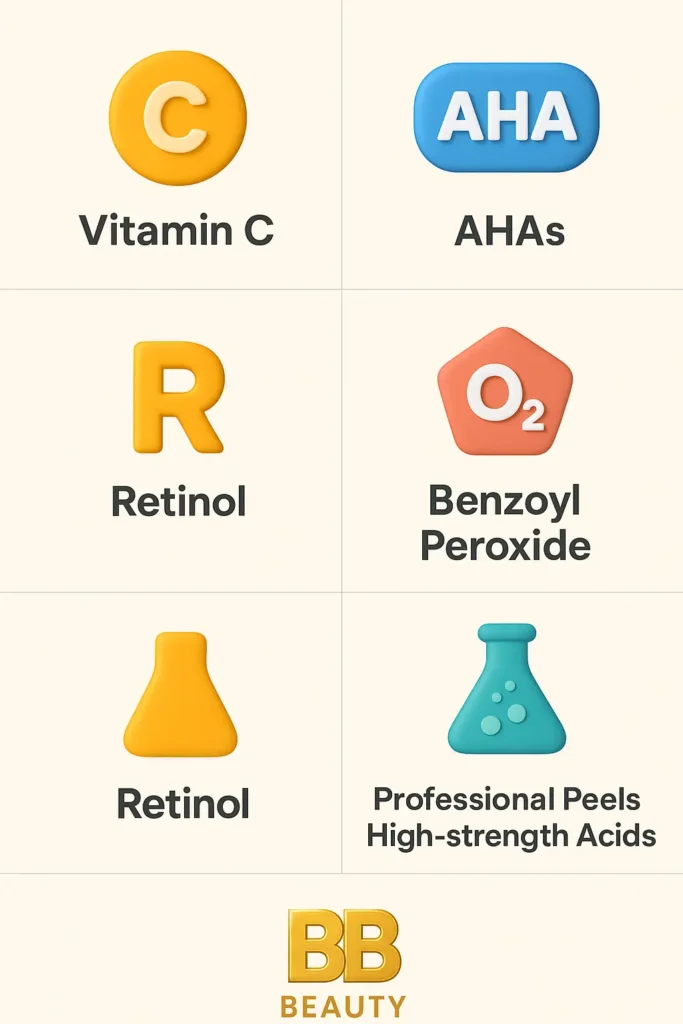
If you’ve been wondering What Not to Use With Niacinamide?, avoid pairing it with highly acidic ingredients such as vitamin C (ascorbic acid), alpha hydroxy acids (AHA) like glycolic or lactic acid, beta hydroxy acids (BHA) like salicylic acid, retinol, and even benzoyl peroxide.
Mixing these actives with niacinamide can reduce effectiveness, trigger redness, or cause unnecessary irritation—especially if you have oily or sensitive skin.
The safest approach isn’t to cut them out completely, but rather to separate these ingredients in your routine, either by using them at different times of day or on alternate nights.

In this article, we’ll break down exactly what not to mix with niacinamide, why these combinations don’t play well together, and the best way to structure your skincare routine for maximum results.
You’ll also discover dermatologist-backed tips, safe ingredient pairings, and practical morning and evening routine examples so you can use niacinamide with confidence.
Quick Table: What Not to Mix with Niacinamide
Niacinamide is one of the best ingredients for oily skin and combination skin — it helps regulate oil production, reduce inflammation and shrink the appearance of pores.
It’s generally safe to use with most actives, including many of the ingredients listed below. The problem usually isn’t niacinamide itself, but how you use it:
wrong timing, high concentrations, or layering multiple strong actives at once can cause irritation, reduce effectiveness, or trigger flushing.
The safest approach is to separate questionable pairings by time of day or by alternate nights, and always patch-test when introducing a new active.
| Ingredient | Why it can conflict | Best practice for oily/combination skin | Safe alternative / Notes |
|---|---|---|---|
| Vitamin C (L-ascorbic acid) | Low pH formulas and potential stability/irritation issues when layered with niacinamide. | Use Vitamin C in the AM and niacinamide in the PM, or on separate days; if layering, wait 10–30 minutes. | Use a stable vitamin C derivative (e.g., sodium ascorbyl phosphate) or keep C in the morning and niacinamide at night. |
| AHAs (Glycolic, Lactic) | Acids lower skin pH and increase barrier stress → higher irritation risk when combined. | Apply AHAs 2–3 nights/week; use niacinamide on non-acid nights or after skin calms. | Lower AHA frequency or use lower-percent formulas for daily maintenance. |
| BHAs (Salicylic Acid) | Oil-soluble acid effective for oily/acne-prone skin; frequent use with niacinamide can amplify irritation. | Often compatible but safer to alternate nights or apply BHA first, wait, then niacinamide; monitor tolerance closely. | Use BHA as a spot/treatment and niacinamide as a daily anti-inflammatory serum if sensitivity occurs. |
| Retinol / Retinoids | Both increase turnover and can cause dryness/irritation if introduced aggressively together. | Use retinol at night and niacinamide in the AM, or alternate nights; start with low concentrations and build tolerance. | Pair niacinamide with barrier-supporting ingredients (ceramides, hyaluronic acid) on retinol nights. |
| Benzoyl Peroxide (BP) | Strong oxidizer; combining with other actives can increase irritation and sometimes affect formulation stability. | Alternate BP nights with niacinamide nights or use BP as a spot treatment while niacinamide is daily. | Consider salicylic acid + niacinamide as a gentler acne regimen, or layer cautiously. |
| Professional Peels / High-strength Acids | These disrupt the barrier intensely; applying actives too soon prolongs irritation and delays recovery. | Avoid niacinamide and other actives for several days post-procedure; follow clinician guidance. | Use gentle hydrating and barrier-repairing products (ceramides, hyaluronic acid) while skin heals. |
Below we’ll unpack each line in this table — why the interaction happens (pH, oxidation, barrier stress), the evidence-based precautions you should take.
exact timing suggestions (AM vs PM, wait times, alternate-night schedules), and oily-skin-specific routines so you can apply niacinamide safely and confidently.
If you’re wondering What can you not mix with niacinamide in your own routine, keep reading for the step-by-step guidance.
How Niacinamide Works
Niacinamide, also known as vitamin B3, is a multi-tasking skincare ingredient that supports the skin barrier, improves hydration, and reduces inflammation.
It works by increasing the production of ceramides and fatty acids, which help maintain a strong skin barrier.
A healthier barrier means less water loss, reduced sensitivity, and better protection against environmental stressors.
For those dealing with breakouts or excess shine, niacinamide for oily skin is especially effective. It helps regulate sebum production, minimizes the look of large pores, and calms redness.
This makes it one of the best active ingredients for acne-prone and combination skin types.
Research also shows that niacinamide reduces hyperpigmentation, supports collagen production, and enhances skin elasticity.
Whether your goal is clearer skin, smoother texture, or a balanced complexion, niacinamide works across multiple pathways to improve overall skin health.
What Not to Use With Niacinamide
The truth is, niacinamide itself is highly stable and skin-friendly — but problems happen when it’s paired with ingredients that have very different pH levels or strong oxidizing effects.
nstead of avoiding these actives entirely, the smarter approach is to adjust your routine — separate them by AM/PM, alternate days, or choose gentler derivatives that complement niacinamide.
1: Niacinamide and Vitamin C
Perhaps you’re wondering: Can you use niacinamide with vitamin C? Short answer: Yes — but with caution.
Using pure vitamin C (L-ascorbic acid) together with niacinamide can lead to irritation, reduce stability, or lessen effectiveness if both are strong or used at once.
The key is smart timing, correct concentrations, and layering properly to protect oily or combination skin.
🔬 Clinical Evidence & Study Highlights
- In a randomized, investigator-blind clinical trial (Juliane Rocio et al.).
- 60 women aged 20-50 with facial melasma used a serum containing 5% niacinamide + stabilized vitamin C + tranexamic acid + hydroxy acids vs. 4% hydroquinone over several months.
- After 3 months, both groups saw a significant reduction in pigmentation (p < 0.001). The niacinamide group also showed better skin hydration and barrier function and fewer side-effects. PMC
Another Japanese study (Kerob et al.) with 50 women (ages ~23) dealing with mild acne tested a multi-acid complex + niacinamide over 8 weeks. They found:
- A significant drop in inflammatory lesions (from ~11.2 to 8.4) (p < 0.01) .
- Pore evaluation scores improved significantly (baseline ~3.0 to ~1.9) .
- Skin tolerance overall was excellent; minor irritation in a few participants that resolved without treatment. PMC
These studies suggest that niacinamide and vitamin C can coexist in a routine — especially when formulas are well-made and strengths are moderate.
and may even complement each other for brightening, hyperpigmentation control, and barrier repair.
🛠 How To Use Niacinamide with Vitamin C together (Especially for Oily Skin)
- Use vitamin C in the morning, followed by sunscreen; reserve niacinamide for your evening routine if using both actives in one day.
- If using both in one routine (same time), select a vitamin C derivative with a less acidic pH (e.g., magnesium ascorbyl phosphate) and expect less irritation.
- apply vitamin C first, then wait about 10–15 minutes before layering niacinamide. This buffer time allows your skin’s pH to settle, reducing the chance of irritation.
- Introduce one product first; allow skin 1–2 weeks to adapt before adding the second.
- Always patch-test new combinations — especially if your skin is acne-prone or reactive.
- Start with lower concentrations (e.g., 5% niacinamide / ~10% vitamin C) rather than high dose formulas if you are unsure of tolerance.

🔚 Takeaway:
Putting niacinamide together with vitamin C doesn’t have to be a skincare gamble.
With the right strategy, you can tap into their combined benefits — brightness, even tone, reduced inflammation — while avoiding common pitfalls.
For oily skin: timing and tolerance matter more than stacking strong actives. Moderation, consistency, and listening to your skin will always outperform overloading your routine.
Salicylic Acid and Niacinamide
2: Salicylic Acid and Niacinamide
Many people ask: Can I use salicylic acid and niacinamide together? Short answer: Yes — you can, and they often work well in synergy if used thoughtfully.
Salicylic acid (a BHA) penetrates oil-clogged pores to exfoliate and clear buildup; niacinamide calms inflammation, strengthens barrier, and regulates sebum.
But misuse — too high concentration, layering both in the same time without buffer, or failing to moisturize — can lead to irritation or barrier breakdown.
🔬 Clinical Study: Evidence from PubMed
- A trial titled “Supramolecular salicylic acid combined with niacinamide in chloasma: a randomized controlled trial”.
- (SSA 30% + 10% niacinamide) involved 300 participants (150 in treatment vs 150 placebo).
- Duration: 16 weeks. Outcome: mMASI scores (melasma severity) dropped significantly (p < 0.001) in the treatment group. Adverse effects were mild. PubMed
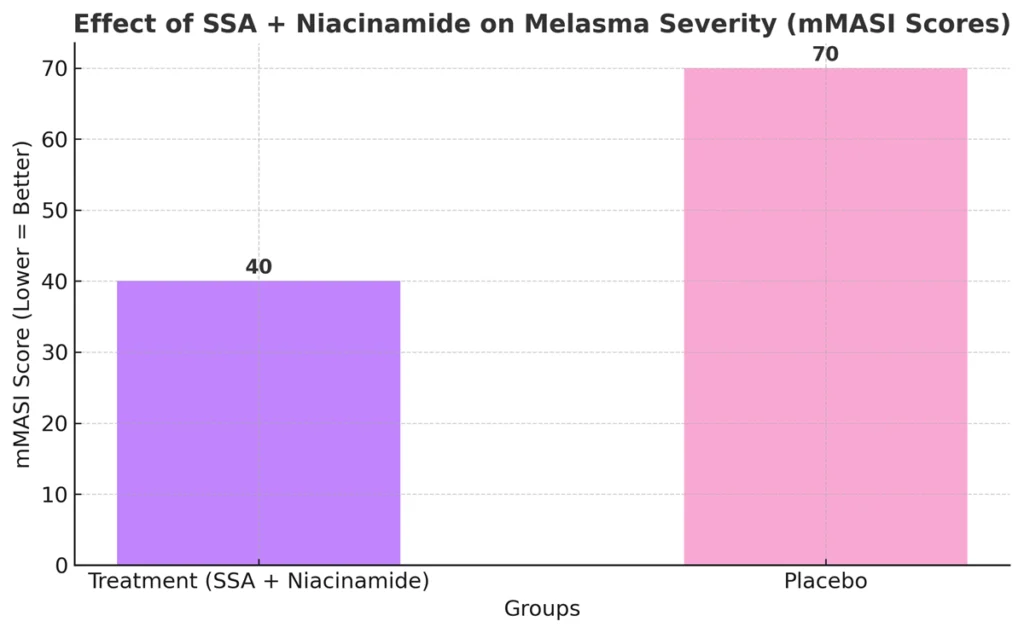
These trials demonstrate that salicylic acid and niacinamide can complement each other — especially for oily, acne-prone skin — if you follow smart formulation and timing.
🛠 Tips For Using Niacinamide and salicylic acid together (Best Practices)
- Use salicylic acid at night after cleansing. If you want to use niacinamide too, apply it later in the same routine or on alternate nights depending on your skin’s sensitivity.
- Begin with lower strengths — e.g., 1-2% salicylic acid + 5% niacinamide; increase gradually.
- Always patch-test new combos — behind the jaw or neck is good.
- Use a gentle, non-stripping cleanser and a rich, barrier-support moisturizer to support skin integrity.
- Avoid using both in high concentration acids + retinol nights together; rotate them to prevent overload.
- If you want to use them in the same routine, apply a salicylic acid serum first, wait about 30 minutes, then follow with a moisturizer containing niacinamide and hyaluronic acid.
- This approach reduces irritation risk and locks in hydration. ✅
💡 Note: These best practices are not limited to salicylic acid. They also apply to other BHAs such as beta-hydroxybutanoic acid or tropic acid.
The same principles — gradual introduction, buffer time, and pairing with barrier-friendly ingredients — will help you avoid irritation while getting the benefits of exfoliation.
🔚 Conclusion:
When done right, combining niacinamide with salicylic acid is less of a risk and more of a powerful strategy for oily or combination skin.
Rather than fearing conflict, think of them as partners: salicylic acid opens the way by clearing pores; niacinamide soothes, balances, and maintains.
With gradual introduction, moderate strength, and barrier support, most people can enjoy clearer, less shiny skin — without compromising comfort or sensitivity.
3: Glycolic Acid and Niacinamide
A friend once asked me: “Can I use glycolic acid and niacinamide together?” And I told him : yes, you can combine them — but only if you respect your skin’s tolerance and apply them correctly.
Glycolic acid is a powerful alpha-hydroxy acid (AHA). It works on the surface of the skin, gently dissolving dead cells and improving skin turnover. Niacinamide, on the other hand, strengthens the skin barrier, calms redness, and regulates oil. Together, they can create a smoother and brighter complexion.
However, using both at the same time without caution may lead to over-exfoliation, dryness, or increased sensitivity.
The acidic pH of glycolic acid can temporarily destabilize niacinamide, which is why spacing their application — morning vs night, or on alternate days — is often the safest approach.
✅ How To Use Glycolic Acid and Niacinamide
- Start with a low concentration of glycolic acid (5–7%) before combining with niacinamide.
- Use niacinamide in the morning for barrier support, and glycolic acid at night for exfoliation.
- If layering in one routine, apply glycolic acid toner first, wait 20–30 minutes, then follow with a hydrating niacinamide serum or cream.
- Always pair this routine with sunscreen during the day, as glycolic acid increases UV sensitivity.
- Patch test before introducing both ingredients into your routine, especially if you have sensitive skin.
💭 Conclusion (From My Experience):
In my own practice and Deep research, I’ve found that combining glycolic acid and niacinamide can be a game changer — but only when introduced gradually and used with patience.
Glycolic acid renews the surface. Niacinamide protects and strengthens from within. When balanced correctly, they create healthier, more radiant skin without the drawbacks of irritation or dryness.
4: Niacinamide and Retinol / Retinoids
Many women and men with acne wonder: “Can you use niacinamide and retinol together?” Absolutely.
Niacinamide is one of the safest active ingredients — it’s known for soothing inflammation, strengthening skin barrier, and regulating oil.
Retinol (and its derivatives) promote cell turnover, reduce fine lines, and help fade hyperpigmentation.
However, using retinol too aggressively alongside niacinamide, especially without adjusting strength or giving skin time to adapt, can lead to peeling, dryness, or irritation.
Confirmed scientific study
- The study “The Anti-Acne and Reduction of Hyperpigmentation Effects of Products Containing Retinol, Niacinamide, Ceramides, and Dipotassium Glycyrrhizinate in Chinese Women” by Zheng Kuai et al. (2025).
- involved 43 women with acne (including sensitive skin). Duration: 4 weeks.
- Results: significant reductions in both inflammatory and non-inflammatory acne lesions. Redness and sebum Dark spots decreased. Skin brightness and gloss improved. No serious adverse events.
🛠 How to use them together (retinol recommendations)
- Begin with low concentrations — for example, retinol 0.2% or 0.3% + niacinamide around 5%.
- Use retinol at night, follow with niacinamide only after waiting 20-30 minutes, or alternate nights if irritation appears.
- Always include a strong SPF 30+ in the daytime routine, because retinoids increase sun sensitivity.
- Moisturizers with ceramides, hyaluronic acid, or other barrier-supporting ingredients help buffer potential irritation.
- Patch-test behind the jaw or along the jawline for at least 3 consecutive nights before applying full face.

🔚 My Personal Take
To be honest, I haven’t personally tried combining niacinamide with retinol yet — but I’m genuinely excited to do so.
Based on my deep research and what many dermatologists highlight, this combination can be incredibly effective:
niacinamide helps buffer irritation while retinol drives powerful results against acne, fine lines, and uneven texture.
From what I’ve learned, when used carefully, the duo offers one of the most promising approaches for healthier, clearer, and more radiant skin.
5: Niacinamide and Benzoyl Peroxide (BP)
in fact, it’s one of the most dermatologist-recommended duos for acne-prone skin.
Unlike acids or retinoids, benzoyl peroxide targets acne at its root by killing acne-causing bacteria (Cutibacterium acnes).
Niacinamide doesn’t just “calm” the irritation — it helps reduce the dryness and redness that BP often causes, making the treatment more tolerable in the long run.
Published Study:
- A study published in the Journal of Drugs in Dermatology (JDD, 2013).
- showed that combining a 2.5–5% benzoyl peroxide gel with niacinamide-containing moisturizer, improved acne outcomes while lowering irritation levels compared to benzoyl peroxide alone.
- This combination is still widely referenced by dermatologists as a gold standard.
⚡ Key Takeaway Of Using Them
- Think of benzoyl peroxide as the “acne fighter” and niacinamide as the “skin protector.”
- Used together, they balance efficacy and tolerability — clearing breakouts while preserving skin barrier health.
- For oily and acne-prone skin types, this duo can be a long-term solution rather than a short-term fix.
And now that we’ve explored the main question — what not to use with niacinamide —
But let me ask you this: doesn’t it make you wonder — if these combinations can be risky, then which ingredients can actually be mixed with niacinamide safely, without causing irritation or setbacks to your skin?
That’s exactly what we’ll uncover next: the ingredients you can confidently pair with niacinamide to boost your skincare routine without side effects.
What Can You Mix With Niacinamide?
We’ve spent a lot of time discussing what not to use with niacinamide — but what about the ingredients that pair beautifully with it? Luckily, niacinamide is one of the most versatile skincare actives, and it works in harmony with several ingredients to maximize results without irritation.
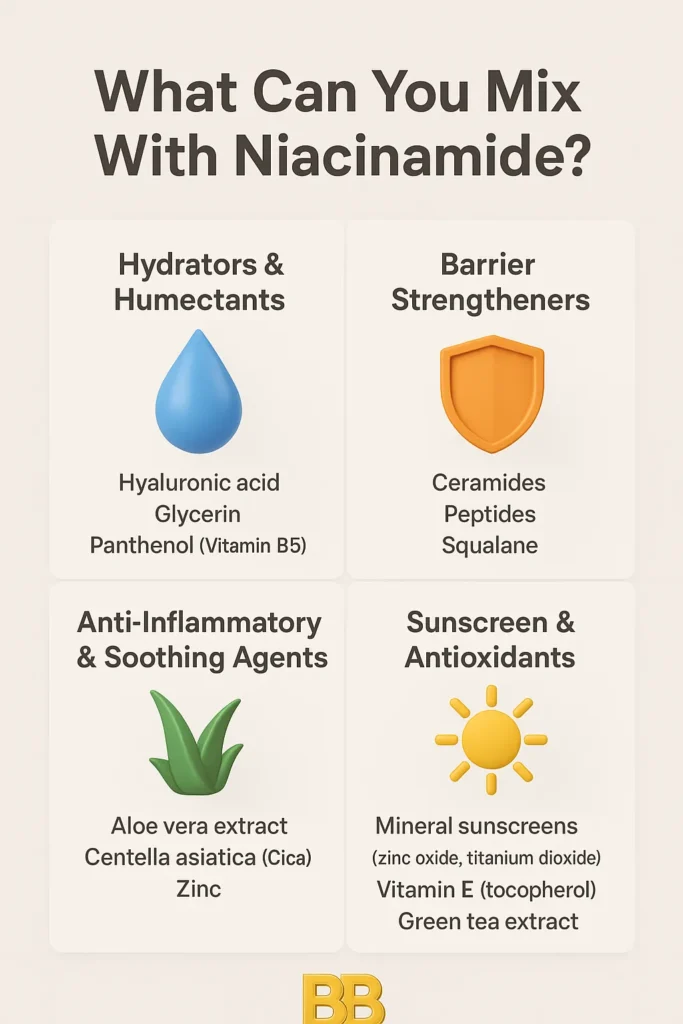
1. Hydrators & Humectants :
- Hyaluronic acid → perfect for hydration boost.
- Glycerin → locks in water, gentle for all skin types.
- Panthenol (Vitamin B5) → soothing and barrier-supportive.
2. Barrier Strengtheners:
- Ceramides → repair and strengthen skin barrier.
- Peptides → support collagen and improve elasticity.
- Squalane → balances oil and moisturizes without clogging.
3. Anti-Inflammatory & Soothing Agents:
- Aloe vera extract → calming and refreshing.
- Centella asiatica (Cica) → reduces redness and irritation.
- Zinc → balances oil production and supports acne-prone skin.
4. Sunscreen & Antioxidants :
- Mineral sunscreens (zinc oxide, titanium dioxide) → compatible and calming.
- Vitamin E (tocopherol) → antioxidant that complements niacinamide.
- Green tea extract → powerful antioxidant, fights free radicals.
Now you know both sides of the story: the combinations to avoid and the ones that can actually transform your skincare routine.
Niacinamide is safe, versatile, and incredibly effective when paired with the right partners.
✨ I encourage you to give these safe combinations a try and see how your skin responds.
And don’t forget — share your experience in the comments, because your story might inspire someone else’s journey to healthier, glowing skin!
How to Build a Skincare Routine with Niacinamide
Niacinamide is one of the most versatile ingredients in modern skincare. You can integrate it into both morning and evening routines, depending on your goals and what other actives you are using.
In the morning, it pairs beautifully with hydrating serums, hyaluronic acid, peptides, and ceramides to strengthen your skin barrier and minimize excess oil.
At night, niacinamide works as a calming agent after exfoliating acids or retinoids, helping reduce irritation and keeping your complexion balanced.
When layering, always apply lighter products (like serums) before heavier ones (like creams and oils). Niacinamide serums generally sit best right after cleansing and before your moisturizer.
If you are using stronger actives such as retinol or salicylic acid, you may want to alternate nights or allow a buffer time to minimize any risk of sensitivity.
The key is listening to your skin and gradually adjusting how often you use niacinamide based on tolerance and results.
👉 And if you’d like to go beyond ingredient combinations and learn a dermatologist-recommended skincare routine designed specifically for oily skin, make sure to read our dedicated guide: SkinCare Routine for Oily Skin.
Common Mistakes People Make With Niacinamide
Even though niacinamide is one of the safest and most effective skincare ingredients, I often see people wondering “why is niacinamide not working for me?”
The truth is, it’s usually not about the ingredient itself — but about how it’s being used. Let’s go over some common niacinamide mistakes that might be stopping you from seeing the glowing, balanced skin you’re hoping for.
- Starting with a high concentration
Jumping straight into 10% or higher can sometimes overwhelm sensitive or oily skin. If you’re new to niacinamide, begin with 2–5% and build up gradually. - Mixing it with too many strong actives at once
Combining niacinamide with highly acidic ingredients like glycolic acid, salicylic acid, or vitamin C without spacing them out can lead to irritation. Always learn how to use niacinamide correctly in relation to other products. - Expecting overnight results
Niacinamide works steadily — studies show it can take 8–12 weeks of consistent use to reduce excess oil, minimize pores, and even out skin tone. Patience is key! - Skipping sunscreen
If you’re using niacinamide for oily skin to reduce dark spots or redness, but you’re not applying SPF daily, you’re undoing your own progress. Sun exposure can reverse the benefits. - Being inconsistent
Niacinamide delivers its best results when used daily. Skipping days or applying it randomly often makes people feel like it “isn’t working.”
✨ If you avoid these mistakes, niacinamide can truly transform your skin — making it smoother, less oily, and more resilient.
FAQ Ofwhat not to combine with niacinamide
Bad combinations are those that overload the skin or have clashing pH/oxidizing effects. Common examples include:
- Pure vitamin C (L-ascorbic acid) when layered immediately with niacinamide (use separation).
- High-strength AHAs (e.g., glycolic) or aggressive chemical peels — they can increase irritation.
- Benzoyl peroxide in very high doses, unless used as a spot treatment or alternated with niacinamide.
- Combining multiple exfoliants + retinoids + niacinamide in one session — this overloads the barrier.
Instead, separate these actives by AM vs PM or by alternate nights to keep your skin balanced.
Niacinamide is stable and resilient. Nothing reliably “cancels” it, but two practical issues occur:
- Very low-pH actives (strong AHAs or pure L-ascorbic acid) can temporarily change skin surface pH and may reduce immediate effectiveness if layered directly.
- Harsh oxidizers used incorrectly (very high-strength benzoyl peroxide) can increase irritation and make the routine feel counterproductive.
My tip: don’t worry about “cancellation.” Focus on timing, buffering, and choosing compatible formulations (stable vitamin C derivatives, gentle acids, or alternating nights).
Niacinamide is usually delivered as a serum or lightweight treatment. Applying a moisturizer afterward:
- Seals in the active and enhances hydration.
- Reinforces the skin barrier with ceramides, squalane, or humectants.
- Reduces the chance of dryness or irritation, especially when using other actives.
For oily skin, choose a non-comedogenic, fast-absorbing moisturizer containing humectants (hyaluronic acid, glycerin) and barrier lipids (ceramides).
There’s no absolute ban, but common serum pairings to avoid layering directly include:
- Retinol + strong AHA/BHA (high irritation risk).
- High-strength benzoyl peroxide + vitamin C (pure) — can increase irritation and reduce comfort.
- Multiple exfoliating serums together (e.g., glycolic serum + daily BHA serum).
Best rule: if both serums are active and potent, alternate nights or use one in AM and one in PM. This reduces irritation and improves long-term results.
- Cleanse — start with a gentle, non-stripping cleanser.
- Apply niacinamide serum (after water has dried) — serums first, creams later.
- Moisturize — lock in hydration and protect the barrier.
- Use SPF every morning — essential when using actives that increase sun sensitivity.
- Space strong actives — use acids, retinoids, or benzoyl peroxide on alternate nights or with buffer times.
These rules help you use niacinamide correctly, reduce mistakes, and get consistent improvements in oil control, redness, and texture.
Purging typically occurs with ingredients that speed up cell turnover (like retinoids or strong AHAs/BHAs). Niacinamide works by reducing inflammation and strengthening the barrier, so it rarely causes purging.
If you see new breakouts after starting niacinamide, consider other active ingredients in your routine or a reaction to a formulation ingredient (fragrance, alcohol). Patch-test to be sure.
For improvements in oil control, pore appearance, and redness, most people notice measurable changes within 4–12 weeks of consistent use (daily or twice daily, depending on product instructions).
For pigmentation and texture, allow up to 12 weeks or longer. Track your routine and avoid switching products too often — consistency gives the best signal for results.
Niacinamide complements sunscreen very well. It strengthens the barrier and reduces inflammation, while SPF protects against UV damage that can worsen pigmentation and oiliness.
Apply niacinamide serum first, then a moisturizer if needed, and finish with broad-spectrum SPF 30+ every morning. This combo supports results and prevents setbacks.
Thank you so much for staying with me through this guide on What Not to Use With Niacinamide.
I know skincare can sometimes feel overwhelming, but the fact that you’re here, learning and taking action, already means you’re on the right path.
I’d love for you to take what you’ve learned today and actually try it out in your own routine. Notice how your skin responds when you avoid the wrong combinations and focus on what really works.
Then, come back and share your experience in the comments — your journey might inspire someone else who’s struggling with the same questions.
And if you haven’t already, don’t forget to subscribe to our newsletter so you’ll never miss expert tips, practical routines, and honest skincare insights.
Your healthiest, glowiest skin is just a few steps away — and I’m so excited to be on this journey with you! 💖

Akram Boulaid is a dedicated Skincare Researcher and Analyst with over 7 years of intensive focus on dermatology and cosmetic ingredient science. As a globally recognized expert, his insights have been featured in major international publications, including the New York Post and GB News. A verified expert on Qwoted, Akram connects with health journalists to provide evidence-based analysis. He founded Beauty Blurb to bridge the gap between complex clinical data and practical skincare routines, specializing exclusively in the needs of oily and acne-prone skin through rigorous analysis of peer-reviewed scientific literature.