
is glycerin good for oily skin? Yes, when used correctly. Unlike heavy emollients, glycerin is a lightweight humectant that attracts water into the skin without clogging pores or increasing greasiness.
What makes it especially beneficial for oily or acne-prone skin is its ability to balance hydration: when your skin is dehydrated, it often compensates by producing even more oil.
By strengthening the skin’s natural barrier and maintaining healthy moisture levels, glycerin can actually reduce excess shine and help keep breakouts under control.

In this guide to Glycerin for Oily Skin, you’ll discover everything you need to know before adding it to your skincare routine.
We’ll break down its science-backed benefits, possible side effects, the best ways to use it safely, and even how it compares to other popular ingredients like hyaluronic acid or aloe vera.
By the end, you’ll know exactly whether glycerin deserves a spot in your oily-skin regimen—and how to get the most out of it.
What is Glycerin and How Does It Work?
Glycerin, also known as glycerol, is a clear, odorless liquid that has been used in skincare for decades.
It belongs to a group of ingredients called humectants, which means it works by attracting water from the deeper layers of your skin, and from the environment into the outer layer of your skin (the epidermis).
This powerful ability to lock in hydration makes glycerin one of the most popular ingredients in moisturizers, cleansers, and serums.
For people with oily skin or even acne-prone skin, glycerin is especially useful because it provides lightweight hydration without leaving a greasy film.
Instead of adding oil, it helps restore the skin barrier function and prevents transepidermal water loss (TEWL)—a condition where the skin loses too much water and becomes dehydrated.
When your skin is dehydrated, it often produces more sebum, leading to excess shine and clogged pores.
By keeping your skin balanced, glycerin reduces that cycle and promotes a healthier complexion.
is glycerin good for oily skin?
When it comes to balancing hydration without making your face greasy, few ingredients work as effectively as glycerin.
Gentle yet powerful, it helps oily skin stay smooth, healthy, and comfortable by drawing in the right amount of moisture while supporting the skin’s natural barrier.
That’s why many experts believe benefits of glycerin for oily skin go far beyond basic hydration—and the results might surprise you.
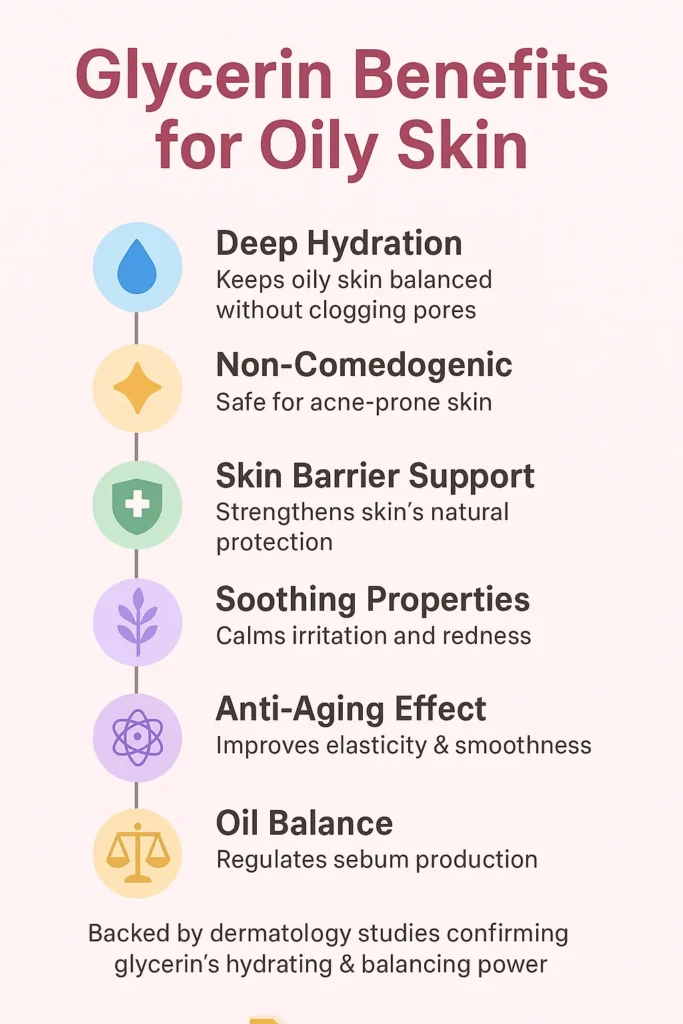
1. Deep Hydration Without Oiliness
Glycerin is a master at pulling in moisture without leaving that greasy residue. It acts as a humectant, meaning it draws water from the deeper layers of skin and the air into the outer layer (stratum corneum).
improve Study:
- A clinical study with 17 healthy volunteers found that a cream containing 20% glycerin significantly increased skin hydration (measured via corneometer) after 10 days, compared to the placebo. PubMed
- This shows glycerin benefits for oily skin are real—hydration is boosted, yet oiliness doesn’t increase.
2. Strengthening the Skin Barrier & Reducing Water Loss (TEWL)
One of the biggest issues in oily skin is when the skin barrier is compromised—leading to moisture loss, irritation, and then overproduction of sebum.
Glycerin helps reinforce that barrier.
The same 20% glycerin cream study showed improved hydration, though it didn’t significantly lower TEWL in normal skin in that particular trial.
Still, other research (on atopic dermatitis patients) using glycerol-based emollients (20% glycerin) showed both improved stratum corneum hydration and restored barrier function over several weeks. PubMed
3. Non-Comedogenic & Acne-Safe Texture
A concern many with oily or acne-prone skin have is “will this clog my pores?”. Glycerin generally has a non-comedogenic rating (i.e. it’s unlikely to clog pores).
Although pure glycerin can feel sticky or heavy at high percentages, when it’s formulated well (often ≤20–30%), the texture becomes lightweight and safe even for sensitive break-out prone skin.
4. Calming Sensitivity & Reducing Irritation
For oily skin, irritation (from harsh cleansers, environment, pollution) can trigger more oil. Glycerin has soothing, anti-irritant properties.
Clinical Study:
- One study in mice showed that when skin was irritated with sodium lauryl sulfate (a harsh surfactant).
- glycerol at 5-10% helped reduce inflammatory markers (IL-1β, TNF-α) and reduced immune cell infiltration. Typology Paris
So, glycerin benefits for oily skin include not only hydration but also helping skin stay calm and less reactive.
5. Improves Texture, Smoothness, & Overall Skin Feel
Regular use of glycerin helps the outer layer of skin (dead cell turnover, smoothness) feel softer.
Because hydration is more balanced, you’ll notice less flaky patches or roughness, especially in areas that tend to dry out even when the skin is oily.
Though direct clinical trials for “oily skin texture” are fewer, studies (like the AD one above) show patients report improved skin capacitance and visual reduction in dryness and roughness.
6. Enhances Other Skincare Actives & Product Performance
Glycerin doesn’t work alone—it often helps other ingredients penetrate better.
For example, when used in formulations alongside other humectants or actives, glycerin can help those ingredients (like hyaluronic acid, calming botanical extracts) perform more effectively because the skin is better hydrated and less irritated.
(Although I didn’t find a study isolating glycerin + a specific active for oily skin only, health-skincare summaries often mention this synergy.)
So, can glycerin be used for oily skin? Absolutely yes—but the real difference comes from how you use it.
Glycerin for oily skin works best when it’s part of a balanced skincare routine, not applied in its pure form.
Instead of using raw glycerin (which can feel sticky or heavy), choose moisturizers, gels, or serums that contain glycerin in a well-formulated percentage—usually around 5–20%.
Used correctly, glycerin becomes a reliable ally for oily and acne-prone skin.
How to Use Glycerin for Oily Skin
Using glycerin the right way can make all the difference between balanced hydration and a sticky mess. Here’s the safest and most effective way to include glycerin for oily skin in your daily routine:

1. Choose the Right Form
Instead of applying pure glycerin directly, go for skincare products—like oil-free moisturizers, lightweight gels, or hydrating serums—that list glycerin among their top ingredients.
These formulas usually contain 5–20% glycerin, the concentration found to be most effective for hydration without clogging pores.
2. Apply on Damp Skin
For best results, use glycerin after cleansing, while your skin is still slightly damp.
This allows it to pull in water and lock in hydration, preventing that tight or dehydrated feeling oily skin often gets after washing.
3. Layer It Smartly
- With a toner: Apply a glycerin-based toner or essence to refresh and hydrate without greasiness.
- With a moisturizer: Mix one drop of glycerin into your oil-free moisturizer to enhance hydration and support the skin barrier.
- As a serum step: If you use a serum, choose one that combines glycerin with hyaluronic acid or niacinamide for extra skin-balancing benefits.
4. Don’t Overdo It
Pure glycerin can feel sticky and may attract dust or impurities if left on the skin too long. Stick to diluted formulas or rinse off DIY masks after 15–20 minutes.
5. Important Tips for Oily Skin
- Patch test first: Apply on a small area to make sure your skin tolerates it.
- Use once or twice daily: Ideally after cleansing, in the morning and/or evening.
- Avoid over-layering: Too much glycerin can overwhelm oily skin—balance is key.
Always make sure to dilute glycerin before applying it directly to your face. When mixed with water or rosewater, it becomes safe, soothing, and highly effective. Using pure, undiluted glycerin, however, may feel harsh and uncomfortable on the skin—especially if you have an oily or sensitive complexion. A little dilution goes a long way toward keeping your routine gentle and balanced.
✅ When used correctly, glycerin becomes a lightweight, non-comedogenic moisturizer that keeps oily skin hydrated, smooth, and less prone to excess oil production.
💡 Pro Tip (with a wink): While glycerin is a superstar, it’s only one piece of the puzzle. If you really want your oily skin to behave, check out our guide on a dermatologist recommended skin care routine for oily skin.
Think of it as the “full recipe” — because let’s be honest, even superheroes need a team. 😉
side Effects of Glycerin for Oily Skin
Even though glycerin is considered one of the safest and most versatile skincare ingredients, it’s not entirely risk-free—especially if used incorrectly.
Understanding the potential downsides will help you enjoy its benefits without unexpected surprises.
1. Stickiness & Residue
Using pure glycerin in high concentrations can leave a sticky film on the skin, which may trap dust, pollutants, or even bacteria. This can make oily skin feel heavy rather than refreshed.
Always look for lightweight, oil-free formulations with balanced percentages.
2. Possible Irritation or Redness
While rare, some people may experience mild irritation, itching, or redness when glycerin is applied directly to the skin.
This usually happens if the concentration is too strong or if the product isn’t properly diluted. That’s why a patch test is always recommended before regular use.
3. Not Ideal for Hot & Humid Climates
Because glycerin is a strong humectant, in very humid conditions it may pull excess moisture onto the skin’s surface, leaving a tacky or greasy feel.
If you live in a tropical environment, opt for a lighter water-based glycerin toner instead of thick creams.
4. Over-Moisturizing Effect
Ironically, overusing glycerin can make oily skin feel more congested. Too much hydration without proper oil control might lead to a shiny appearance. Balance is key—limit usage to once or twice daily.
5. Interaction with Other Products
Glycerin is generally compatible with most ingredients, but when layered incorrectly (especially under heavy occlusive creams or facial oils), it can feel suffocating on oily skin.
Always apply it in the correct order: cleanser → toner/serum → glycerin-based moisturizer → sunscreen.
can I use glycerin for oily skin in summer?
Yes—but the trick is in how you use it. Glycerin is a humectant that hydrates oily skin without clogging pores, making it a safe choice even in hot weather.
In dry summer climates, it helps prevent dehydration and keeps the skin barrier strong. In humid conditions, however, too much glycerin can sometimes feel tacky,
so it’s best to use lightweight formulas like gels, serums, or glycerin-based toners rather than thick creams.
Always apply it on damp skin after cleansing, and finish with a broad-spectrum sunscreen—not because glycerin increases sun sensitivity, but because hydrated skin is more prone to environmental stress.
Used this way, glycerin becomes a summer-friendly moisturizer that balances hydration while keeping oily skin fresh, smooth, and shine-free.
What is The Best glycerin for oily skin (top product)
You might be wondering: which glycerin is best for oily skin? The answer isn’t about choosing one magical bottle of “pure glycerin,” but about picking the right formulation that suits oily and acne-prone skin.
The best options are lightweight, non-comedogenic products—think glycerin soaps, hydrating gels, oil-free moisturizers, and soothing serums—where glycerin is combined with other skin-friendly ingredients.
These deliver all the humectant power of glycerin without leaving a sticky or greasy feel, making them perfect for daily use in a balanced skincare routine.
Tip from my exprience:
Choosing the best glycerin for oily skin isn’t about chasing the purest ingredient—it’s about picking products that balance hydration with a lightweight feel.
Whether you prefer a gentle glycerin soap, an oil-free moisturizer, or a serum that combines glycerin with other actives, the key is to keep your routine consistent and suited to your skin type.
With the right choice, glycerin transforms from a simple humectant into a daily essential that keeps oily skin smooth, fresh, and perfectly balanced.
Do’s & Don’ts of Using Glycerin for Oily Skin
Glycerin can be a game-changer for hydration and oil balance, but using it incorrectly (like applying it pure on dry skin or mixing it with the wrong products) may cause irritation or greasiness.
Here’s a clear guide to help you get the best results.
✅ Best Practices: How to Use Glycerin for Oily Skin Safely
- Dilute it first – Always mix glycerin with rose water, plain water, or an oil-free moisturizer for a lightweight finish.
- Layer with the right products – It works beautifully with niacinamide, hyaluronic acid, and gentle water-based serums, boosting hydration without clogging pores.
- Apply on damp skin – This maximizes its humectant effect and prevents stickiness.
- Choose oil-free formulas – Look for glycerin in soaps, gel moisturizers, and non-comedogenic cleansers specially made for oily or acne-prone skin.
- Use in moderation – A few drops or a thin layer is enough; too much can feel tacky.
❌ Common Mistakes: What should you not mix with glycerin?
- Don’t use pure glycerin on dry skin – It can draw moisture out, leading to dryness or irritation.
- Avoid harsh exfoliants + glycerin together – Strong acids or scrubs (like AHAs/BHAs at high concentration) may disrupt the skin barrier when layered directly.
- Skip alcohol-based toners – These cancel out glycerin’s hydrating benefits and can make oily skin overproduce sebum.
- Don’t combine with heavy oils – Thick occlusives (like mineral oil or petrolatum) may trap sweat and clog pores on oily skin.
- Avoid leaving it unwashed in humid climates – In sticky weather, rinse off masks with glycerin to prevent buildup of dirt and pollutants.
✨ Closing tip: By following these do’s and don’ts, glycerin becomes one of the most versatile and skin-friendly ingredients for oily skin—hydrating without heaviness and balancing without irritation.
Is Glycerin or Hyaluronic Acid Better for Oily Skin?
Many people ask whether glycerin or hyaluronic acid is better for oily skin, and the truth is that both ingredients have unique benefits.
Glycerin is a classic humectant that not only attracts water but also strengthens the skin barrier and keeps it smooth over time. Hyaluronic acid, on the other hand,
is extremely lightweight and can hold up to 1,000 times its weight in water, delivering instant hydration without any sticky feel. Instead of thinking one is strictly “better,” it’s about which one fits your skin’s current needs.
Key Differences Between Glycerin and Hyaluronic Acid for Oily Skin:
If your skin feels greasy and you want quick, refreshing hydration, hyaluronic acid for oily skin is an excellent choice.
But if you need long-term balance, barrier repair, or a multitasking humectant that works well in cleansers and moisturizers, glycerin shines. In fact, the best routine often combines both: hyaluronic acid for instant plumpness and glycerin for lasting hydration and oil control.
glycerin moisturizer for oily skin vs Other Moisturizing Ingredients
When it comes to hydration, not all ingredients work the same way. To understand the unique role of glycerin for oily skin, let’s compare it with some other popular moisturizers:
- hyaluronic acid
Like glycerin, hyaluronic acid is a humectant, but it has larger molecules that mostly stay on the skin’s surface.
Glycerin’s smaller molecules penetrate deeper, making it excellent for long-lasting hydration. Both work beautifully together in lightweight serums for oily skin. - Ceramides
Ceramides focus on repairing the skin barrier and locking in existing moisture.
Unlike glycerin, they don’t actively draw water from the environment.
Pairing glycerin with ceramides can give oily skin the perfect balance of hydration and barrier protection. - Petrolatum (Vaseline)
Petrolatum is an occlusive—it seals moisture in but doesn’t add any hydration by itself.
It can feel heavy and greasy, so it’s not ideal for oily skin.
Glycerin, in contrast, is non-comedogenic and lightweight, making it more suitable for everyday use. - Aloe Vera
Aloe vera is known for its soothing and calming properties, especially for irritated or acne-prone skin. While it hydrates, its effects are milder compared to glycerin.
That’s why many oily skin products combine aloe vera and glycerin for both hydration and soothing.
🌸 Final Tip
Instead of choosing only one, think of glycerin as a hydration anchor that works well alongside other ingredients.
Pair it with hyaluronic acid for oily skin when you need a lightweight boost, or with ceramides when your skin barrier feels weak. The right combination gives oily skin a fresh, balanced, and healthy glow.
FAQ Of glycerin for oily skin
People with extremely sensitive or eczema-prone skin may experience irritation with undiluted glycerin. Also, those living in very hot, humid climates may find glycerin too heavy, leading to stickiness. Always patch-test before full use.
Glycerin is mild and is often used in baby lotions and soaps. However, always choose pediatric-safe formulas and avoid applying concentrated glycerin directly on a child’s face without medical advice.
Using diluted glycerin or a glycerin-based moisturizer overnight can hydrate oily skin without clogging pores. Just avoid thick layers, as glycerin can feel sticky and attract dust if left undiluted.
It won’t clog pores, which makes it safe for oily and acne-prone skin when used correctly.
While glycerin doesn’t fade scars directly, its deep hydration improves skin elasticity and supports healing, which can soften the appearance of scars over time.
Both are humectants, and layering them boosts hydration. Apply hyaluronic acid serum first, then glycerin-based moisturizer to lock in moisture.
In hot weather, use glycerin in lighter formulations (like toners with rose water). This prevents greasiness and keeps hydration balanced.
Glycerin doesn’t bleach or darken skin. It helps maintain hydration and barrier function, which can make skin look healthier and more even-toned.
Glycerin hydrates well but doesn’t provide all the barrier-repair benefits of a full moisturizer. Best use: choose a light oil-free moisturizer with glycerin as a key ingredient.
Mixing a few drops of glycerin with rose water creates a lightweight, refreshing toner that balances oil and hydrates the skin naturally.
Thank you so much for reading this guide on glycerin for oily skin 💜.
I hope it helped you understand how to use glycerin safely and effectively without overwhelming your oily skin.
Remember, skincare is a journey, and every small step counts! I’d love for you to try the tips shared here and then come back to tell us about your own experience in the comments 📝💬.
And if you don’t want to miss our next beauty secrets and dermatologist-approved routines, make sure to subscribe and stay connected with us. Here’s to glowing, balanced skin! 🌸

Akram Boulaid is a dedicated Skincare Researcher and Analyst with over 7 years of intensive focus on dermatology and cosmetic ingredient science. As a globally recognized expert, his insights have been featured in major international publications, including the New York Post and GB News. A verified expert on Qwoted, Akram connects with health journalists to provide evidence-based analysis. He founded Beauty Blurb to bridge the gap between complex clinical data and practical skincare routines, specializing exclusively in the needs of oily and acne-prone skin through rigorous analysis of peer-reviewed scientific literature.