If you’re wondering Hyaluronic Acid or Salicylic Acid for acne, here’s the quick answer: Salicylic acid helps clear pores and fight breakouts, while hyaluronic acid keeps your skin hydrated and calm. Choosing the right one depends on your skin type and the kind of acne you have.
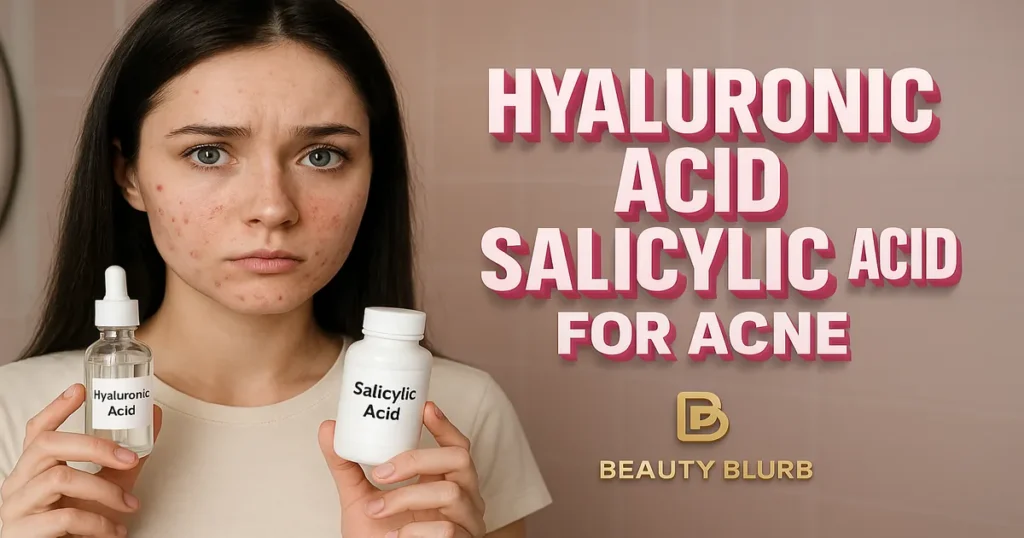
So, is hyaluronic acid or salicylic acid better for acne? In this article, we’ll compare both ingredients, explain their benefits for acne-prone skin, and show how to use them safely for the best results.
By the end, you’ll have a clear understanding of which ingredient fits your skin’s needs and how to get the most effective results without causing extra irritation.
Understanding Acne and Its Types
Before we dive into what is better for acne: Hyaluronic Acid or Salicylic Acid, it’s important to understand your acne first.
Not all acne is the same, and choosing the wrong treatment can make it worse. Knowing your type of acne helps you pick the right ingredient and get the best results.
Here are the main types of acne:
- Whiteheads and Blackheads (Comedones):
- Clogged pores, either closed (whiteheads) or open (blackheads).
- Salicylic acid works well to clear pores and prevent build-up.
- Inflammatory Acne (Papules and Pustules):
- Red, tender bumps or pus-filled pimples.
- Salicylic acid reduces inflammation, while hyaluronic acid keeps your skin calm and hydrated.
- Cystic Acne:
- Deep, painful lumps under the skin.
- Often requires professional care, but hyaluronic acid can soothe, and salicylic acid may help mildly if the skin isn’t too sensitive.
- Fungal Acne (Malassezia Folliculitis):
- Small, itchy bumps caused by yeast overgrowth, often on the forehead or chest.
- Salicylic acid may help gently exfoliate, but antifungal treatments are usually needed.
- Hyaluronic acid is safe to use for hydration without feeding the yeast.
- Bacterial Acne:
- Breakouts caused by bacterial infection inside clogged pores.
- Salicylic acid helps reduce bacterial build-up and inflammation.
- Hyaluronic acid helps protect and hydrate skin during treatment.
- Combination Acne:
- Some areas with clogged pores, others with red bumps.
- A combination of treatments often works best, targeting each type carefully.
Quick Acne Type Check:
- Mostly small blackheads or whiteheads? → Comedonal
- Red and tender pimples? → Inflammatory
- Deep, painful lumps? → Cystic
- Small, itchy bumps that spread quickly? → Fungal
- Breakouts caused by bacterial infection? → Bacterial
- A mix of types? → Combination
Understanding your acne type is the first step before choosing Hyaluronic Acid or Salicylic Acid for acne, so you can target your treatment effectively and avoid irritation.
What Is Hyaluronic Acid?
Hyaluronic acid (often called HA or hyaluronan) is a naturally occurring sugar molecule in your skin that plays a crucial role in keeping it healthy.
Instead of thinking of it as just a “moisture sponge,” imagine it as your skin’s built-in hydration system. It belongs to a family of molecules called glycosaminoglycans (GAGs), which are responsible for maintaining the skin’s elasticity, firmness, and plump appearance.
What makes hyaluronic acid unique is its ability to attract and hold up to 1000 times its weight in water. This means it doesn’t just sit on the surface — it helps your skin lock in essential hydration, supports the skin barrier, and creates the ideal environment for healing and repair.
In fact, it interacts with tiny receptors in your skin cells (like CD44) that influence how your skin recovers from inflammation, irritation, and breakouts.
When levels of hyaluronic acid naturally decline with age, stress, or harsh treatments (like acne medications), skin often becomes dry, tight, and more prone to redness.
That’s why using hyaluronic acid serums, creams, or hydrating toners can make such a difference — they replenish what your skin loses and help keep acne-prone skin balanced, soothed, and less reactive.
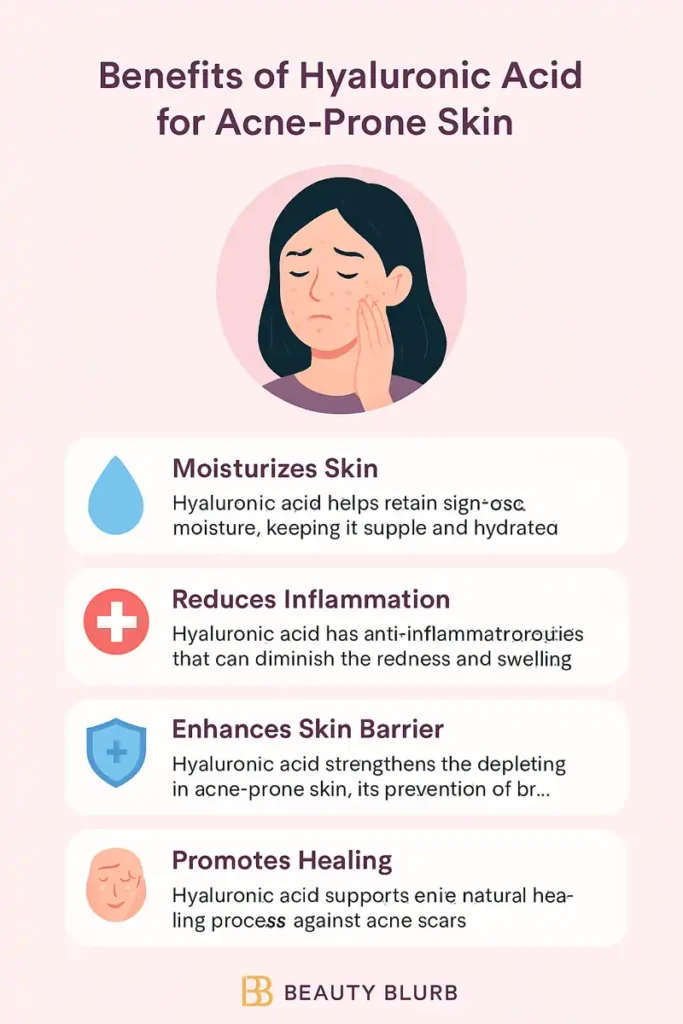
Benefits Of Hyaluronic Acid for Acne Prone Skin
Here’s why hyaluronic acid (HA) can be a game-changer for acne-prone skin:
1. Deep Hydration Without Greasiness
Hyaluronic acid is a powerful humectant—it attracts moisture into the skin without adding oil or clogging pores. It’s lightweight and generally non-comedogenic, which makes it perfect for acne-prone and oily skin types.
Even dermatologists highlight that it offers effective hydration without feeling heavy.
2. Strengthens the Skin Barrier & Reduces Irritation
Acne treatments like retinoids or benzoyl peroxide can strip your skin’s protective barrier.
A 2009 randomized clinical trial showed that participants using an HA gel-cream alongside oral isotretinoin experienced significantly less dryness and transepidermal water loss (TEWL), and improved hydration compared to a placebo group (34 vs. 33 people over 3 months). Source.
3. Controls Sebum Production
Some research suggests hyaluronic acid may help regulate oil production. In a double-blind, split-face study involving 20 oily-skinned volunteers, the HA-treated side showed reduced sebum production.
Note: Though this is preclinical and a small sample, it indicates promising potential.
4. Aids in Healing Acne Scars
While primarily studied for injections, HA has proven effective in treating acne scars. In one study, 12 individuals with moderate to severe atrophic scars received microinjections of low-viscosity HA every 4 weeks. The results: visible improvement and high tolerability. PubMed.
Another follow-up study also confirmed the effectiveness and safety of HA injections over time.
5. Delivers Plumping & Radiance Benefits
Even for those treating acne, HA boosts skin texture and plumpness. A dermal study using a high-performance HA serum produced a 55% increase in skin hydration, measured via corneometry, across multiple skin types. PMC
Think of hyaluronic acid as your skin’s reset button—it hydrates deeply, soothes irritation, and bolsters skin repair, making your skin more resilient to acne treatments and flare-ups.
Pro Tip: Want to know if hyaluronic acid actually helps with acne itself? Check out our next section: “Is Hyaluronic Acid Good for Acne?” — where we dig into real-world effectiveness, routines, and user-tested results.
What Is Salicylic Acid?
Salicylic acid (often abbreviated as SA) is a type of beta hydroxy acid (BHA) that dermatologists consider one of the most effective agents for treating acne.
Unlike hyaluronic acid, which hydrates, salicylic acid works mainly as a keratolytic exfoliant—meaning it helps shed dead skin cells and unclog pores from the inside out.
What makes salicylic acid unique is its lipophilic (oil-soluble) structure. This allows it to penetrate deeply into the sebaceous follicles, where acne begins.
Once inside the pores, it dissolves excess sebum, breaks down the keratin plugs, and reduces the environment where acne-causing bacteria thrive.
Beyond exfoliation, salicylic acid has a natural anti-inflammatory effect (derived from the same family as aspirin), which helps calm redness, swelling, and those painful inflamed pimples.
It’s also recognized for its comedolytic activity—meaning it actively prevents the formation of new blackheads and whiteheads.
In short, salicylic acid isn’t just about “drying out” pimples—it’s about resetting the pore environment, reducing future breakouts, and making the skin’s texture smoother and clearer over time.
Benefits of Salicylic Acid for Acne-Prone Skin
Salicylic acid has earned its reputation as a gold-standard acne treatment—but its real value goes beyond just drying out pimples. Here are the scientifically backed ways it helps acne-prone skin:

1. Unclogs Pores at the Source
Because salicylic acid is oil-soluble, it penetrates deeply into clogged follicles. Once inside, it breaks down keratin plugs and dissolves excess sebum—two major culprits behind blackheads and whiteheads.
📊 Clinical Evidence: A 2015 review in the Journal of Clinical and Aesthetic Dermatology confirmed that 2% salicylic acid cleansers significantly reduced both comedonal and inflammatory acne lesions within 12 weeks.
2. Exfoliates Gently but Effectively
As a keratolytic agent, salicylic acid accelerates the shedding of dead skin cells, preventing buildup that blocks pores. This is different from harsh physical scrubs—SA smooths skin without causing micro-tears.
💡 This makes it especially helpful for people whose acne is worsened by rough texture and dullness.
3. Reduces Inflammation & Calms Active Breakouts
Salicylic acid belongs to the salicylate family (the same chemical group as aspirin), giving it a natural anti-inflammatory effect. This helps reduce redness, swelling, and tenderness of active pimples.
📊 Clinical Study: In a split-face trial, patients using a 30% salicylic acid peel every 2 weeks for 6 weeks showed significant reduction in papules, pustules, and erythema compared to baseline.
4. Prevents New Breakouts (Comedolytic Effect)
Beyond treating existing acne, salicylic acid actively prevents new comedones (blackheads/whiteheads) from forming. By keeping pores clear and regulating excess sebum, it minimizes acne recurrence.
This long-term prevention is why dermatologists often recommend SA as a maintenance therapy even after acne clears.
5. Improves Overall Skin Texture & Tone
With consistent use, salicylic acid reduces post-acne roughness, fades residual dark spots (post-inflammatory hyperpigmentation), and leaves skin looking smoother, brighter, and more even-toned.
📊 Dermatology Insight: A 2020 study involving 30 participants found that a combination of salicylic acid with niacinamide significantly improved both acne lesions and pigmentation after 8 weeks of use.
If your skin tends to be oily as well as acne-prone, you’ll love our deep dive into: Salicylic Acid Benefits for Oily Skin — where we explore why SA is the go-to ingredient for balancing shine while keeping acne under control.
Hyaluronic Acid Or Salicylic Acid For Acne
Now that we’ve explored the unique benefits of each ingredient, the big question is: what is better for acne—hyaluronic acid or salicylic acid? While both are powerful in their own ways, they don’t work the same. To make things crystal clear, here’s a side-by-side comparison:
| Feature | Hyaluronic Acid | Salicylic Acid |
|---|---|---|
| Main Function | Humectant — deep hydration & barrier support hydration | Exfoliant (BHA) — pore unclogging & comedolytic action exfoliant |
| Best For | Dry, irritated, or sensitive acne-prone skin | Oily, congested, and breakout-prone skin |
| How It Works | Attracts water, improves skin turgor, supports ECM and CD44 signaling | Penetrates sebum-rich follicles, dissolves keratin plugs, reduces inflammation |
| Effect on Active Acne | Indirect — soothes, reduces flaking and irritation from actives | Direct — shrinks pimples, clears comedones, reduces swelling |
| Effect on Acne Scars | Improves healing, plumping effect (topicals & injectable HA) | Improves texture & pigmentation with consistent use (peels/serums) |
| Side Effects | Very low risk; generally well-tolerated across skin types | Can cause dryness/peeling; may irritate sensitive skin if overused |
| Role in Routine | Supporting ingredient — apply after actives to restore moisture | Core active — use as treatment (cleanser, serum, peel) depending on concentration |
| Dermatologist Insight | Recommended to balance hydration during isotretinoin/retinoid therapy | First-line topical for comedonal and inflammatory acne (0.5–2% OTC range) |
a summary:
If you’re struggling with oily, clogged pores and active breakouts, salicylic acid is usually the better choice. But if your skin is dry, sensitive, or irritated from harsh acne treatments, hyaluronic acid plays a crucial supporting role.
The truth is, you don’t always have to choose one over the other—many dermatologists recommend using them together: salicylic acid to target acne at its root, and hyaluronic acid to keep the skin barrier hydrated and resilient.
Can I Use Hyaluronic Acid and Salicylic Acid Together?
Yes — and used wisely, this duo can be your acne-fighting power team.
Dermatology-approved sources like Bioderma confirm that hyaluronic acid (HA) and salicylic acid (SA) work in harmony, especially for acne-prone skin. SA exfoliates and unclogs pores, while HA hydrates and strengthens your skin barrier. This combination helps keep your routine simple without compromising on results. Source.
| Combination | Benefit |
|---|---|
| SA → deep exfoliation | Clears pores and reduces acne-causing buildup |
| HA → deep hydration | Replenishes moisture, soothes irritation, supports recovery |
| Together | Cleans, treats, soothes—without overloading your routine |
How to Use Hyaluronic Acid and Salicylic Acid Together
After learning the key differences between Salicylic Acid or Hyaluronic Acid for Acne, I know you might still be wondering:
Should I use salicylic acid or hyaluronic acid first? Don’t worry—here’s exactly how to use both ingredients in your skincare routine for maximum results.
Using hyaluronic acid and salicylic acid together Step-by-Step Routine
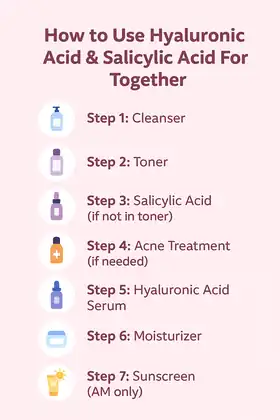
- Step 1: Cleanser
Wash your face with a gentle, pH-balanced cleanser to remove excess oil, dirt, and makeup. - Step 2: Toner
Use a hydrating toner to prep your skin, or if you’re using a salicylic acid toner, this step will double as your exfoliation. - Step 3: Salicylic Acid (if not in toner)
Apply a salicylic acid serum to penetrate pores, exfoliate, and target acne-causing buildup. - Step 4: Acne Treatment (if needed)
If your dermatologist prescribed an acne treatment, this is where it goes.
👉 Examples:- Benzoyl Peroxide (kills acne-causing bacteria)
- Adapalene/Retinoids (boost cell turnover, reduce breakouts)
- Azelaic Acid (calms redness and helps with post-acne marks)
- Step 5: Hyaluronic Acid
On slightly damp skin, apply hyaluronic acid serum to replenish hydration and buffer any irritation from stronger treatments. - Step 6: Moisturizer
Lock everything in with a lightweight, non-comedogenic moisturizer. - Step 7: Sunscreen (AM only)
Always finish your morning routine with SPF 30+, since acids and acne treatments can increase sun sensitivity.
Think of salicylic acid as the “deep cleaner” and hyaluronic acid as the “comforting hug” your skin needs afterward. When combined, they create a power duo that clears, hydrates, and balances acne-prone skin.
So go ahead—try this routine and let us know in the comments: 👉 Did your skin feel clearer, calmer, or more balanced after using both?
Professional Note: want a dermatologist-approved plan that takes the guesswork out of your daily skincare? Check out my full guide here: Dermatologist Recommended Skin Care Routine for Oily Skin.
Common Mistakes to Avoid When Using Hyaluronic Acid and Salicylic Acid
Even if you know the benefits of Hyaluronic Acid or Salicylic Acid for Acne, small mistakes in your skincare routine can stop you from seeing real results. Here are the most common ones to avoid:
- ❌ Skipping sunscreen
Salicylic acid makes your skin more sensitive to UV rays. Without daily SPF, you risk irritation, hyperpigmentation, and faster skin aging. - ❌ Skipping moisturizer
Many people think oily or acne-prone skin doesn’t need hydration. That’s wrong. Without a lightweight, non-comedogenic moisturizer, your skin can overproduce oil, leading to even more breakouts. - ❌ Applying in the wrong order
Putting hyaluronic acid before salicylic acid prevents the exfoliant from penetrating properly. Always apply salicylic acid first, then hyaluronic acid. - ❌ Overusing exfoliation
Using salicylic acid twice daily or combining it with too many other acids (like glycolic or lactic acid) can weaken your skin barrier and cause redness. - ❌ Not applying hyaluronic acid on damp skin
Hyaluronic acid works like a magnet for water, but if your skin is bone-dry, it can pull moisture out of deeper layers instead of locking hydration in. - ❌ Ignoring acne treatments
Relying only on acids without adding targeted acne solutions like benzoyl peroxide, retinoids, or azelaic acid can slow down your progress. - ❌ Expecting overnight results
Clearer, calmer skin takes time. Clinical studies show that consistent use of salicylic acid can take 6–8 weeks to show significant acne reduction.
🌟 Quick Recap: The biggest secret is balance: exfoliate gently with salicylic acid, rehydrate with hyaluronic acid, protect with SPF, and give your skin time to adjust.
Hyaluronic Acid Or Salicylic Acid for Acne Scars
When acne heals, it often leaves behind scars or dark spots that can feel just as frustrating as breakouts themselves. The question is: Can hyaluronic acid or salicylic acid help with acne scars?
Hyaluronic Acid for Scars
Hyaluronic acid won’t directly erase scars, but it helps by improving skin hydration, elasticity, and overall healing.
A hydrated skin barrier makes treatments for acne scars (like retinoids, microneedling, or chemical peels) more effective. Some studies suggest that topical hyaluronic acid can speed up wound repair and minimize the visibility of post-inflammatory marks.
Salicylic Acid for Scars
Salicylic acid for acne scars is more active when it comes to fading post-acne marks and uneven texture. By exfoliating dead skin and encouraging cell turnover, it gradually smooths the surface and reduces discoloration.
Dermatologists often recommend salicylic acid peels for post-inflammatory hyperpigmentation (PIH) and shallow acne scars.
⚖️ Which One Works Better?
If your main concern is dark spots and uneven tone, salicylic acid has the edge. If
Think of it this way:
- Salicylic acid = scar smoother & tone correct
- Hyaluronic acid = skin healer & hydration booster
For stubborn scars, dermatologists often recommend using these acids alongside advanced treatments (like retinoids, microneedling, or ch
Hyaluronic Acid Or Salicylic Acid for Fungal Acne
Fungal acne (technically known as Malassezia folliculitis) isn’t the same as typical bacterial acne. It’s caused by an overgrowth of yeast on the skin, which makes treatment a little different.
If you’re wondering whether hyaluronic acid or salicylic acid works for fungal acne, here’s what you need to know:
Hyaluronic Acid and Fungal Acne
Hyaluronic acid is not an antifungal agent, so it won’t treat fungal acne directly. However, it can play a supportive role by keeping the skin barrier strong and preventing irritation from harsher antifungal treatments.
A hydrated barrier is less likely to flare up when you use products like ketoconazole or sulfur-based creams.
Salicylic Acid and Fungal Acne
Salicylic acid for fungal acne, can be more beneficial because of its keratolytic properties—it helps unclog pores, reduce buildup of dead skin cells, and create an environment less favorable for yeast overgrowth.
Some dermatologists also recommend salicylic acid cleansers as a supporting step in fungal acne skincare routines.
⚖️ Which One Should You Choose?
If fungal acne is your main concern, salicylic acid is the more active option since it gently exfoliates and keeps pores clear. Hyaluronic acid can still be used alongside it to reduce dryness and irritation from antifungal medications.
FAQs — Hyaluronic Acid & Salicylic Acid for Acne
Can I use salicylic acid with hyaluronic acid and niacinamide?
Can I use salicylic acid and hyaluronic acid every day?
What acid is best for acne?
What should I never mix with hyaluronic acid?
What not to mix with salicylic acid?
What pairs well with salicylic acid?
Can I use serum with salicylic acid and hyaluronic acid together?
Thank you for staying with me through this skincare deep dive! 💖 Now that you know the real differences between Hyaluronic Acid Or Salicylic Acid For Acne, it’s time to put this knowledge into practice.
Every skin type tells a different story, and your journey might look a little different from someone else’s — and that’s completely okay.
I’d love to hear about your own experience: have you tried hyaluronic acid, salicylic acid, or even both together in your acne routine?.
Share your story in the comments below — your journey could inspire someone else who’s struggling right now. And remember, glowing skin is never about perfection, it’s about patience, love, and the right routine tailored to you.

Akram Boulaid is a dedicated Skincare Researcher and Analyst with over 7 years of intensive focus on dermatology and cosmetic ingredient science. As a globally recognized expert, his insights have been featured in major international publications, including the New York Post and GB News. A verified expert on Qwoted, Akram connects with health journalists to provide evidence-based analysis. He founded Beauty Blurb to bridge the gap between complex clinical data and practical skincare routines, specializing exclusively in the needs of oily and acne-prone skin through rigorous analysis of peer-reviewed scientific literature.