
If you’re wondering salicylic acid or glycolic acid for acne, the short answer is this: salicylic acid is usually the go-to for clearing active breakouts because it’s oil-soluble and works deep inside the pores to dissolve clogs and reduce inflammation.
Glycolic acid, on the other hand, shines when it comes to fading post-acne marks, evening out texture, and giving skin a brighter look.
In other words, salicylic is often best for treating pimples as they appear, while glycolic supports the recovery process and helps prevent leftover dark spots.
So, is glycolic acid or salicylic acid better for acne overall? The truth is—it depends on the type of acne you’re dealing with and your skin’s needs.
In this article, we’ll break down exactly how each acid works, which one is better for blackheads, inflamed pimples, or acne scars, how to safely use them in your routine, and whether you can combine the two for the best results.
By the end, you’ll know exactly which option (or mix) makes the most sense for your skin.
What Is Salicylic Acid and How Does It Work?
Salicylic acid is a beta-hydroxy acid (BHA) that has been trusted for decades in dermatology as one of the most effective acne treatments.
Unlike many other exfoliants, it’s oil-soluble, which means it can move past the skin’s natural oils and travel deep into the pores. Once inside, salicylic acid breaks apart the buildup of dead skin cells, sebum, and debris that often lead to blackheads, whiteheads, and breakouts.
This unique ability makes it especially powerful as salicylic acid for oily skin. If your skin tends to get shiny by midday or feels congested, salicylic acid helps regulate excess oil while keeping pores clear.
By gently exfoliating inside the follicle, it not only treats existing pimples but also prevents new ones from forming. That’s why many dermatologists consider it a first-line exfoliant for acne-prone skin.
When used consistently and in the right concentration, it can transform oily, acne-prone skin into a clearer and more balanced complexion without the harshness of scrubs.
What Is Glycolic Acid and How Does It Work?
Before we dive deeper into salicylic acid vs glycolic acid for acne, it’s important to clearly understand what glycolic acid is and why it matters for people struggling with breakouts.
Glycolic acid is an alpha-hydroxy acid (AHA), famous for being one of the smallest and most effective exfoliants in skincare. Unlike salicylic acid, which penetrates oily pores, glycolic works mainly on the skin’s surface.
It gently dissolves the bonds between dead skin cells, speeding up cell turnover and revealing fresher, smoother skin underneath.
This makes glycolic a go-to for improving acne scars, hyperpigmentation, and dull skin tone. By resurfacing the outer layer, it fades dark spots left behind after pimples heal and helps refine uneven texture.
Many dermatologists also recommend glycolic acid for oily skin, especially when excess sebum leads to congestion and rough patches. While it doesn’t penetrate pores as deeply as salicylic acid, it can still keep the surface clear and more balanced.
Because it acts on the outer layer, glycolic is often paired with salicylic for a more complete approach — one targets pores, the other perfects the surface. They’re not used at the same time, though; there’s a specific way to combine them safely, which we’ll cover in the section Salicylic Acid and Glycolic Acid Together.
Benefits Of Salicylic Acid for Acne
Salicylic acid is one of the most studied and trusted ingredients in acne care. Because it works deep inside the pores and has both exfoliating and anti-inflammatory effects, dermatologists often recommend it as a first-line option for oily and acne-prone skin.
Let’s break down the main salicylic acid benefits for acne, supported by real clinical studies.
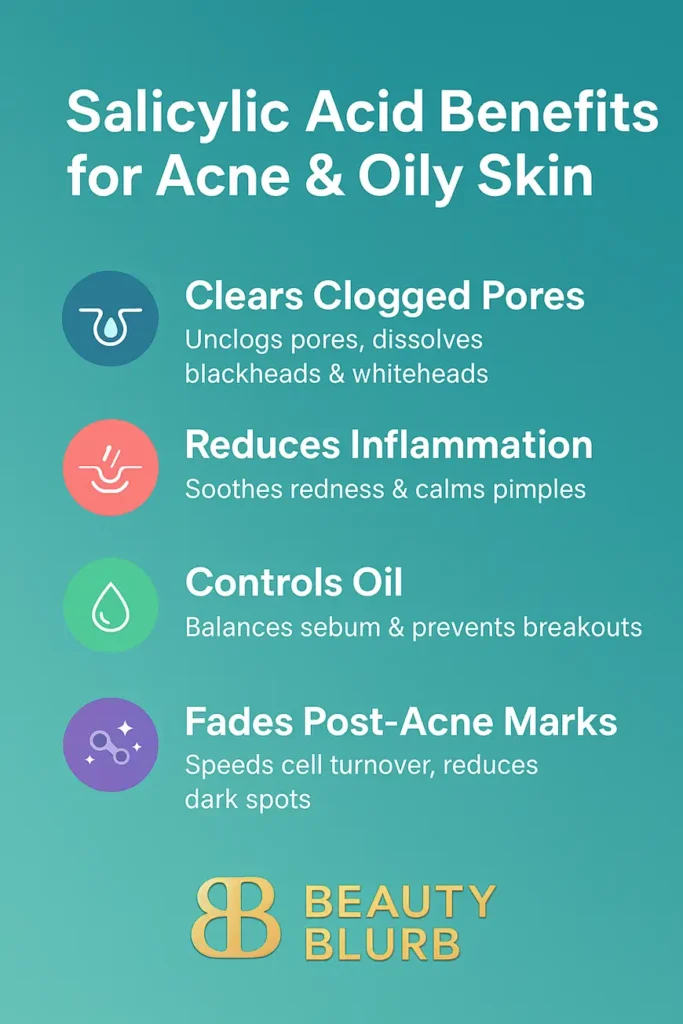
1: Clears Clogged Pores and Blackheads
Salicylic acid is oil-soluble, meaning it can travel into pores clogged with excess sebum and dead skin. Once inside, it helps dissolve the “glue” that holds debris together, so pores clear out and blackheads/whiteheads become less stubborn.
That pore-clearing action is a primary reason salicylic acid is recommended for comedonal acne.
Clinical study:
- A split-face, randomized study by Levesque et al. compared salicylic acid peels with another peeling agent in 20 subjects with comedonal acne, performing six peels at two-week intervals.
- The study found meaningful reductions in non-inflammatory (comedonal) lesions on the salicylic-treated side, confirming its effectiveness at clearing clogged pores. Source.
2: Reduces Inflammation and Red Pimples
Beyond unclogging pores, salicylic acid has mild anti-inflammatory properties. That helps calm redness and swelling in active pimples, so breakouts appear less inflamed and heal faster when salicylic is used appropriately.
Scientific study:
- Clinical trials and product-based studies that include salicylic acid formulations (for example, multi-product regimens studied in controlled trials) have shown reductions in lesion counts — including improvements in inflammatory and noninflammatory acne over several weeks of treatment.
- A notable industry-sponsored randomized study of a salicylic-containing three-step system in adolescents reported significant improvement in lesion counts over a ~10-week period, supporting salicylic-based regimens for acne control. Source.
3: Controls Excess Oil Production
Excess sebum fuels acne. By exfoliating inside the follicle and reducing comedone formation, salicylic acid indirectly helps control oiliness over time — fewer clogs mean less stimulus for ongoing sebum-driven breakouts. This is why salicylic is commonly recommended as salicylic acid for oily skin.
What does science say:
- A recent clinical evaluation of a salicylic acid–containing gel measured sebum levels, and acne severity over a short course and reported improvements in sebum metrics and clinical signs of acne.
- after about three weeks of use, indicating salicylic formulations can reduce oiliness and associated lesion counts in the short term.
4: Helps Fade Post-Acne Marks
While salicylic acid’s main strength is treating active and comedonal acne, its exfoliating effect also speeds surface renewal. That can help fade post-inflammatory hyperpigmentation (PIH) and improve texture when used in appropriate formulations or in superficial peel protocols.
Clinical study:
- Reviews and clinical series on superficial salicylic acid peels report efficacy and safety for acne vulgaris and associated hyperpigmentation, particularly in darker skin types where PIH is a major concern.
- For example, a comprehensive review and clinical reports have shown that superficial salicylic peels are both safe and effective for treating acne and improving PIH when performed correctly.
The benefits of salicylic acid for acne are supported by multiple clinical studies and reviews: it clears clogged pores and blackheads, helps reduce inflamed lesions as part of appropriate regimens, can lower sebum-related issues in the short term, and aids in fading post-acne marks when used as directed.
These effects explain why salicylic acid remains a cornerstone OTC option for oily, acne-prone skin.
Benefits of Glycolic Acid for Acne
Glycolic acid is well-regarded in skincare for more than just its exfoliating abilities—it also offers meaningful benefits for acne, especially when it comes to dealing with dark spots and post-acne marks. Let’s explore its advantages, grounded in clinical research and simplified in a friendly, clear way.
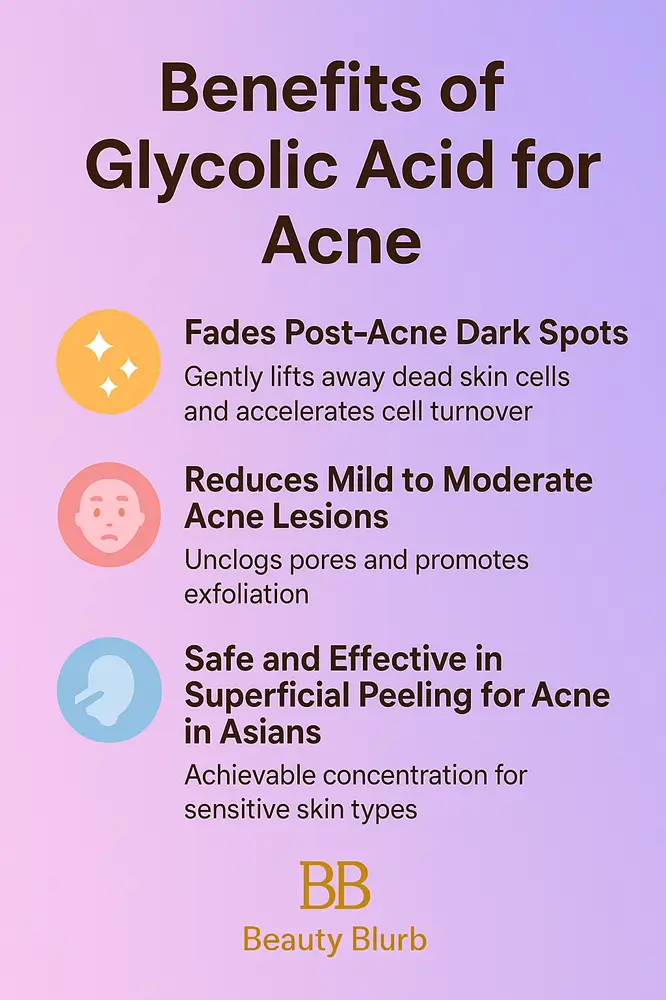
1: Fades Post-Acne Dark Spots
Glycolic acid works on the skin surface, gently lifting away dead skin cells and accelerating cell turnover.
This resurfacing effect helps reduce the appearance of acne-related dark spots—also known as post-inflammatory hyperpigmentation (PIH)—and leaves the complexion looking brighter and more even.
Clinical Evidence:
- A comprehensive review of glycolic acid peels—including those used for acne and post-inflammatory hyperpigmentation—showed solid improvement.
- Specifically, serial glycolic acid peels normalized keratinization and enhanced skin renewal in acne patients, effectively reducing dark spots over several sessions.
2: Reduces Mild to Moderate Acne Lesions
In addition to improving texture and pigmentation, glycolic acid can help reduce mild to moderate acne lesions. Its ability to unclog pores and promote exfoliation gently contributes to cleaner skin and fewer breakouts.
What did science say:
- A randomized, double-blind, placebo-controlled trial using a 10% glycolic acid oil-in-water emulsion showed significant improvement in mild acne after 45 days of application.
- Participants experienced fewer breakouts and smoother skin texture.
3: Safe and Effective in Superficial Peeling for Acne in Asians
Superficial glycolic acid peels can be used safely at achievable concentrations to treat acne and even skin tone, particularly in individuals with sensitive or darker skin types who may be prone to hyperpigmentation from harsher treatments.
Proven study:
- In a 2014 clinical evaluation by Kaminaka et al., 40% glycolic acid peels administered safely over several sessions significantly improved moderate acne in Asian patients with no serious adverse effects.
- This highlights both efficacy and tolerability in that population.
In summary, glycolic acid for dark spots offers multiple acne-related benefits: it brightens by fading post-acne hyperpigmentation, helps reduce mild to moderate breakouts through gentle exfoliation, and can be safely used in superficial peels for populations prone to PIH.
When combined smartly with salicylic acid, you achieve a powerful, dual-layered approach. This makes the choice of salicylic acid or glycolic acid for acne not just about which to pick—but how to use both for clearer and brighter skin.
Salicylic Acid or Glycolic Acid for Acne
Which is better for acne glycolic or salicylic acid? That’s the question most people ask when struggling with breakouts.
The truth is, both acids can improve acne—but in different ways. To make it clear, let’s break down the difference between salicylic acid and glycolic acid for acne in a simple comparison table.
| Factor | Salicylic Acid (BHA) | Glycolic Acid (AHA) |
|---|---|---|
| Solubility | Oil-soluble → penetrates deep into pores | Water-soluble → works on the surface |
| Best for | Blackheads, whiteheads, oily & acne-prone skin | Texture, dark spots, early aging signs |
| Penetration Depth | Deep inside pores | Surface exfoliation only |
| Skin Type Suitability | Oily / combination / acne-prone | Normal / dry / uneven tone |
| Speed of Results | Quick relief from active breakouts | Gradual improvement in texture & tone |
| Extra Benefits | Reduces oil, unclogs pores, calms inflammation | Fades dark spots, brightens skin, boosts glow |
So, what is better for body acne salicylic acid or glycolic acid isn’t about one being universally “better.”
If you’re battling clogged pores and shiny skin, salicylic acid is usually your best ally. But if acne has left behind dark spots or uneven texture, glycolic acid steps in as the repair hero.
The smartest move? Don’t think of them as rivals. Think of them as two different tools in the same skincare toolbox.
Choosing between salicylic acid or glycolic acid for acne depends on your skin’s immediate needs—and sometimes, the winning strategy is learning how to combine them safely for the clearest, healthiest skin possible.
How to Use Salicylic Acid and Glycolic Acid Together
Maybe you’ve been wondering:Can you use glycolic acid and salicylic acid together for acne? The short answer is Yes, you can combine these two powerhouse acids, but layering them at the same moment is often too harsh for most skin types. Instead, the most effective approach is a strategic “Shift System.”
Why Combine Them?
- Dual Action: Salicylic acid (BHA) dives deep into pores to dissolve oil, while Glycolic acid (AHA) polishes the surface to fade acne marks.
- Synergistic Results: Recent clinical data (Deda et al., 2025) suggests that alternating these acids significantly reduces inflammatory lesions by up to 85%.
The Recommended “Shift” Routine
To get the benefits without the irritation, follow this simple schedule:
- 🌞 Morning (The Oil Control Shift): Use a Salicylic Acid cleanser or toner to keep pores clear and control shine throughout the day. Always follow with SPF 30+.
- 🌙 Evening (The Texture Shift): Apply Glycolic Acid 2–3 times per week to renew skin texture and fade pigmentation while you sleep.
- 🔄 The Pro Rule: On nights when you use Glycolic Acid, skip other strong actives. On alternate nights, focus on barrier repair with Niacinamide or Ceramides.

ntly for a few weeks, and let us know in the comments how your skin transformed—we’d love to hear your journey!
💡 Pro Note: Want to see how this routine fits into a complete dermatologist-approved plan? Check out → Dermatologist Recommended Skin Care Routine for Oily Skin
Salicylic Acid or Glycolic Acid for Acne Scars
If you’ve finally managed to control your breakouts, you might still be left with a frustrating reminder—acne marks. These are not active pimples, but rather post-inflammatory hyperpigmentation (PIH) or lingering acne scars that affect your skin tone and texture.
The big question is: which is better for acne scars salicylic acid or glycolic acid?

Salicylic Acid for Acne Scars
Salicylic acid is oil-soluble, which makes it great for preventing future breakouts and reducing the inflammation that often causes acne marks in the first place.
While it’s not the strongest option for deep pigmentation, studies show that regular use of salicylic acid peels can gradually improve mild acne scars and even out skin texture over time.
👉 This makes salicylic acid a smart choice if you want to treat both active acne and prevent new marks from forming.
Glycolic Acid for Dark Spots
When it comes to fading existing acne marks, glycolic acid takes the spotlight. As an alpha-hydroxy acid (AHA), it works on the surface layer of your skin, accelerating cell turnover and helping to shed pigmented cells faster.
Dermatologists often recommend glycolic acid for post-acne dark spots and uneven skin tone, since it penetrates just enough to boost collagen while lightening discoloration.
👉 It’s often considered the best acid for hyperpigmentation because of its ability to target surface-level pigmentation directly.
Which One Should You Choose?
- If your main struggle is oily skin + breakouts that keep leaving marks, start with salicylic acid to reduce inflammation and prevent new scars.
- If your main struggle is post-acne pigmentation or uneven tone, glycolic acid is generally more effective for fading discoloration.
- Many dermatologists recommend alternating between them (salicylic for prevention, glycolic for fading) for a more comprehensive post-acne marks treatment.
When it comes to salicylic acid or glycolic acid for acne marks, the truth is—they work best as a team. Salicylic acid reduces the chance of new marks forming, while glycolic acid actively fades the ones you already have.
Together, they address both the cause and the consequence of acne, leaving your skin clearer, brighter, and more even-toned.
Which Acid is Best for Acne and Pimples?
If you’re dealing with stubborn pimples, blackheads, or oily skin, not all acids are created equal. Some are acne powerhouses, while others are more for glow or gentle exfoliation. Here’s a ranked list of the best acids for acne-prone skin:
| Rank | Acid | Why it works | Best for | Rating |
|---|---|---|---|---|
| 1 | Salicylic Acid (BHA) | Oil-soluble BHA that penetrates into pores to dissolve sebum and comedones; also has mild anti-inflammatory effects. | Oily, acne-prone skin — blackheads, whiteheads, active pimples. | |
| 2 | Azelaic Acid | Multi-action: antibacterial, anti-inflammatory and reduces hyperpigmentation—works on several acne pathways. | Inflammatory acne, sensitive/acne-prone skin, post-inflammatory hyperpigmentation. | |
| 3 | Glycolic Acid (AHA) | Small-molecule AHA that speeds cell turnover and exfoliates the surface—excellent for fading marks and improving texture. | Post-acne dark spots, uneven texture, dull skin. | |
| 4 | Lactic Acid (AHA) | Gentler AHA that exfoliates while adding hydration; useful when glycolic is too irritating. | Mild acne, sensitive or dry acne-prone skin. | |
| 5 | Mandelic Acid (AHA) | Larger molecule AHA that penetrates more slowly—lower irritation risk, helpful for pigmented lesions and gentle resurfacing. | Sensitive acne-prone skin, combination skin that can’t tolerate stronger acids. |
When it comes to the best acid for acne, salicylic acid still reigns supreme. But don’t overlook azelaic acid for its anti-bacterial and brightening powers, or glycolic acid for fading marks after breakouts.
The best routine often combines more than one acid—used smartly and not all at once—for clear, healthy-looking skin.
FAQ Of salicylic acid vs glycolic acid for acne
Salicylic acid is oil-soluble and reaches into clogged pores to dissolve sebum and dead skin — so a salicylic face wash (or leave-on BHA product) is typically more effective at preventing and treating blackheads and active pimples on oily skin. Glycolic face washes mainly exfoliate the surface and are better for texture and marks, not deep pore unclogging.
Tip: Use a salicylic cleanser in the morning or evening 3–5 times/week depending on tolerance, and follow with a gentle moisturizer. If you have sensitive skin, prefer a low-concentration leave-on BHA or consult a dermatologist.
Back acne (bacne) often stems from clogged pores and excess oil; salicylic acid—because it’s oil-soluble—can penetrate body pores and help clear comedones and small inflammatory papules. Look for body washes or leave-on sprays with salicylic (1–2%) formulated for the body.
If you have stubborn PIH on the back after acne clears, add glycolic acid body products or professional peels to fade marks—but start slowly and patch-test to avoid irritation.
Using both can give you a fuller approach: salicylic treats active, oil-driven breakouts, while glycolic fades marks and improves texture. The safest strategy is alternating (e.g., BHA nights and AHA nights) or AM/PM separation—this reduces irritation while delivering combined benefits.
If your skin is sensitive, start with one acid at a time and introduce the second slowly. Always patch-test and use sunscreen daily when using AHAs/BHAs.
Avoid strong, high-concentration surface AHAs (very high % glycolic) directly on inflamed, open lesions — they can irritate and worsen redness. Acids like citric or malic (used mainly as pH adjusters) are not effective acne treatments and may irritate sensitive skin.
The real issue is misuse: layering multiple active acids, over-exfoliating, or combining potent acids with harsh physical scrubs can damage the barrier and make acne worse. Use targeted, evidence-based acids (BHA for breakouts, AHA for marks) and follow safe frequency guidelines.
Glycolic acid speeds surface cell turnover, so texture and mild inflammatory lesions can improve within ~6–12 weeks of consistent use. Fading deeper post-inflammatory hyperpigmentation often takes 8–12+ weeks. Results depend on concentration, product formulation, how often you use it, and your skin type.
Be patient, use sunscreen daily (AHAs increase sun sensitivity), and consider professional peels for faster results if appropriate.
Purging happens when exfoliation speeds up cell turnover and brings pre-existing micro-comedones to the surface; it’s usually temporary (2–6 weeks) and occurs in areas you normally break out. Irritation, however, is redness, stinging, or widespread new breakouts in areas that were previously clear and often worsens with continued use.
If symptoms appear like purging and improve after ~6 weeks, continue with caution. If you get widespread irritation, stop the product and consult a dermatologist.
Oral salicylates (like aspirin) are avoided in pregnancy, but low-concentration topical salicylic acid (e.g., cleansers or spot treatments around 0.5–2%) is often used. Still, many clinicians prefer safer alternatives (like azelaic acid) during pregnancy. Always consult your OB/GYN or dermatologist before using any active ingredient while pregnant or breastfeeding.
When in doubt, choose pregnancy-safe options and get personalized medical advice.
Thank you so much for taking the time to read this guide 💕. Now that you know the science, the benefits, and the right way to use salicylic acid or glycolic acid for acne, it’s your turn to take action.
Remember, skincare is not just about clear skin—it’s also about confidence and self-love.
I’d love to hear about your journey: Have you tried salicylic acid, glycolic acid, or maybe both? Which one worked best for you? 💬 Share your story in the comments below—you might inspire another reader who’s just starting her skincare routine.
And if you found this article helpful, don’t forget to subscribe to our newsletter so you never miss out on dermatologist-approved tips, honest product reviews, and the best routines for oily, acne-prone skin. 🌸
Your clear skin journey starts today, and I’m so excited to be part of it with you. 🌿💖

Akram Boulaid is a dedicated Skincare Researcher and Analyst with over 7 years of intensive focus on dermatology and cosmetic ingredient science. As a globally recognized expert, his insights have been featured in major international publications, including the New York Post and GB News. A verified expert on Qwoted, Akram connects with health journalists to provide evidence-based analysis. He founded Beauty Blurb to bridge the gap between complex clinical data and practical skincare routines, specializing exclusively in the needs of oily and acne-prone skin through rigorous analysis of peer-reviewed scientific literature.