Is hyaluronic acid good for oily skin? Yes — when used correctly, hyaluronic acid can actually help balance oily skin by providing lightweight hydration without clogging pores. It draws moisture into the skin, helping to reduce excess oil production over time.
In this article, we’ll explore why hyaluronic acid is good for oily skin, how it works at a molecular level, and what dermatologists recommend for incorporating it into your skincare routine.
You’ll also discover the best application methods, common mistakes to avoid, and the top products suited for oily or acne-prone skin.
✅ What Is Hyaluronic Acid & How Does It Work?
Let’s break it down: Hyaluronic acid is something your body already makes — it’s found in your skin, joints, even your eyes. Its superpower? Holding onto water. And not just a little — we’re talking about up to 1,000 times its own weight! 💧
When you apply it to your skin, it acts like a sponge — pulling in moisture from the air (and deeper layers of your skin) to keep things soft, smooth, and hydrated. And the best part? It does all that without making your skin oily or greasy.
There are actually different “sizes” of hyaluronic acid.
- High molecular weight (HMW): Stays on the surface and calms the skin.
- Low molecular weight (LMW): Goes deeper, giving longer-lasting hydration.
Many products use a combo of both so you get the best of both worlds!
Now My Freind, Let’s dive into the top benefits hyaluronic acid offers for oily and shiny skin — and how it can help you find the perfect balance without overloading your pores.
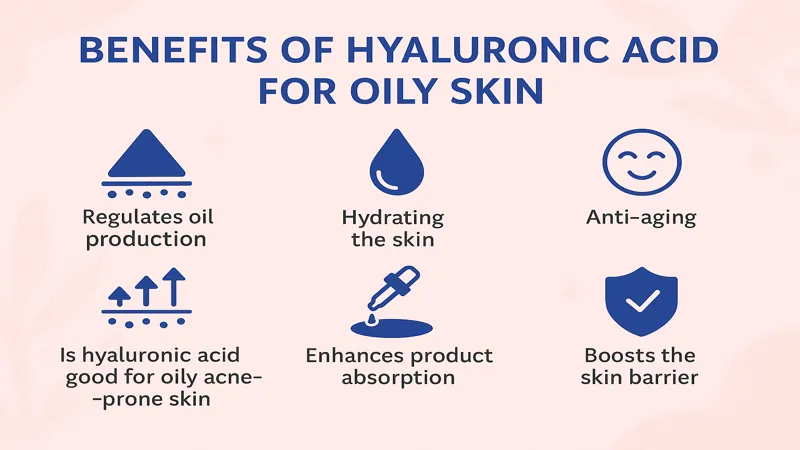
Is Hyaluronic Acid Good for Oily Skin: 6 Benefits You Need
Now that you know what hyaluronic acid is and how it works, you might be wondering:
why is hyaluronic acid good for oily skin specifically? It’s not just about hydration — there’s actually more going on behind the scenes. Ultimately, it is considered one of the gentlest acids for oily skin.
1: Regulates Excess Oil
If your skin tends to feel greasy by midday, hyaluronic acid can be a surprising but powerful ally. One of the top hyaluronic acid benefits for oily skin is its ability to gently reduce shine and calm overactive oil production—without dehydrating or tightening your skin in response.
Imagine giving your skin exactly what it needs—moisture—so it doesn’t feel compelled to go into oil overdrive. HA helps restore balance, making your skin feel calmer, less slippery, and more comfortable throughout the day.
🧪 Scientific Proof: What the Study Shows
- The 2017 study titled “Hyaluronic Acid Decreases Lipid Synthesis in Sebaceous Glands” published in Journal of Investigative Dermatology by Yu Ra Jung et al.
- at Chungnam National University (Daejeon, South Korea) was a double‑blind, placebo‑controlled, split‑face clinical trial involving 20 volunteers with oily skin, conducted over 4 weeks.
- The side treated with low‑molecular-weight HA consistently showed a statistically significant drop in sebum production, as well as visibly less oil and fewer clogged pores compared to the placebo side.
Source: pubmed – Hyaluronic Acid.
Importantly, the researchers confirmed that human sebaceous glands express the CD44 receptor, which binds HA and triggers a molecular pathway that downregulates lipid synthesis—essentially instructing oil glands to ease up.
summary
The takeaway? Using HA isn’t counter‑intuitive—it’s strategic. You’re not “adding oil,” you’re supplying balanced hydration that communicates to your skin:
“You’ve got enough moisture, no need to overproduce oil.” Pair the serum with a lightweight moisturizer, use it consistently for a few weeks, and many users notice less shine, smaller-looking pores, and calmer skin overall.
2: Hydrating the Oily Skin
il‑prone skin often feels tight underneath matte products, which might surprise you—but tight skin still needs hydration.
One of the standout benefits of hyaluronic acid for oily skin is its exceptional ability to attract and hold moisture without the heaviness of oils or creams.
Because it’s lightweight and water-based, HA hydrates the skin surface and reinforces the moisture barrier without clogging pores or triggering oil overproduction.
🧪 Scientific Study: Hydration That Lasts
Here’s a real-world study that backs it up:
- 2021 double‑blind trial by Draelos ZD et al., published in Dermatology & Therapy
- Participants: 40 women (ages 30–65)
- Duration: 6 weeks of topical HA application
- Results: Immediately post‑application, skin hydration rose by +134 %; at 6 weeks, sustained hydration still maintained at +55 % (all p < 0.001). Source.
🚀 Why This Matters for Oily Skin
Think of HA as adding just enough water to stop your oil glands from panicking and overproducing. Instead of more mattifiers or exfoliants, what oily skin often needs most is light, long-lasting hydration that supports—not masks—its natural balance.
So the question remains: Is Hyaluronic Acid Good for Oily Skin?
If your goal is to hydrate without heaviness, yes—it just might be the hydration hero oily skin has been waiting for.
3: Anti‑Aging Effects
Is hyaluronic acid good for oily skin on face? You might think “anti-aging” means thick creams or oils, but HA delivers a clear exception.
Even oily or acne-prone skin can enjoy younger-looking firmness and smoother texture—without feeling heavy or causing more shine.
HA gently supports collagen and elastin synthesis while attracting hydration, so your skin feels softer, lines appear less noticeable, and the moisture barrier gets a subtle lift.
🧪 Scientific Corner: One Study That Speaks Volumes
- In a double‑blind, placebo‑controlled split‑face trial published in Clinical, Cosmetic, and Investigational Dermatology (2019), Adele Sparavigna et al.
- treated 18 volunteers (aged 35–55) with moderate aging signs using two injections of a hyaluronic acid gel over roughly five months (baseline, 48 hours later, then one more dose, followed by final evaluation).
- By Month 5, participants showed statistically significant reductions in wrinkle depth (eye area, lip and nasolabial folds), improved skin brightness, and surface smoothness—all without irritation.
So yes: HA serves as more than just hydration—it’s a hydration-first anti-aging tactic that oily skin types can use without worrying about excess greasiness. Want to keep aging at bay? This is one of the smartest benefits HA offers oily skin on the face.
4: Is Hyaluronic Acid Good for Oily Acne‑Prone Skin
You may be wondering if hyaluronic acid is good for acne? Imagine you’re battling blemishes and still want hydration without flare‑ups—HA might just be your peacekeeper. It’s lightweight, oil‑free, and won’t clog your pores, making it an ideal support for skin that battles both breakouts and excess oil.
By helping repair the moisture barrier, it soothes inflammation from acne treatments (like benzoyl peroxide or retinoids) that often leave skin dry, tight, or red.
In your skincare routine, think of HA as your gentle mediator: hydrating without adding weight, calming without dullness.
🧪 What Sience Say
- A well‑conducted randomized, double‑blind study in J. Cosmetic Dermatology (2009) looked at 66 patients on oral isotretinoin for inflammatory acne.
- Half used a non-oily, HA‑based gel‑cream alongside their treatment, while the other half had a placebo cream. After just 30 days, the HA group showed better skin hydration, significantly less transepidermal water loss, and even fewer inflammatory lesions, compared to those using placebo. Source. Source.
📣 Bottom Line:
If you’re on acne meds or fighting flare-ups, HA isn’t just a nice-to-have—it helps your skin recover, reduces redness, and supports treatment without adding grease.
So, when your skin feels tight or patchy, layering a drop of HA serum on slightly damp skin can help you stick with your acne regimen—while feeling more comfortable.
Did hyaluronic acid help solve this for you? I really hope it did—and I’d love to hear your experience in the comments below!
5: Enhances Absorption of Other Skincare Actives
If you’ve ever felt like your serums, niacinamide, or acne treatments aren’t really sinking in, this is where hyaluronic acid (HA) shines—it improves how your skin takes in the ingredients that follow. HA acts like a moisture magnet and skin primer, setting the stage for everything that comes next.
🧪 Scientific Study
- Dr. Shari Sperling (a board-certified dermatologist) recommends applying hyaluronic acid on slightly damp skin right after cleansing—before any other serums or treatments—to lock in hydration and help subsequent ingredients like vitamin C, salicylic acid, or peptides penetrate more deeply.
- In fact, HA’s water-binding nature enhances product penetration, making your formulas more effective — especially useful for oily or acne-prone skin managing lightweight serums like niacinamide or sulfur treatments.
Many readers ask, “is hyaluronic acid good for oily skin dermatologist,” and skin experts say yes—because by acting as a hydrating “primer,” HA prepares your skin to absorb actives better without clogging pores or adding weight.
6: Boost the skin barrier
A strong skin barrier is your best defense against irritation, sensitivity, and worsening oil imbalance—not to mention a key in healthy, resilient skin.
One of the lesser‑known hyaluronic acid benefits for oily skin is its ability to support barrier repair by retaining hydration in the outermost layers and helping seal in moisture—without heaviness or comedogenic risk.
This helps prevent water loss (TEWL), keeps skin calm, and reduces the urge for compensatory oil production.
🧪 Study Snapshot
- In a randomized, assessor‑blinded trial, a moisturizing fluid containing 1% hyaluronic acid (with glycerin & Centella asiatica) increased skin hydration by ~59% and reduced transepidermal water loss by 48% after 24 hours (Pavicic et al., single‑site split comparison).
🔚 Pro Tip:
Giving your skin its hydration quota is like restoring its natural “comfort zone.” HA removes the water‑stress signal that can push oil into overdrive, and reinforces your barrier against future damage.
It’s all about listening to what your skin needs—not stripping it dry or piling on mattifiers. Start slow, focus on hydration first, and let your skin lead the way.
Do You Need a Moisturizer If You Use Hyaluronic Acid?
After answering your question, dear friend, about Is Hyaluronic Acid Good for Oily Skin, it’s time to explore a follow-up that many people ask: If I’m using HA, do I still need to apply a moisturizer?
Well, it depends.
- While hyaluronic acid itself offers excellent hydration, some people with very oily skin might feel they don’t need an extra moisturizer—especially if their HA product is well-formulated.
- According to Cetaphil, oily skin may sometimes get enough hydration from HA alone. However, most dermatologists still recommend using a lightweight, non-greasy moisturizer to lock in that hydration and support your skin barrier.
✅ What Kind of Moisturizer Works Best?
If you’re going to use one, look for oil-free formulas that contain ingredients like:
- Niacinamide – helps soothe, refine pores, and regulate sebum production.
- Panthenol & Glycerin – support skin barrier function and hydration without heaviness.
- Bonus if the moisturizer also contains HA, like the Cetaphil Moisturizing Lotion.
💡 Final Thought:
Your skin is unique—some oily skin types may be fine with just HA, others may feel dry without that extra layer.
So, listen to your skin. If it feels tight, flaky, or stripped—add the moisturizer. If it feels balanced and hydrated, you might be okay without it. Let your skin tell you what it needs.
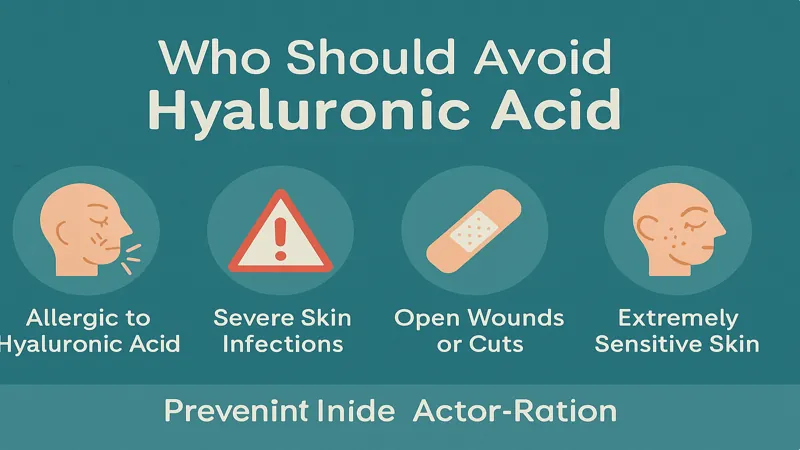
🚫 Who Should Avoid Hyaluronic Acid?
While hyaluronic acid is praised as a holy grail for hydration—even for oily and acne-prone skin—it’s not a one-size-fits-all solution.
For a small group of people, using HA may lead to irritation, breakouts, or simply not work as expected. So, if you’ve ever asked yourself, “Could HA be doing more harm than good?”, this part is for you.
⚠️ You Might Want to Avoid Hyaluronic Acid If:
- You live in a very dry climate: Without enough humidity in the air, HA can actually pull moisture out of your skin, leading to dehydration.
- You have extremely sensitive or reactive skin: Some people experience redness, itching, or burning when using HA, especially in high concentrations or with added fragrances.
- You notice breakouts or clogged pores: Although rare, certain HA serums (especially those mixed with occlusive or silicone-heavy bases) can trigger acne in very oily or acne-prone skin.
- You’re using it incorrectly: Applying HA on dry skin without sealing it with moisturizer can backfire, leaving your skin more dehydrated than before.
So, is HA bad? Not at all! But just like any ingredient, how you use it makes all the difference.
Up next, let’s break down how to use hyaluronic acid the right way—especially if you have oily or acne-prone skin.
How to Use Hyaluronic Acid for Oily Skin؟
Now, let me show you exactly how to incorporate hyaluronic acid into your oily skin routine — the right way, without triggering breakouts or unwanted shine.
- Cleanse Gently: Start with a mild, oil-free cleanser to remove excess sebum and dirt without stripping your skin.
- Apply on Damp Skin: After patting your face with a towel, leave your skin slightly damp. This is key—HA works best when there’s water to pull into the skin.
- Use 1–2 Drops of HA Serum: Apply a thin layer using clean fingertips. Focus on areas that feel dehydrated or tight.
- Seal It In: Follow immediately with a lightweight, non-comedogenic moisturizer to trap the hydration inside.
- Morning or Night: You can use HA in both routines. In the morning, follow with sunscreen. At night, layer it before your treatment or night cream.

🌟 Ready to See the Glow?
Give this method a try, especially if other products have left your skin feeling greasy or stripped. Hyaluronic acid might just be the game-changer your oily skin needs.
Try it consistently for a week and let us know in the comments how it worked for you! Your story could help others too. 💬
💬 Note:
Want a full dermatologist-approved skincare routine tailored for oily skin? 👉 Check out our in-depth guide: Dermatologist Recommended Skin Care Routine for Oily Skin.
Mistakes to Avoid When Using Hyaluronic Acid on Oily Skin
Hey beauty, just because hyaluronic acid works wonders for oily skin doesn’t mean it’s foolproof!.
Let’s make sure you’re not making these sneaky little mistakes that could actually make your skin worse instead of better. 😬👇
💥 1. Applying It on Dry Skin: Big no-no! Hyaluronic acid draws moisture — if you apply it on dry skin, it can pull hydration from the deeper layers out, leaving your skin dehydrated. ✔️ Pro tip: Apply it on slightly damp skin right after cleansing.
💥 2. Skipping Moisturizer After: HA is a humectant, not a moisturizer. It pulls in water, but it can evaporate without something to seal it in. ✔️ Always follow up with a lightweight, non-comedogenic moisturizer.
💥 3. Using It Too Often: Yes, overdoing it is real! Using hyaluronic acid more than twice a day or layering multiple HA products can irritate oily skin. ✔️ Stick to once or twice a day — that’s enough to get the glow without clogging things up.
💥 4. Not Paying Attention to the Formula: Not all HA products are created equal. If yours is packed with oils, alcohol, or silicone-heavy fillers, it might be breaking you out. ✔️ Check the label and go for “oil-free” and “non-comedogenic.”
💥 5. Using It with Harsh Ingredients: Mixing HA with very strong acids or exfoliants (like glycolic acid, salicylic acid, or retinoids) without proper layering can lead to redness or irritation. ✔️ Keep your routine simple, especially if you’re new to actives.
🌸 Wrap-Up:
Even if you’re still asking yourself “Is Hyaluronic Acid Good for Oily Skin?” — the answer is YES, but only if you’re using it right.
Avoid these mistakes and your skin will thank you, glowing and grateful 🌿✨
⚠️ Hyaluronic Acid for Oily Skin Side Effects: You Should Know
Hey gorgeous! 🌸 Before you go all-in on hyaluronic acid, let’s talk honestly for a second.
Even though it’s hailed as a skincare superhero, no ingredient is 100% perfect for everyone—not even HA. If you have oily skin, you might be wondering:
“Is Hyaluronic Acid Good for Oily Skin, or can it actually cause issues for me?” Let’s break it down.
- Increased Oiliness (Yes, really!): If you’re not locking HA in with a moisturizer, it can leave your skin thirsty—causing your oil glands to go into overdrive. The result? Greasy, shiny skin.
- Breakouts or Congestion: Some HA serums are combined with heavy bases, like silicones or oils, which might clog pores if you’re acne-prone.
- Irritation or Redness: High concentrations of low-molecular-weight HA can sometimes penetrate too deeply and irritate sensitive skin, especially if used too frequently.
- Tightness or Flakiness: Yep, it sounds weird—but if there’s no moisture in the air, HA can pull water from your skin and leave it feeling dry and tight.
💬 Friendly Tip, beautiful:
If you’ve ever tried HA and felt like your skin just didn’t love it—it doesn’t necessarily mean the ingredient is “bad.” Sometimes it’s all about how you’re using it, what it’s paired with, or even the climate you’re in.
What is best combined with hyaluronic acid?
Hey lovely! ✨ Now that you’ve got the hang of hyaluronic acid (HA), let’s take it up a notch.
Did you know that pairing HA with the right ingredients can totally supercharge your skincare routine—especially if you have oily or acne-prone skin?
Here’s a list of power duos your skin will thank you for:
1:💧 Hyaluronic Acid & Niacinamide
This combo is chef’s kiss for oily skin! While HA deeply hydrates, niacinamide works to refine pores, balance sebum, and calm inflammation.
HA & Niacinamide Together, they leave your skin smooth, fresh, and shine-free without stripping moisture.
2: 💧 Hyaluronic Acid & Salicylic Acid
This dynamic pair is perfect for oily babes who deal with congestion.
Salicylic acid cleans out the pores, and HA follows with a surge of hydration—preventing the dryness and irritation that exfoliating acids can sometimes cause.
3: 💧 Hyaluronic Acid & Vitamin C
Looking to even out skin tone and add a dewy glow?
Vitamin C boosts radiance and fades dark spots, while HA keeps your skin plump and juicy. Use this pair in the morning under sunscreen for max results.
4: 💧 Hyaluronic Acid & Panthenol (Vitamin B5)
This soothing combo is a hidden gem.
Panthenol helps repair the skin barrier and reduce redness—especially after active treatments. Combined with HA, it’s like a comforting hug for stressed, oily skin.
💬 Quick Tip: When layering these ingredients, always apply HA first on damp skin, then follow with serums or creams. This helps seal in moisture and allows other actives to work better.
🚫 What to Not Mix with Hyaluronic Acid?
Hey sweet soul! 🌷 While hyaluronic acid is one of the most flexible ingredients in skincare,
there are still a few pairings that just don’t vibe well with it — especially if you want clear, happy skin.
Here’s what to avoid (or use cautiously):
❌ Hyaluronic Acid & Harsh Exfoliants at the Same Time: If you’re using strong AHAs or BHAs, don’t layer them directly with HA in the same step — especially if your skin is sensitive. Doing so might cause tightness or stinging, not extra glow.
❌ Hyaluronic Acid & Alcohol-Based Toners: Alcohol-heavy products can disrupt your skin barrier. Pairing them with HA often leads to dryness and irritation, as HA tries to pull moisture that just isn’t there.
❌ Hyaluronic Acid & Retinoids (In Some Cases): While these can work well together for some people, applying HA before heavy-duty retinoids can sometimes trap too much water, leading to temporary puffiness or irritation — especially in humid climates. Always test first!
❌ Low-Quality or Mixed Formulas: Be cautious with multi-ingredient serums that contain HA but also fragrances, dyes, or strong preservatives. These can cancel out HA’s soothing benefits and cause breakouts or sensitivity for oily skin.
💡 Final Friendly Advice:
Always do a patch test first, gorgeous! Apply any new combination on a small area of your face (like your jawline) for 24 hours.
Your skin speaks—just make sure you’re listening. 💖
Which is better for oily skin hyaluronic acid or salicylic acid?
Hey beauty! 🌿 If you’ve ever stood in the skincare aisle wondering, “Should I go for hyaluronic acid or salicylic acid?” — you’re definitely not alone.
Both are beloved by dermatologists, but they serve very different purposes.
So, let’s help you figure out which one your oily skin is truly craving.
| Feature / Function | Hyaluronic Acid (HA) | Salicylic Acid (SA) |
|---|---|---|
| Main Role | Hydrates and plumps the skin | Exfoliates and unclogs pores |
| Best For | Dehydrated, oily, or tight-feeling skin | Acne-prone, congested, blemish-prone skin |
| Skin Type Compatibility | All skin types, including sensitive | Oily and acne-prone (can be drying for sensitive skin) |
| How It Works | Attracts and retains water in skin layers | Penetrates pores to dissolve oil and dead skin cells |
| Common Use | Daily hydration, before moisturizer | Spot treatment or 2–3x weekly exfoliation |
| Texture/Feel | Lightweight, gel-like, non-greasy | Often in toners or serums; may sting a little |
| Can Be Used Together? | ✅ Yes, apply HA after SA for balance | ✅ Yes, but introduce slowly |
So, which one is better? The truth is… they work best together, not against each other.
Use salicylic acid to clear out pores and reduce breakouts, and follow up with hyaluronic acid to bring hydration back and keep your skin balanced.
It’s not a competition—it’s teamwork! 💪✨
Start slow, see how your skin responds, and find the balance that works best for you.
What Is best hyaluronic acid for oily skin?
So now that you know how hyaluronic acid works, how to use it, and whether it suits oily skin (spoiler: it does!).
let’s talk about something important: choosing the right one. Because not all HA products are created equal, bestie! 💁♀️.
Top Hyaluronic Acid Serums Oily-Skin Users Swear By:
| Brand | Product Name | Why It’s Loved |
|---|---|---|
| The Ordinary | Hyaluronic Acid 2% + B5 | Simple, affordable, and absorbs like a dream. |
| La Roche-Posay | Hyalu B5 Serum | Lightweight with panthenol to soothe oily skin. |
| CeraVe | Hydrating Hyaluronic Acid Serum | Non-greasy and includes ceramides for barrier support. |
| Vichy | Mineral 89 | Watery texture, plumps skin without oiliness. |
| Neutrogena | Hydro Boost Water Gel with HA | Dermatologist-recommended and budget-friendly. |
✨ Final Thoughts
The best hyaluronic acid for oily skin is the one that hydrates without heaviness, absorbs fast, and works in harmony with your skin’s needs.
So don’t just buy what’s trending — choose what feels right for your skin.
And hey, don’t forget: if you’re still wondering “Is Hyaluronic Acid Good for Oily Skin?” — the answer is a glowing YES. 💙
💬 My Real Experience Using Hyaluronic Acid for Oily Skin
Okay, so let me be totally honest — I was super skeptical about trying hyaluronic acid at first. I always thought,
“Why would I add something hydrating to my already oily skin? Won’t that just make it worse?”
But girl, I was wrong.
📆 Day 1: First Impressions
- Okay… not gonna lie, I was nervous. My skin was freshly cleansed and still a bit damp.
- I applied just 2–3 drops of HA and gently patted it in. It felt light, no greasy film or stickiness. I followed with a gel-based moisturizer.
Result? My skin felt fresh. Nothing magical yet, but definitely not worse.
📆 Day 2: A Subtle Shift
- Woke up and noticed that my forehead didn’t look like a frying pan. That’s a first.
- Usually by 10 AM, I’m blotting my T-zone, but today it felt… balanced. Like hydrated, not oily.
- I even got a little compliment at work: “Your skin looks healthy today.” I’ll take it!
📆 Day 4: Texture Is Changing
- It’s small, but I’m seeing it: less bumpiness.
- My cheeks, which usually feel dry-ish but still break out, are smoother.
- Makeup applied more evenly, and didn’t slide off by noon like usual.
- Still no breakouts. Still no extra shine. Just calm, soft skin.
⏳ After 1 Week: Honestly Impressed
- This is the first time I feel like my oily skin isn’t fighting me.
- My pores aren’t clogged, my nose is less shiny, and I haven’t had that “tight and dry but oily” feeling all week.
- Now I understand — hydration and oil aren’t the same thing. My skin was dehydrated and overproducing oil. Hyaluronic acid helped stop that vicious cycle.
⏳ After 10 Days: A Keeper in My Routine
- At this point, HA is a non-negotiable.
- I now use it twice a day, always on damp skin, followed by a non-comedogenic moisturizer. My skin tone looks more even, my breakouts are fewer, and that annoying afternoon shine? Almost gone.
So, if you’re still wondering:
Is hyaluronic acid good for oily skin? On the face?
Girl, from my experience — 100% yes. Just use it right, be consistent, and trust the process.
🌸 Have you tried it yourself? I’d love to hear how your skin reacted — drop your story in the comments, let’s compare notes! 💬
FAQ Of hyaluronic Acid For Oily Skin
Hey beauty, thank you for joining me on this skincare deep dive! 🌸
We’ve covered everything from the science to the glow-up — and now, you’re more than ready to make a smart decision for your skin.
So, is hyaluronic acid good for oily skin?
Absolutely — when used right, it’s one of the gentlest and most effective ways to keep oily skin balanced, hydrated, and happy. It’s not about fighting your skin — it’s about understanding what it truly needs.
Now it’s your turn! 💬
Have you tried hyaluronic acid before? Did it transform your skin or leave you with questions?
Drop your experience in the comments — I’d love to hear your skincare story. 🫶
Until then… keep glowing, stay kind to your skin, and remember: the journey to healthy skin is a marathon, not a sprint. You got this! 💖

Akram Boulaid is a dedicated Skincare Researcher and Analyst with over 7 years of intensive focus on dermatology and cosmetic ingredient science. As a globally recognized expert, his insights have been featured in major international publications, including the New York Post and GB News. A verified expert on Qwoted, Akram connects with health journalists to provide evidence-based analysis. He founded Beauty Blurb to bridge the gap between complex clinical data and practical skincare routines, specializing exclusively in the needs of oily and acne-prone skin through rigorous analysis of peer-reviewed scientific literature.